Inspiration
A correct answer does not always reveal whether a student understands the reasoning behind it. Students may recognize a familiar solution yet struggle to explain why it works or apply it to a different situation. For lecturers, uncovering these gaps means looking beyond final answers and listening to how students think.
This led us to a simple question: What if students could test their understanding by teaching someone else?
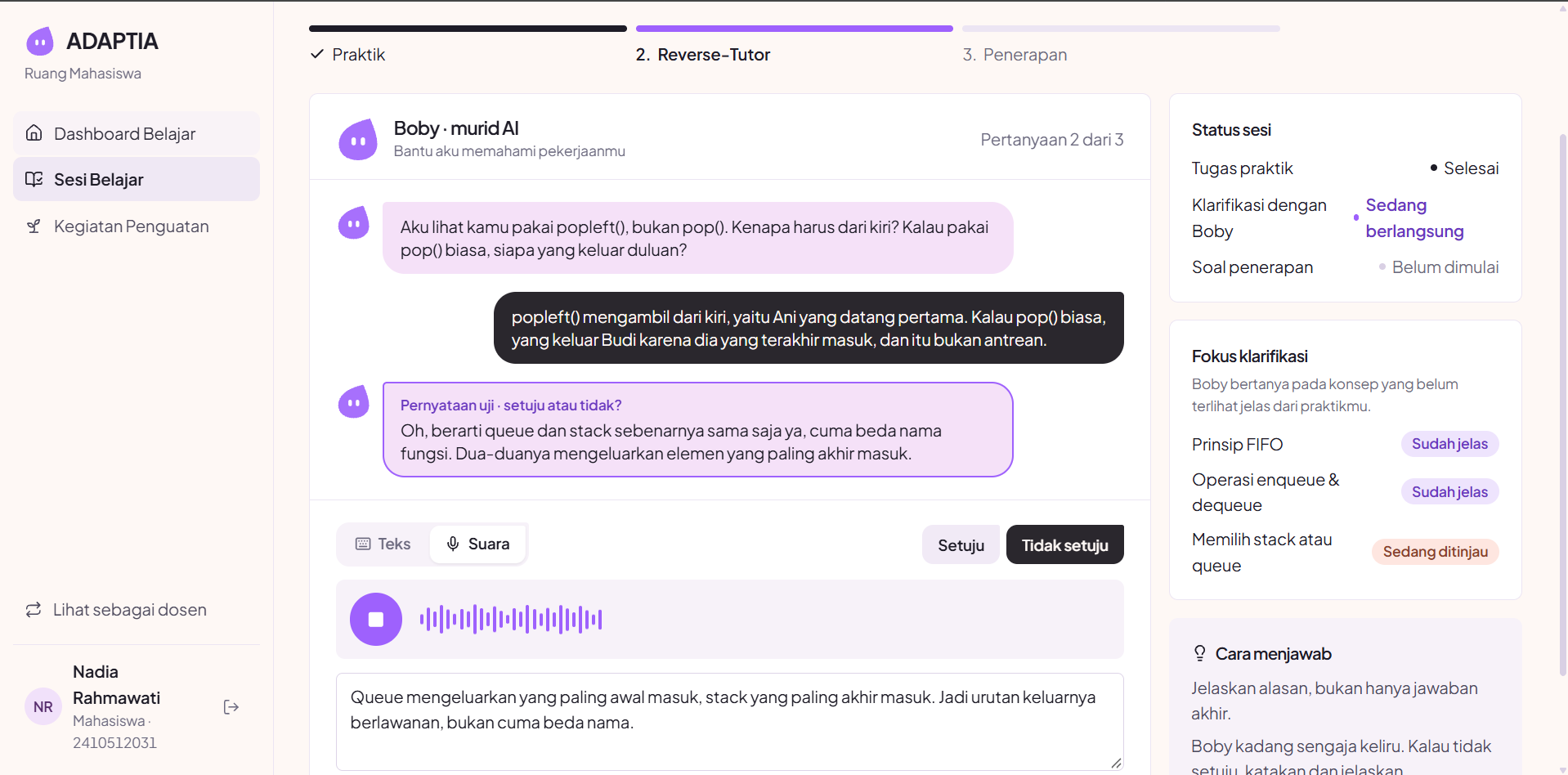
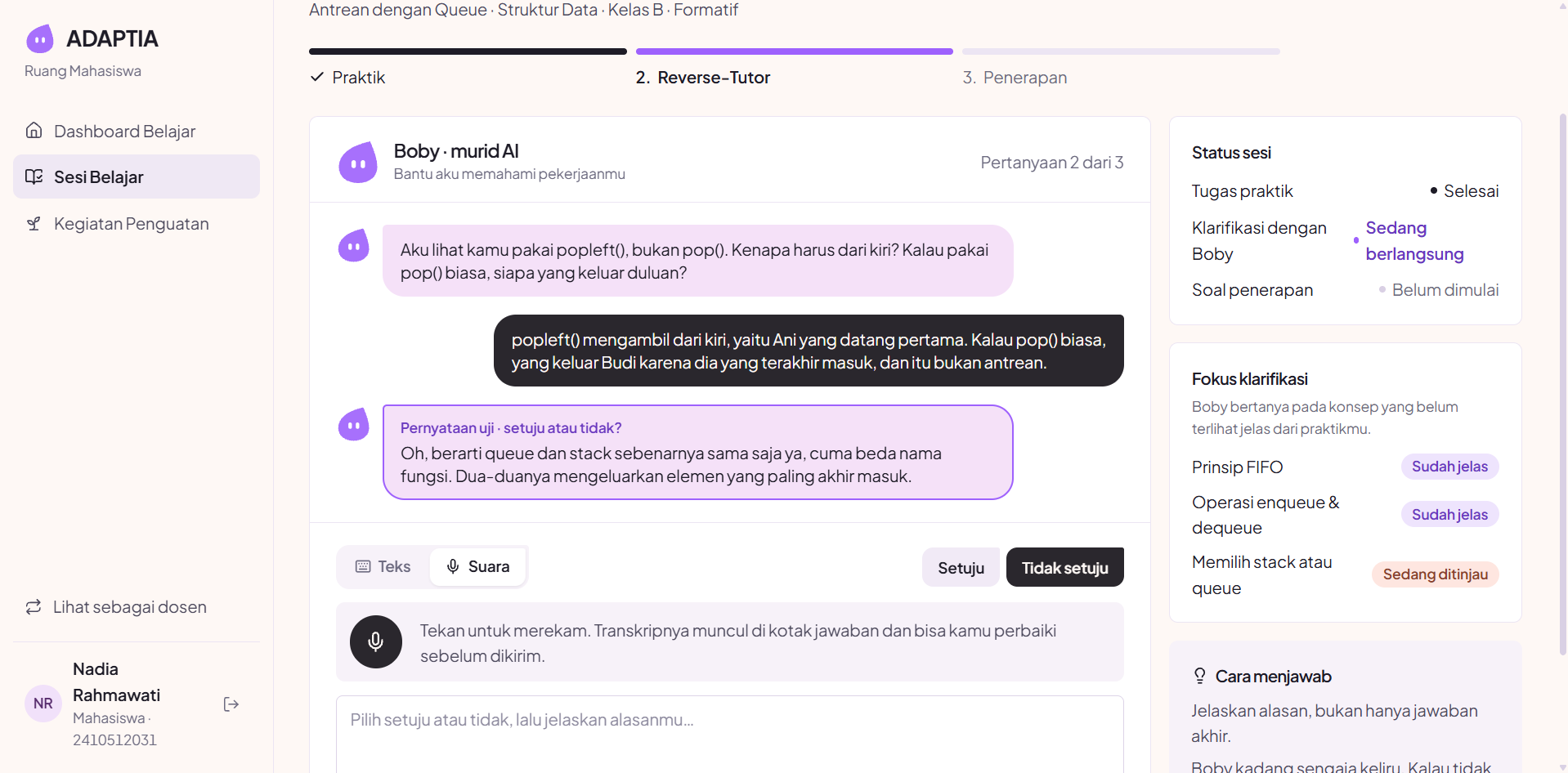
ADAPTIA turns that idea into a learning experience where students teach an AI learner. The AI asks questions, requests examples, and presents statements for students to evaluate, making their reasoning visible.
What it does
ADAPTIA is designed to help university students examine their understanding and help lecturers identify possible misconceptions early.
The learning journey has three stages:
- Practice: Students attempt a task to establish their initial understanding.
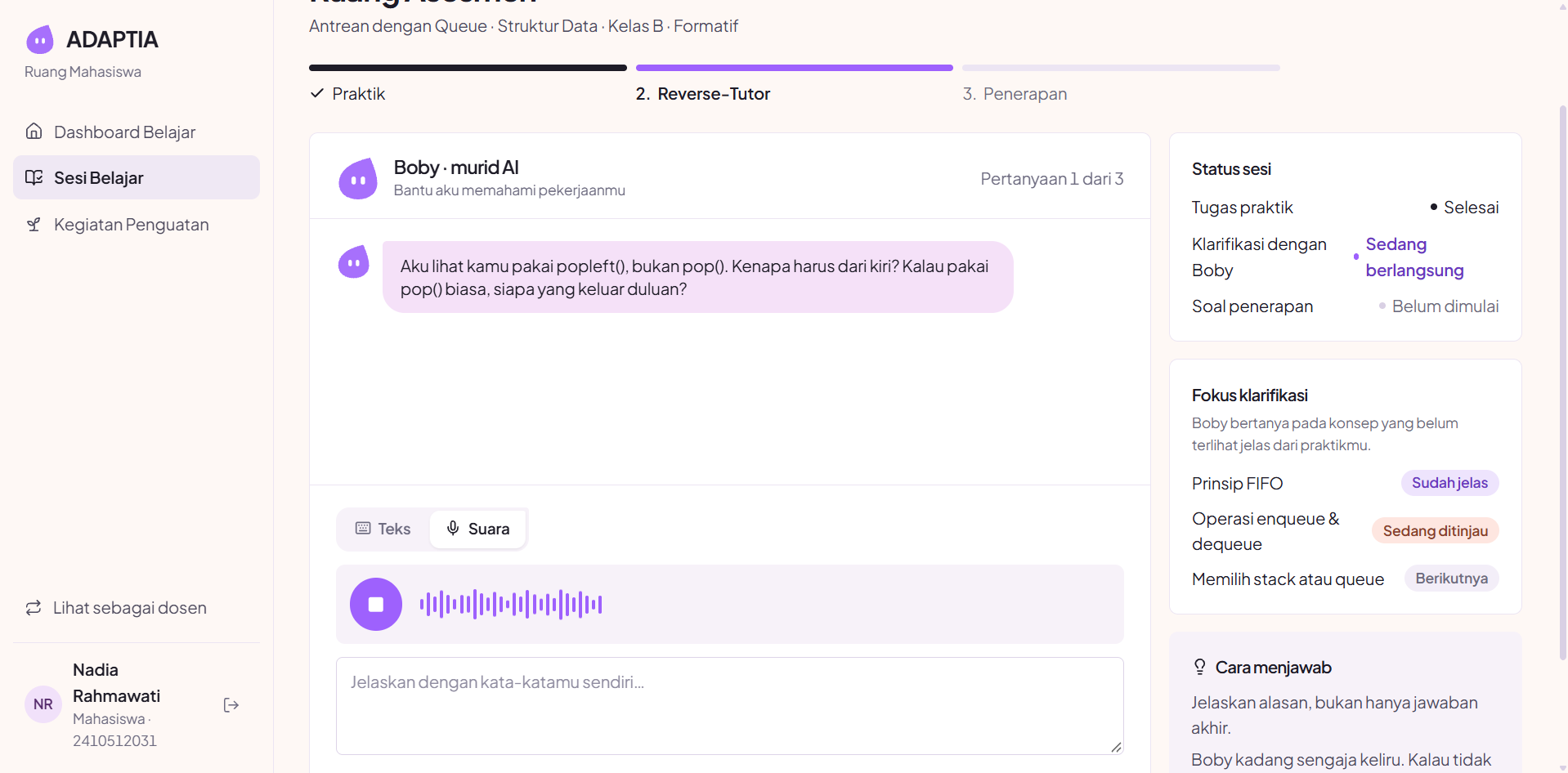
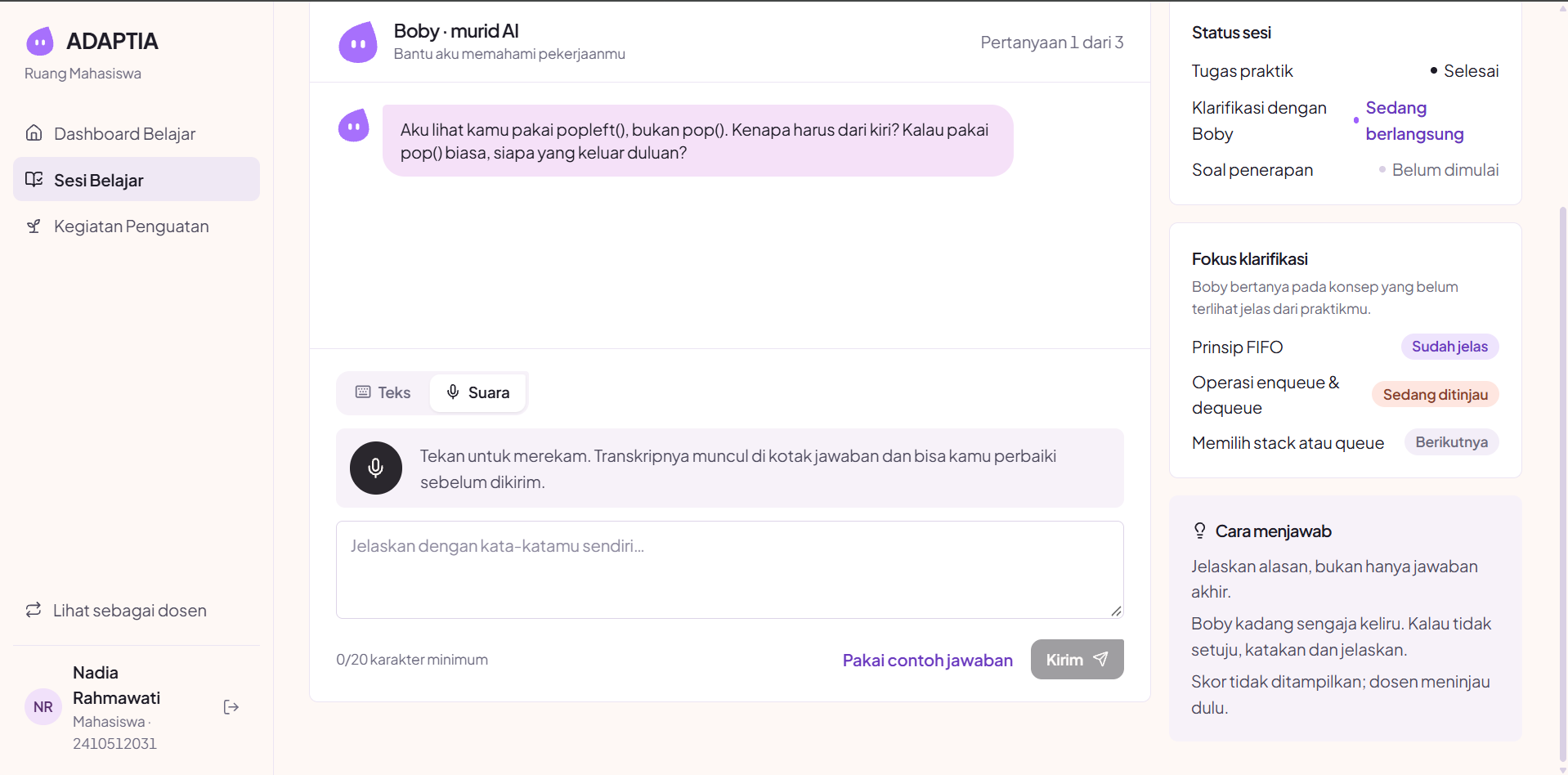
- Teach the AI: Students explain their reasoning to an AI learner and respond to follow-up questions. When the AI presents a test statement, students agree or disagree and explain why.
- Apply: Students use the same concept in a new situation.
For example, a student learning about stacks might explain how Undo works. The AI learner could ask, “So Undo removes the earliest action first?” The student then has to evaluate that statement and explain the order of operations.
The lecturer experience connects proposed findings to specific excerpts from students’ explanations. Lecturers can inspect the context, accept or revise the findings, and decide what support is appropriate. Student-facing assessment results are released after lecturer review.
Our broader product vision includes voice conversations, lecturer-assigned follow-up activities, and reassessment.
How we built it
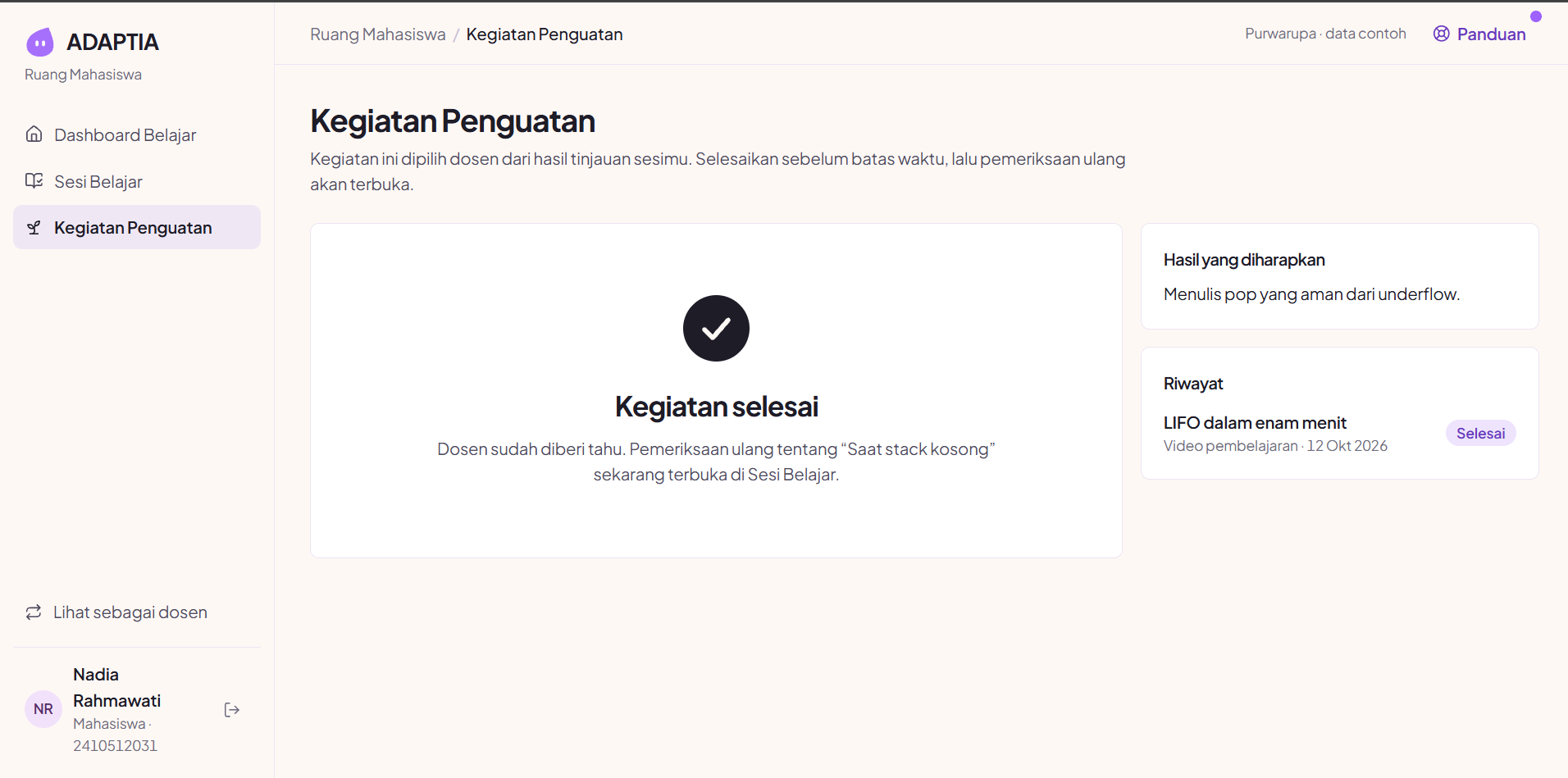
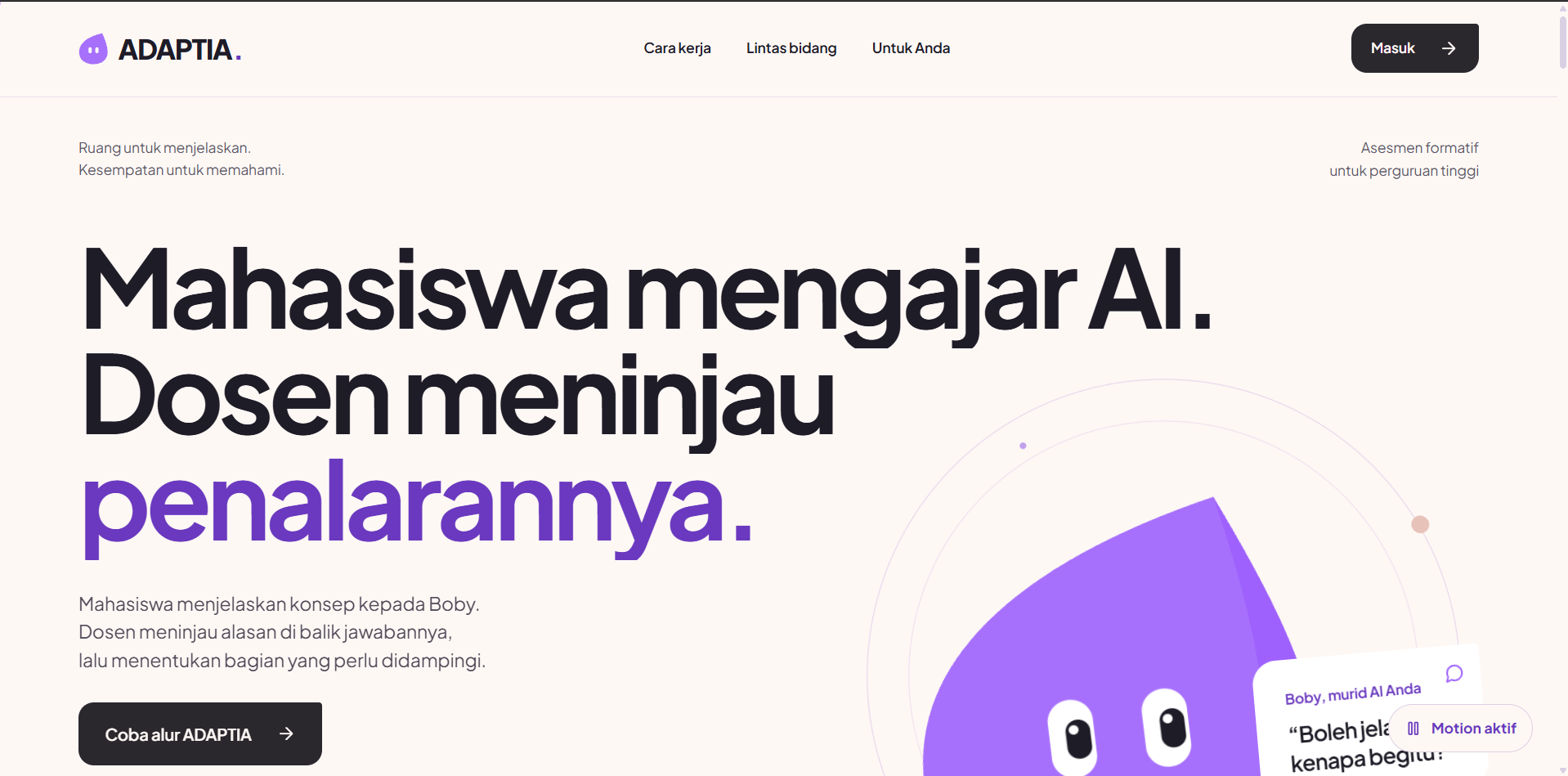
We began by mapping the learning journey and defining separate experiences for students and lecturers. We used Figma to develop the landing page and product screen designs, including the student learning dashboard, AI teaching session, application task, and submission confirmation.
We chose a restrained visual style with warm backgrounds, purple accents, Urbanist typography, and an approachable AI learner mascot. Student sessions use minimal navigation to support focus, while lecturer screens prioritize reviewing and acting on findings.
Our proposed technical architecture separates three responsibilities: conducting the learning conversation, analyzing explanations against lecturer-defined criteria, and verifying that supporting quotations exist in the transcript. Lecturer review remains the final step before findings become student feedback.
Challenges we faced
A central challenge was deciding what AI should infer—and what it should leave for a lecturer to judge. An incomplete explanation, a correction, or a hesitant response should not automatically become a confident diagnosis.
We also had to distinguish evidence verification from interpretation: a quotation can exist in a transcript while the conclusion drawn from it is still wrong.
Another challenge was balancing a broader voice-first vision with a focused competition MVP. We separated the essential teaching-and-review workflow from later capabilities such as follow-up assignments and progress tracking.
What we learned
Designing ADAPTIA taught us that the quality of the questions matters as much as the answers. Asking students to explain, challenge, and apply an idea creates opportunities to examine their reasoning.
We also learned that educational AI needs visible uncertainty and meaningful human oversight. Useful feedback should show the evidence behind a finding and give lecturers room to correct it.
What’s next
Our next step is to validate the core workflow with students and lecturers using a focused topic: Stack and Queue. We plan to compare AI-proposed findings with lecturer judgments, refine the review experience, and test whether students understand and can act on the feedback.
From there, we aim to develop the voice experience and extend the learning cycle through targeted practice and reassessment.
