-
-
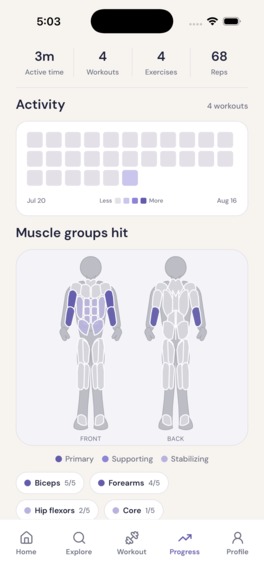
Dashboard
-
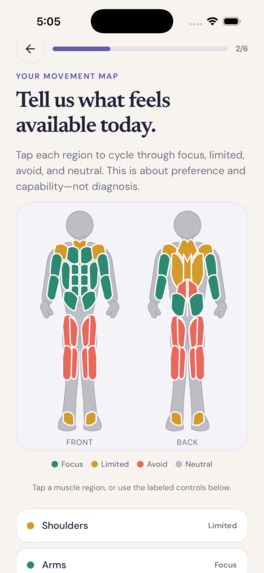
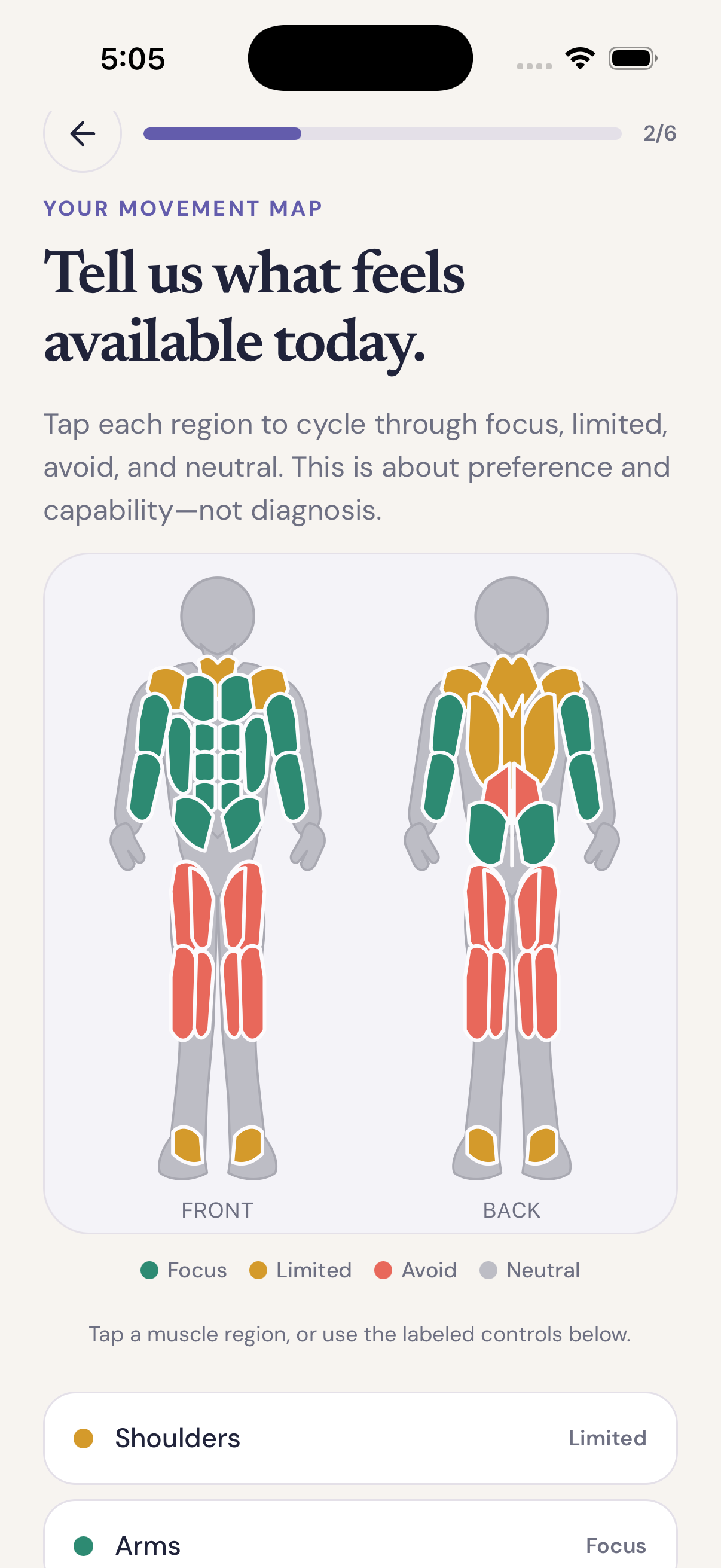
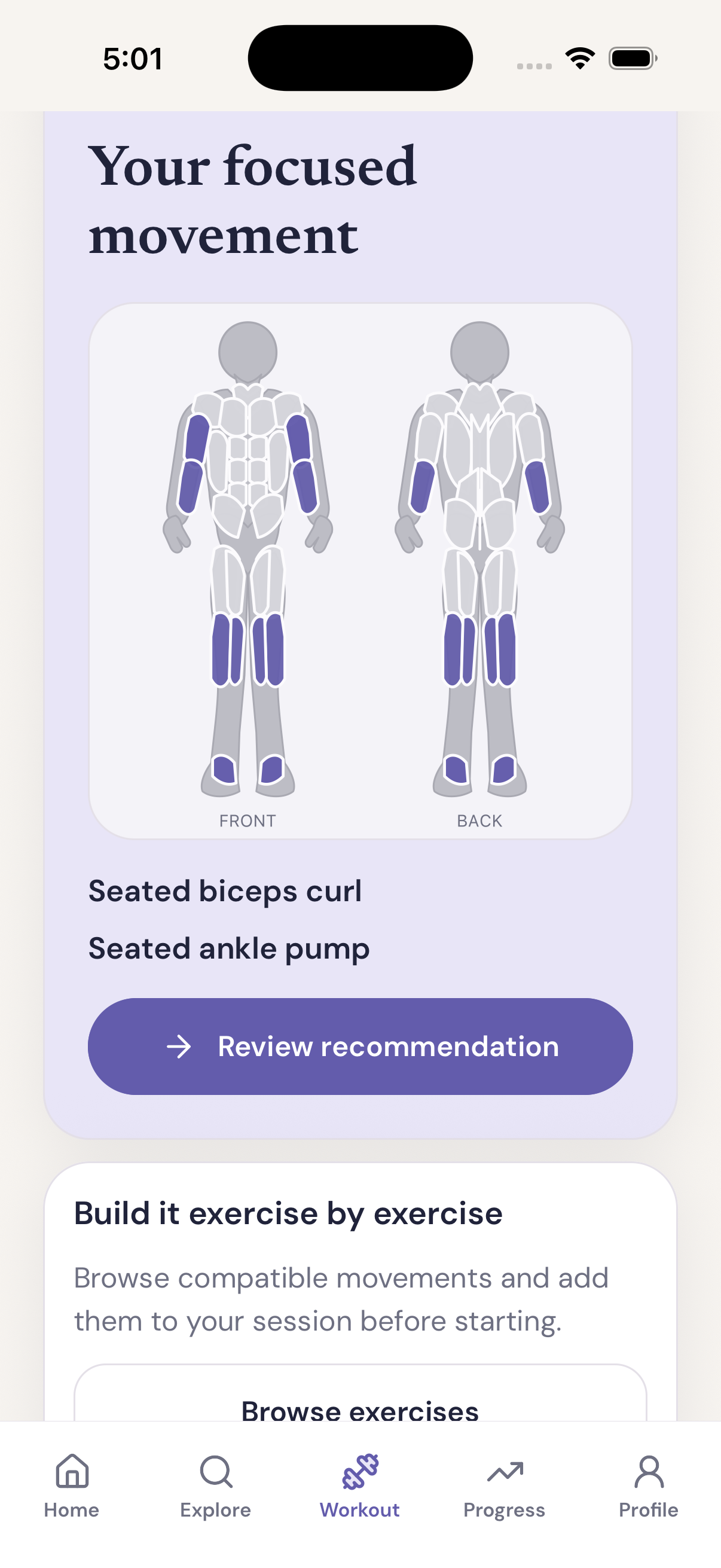
Movement Map
-
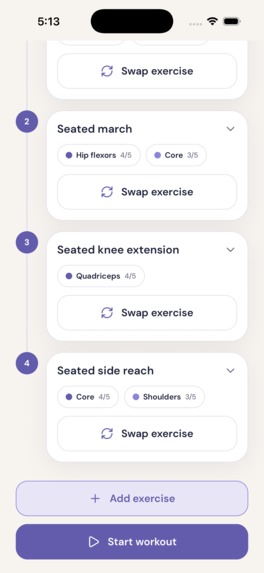
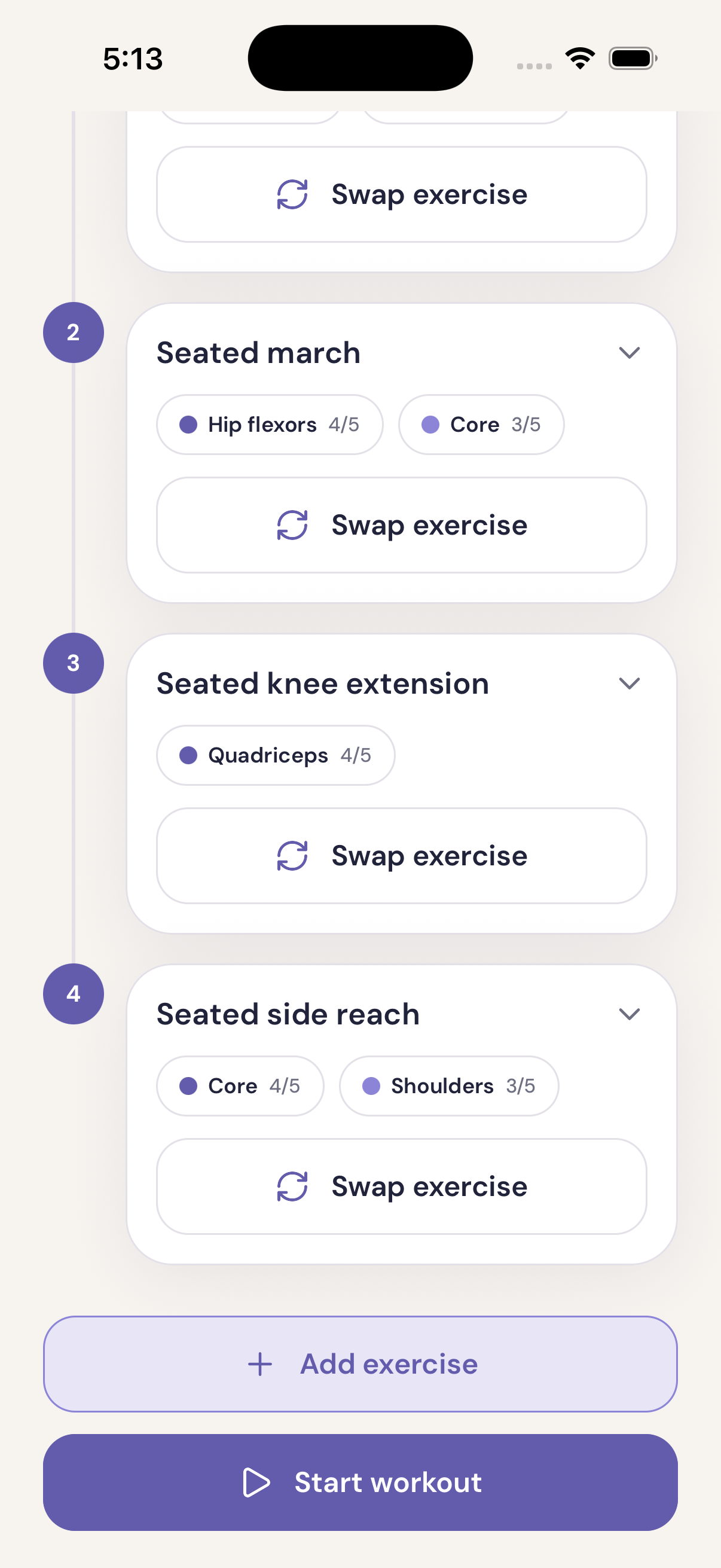
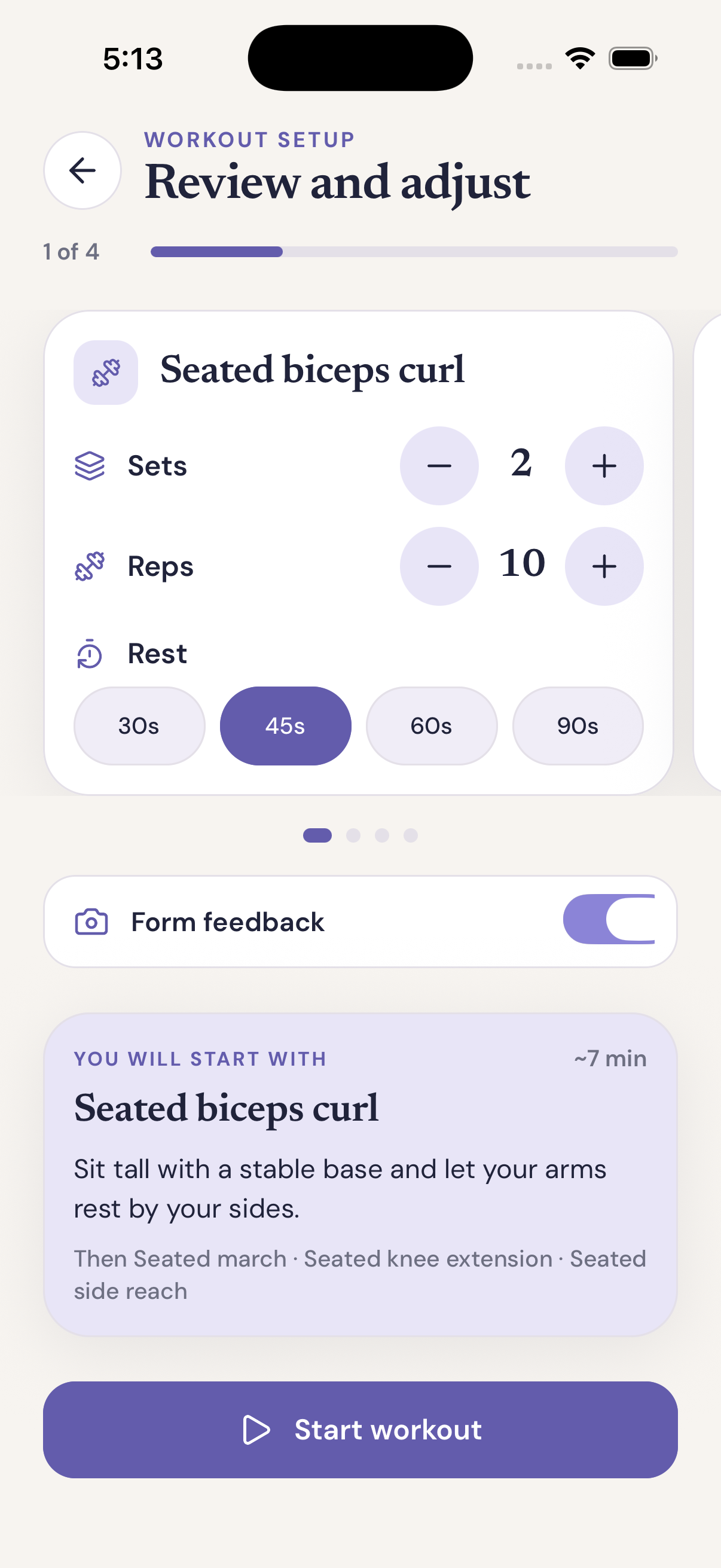
Workout
-
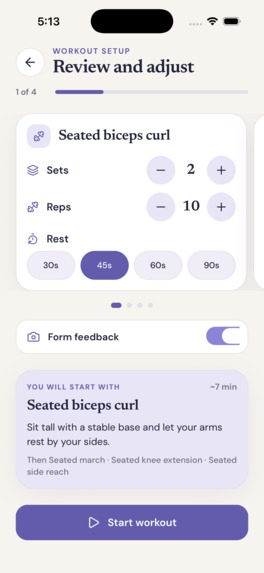
-
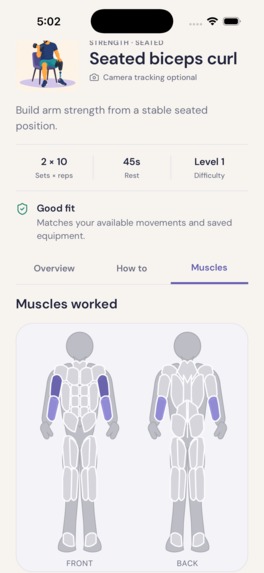
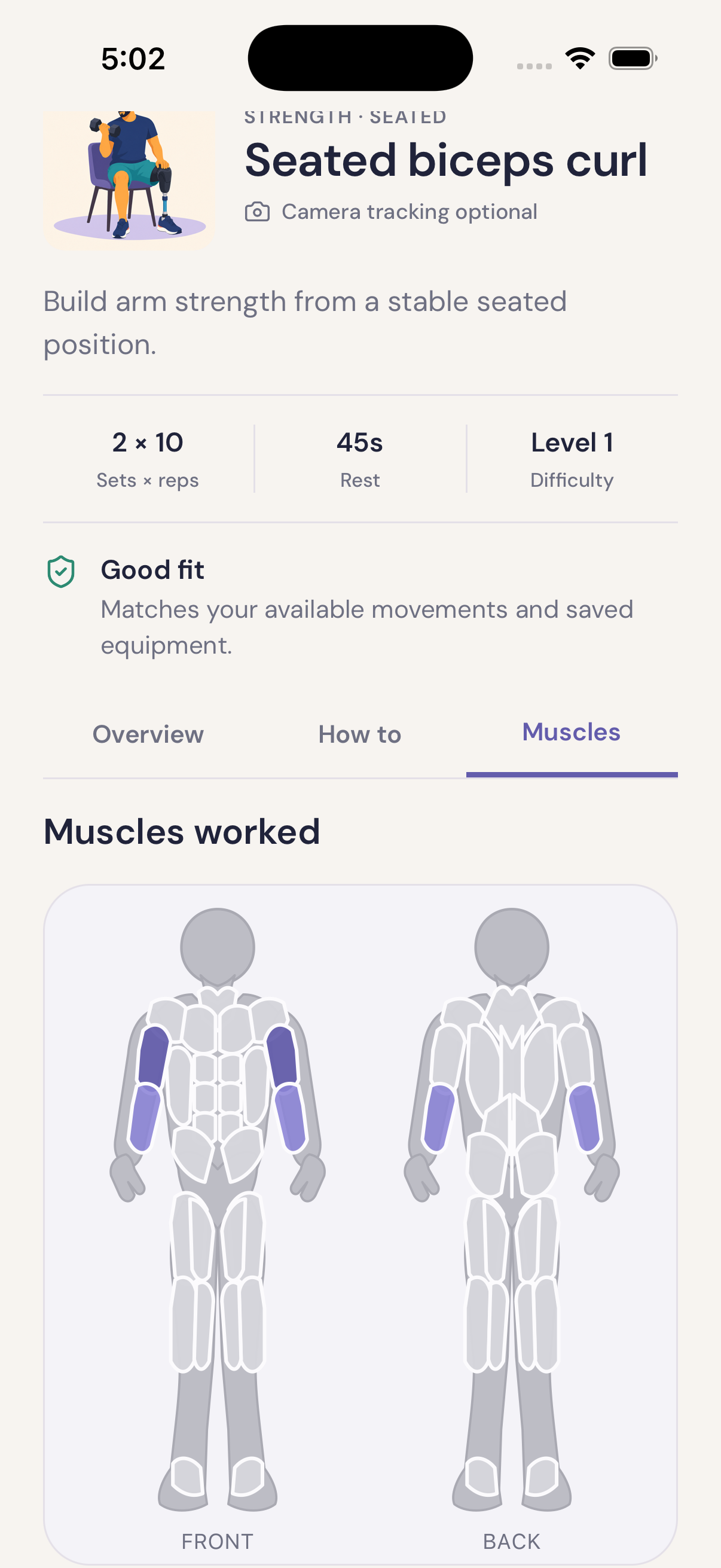
Exercise Description
-
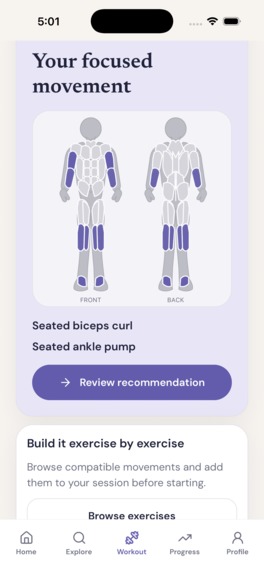
Curated Movement
-
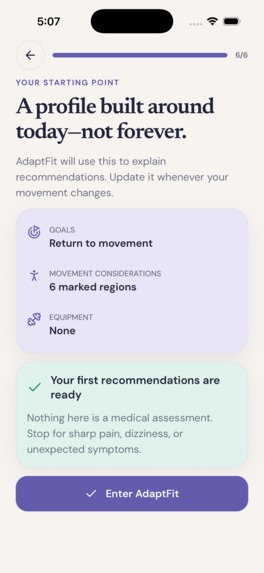
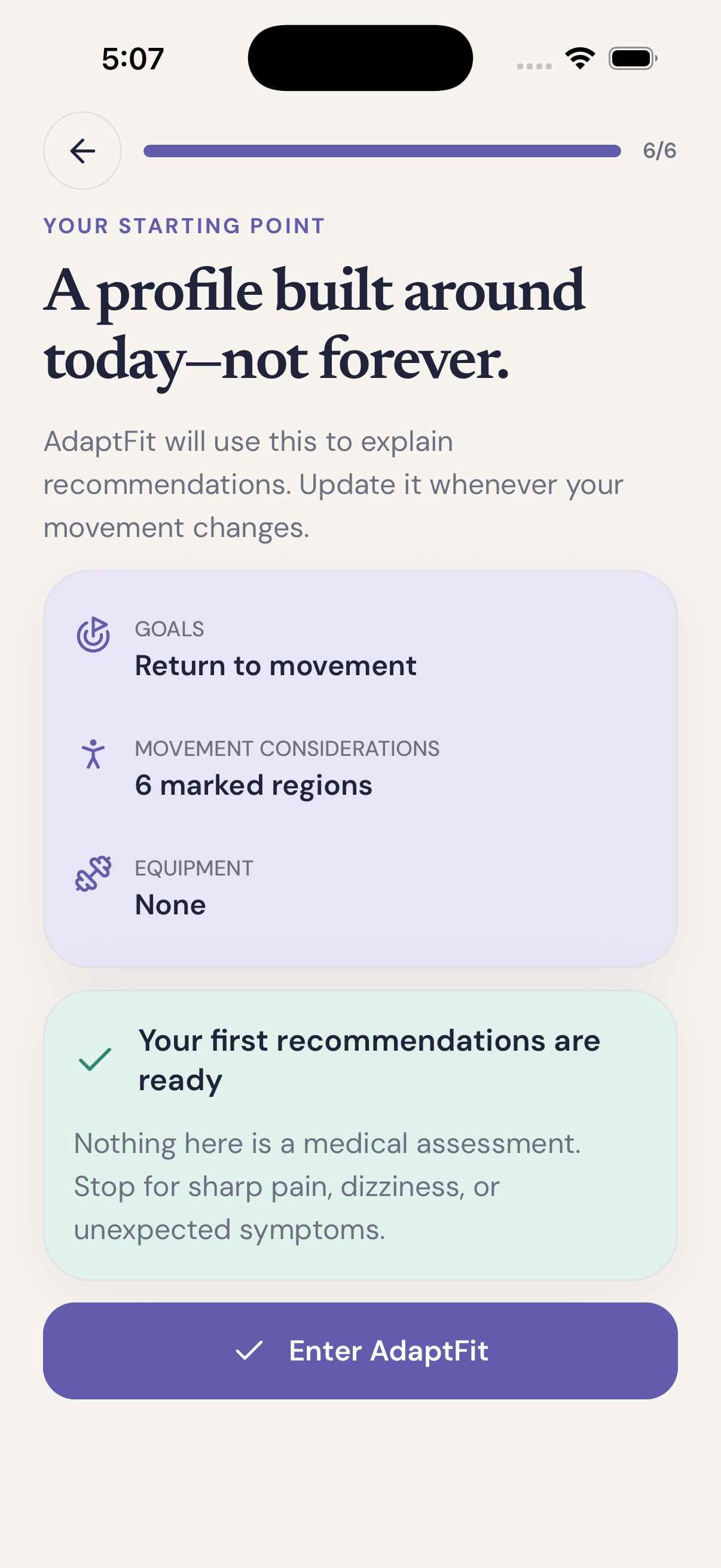
Profile init
-
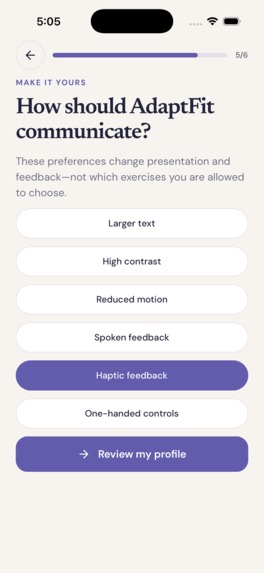
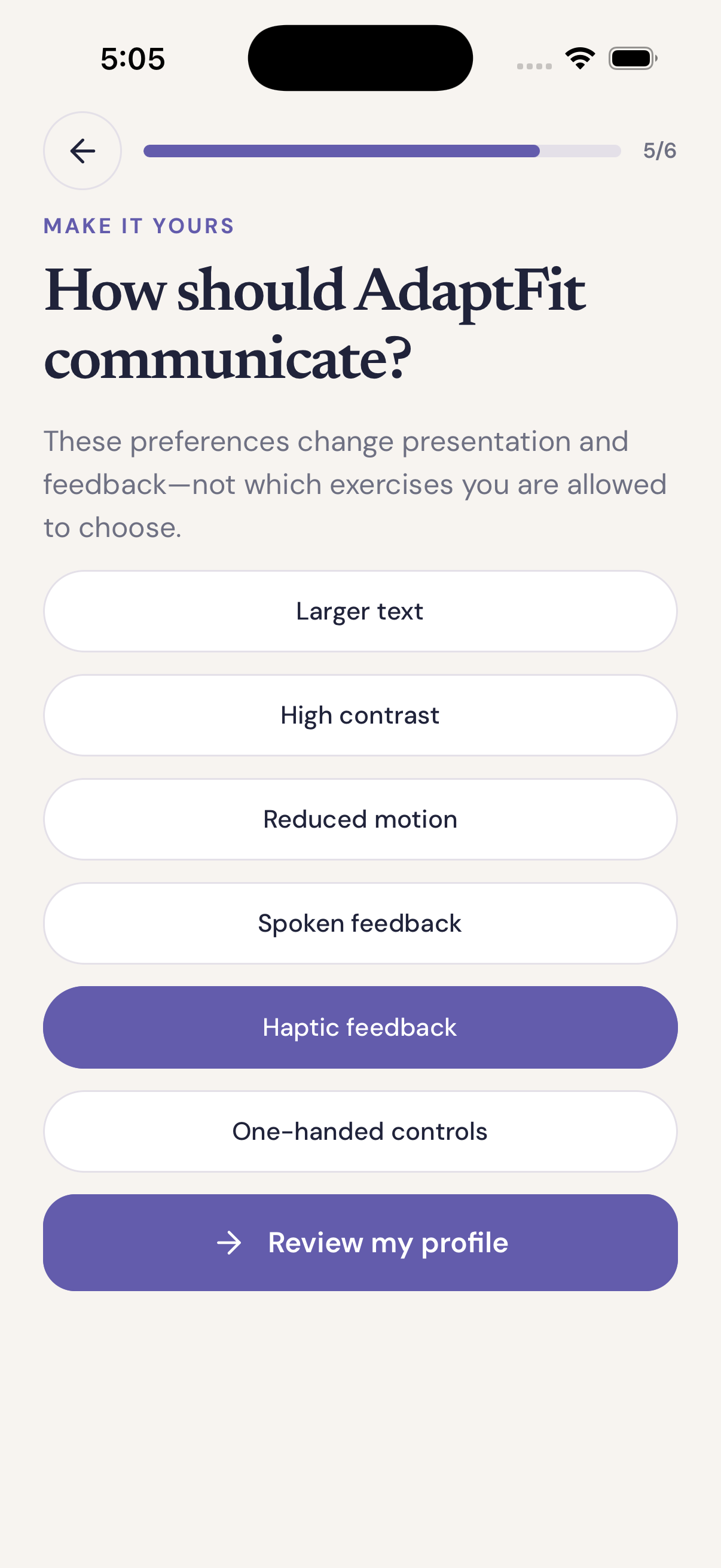
Accommodations
-
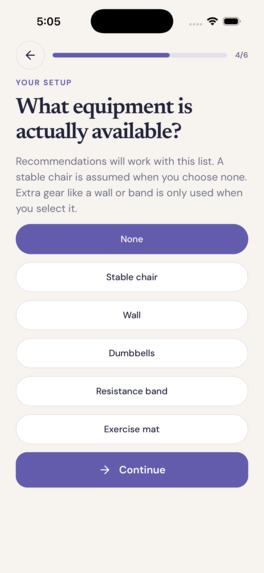
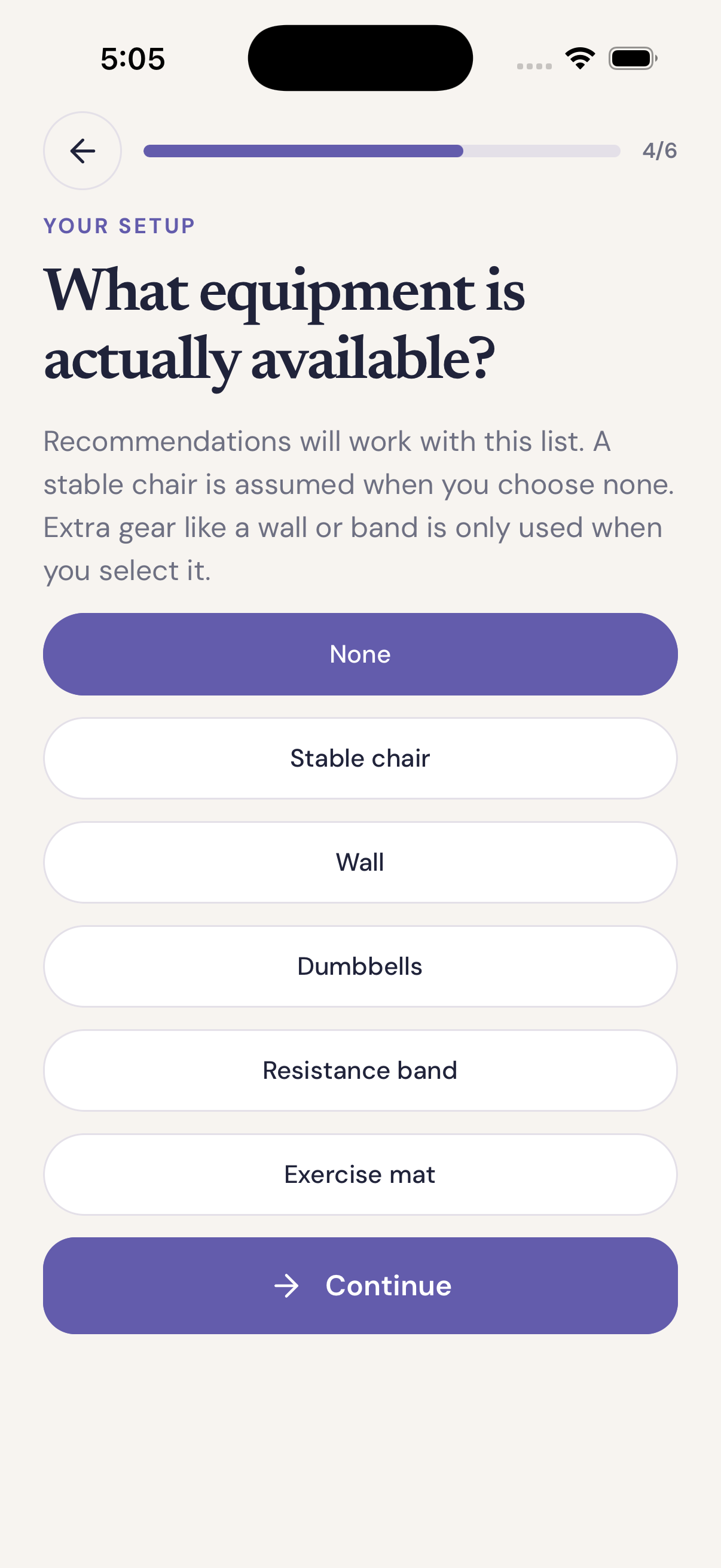
Equipment
-
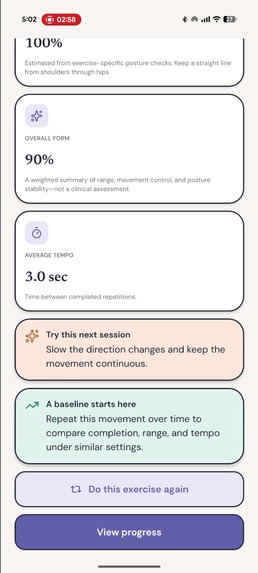
High Contrast Mode Setting
-
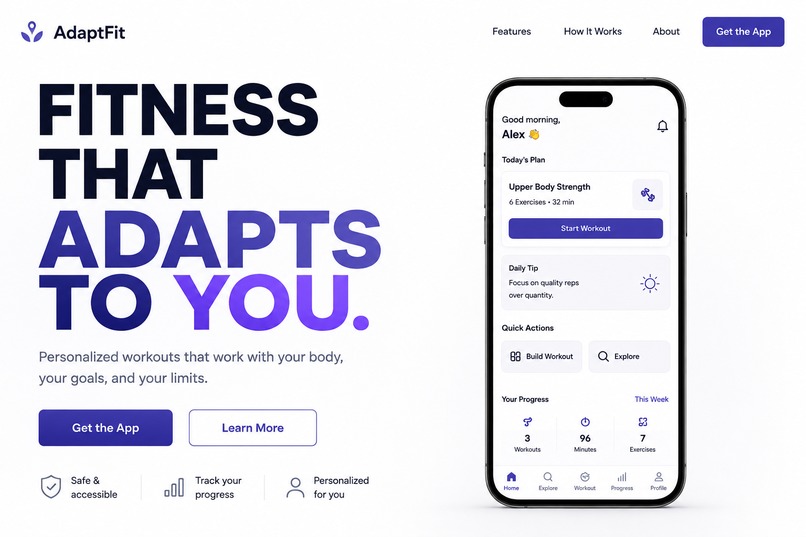
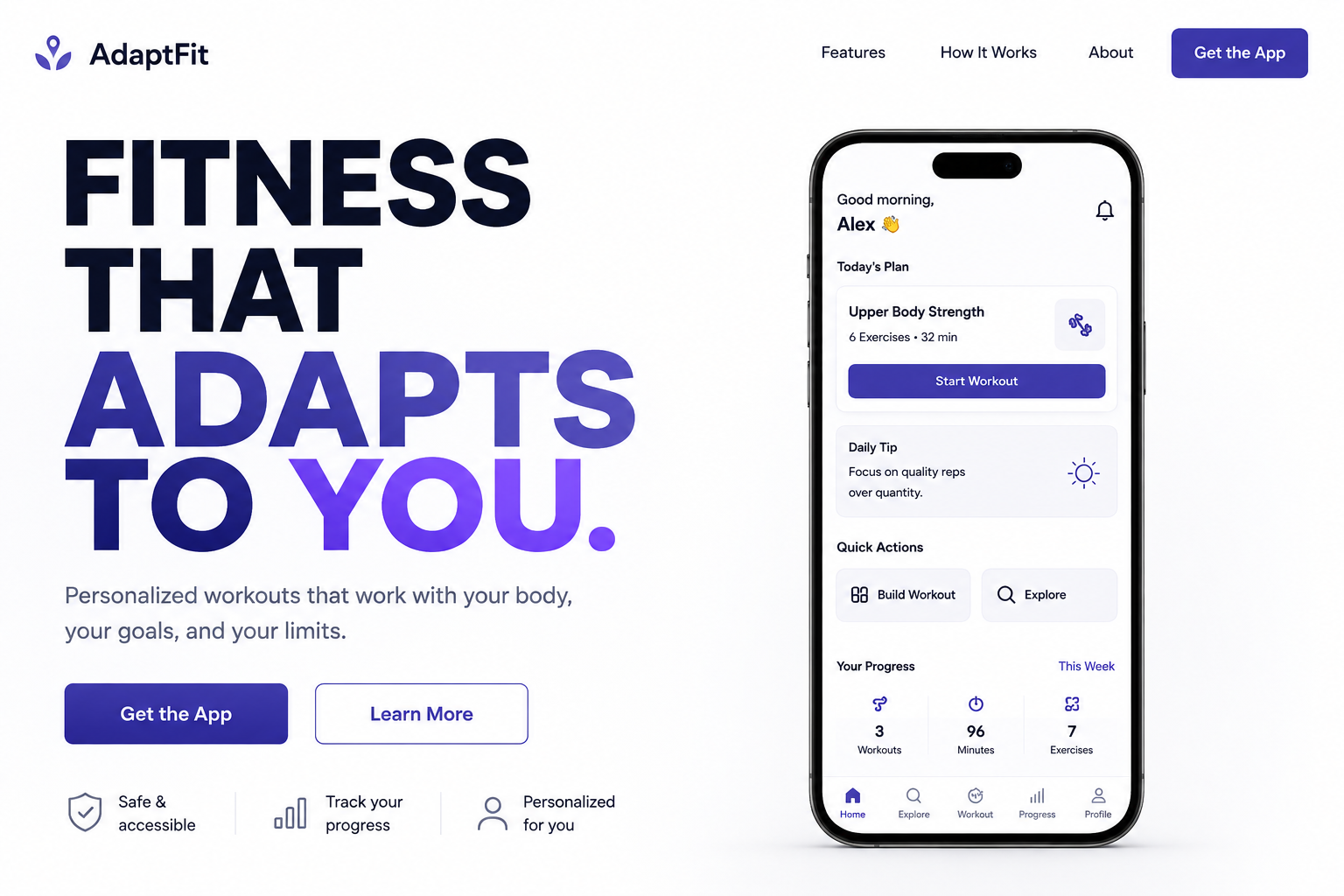
landing page
Incase the video is not shown, visit : https://www.youtube.com/@devk67 and click on the PeddieHacks 2026 Video.
Inspiration
Around 1.3 billion people (about one in six worldwide) live with a significant disability. CDC data also shows that U.S. adults without disabilities are more than twice as likely to meet aerobic activity guidelines.
Every existing fitness app still assume everyone can follow the same movements, so users with disabilities often have to modify workouts themselves, which puts them at risk of injury. We built AdaptFit to remedy this.
What it does
AdaptFit builds workouts around each user’s abilities, sensitive body areas, available equipment, and fitness goals. It recommends exercises that fit their movement profile, explains possible concerns, and suggests alternatives on top of marking certain movements as “safe” or “unsafe.”
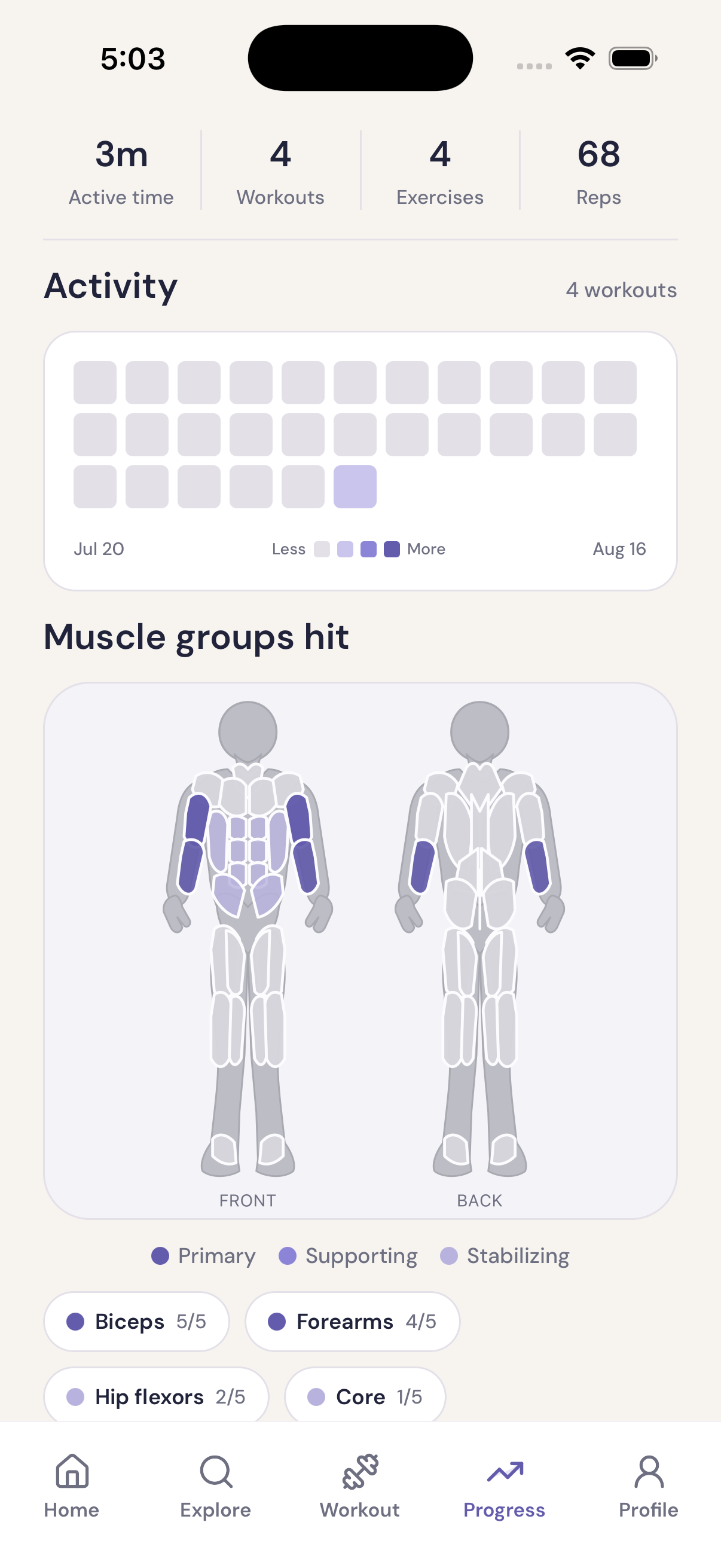
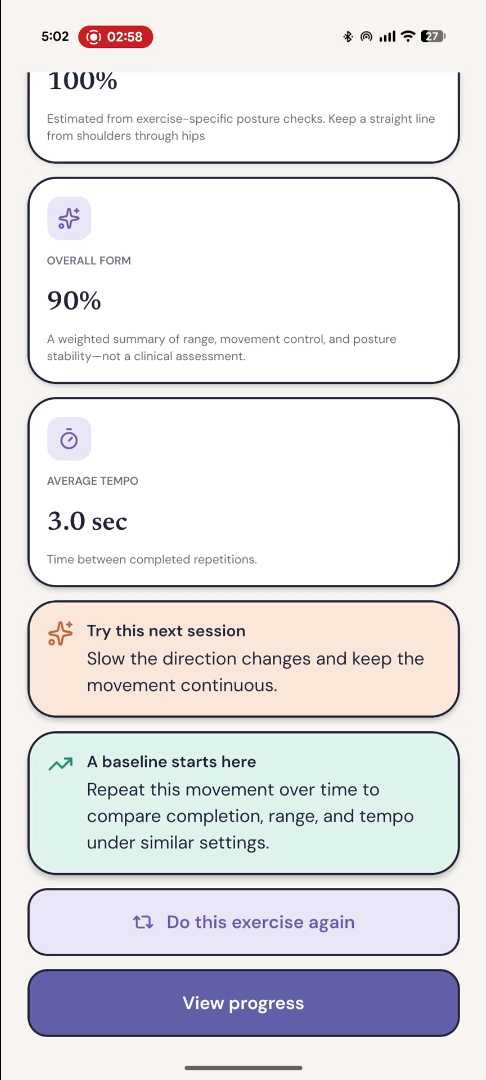
Users can swap any exercise, count reps manually, or use optional camera guidance. After each session, they can review their results and track their workout history and progress over time.
We also ensured that users are accommodated with haptics, high contrast, larger text and etc
How we built it
We built the mobile app with React Native, Expo, TypeScript, Expo Router, and React Query. The Fastify API connects to Supabase and PostgreSQL through Prisma. On the Android prototype, we used MediaPipe for movement processing
Challenges we ran into
The hardest part was the exercise matching logic. People's movement needs usually don’t fit neatly into a yes/no label, and the numeric scores that many apps use wouldn’t fit our userbase. We wanted every recommendation to explain what the issue was and what the user could do instead.
We ended up using a 2 stage filtering algorithm first using bitmasks and then detailed tags to minimize the load on the local and server backend. Each indexed exercise is pushed out to the local database based on the filtration from the bitmask.
We also ran into several technical challenges involving the camera lifecycle, native Expo modules, offline guest data, authentication, and differences between platforms. Moreover, we worked to ensure that the app was able to deliver even when the user opted out of camera recording.
The anatomy model also was very annoying to implement as an svg.
What's next for AdaptFit
We would love to do comprehensive beta testing for AdaptFit with disabled users and inclusive fitness professionals. We also want to calibrate more exercises, improve native pose tracking on iOS, and ameliorate support for a wider range of bodies, assistive devices, and movement patterns.
We also want to include a full local AI pipeline for advanced infrence of motions. We plan to train a SLM (<125M params) and finetune it in order to serve use for this app. We would also benefit from a text to speech pipeline.

Built With
- expo-router
- expo.io
- fastify
- mediapipe
- node.js
- postgresql
- prisma
- react
- react-native
- sqlite
- supabase
- tanstack-query
- typebox
- typescript
- vite
- vitest
- zustand


Log in or sign up for Devpost to join the conversation.