-
-
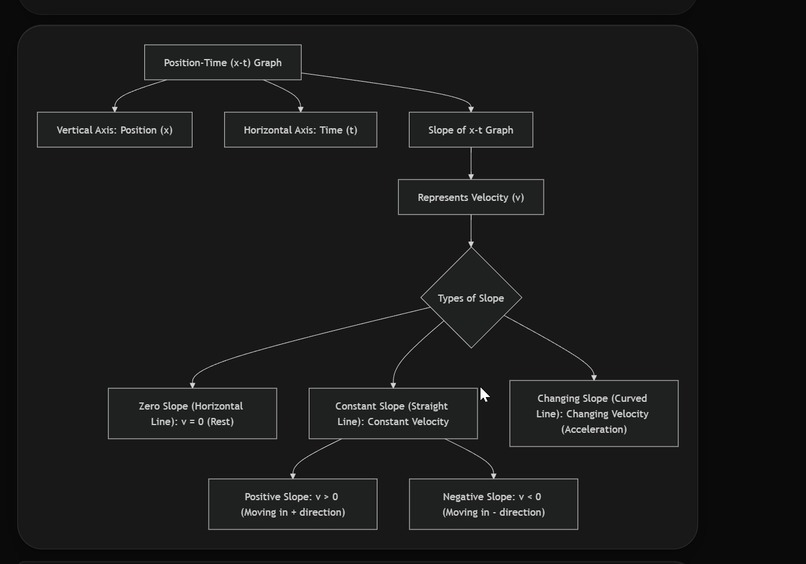
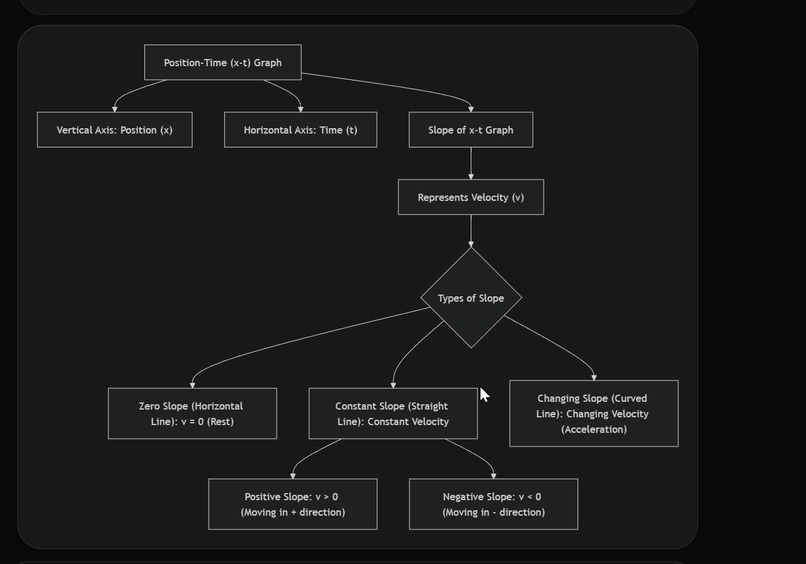
a map generated by Aether
-
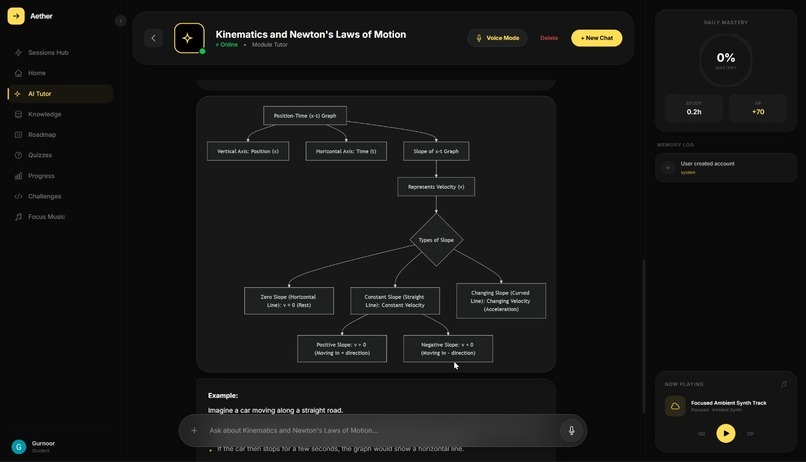
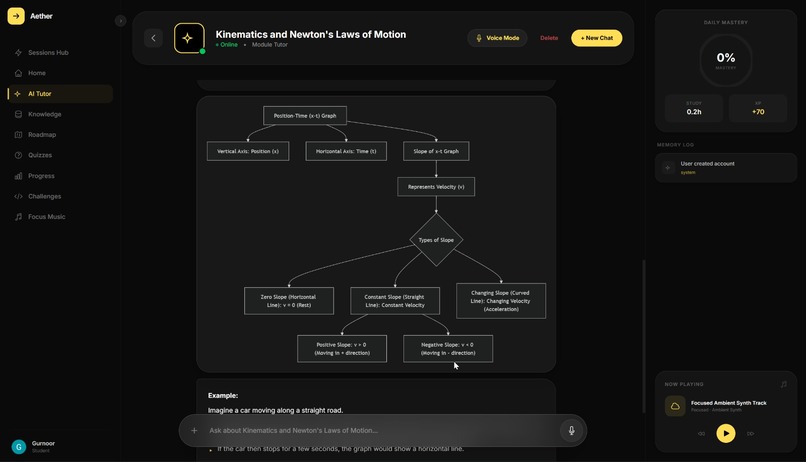
a map generated by Aether
-
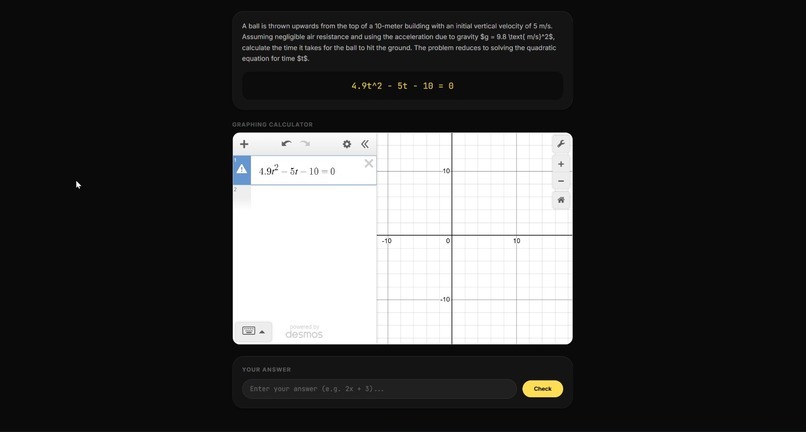
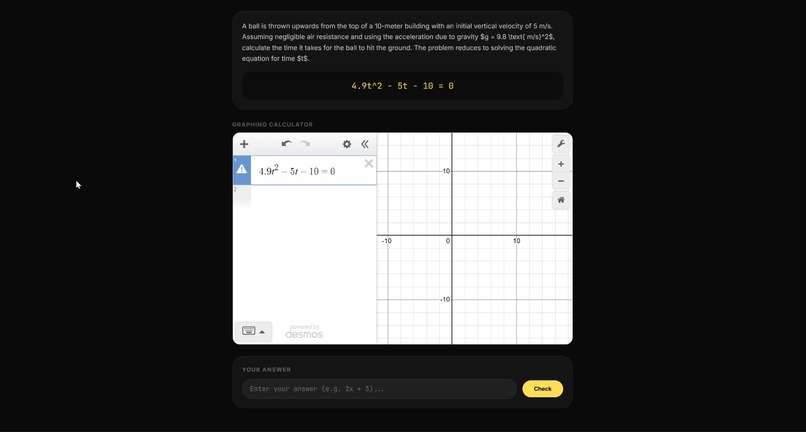
math challenges
-
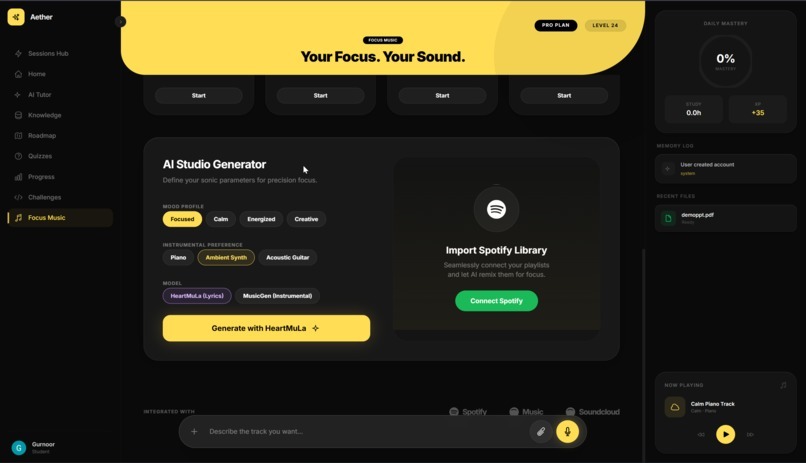
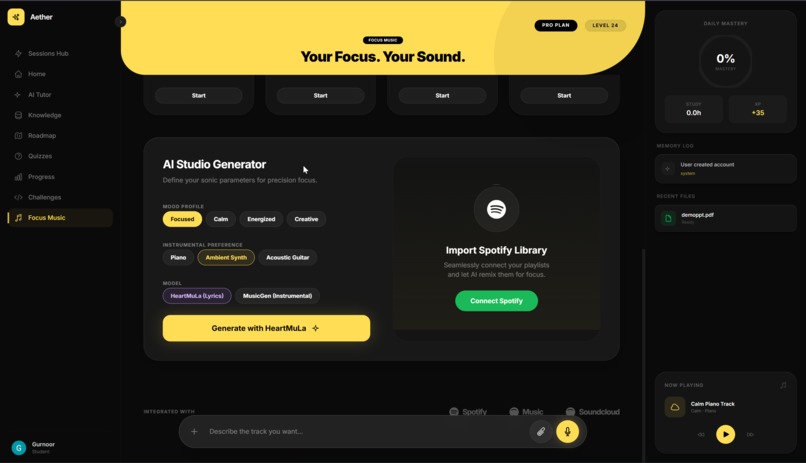
music
-
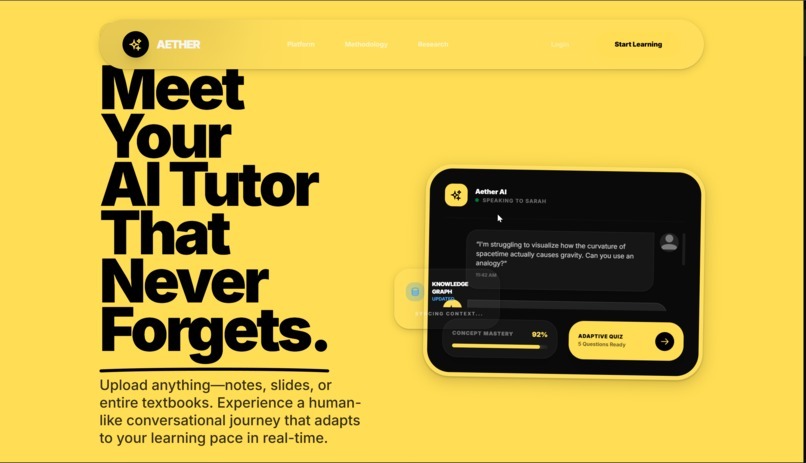
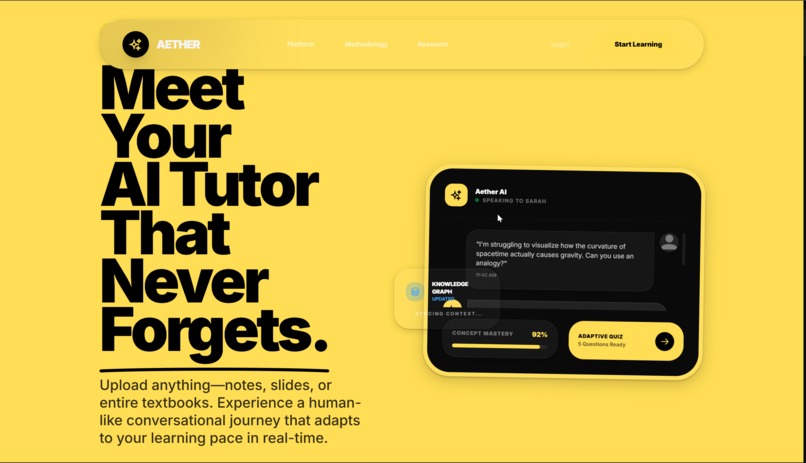
Landing page
-
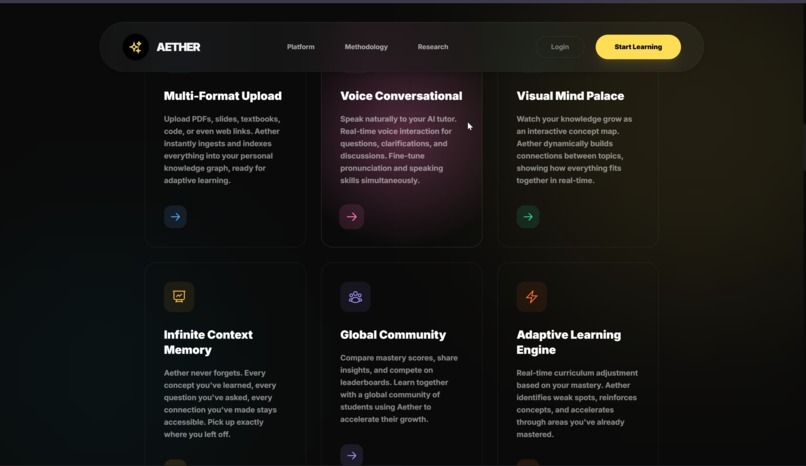
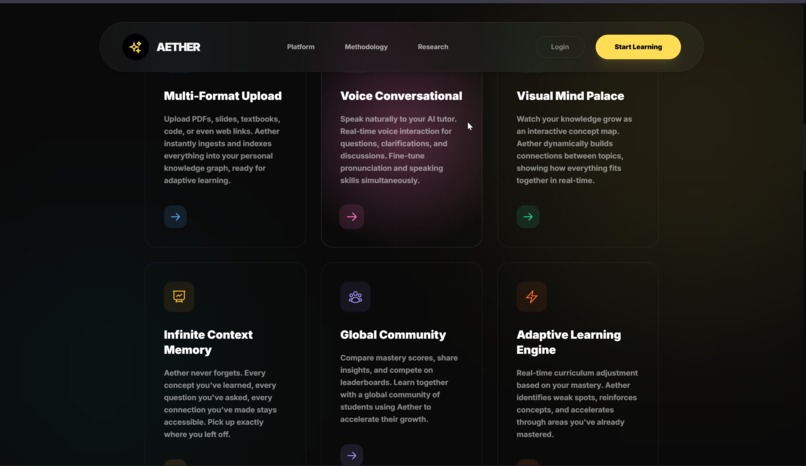
Landing page
Inspiration
Students often study across multiple disconnected resources, including PDFs, lecture slides, recorded lectures, online videos, personal notes, and flashcards. Switching between these resources makes it difficult to maintain context, connect concepts, and identify gaps in understanding.
Traditional AI chatbots can answer questions, but they may not retain a structured understanding of a student's learning progress or consistently ground their answers in the student's own study materials.
Aether was designed to address this problem by bringing learning resources, AI-powered assistance, and personalized study tools into one platform. The goal is to help students move beyond searching for information toward building a continuous, organized, and personalized learning experience.
What It Does
Aether is an AI-powered learning platform that helps students organize their study materials, ask context-aware questions, and plan their learning more effectively.
1. Personal Knowledge Base
Students can upload supported learning resources, such as PDFs, PowerPoint presentations, images, and other supported document formats. Where integrations are configured, resources can also be imported from YouTube or Google Drive.
The platform processes these materials into searchable content, allowing students to retrieve relevant information without repeatedly searching through individual files.
2. Retrieval-Augmented Generation (RAG)
Aether uses Retrieval-Augmented Generation to ground AI responses in relevant information retrieved from a student's learning materials.
The pipeline extracts text from supported sources, divides it into smaller chunks, generates vector embeddings, and stores them for semantic retrieval. When a student asks a question, the system retrieves relevant passages and supplies them as context to the language model.
This approach helps make answers more relevant to the supplied materials. Answer accuracy still depends on the quality of the source content, retrieval process, and generated response.
3. Context-Aware AI Tutoring
Students can ask questions about their uploaded materials and receive explanations based on retrieved context. The intended experience is to help students understand concepts, clarify doubts, and continue studying without repeatedly providing the same background information.
Where conversation history and persistent memory are implemented, Aether can use relevant previous interactions to maintain continuity between learning sessions.
4. Personalized Learning and Assessment
Aether is designed to support personalized quizzes, learning roadmaps, and progress tracking. These features can help students practice concepts and identify areas that need further attention.
Where assessment results are connected to the learning-plan logic, recommendations can be adjusted according to demonstrated strengths and weaknesses.
5. Voice-Based Learning
Aether includes a browser-based voice interaction experience intended to make tutoring more conversational and accessible. Its capabilities depend on the implemented speech-recognition, text-to-speech, and browser support.
6. AI-Powered Study Environment
Aether also explores AI-generated focus music for different study preferences and environments, bringing study assistance and environmental customization into the same platform.
How I Built It
Aether was developed as a full-stack application combining a modern web interface, backend services, database infrastructure, and AI integrations.
Frontend
- Next.js and React for the application interface.
- TypeScript for typed application development.
- Tailwind CSS for styling and responsive layouts.
Backend and data infrastructure
- Supabase for authentication, PostgreSQL storage, and application data.
- Row-Level Security (RLS) for database access control.
- pgvector for storing and searching vector embeddings.
AI and retrieval pipeline
- Ingest supported learning resources.
- Extract text or other supported content.
- Divide extracted text into searchable chunks.
- Generate embeddings and store them in the vector database.
- Retrieve relevant context for a student's question.
- Pass the retrieved context to the language model.
- Return the generated response to the application.
Streaming responses can improve perceived responsiveness by displaying generated text incrementally rather than waiting for the entire response.
Challenges
One of the main challenges was integrating document ingestion, semantic search, AI generation, and user-facing interactions into a coherent learning workflow.
Another challenge was retrieving useful context from large collections of learning materials. Chunking strategy, embedding quality, retrieval relevance, and context selection all influence the usefulness of generated answers.
Maintaining a responsive experience was also important. AI requests and document processing can introduce latency, so the architecture needs to handle asynchronous work and communicate progress clearly.
Finally, combining tutoring, assessment, progress tracking, voice interaction, and study-environment features required careful coordination between frontend components, backend services, and external AI capabilities.
Accomplishments
The main accomplishment is bringing the core components of an AI-assisted learning workflow together in one application.
Key implementation areas include:
- A web interface for interacting with learning resources.
- A document-processing and semantic-retrieval pipeline.
- A RAG-based question-answering workflow.
- Database infrastructure for application data and vector search.
- AI-assisted learning and assessment features, where implemented.
- A foundation for connecting tutoring, study progress, and personalized recommendations.
What I Learned
Building Aether highlighted that useful educational AI requires more than generating fluent answers. The quality of the learning experience also depends on source relevance, retrieval accuracy, continuity, usability, and meaningful feedback.
I also learned how important it is to treat document processing, database security, AI integration, and interface responsiveness as connected engineering problems rather than isolated features.
What's Next
Future development could focus on:
- Real-time voice conversations with interruption support.
- More robust long-term learning memory.
- Collaborative study spaces for students and educators.
- Improved adaptive learning plans based on assessment evidence.
- Dedicated mobile applications.
- Offline access to selected study materials.
- Multilingual tutoring.
- Better source citations and answer verification.
- Evaluation tools to measure retrieval quality and tutoring effectiveness.
The long-term vision is to develop Aether into a learning companion that helps students organize their knowledge, understand difficult concepts, and make informed decisions about what to study next.
Built With
- css
- deepgram
- embeddings
- gemini
- generation
- heartmula
- javascript
- markdown
- next.js
- node.js
- pgvector
- postgresql
- pyodide
- python
- react
- retrieval-augmented
- search
- shadcn/ui
- speech
- supabase
- tailwind
- typescript
- vector
- vercel


Log in or sign up for Devpost to join the conversation.