-
-
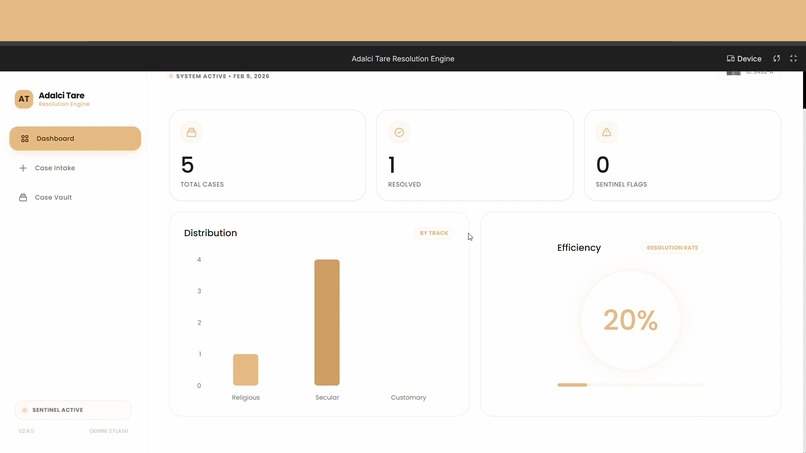
Dashboard
-
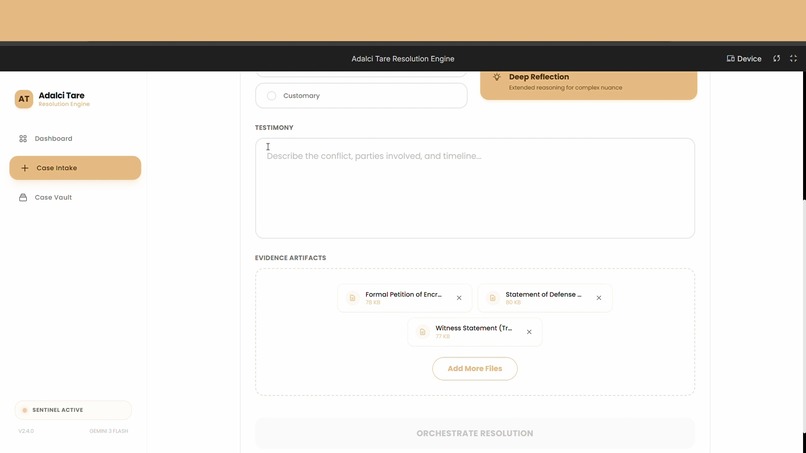
Case analysis
-
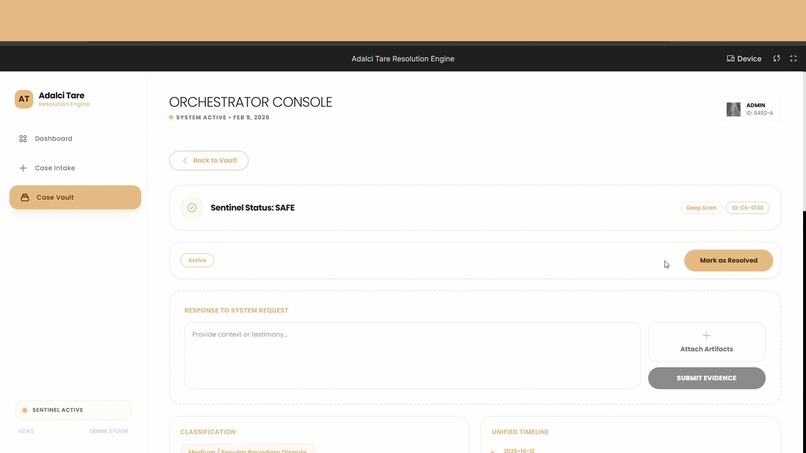
Case analysis
-
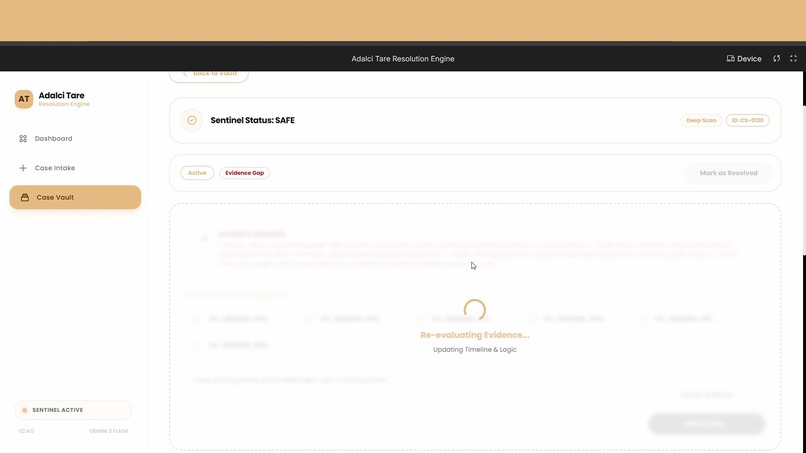
Case analysis
-
Case analysis
-
Case analysis
-
Case vault
-
Case analysis
-
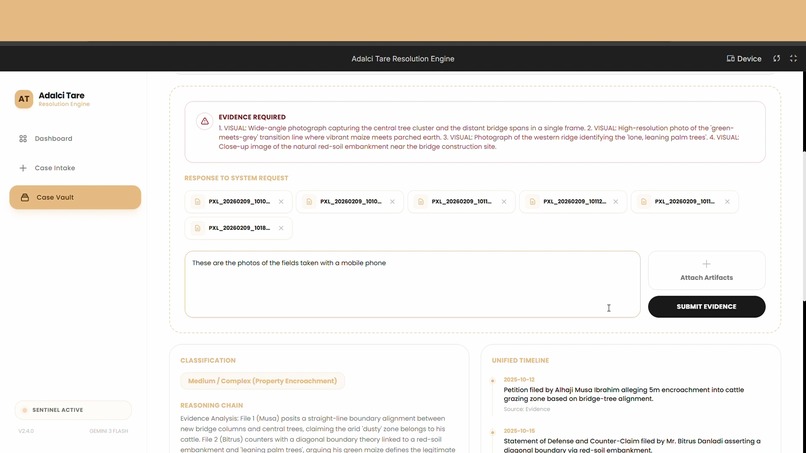
Providing additional evidence
-
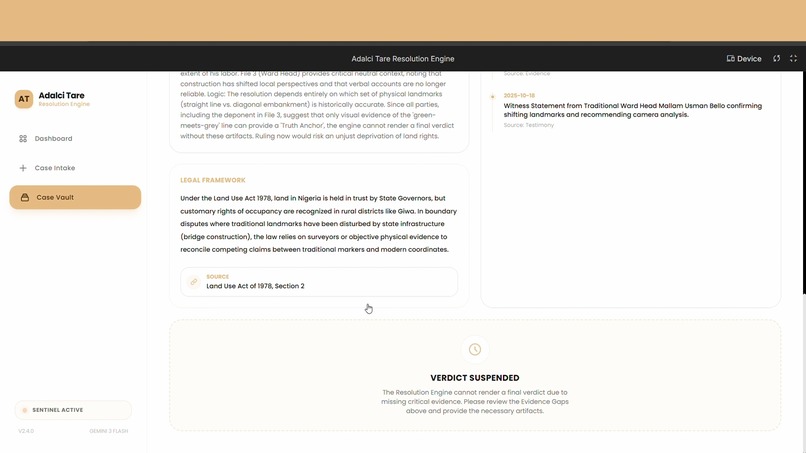
Case analysis
-
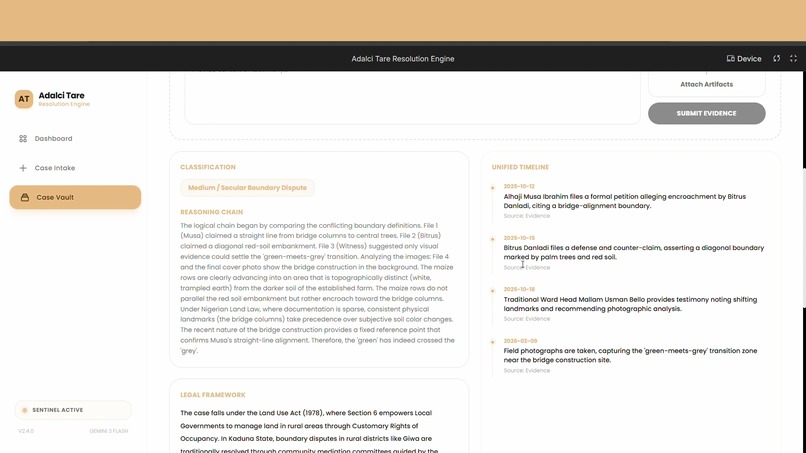
Case analysis
-
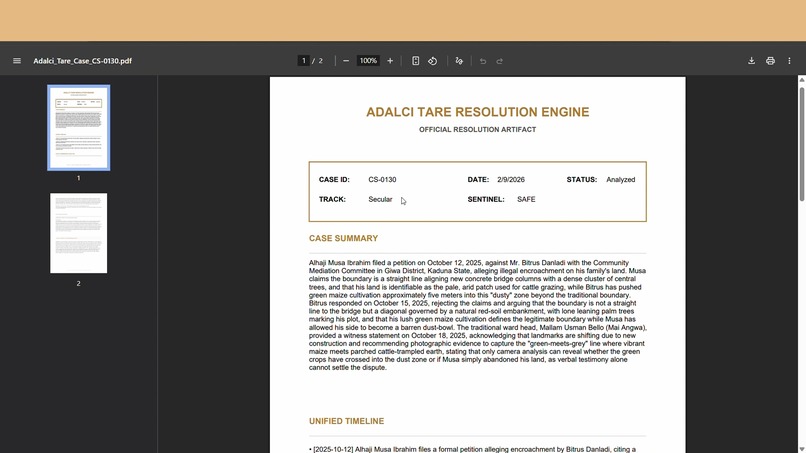
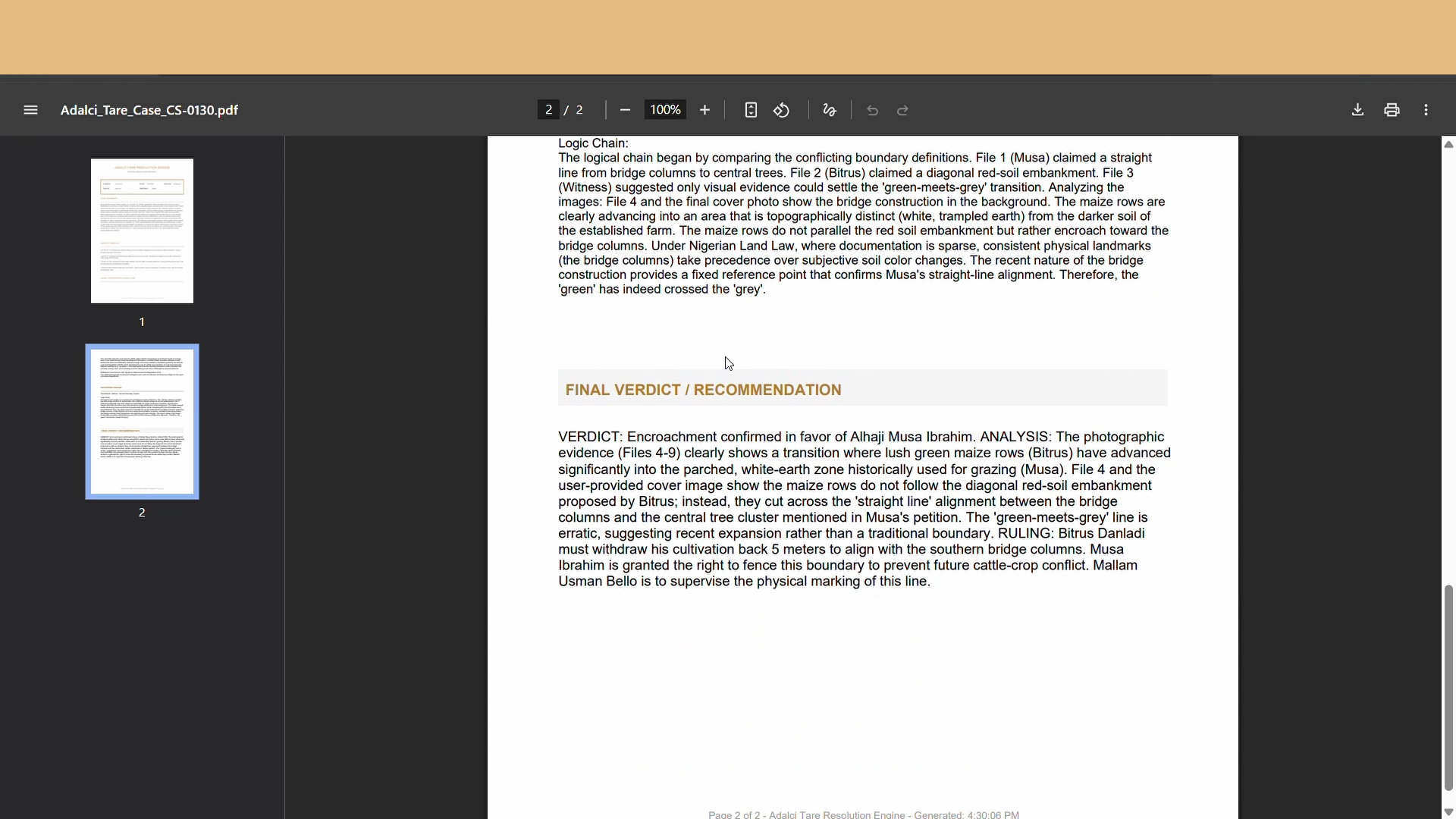
Adalci Tare Artifcate sample
-
Case analysis
-
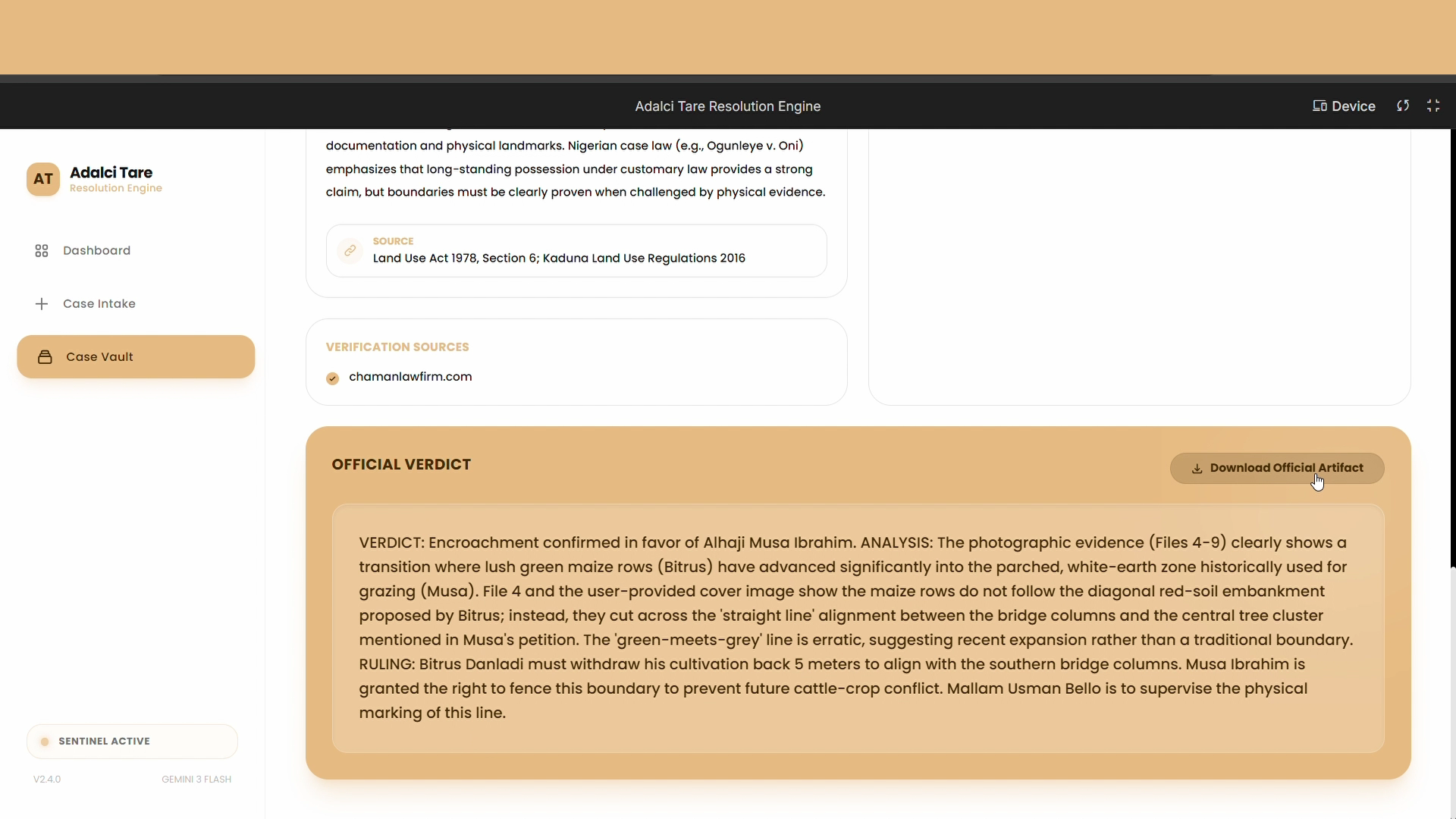
Case verdict
-
Adalci Tare Artifcate sample
Inspiration
In our work developing digital ecosystems for community support, we frequently stepped into areas where the "Justice Gap" was a tangible wall. For example, we saw communal leaders overwhelmed by 40-year-old land disputes and judges struggling to reconcile modern state laws with deeply held religious and traditional beliefs. In these regions, justice is often slow, expensive, or perceived as biased.
The consequences of this gap are devastating: communal violence often erupts from simple disputes that were never resolved, and the most vulnerable are often silenced by cultural or resource barriers. This prototype was inspired by the need for a "Neutral Truth Layer": a platform that allows local leaders to make better, fairer decisions by providing them with an objective, data-driven foundation that respects their pluralistic identities.
What it does
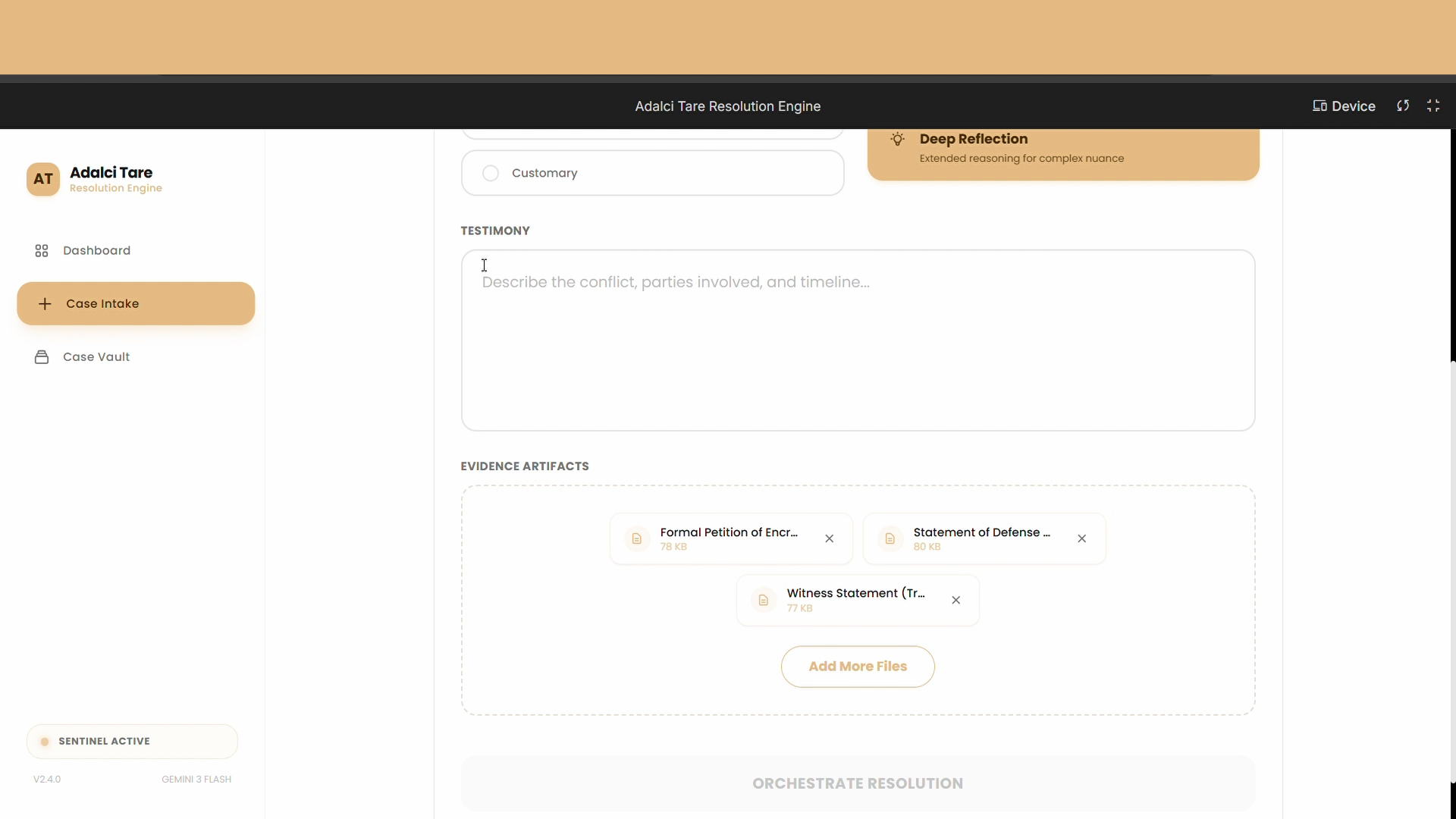
Adalci Tare is a prototype proof-of-concept for an AI-powered "Decision-Support Engine." It is designed not to replace human judgment, but to serve as a high-fidelity tool that aids community leaders, counselors, and judicial authorities in delivering rapid, equitable justice. By handling the heavy lifting of evidence synthesis, the platform allows decision-makers to focus their limited time and resources on reaching just resolutions for a significantly higher volume of disputes than previously possible.
The prototype focuses on eight key pillars:
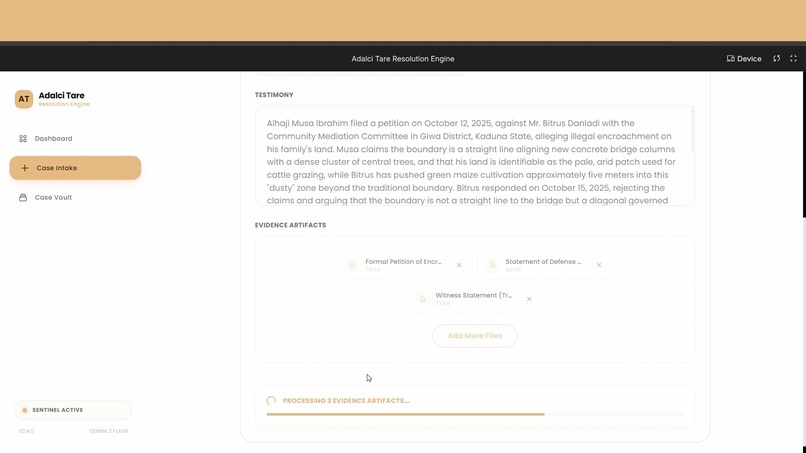
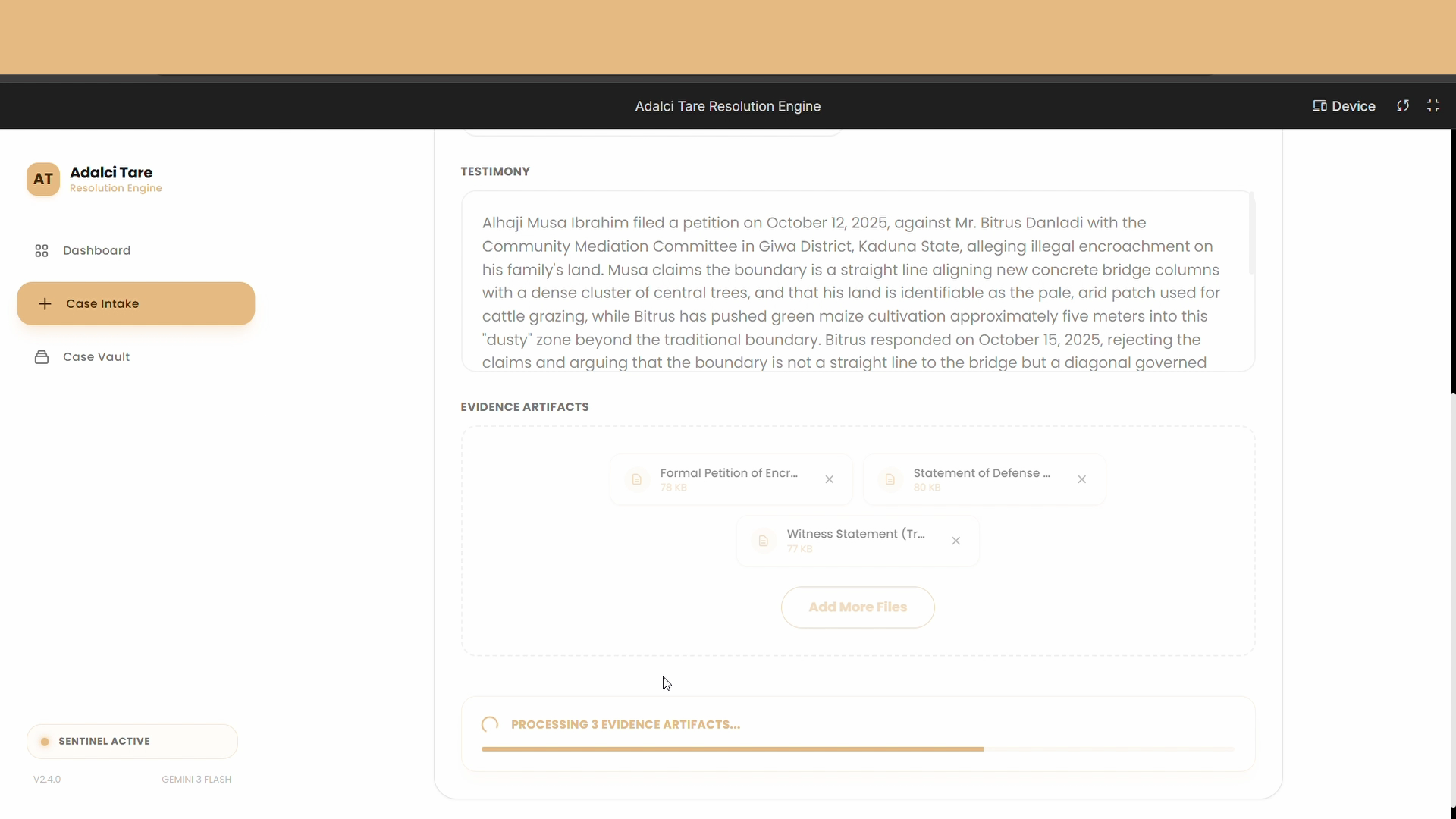
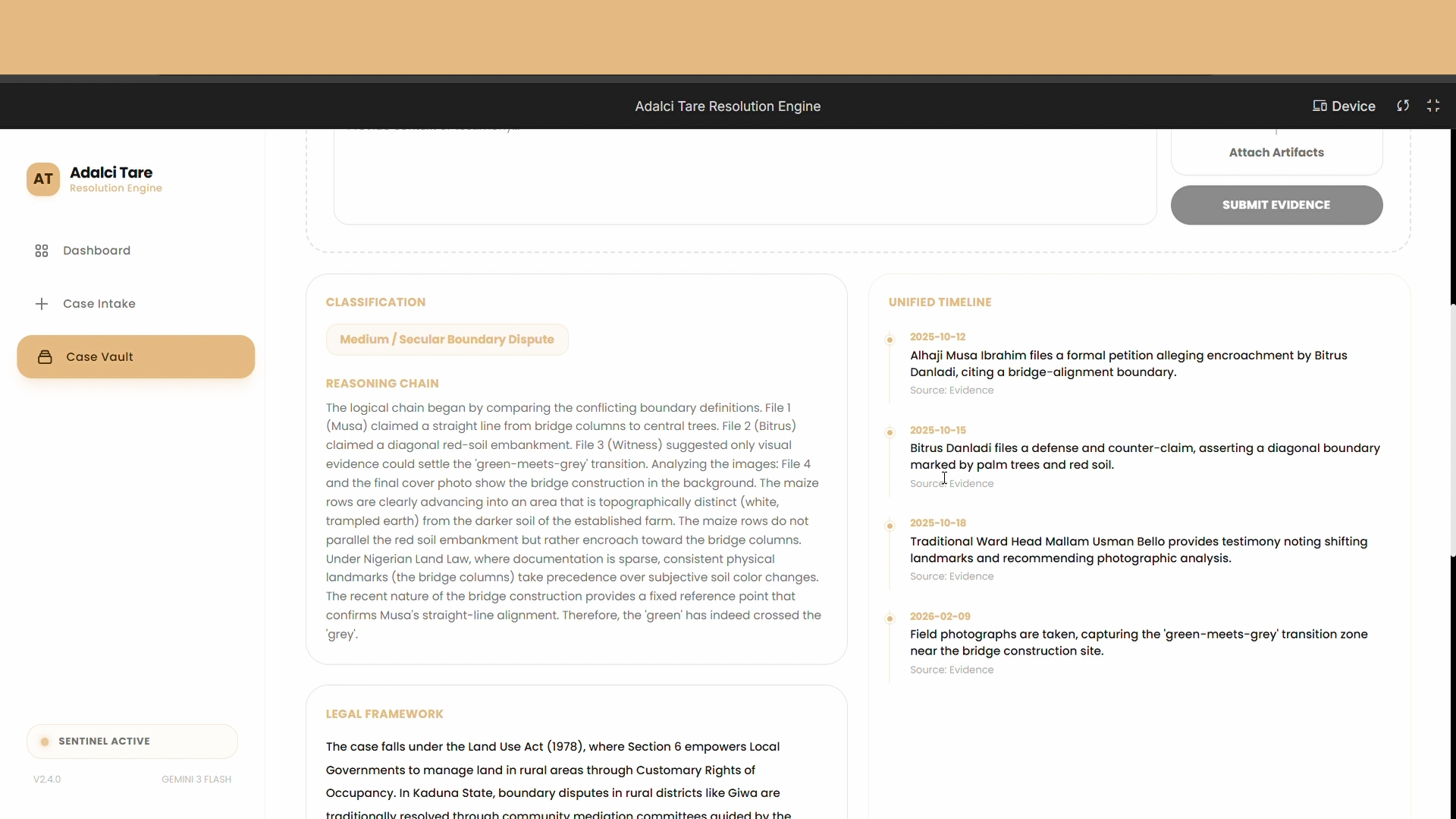
Objective Interpretation: In "he-said, she-said" battles, our prototype provides an objective anchor. By analyzing video and audio evidence, it creates a "Unified Truth Timeline" that strips away emotional bias for the decision-maker.
Pluralistic Jurisprudence: The prototype can toggle between different legal tracks. Whether a Shiite couple needs a marital resolution based on Ja'fari jurisprudence or a land tribunal needs secular statutory law, the AI provides a brief tailored to help the authority apply the correct context.
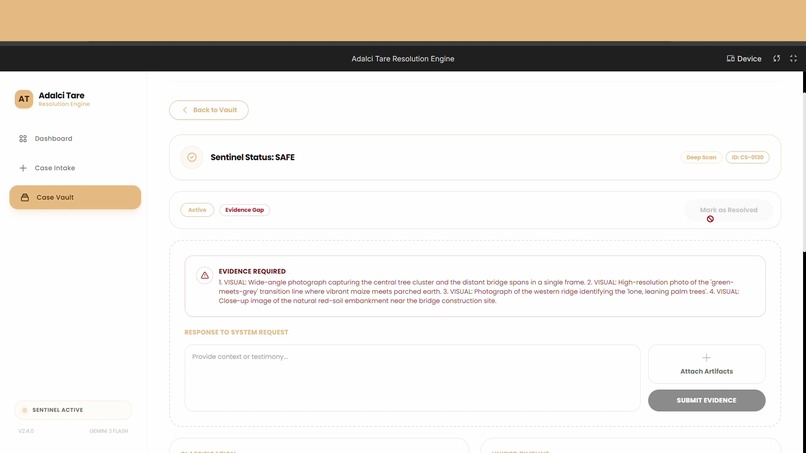
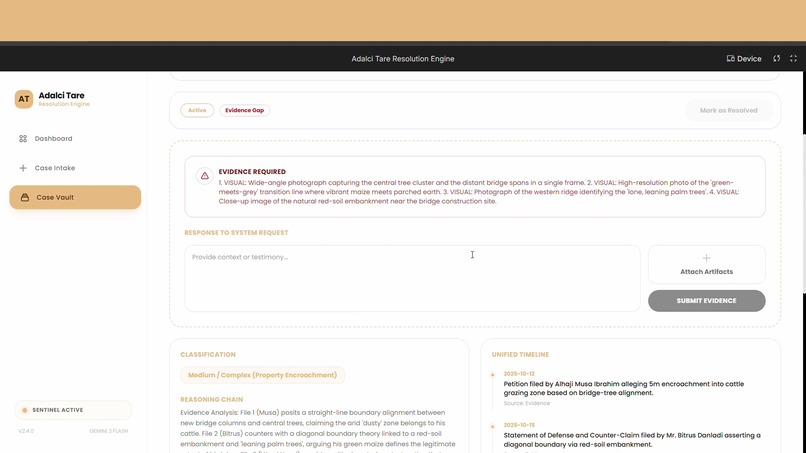
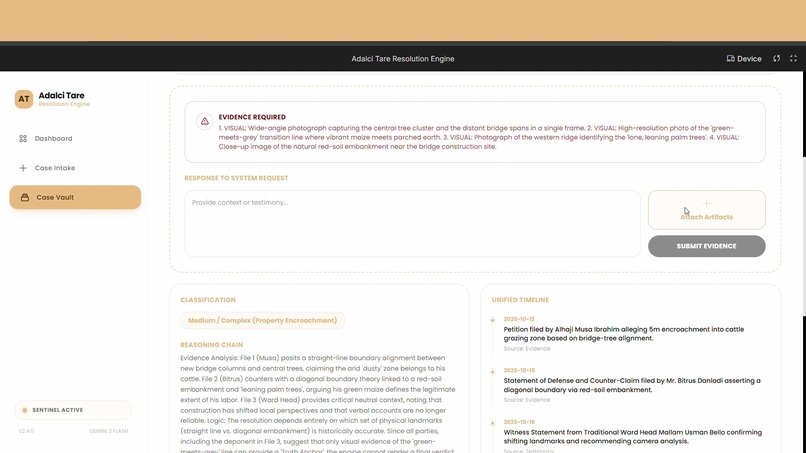
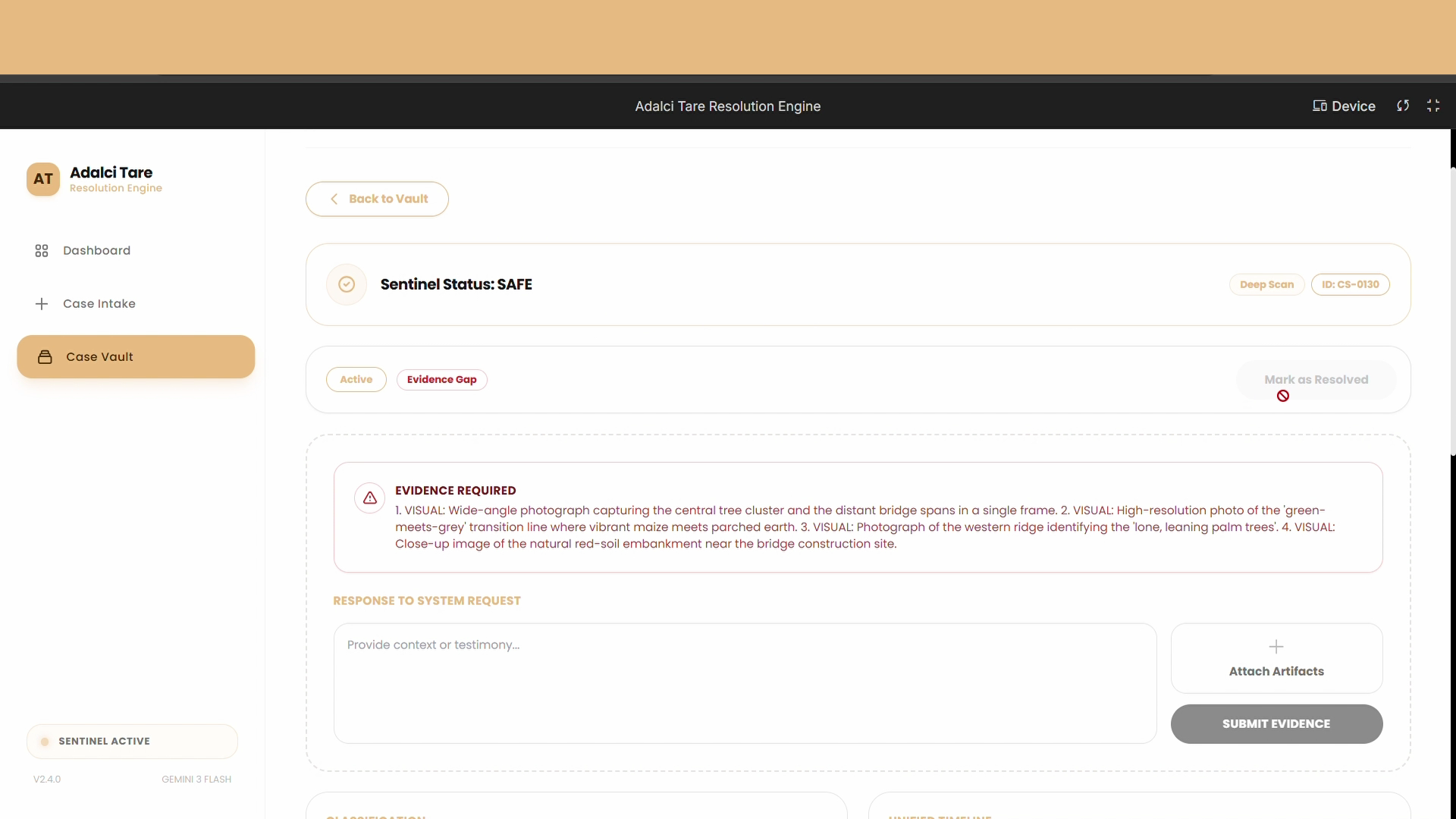
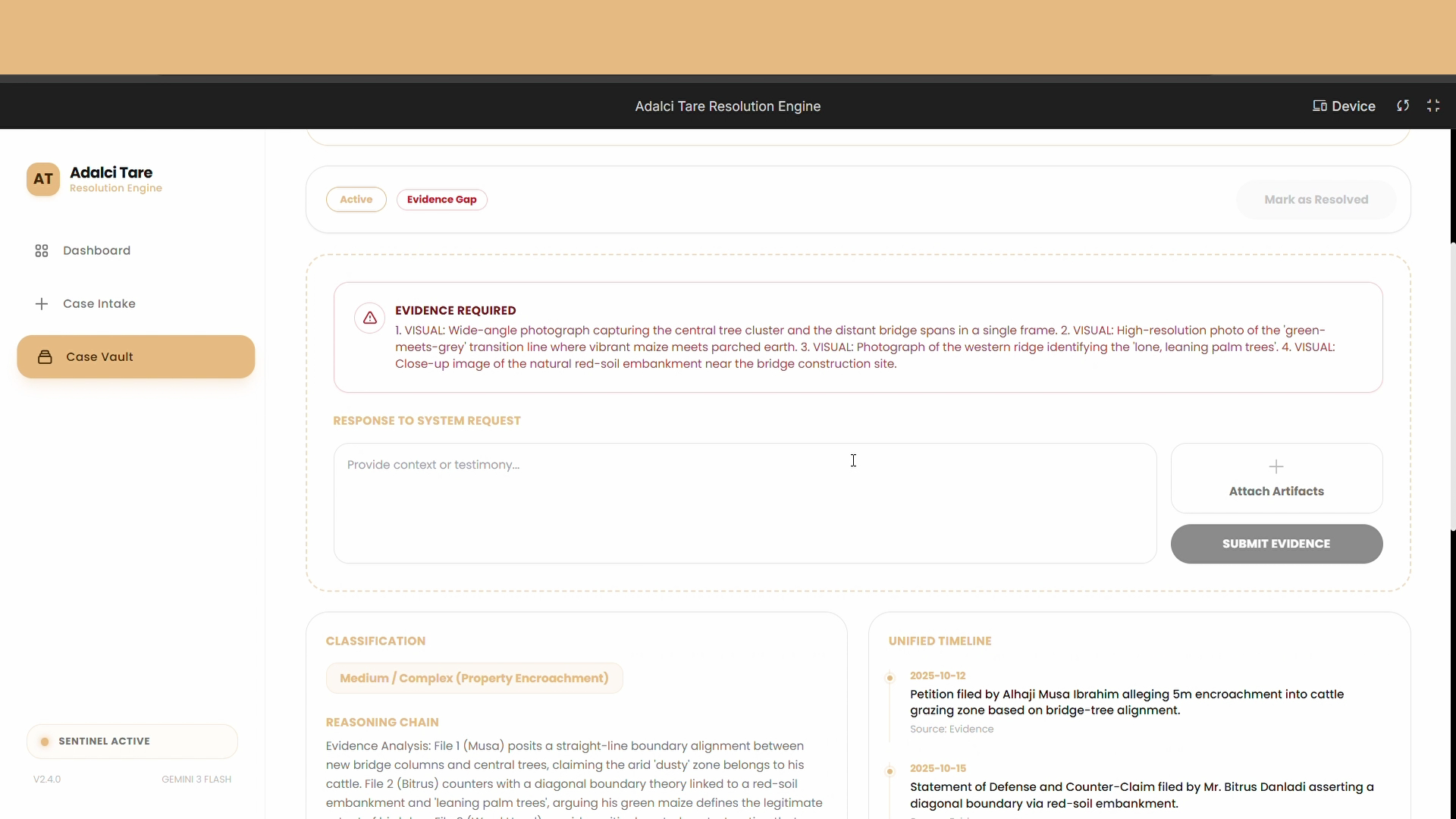
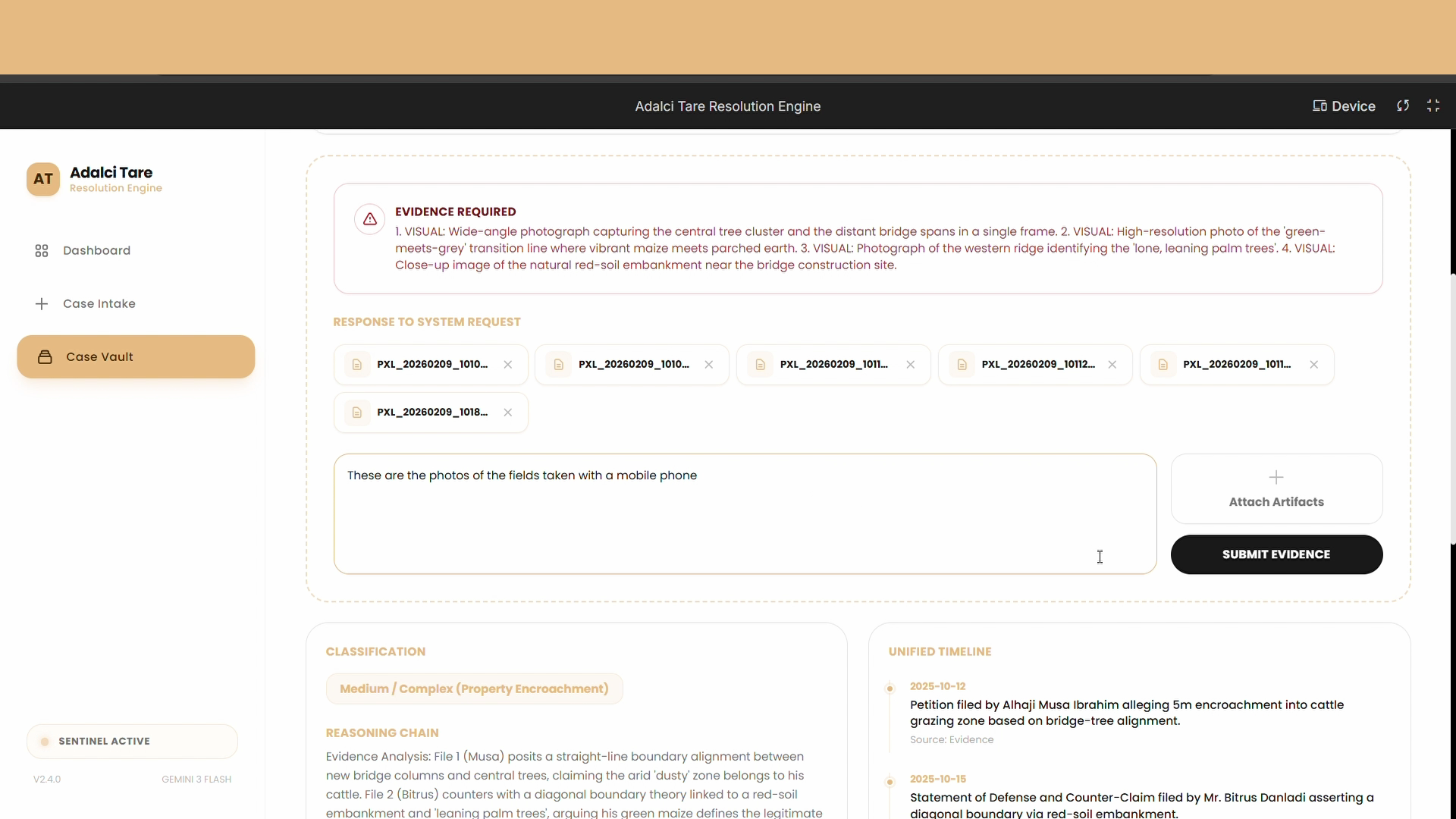
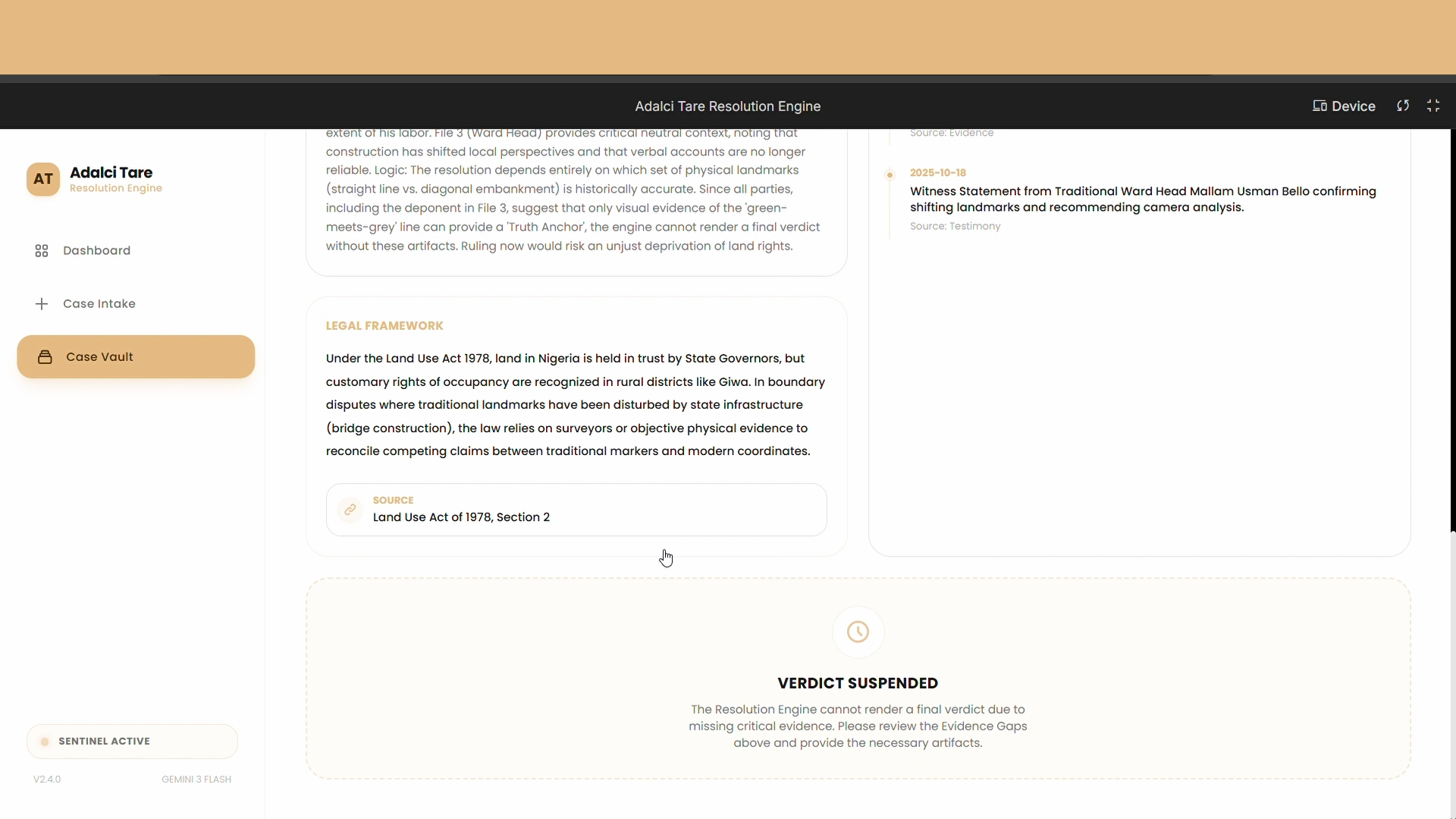
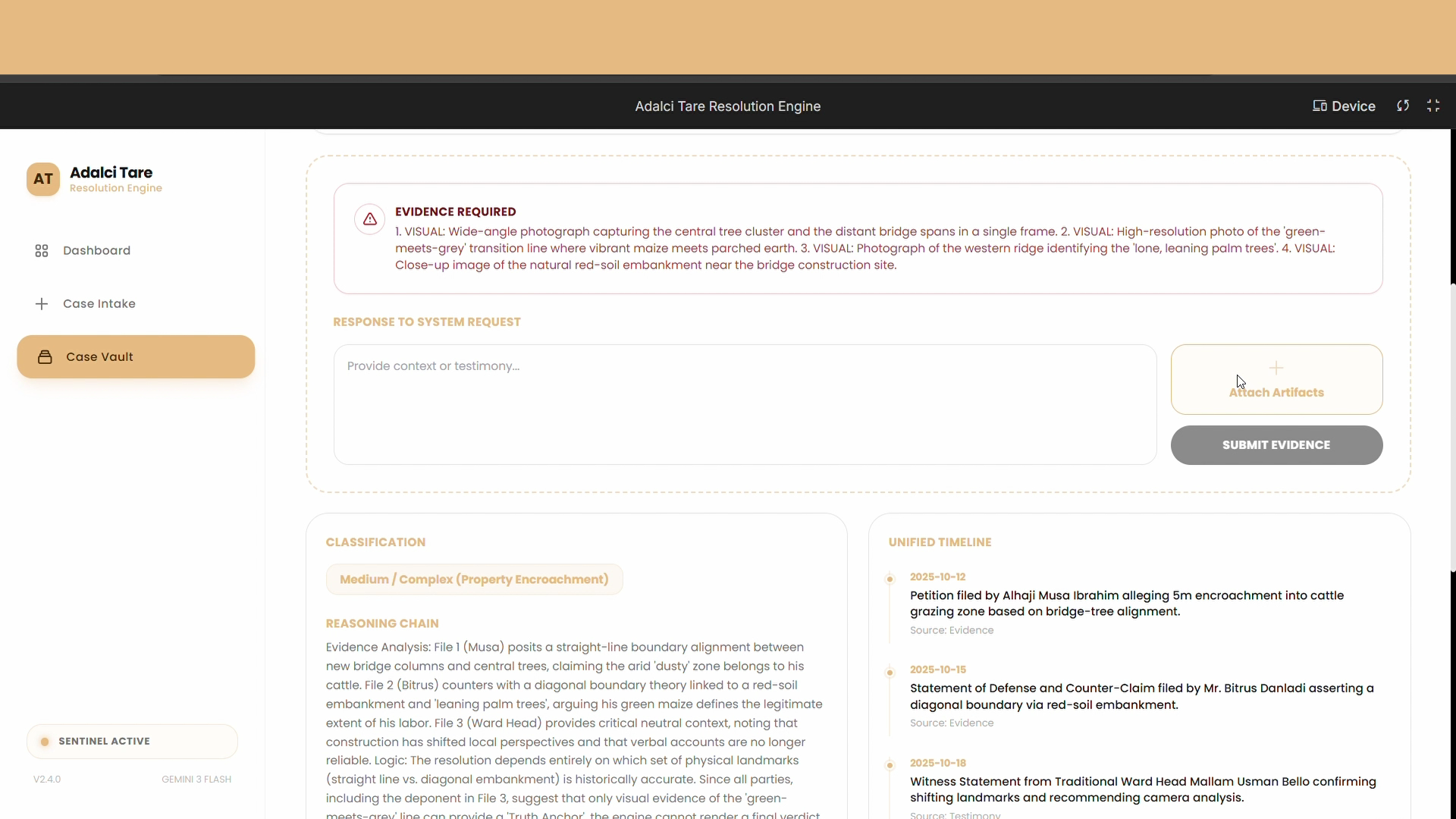
Autonomous Evidence Orchestration: To reach a truly just resolution, the platform acts as an active agent. If the existing evidence is insufficient or contradictory, the AI identifies specific "Logic Gaps" and requests additional proof to complete the reasoning path.
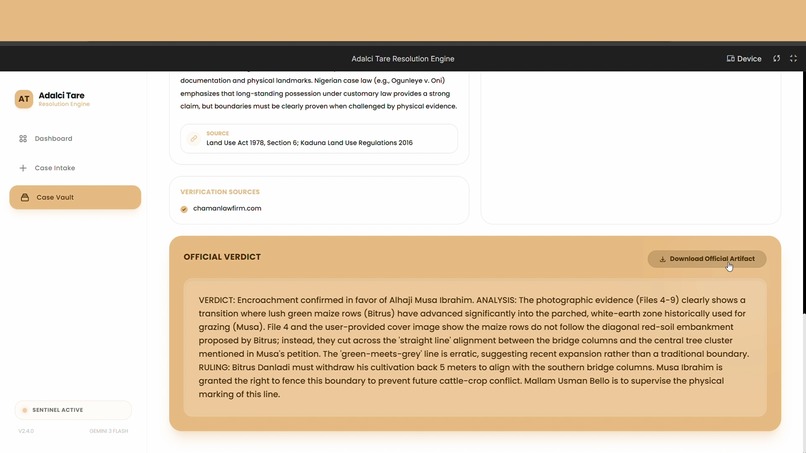
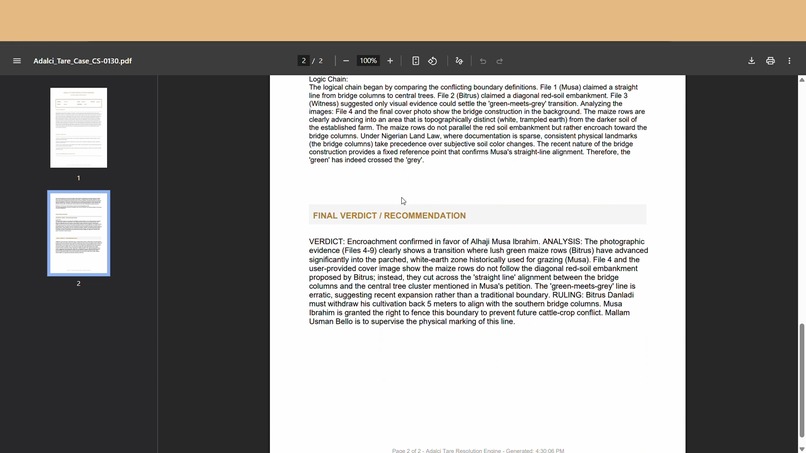
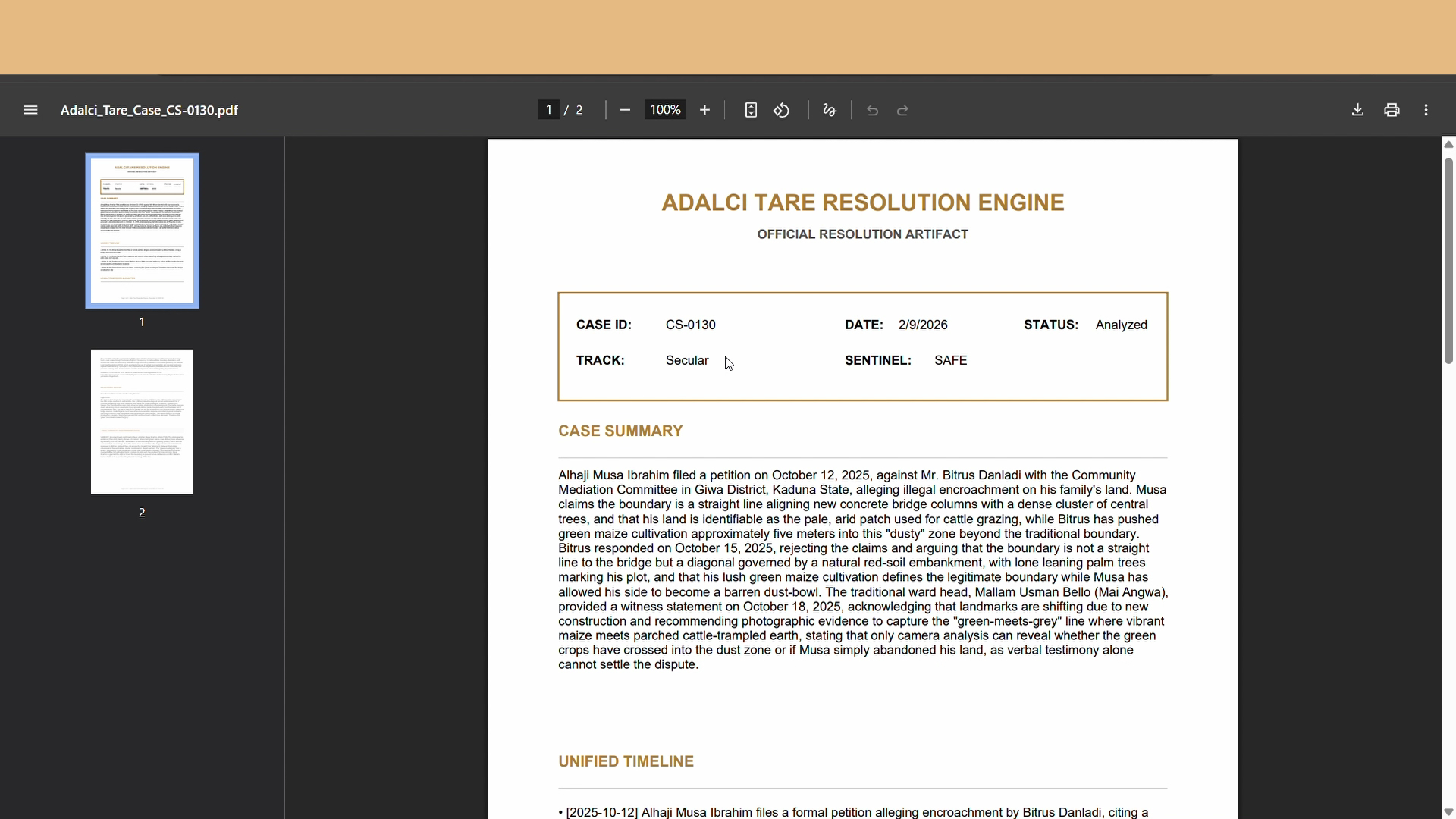
Evidence Citation & Transparency: To ensure absolute trust and accountability, the platform explicitly provides direct links and citations to the primary sources used for the analysis. The final decision remains with the human authority, who can verify every AI-suggested lead against the raw source material.
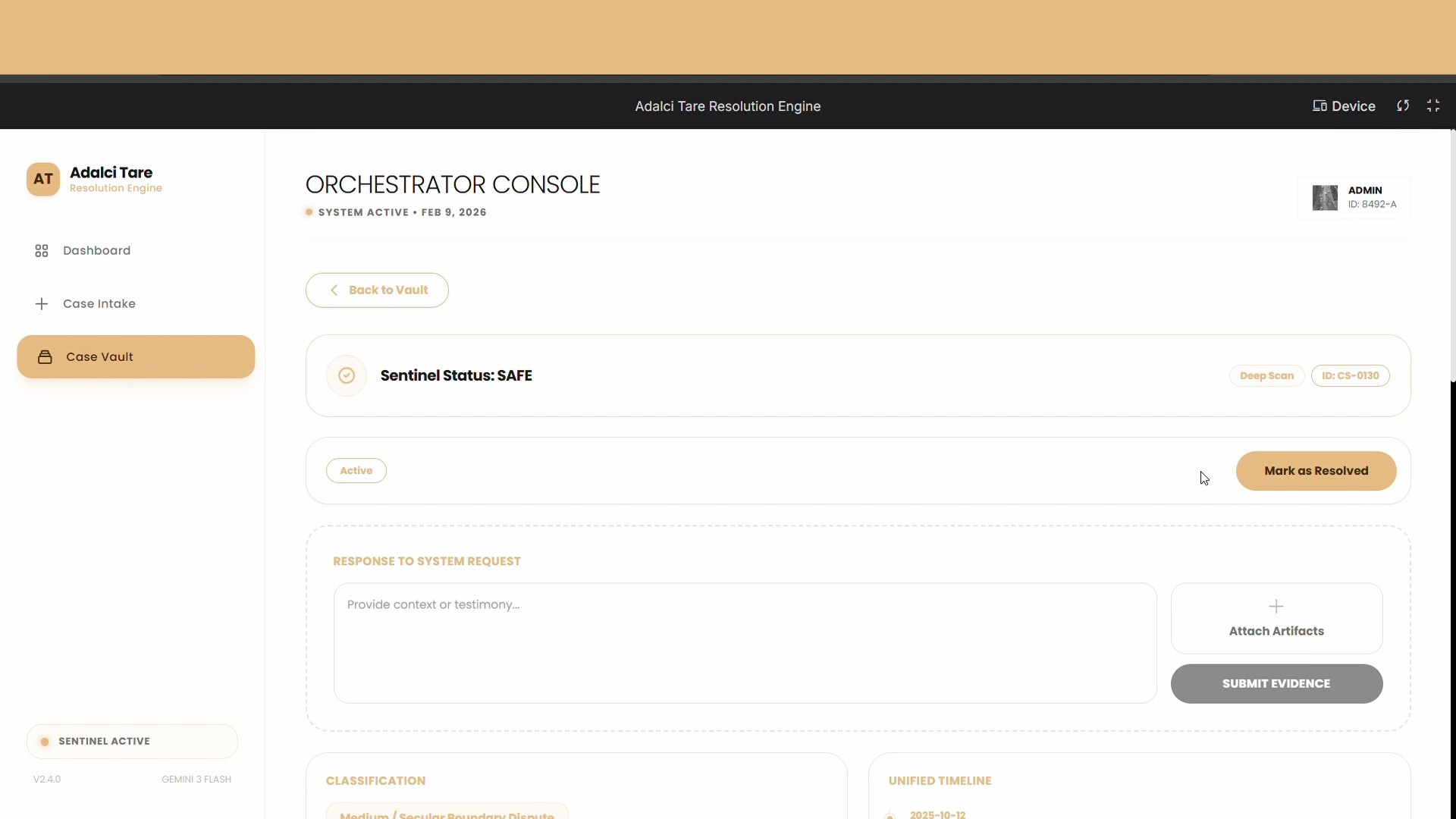
Safeguarding Sentinel: To protect those who cannot speak for themselves, the prototype uses Gemini 3 to sense implicit indicators of distress, domestic abuse, or "witch hunts," automatically flagging them for human review and state-level intervention.
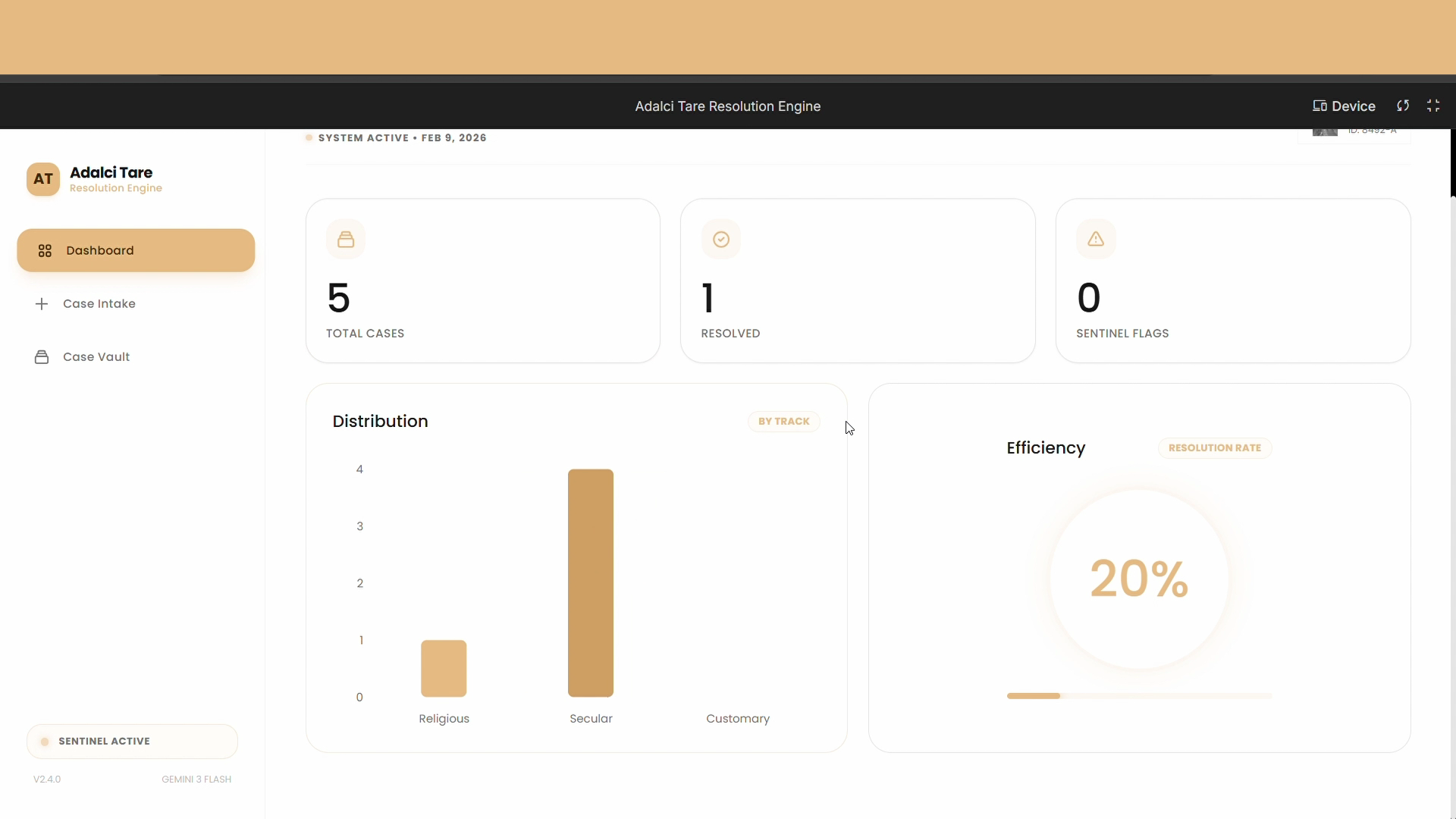
Backlog Resolution & Scaling: Manual judicial review is notoriously slow. Our prototype is designed to triage and summarize cases 10 times faster, providing decision-makers with the bandwidth to cater to more disputes and clear years of unaddressed cases that were previously stalled due to a lack of resources.
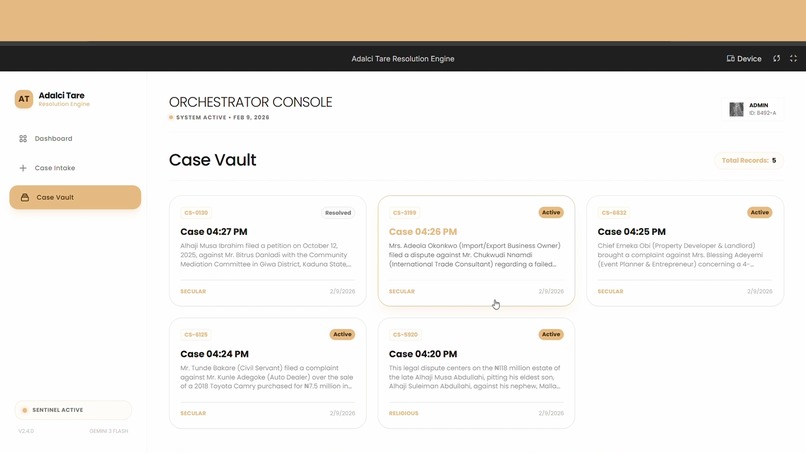
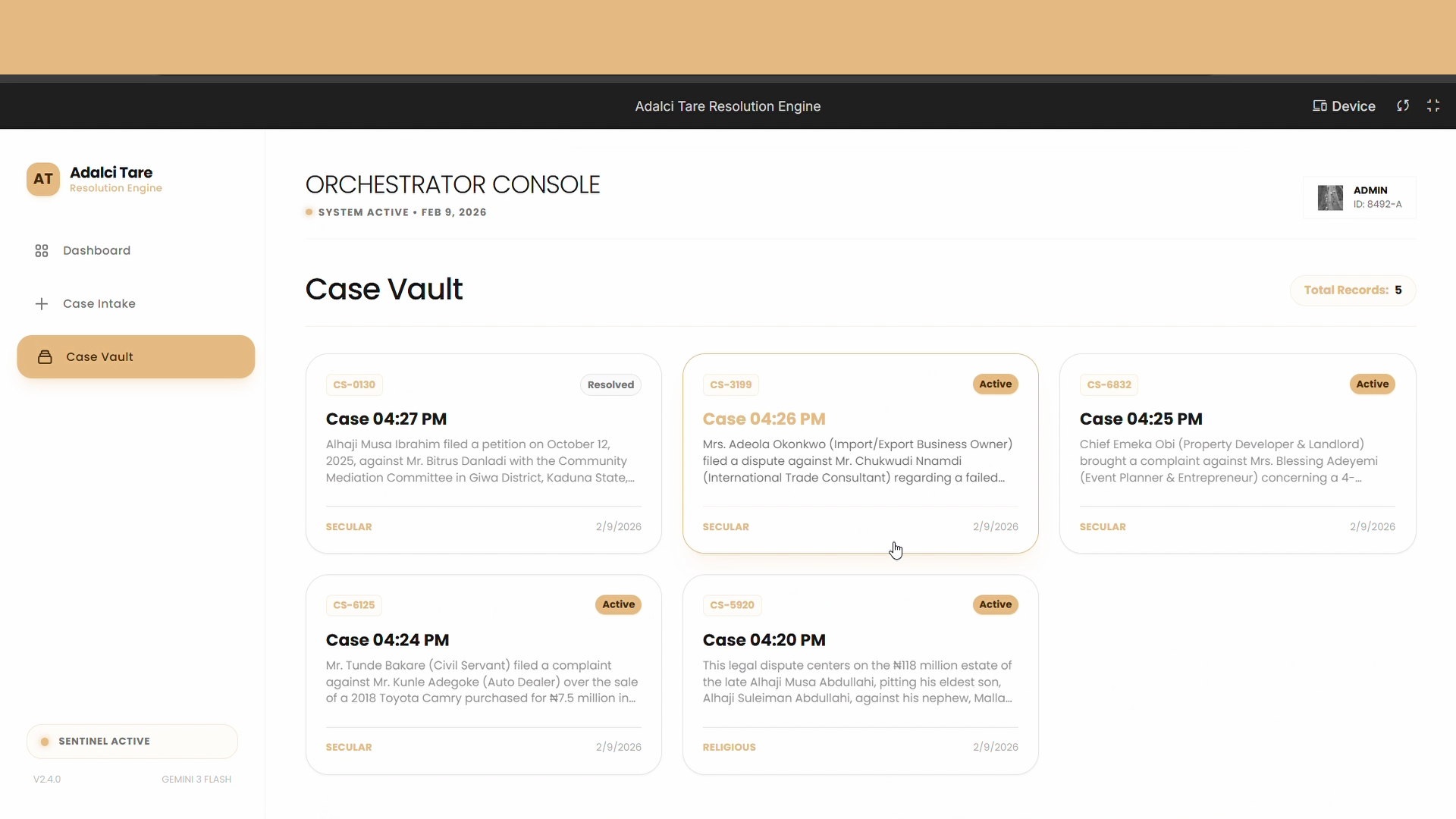
Persistent Case Vault: By digitizing the "History of Justice" in a community, the prototype ensures that decisions aren't forgotten, providing a permanent reference for authorities to ensure continuity in future rulings.
Government Policy Sensing: By aggregating determination patterns, the system helps governments identify "Conflict Hotspots," allowing them to act decisively.
How we built it
The Adalci Tare prototype was architected and built within Gemini 3 AI Studio. We focused on creating a "Universal Jurisprudence Engine" capable of high-order reasoning across disparate legal and physical data.
Our prototype demonstrates Gemini 3’s Multimodal Understanding and Reasoning in the following ways:
Spatial-Temporal Reasoning: We programmed Gemini 3 to perform "Evidence Triangulation." When conflicting videos are uploaded, the AI reasons: "The shadows and physical markers in Video A contradict the timeline provided in Audio Testimony B. Logic Gap detected."
Pluralistic Logic: We leveraged the 1M-token context window to store secular, religious, and customary laws, allowing Gemini 3 to provide "Fairness Recommendations" that respect specific schools of thought.
Primary Source Attribution: We utilized Gemini 3's ability to ground its reasoning in specific data. Every determination includes explicit links to the original documents or media assets used, ensuring the human authority can verify the AI’s logic.
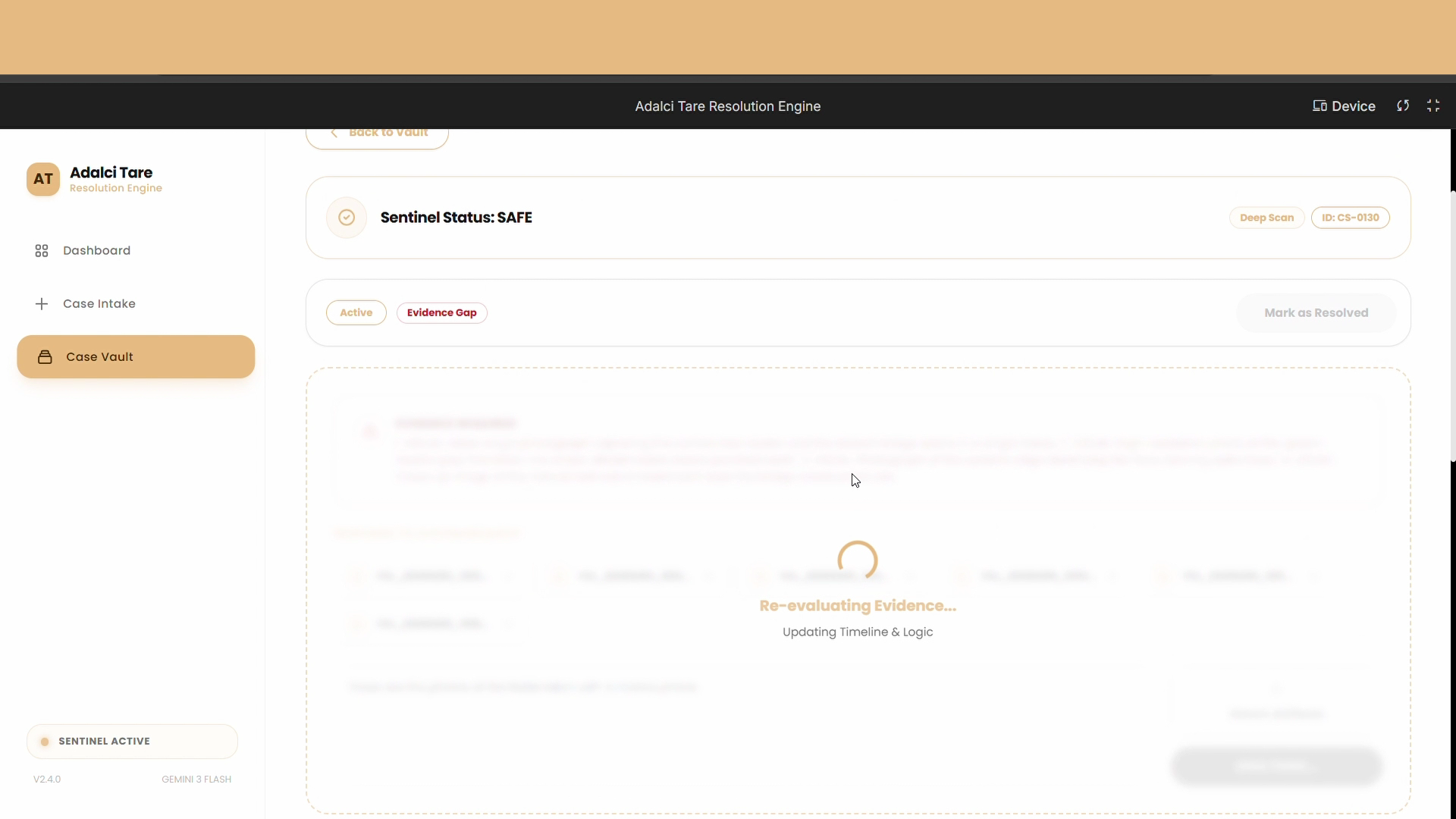
Autonomous Goal-Seeking: We utilized Gemini 3’s agentic capabilities to ensure the AI doesn't just passively analyze data. It is programmed to identify missing information required for a fair judgment and generate specific "Evidence Requests."
Implicit Sentinel Sensing: We utilized high-resolution audio and visual analysis to detect vocal tremors and body language indicators of coercion, demonstrating a technical pathway to identifying hidden abuse.
Marathon Orchestration: We use Thought Signatures to maintain the state of long-running cases, ensuring that the "Chain of Reason" remains consistent as new evidence is added over days or weeks.
Challenges we ran into
Within AI Studio, we relied on the deep Complex Thinking of Gemini 3 to move beyond simple keyword matching. We spent significant time refining our prompts to ensure the AI acts as a neutral consultant, offering a "spectrum of fairness" rather than a singular, forced answer, which respects the absolute authority of the human judge.
Accomplishments that we're proud of
We have successfully built a functional proof-of-concept that demonstrates how to bring "Social Harmony" to underserved regions. By utilizing Gemini 3 AI Studio, we showcased a viable model for clearing judicial backlogs and protecting human rights in Africa and Asia. We are proud to have developed an AI logic that serves as a force multiplier for justice, empowering human decision-makers to reach fairer conclusions for more people than ever before.
What we learned
The most profound lesson is that justice requires legitimacy. Our previous experience in the field taught us that data-driven decisions are only accepted if they respect the local religious and cultural context and provide clear links to the authority of primary sources. We learned that when AI handles the "Truth Triangulation" and mass-triaging of cases, it doesn't replace the human judge; it restores their ability to be truly fair, equitable, and efficient.
What's next for Adalci Tare: Resolution Engine
Our vision is to move from this AI Studio demonstration to a full-scale integration with regional judiciaries. We plan to:
Jurisdictional Hub: Further expand the 1M-token library to include even more localized cultural protocols and specific legal amendments.
Social Harmony Dashboard: Build an interface for governments to sense regional conflict trends in real-time, allowing for proactive infrastructure and social policy intervention.
Mediator Outreach: Partner with local "Peace-Building" NGOs to put this decision-support tool in the hands of field mediators across Northern Nigeria and beyond.

Log in or sign up for Devpost to join the conversation.