-
-
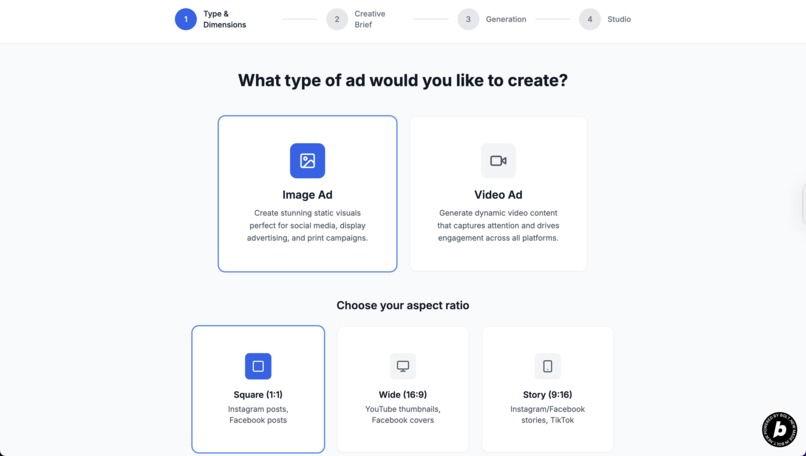
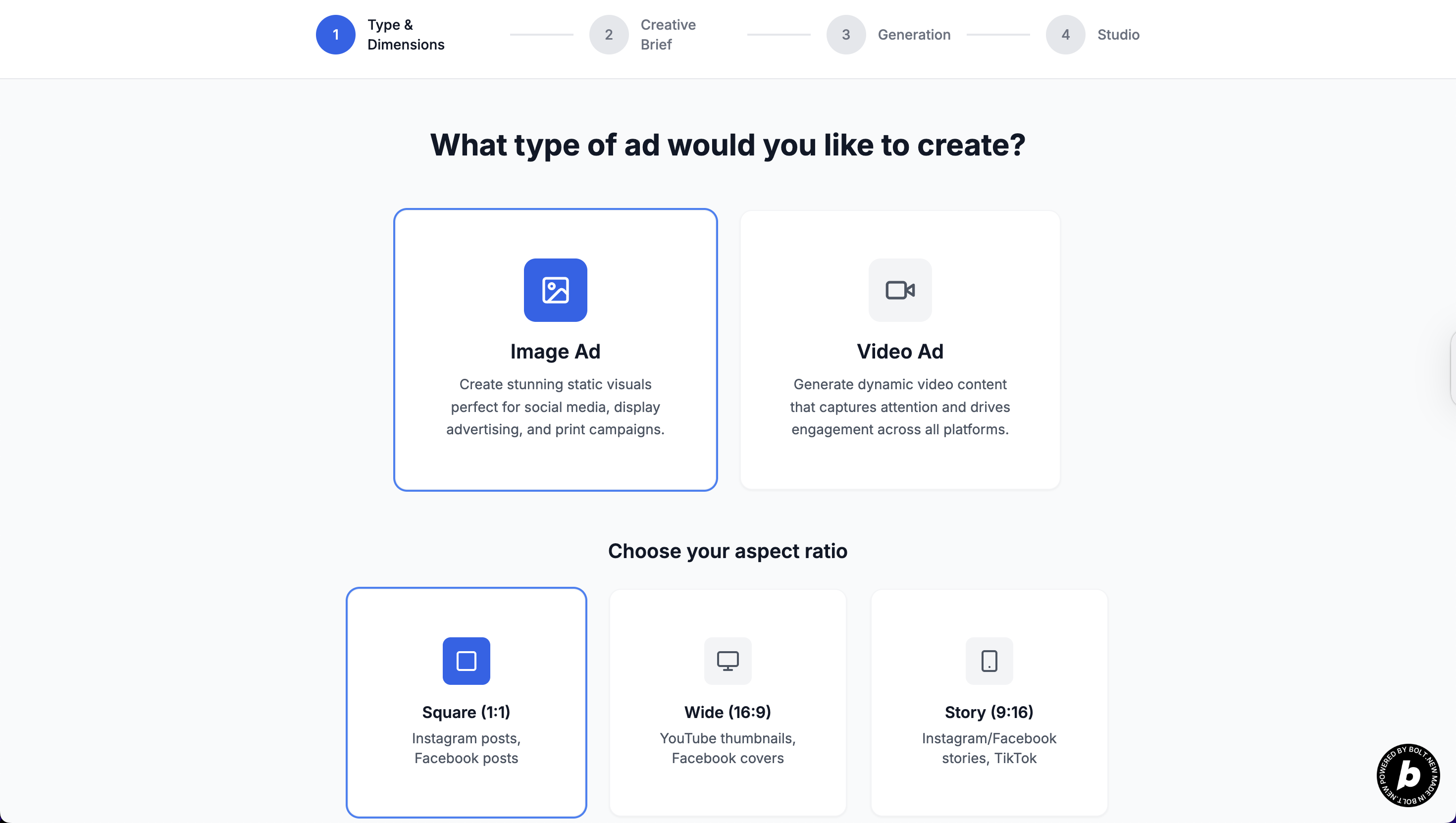
Select Ad Type
-
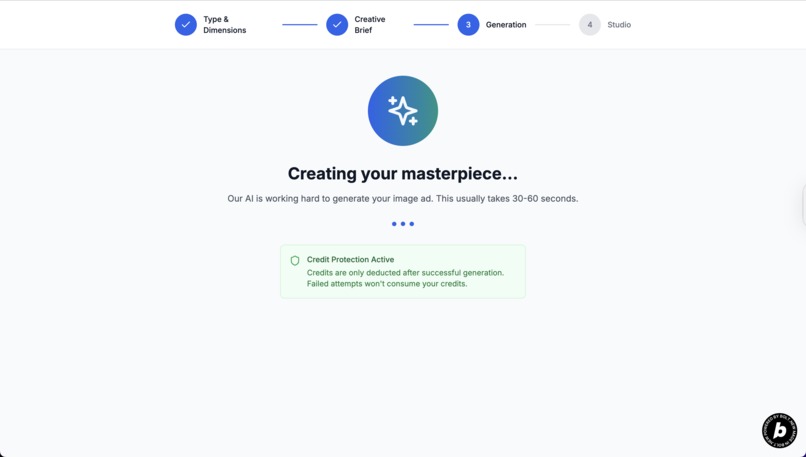
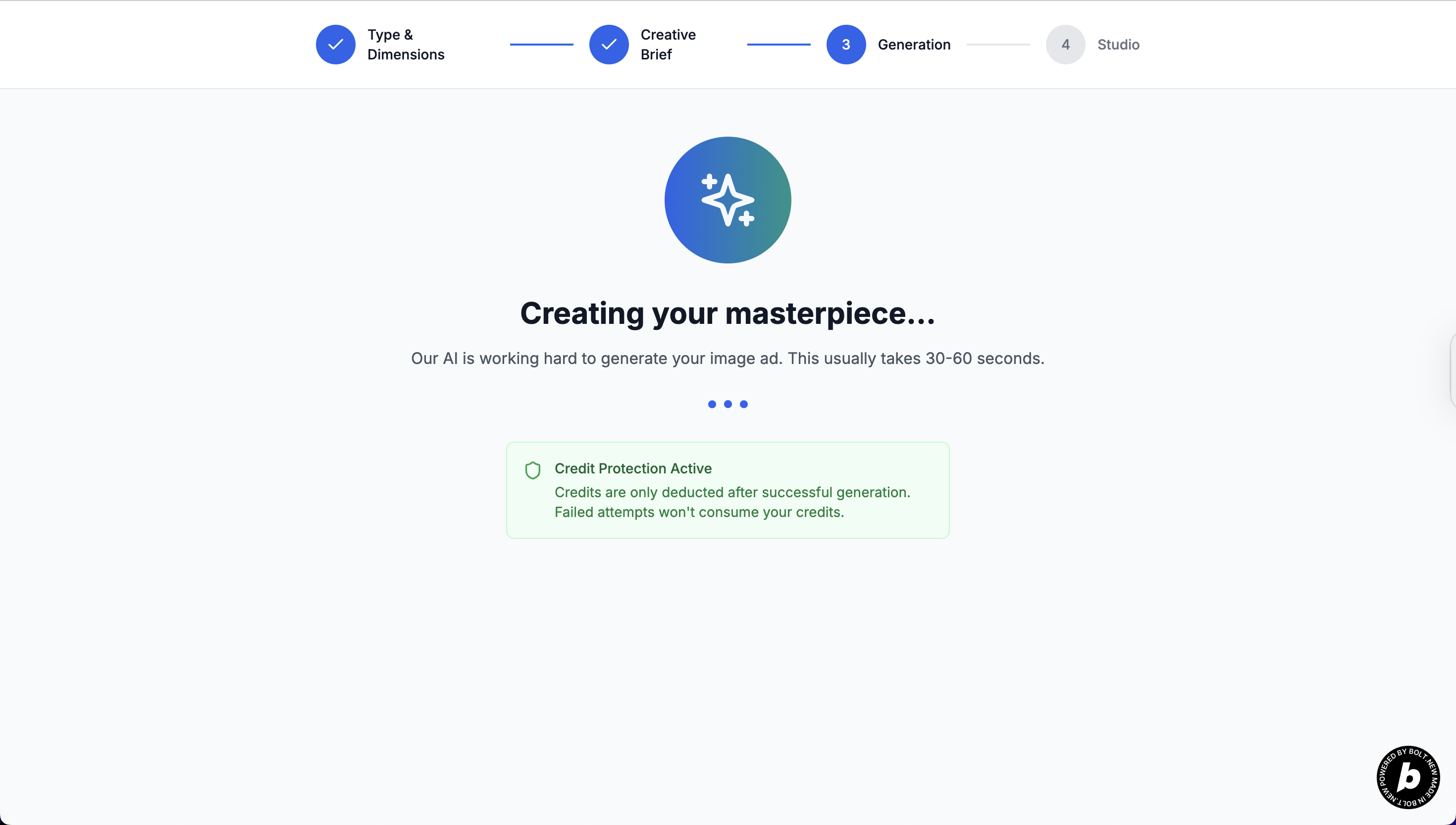
Generating Ad
-
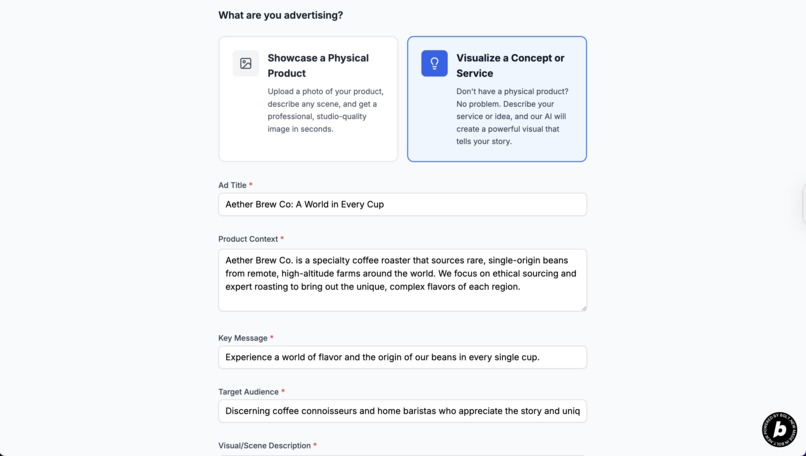
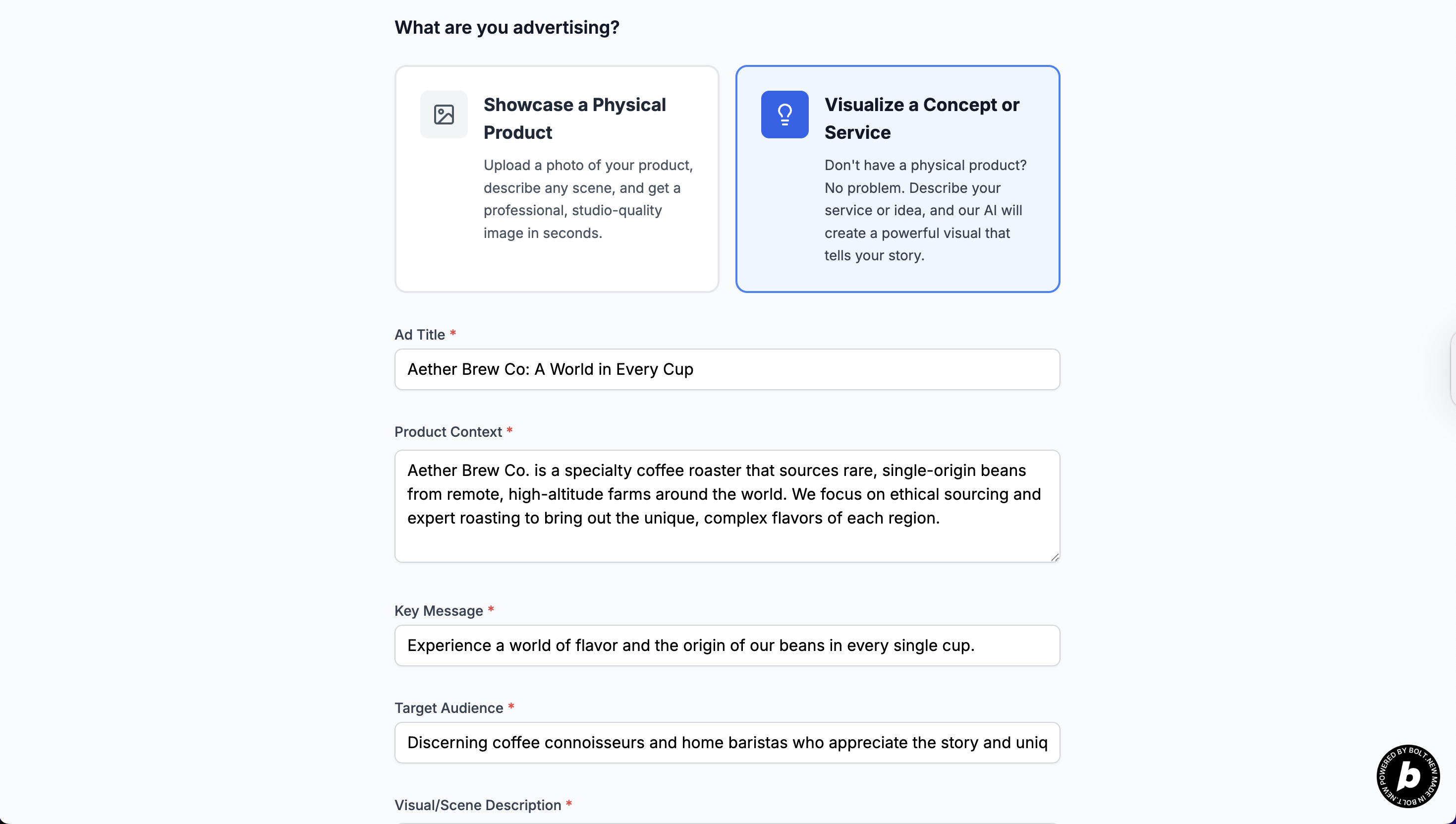
Creative Brief
-
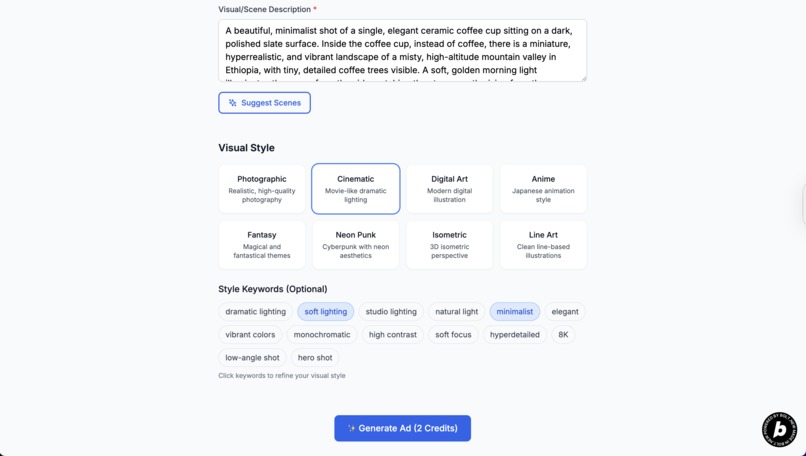
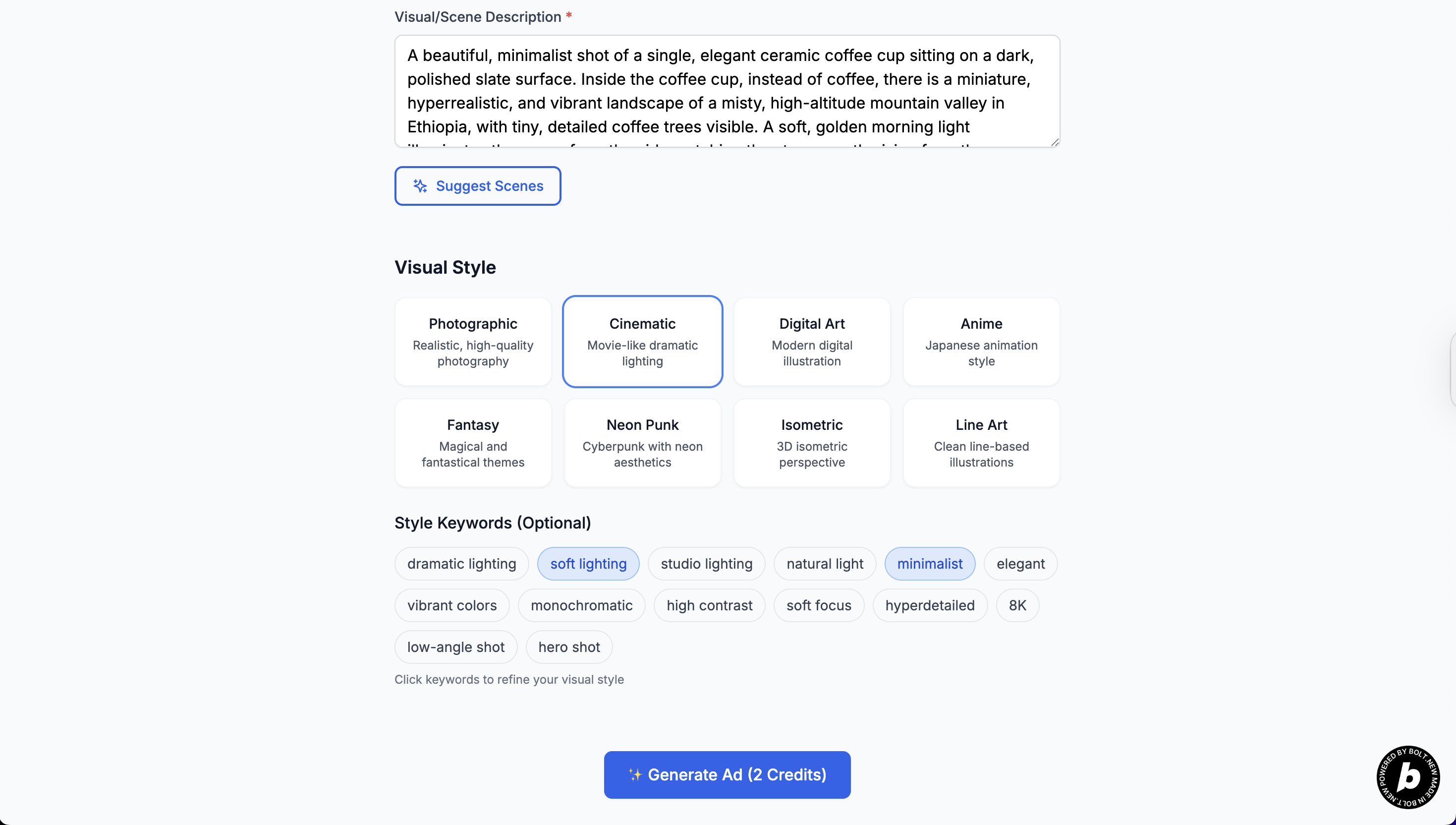
Creative Brief Details
-
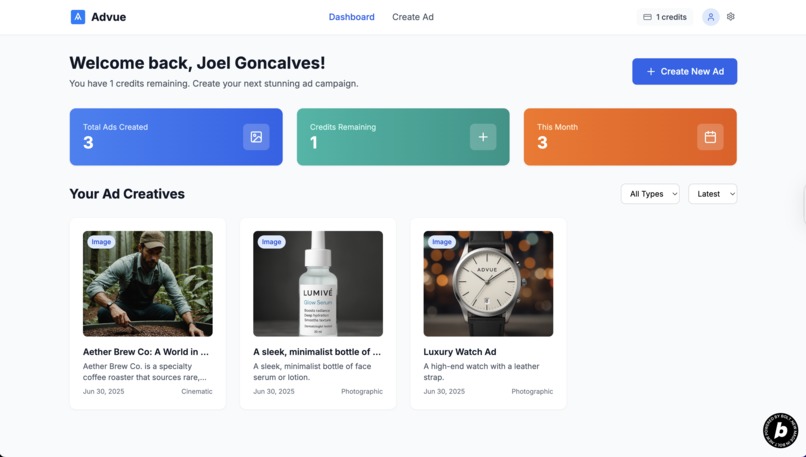
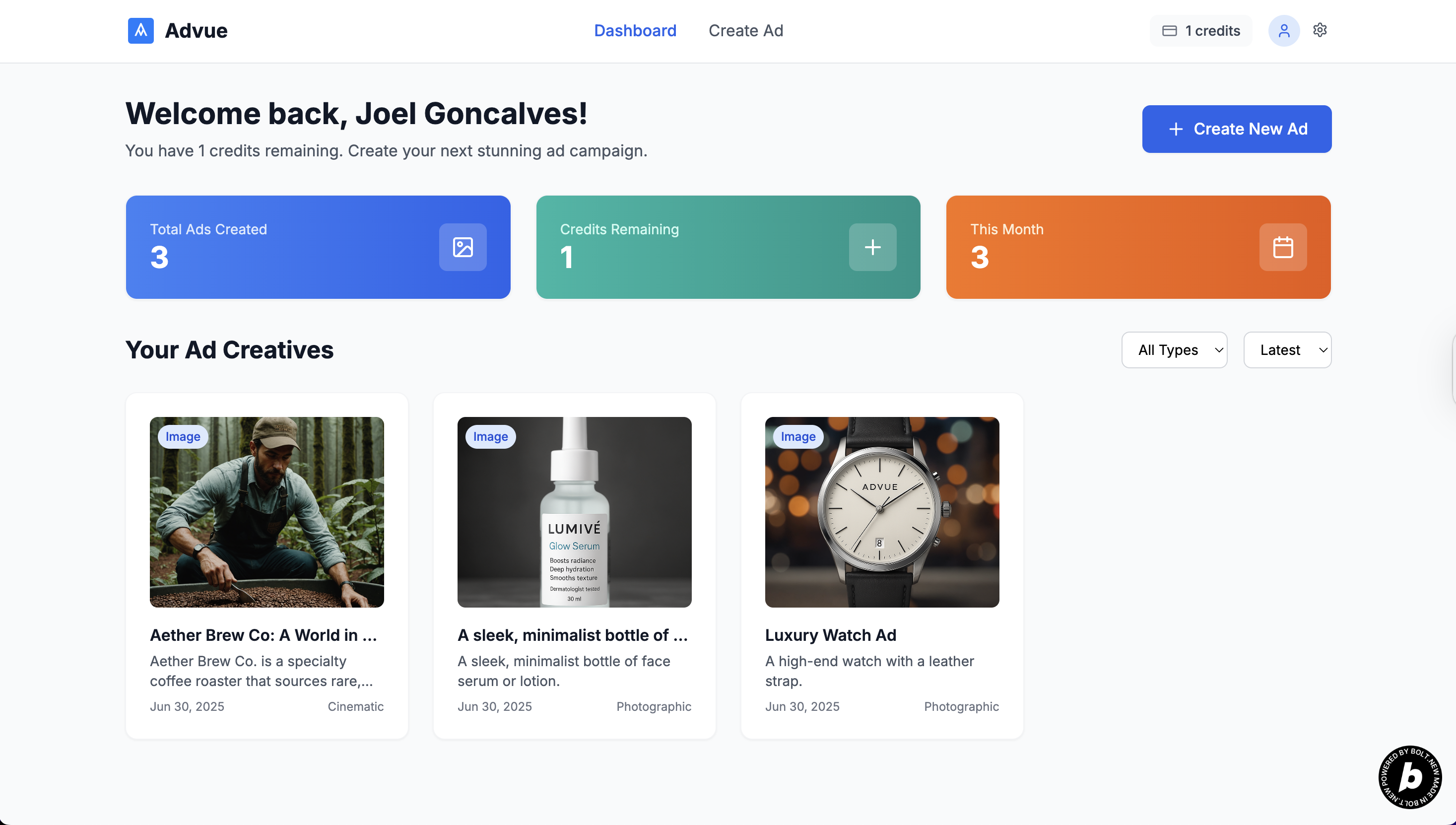
Dashboard
-
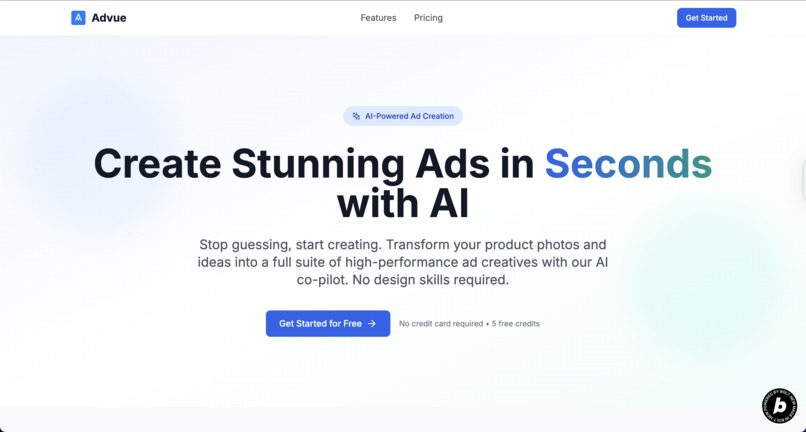
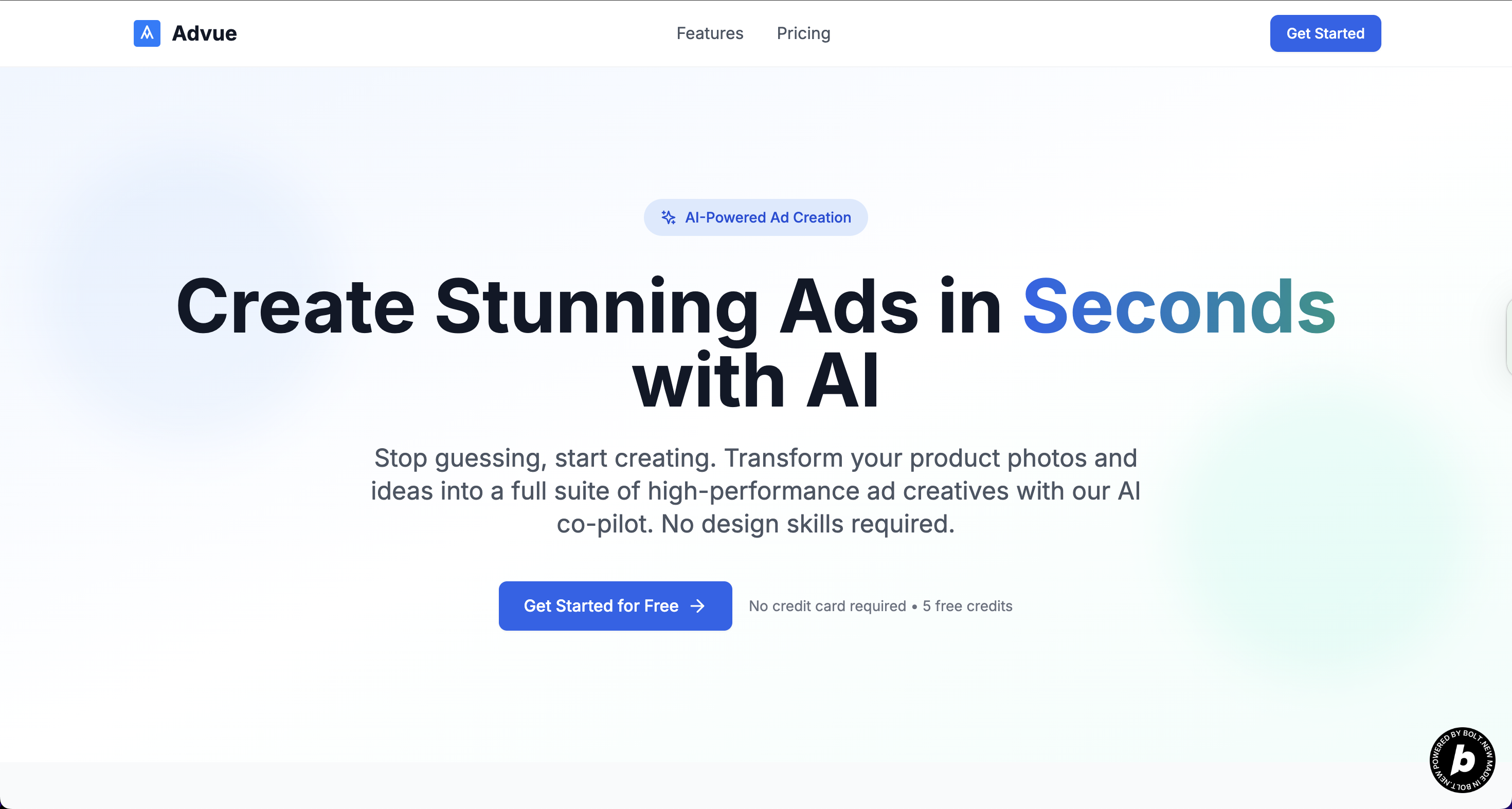
Landing page
-
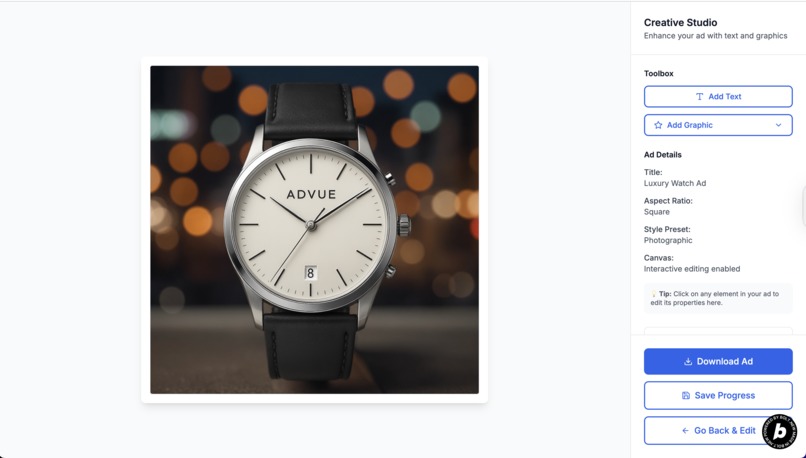
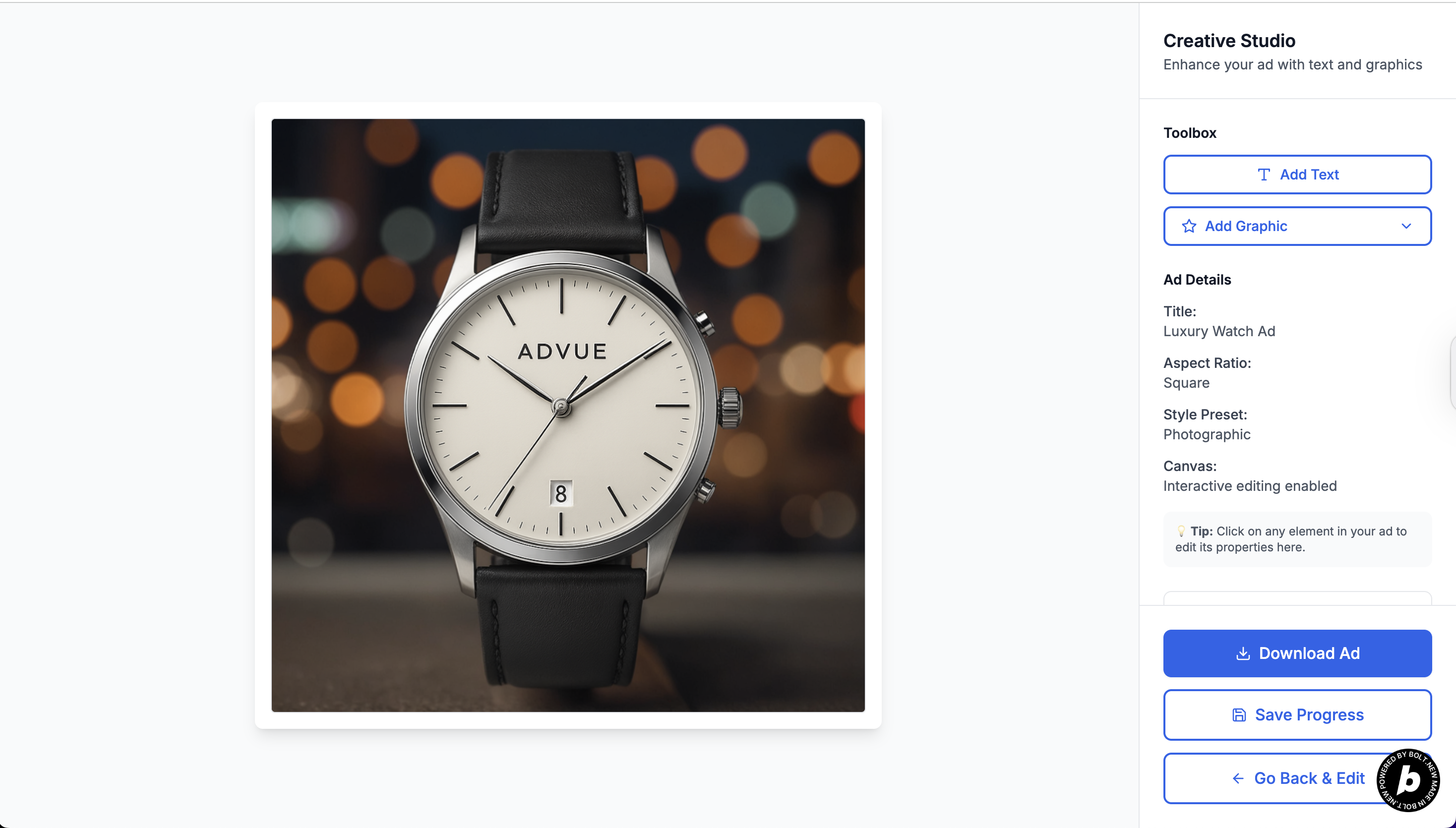
Image Ad Studio
-
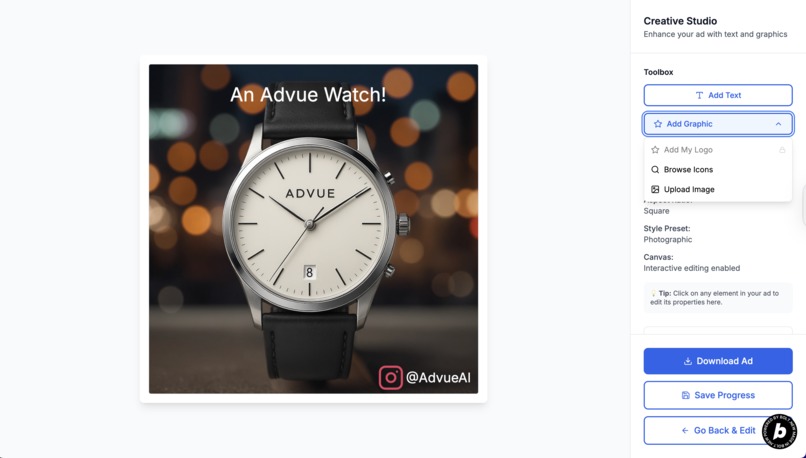
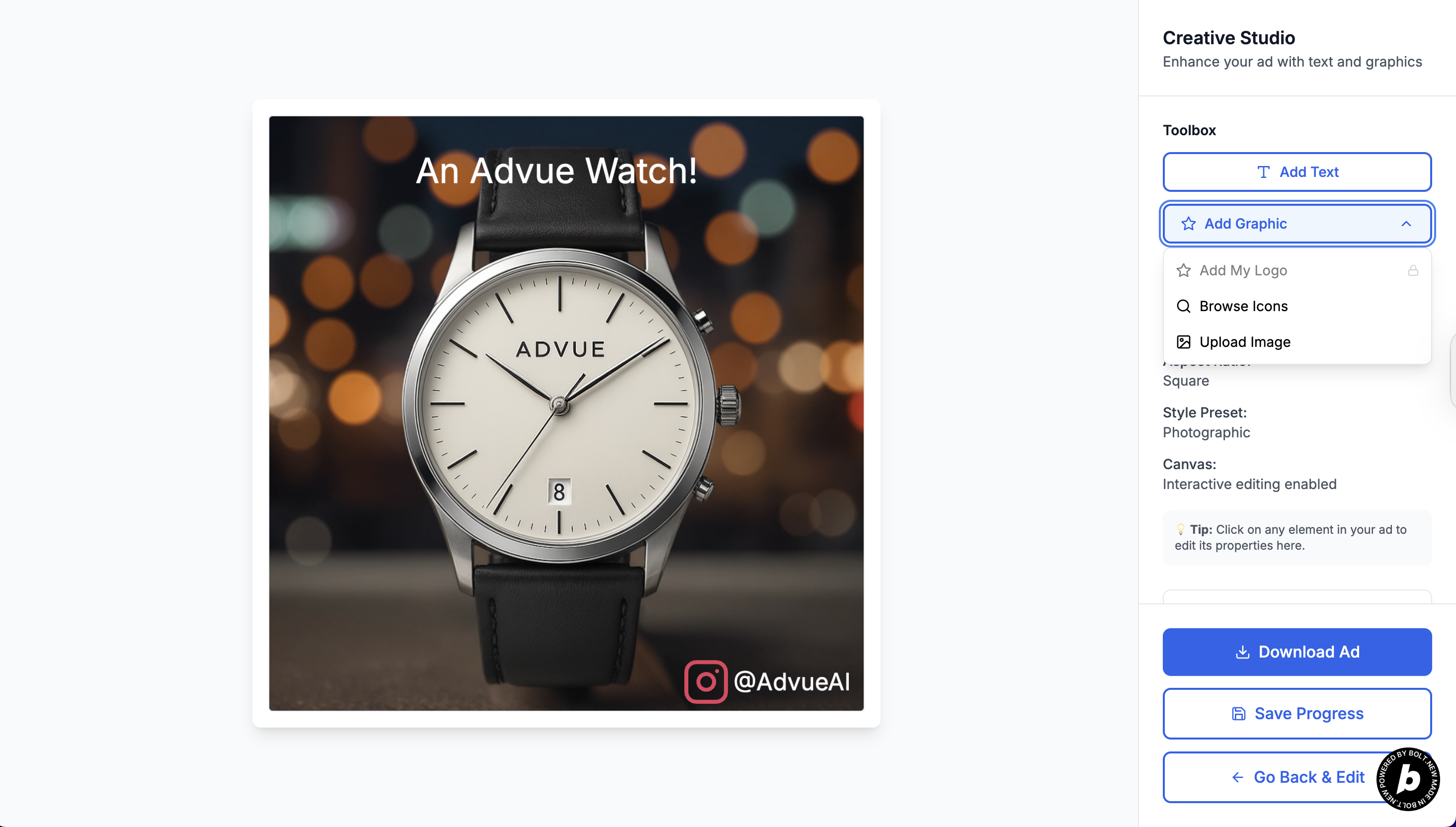
Image Ad Studio with edits
Inspiration
The inspiration for Advue is deeply personal. As an app developer, I've experienced the pain firsthand: after spending months passionately building a product, I'd face the daunting challenge of marketing it. The need to create effective, professional-looking ads felt like a huge hurdle—it was outside my area of expertise, yet absolutely critical to getting an idea out into the world when time was of the essence.
This personal struggle revealed a universal truth that countless small businesses, solopreneurs, and marketing teams face: creating high-converting advertising is expensive, time-consuming, and requires specialized skills.
Advue was born from this challenge during the hackathon presented by Bolt. We saw the potential of generative AI not just as a tool, but as a powerful way to level the playing field. Our goal was to build more than a simple generator; we wanted to create an AI Creative Director that guides users through the entire creative workflow, making studio-quality advertising accessible to everyone.
What it does
Advue is an intelligent, web-based platform that empowers businesses to create stunning, on-brand ad creatives in seconds. It provides two core, tailored workflows:
For Physical Products (Image & Video Ads): Users upload a photo of their product. Advue's AI seamlessly places it into any scene imaginable through a robust inpainting and image-to-video pipeline. This allows businesses to generate an infinite number of professional "product photoshoots" and dynamic "motion ads" without the high cost and logistical hassle.
For Concepts & Services (Text-to-Image Ads): For businesses without a physical product, like software companies or consultants, users can describe their service and key message. Advue's "Idea Visualizer" then generates compelling lifestyle or abstract images that bring their brand's story to life.
Beyond generation, Advue acts as a creative partner with premium features like a Brand Kit for brand consistency, an AI Ad Copy Assistant to write compelling text, and an AI Art Director to provide predictive performance analysis on generated ads.
How we built it
Advue is built on a modern, scalable, serverless architecture designed for performance and cost-efficiency.
Frontend: A responsive web application built with React (Vite) and styled with Tailwind CSS. State management is handled by a combination of Zustand for global UI state and TanStack Query for robust server-state caching.
Backend & Database: The entire backend is built on Supabase. We use Supabase Auth for secure user management, Supabase Postgres for the database, and Supabase Storage for asset management.
Serverless Logic: All backend processes are handled by Supabase Edge Functions, which orchestrate the complex multi-step AI workflows.
AI & APIs: Advue integrates a suite of best-in-class AI services:
- Replicate: To run models for background removal, video generation, ad analysis, and ad copy.
- Stability AI: For its high-quality inpainting and text-to-image APIs.
Payments: Subscriptions and billing are securely managed through Stripe, integrated via Stripe Checkout and webhooks.
Challenges we ran into
AI Model Limitations: We quickly learned that a simple image-to-image call was insufficient. This forced us to architect a much more robust inpainting workflow, which became the core of our solution.
Serverless Environment Constraints: Our biggest hurdle was the limitations of the serverless environment. We discovered that image processing libraries like imagescript have native dependencies that are incompatible with the Supabase Edge Function architecture, which led us to offload all heavy processing to a specialized service like Replicate.
Frontend State Management: Integrating a complex library like Fabric.js for the Studio editor within a React component led to challenging race conditions, which we solved by refactoring to a more robust, state-driven architecture.
Accomplishments that we're proud of
The Seamless Inpainting Workflow: Architecting the full pipeline—uploading a user image, getting a signed URL, using Replicate to generate a mask, and then feeding that into the Stability AI inpainting API—is a complex process we've made seamless.
The Adaptive "Creative Brief" UI: Building a user interface that intelligently changes its fields based on whether the user is creating an ad for a physical product, a concept, or a video.
The "AI Creative Director" Features: Going beyond simple generation to add true business value with the Brand Kit, AI Scene Suggestions, and AI Art Director.
What we learned
Prompt Engineering is Nuanced: We learned that how you structure a prompt is just as important as what you put in it. A small change can have a massive impact on the output quality.
Offload, Don't Fight the Environment: Instead of trying to force complex libraries to work in a minimal serverless environment, the better architectural decision is to offload that specific task to a service designed for it.
Build for the "Why," Not Just the "What": The project evolved from a simple "AI generator" to a "Creative Partner." Every feature was driven by solving a real business problem, which led to a much stronger final product concept.
What's next for Advue
Full Video Studio: Implementing the full suite of studio features for video ads, including text overlays, logo watermarks, and integrating AI-generated music and voiceovers.
Virtual Try-On: Integrating specialized models that can realistically drape clothing and accessories on AI-generated human models.
Analytics Integration & Performance-Based Suggestions: Allowing users to connect their ad accounts to track real-world performance and have the AI learn what works to generate better ads.
Team Collaboration: Adding features for agencies to manage multiple brands and users under a single account.

Log in or sign up for Devpost to join the conversation.