
Inspiration
Actuate started with a simple observation: most of us don’t actually lack ambition, we lack execution. Hours disappear into scrolling, not because people are lazy, but because modern platforms are engineered to capture attention with endless novelty and instant rewards. At the same time, we noticed two patterns in how people get stuck:
- Some know exactly who they want to become but struggle to take consistent action
- Others have endless ideas but feel overwhelmed and never start Both end up in the same place - passively consuming instead of actively creating. Actuate was built to interrupt that loop and redirect it.
What We Learned
We explored how behavioral psychology and cognitive patterns influence action. One key idea is that replacing a behavior is more effective than trying to suppress it. Instead of telling users to stop scrolling, Actuate gives them something better to do.
We also looked at how small actions compound over time. Even replacing just 10 minutes a day creates meaningful change:
10 minutes/day × 365 days = 3650 minutes ≈ 60 hours/year
That insight shaped our focus on micro-actions that are small, achievable tasks that build momentum.
How We Built It
Actuate is a React-based web app designed to feel like a native mobile experience. We chose a web-first approach for fast deployment and iteration, allowing us to focus on functionality during development.
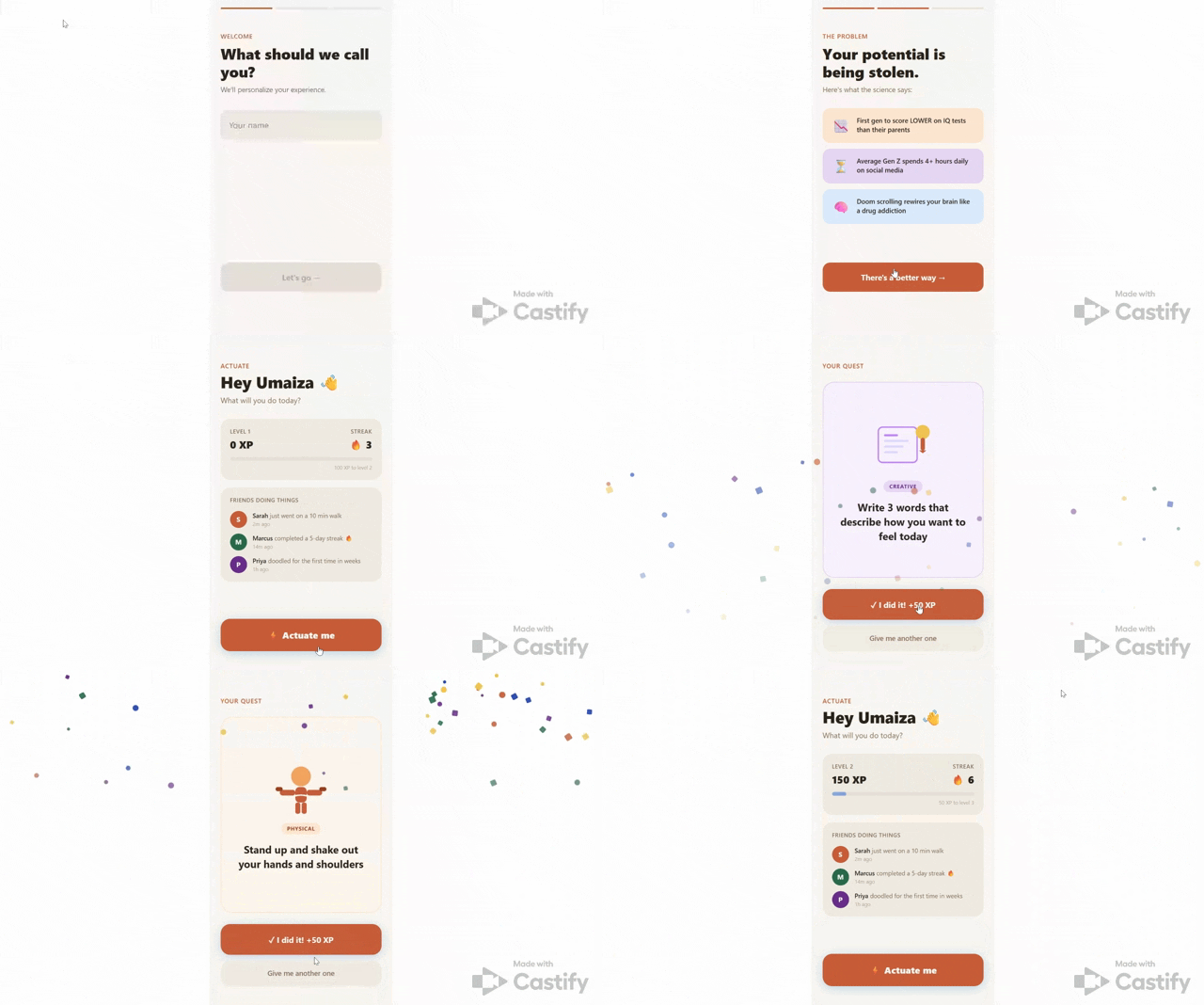
The system works in three main steps: User Onboarding - Users are categorized based on cognitive tendencies (vision-driven vs. idea-driven), which influences how tasks are presented.
Quest Generation - The app selects from a structured database of micro-quests categorized by skill type, difficulty, and cognitive fit. These quests are designed to be easy to start but meaningful over time.
Gamified Feedback Loop - We implemented mechanisms inspired by engagement systems like streaks, rewards, and visible progress
Instead of reinforcing passive behavior, these systems reward real-world action.
Challenges We Faced
One of the biggest challenges was balancing simplicity with personalization. Highly personalized systems are powerful, but they can also become complex and slow to build. We addressed this by creating a structured quest database first, then layering lightweight personalization on top.
Another challenge was designing for action, not distraction. Many apps unintentionally recreate the same addictive patterns they aim to solve. We had to carefully design the experience so that every interaction pushes the user toward doing something in real life.
Finally, we had to ensure the product was compelling enough to compete with social media. That meant borrowing the same engagement principles, but using them responsibly and with a different goal.
What This Project Means
Actuate is not just a productivity tool or habit tracker. It’s an attempt to rethink how technology interacts with human motivation.
Instead of competing for attention, it aims to return attention to the user, one small action at a time.
Built With
- fastapi
- figma
- gemini
- javascript
- json
- openai
- python
- youtubedbapi

Log in or sign up for Devpost to join the conversation.