Inspiration
Actually, That Sucks! was inspired by the energy of online arguments, ranked lists, and “brutal reality check” memes about fictional universes. Instead of just letting people rant endlessly, we wanted to turn that debate energy into a structured, social game that lives directly in the Reddit feed.
The idea came from the fun of comparing worlds like Pokémon vs. The Witcher, Star Wars vs. Dune, The Office vs. Breaking Bad, and asking one simple question: which one actually sucks more to live in?
What it does
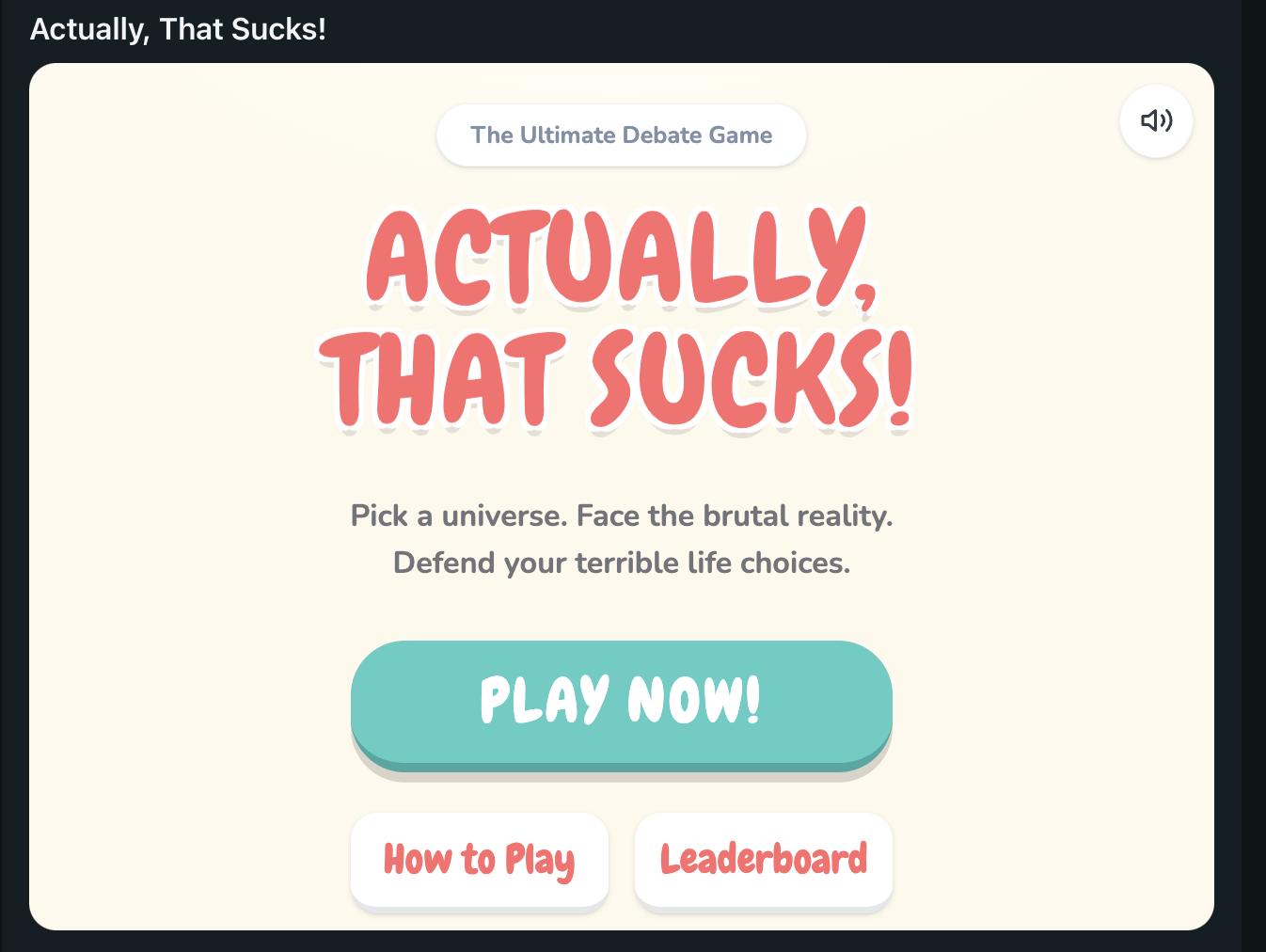
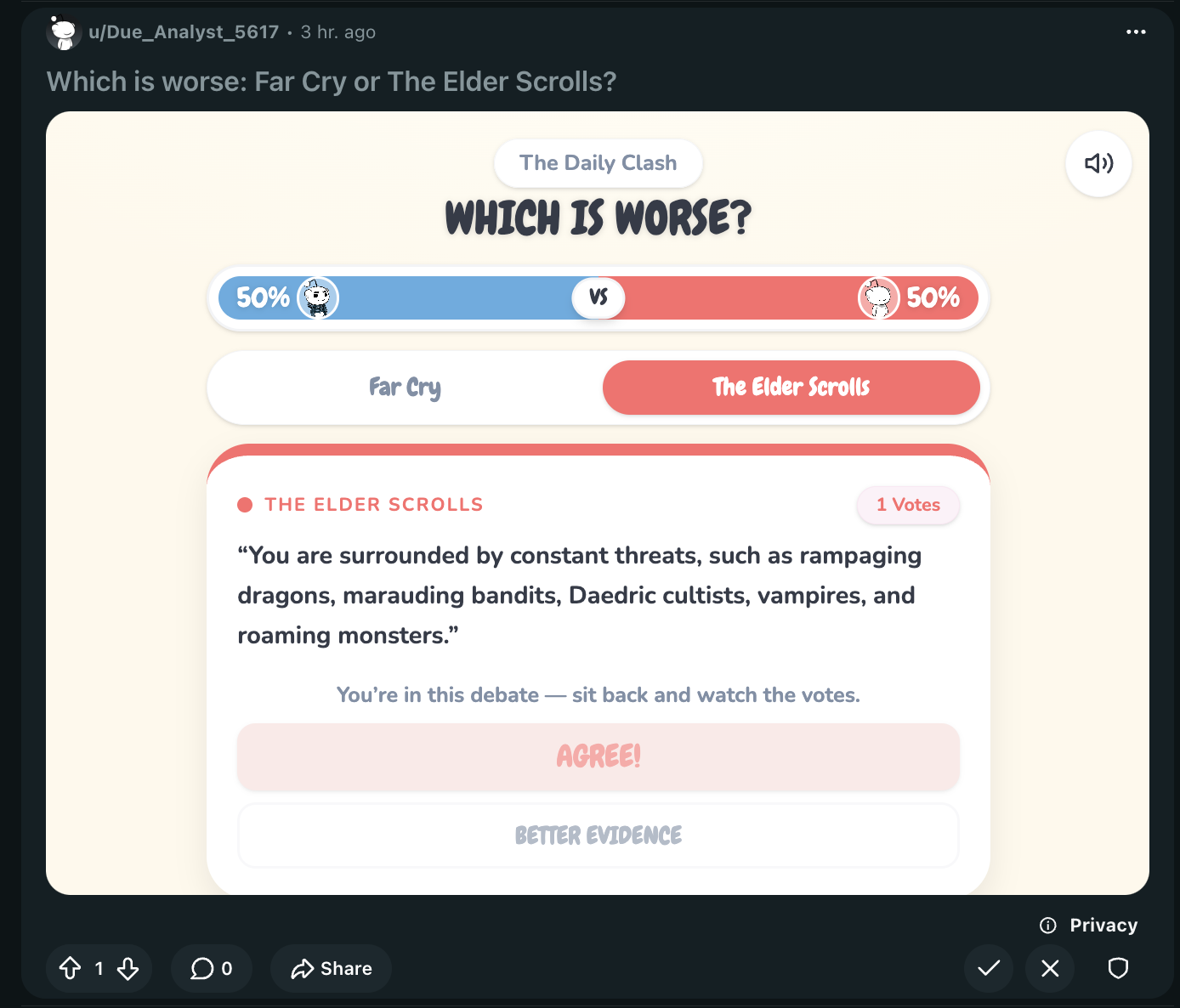
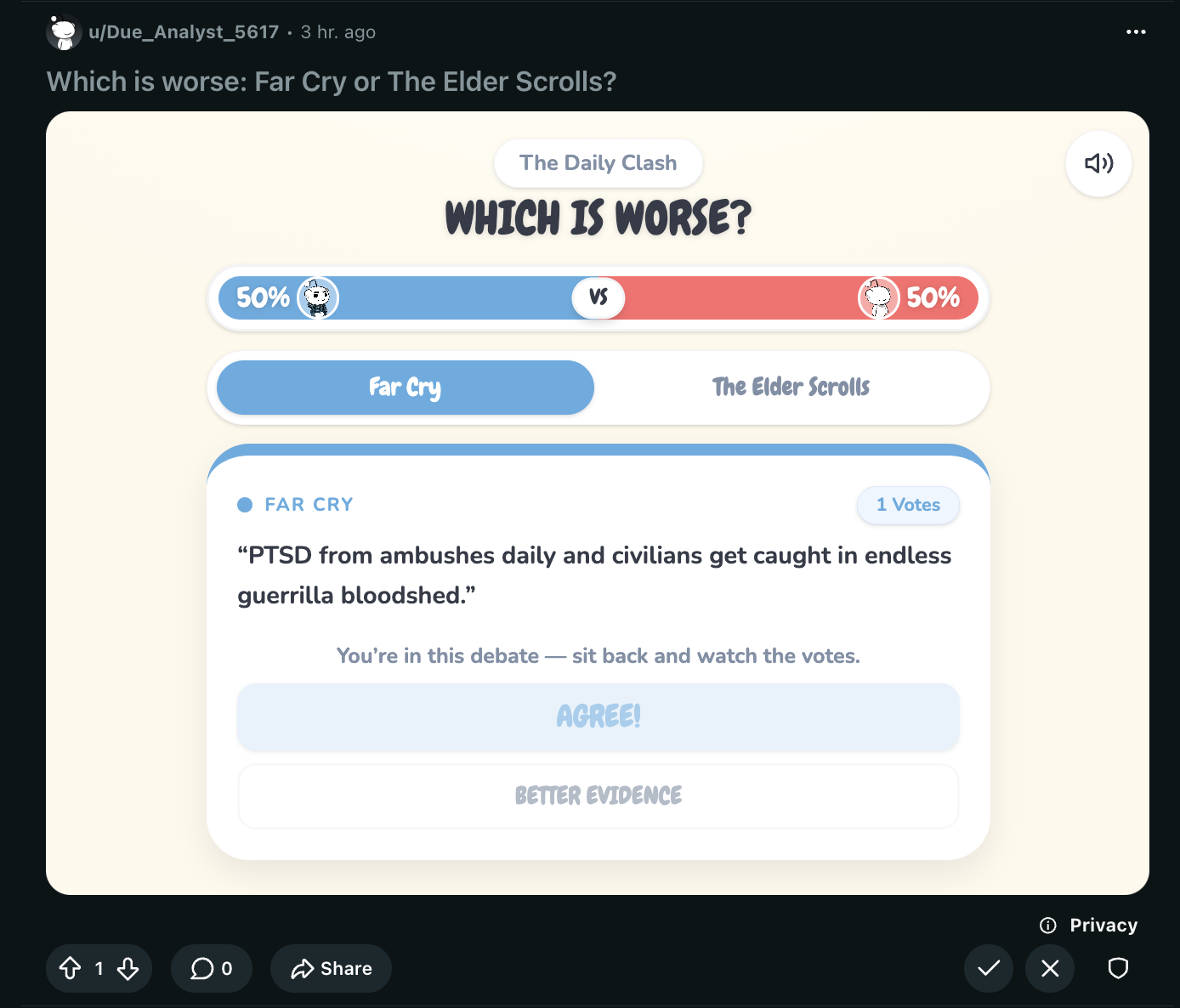
Actually, That Sucks! is a debate game built on Reddit’s Developer Platform (Devvit) that turns fictional universes into head-to-head matchups.
The core loop:
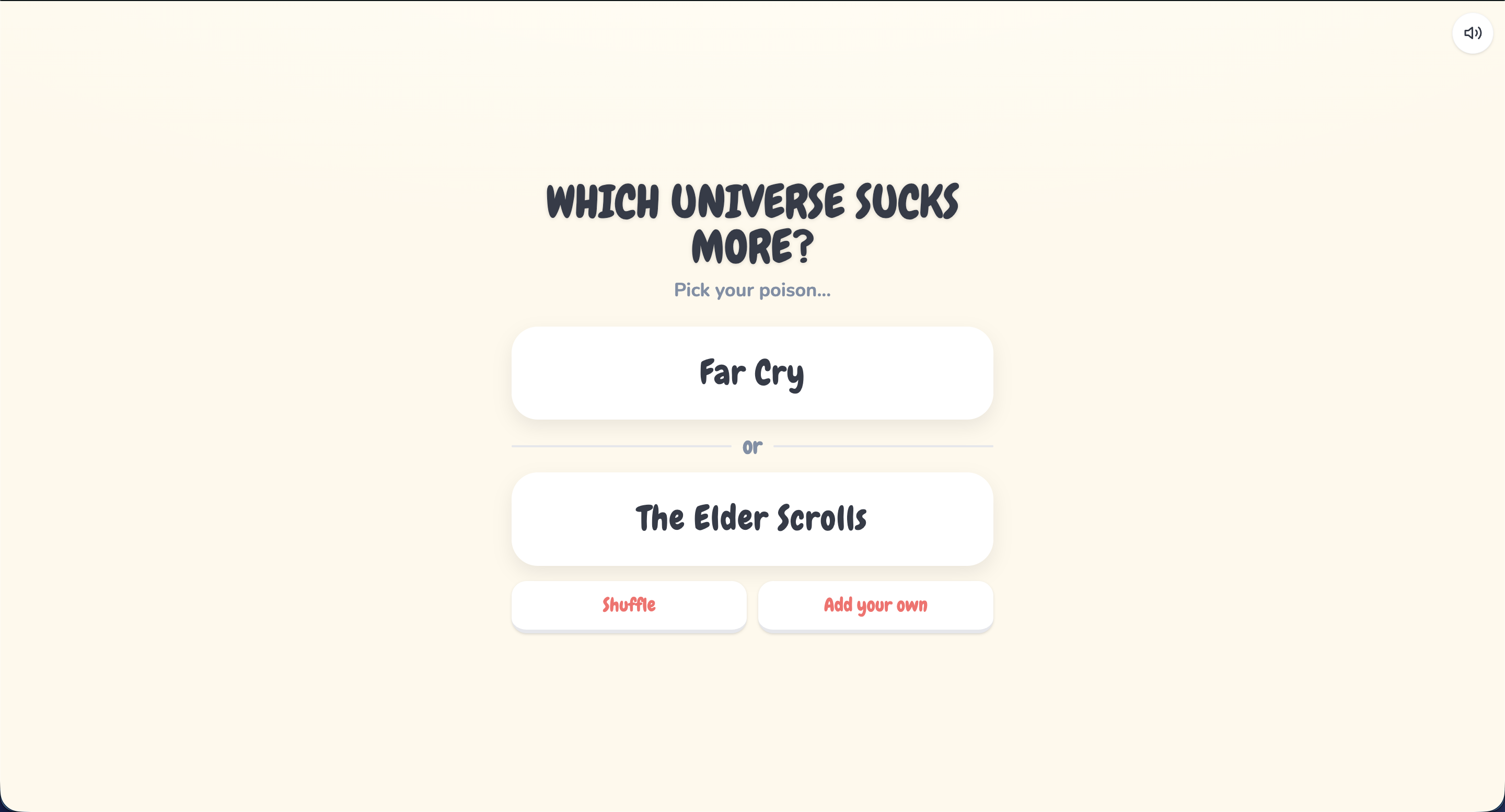
- Pick a matchup (randomly paired universes or your own).
- Choose the side you think is worse.
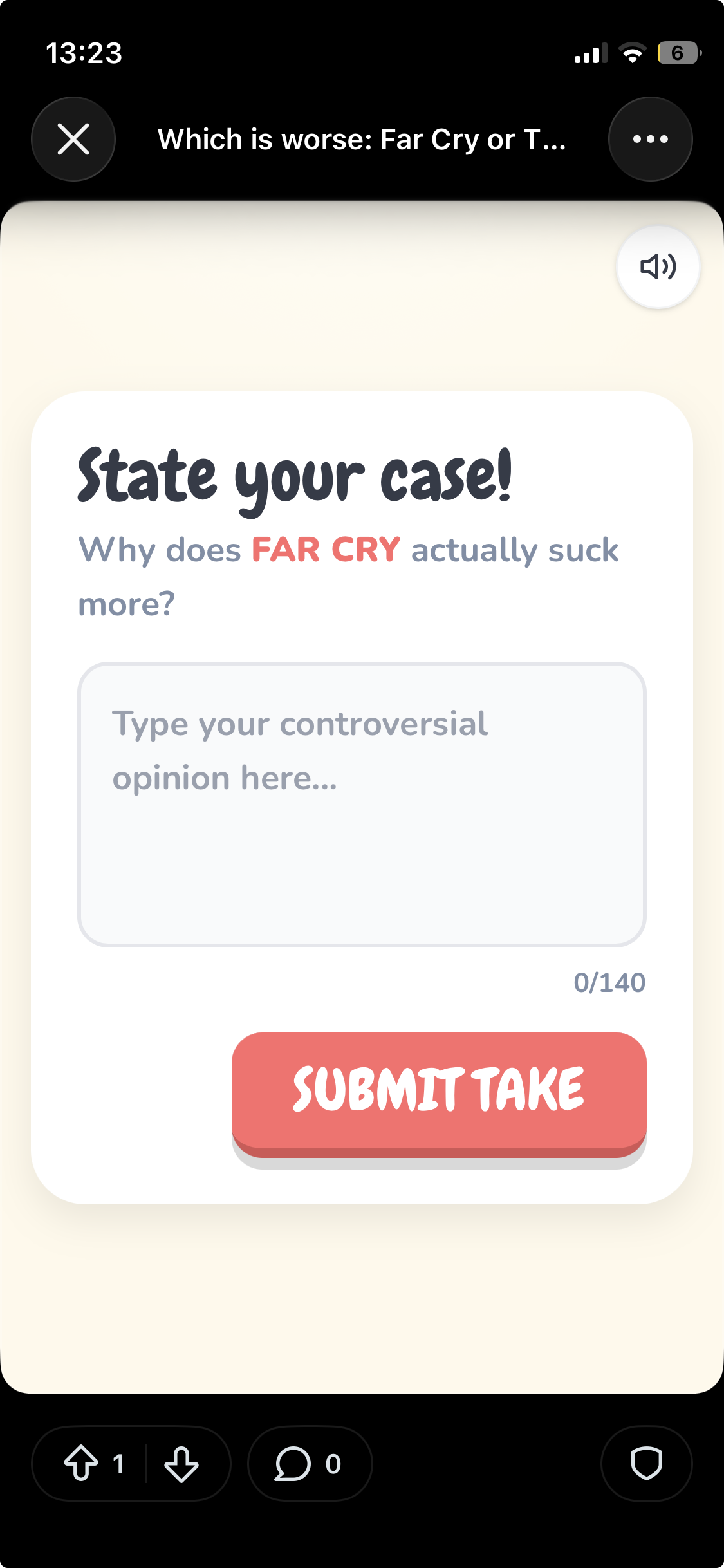
- Type your most brutal reality check (140 characters).
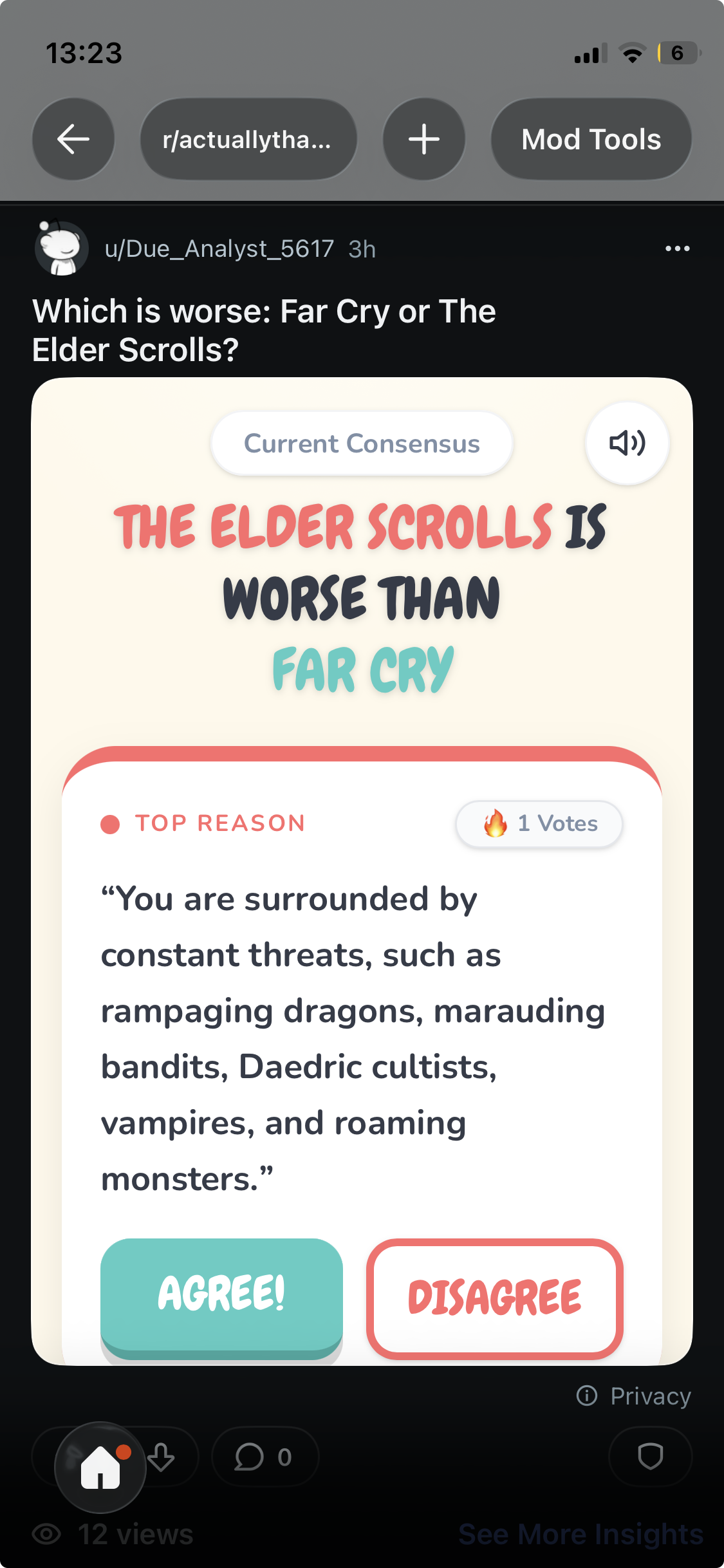
- Your take becomes the Top Reason on the board.
- The feed votes Agree, or people Disagree to defend the other side with better evidence.
- When both sides are represented, the debate flips to a clash board where the community picks a winner.
- After 24 hours, voting locks and the result is final.
Winning debates earns you points and a spot on the Top Debaters leaderboard.
How we built it
I built Actually, That Sucks! as a fully Reddit-native experience using Devvit, React, and a type-safe server backend.
The game lives in two views:
- An inline card in the feed that shows the current consensus or clash.
- An Expanded Mode full-screen board where players pick sides, argue, and vote.
The server handles game state, votes, timers, and the 24-hour resolution logic. A scheduler task automatically resolves each debate when its timer expires. The client handles the interactive UI—matchup selection, argument input, live vote counts, and Snoovatar display on each side.
Challenges we ran into
One challenge was designing a debate flow that felt fair and clear. I wanted strong, meme-style arguments, but also a system that rewarded better reasoning instead of just popularity.
Another challenge was making the 24-hour timer meaningful without making debates feel abandoned. The game needed to work both for people who drop in immediately and those who arrive hours later.
I also had to balance simplicity with depth. The game should be easy to understand from the feed, but still allow for clever arguments, counterpoints, and community dynamics.
Accomplishments that we're proud of
I'm proud that Actually, That Sucks! captures the chaotic fun of online arguments while giving them structure and stakes. Instead of endless back and forth, every debate has a clear goal, a timer, and a final result.
Most of all, I'm proud that the game encourages both funny and serious takes. Some players roast universes with meme-level burns, while others build clever, well-reasoned arguments and both styles can win.
What we learned
I learned that debate-style games work best when the rules are tight and the feedback is immediate. Players need to know quickly if their take was voted up or down, and how others responded.
I also learned that a little structure can make chaos much more fun. Arguments on their own can be messy, but when you give them a clear format, they suddenly feel like a game.
Finally, I learned that letting players be dramatic and funny is a feature, not a bug. The more personality the game allows, the more memorable and engaging the debates become.
What's next for Actually, That Sucks!
Next, we want to make the game even more social and replayable.
Possible future additions include:
- Better leaderboards for top debaters and best arguments.
- Themed rounds or seasonal events.
- Improved tools to keep the space fun and avoid toxic behavior.
- More polish for how the consensus and clash boards look and evolve over time.
I’d also like to experiment with new modes, like community-chosen universes, or multi-round tournaments between fandoms.
Built With
- devvit

Log in or sign up for Devpost to join the conversation.