-
-
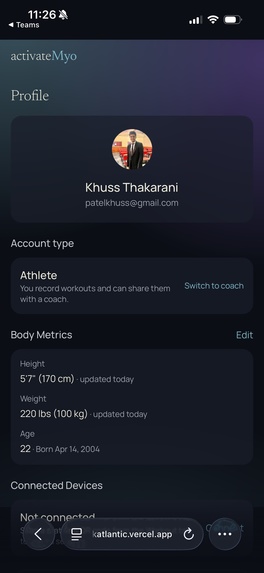
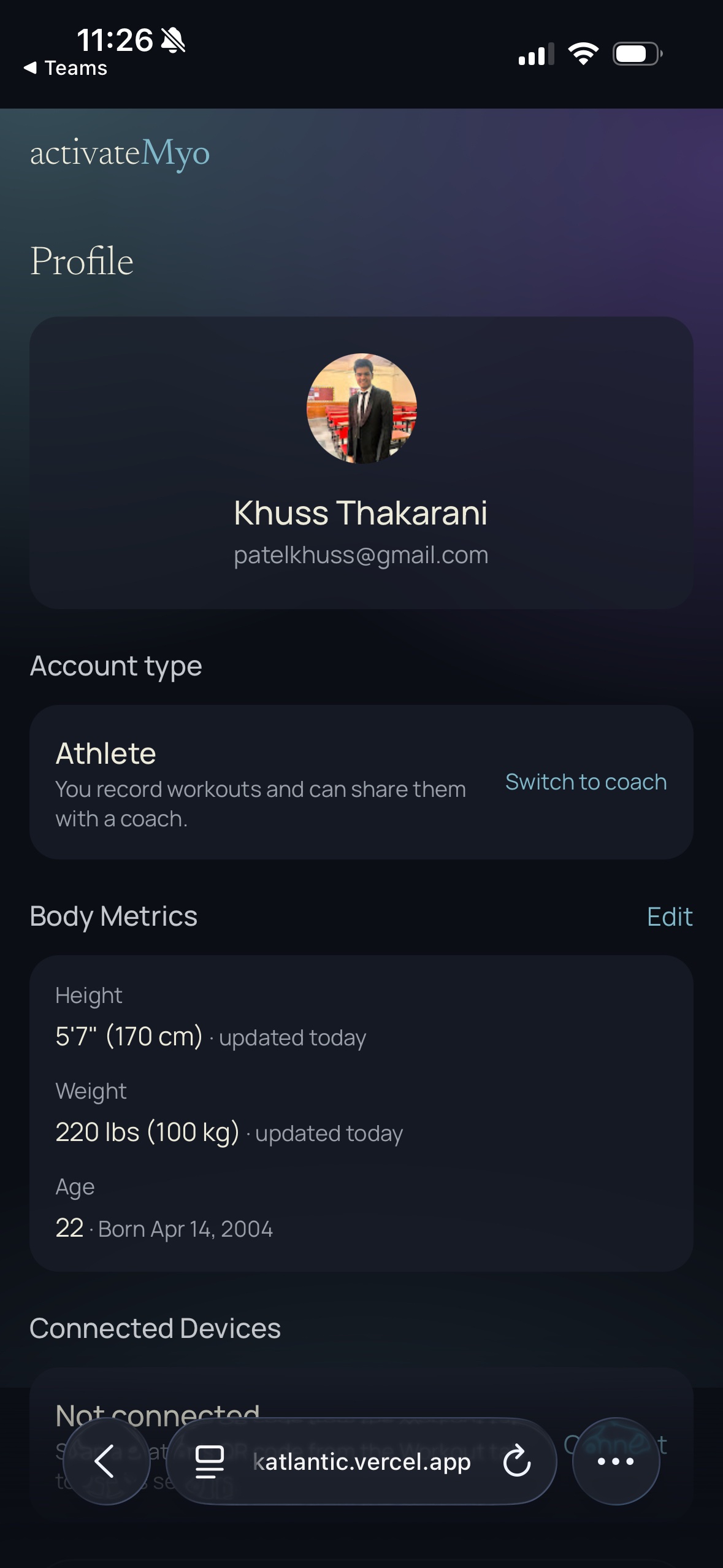
The user profile
-
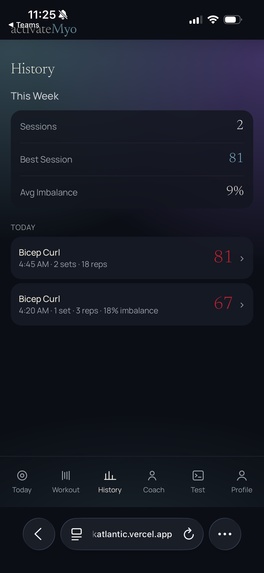
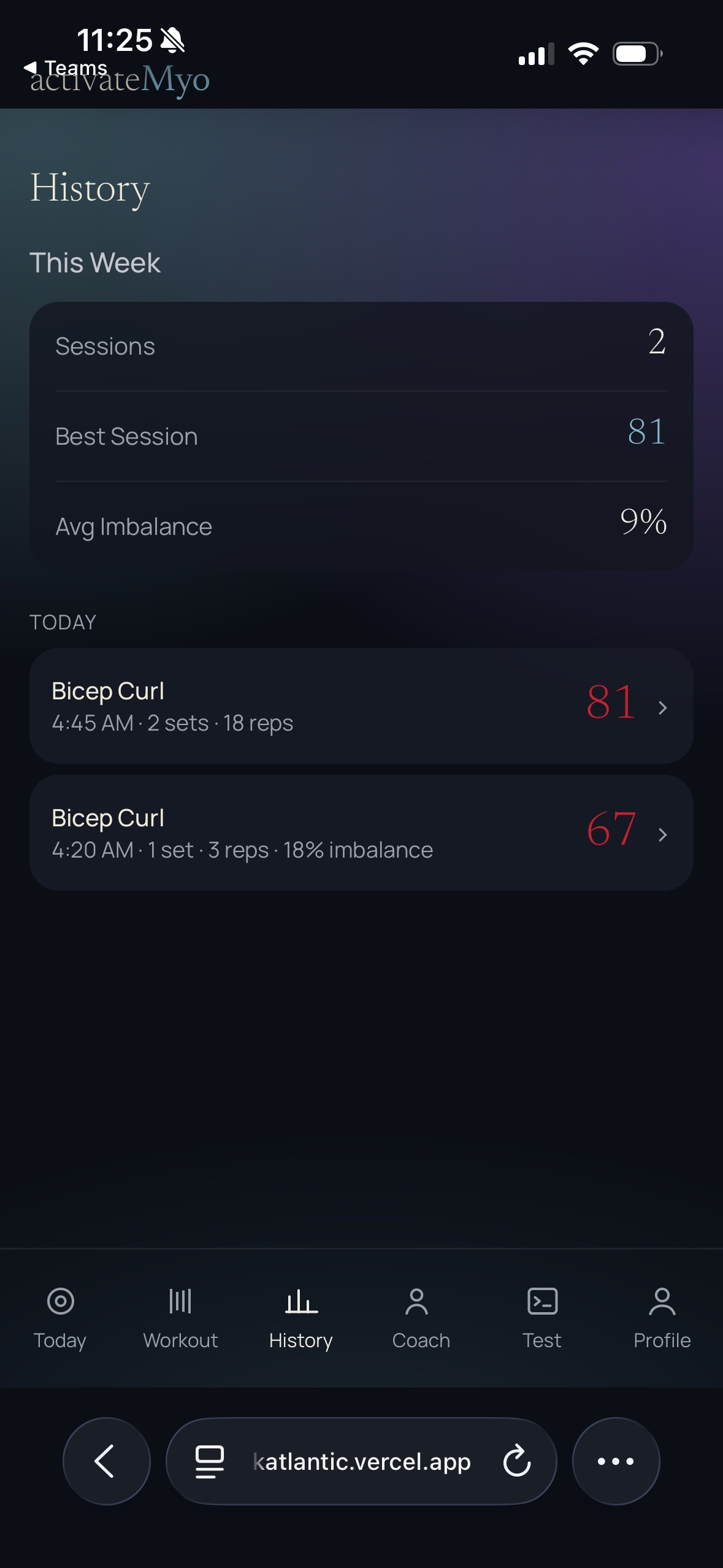
Work out history
-
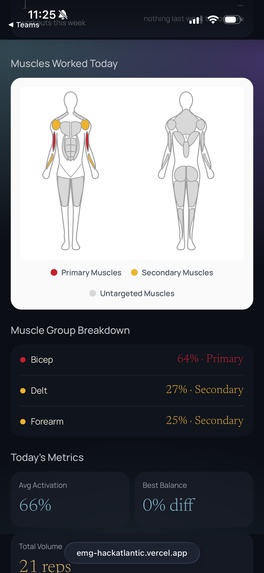
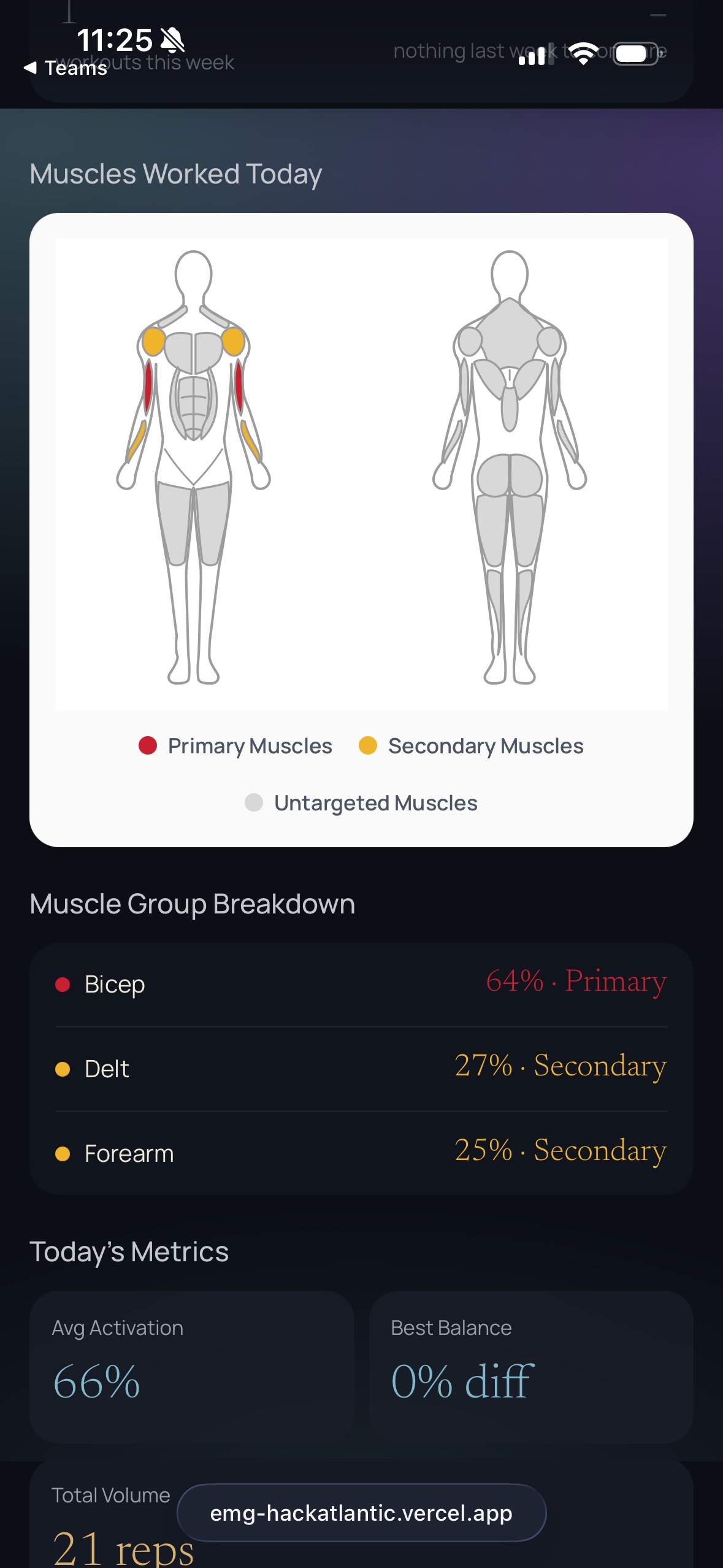
Muscle activation
-
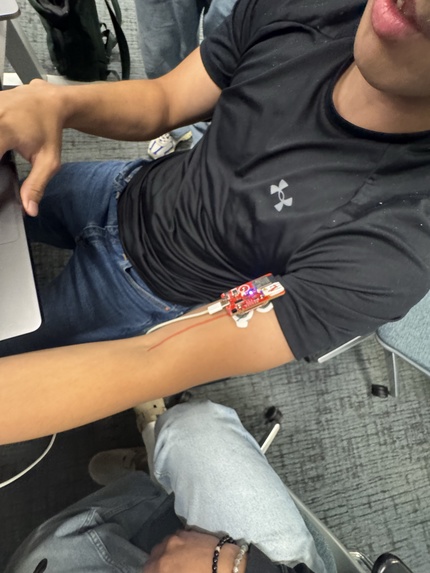
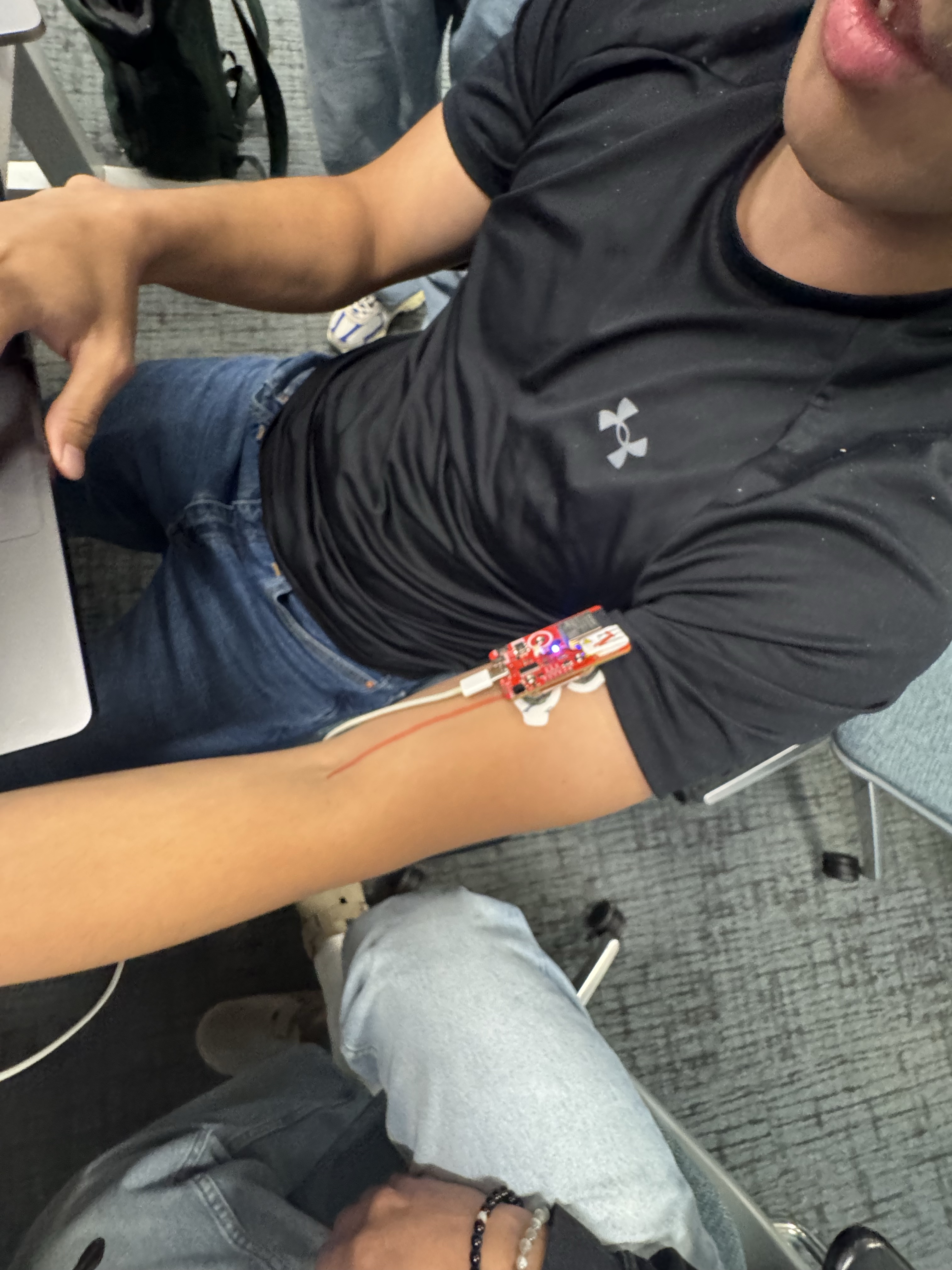
The EMG sensor attached to a person.
-
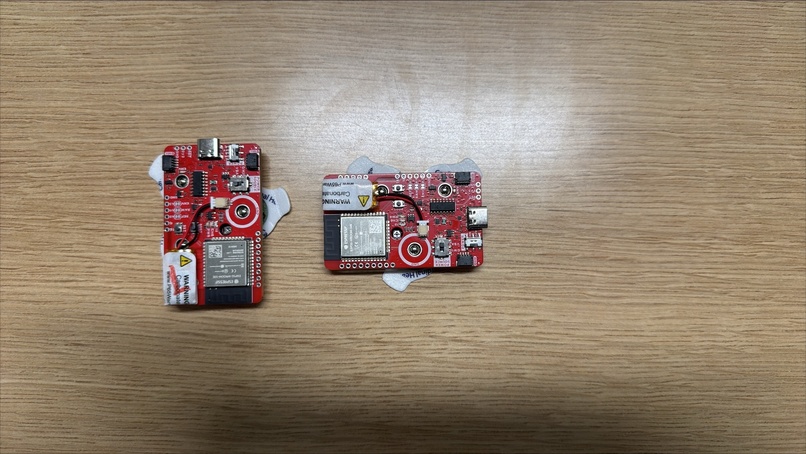
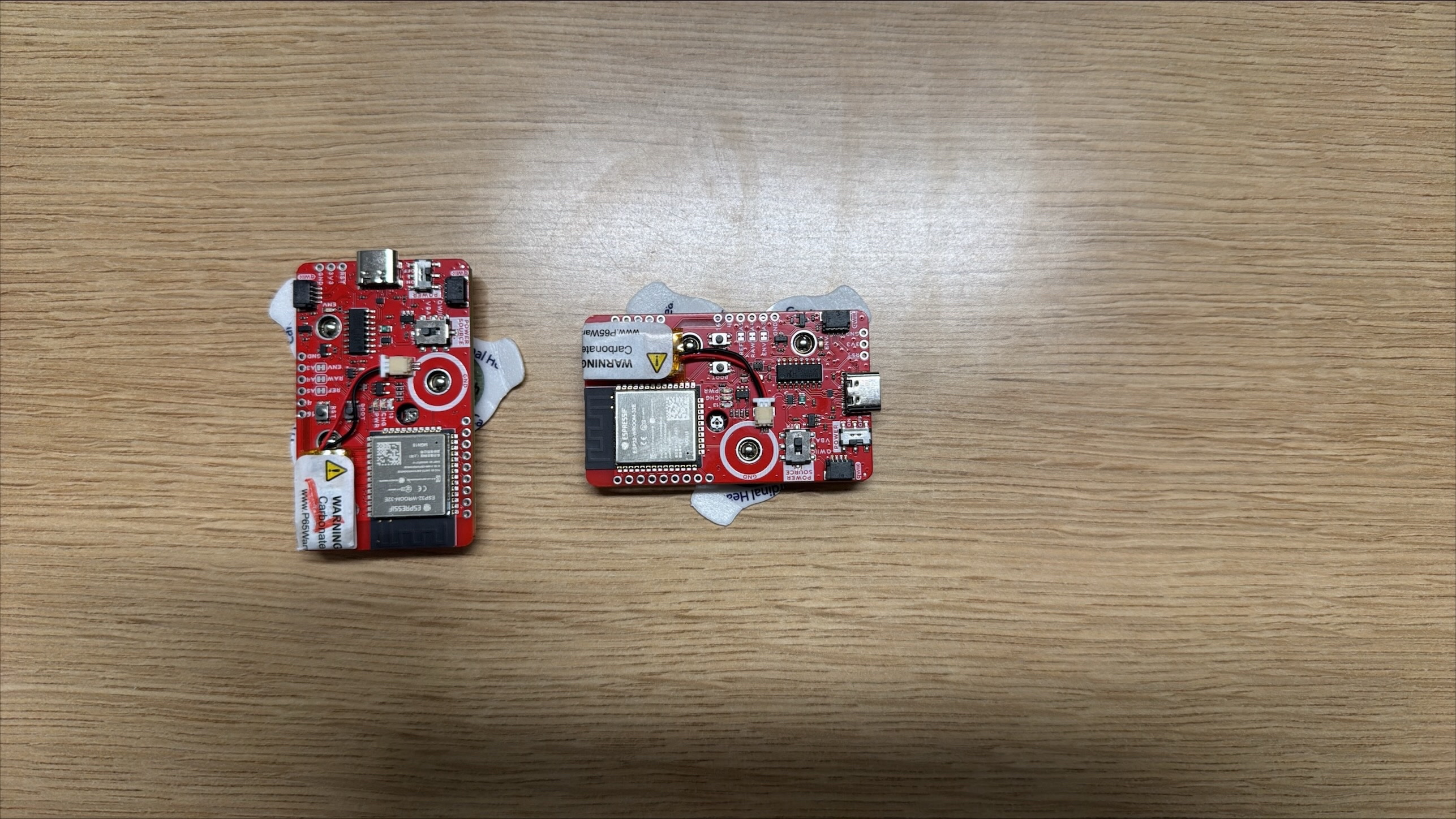
Both emg sensors
Inspiration
Muscle activation data can reveal more than reps and weight alone, but EMG equipment is often expensive, specialized, or difficult to use outside a lab. We wanted to make meaningful EMG insights easier to access during everyday training and rehabilitation.
What it does
ActivateMyo uses wearable EMG sensors to track muscle activity and stream it to a smartphone. Athletes, trainers, and physiotherapists can review activation, compare left and right sides, monitor fatigue, and revisit workout sessions. Coaches can also follow an athlete’s progress.
How we built it
We built a multi-sensor EMG setup around MyoWare 2.0 sensors and ESP32 Bluetooth hardware. This sends live readings to a locally hosted Python service, which stores them in Redis before writing them through our Next.js backend to Supabase. This allows users to view muscle activity and workout metrics across devices in real time while supporting secure permanent data storage.
Challenges we ran into
Everything to do with EMG data: before we settled on connecting via Bluetooth, we experimented with custom firmware that sent embedded packets over local Wi-Fi. This took several hours to build and proved very unreliable. We then switched to the Bluetooth approach. Once that was done, we found that EMG data was still incredibly noisy, and that readings are unique to each person. Therefore, we had to use robust statistical methods based on each individual user's baseline.
Accomplishments that we're proud of
We connected wearable sensors to a live smartphone experience and turned raw electrical signals into understandable workout measures. We’re proud of bringing together rep counting, time under tension, side-to-side balance, activation scoring, and readiness scores into one workflow.
What we learned
As a team, it was our first time using Supabase. It was also our first time working with high-frequency medical data over a network, and learning how crucial intermediate caching layers (like Redis) are when bridging real-time hardware telemetry with cloud storage. Beyond just the tech stack, we learned how to present and summarize complex physiological metrics in an intuitive user interface.
What's next for ActivateMio
There are many possible next steps. Our app is fundamentally limited by the EMG sensor, and as such, the development of an easy-to-use Myo band that does not rely on single-use gel and has a long-lived battery will dramatically improve user experience. As we gain user data, we can incorporate lightweight ML models to detect fatigue thresholds and predict injury risk before overexertion occurs. And, of course, user validation in a hackathon is never going to be high quality, and would need to be pursued further before productization.
Our code can be found at: https://github.com/richardhtoomyat/EMG_Hackatlantic
Built With
- libemg
- nextjs
- radis
- supabase
