Inspiration
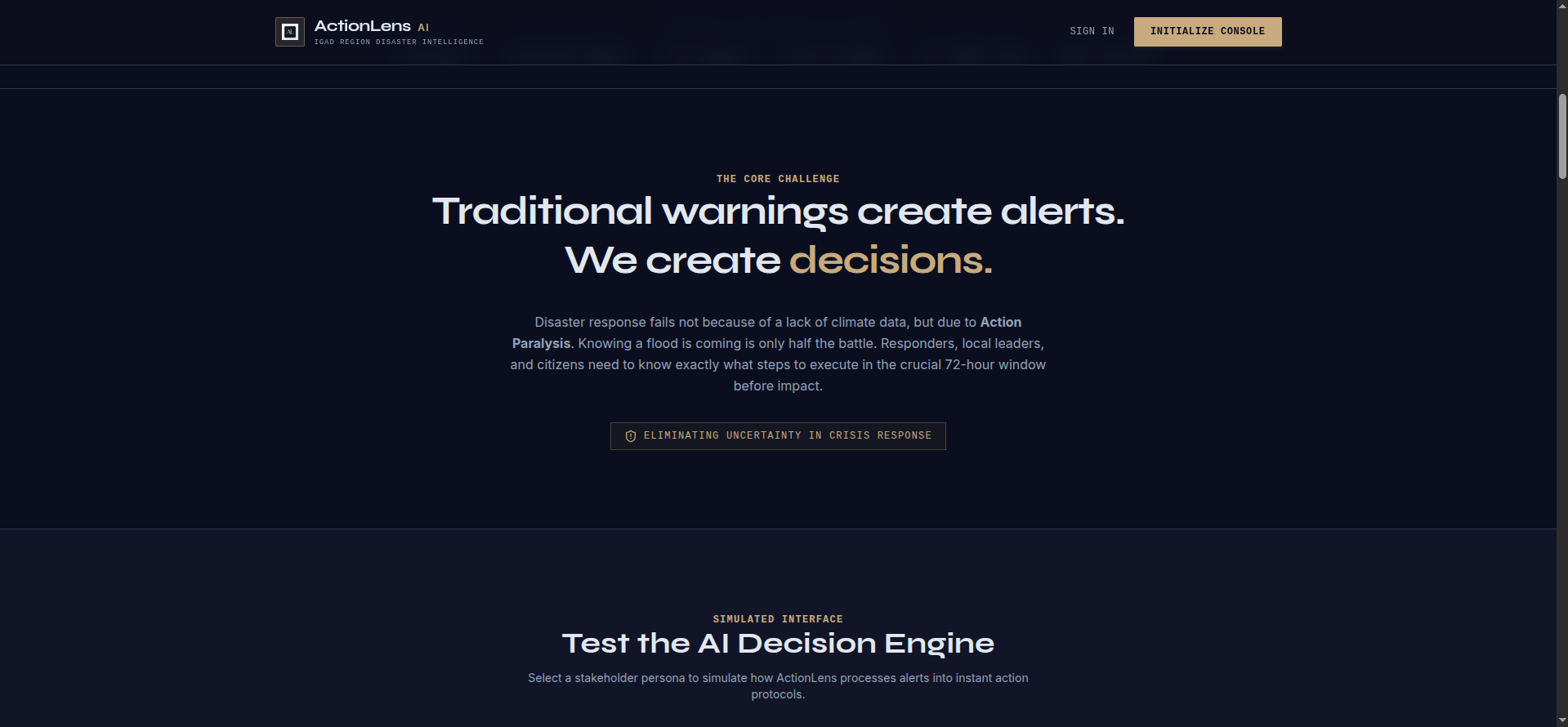
Climate disasters are becoming more frequent, but many communities still receive warnings too late or struggle to know what action to take. Existing systems often provide forecasts without translating them into practical, localized decisions for citizens, emergency responders, governments, and humanitarian organizations.
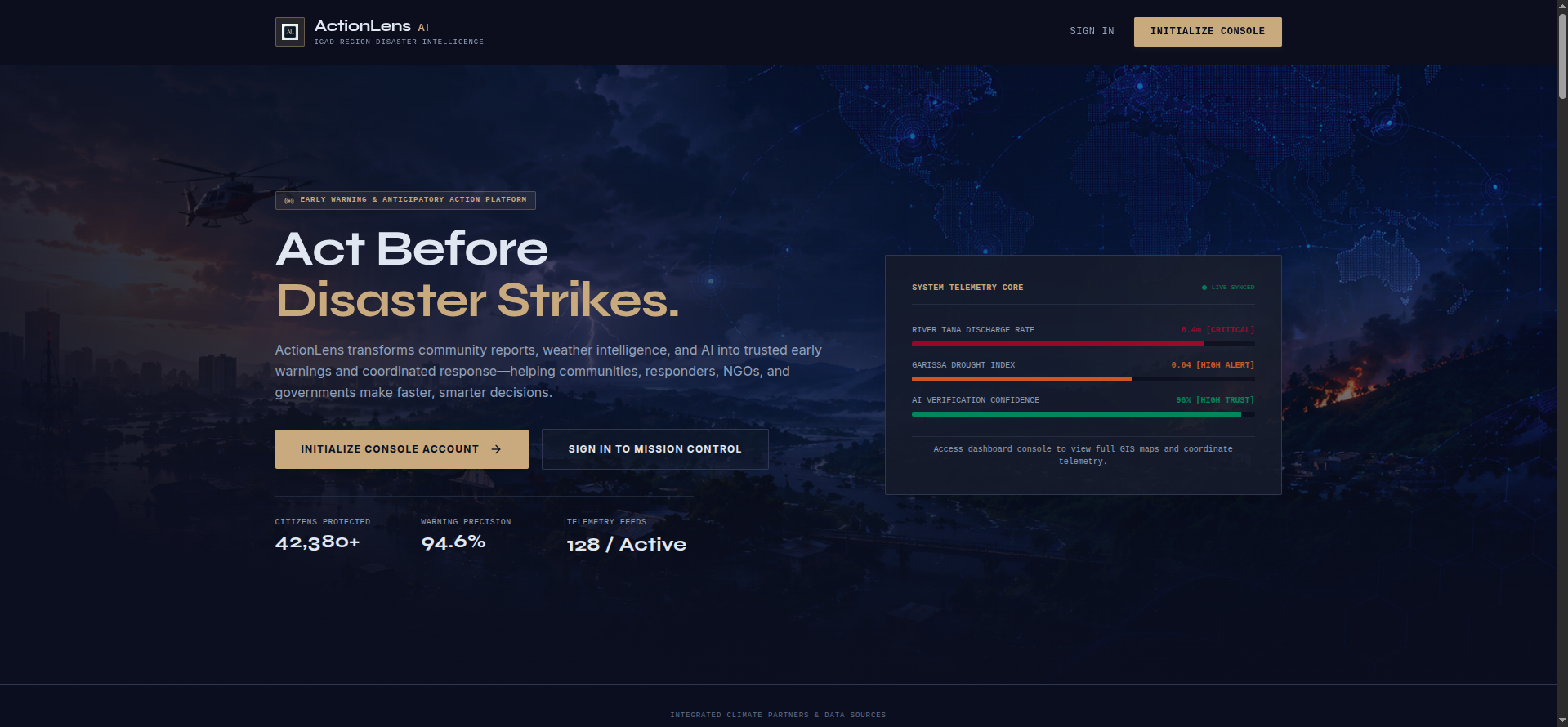
We wanted to bridge this gap by building a platform that transforms hazard data into actionable intelligence. Rather than creating another dashboard of maps and statistics, our goal was to build an AI-powered decision support platform that helps different users understand what is happening, what it means, and what they should do next.
ActionLens AI was inspired by the belief that effective early warning is not just about predicting disasters—it is about enabling people to make faster, smarter, and more coordinated decisions before, during, and after an emergency.
What it does
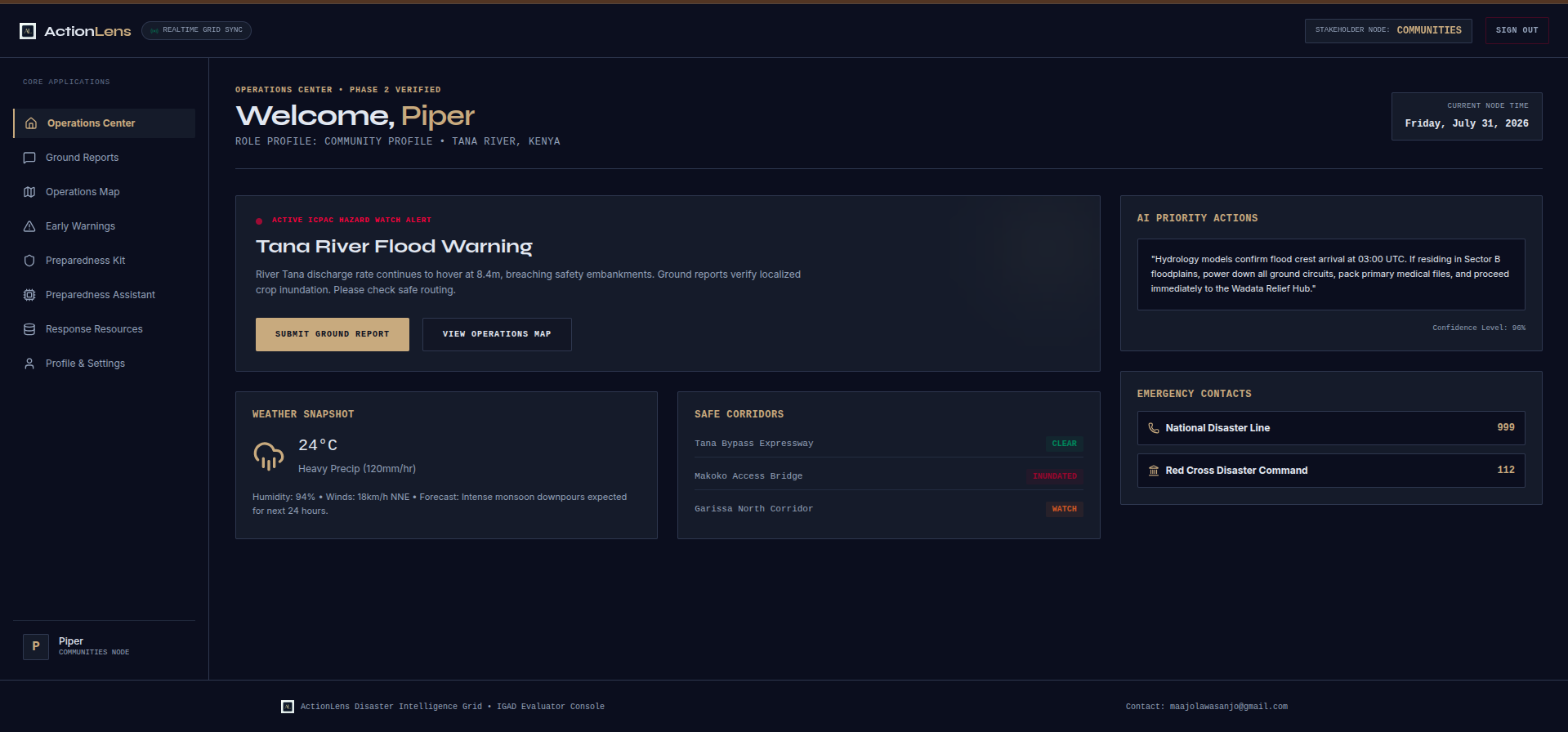
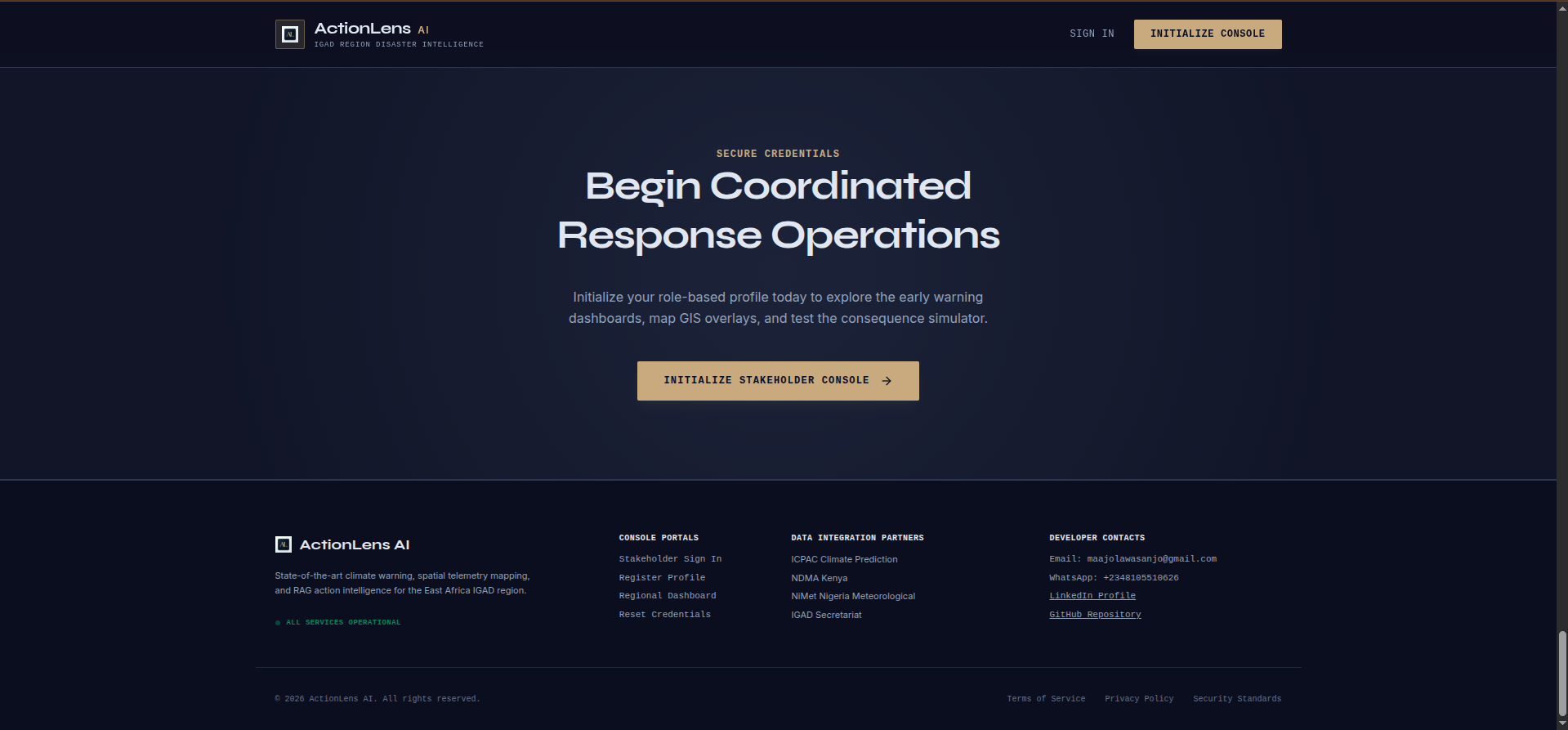
ActionLens AI is an AI-powered disaster intelligence and early warning platform that supports multiple stakeholders through role-based experiences.
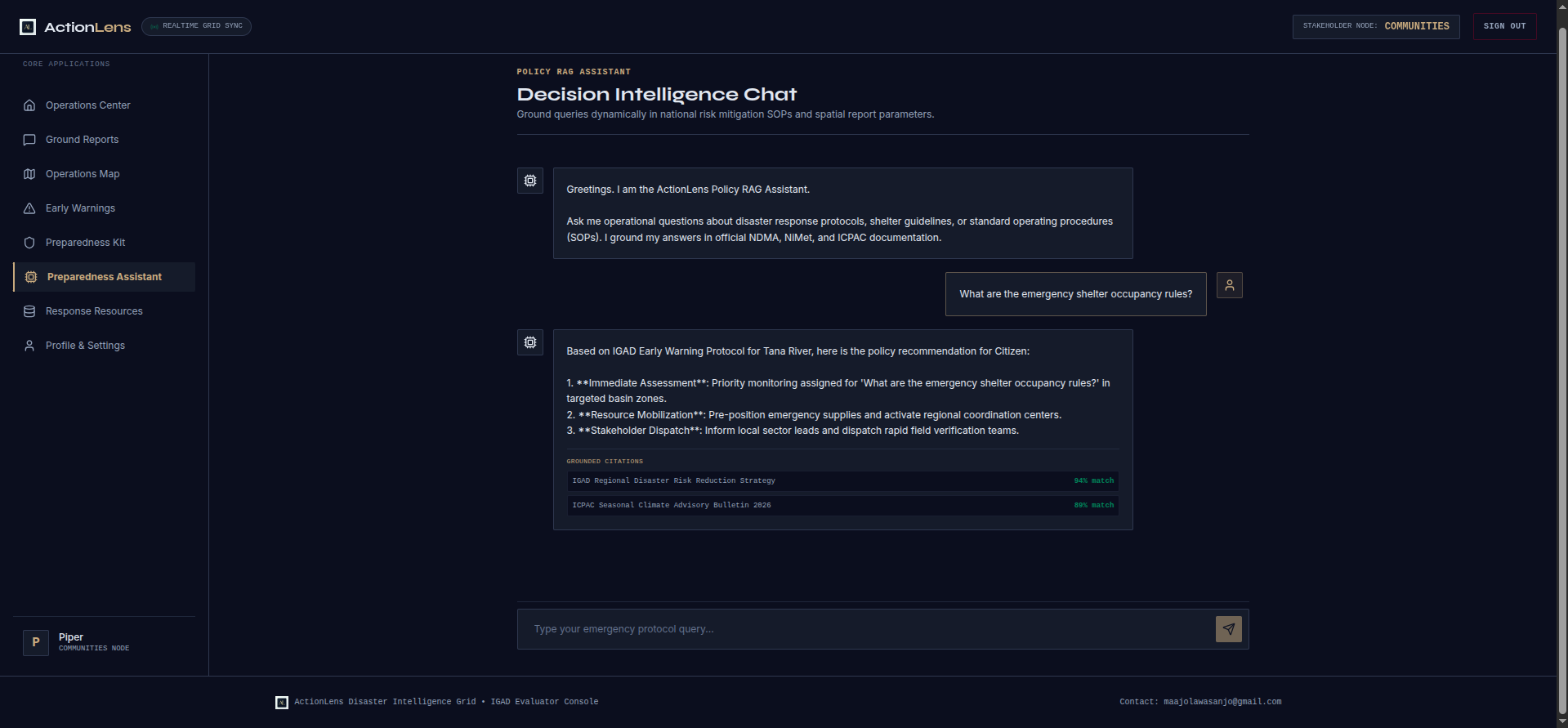
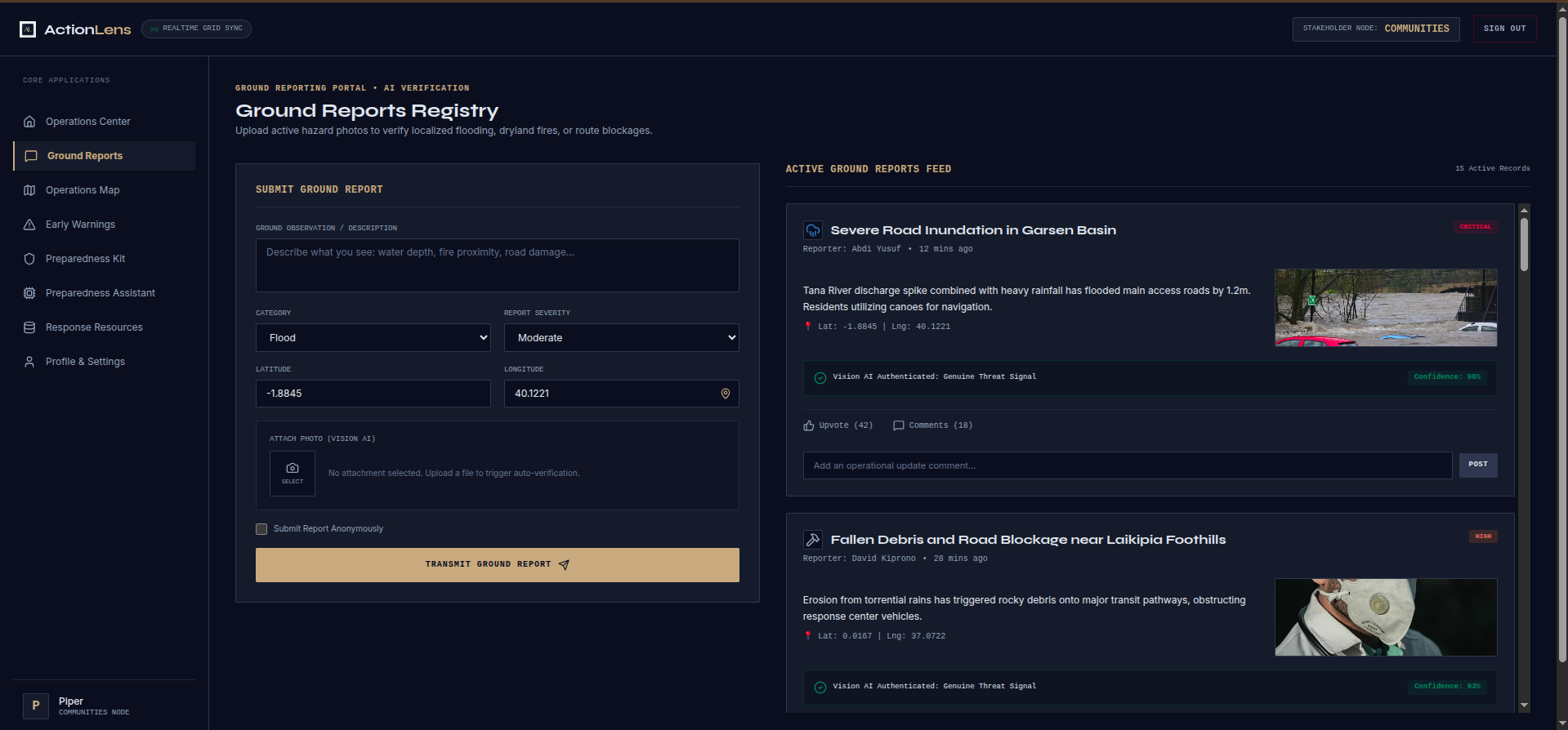
The platform enables citizens to receive localized alerts, report hazards with images and GPS coordinates, discover nearby shelters, hospitals, and safe routes, and ask an AI assistant preparedness questions.
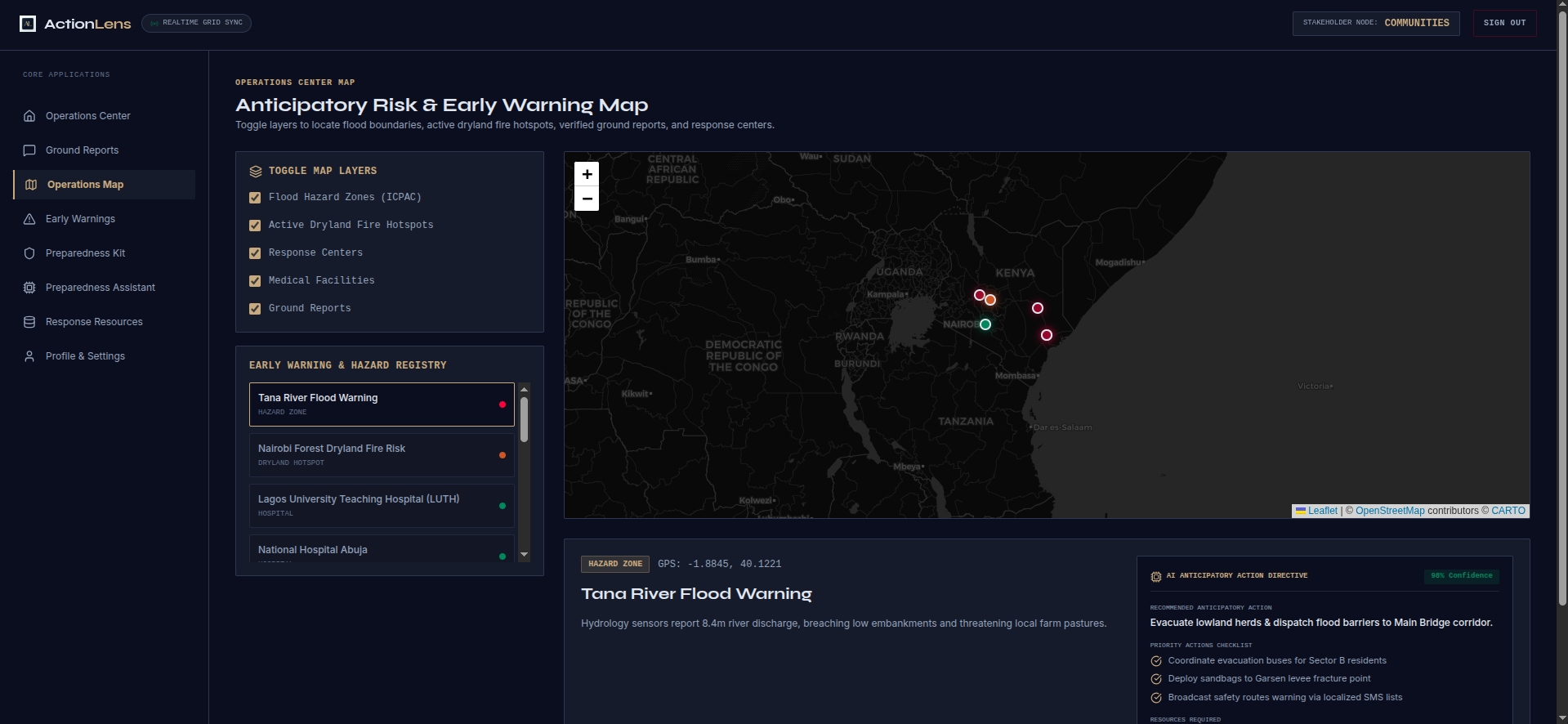
Emergency responders gain access to live incident maps, verified community reports, operational recommendations, resource locations, and AI-assisted tactical guidance.
Government agencies can monitor regional risks, review executive analytics, simulate disaster impacts, evaluate AI-generated recommendations, and coordinate preparedness efforts using real-time information.
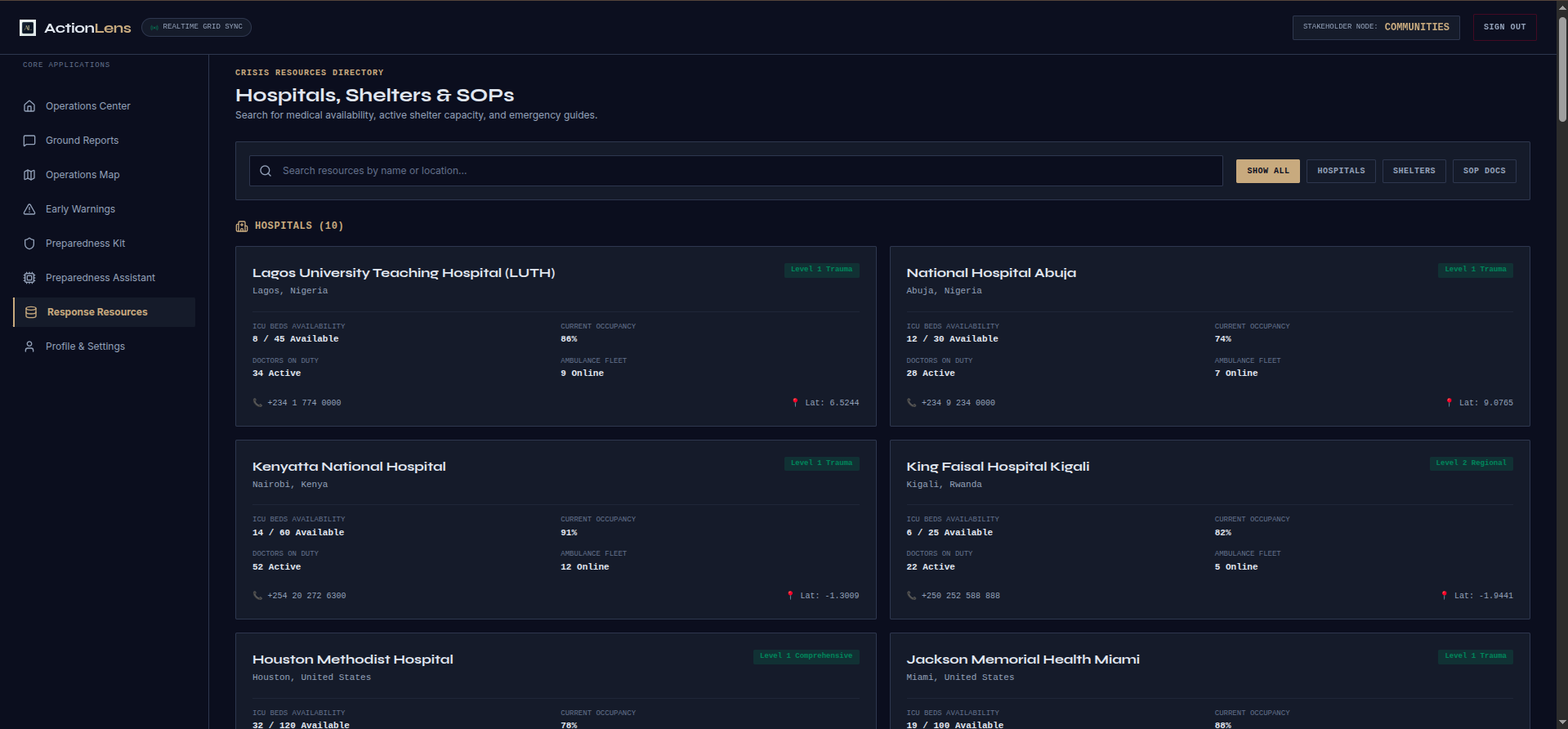
Humanitarian organizations can monitor shelter occupancy, manage aid distribution resources, coordinate relief operations, and identify communities requiring urgent assistance.
Administrators manage the AI platform itself, including prompt governance, knowledge base management, operational monitoring, and AI cost tracking.
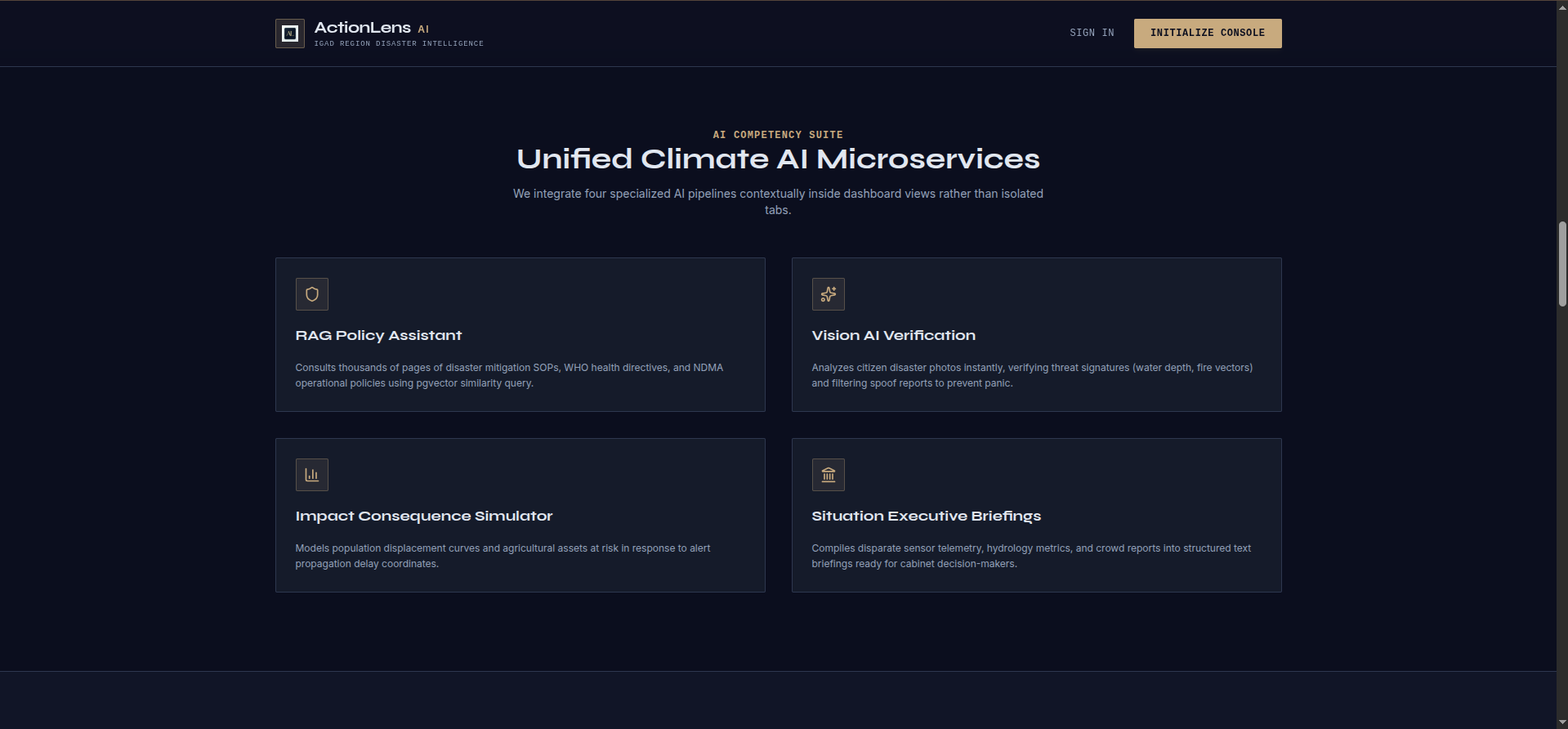
Behind these experiences, ActionLens AI combines AI recommendations, Retrieval-Augmented Generation (RAG), vision verification, disaster simulations, analytics, and real-time community reporting into one unified platform.
How we built it
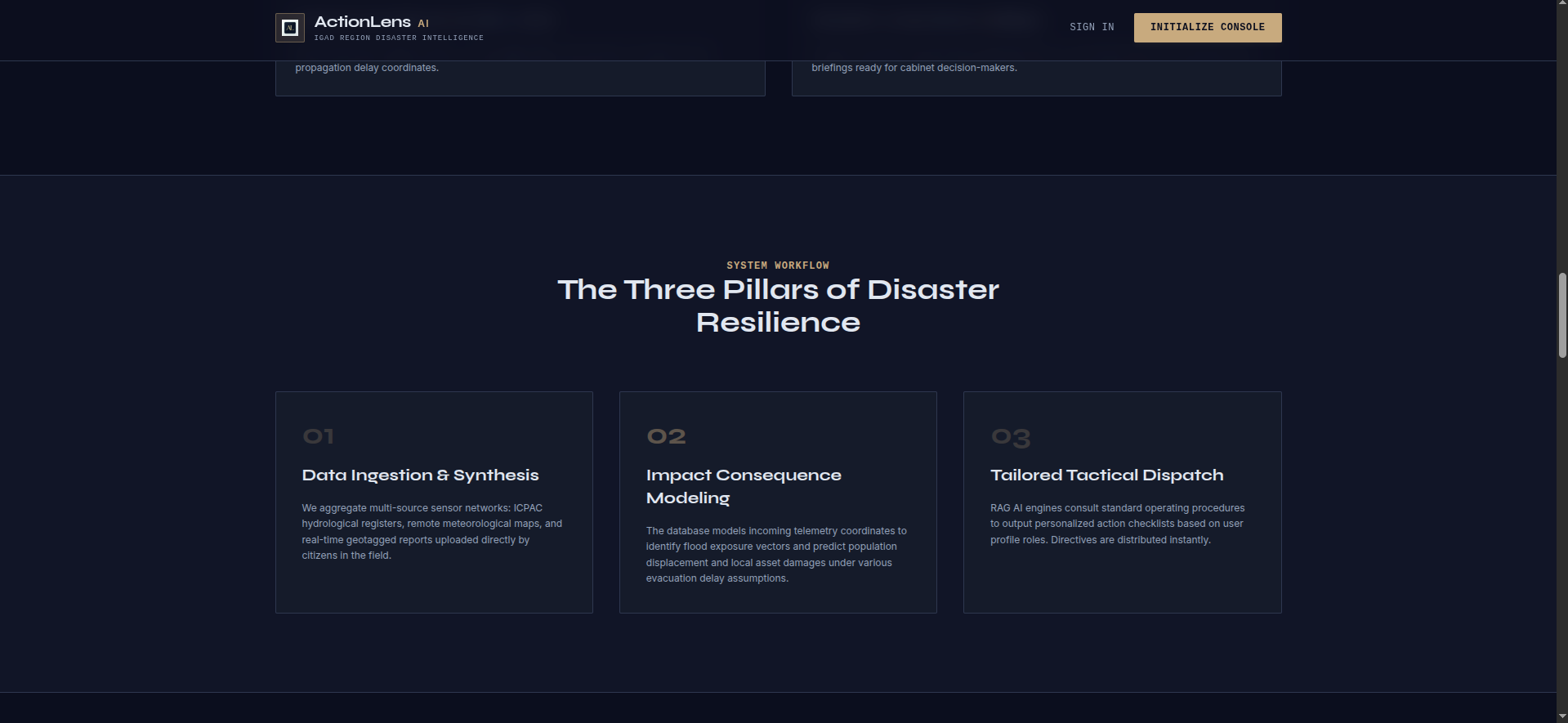
We designed ActionLens AI as a modern full-stack platform with a clear separation between the user interface, backend services, database, and AI engine.
Frontend
- Next.js 15
- React
- TypeScript
- Tailwind CSS
- Framer Motion
- Leaflet Maps
Backend
- FastAPI
- Python
- REST APIs
- Server-Sent Events (SSE)
Database & Infrastructure
- Supabase PostgreSQL
- Row Level Security (RLS)
- Supabase Storage
- Supabase Realtime
- pgvector
Artificial Intelligence
- OpenAI GPT-4o
- GPT-4o Vision
- text-embedding-3-small
- Retrieval-Augmented Generation (RAG)
- Dynamic AI model routing
- AI guardrails
- Confidence calibration
- Recommendation validation
- Prompt orchestration
Platform Features
- Community disaster reporting
- AI image verification
- Interactive GIS mapping
- Disaster impact simulation
- Emergency resource directory
- Real-time notifications
- Analytics dashboard
- Role-based dashboards
- Live incident timelines
The project was developed using an iterative engineering process with modular services, automated testing, and production-oriented architecture.
Challenges we ran into
One of the biggest challenges was integrating multiple AI capabilities into a single coherent platform while maintaining reliability.
We built a recommendation engine, RAG knowledge system, vision verification pipeline, disaster simulator, and streaming AI assistant that all needed to share context without becoming tightly coupled.
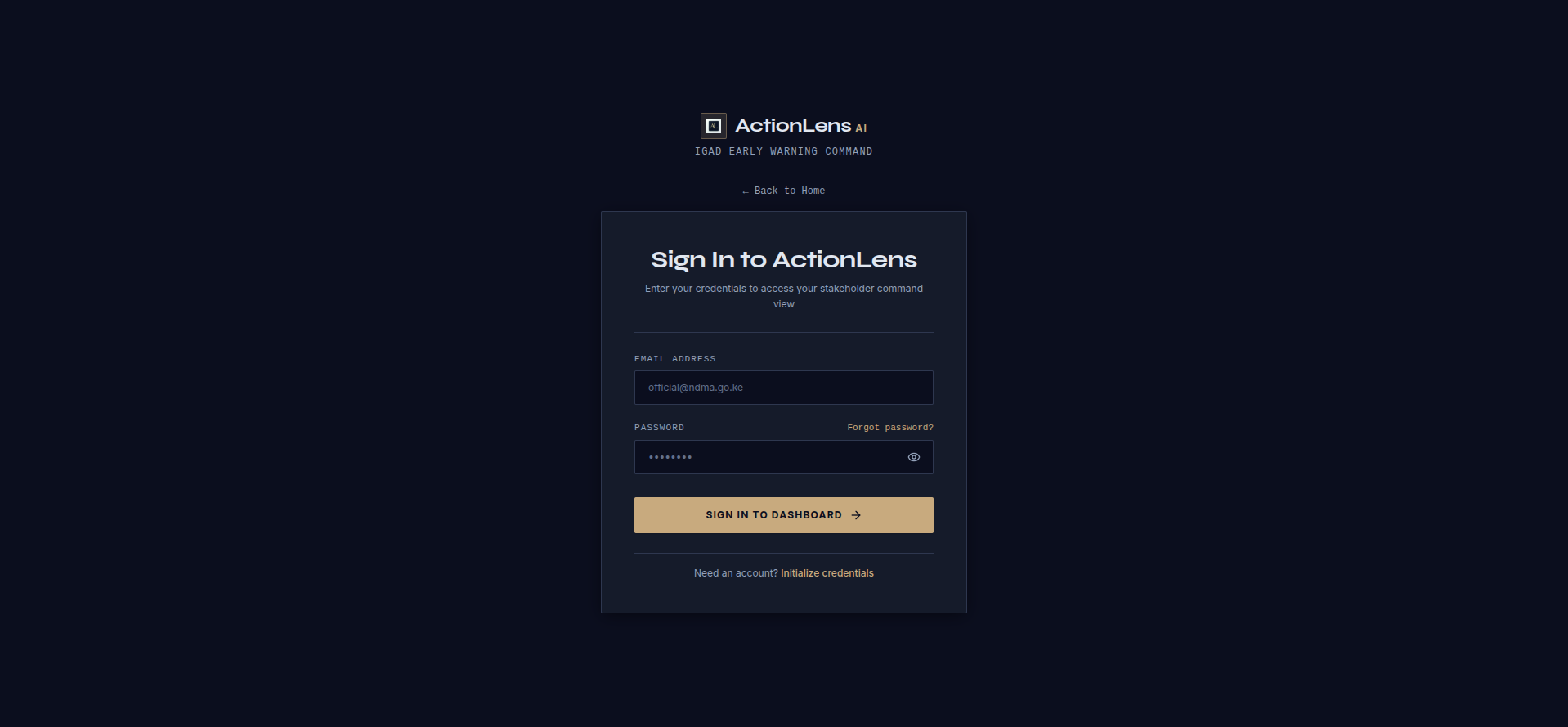
Another major challenge involved authentication and session management. Migrating from a local development environment to production exposed differences in cookie handling and Supabase authentication on serverless deployments. Solving these issues required redesigning our authentication flow around a database-first architecture.
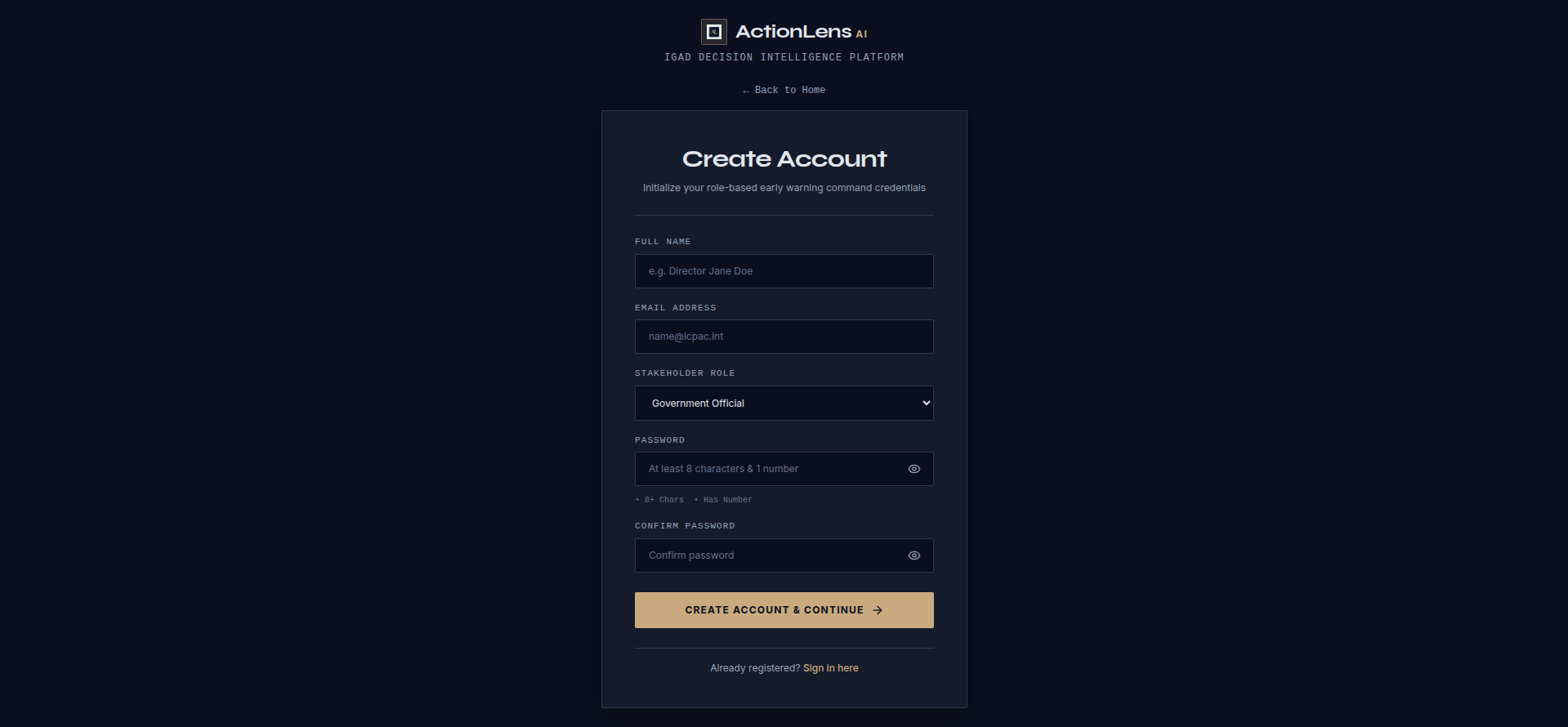
Designing role-specific dashboards was also challenging. Each user group—citizens, responders, government officials, NGOs, and administrators—needed different information while still sharing the same underlying platform.
Finally, sourcing realistic disaster datasets and designing representative demonstrations required significant effort because the project integrates multiple domains including AI, GIS, emergency management, and humanitarian response.
Accomplishments that we're proud of
We are proud of building a platform that goes beyond a simple AI chatbot or dashboard.
Highlights include:
- AI-powered recommendation engine with structured validation
- Production-style Retrieval-Augmented Generation using pgvector
- Vision AI for disaster image verification
- Disaster impact simulation engine
- Real-time community reporting
- Role-based experience for five different stakeholder groups
- Live analytics dashboards
- Emergency resource management
- AI orchestration layer with model routing
- AI guardrails and evaluation framework
- Modular backend architecture
- Comprehensive automated testing
Most importantly, we transformed complex hazard information into practical decisions that different users can immediately understand and act upon.
What we learned
This project reinforced that successful AI systems require much more than calling an LLM.
We learned the importance of:
- grounding AI responses with trusted knowledge sources,
- validating AI outputs before presenting recommendations,
- designing human-in-the-loop workflows,
- integrating geospatial information with AI reasoning,
- building scalable backend services,
- designing for multiple stakeholder perspectives,
- and creating interfaces that prioritize decision-making over raw data.
We also gained practical experience integrating AI with modern cloud infrastructure, real-time systems, and production-grade application architecture.
What's next for ActionLens AI
Our vision is to evolve ActionLens AI into a comprehensive disaster resilience platform that can support governments, humanitarian organizations, and local communities across Africa and beyond.
Future development includes:
- Integration with ICPAC climate products and hazard feeds
- Satellite and remote sensing data ingestion
- IoT weather station integration
- SMS and WhatsApp early warning delivery
- Offline-first mobile applications
- Multilingual AI assistants
- Predictive flood and drought forecasting
- Cross-border disaster coordination
- NGO logistics optimization
- Digital volunteer coordination
- Expanded geospatial analytics
- Deployment across multiple regions with localized datasets
Our long-term goal is to help communities move from reactive disaster response to proactive, AI-assisted preparedness and resilience, ensuring that critical information reaches the right people at the right time so they can make informed decisions before disasters escalate.
Built With
- fastapi
- github
- gpt4
- next.js
- openapi
- python
- rag
- react
- supabase
- tailwindcss
- typescript
- vercel

Log in or sign up for Devpost to join the conversation.