-
-
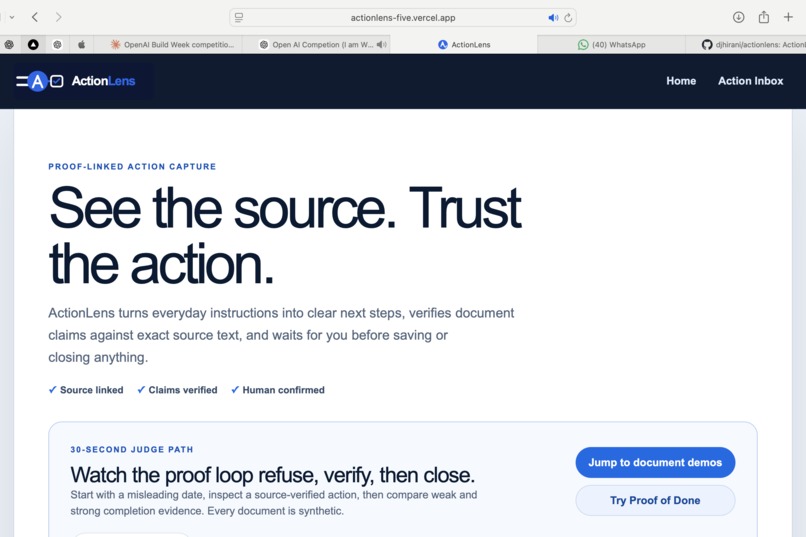
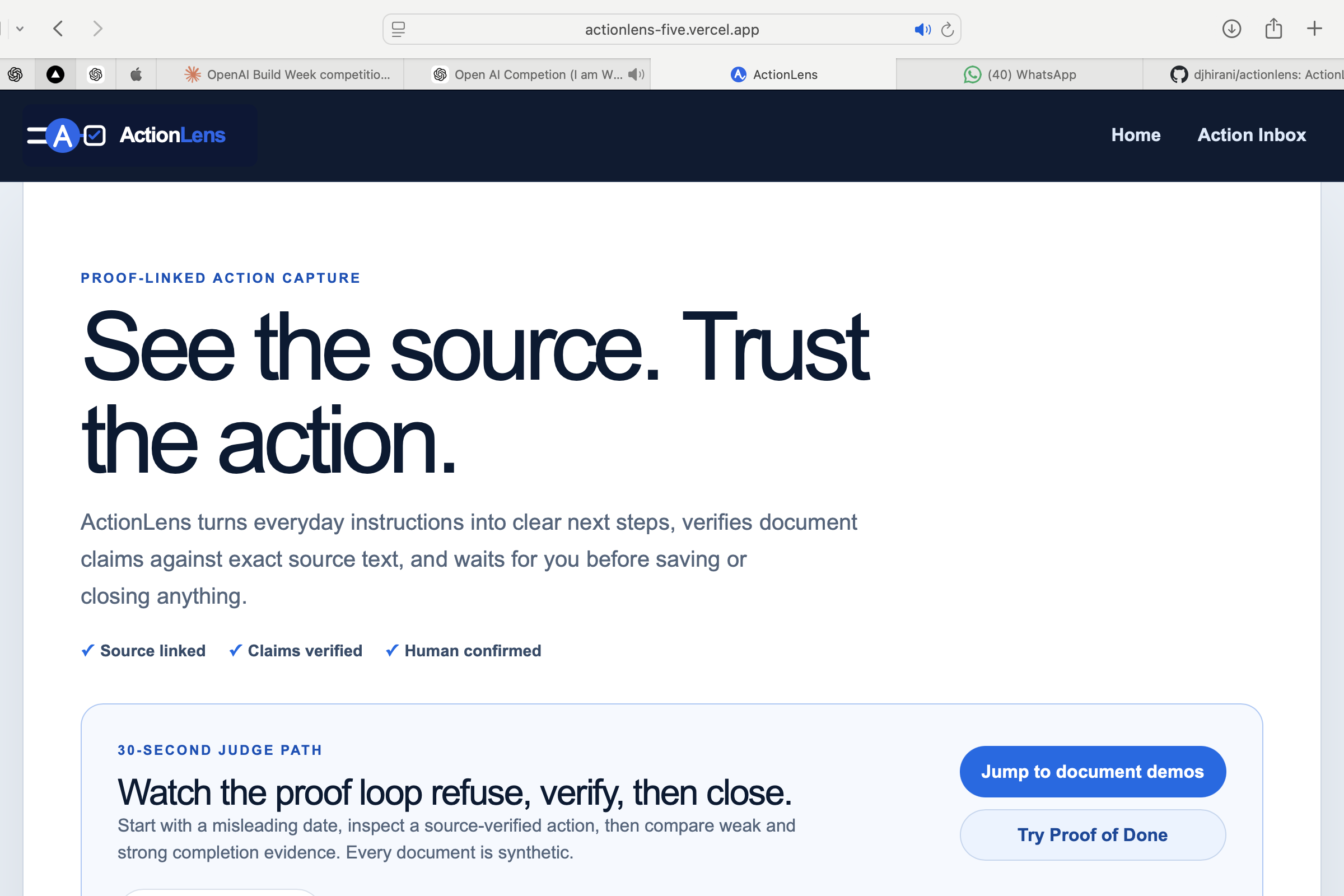
Home Page
-
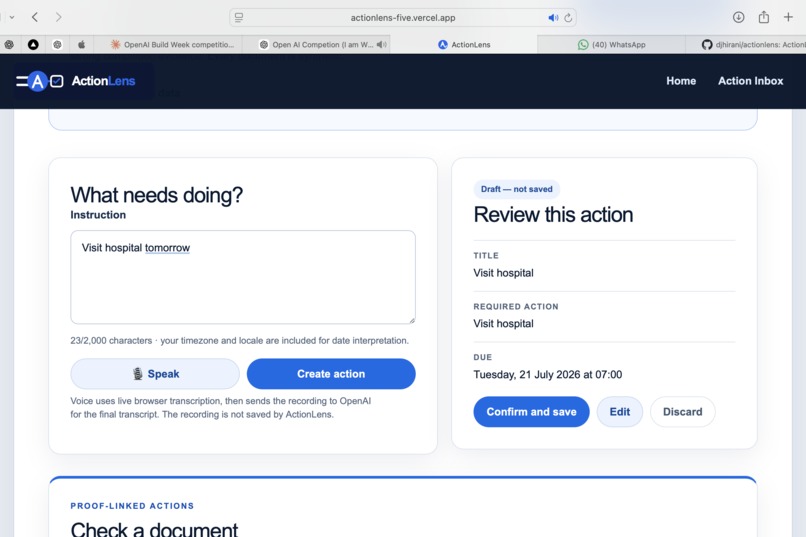
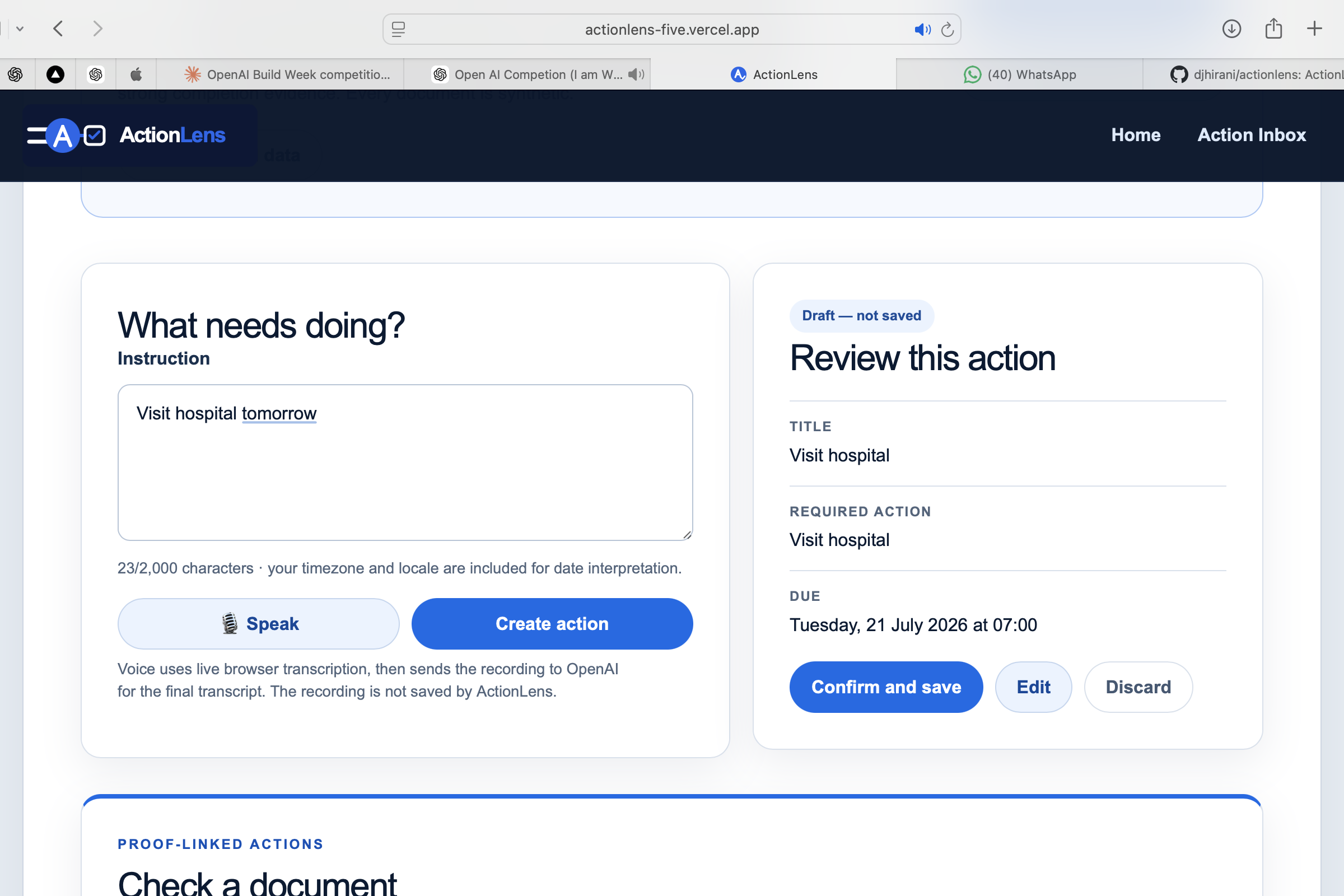
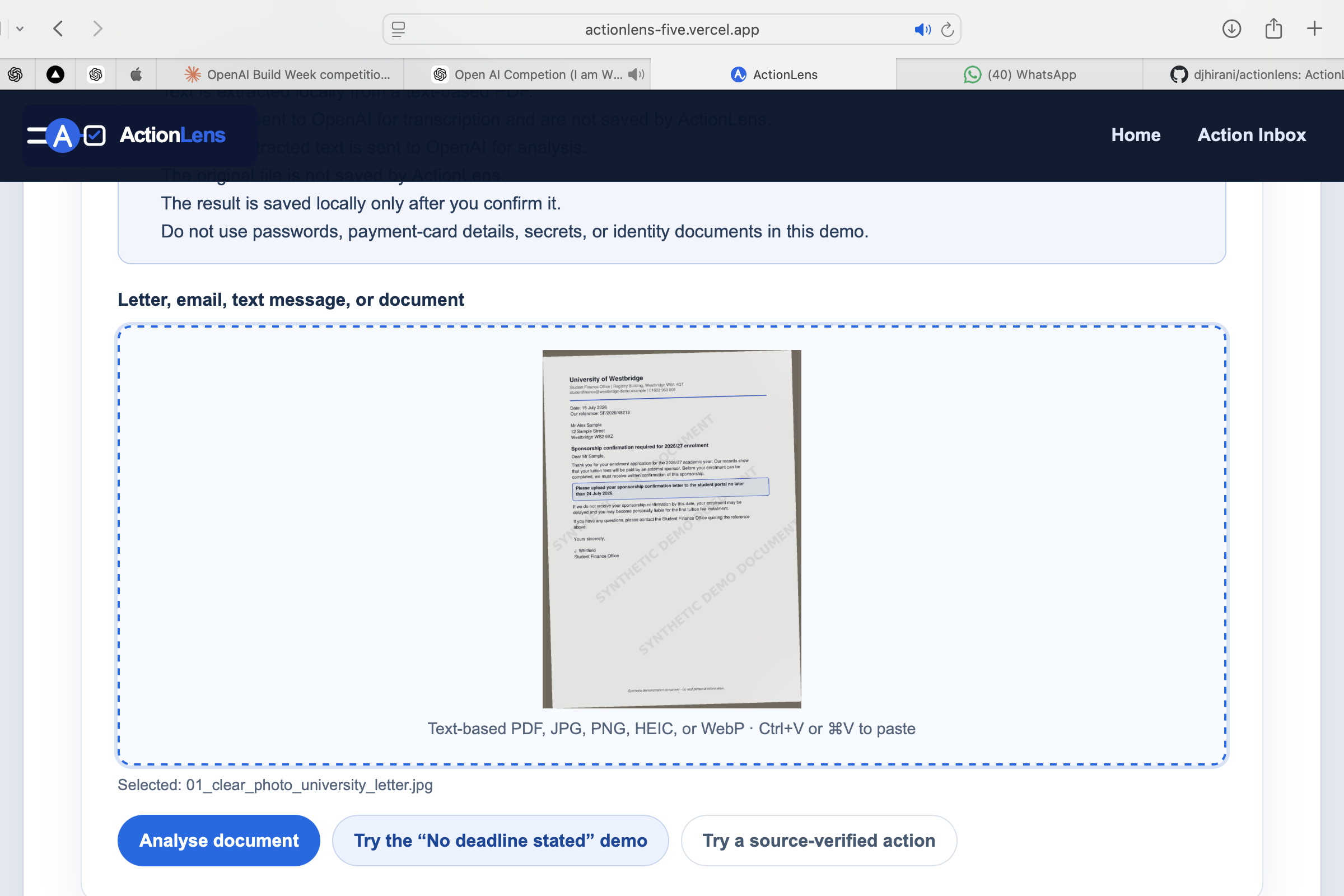
Input Reminder and Tasks
-
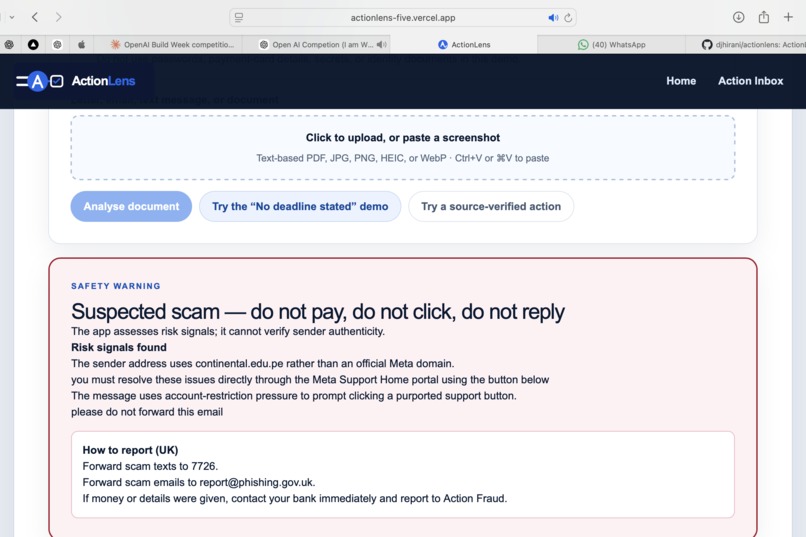
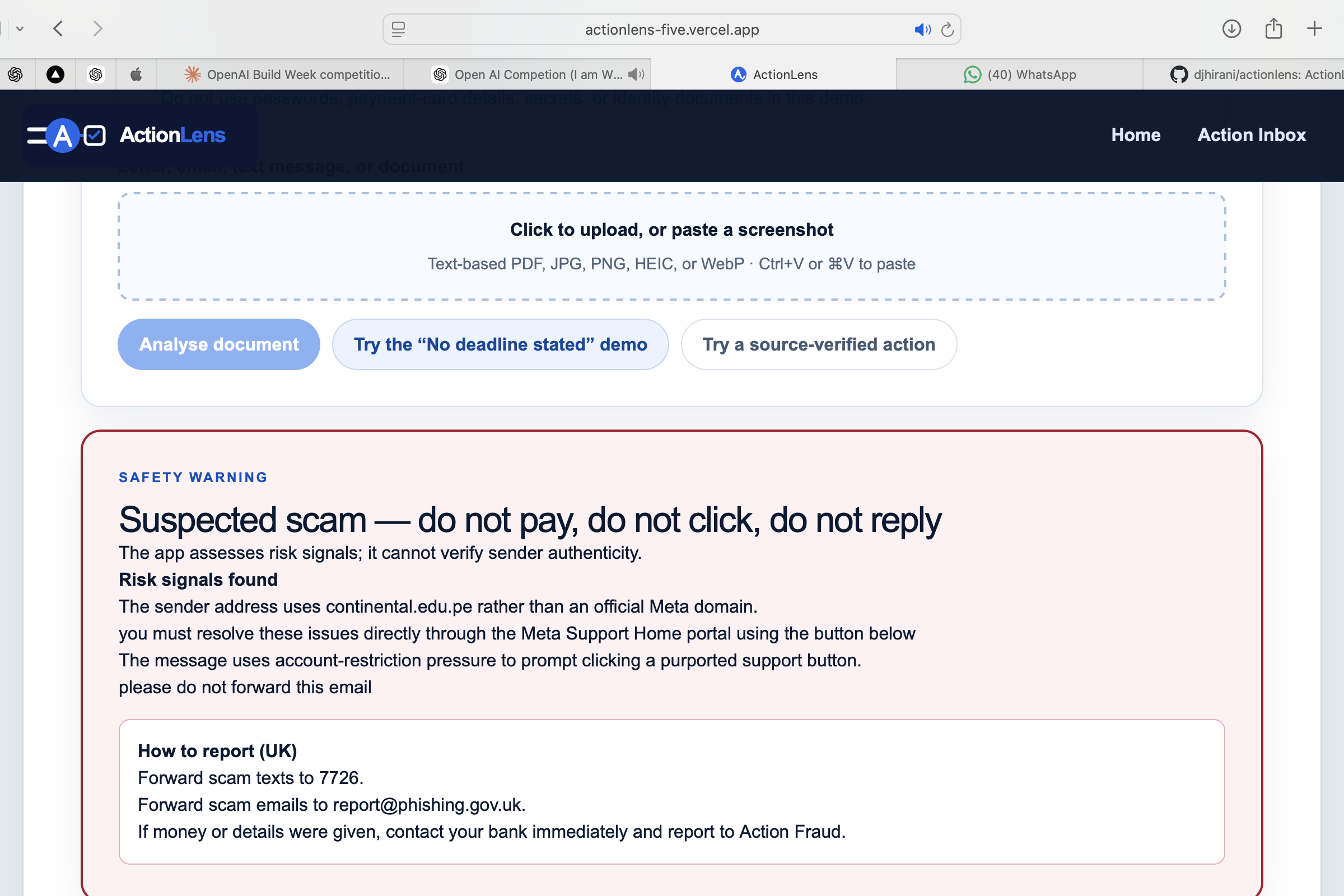
Scam Email Resultt
-
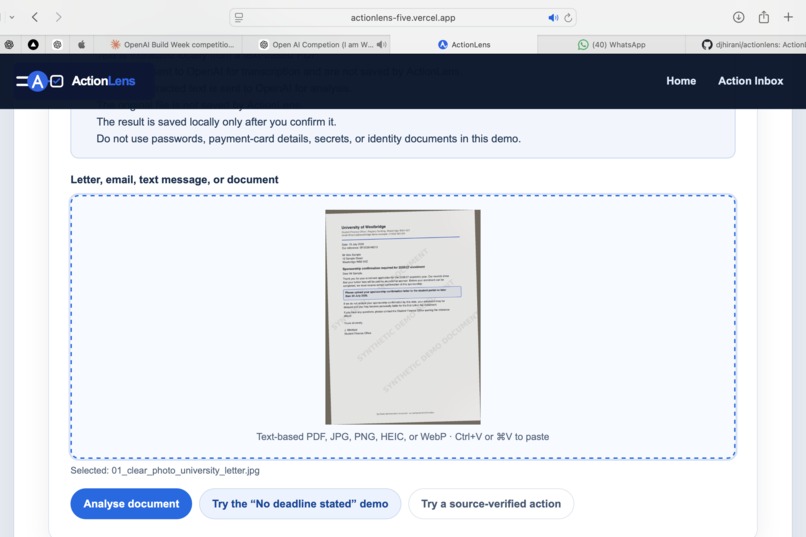
Letter to Examine
-
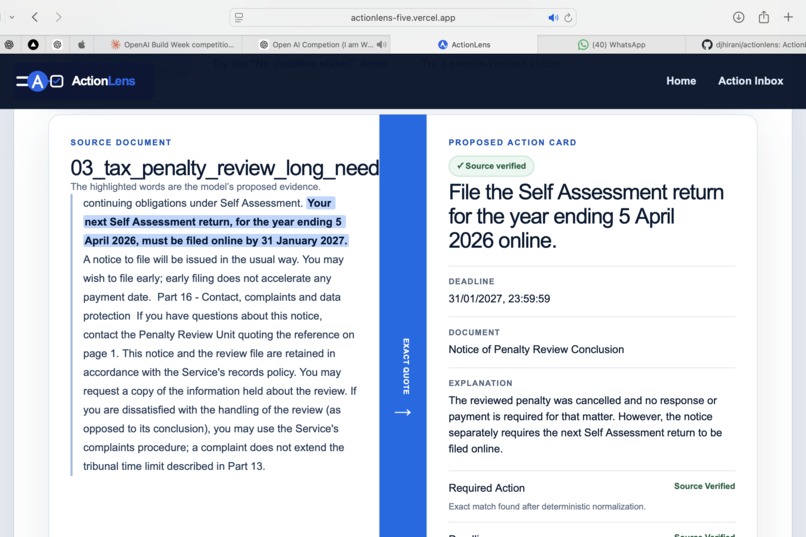
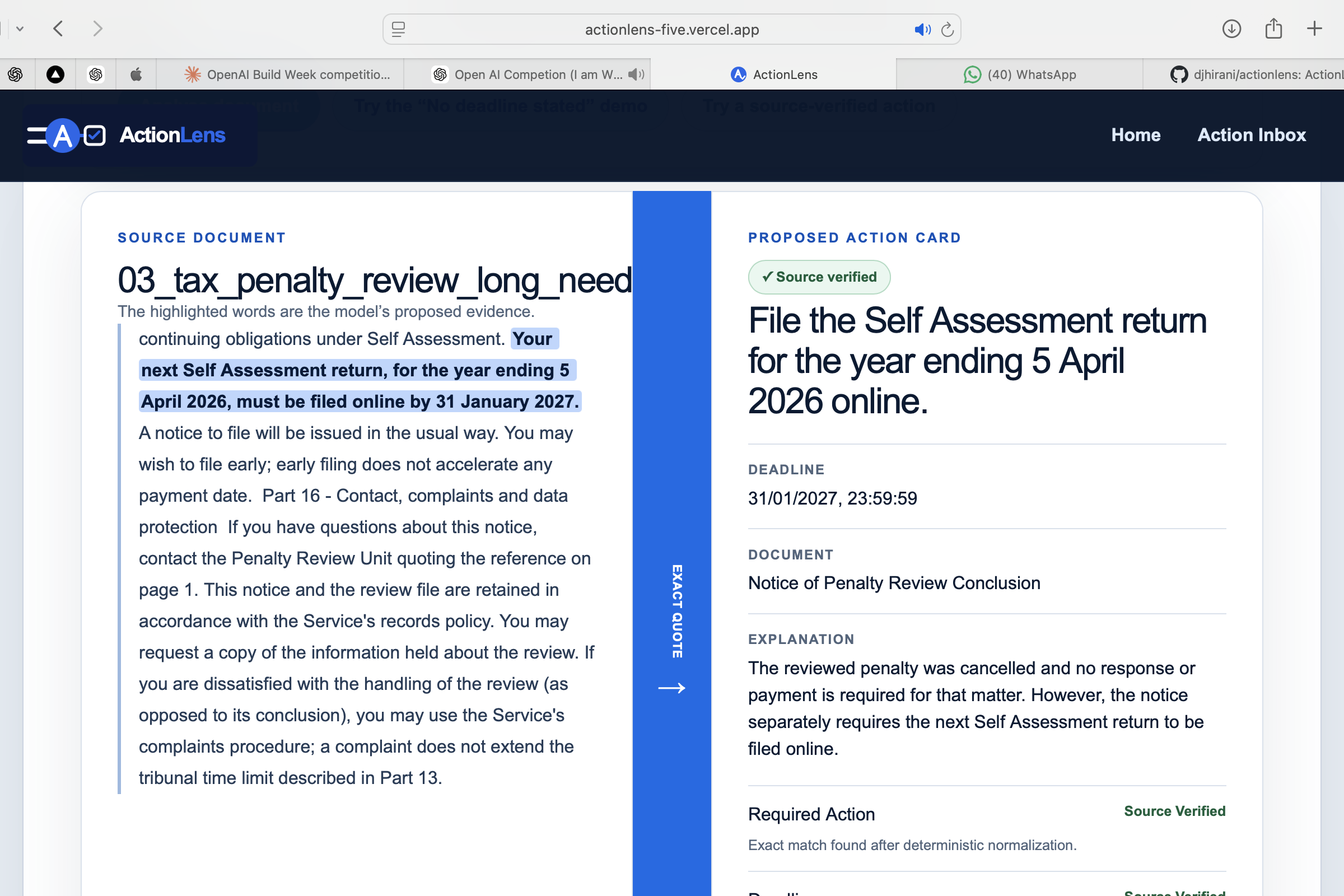
Vague Taxation Letter Result
-
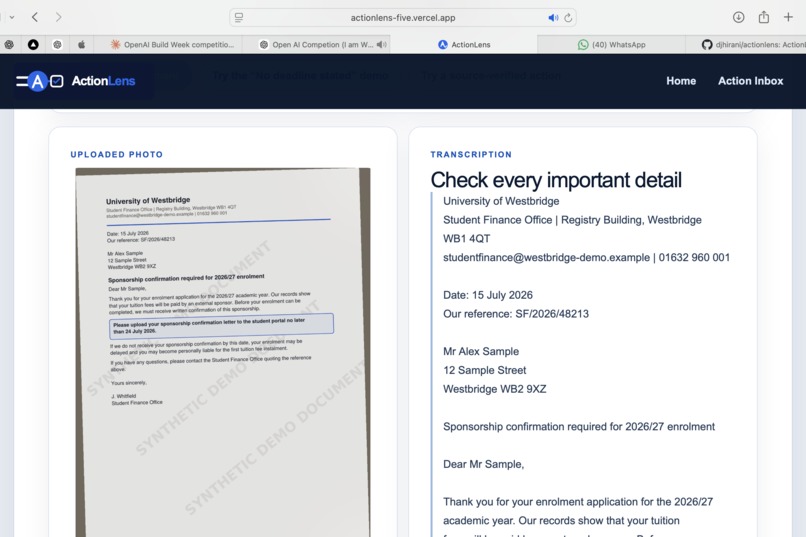
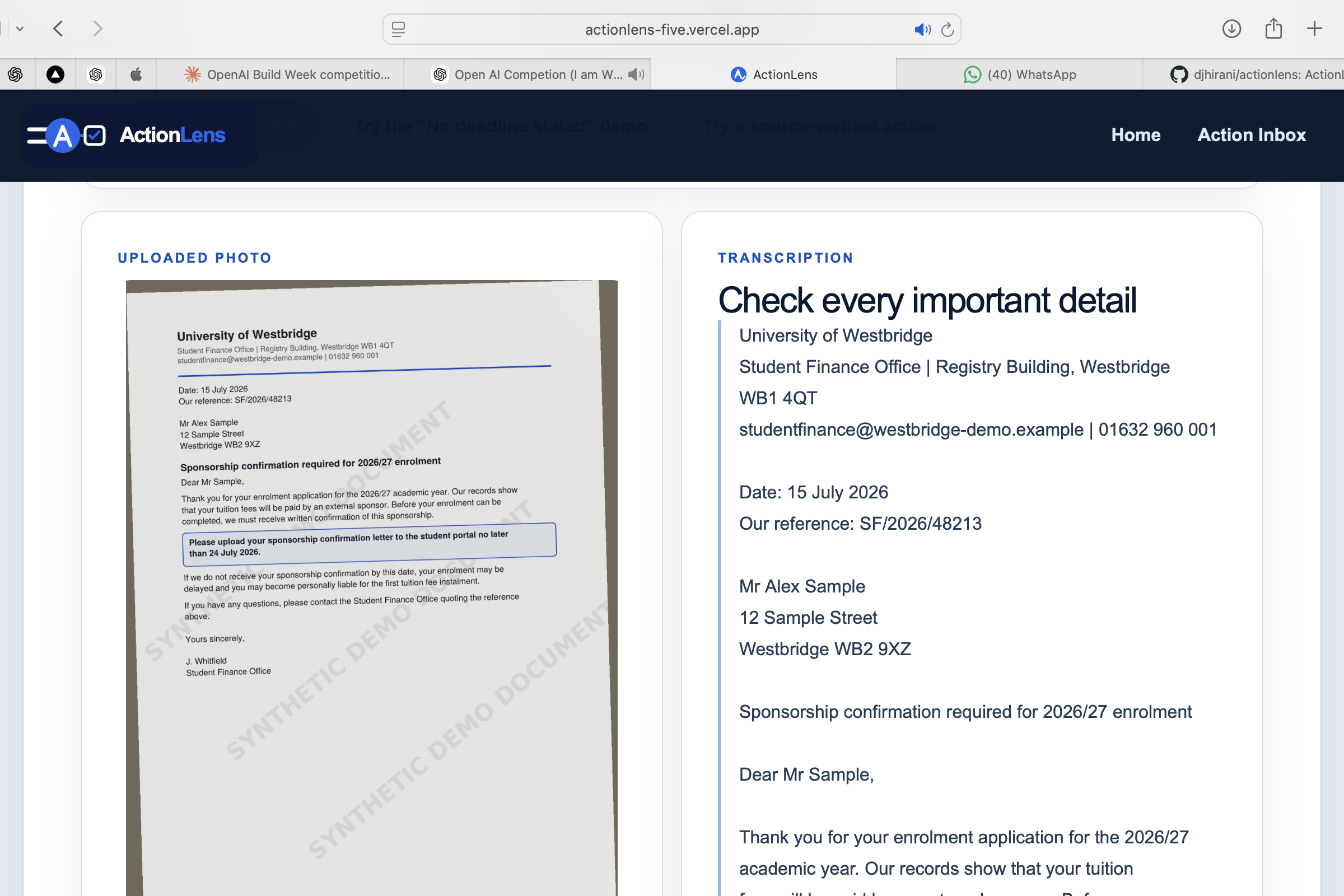
Test Result 1
-
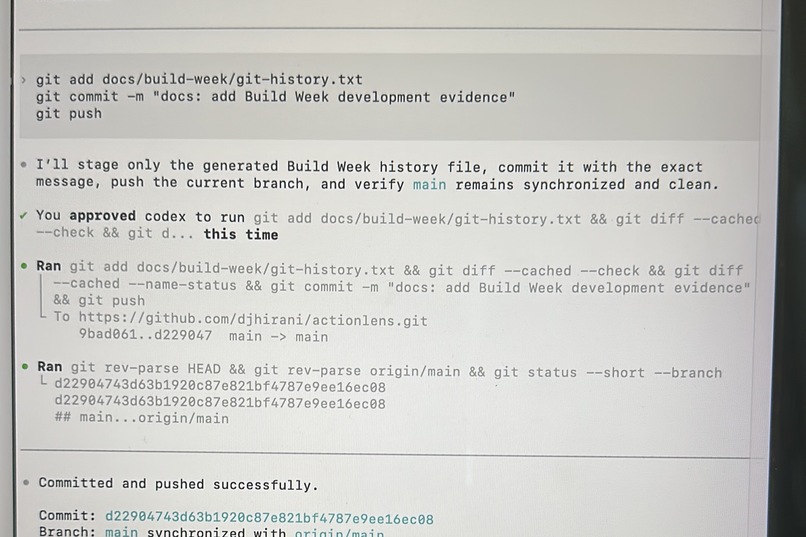
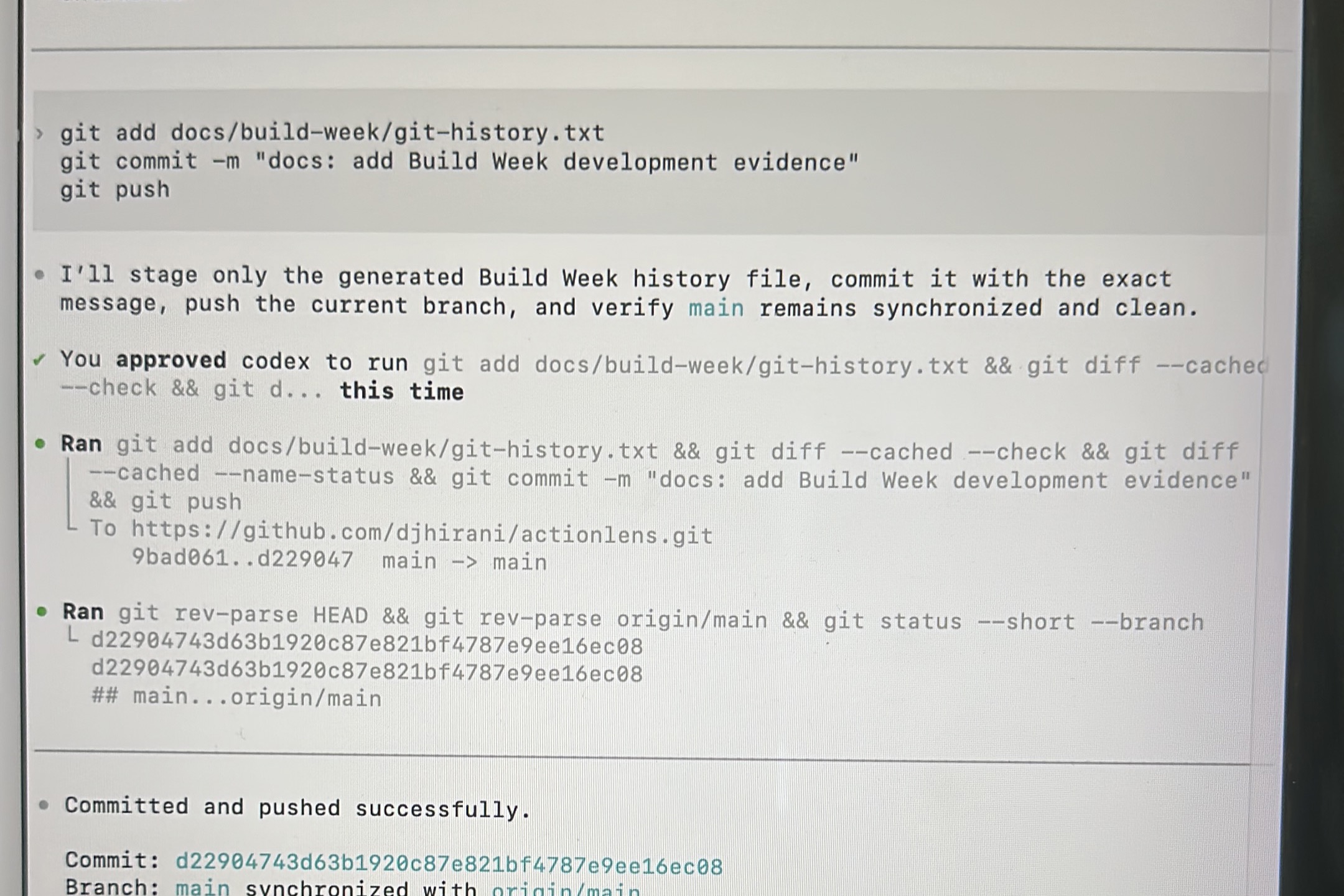
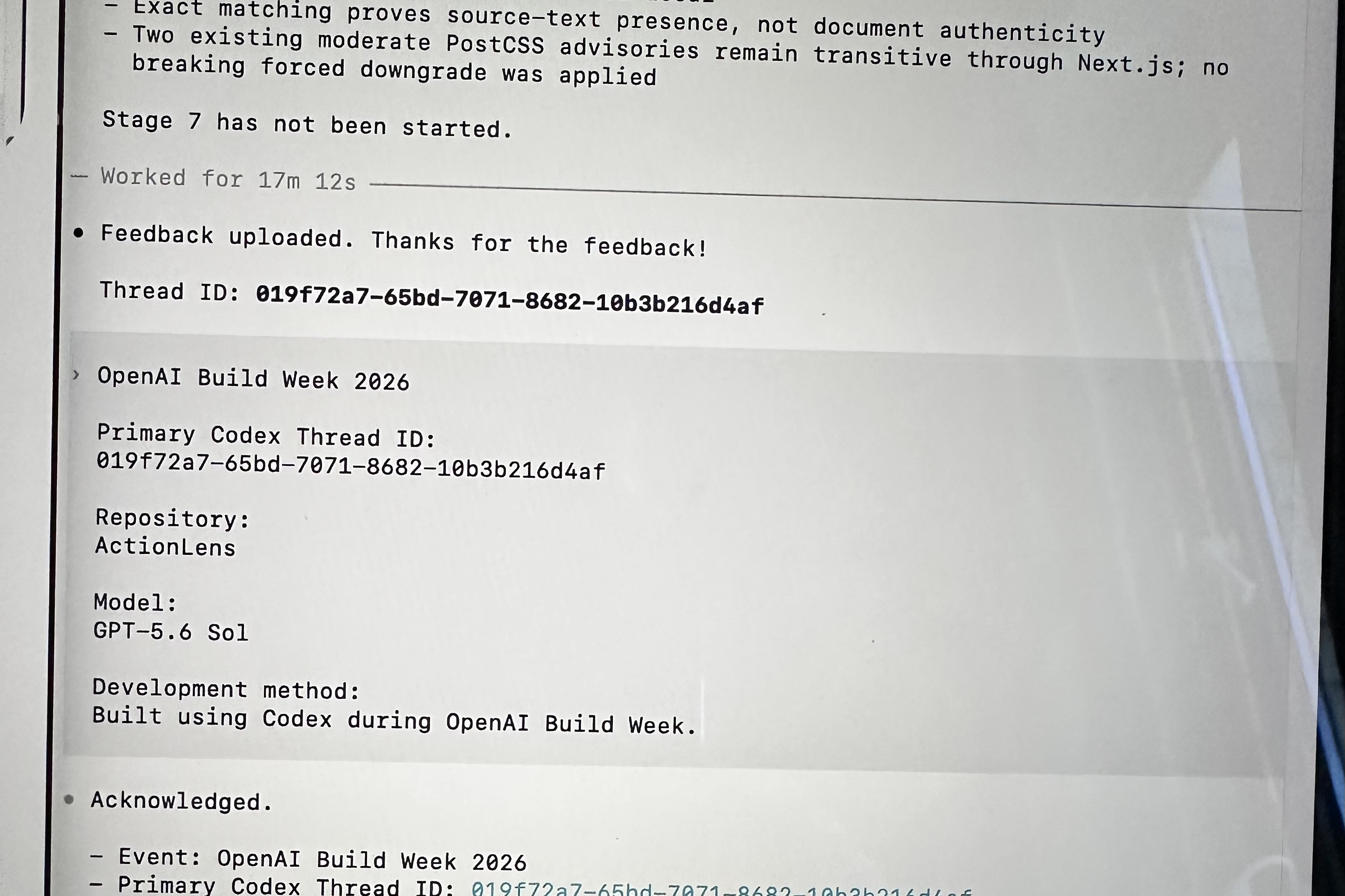
Codex Working Evidence 1
-
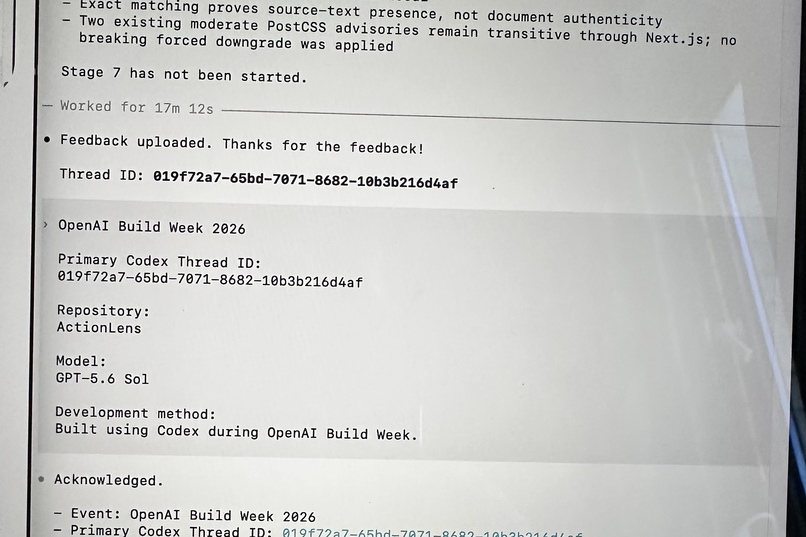
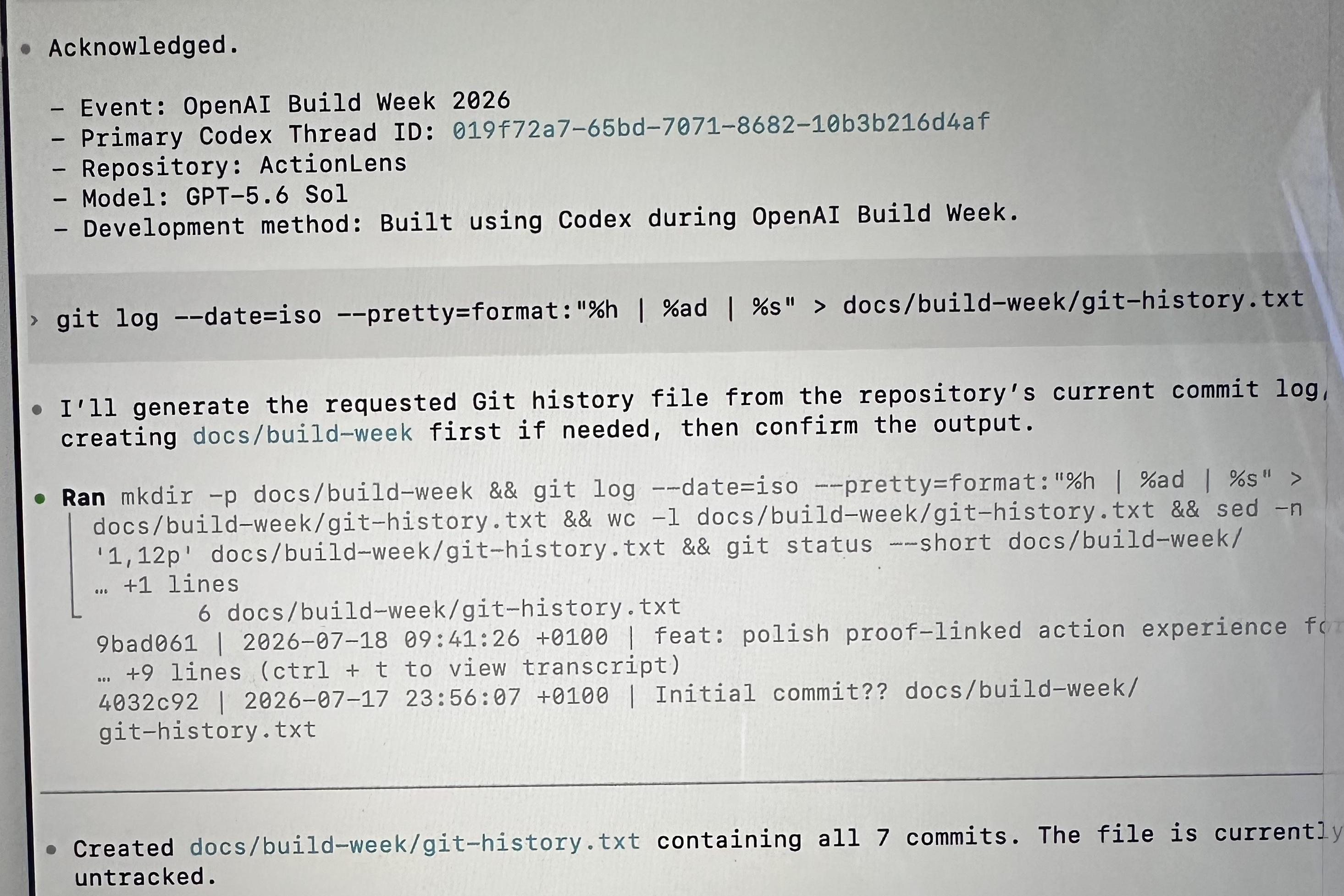
Codex Working Evidence 2
-
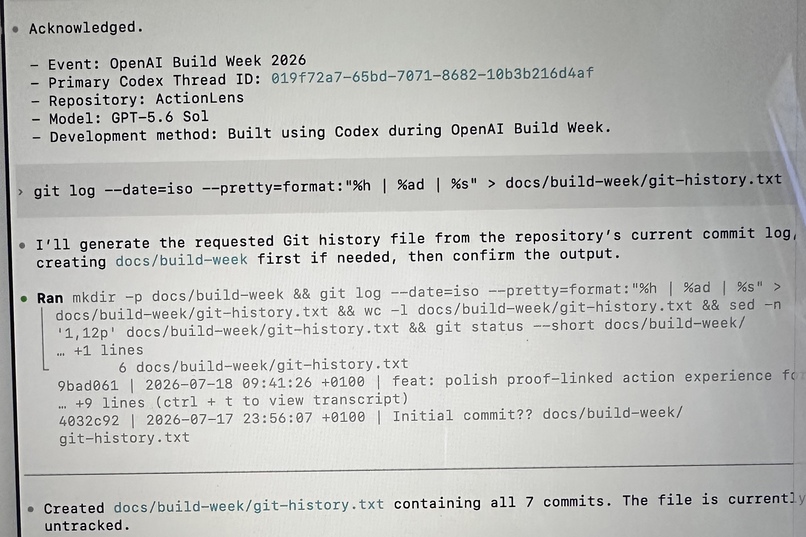
Codex Working Evidence 3
Inspiration
Real obligations arrive buried inside official letters—councils, hospitals, landlords, tax offices, universities. The hard part was never reading them. It's knowing what to actually do, and by when—especially doing that scared, tired, or in a second language. I come from a public administration background, not a technical one, and I've watched people miss real deadlines not from carelessness but because official language is genuinely difficult to convert into "do this, by this date." During development, a real phishing campaign targeting my own small business, Durga Designs, became one of the toughest tests of the system.
What it does
ActionLens turns letters, emails, and instructions into proof-linked actions. Upload a document or photograph a letter, and it proposes deadlines, tasks, reminders, and payments. Every recommendation follows three guarantees:
- Every claim must cite an exact quote, verified by deterministic code—not the AI.
- Nothing is saved without explicit human confirmation.
- If evidence is insufficient, the system refuses rather than inventing an answer.
AI proposes. Code verifies. You decide.
How we built it
ActionLens was built entirely in Codex using GPT-5.6. GPT-5.6 powers document understanding, structured extraction, photo transcription, and scam-signal detection. Development happened conversationally: I described the required behaviour, Codex implemented it, and every feature was refined through iterative testing and reproducible evaluations. The application is local-first using IndexedDB, where saved actions and history remain in the browser. Original uploaded files are not retained, and every AI-generated action requires explicit user confirmation before being saved.
Challenges we ran into
The difficult problem was never reading documents—it was proving that AI recommendations could actually be trusted. I built an adversarial evaluation suite containing misleading letters, hallucination traps, negated deadlines, phishing emails, and long documents with hidden answers. Comparing ActionLens against leading chat models showed that the biggest risk was not reading comprehension but confidently inventing actions that the source never requested. That insight led to an architecture where verification is enforced by deterministic code rather than relying solely on model behaviour.
Accomplishments that we're proud of
- Built a proof-linked action system instead of a traditional AI summarizer.
- Programmatically verified every evidence quote against its source.
- Developed a reproducible evaluation suite with adversarial document fixtures.
- Successfully detected a real phishing email received during Build Week.
- Designed a privacy-first workflow with explicit human confirmation.
What we learned
Large language models are already excellent at understanding documents. The harder problem is ensuring that every recommended action is trustworthy. We learned that trust should come from architecture—verified evidence, deterministic validation, and human confirmation—not from model confidence alone.
What's next for ActionLens
ActionLens will expand with richer OCR support, multi-model verification, intelligent form completion, and workflow integrations while preserving its evidence-first architecture. The goal is to become the trusted AI layer between people and important documents.
Built With
- api
- codex
- css
- gpt-5.6
- indexeddb
- next.js
- openai
- playwright
- react
- tailwind
- typescript
- vercel
- vitest

Log in or sign up for Devpost to join the conversation.