-
-
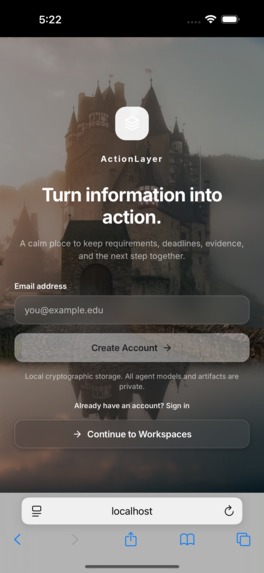
Login
-
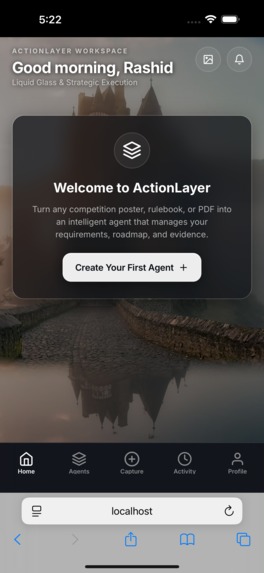
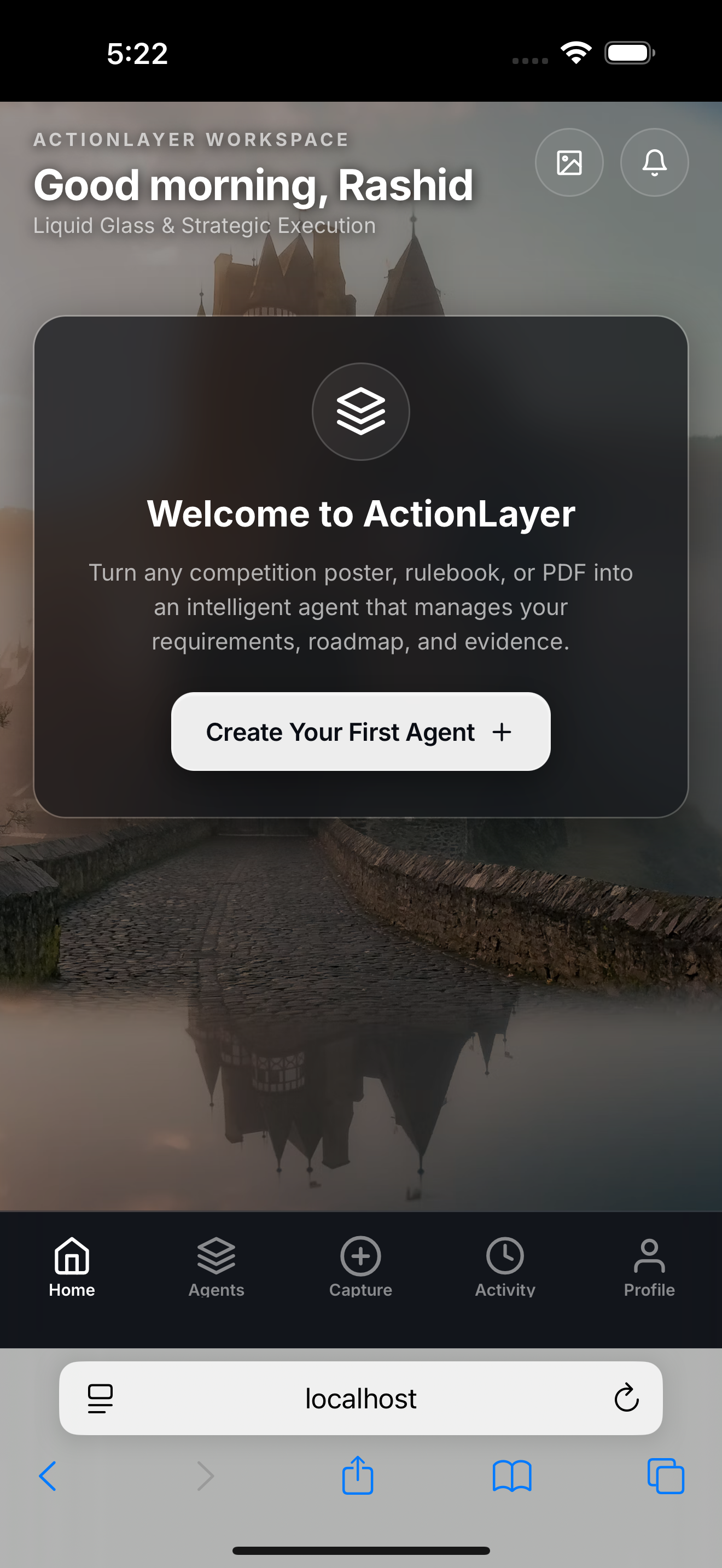
Home
-
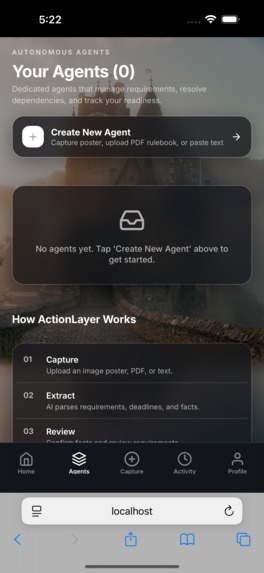
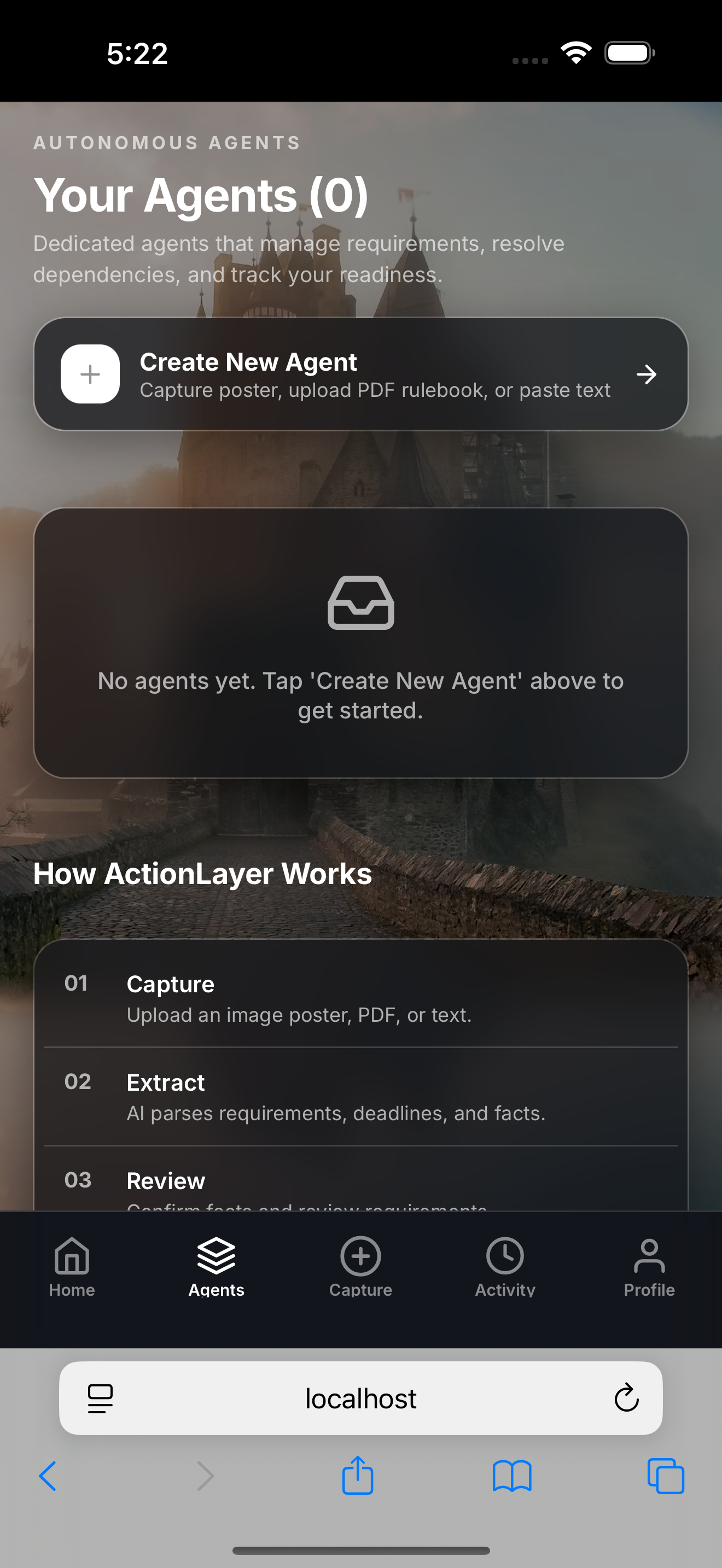
Agent
-
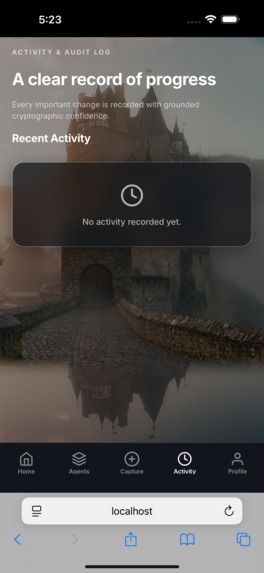
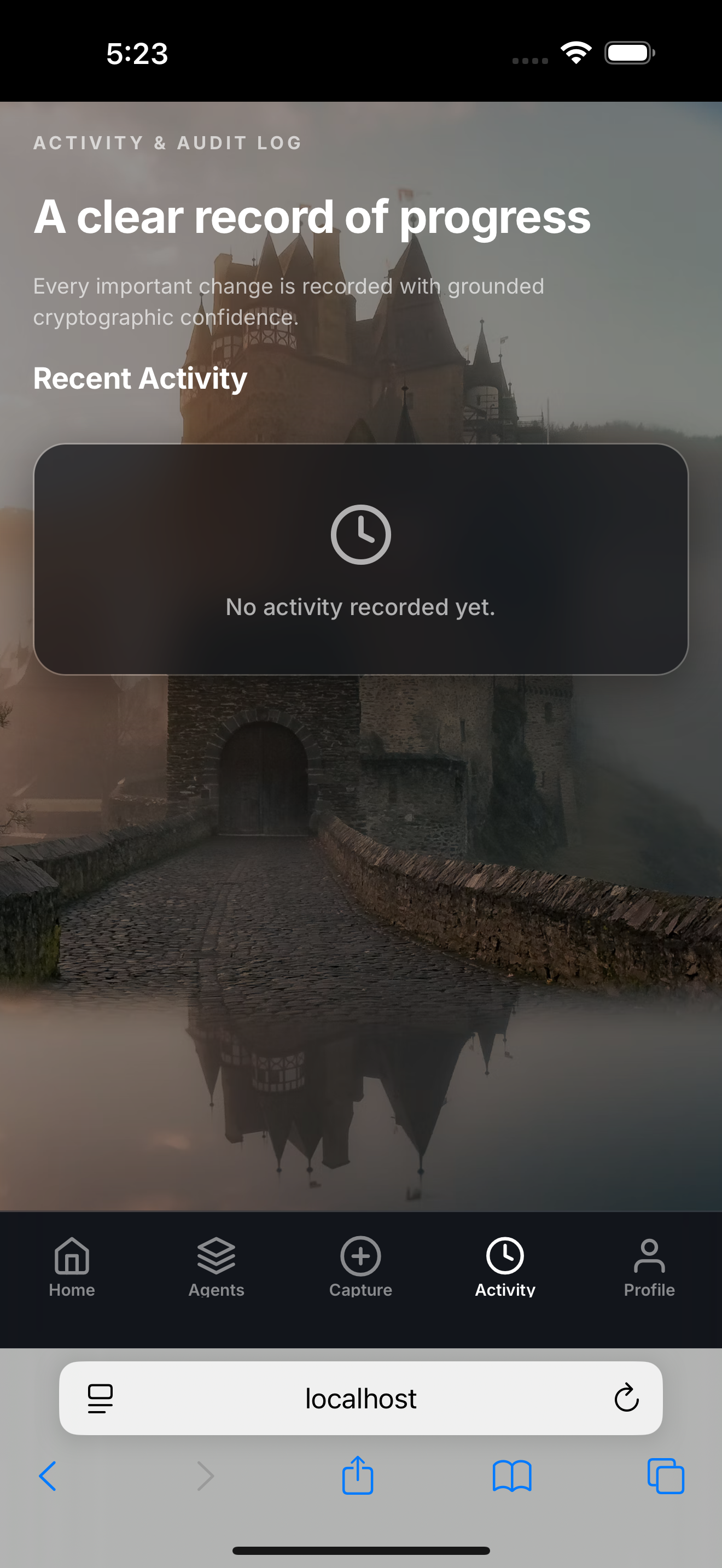
Activity
-
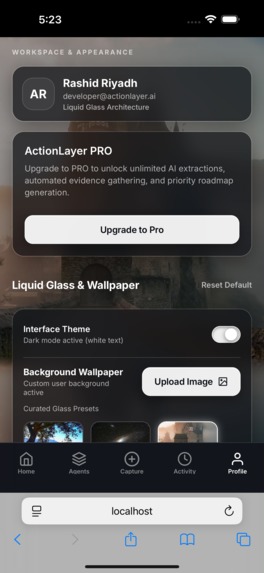
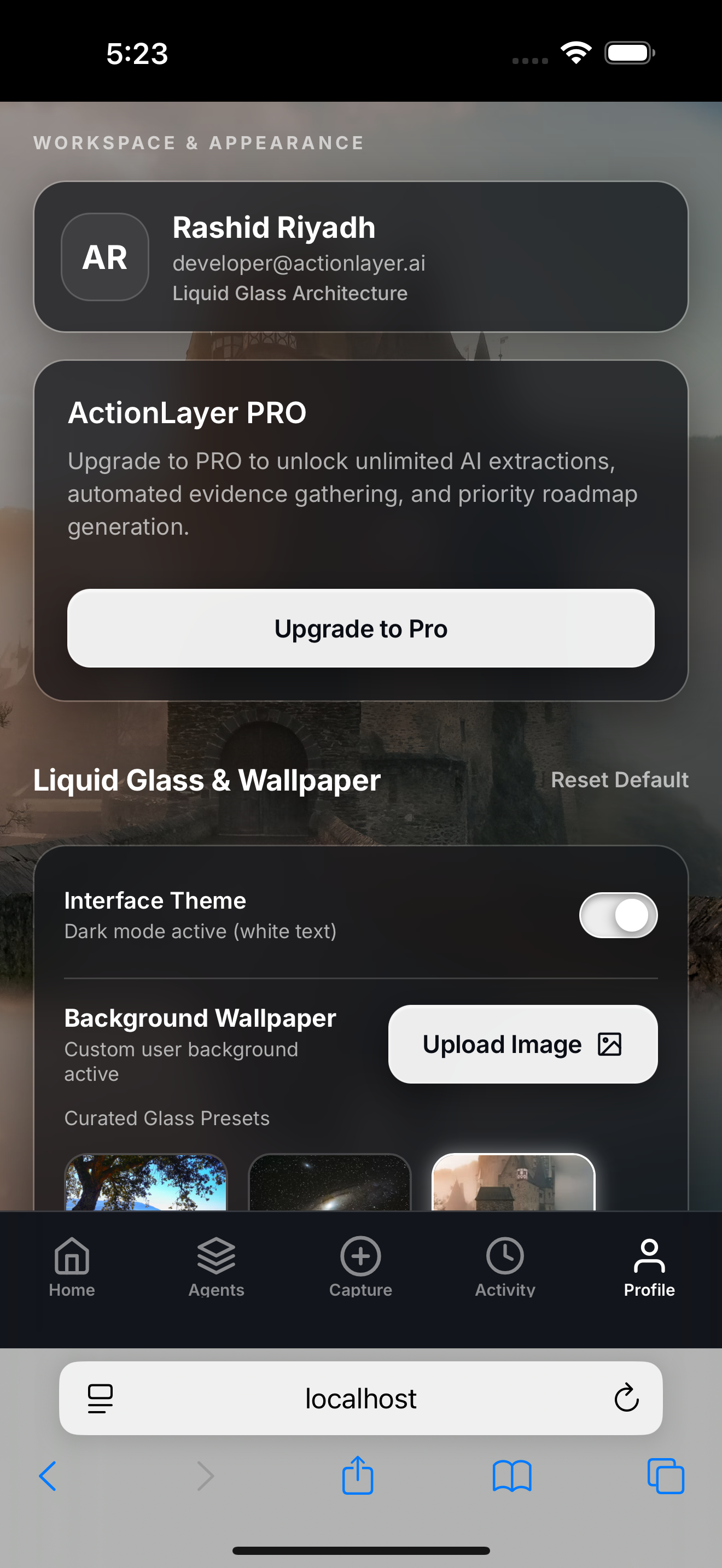
Profile
-
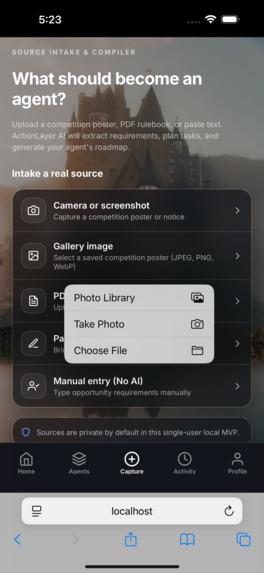
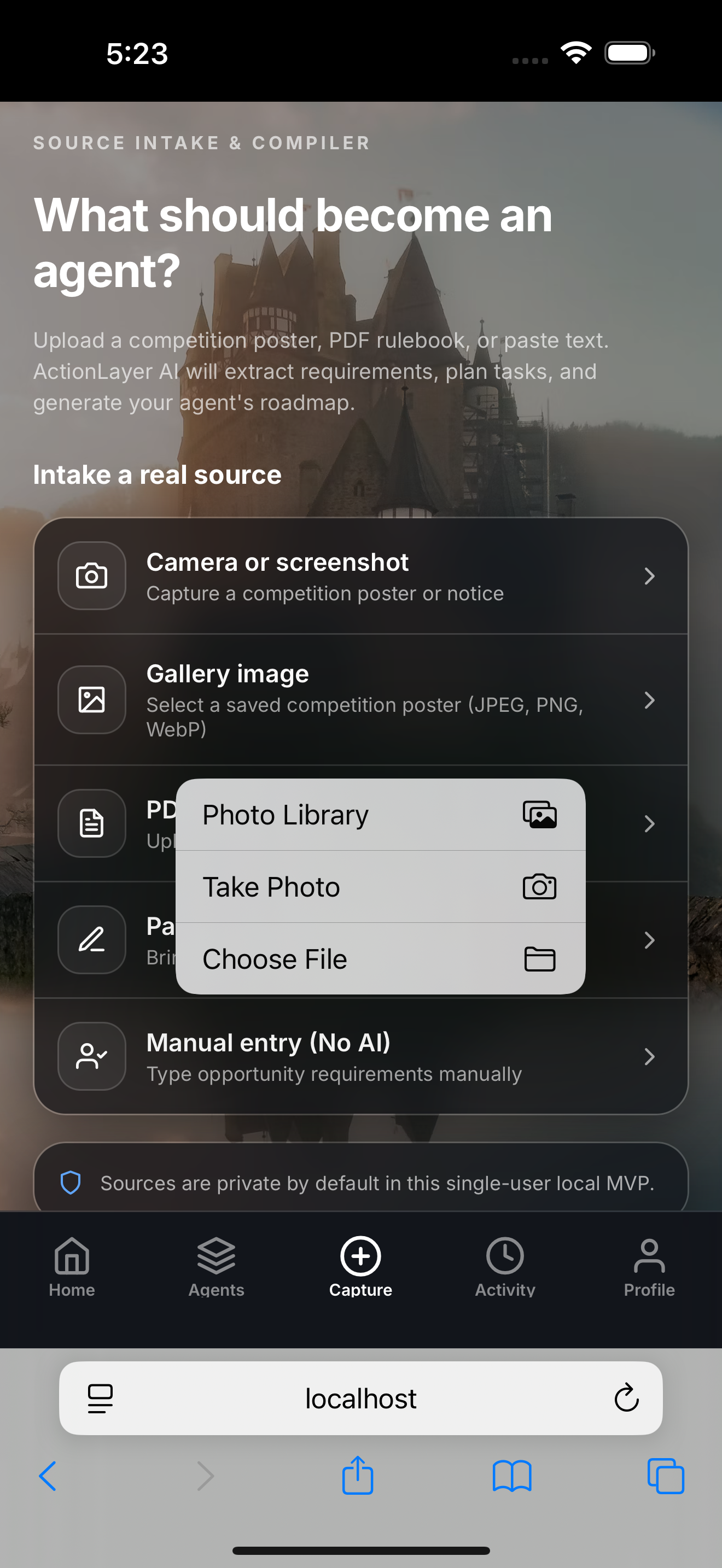
Capture
-
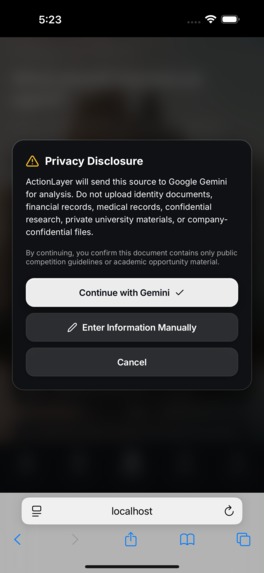
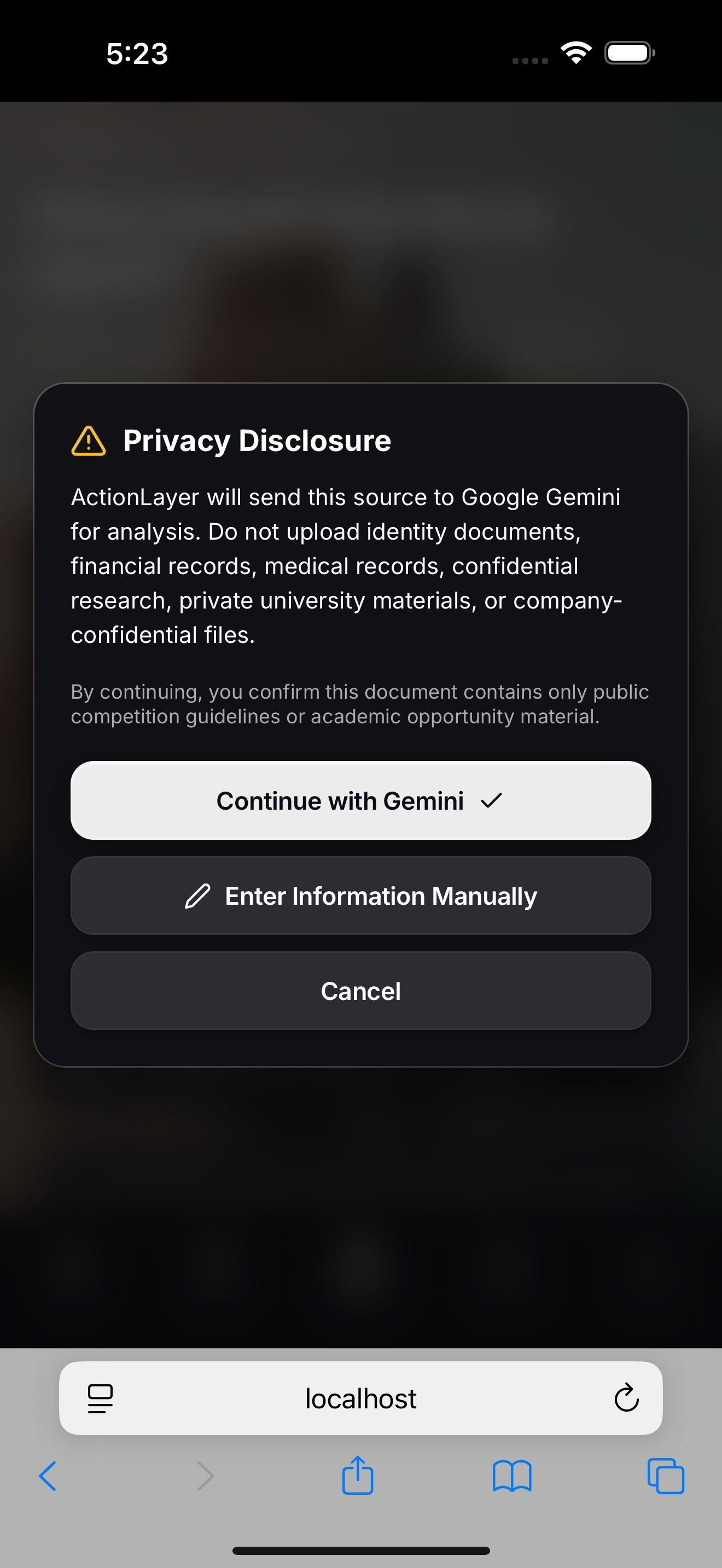
Privacy Disclosure
-
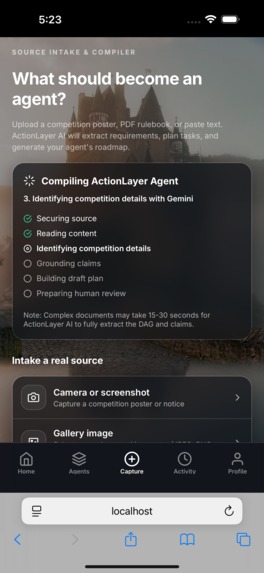
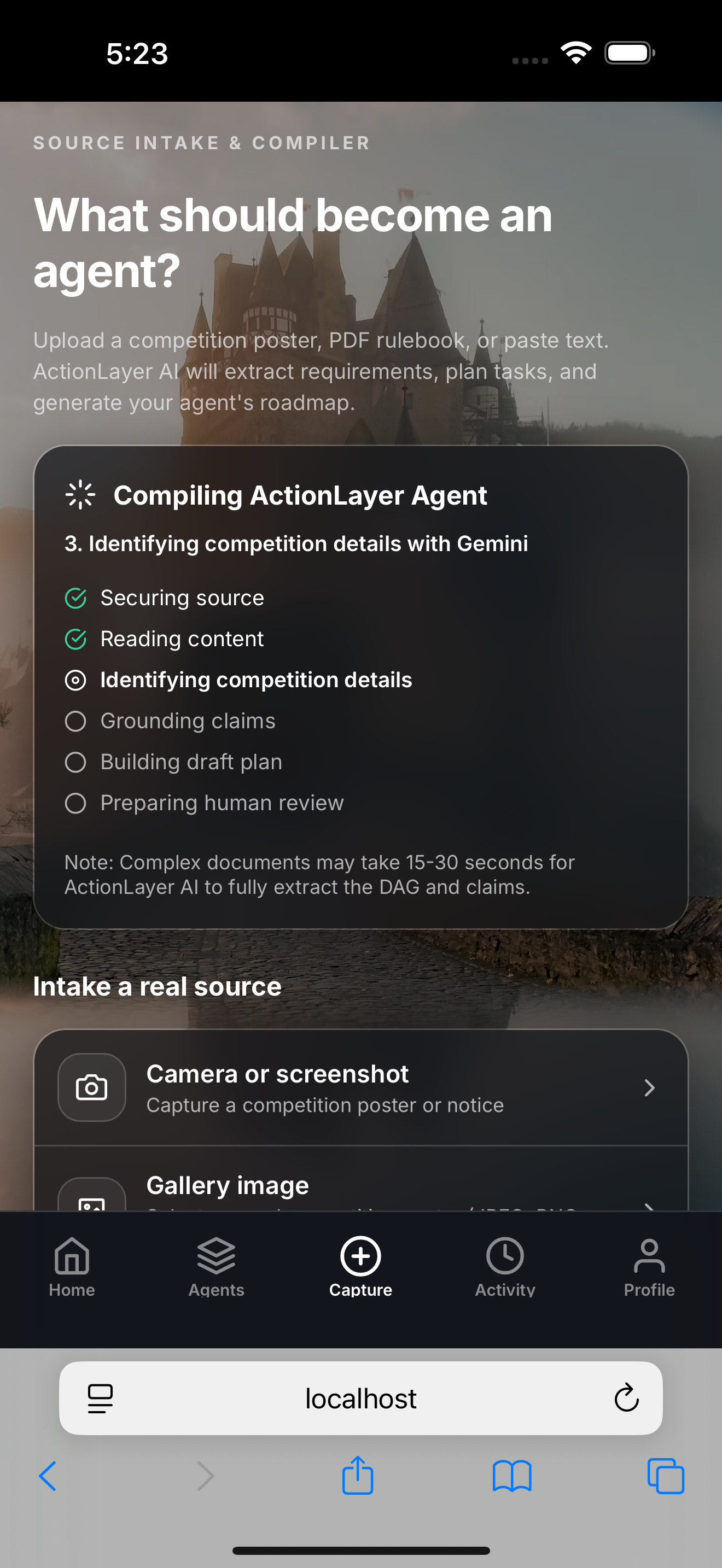
Source Intake & Compliler
-
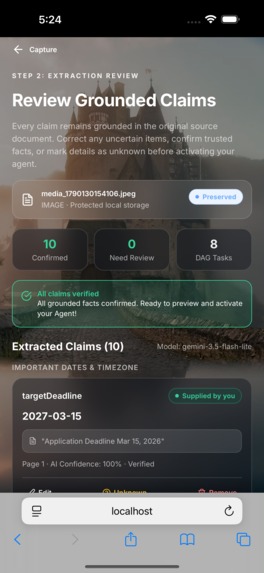
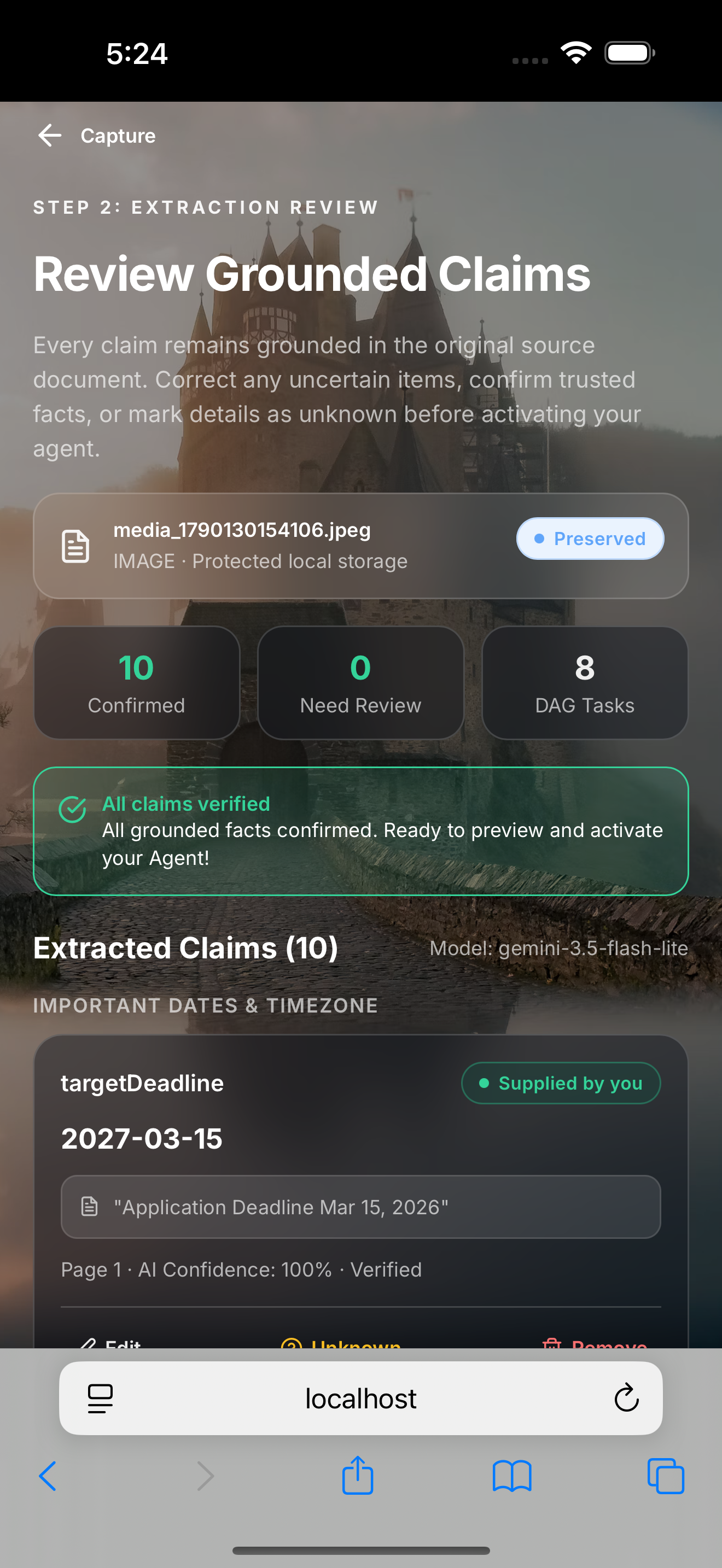
Human Review
-
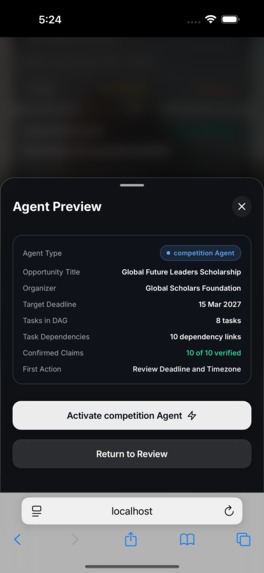
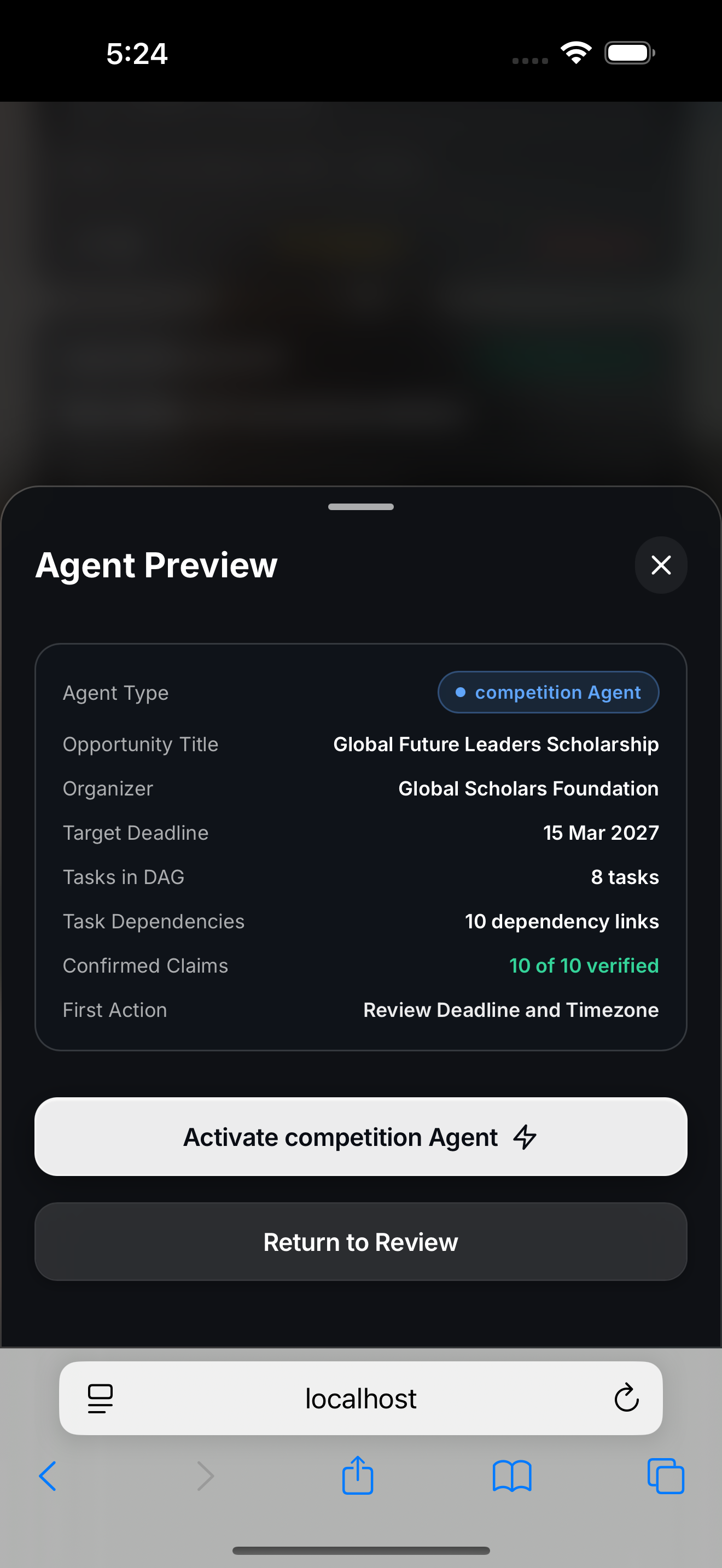
Agent Preview
-
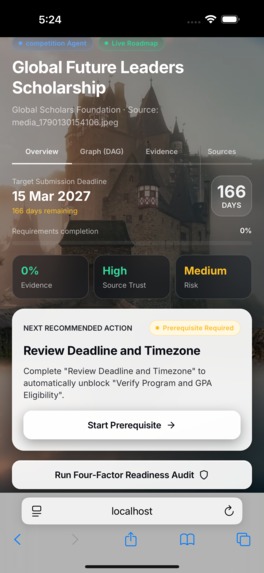
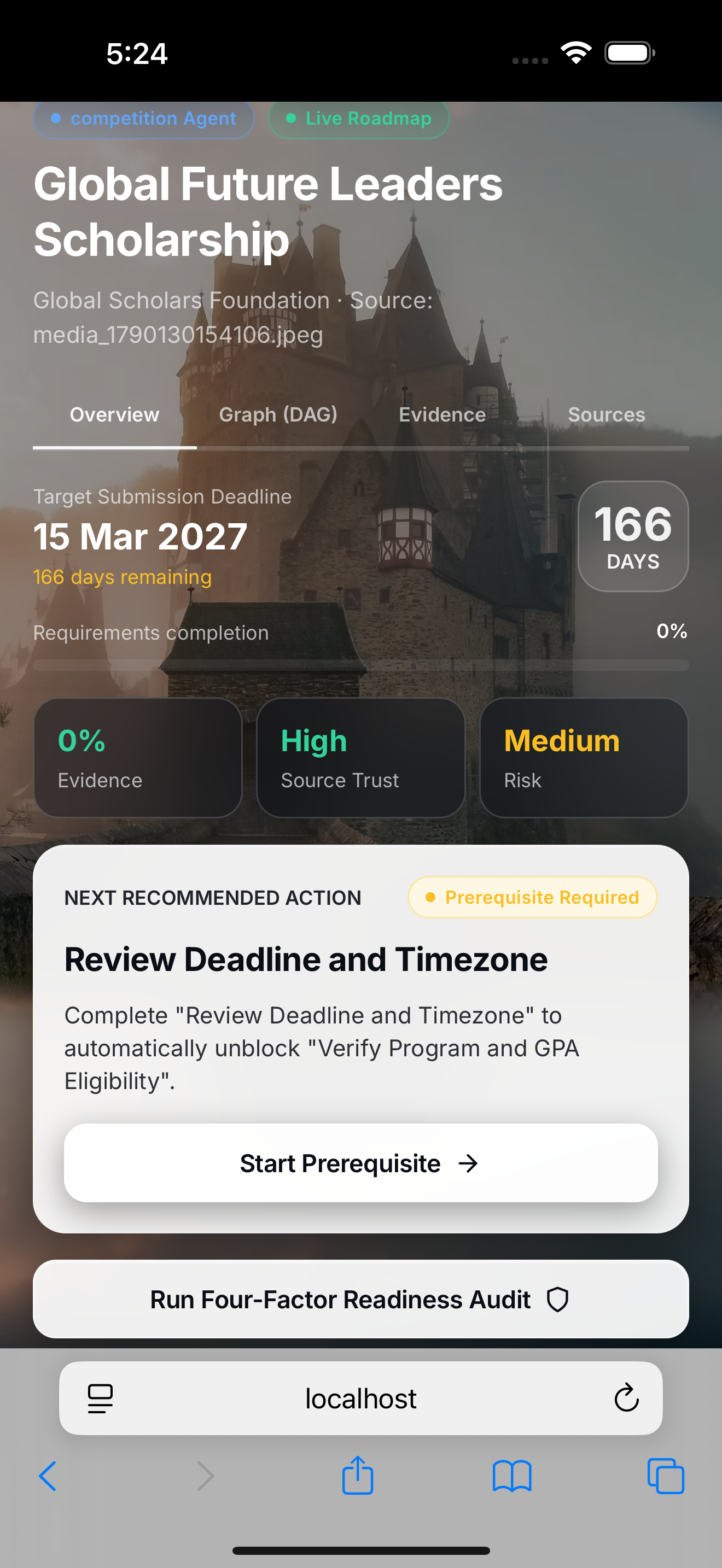
Workflows > Overview
-
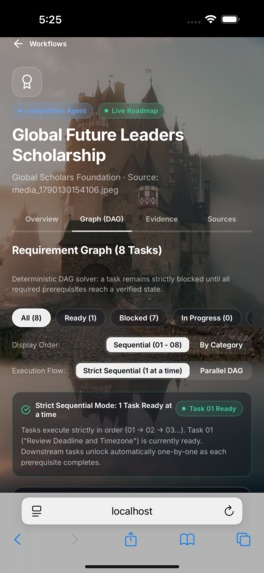
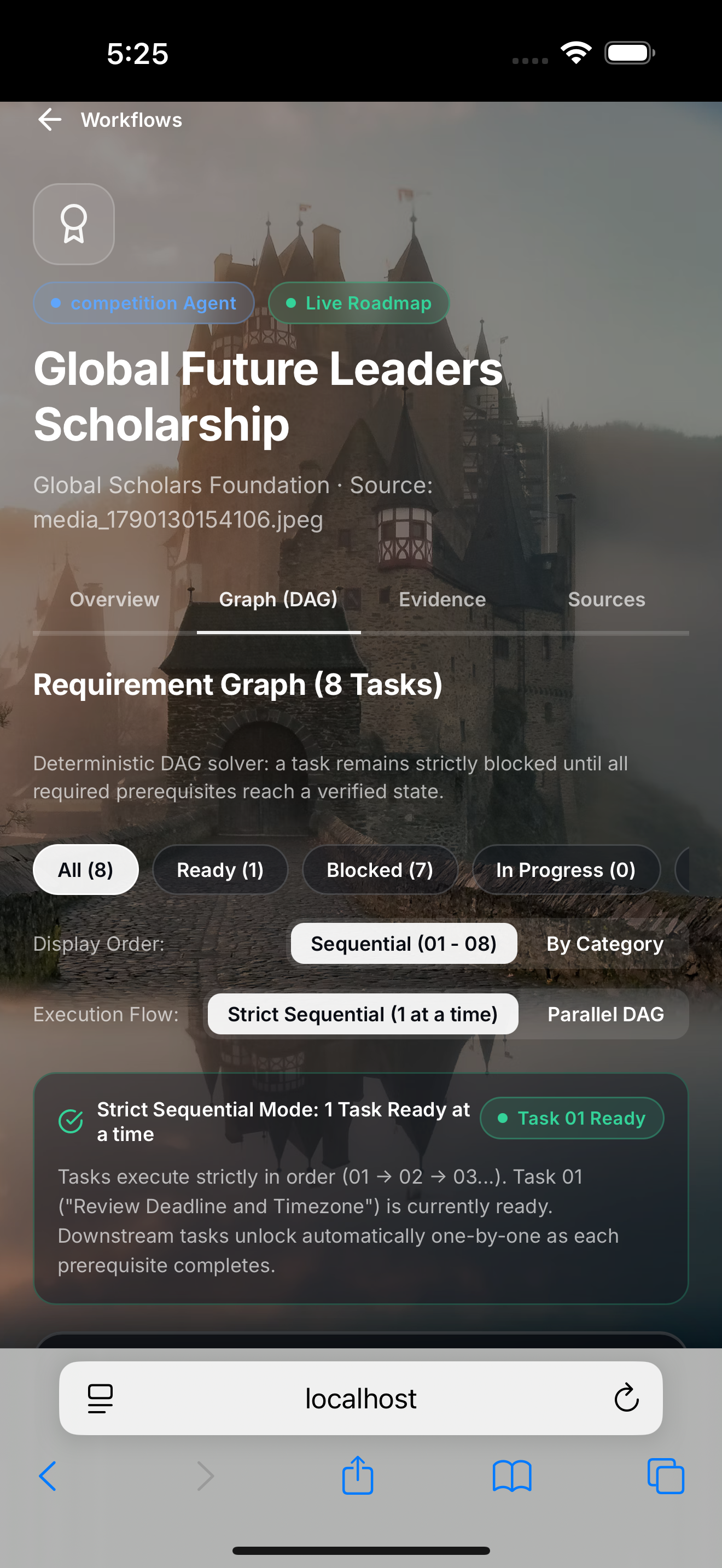
Workflows > Graph (DAG)
-
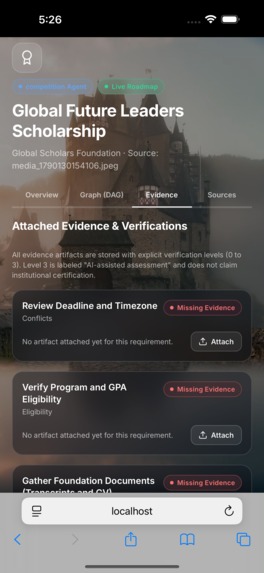
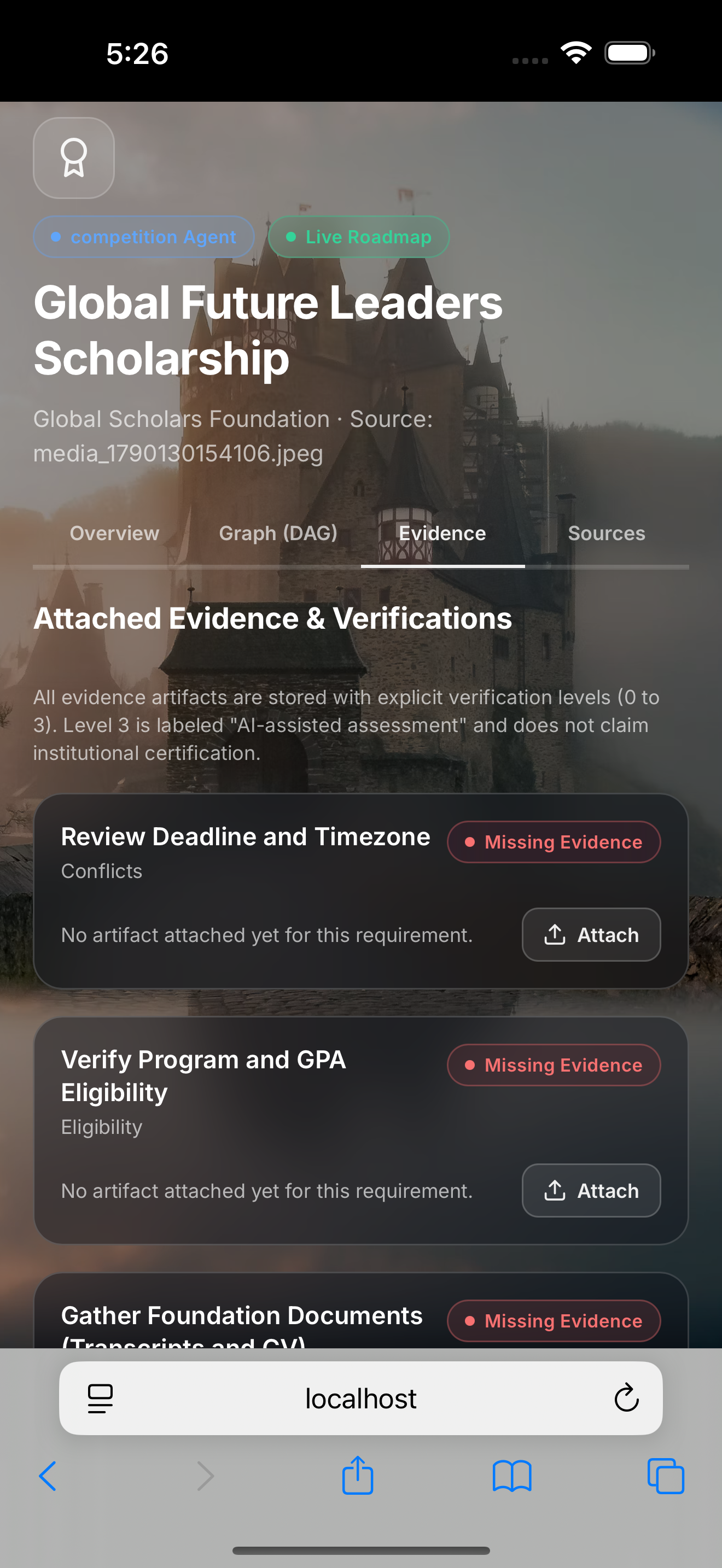
Workflows > Evidence
-
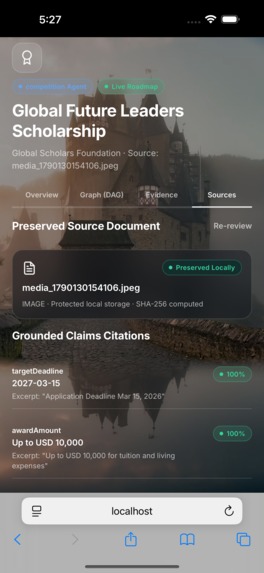
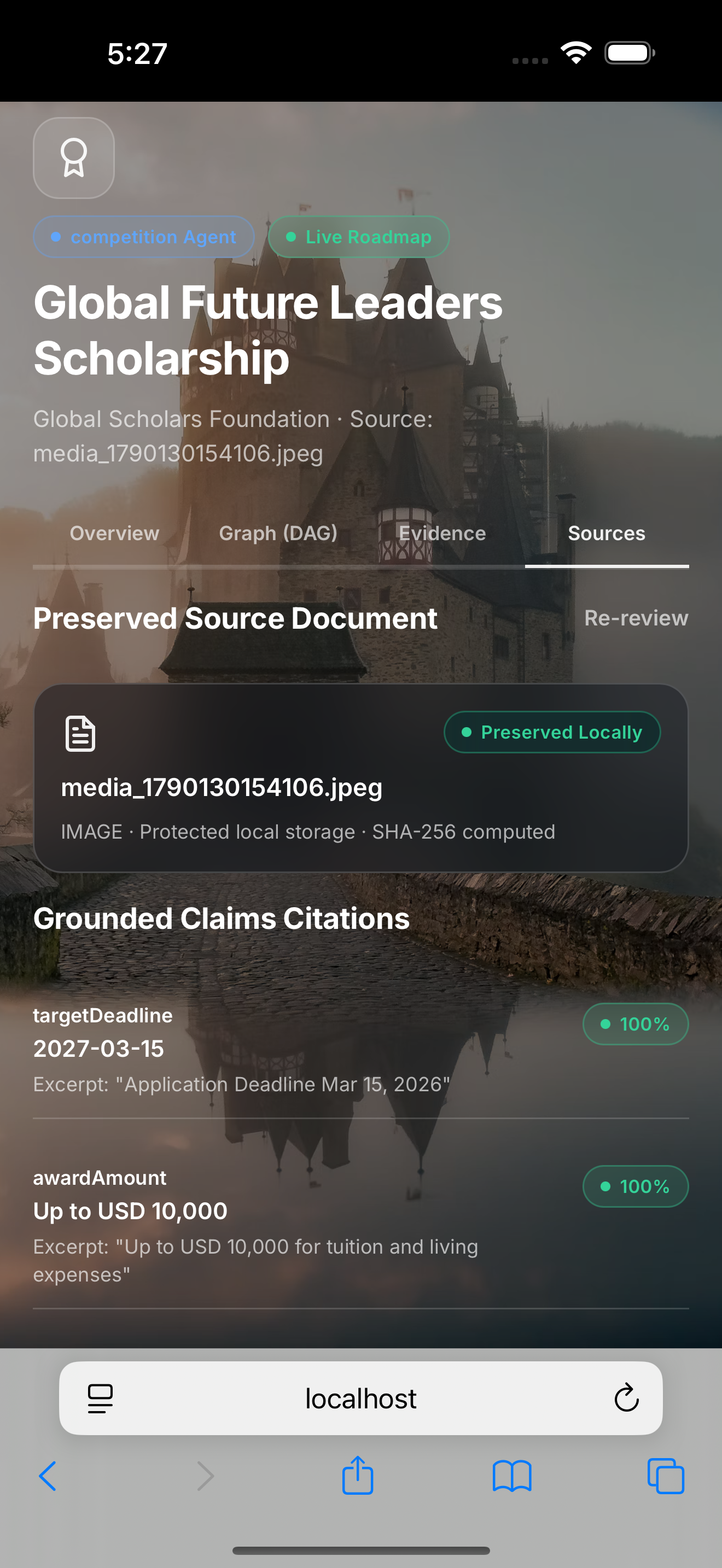
Workflows > Source
-
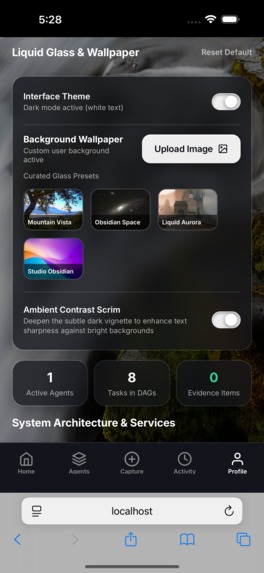
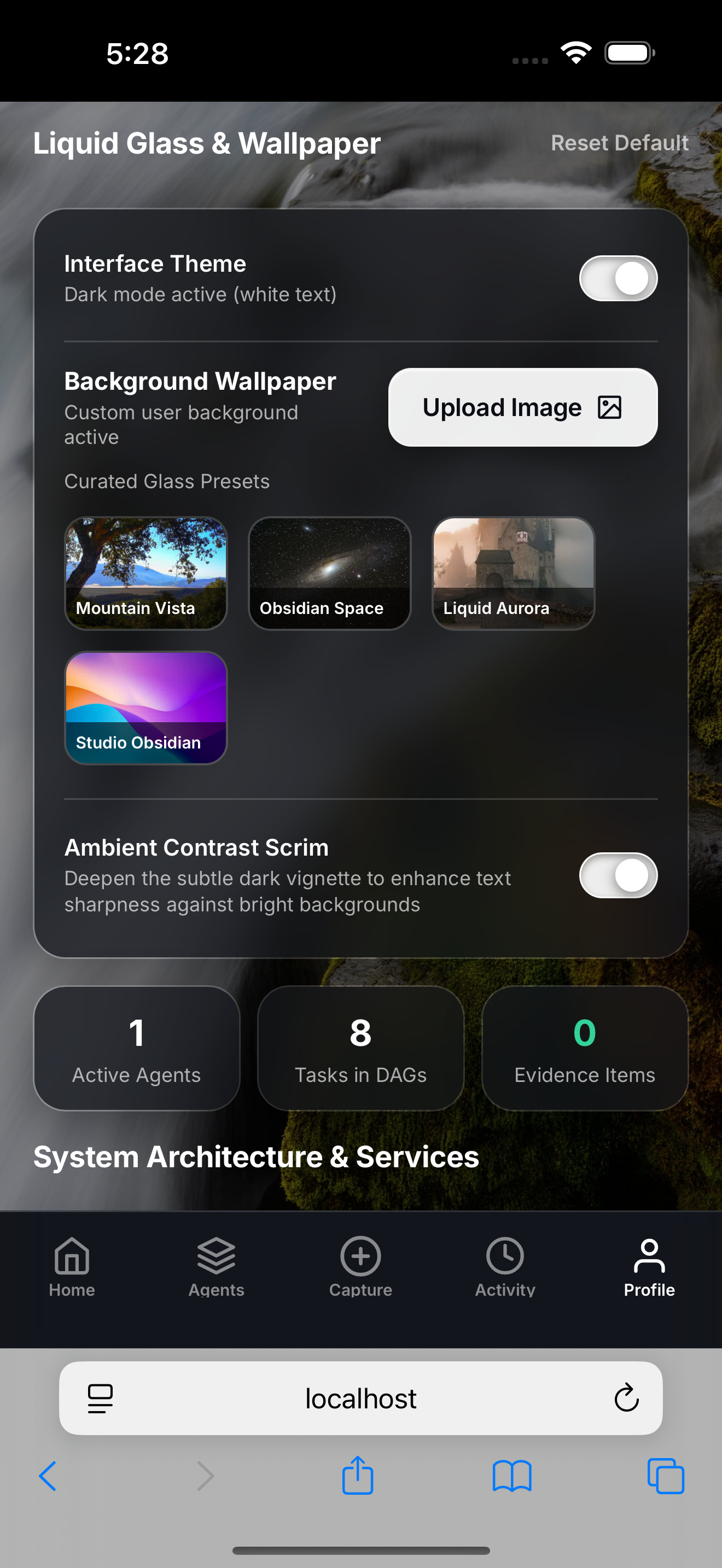
Liquid Glass & Wallpaper
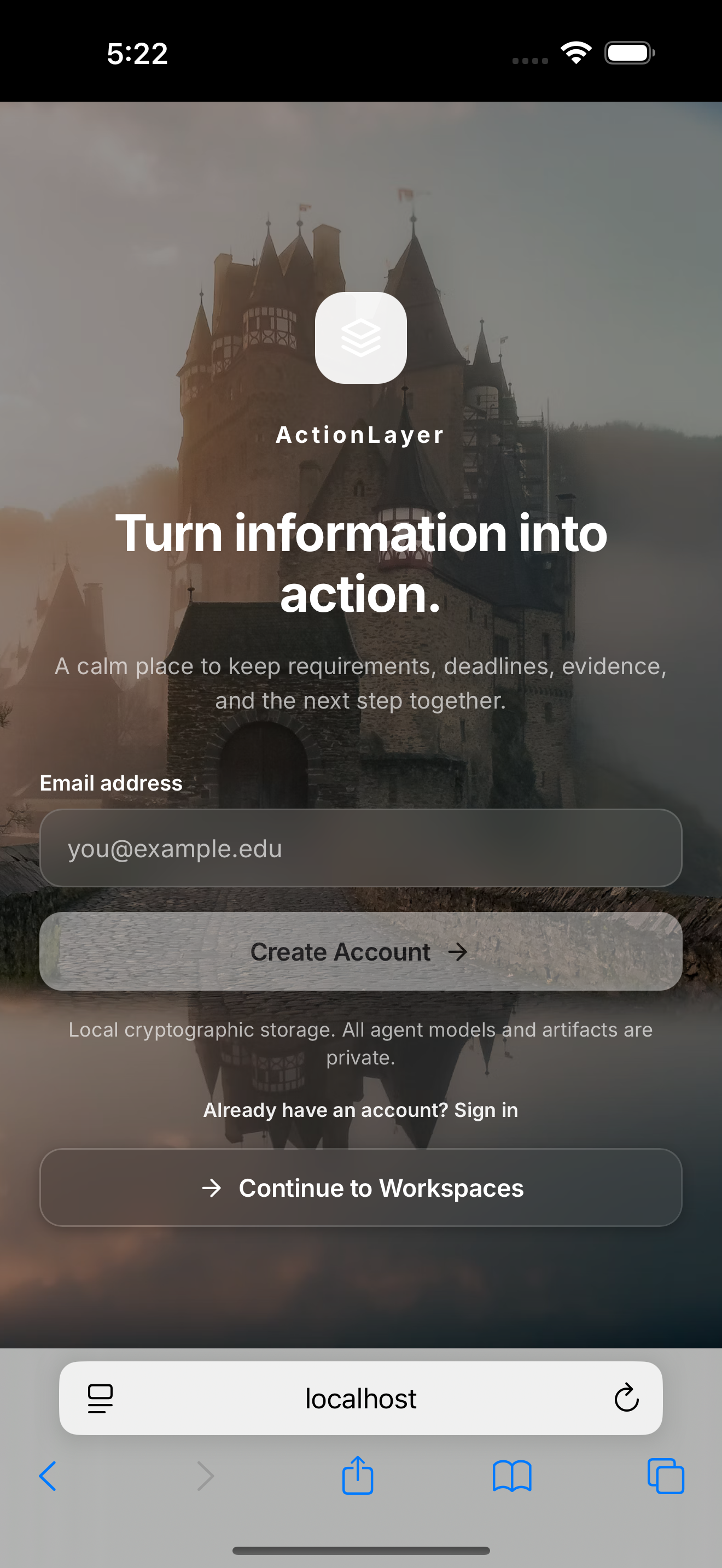
ActionLayer
Turn complex information into executable action.
Inspiration
As university students, we regularly receive important requirements through long PDFs, screenshots, competition posters, academic briefs, grant applications, and online submission pages.
The information may be available, but converting it into a reliable execution plan is still manual. A single document can contain deadlines, eligibility conditions, file-format restrictions, required evidence, conditional obligations, task dependencies, and conflicting instructions distributed across many pages.
Teams can spend hours reading these documents, copying requirements into task managers, identifying dependencies, and checking every deliverable before they can focus on building.
Missing one critical requirement can invalidate an otherwise strong submission.
We built ActionLayer to remove this administrative burden.
ActionLayer is an agentic AI mobile application that transforms complex opportunity documents into persistent, source-grounded workflows.
It extracts important requirements, organizes them into an executable roadmap, tracks supporting evidence, audits progress against the original source, and shows the team exactly what is ready, blocked, missing, or next.
Why Not Just Use a General AI Assistant?
General AI assistants are highly useful for answering questions, generating ideas, and summarizing documents.
However, a summary is not the same as an execution system.
After receiving a summary, users must still determine:
- What must be completed?
- What can begin immediately?
- Which tasks depend on other tasks?
- Which information is uncertain or conflicting?
- What evidence is required?
- Which requirements are still missing?
- What should the team do next?
- Is the final submission actually ready?
ActionLayer continues beyond summarization. It transforms extracted information into operational objects that remain connected throughout the complete workflow:
Source → Source-grounded claims → Human review → Requirement Graph → Task execution → Evidence assessment → Final Readiness Audit
ActionLayer does not replace human judgment. Its agentic workflow organizes information, maintains task states, enforces dependencies, tracks supporting evidence, recalculates readiness, identifies blockers, and recommends the next valid action.
What ActionLayer Does
Users can upload:
- Competition posters
- Screenshots and images
- PDF documents and rulebooks
- Grant and fellowship announcements
- Academic briefs
- Application guidelines
- Pasted requirement text
ActionLayer analyzes the source and extracts important information such as:
- Deadlines and timezone details
- Eligibility conditions
- Required deliverables
- File and formatting restrictions
- Conditional obligations
- Evidence requirements
- Missing information
- Conflicting instructions
- Relationships between tasks
Every important extracted claim remains connected to a supporting source excerpt and page number when available.
Before an agent is activated, the user reviews the extracted claims. The user can:
- Confirm a claim
- Correct an extracted value
- Mark information as unknown
- Review the supporting source
- Resolve conflicting information
- Remove unsupported information
- Add missing details manually
This human-review stage prevents uncertain AI output from silently becoming part of the execution plan. After review, ActionLayer converts the confirmed requirements into a persistent Requirement Graph.
Agentic AI Workflow
ActionLayer behaves as an execution agent rather than a one-time document summarizer:
- Analyzes the uploaded source
- Extracts source-grounded requirements
- Identifies uncertainty and conflicts
- Waits for human review of critical information
- Generates tasks and completion conditions
- Connects tasks through prerequisite relationships
- Tracks task and evidence states
- Recalculates downstream readiness
- Identifies blockers and missing requirements
- Recommends the most useful next action
- Performs a final readiness audit
Critical decisions remain human-reviewed. Google Gemini proposes extracted information, tasks, and workflow relationships. Deterministic application logic validates the graph, controls task states, resolves dependencies, and calculates readiness.
This separation gives the AI flexibility for interpreting complicated documents while keeping critical execution logic predictable, testable, and explainable.
Requirement Graph
The Requirement Graph is more than a traditional checklist. It represents:
- Ready tasks
- Blocked tasks
- In-progress work
- Completed tasks
- Parallel workstreams
- Required prerequisites
- Completion conditions
- Evidence policies
- Conditional requirements
- Final submission dependencies
Independent activities can proceed in parallel, while tasks with genuine prerequisites remain blocked until the required upstream work is complete.
Google Gemini proposes tasks and dependency relationships. ActionLayer then applies deterministic application logic to validate and enforce the resulting graph. The graph engine checks that:
- Every dependency references an existing task
- Tasks do not depend on themselves
- Duplicate dependency relationships are rejected
- Circular dependencies are rejected
- Blocked tasks cannot begin prematurely
- A task remains blocked while any required prerequisite is incomplete
- Completing a prerequisite recalculates downstream task states
When all required prerequisites for a blocked task are completed, ActionLayer automatically changes the task to Ready and updates the recommended next action.
This gives the team a clear answer to the most important execution question: What should we work on next?
Source-Grounded Human Review
ActionLayer keeps uncertainty visible.
For example, a rulebook may state one submission deadline while an application portal displays another. ActionLayer does not silently choose between the dates. Instead, ActionLayer:
- Preserves both source excerpts
- Records the relevant page references
- Marks the information as conflicting
- Requires human review
- Creates an appropriate clarification action
- Includes the unresolved conflict in deadline risk and final readiness
The same approach applies to conflicting eligibility rules, participation formats, team-size requirements, file restrictions, and deliverable limits.
Users can see not only what ActionLayer extracted, but also where the information came from and whether it still requires confirmation.
(ActionLayer is designed to reduce the risk of missed requirements. It does not guarantee eligibility, official compliance, acceptance, or competition success).
Evidence-Backed Progress
Some tasks require more than a completion checkbox. ActionLayer supports evidence such as:
- Text responses
- Images
- PDF documents
- URLs
- Repository links
- User declarations
Evidence remains connected to the task and its source-grounded completion conditions across multiple levels:
- Level 0: No evidence required
- Level 1: User-confirmed completion
- Level 2: Supporting evidence attached
- Level 3: AI-assisted assessment against explicit criteria
An assessment reports requirements met, requirements missing, confidence score, assessment limitations, recommended corrections, and suggested next actions.
AI-generated results are clearly presented as AI-assisted assessments, not official certification. Previous evidence attempts are preserved so users can correct and resubmit work without losing assessment history.
Final Readiness Audit
Before submission, ActionLayer performs an explainable audit across four separate dimensions:
- Requirements completion
- Evidence readiness
- Source confidence
- Deadline risk
Rather than hiding everything behind one unexplained score, ActionLayer shows exactly what is Ready, Missing, Blocked, Uncertain, Conflicting, or At Risk, explaining why an item is blocking readiness and recommending the most important next action.
The final checklist is generated from the uploaded source. If the source does not require a video, repository, budget, or recommendation letter, those items do not appear in the final audit.
The Main Time-Saving Value
The most important benefit of ActionLayer is the administrative work it removes.
Instead of spending hours manually reading a dense rulebook, copying requirements into a task manager, identifying dependencies, checking file limits, and reviewing every deliverable again before submission, teams receive:
- A reviewed set of requirements
- A dependency-aware execution roadmap
- Clear task relationships
- Visible blockers
- Evidence requirements
- Readiness checks
- One recommended next action
As the team uploads completed work, ActionLayer assesses the evidence against the original requirements and identifies possible mistakes, missing information, or unmet conditions. This allows teams to spend less time managing compliance overhead and more time designing, building, testing, and improving their projects.
Mobile-First Experience
ActionLayer is designed as a mobile-first application because students often discover opportunities through their phones.
The application includes:
- Image and document intake
- Privacy disclosure before AI processing
- Human-readable processing stages
- Structured claim review
- Conflict and uncertainty indicators
- Dependency-aware task navigation
- Evidence submission
- Readiness auditing
- Source citations
- Activity history
- Touch-friendly controls
- Responsive mobile and web layouts
The visual system uses translucent surfaces, purposeful motion, clear status indicators, customizable backgrounds, and accessible interaction patterns to create a focused workspace without hiding operational information.
How We Built It
ActionLayer uses a cross-platform client-server architecture:
Client
- React Native (0.86)
- Expo (57)
- Expo Router
- React Native Web
- TypeScript
- React Context
- AsyncStorage for supported preferences and cached client state
expo-blurreact-native-reanimated- Custom Spatial Liquid Glass design system
Backend
- Node.js
- Express.js
- REST API
- Zod runtime validation
- Structured error handling
- Multimodal image, PDF, and text processing
- Protected file-intake workflow
- Deterministic Requirement Graph services
Data Layer
- PostgreSQL
- Drizzle ORM
The relational data model supports sources, extraction jobs, claims, workflows, tasks, dependencies, evidence, assessment history, readiness audits, and activity events.
AI Engine
- Google Gemini API
- Multimodal image, PDF, and text understanding
- Structured information extraction
- Source-grounded claims
- Workflow suggestions
- AI-assisted evidence assessment
- Zod validation before extracted information is used
The Gemini model is configured through a server-side environment variable. The provider and model identifier used for each extraction are retained with the extraction metadata. The Gemini API key remains strictly on the backend and is not exposed through client-side variables.
Deterministic Application Logic
Gemini supports document analysis and workflow suggestions, but does not directly control critical application state. Deterministic application logic handles:
- Graph-integrity validation
- Dependency-existence checks
- Self-dependency rejection
- Duplicate-edge rejection
- Cycle detection
- Task-state transitions
- Automatic unblocking
- Requirement coverage
- Next-action selection
- Readiness calculations
- Evidence-history preservation
RevenueCat Integration
ActionLayer integrates the official react-native-purchases SDK to support a freemium product experience.
- Free Tier: Core document processing, source-grounded claim review, Requirement Graph functionality, and standard readiness checks.
- Pro Tier: Higher AI extraction limits, advanced AI-assisted evidence assessment, larger workflows, and extended verification history.
The application contains RevenueCat offering, purchase, customer-information, and entitlement-handling architecture. ActionLayer reads entitlement information through RevenueCat and unlocks Pro functionality when the configured pro entitlement becomes active.
Challenges We Faced
1. Producing Valid Requirement Graphs
One of the largest challenges was preventing AI-generated tasks from becoming a simple linear to-do list. Independent work should proceed in parallel, while genuine prerequisites should create blocking relationships. We separated AI suggestions from deterministic graph enforcement and added cycle detection, dependency-existence checks, and automatic state recalculation.
2. Handling Long and Conflicting Documents
We stress-tested ActionLayer using a controlled 20-page rulebook containing conflicting deadlines, conflicting participation rules, conditional eligibility, and formatting restrictions. This helped us refine conflict handling, task coverage, dependency reasoning, and blocking explanations.
3. Preserving Source Grounding
Extracting a deadline is not enough—the application must preserve where the information came from. ActionLayer records source excerpts, page references, confidence, and review status. Confirmed claims require supporting source evidence, and ambiguous items remain visibly flagged.
4. Designing Human-Supervised Agentic AI
We carefully defined the boundaries between what the AI could suggest, what required human review, and what required deterministic software enforcement. This keeps critical execution logic predictable, testable, and explainable.
5. Cross-Platform Visual Consistency
Creating a consistent experience across mobile and web required careful handling of blur, transparencies, safe areas, bottom navigation, responsive layouts, scroll behaviors, touch targets, and contrast.
What We Learned
Building ActionLayer taught us that reliable agentic AI products require more than a capable model:
- AI output must be validated before use.
- Uncertainty must remain visible.
- Human review is essential for deadlines and eligibility.
- Task states and dependencies require deterministic enforcement.
- Evidence assessments must disclose their limitations.
- Source provenance is as important as extraction.
- Error recovery is part of the product experience.
- A polished interface cannot compensate for incorrect workflow logic.
- Agentic AI works best when model reasoning, deterministic software, and human judgment have clearly defined responsibilities.
What Is Next
The next phase of ActionLayer will focus on:
- Authenticated multi-user synchronization
- Secure cloud persistence
- Calendar integration
- Improved conditional-task handling
- More precise document-page citations
- Organization and team workspaces
- Stronger offline support
- Real-world student testing
- Expanded RevenueCat entitlement functionality
- Secure URL ingestion (introduced after server-side validation, redirect limits, private-network blocking, and safety protections are fully tested)
Why ActionLayer Matters
Students do not usually lose opportunities because they lack ambition. They lose them because complex requirements remain scattered across documents and platforms, requiring hours of repetitive administrative work before meaningful project development can begin.
ActionLayer transforms that information into reviewed requirements, dependency-aware execution, evidence-backed progress, explainable readiness, and one clear next action.
ActionLayer is not another chatbot. It is an agentic Action Compiler that helps teams finish what complex documents require.
Built With
- asyncstorage
- docker
- drizzle-orm
- expo-blur
- expo-router
- expo.io
- express.js
- generative-ai
- github
- google-gemini
- mobile
- node.js
- postgresql
- react-native
- react-native-purchases
- react-native-reanimated
- react-native-web
- rest-api
- revenuecat
- typescript
- zod


Log in or sign up for Devpost to join the conversation.