Inspiration
Real-world tasks often require phone calls, but simply giving an AI access to a phone is not enough. Users need control over what the agent is allowed to do, visibility into what happened, and a clear way to review the outcome.
ActionBridge was built around a simple idea: a phone call should be an authorized action inside a larger workflow, not an isolated AI conversation.
What is ActionBridge?
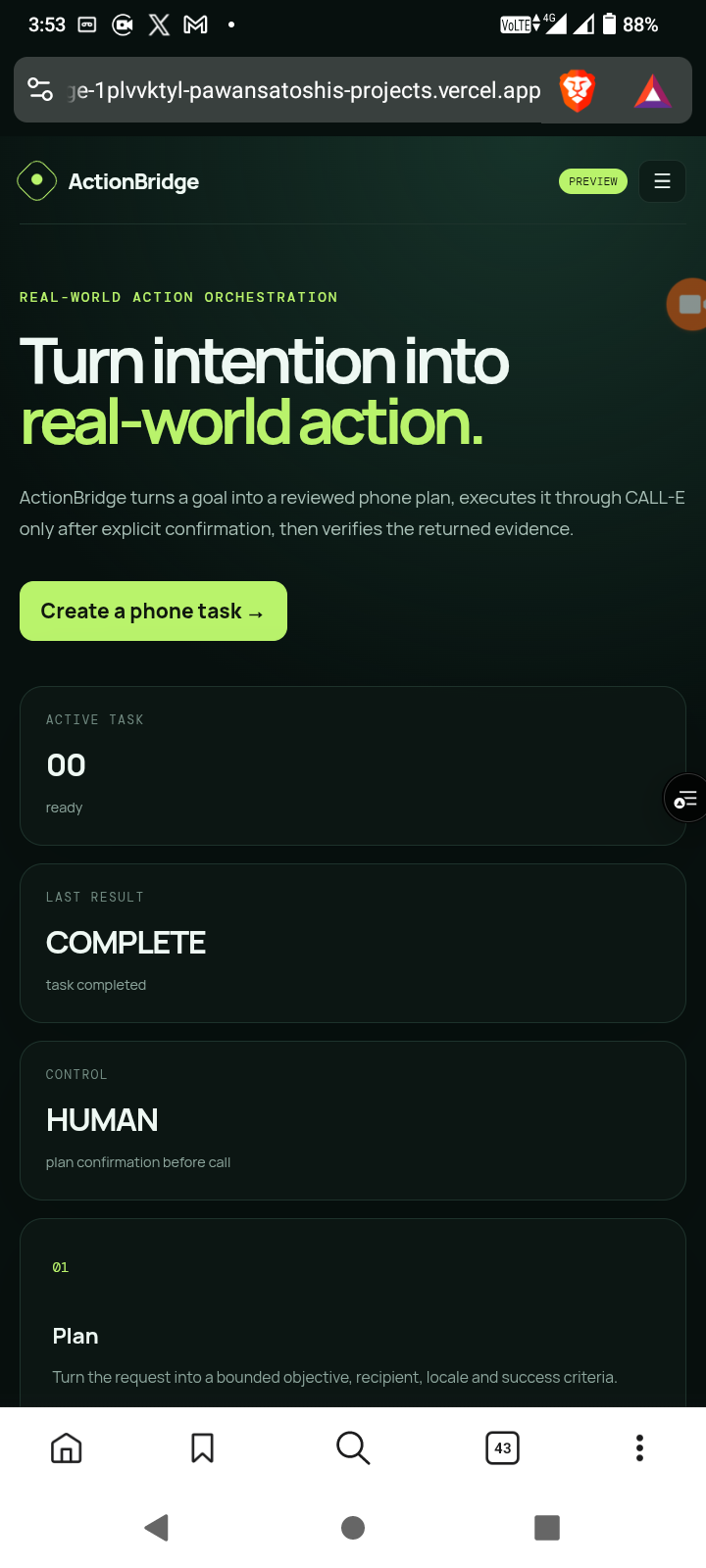
ActionBridge is a human-controlled phone-work orchestration layer powered by CALL-E.
Instead of starting with “make a phone call,” the workflow starts with a bounded goal. ActionBridge validates the request, prepares the call, obtains explicit human authorization, executes the approved call through CALL-E, tracks status and events, and turns the outcome into structured information that a person can review and act on.
The core workflow is:
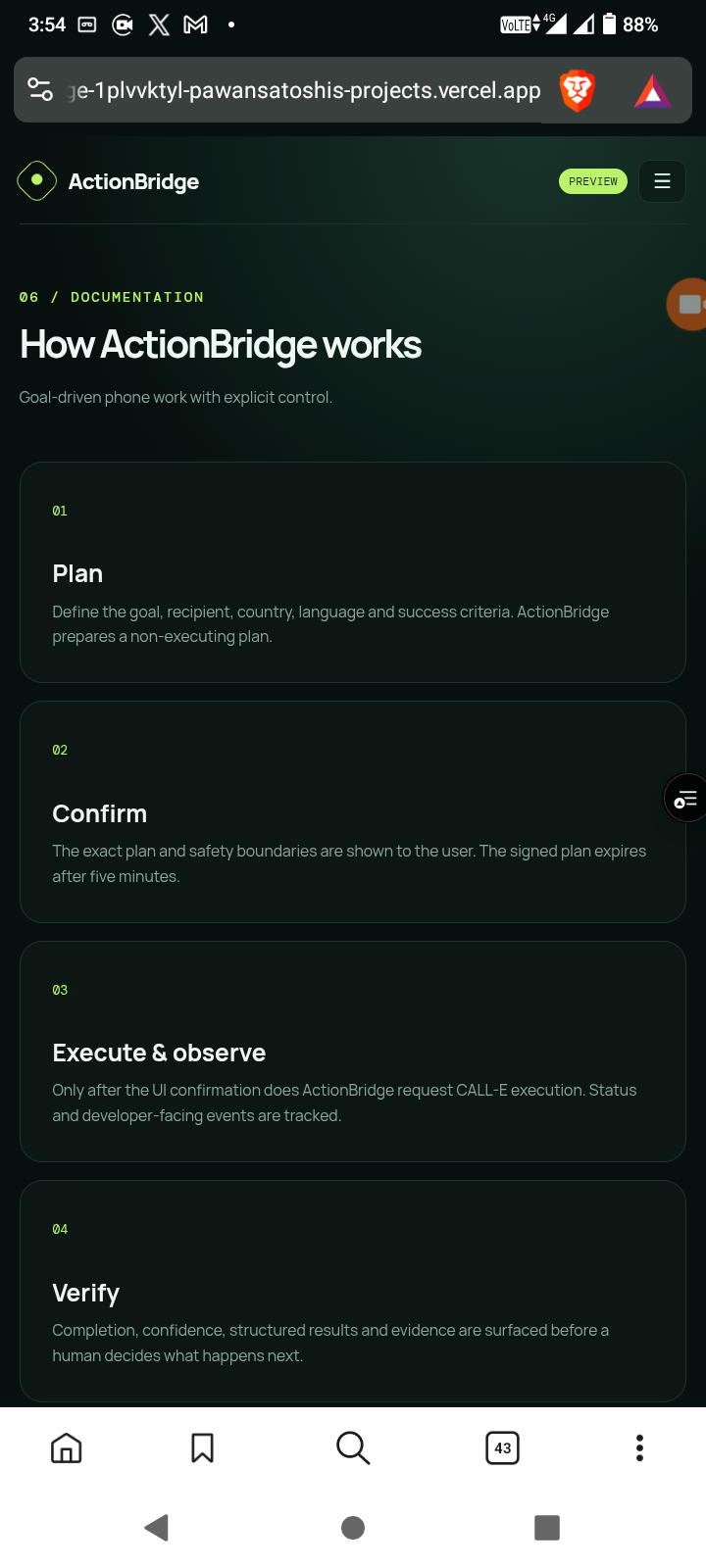
Goal → Validate → Authorize → CALL-E → Status & Events → Structured Result → Evidence → Human Decision
How It Works
- Define a goal — The user describes the real-world task they want completed.
- Validate — ActionBridge checks the request and call parameters before execution.
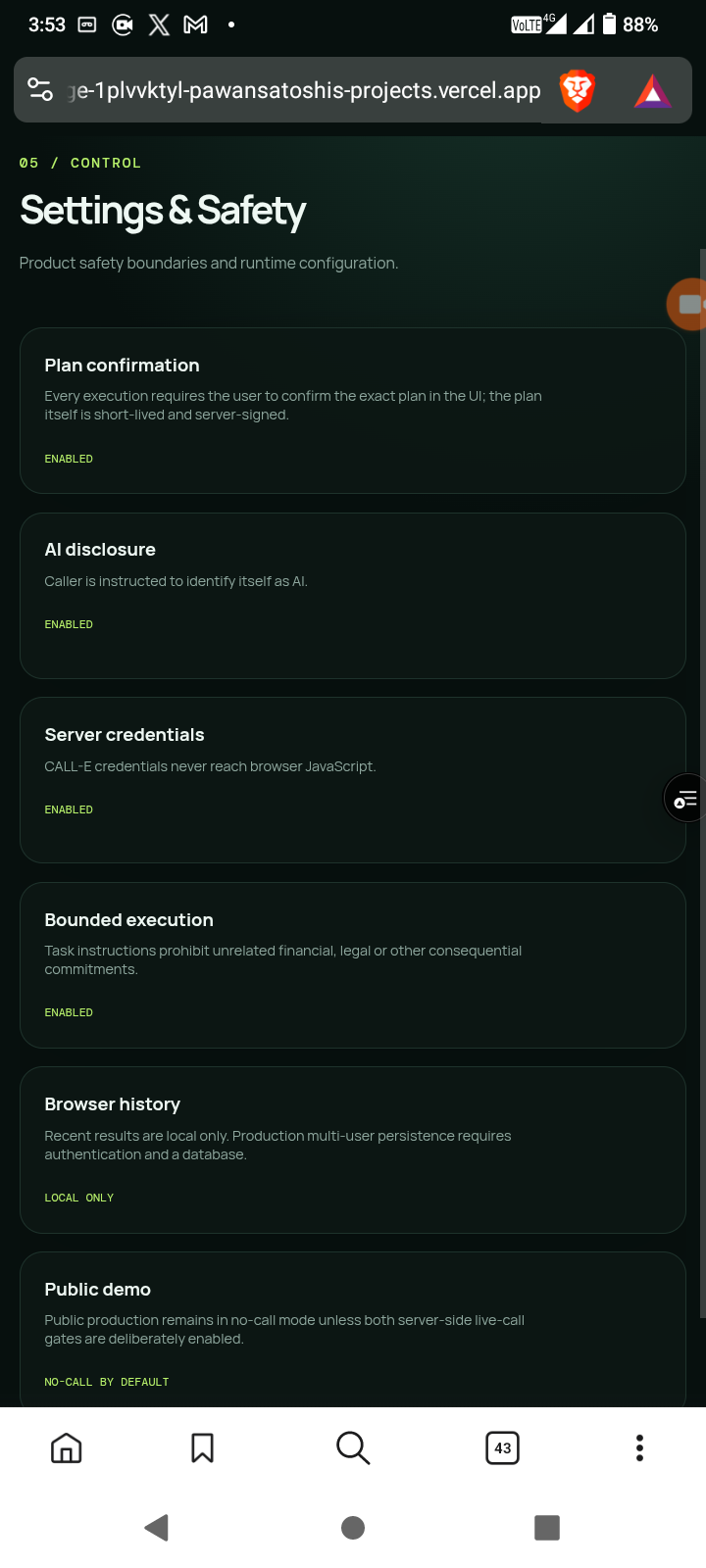
- Authorize — The user explicitly confirms the proposed phone action.
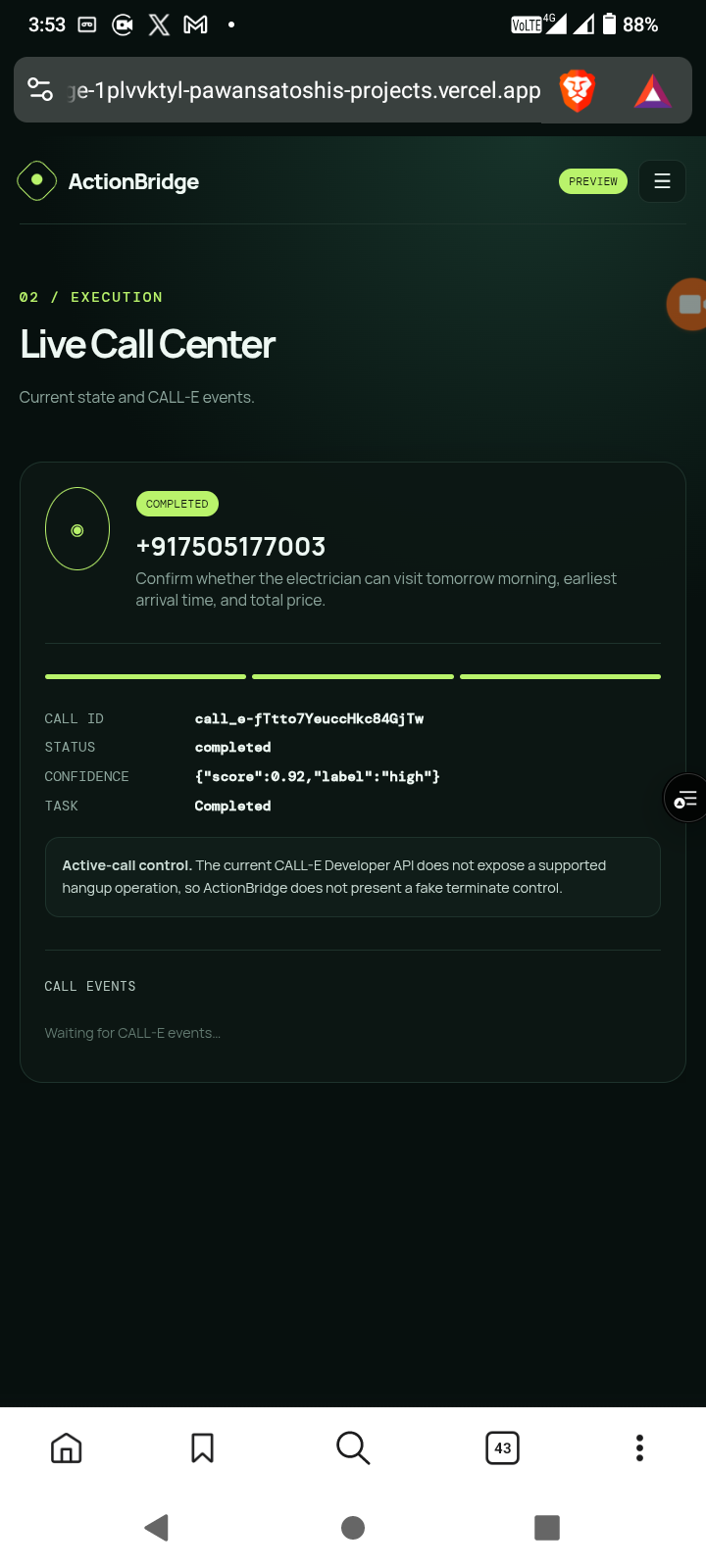
- Execute with CALL-E — The approved workflow creates the phone call through the CALL-E Developer API.
- Track execution — Call status and events are surfaced in the application.
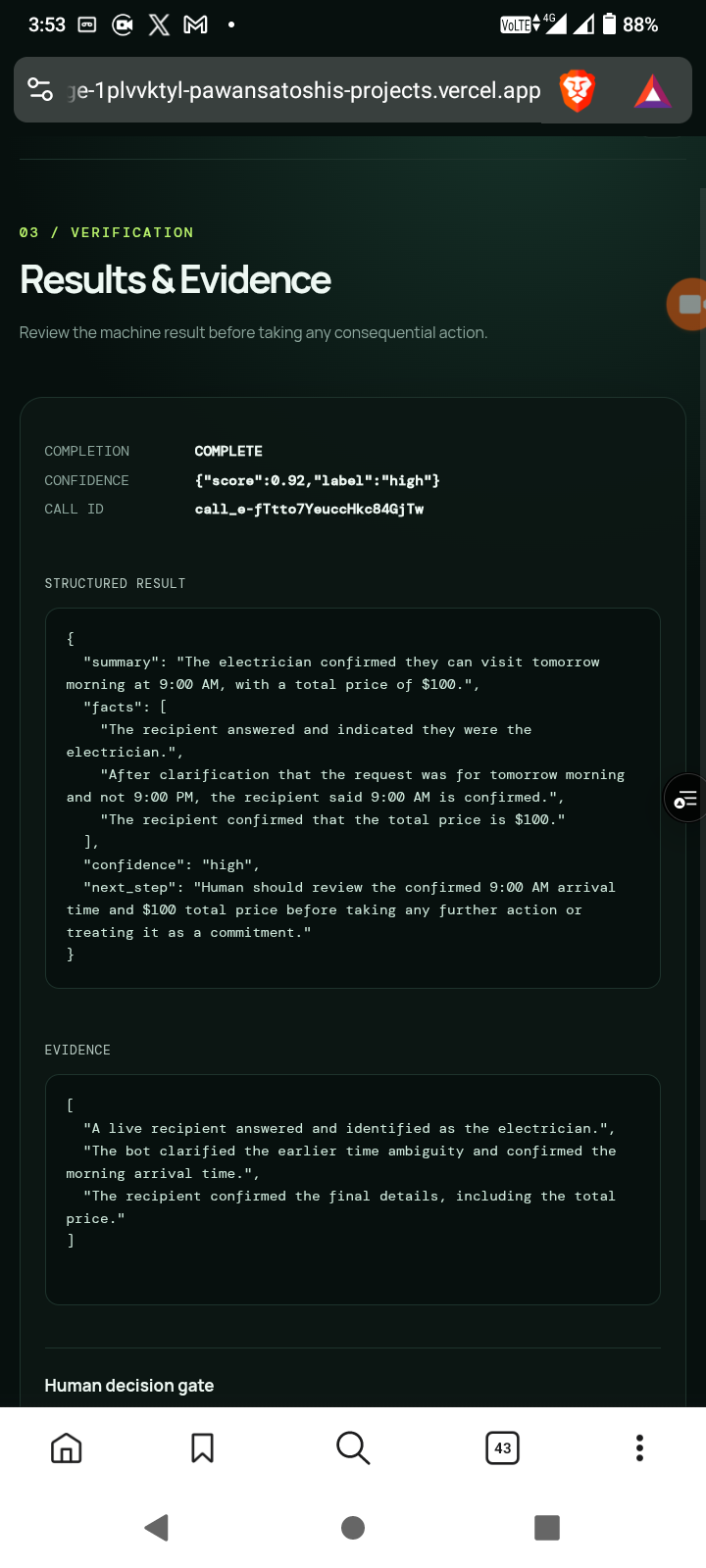
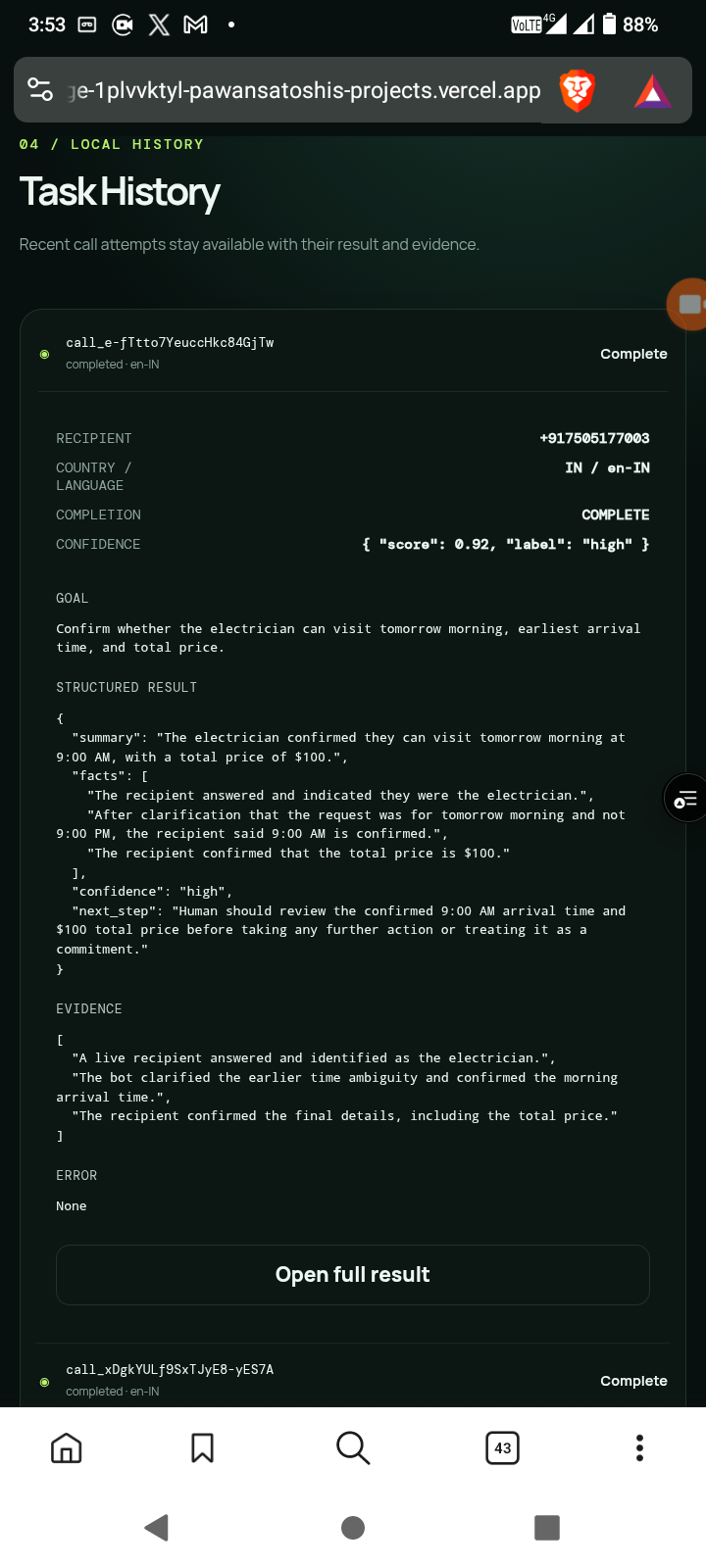
- Structure the outcome — CALL-E results are converted into useful structured data rather than leaving the user with only a transcript.
- Review evidence — The user can inspect the resulting information before making the final decision.
Why CALL-E?
CALL-E provides the phone-call execution layer that makes ActionBridge possible. ActionBridge focuses on the orchestration layer around that capability: authorization, validation, execution tracking, structured outcomes, and human review.
This separation makes phone agents more useful for workflows where the result of the call matters as much as the call itself.
What We Built
ActionBridge is a Next.js/TypeScript web application using the CALL-E Developer API. The application includes server-side call creation, E.164 phone-number validation, explicit approval flow, idempotency handling, call status/event retrieval, structured results, evidence presentation, and a safe no-call public mode.
The public deployment is intentionally configured so that visitors cannot accidentally trigger real calls. A controlled working environment can be used for evaluation of the live CALL-E flow.
Challenges & Lessons
The biggest challenge was designing the boundary between AI phone execution and human control. A useful phone agent should not simply act autonomously; it should make its intended action understandable, obtain authorization, and return an outcome that can be evaluated.
Building ActionBridge reinforced that phone AI becomes significantly more useful when treated as an auditable workflow rather than just a conversational interface.
What's Next
Future versions can extend ActionBridge with more workflow types, richer evidence, durable history, additional integrations, and more granular authorization policies while keeping the human-in-the-loop model at the center.
Built With
- call-e
- github
- next.js
- react
- typescript
- vercel


Log in or sign up for Devpost to join the conversation.