-
-
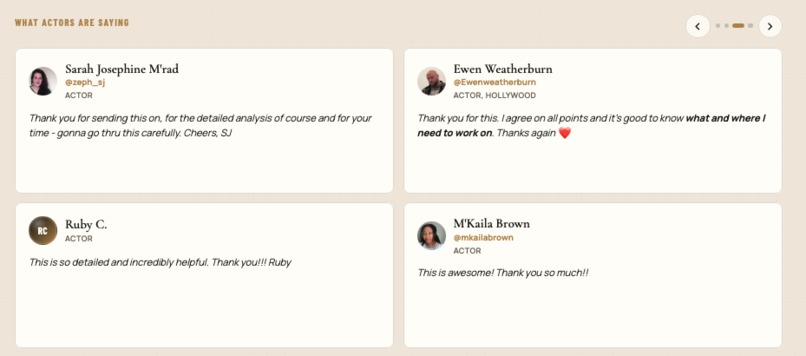
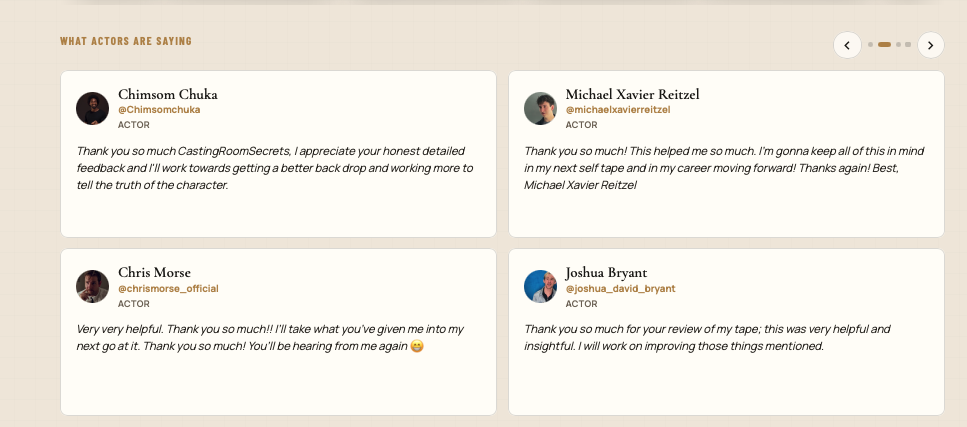
CastingRoomSecrets feedback reviews
-
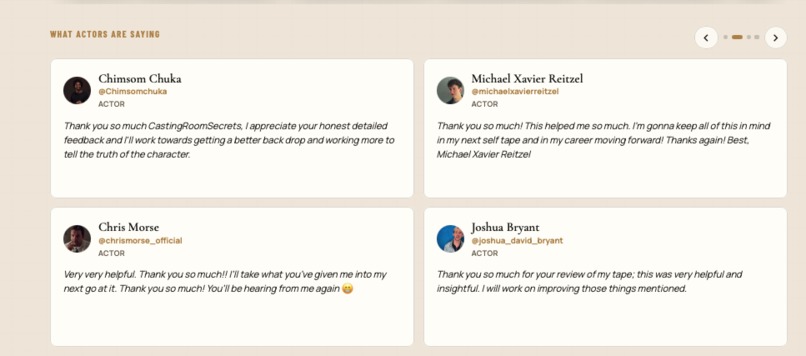
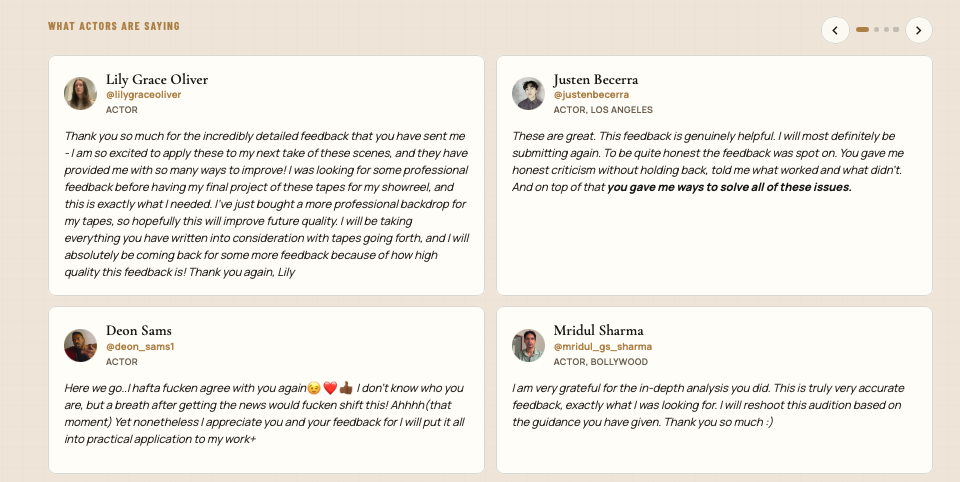
CastingRoomSecrets feedback reviews
-
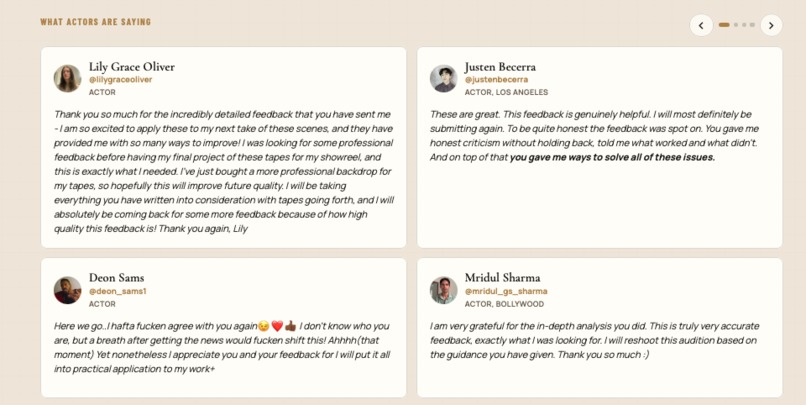
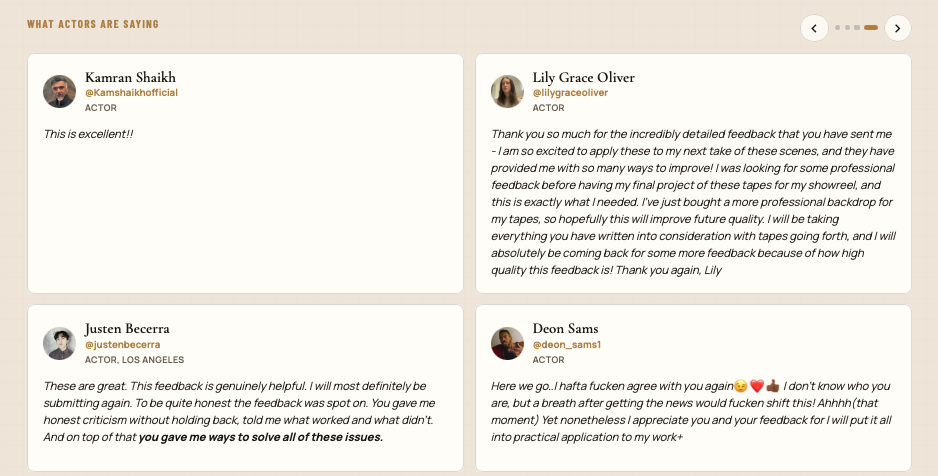
CastingRoomSecrets feedback reviews
-
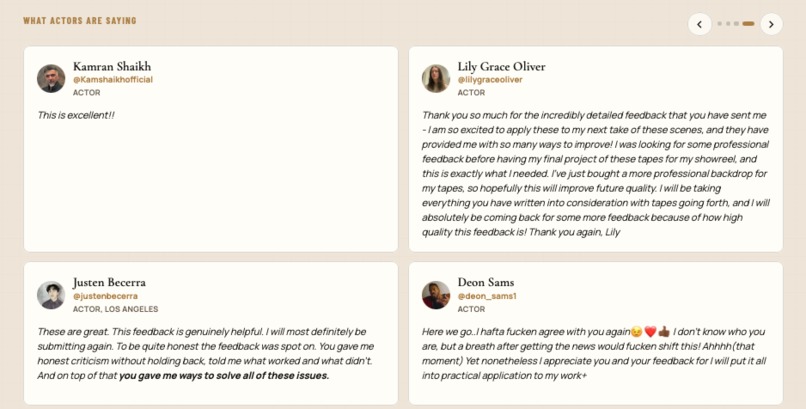
CastingRoomSecrets feedback reviews
-
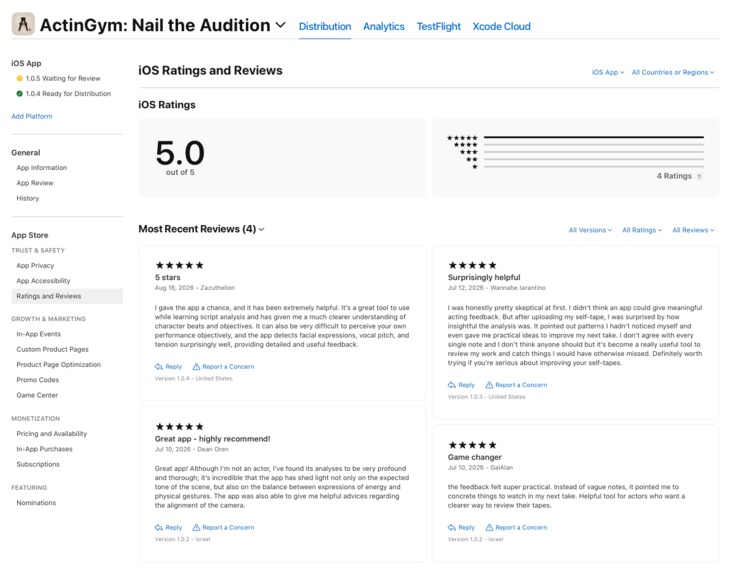
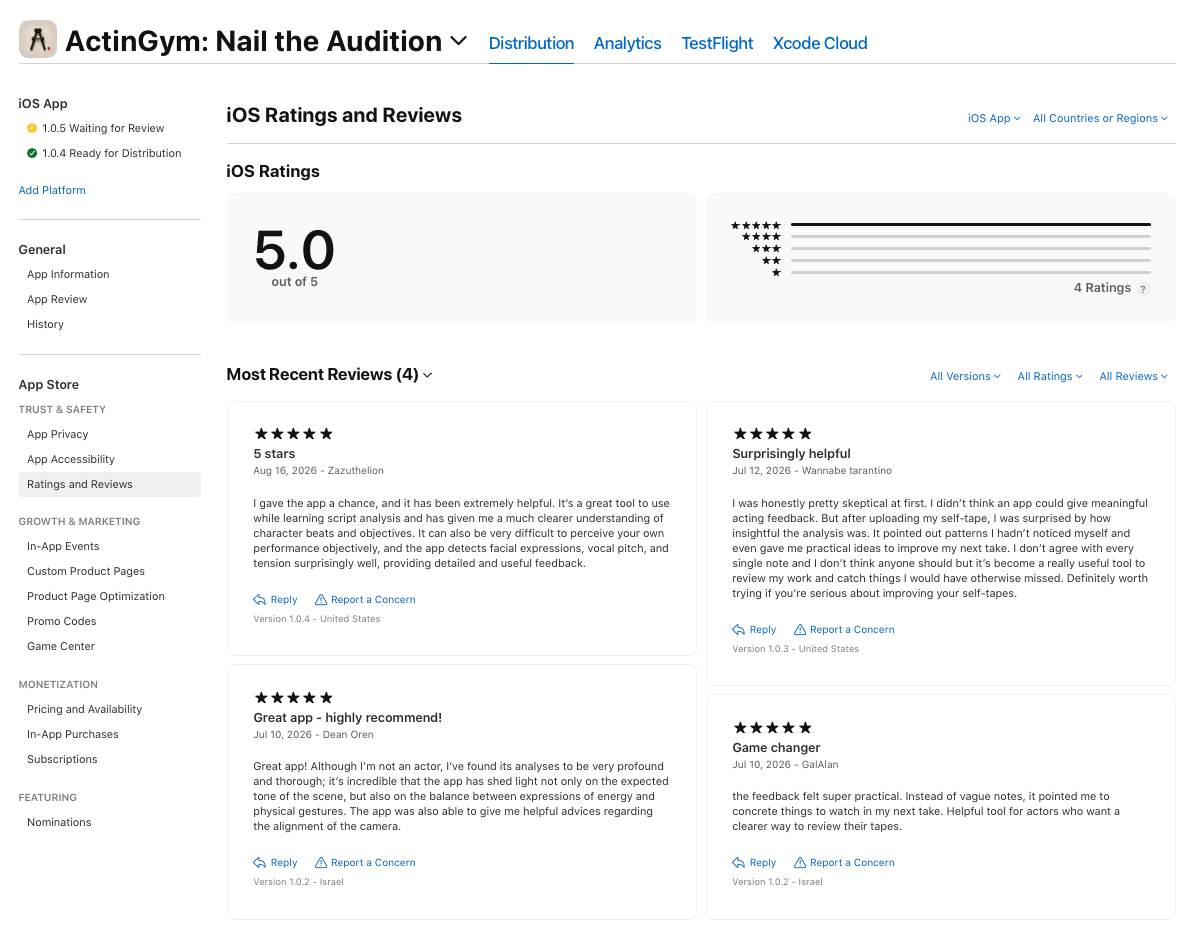
Apple Store reviews.
-
icon 1024 x 1024
-
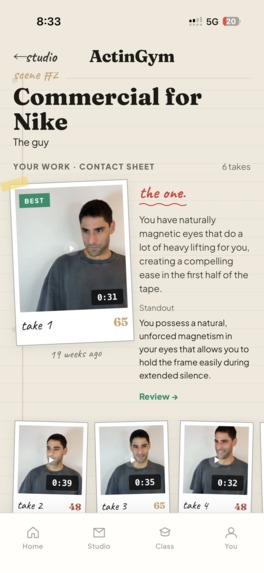
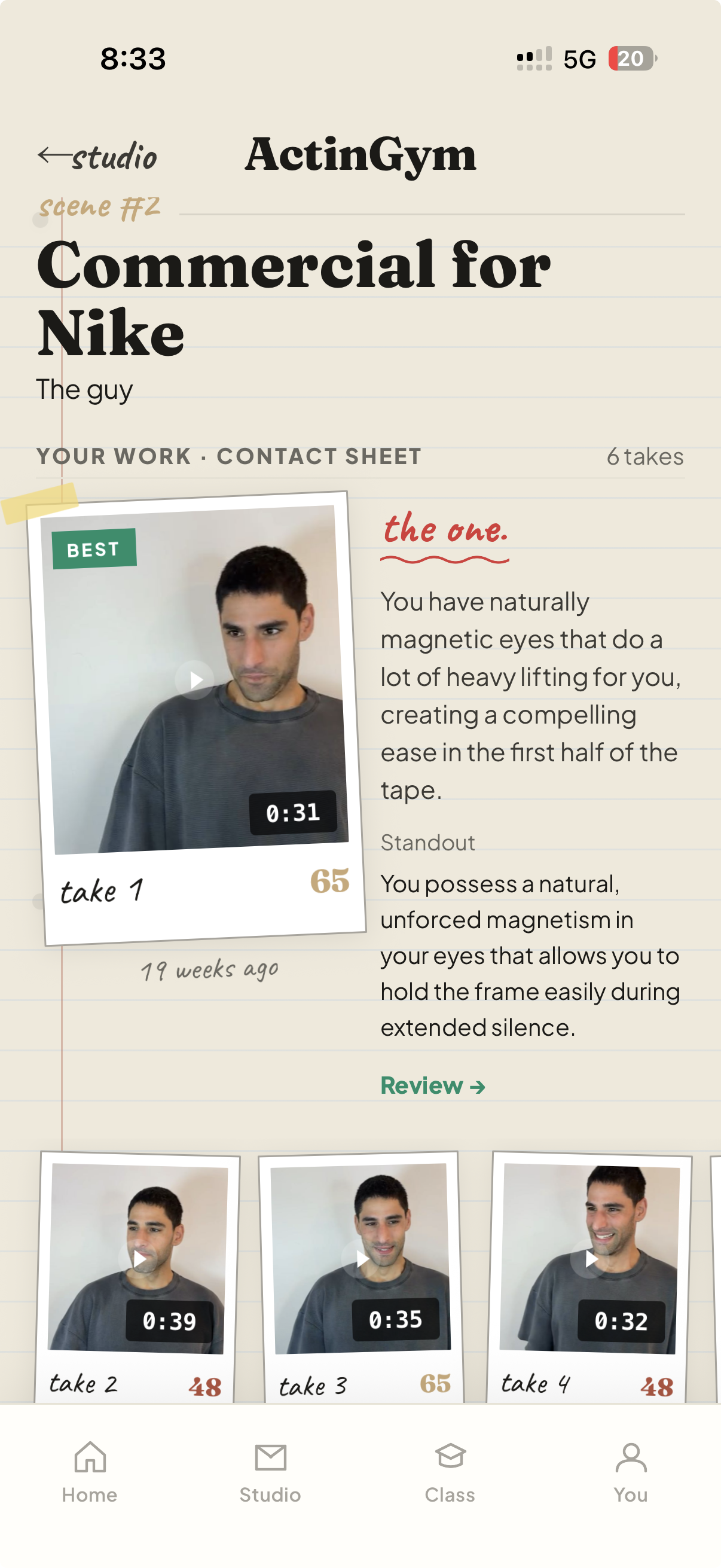
screenshot of the app
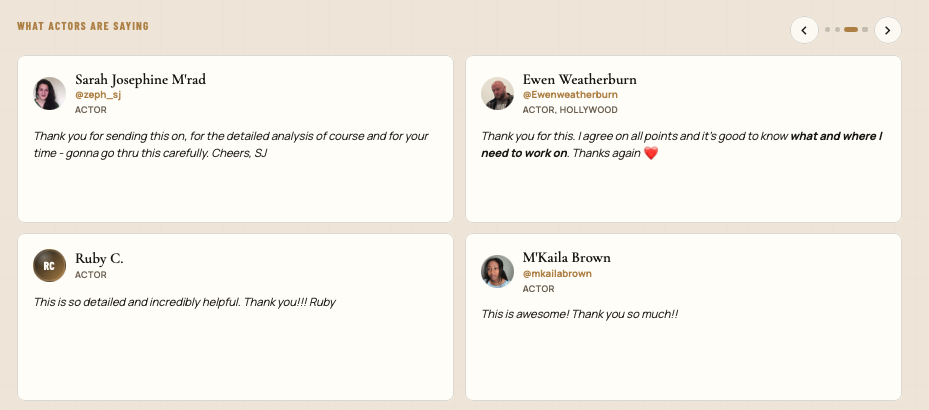
ActinGym turns the silence after an audition into an always-available AI coach - helping actors understand every take, train with purpose, and walk into the next audition better than they entered the last.
- $8,149 independent revenue; 133 paying customers; no payment refunds or chargebacks
- 875 tapes uploaded; 782 analyses completed in production
- 80% repeat behavior: 105 of 133 analyzed actors returned
- 7.8% install-to-paid; half use their allowance within two weeks and 20% buy more
The acting industry is built around judgment, yet it gives actors almost none of it back.
An actor can spend hours learning a scene, recording take after take, and pressing Send. Then comes silence. No explanation. No direction for the next audition. Casting teams receive hundreds of tapes; they cannot coach everyone they reject.
I knew that silence from acting in high school. In class, feedback was part of the work; outside it, feedback became a luxury. A coach can cost around $200 while an actor may submit 100–300 auditions a year. For performers awaiting one life-changing “yes,” continuous coaching is impossible. Acting is a muscle most must strengthen in the dark.
By late May, I felt this was bigger than my experience - but feelings are not validation. On Reddit and TikTok, actors uploaded self-tapes daily and asked strangers for criticism; some posted several times, desperate for any clue. They did not know who was answering. Their willingness to expose vulnerable work for anonymous feedback proved the pain was real.
I believe in selling before building, so I began with a page (@castingroomsecrets) , a simple website (www.castingroomsecrets.com), and a closed AI loop. An actor uploaded a tape. AI separated actor from reader, analyzed the performance, decided which moments and feedback should become the story, wrote the hook and narrator’s script, generated the narration, composed the video, and emailed the actor a detailed report. With explicit public-use consent and after I set the strategy and publishing boundaries, the routine production ran with almost no human labor. Some actors paid $25–$35 for faster delivery, generating the first $200. More importantly, every post attracted new submissions; every submission generated feedback and user reactions; and those reactions exposed weaknesses that improved the same analysis engine being built for ActinGym. Marketing, validation, and product development became one self-feeding loop.
Then it took off: approximately 500,000 views and 7,000 Instagram followers in one month, including 100+ actors with major credits. The hypothesis became real: the audience existed, the pain was urgent, and people would pay. I began building ActinGym.
ActinGym does not give an actor a generic paragraph about a video. Its approximately 25 onboarding questions capture experience, goals, insecurities, career stage, and current needs so AI can decide not only what feedback matters now, but what that actor should train next. After each tape, AI scores seven acting dimensions, attaches feedback to exact moments, identifies the highest-priority improvement, and selects exercises from a 240-exercise library. It turns those decisions into a living training plan, updates the roadmap as new performances arrive, remembers progress, and recommends the strongest take with grounded reasons. The actor finally has the missing loop: perform, understand, train, record again, and compare.
The hardest part was not making AI say something intelligent. It was teaching the system to know whom it was watching, and to admit when it did not know.
Early versions sometimes criticized the reader’s lines as the actor’s. So the pipeline evolved. Speech-to-Text processes dialogue; Gemini probes look for visible speaking; and a deterministic election identifies the actor only above strict confidence thresholds, otherwise, it abstains. Gemini 3.1 Pro combines video, attributed dialogue, onboarding, preparation, and reflection, guided by a 765-line acting rubric. Deterministic gates check structure, timeline coverage, grounding, and language; failed analyses restore the customer’s credit automatically.
As a solo founder, AI lets me operate like a team: one system delivers coaching; another turns consented tapes into educational videos; another researches actor pain points and creates carousels; another builds reaction-and-demo content. Together they prepare and schedule up to 24 pieces daily, continuously bringing relevant actors into the product. My measurement center unifies social and app performance; AI summarizes what is happening and recommends responses. I define the methodology, safeguards, strategy, and brand, speak with customers, investigate exceptions, and make final decisions. AI handles the end-to-end analysis, personalization, and marketing production that would normally demand coaching, editing, growth, and analytics teams.
The clearest signal came when actors began paying - and returning. It reached 133 paying customers; half use their monthly credits within two weeks, and 18.5% purchase more. Of 133 actors with a completed analysis, 105 returned. Two U.S. colleges initiated exploratory licensing conversations, and a major production company approached us. It is too early to claim booked roles - but actors demonstrably return to the feedback-and-training loop their careers were missing.
ActinGym starts with acting, but the destination is a Duolingo-like platform for the performing arts. Schools could give every student personalized practice between classes while instructors follow progress. Production companies could provide scalable development feedback instead of leaving thousands of applicants with silence. With explicit consent and licensing, performance data could support model companies studying human expression and emotion. The same vision-based loop can expand into singing, dance, and public speaking: teach, watch, correct, practice, and measure. We will begin by deepening the acting curriculum, proving progress across comparable takes, and piloting institutional licensing. The mission is to make world-class feedback available before someone is wealthy, connected, or successful - and turn the silence after every performance into a clear next step.
Built With
- chirp
- cloud
- firebase
- firestore
- gcp
- gemeni
- vertex


Log in or sign up for Devpost to join the conversation.