-
-
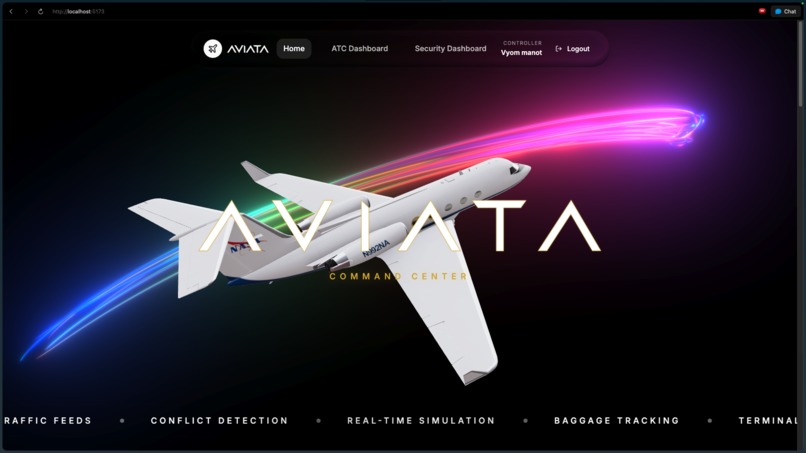
Hero Section
-
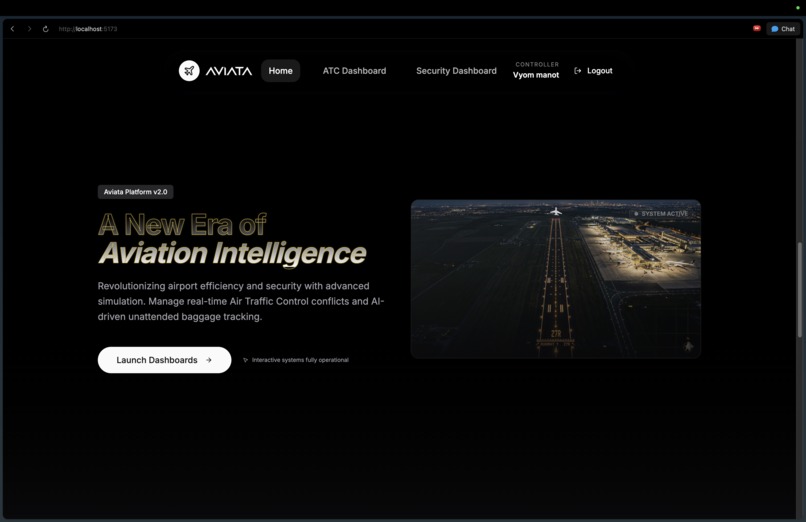
Home Page
-
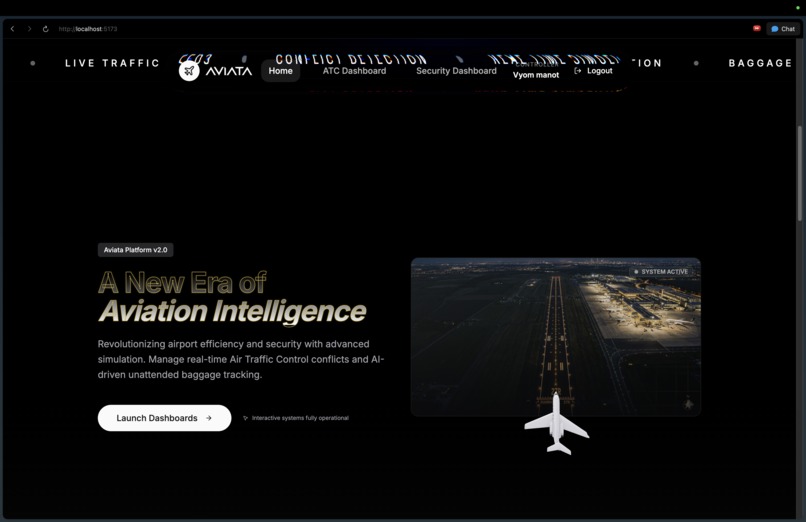
Home Page
-
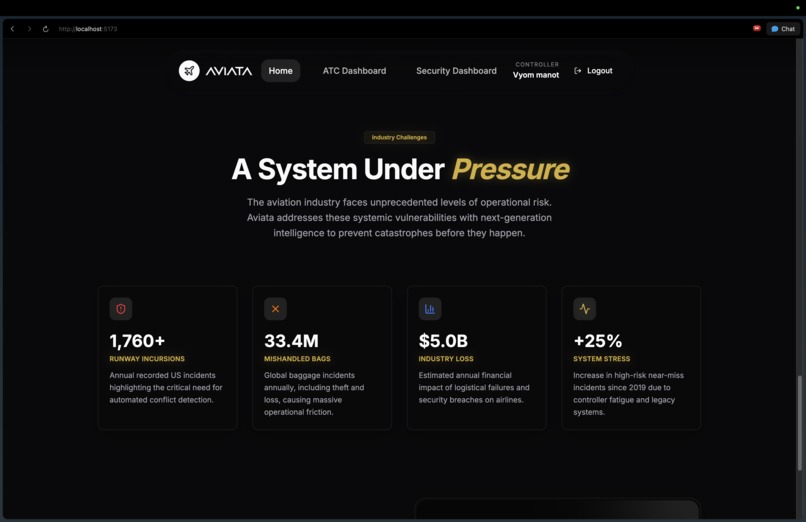
Home Page
-
ATC Dashboard Page
-
ATC Dashboard Page
-
ATC Dashboard Page
-
ATC Dashboard Page
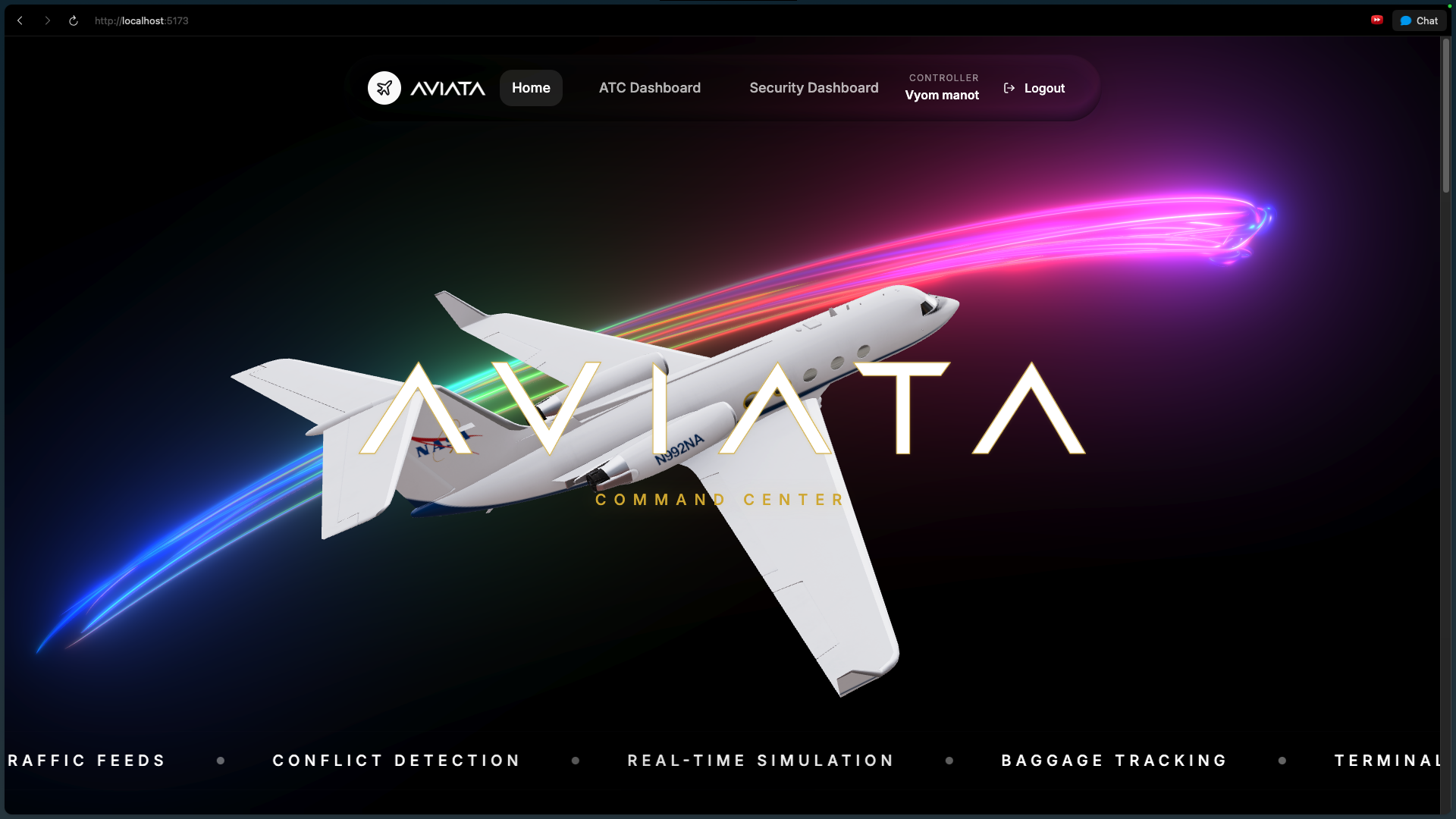
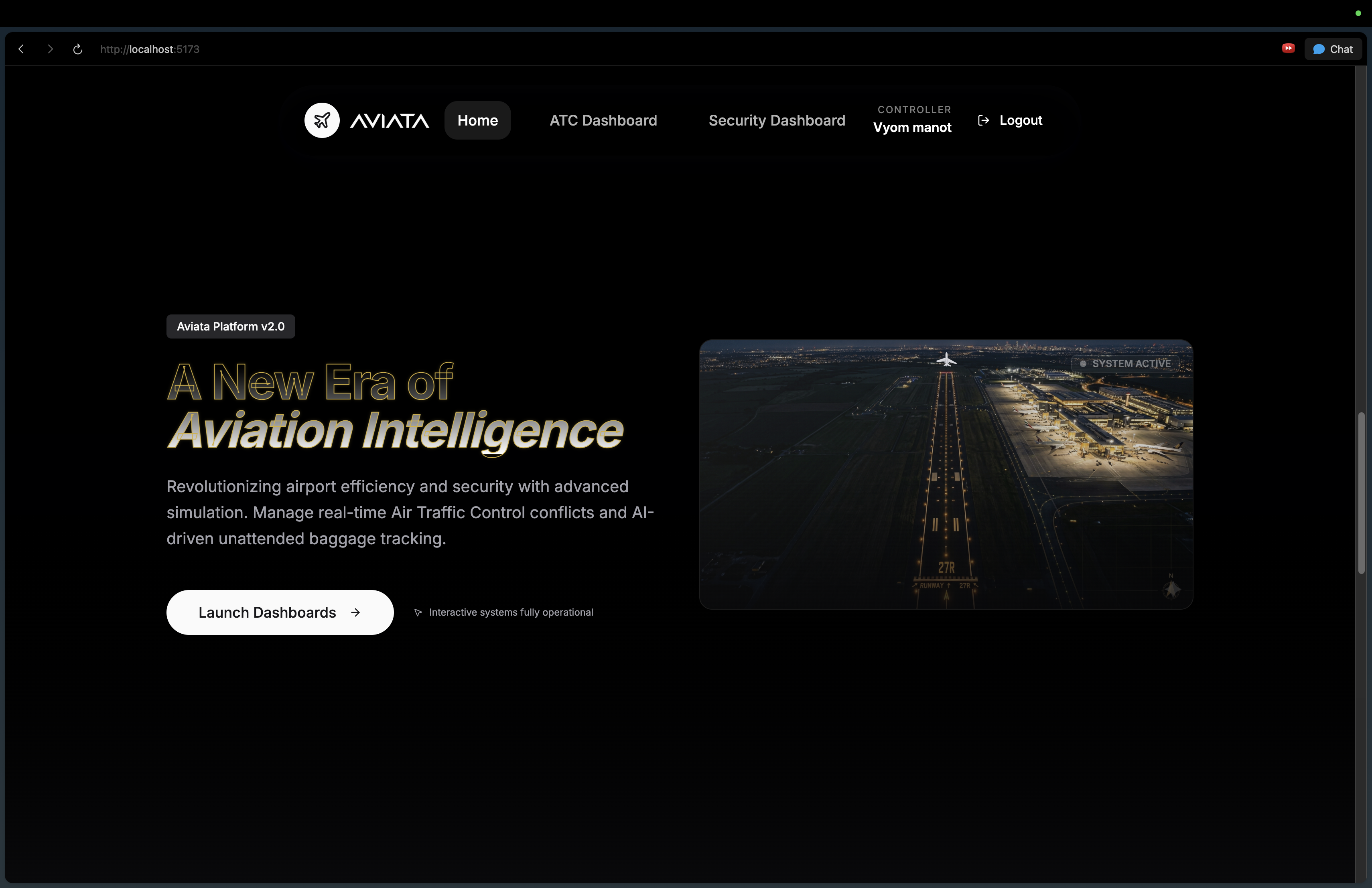
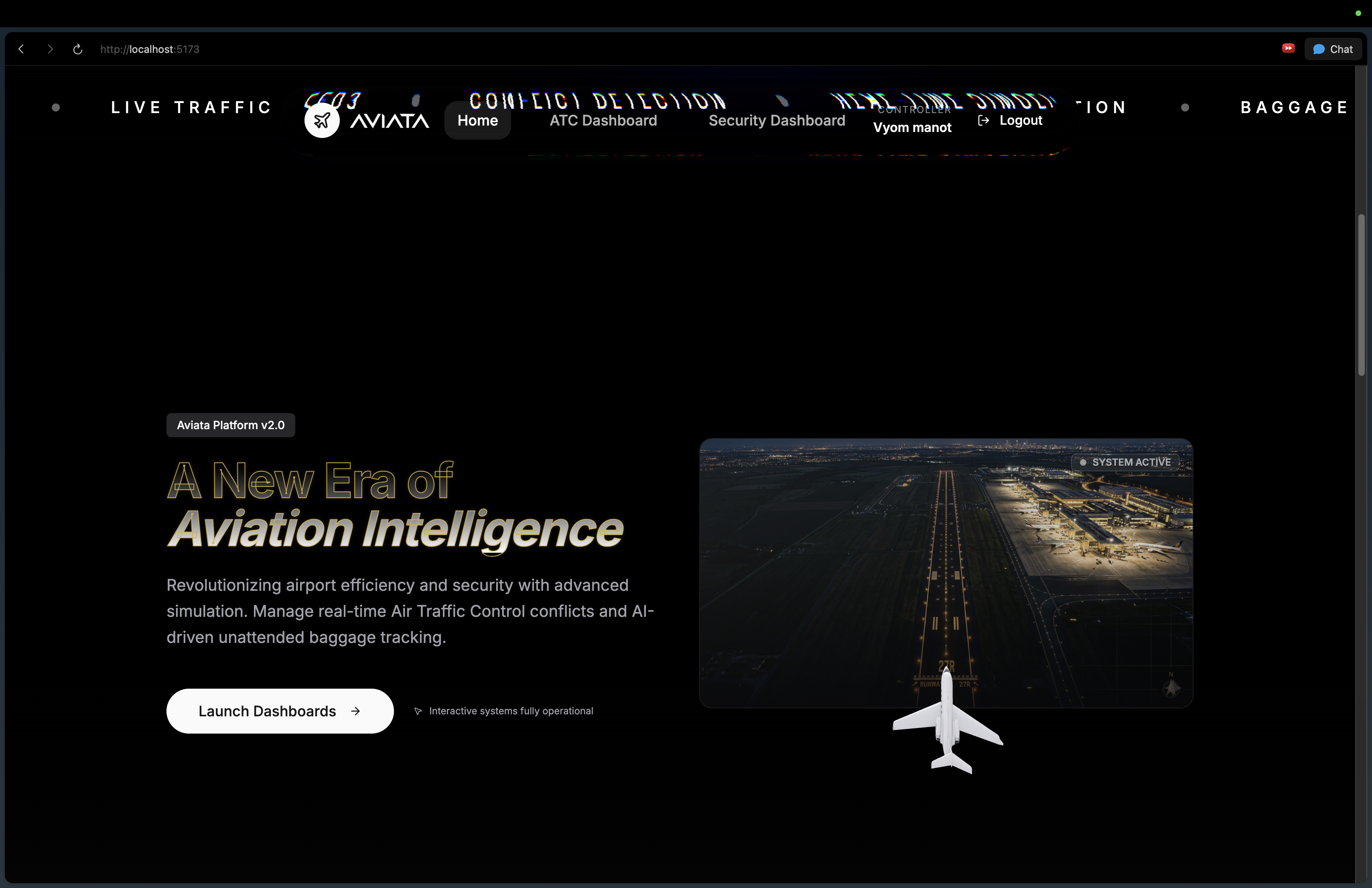
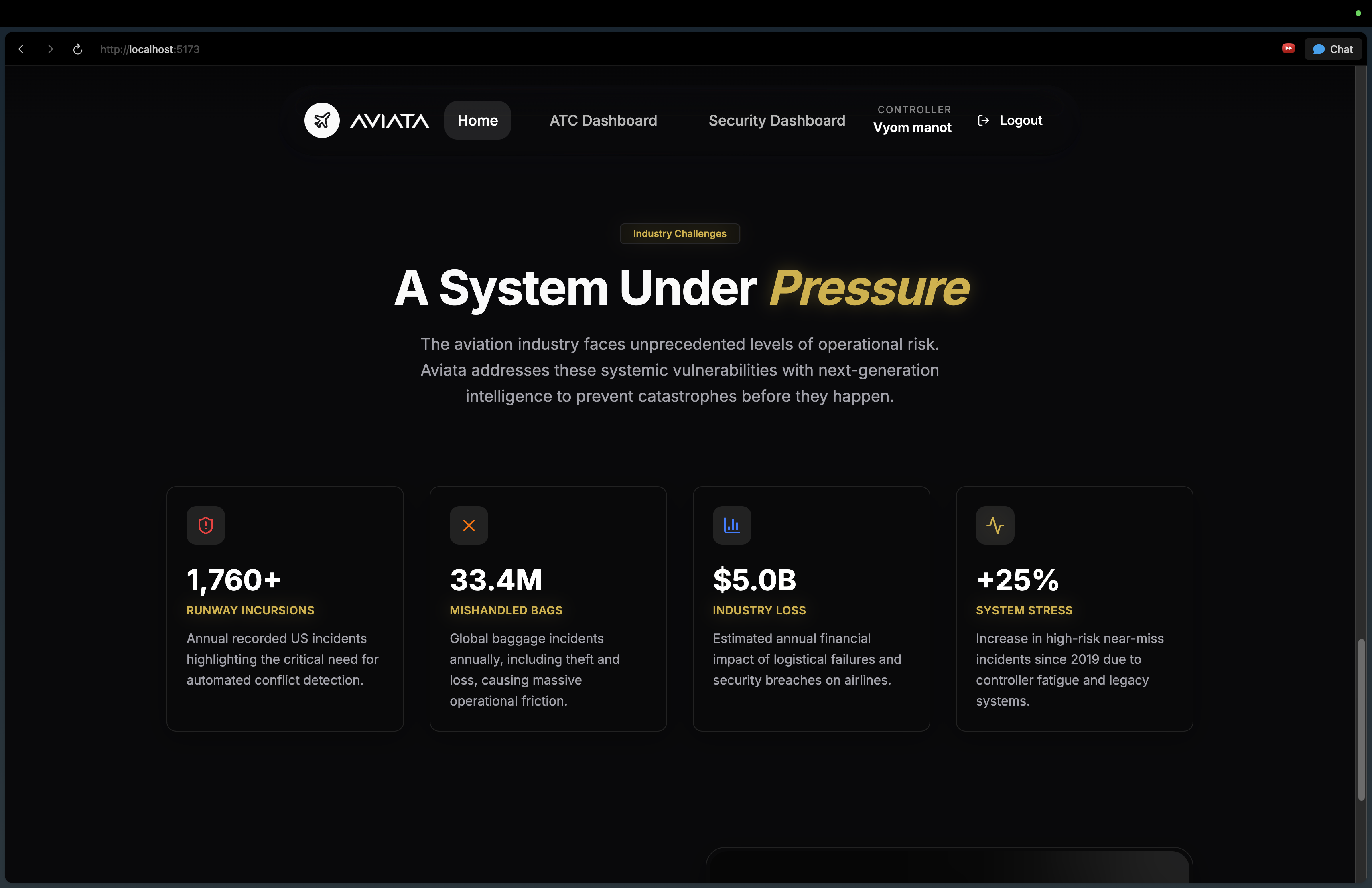
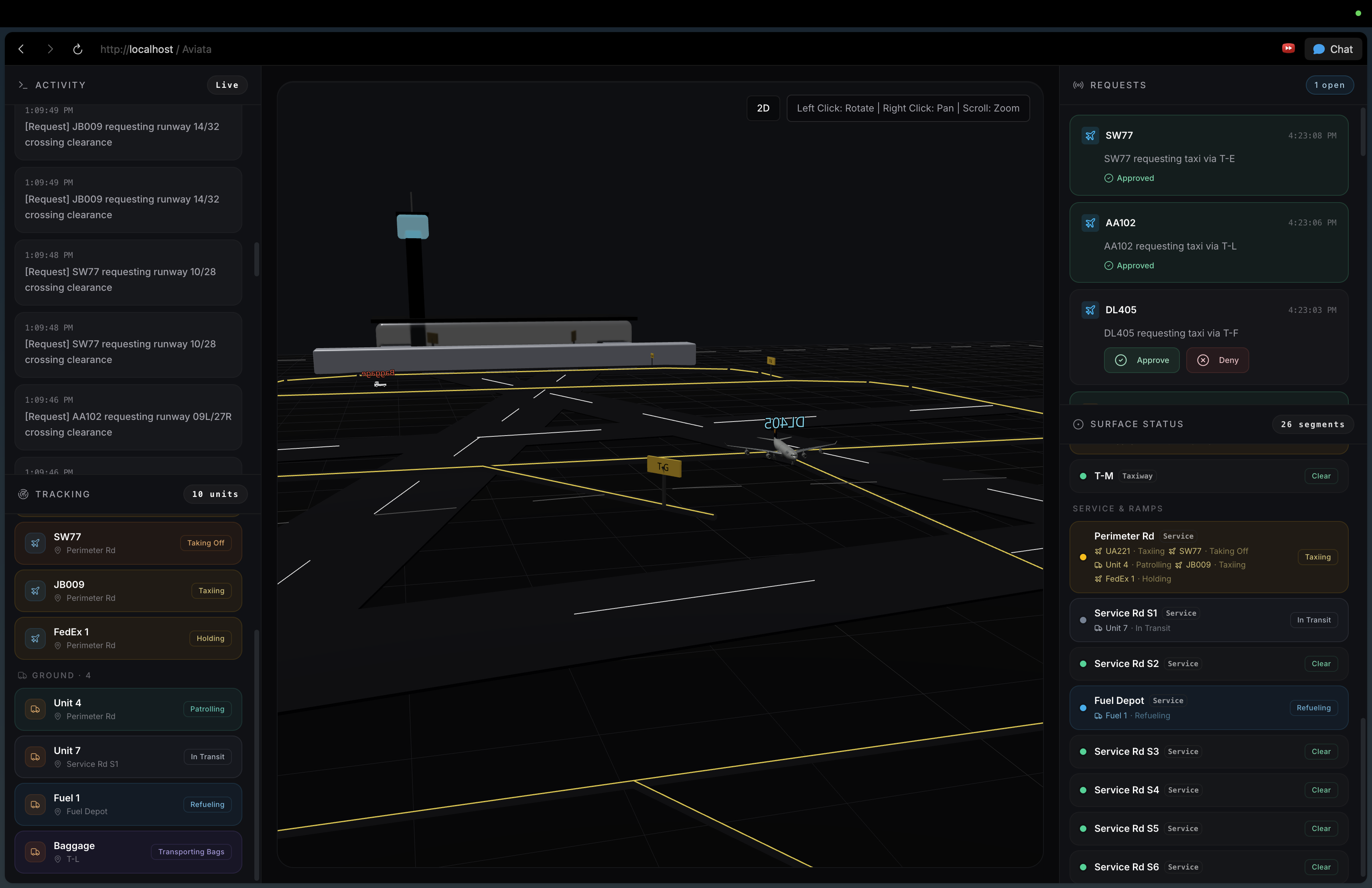
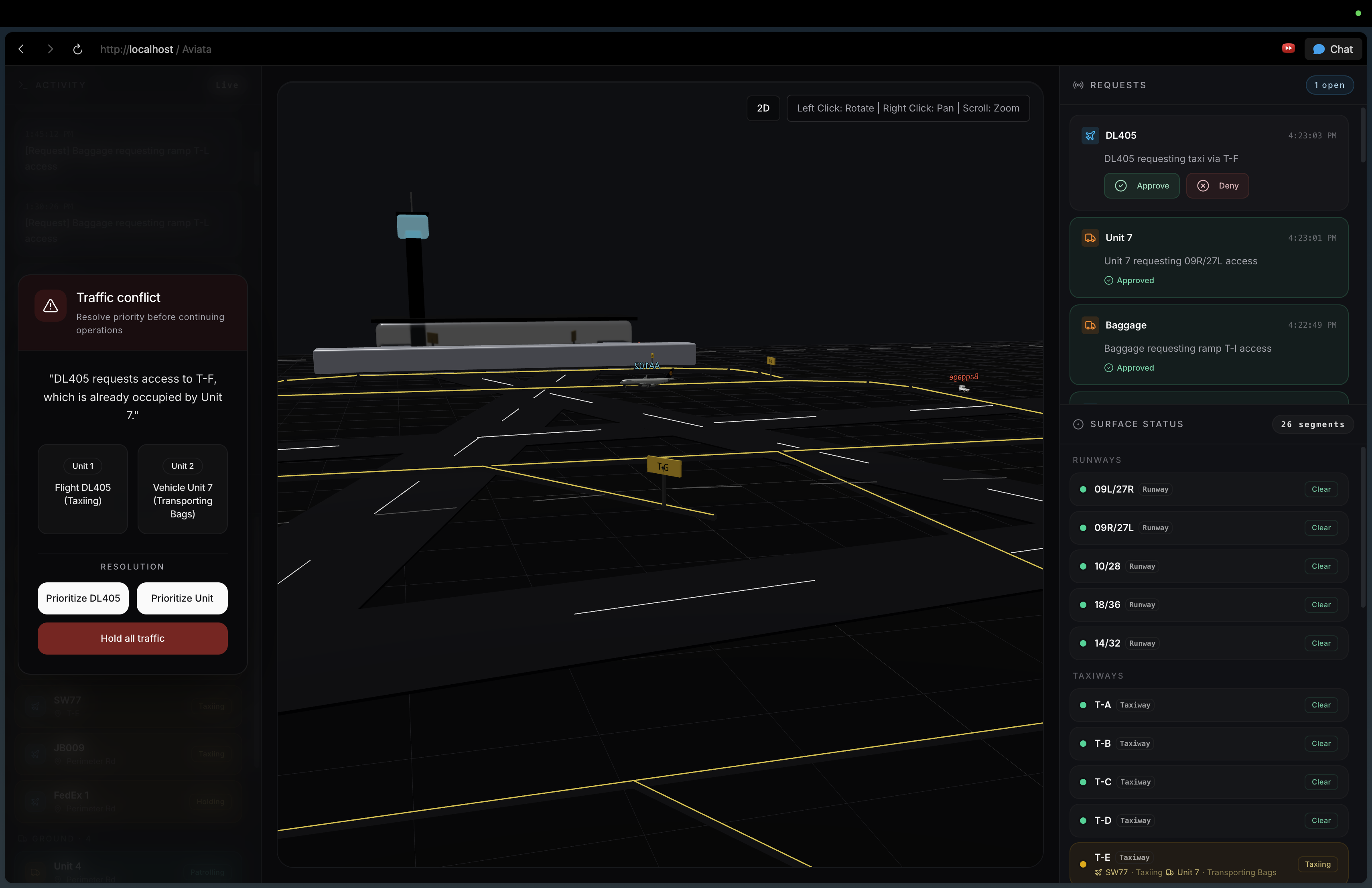
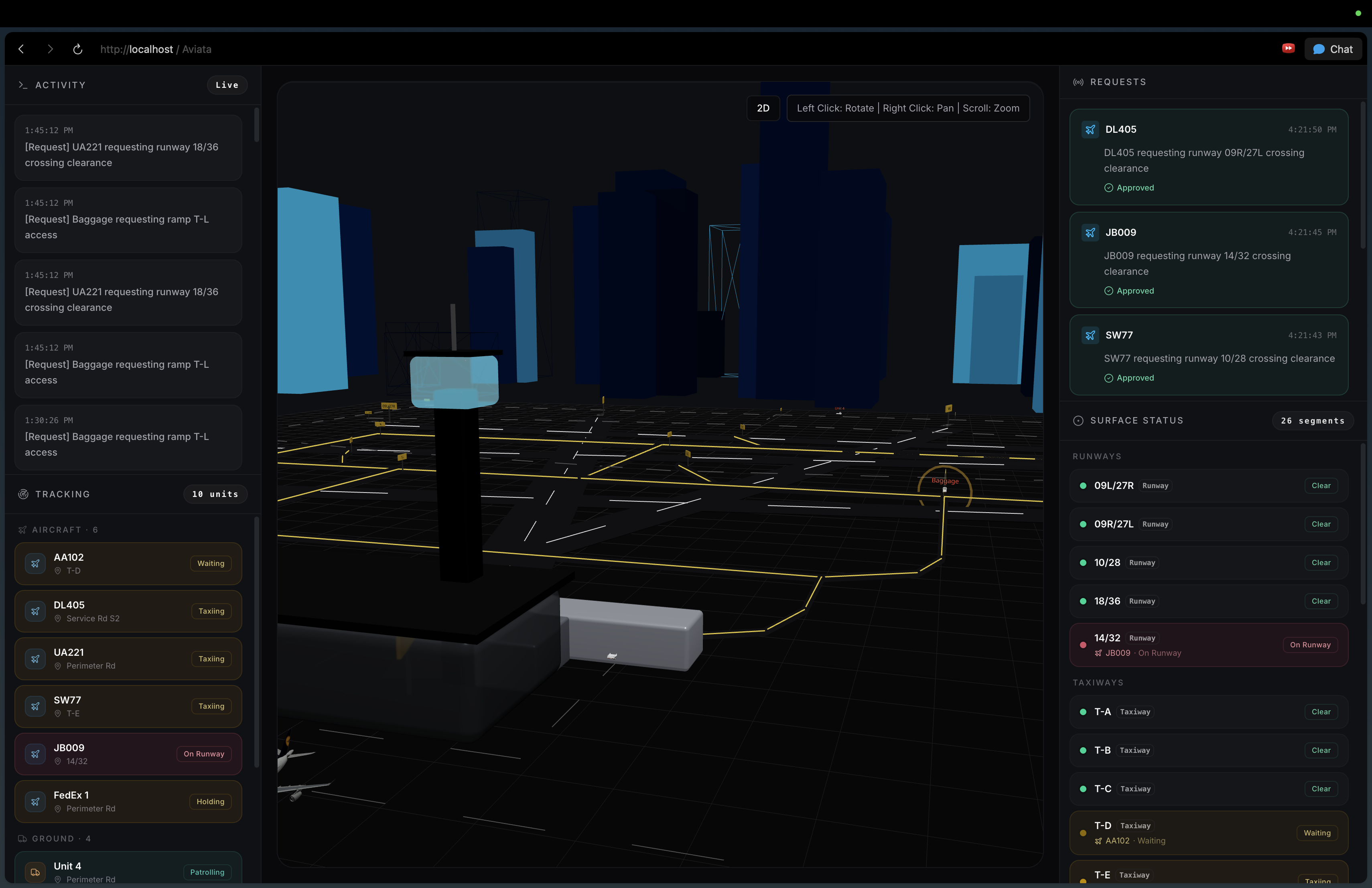
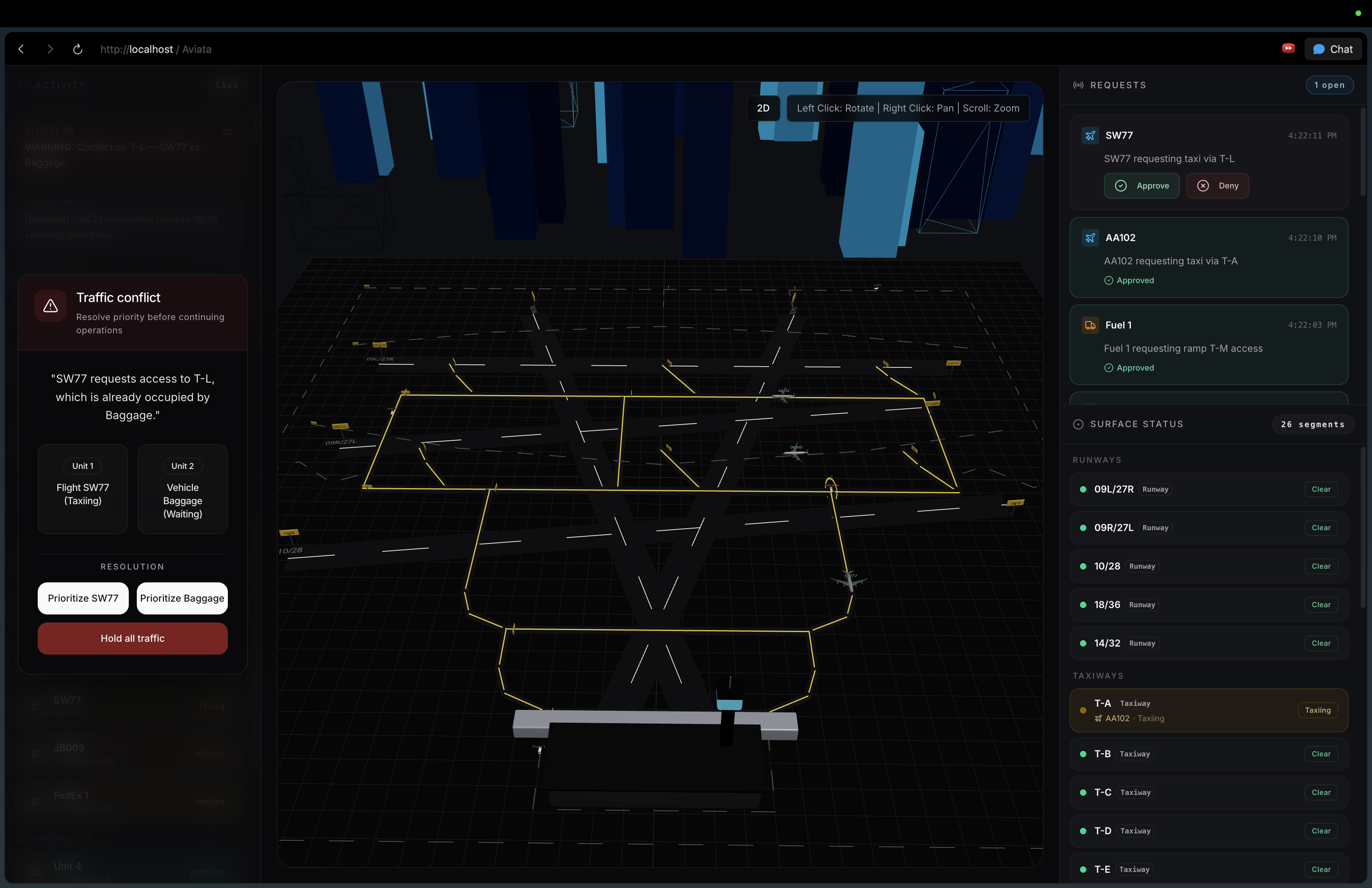
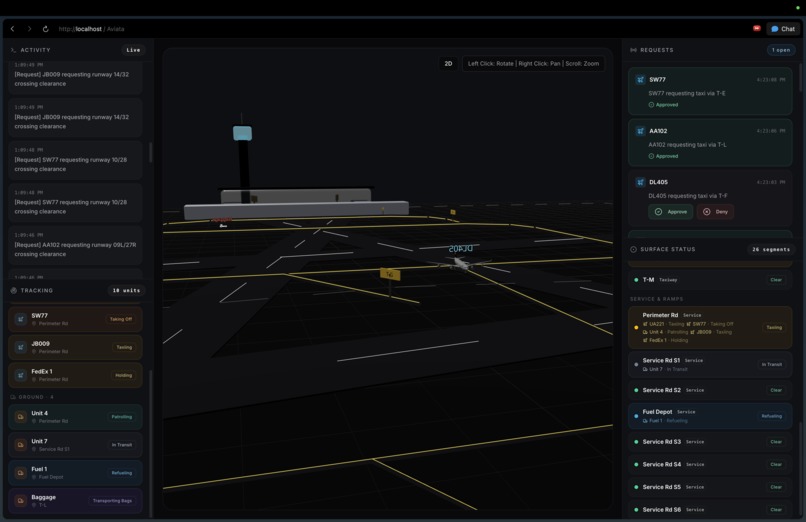
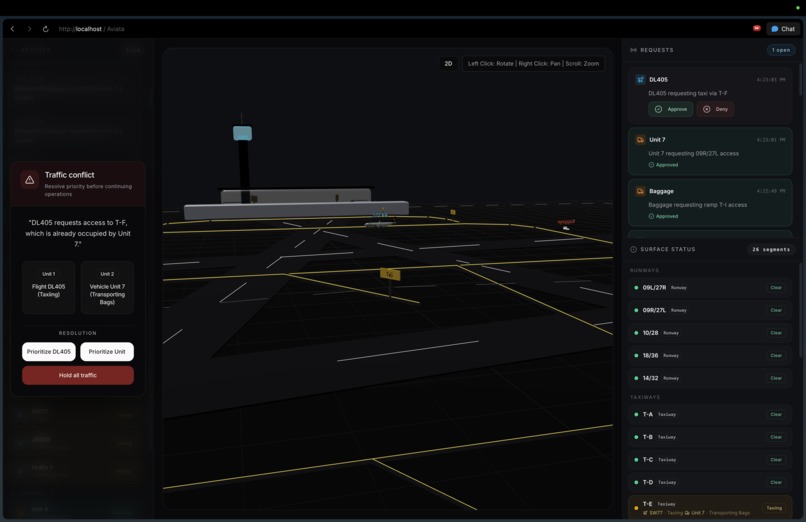
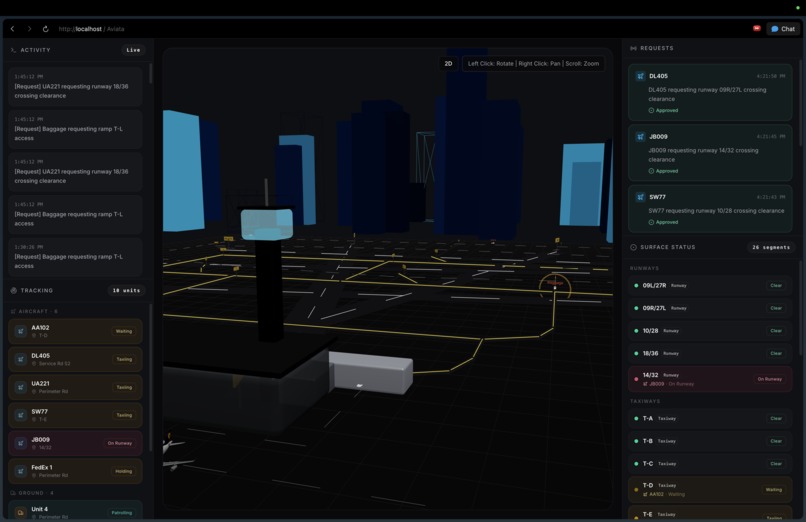
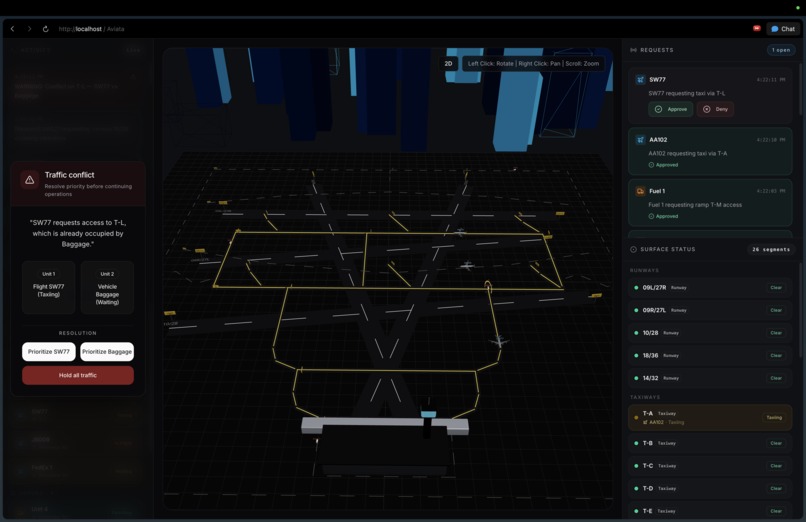
Aviata is an AI-powered airport surveillance system with two main components. The first is a runway safety system that monitors aircraft and ground vehicle movements and detects potential conflicts when multiple entities are cleared to use the same runway at overlapping times. It provides real-time alerts to Air traffic controllers to prevent dangerous situations.
The second is a security monitoring system that uses computer vision to detect people and luggage. It determines whether a bag is unattended by analyzing proximity and tracking how long it has been left alone, then raises alerts to a security member when a threshold is exceeded.
How we built it: Our tech stack consisted of React Vite, Python for detection, Fast, and Supabase. We started with the 5 principles of engineering design, which, after a lot of brainstorming/ideation and planning, turned out to be something we are happy with. We used the pretrained YOLOv8 model for real-time detection of people and luggage. We built a tracking and logic layer on top of the detections to measure the distance between objects and track time-based behavior. OpenCV was used to process live webcam input.
For the runway system, we simulated aircraft movement data and implemented a rule-based conflict detection algorithm that identifies overlapping runway usage. We built simple dashboards to visualize detections, alerts, and system status.
Challenges we ran into:
One challenge was filtering detections to only relevant objects while maintaining real-time performance. Another was accurately defining what counts as an unattended bag, especially in cases with multiple people nearby.
Another Challenge we ran into was integrating each 3rd party software with each other, creating a seamless pipeline between Gemini, ElevenLabs, Twilio, and our codebase.
Accomplishments that we're proud of:
We built a working real-time system that detects unattended baggage and generates alerts based on both spatial and temporal reasoning. We also designed and implemented a runway conflict detection system that can hopefully assist many ATC’s in preventing dangerous situations.
We are especially proud of creating a complete, end-to-end prototype that addresses real-world problems and delivers a clear, interactive demo.
What we learned:
We learned how to apply computer vision models in practical scenarios and how to combine pretrained AI models with custom logic to solve real problems. We also learned the importance of balancing accuracy and speed in real-time systems.
Additionally, we gained experience in rapidly prototyping, integrating multiple components, and focusing on building a clear and effective solution within a limited timeframe.
What’s next for Aviata:
Next steps include adding predictive capabilities to anticipate runway conflicts before they occur, improving tracking accuracy with more advanced methods, and training custom models for more nuanced behaviors such as suspicious activity detection.
We also aim to integrate more realistic data and expand Aviata into a more comprehensive and deployable airport safety platform.


Log in or sign up for Devpost to join the conversation.