
Inspiration
As advocates for a more sustainable future, we believe that excessive energy consumption from household climate control systems is a significant, yet easily preventable issue affecting millions of ordinary people. We were inspired to create WindowWise as a tool that provides individuals with easy-to-understand data about how they can responsibly utilize natural processes to their advantage.
What It Does
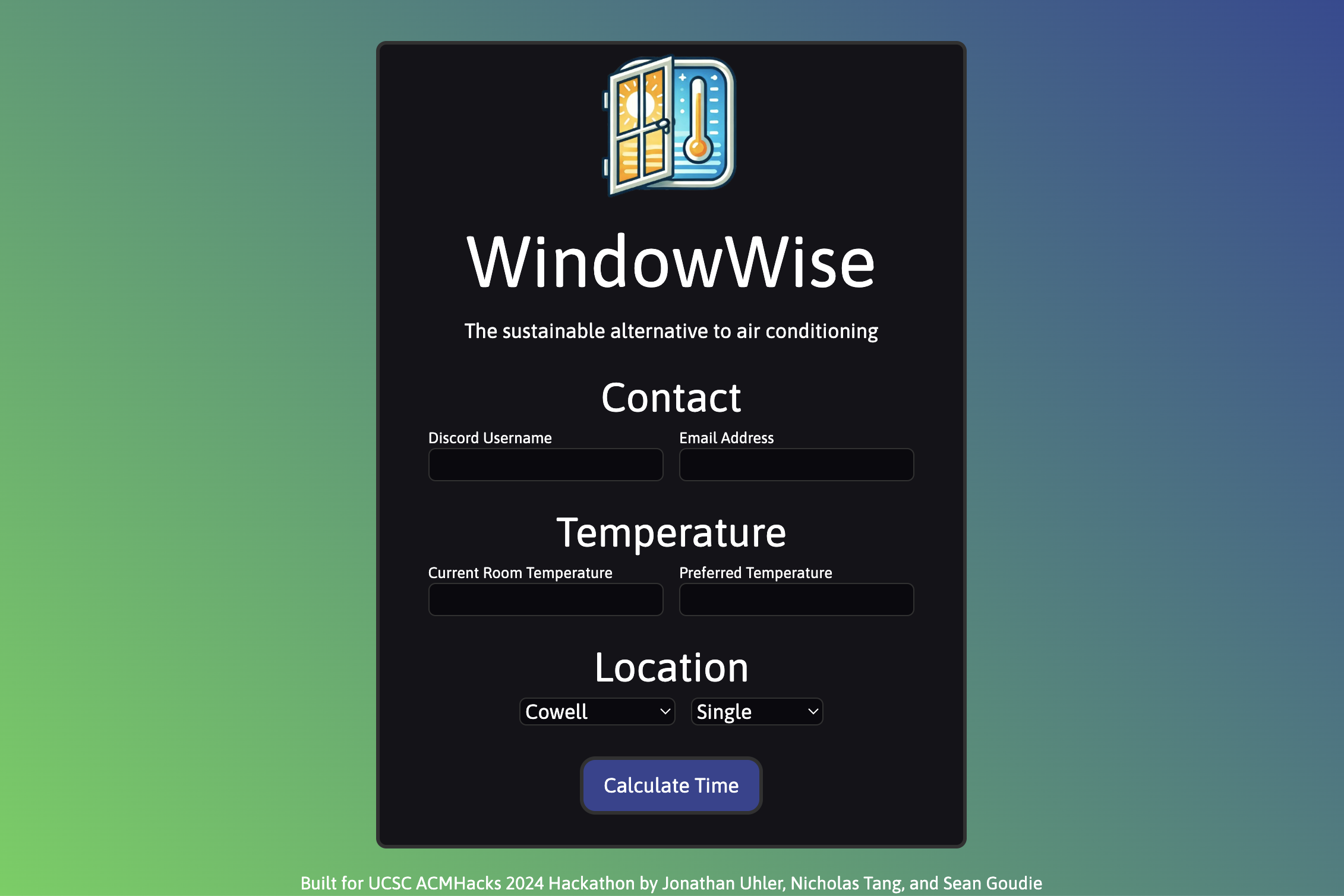
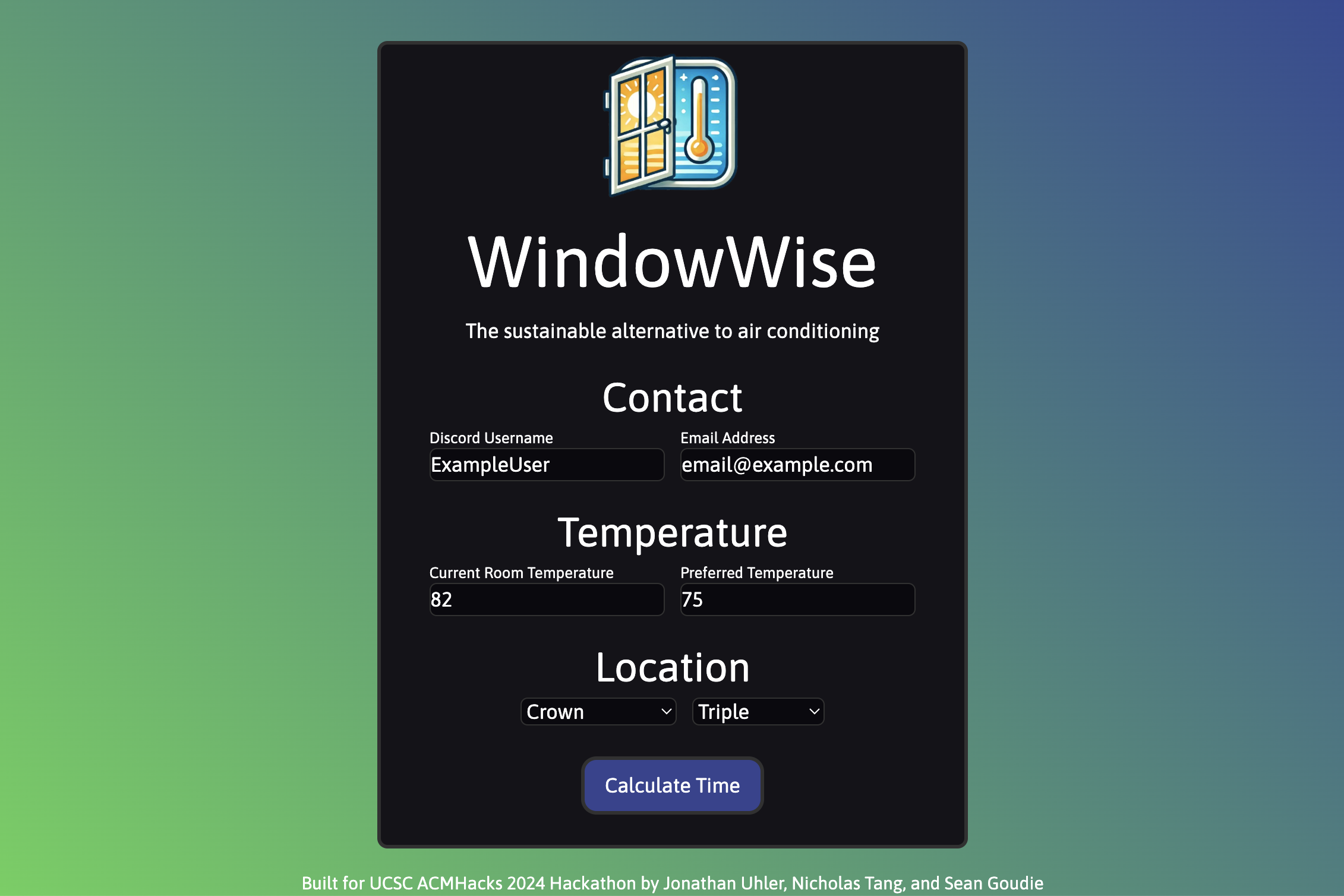
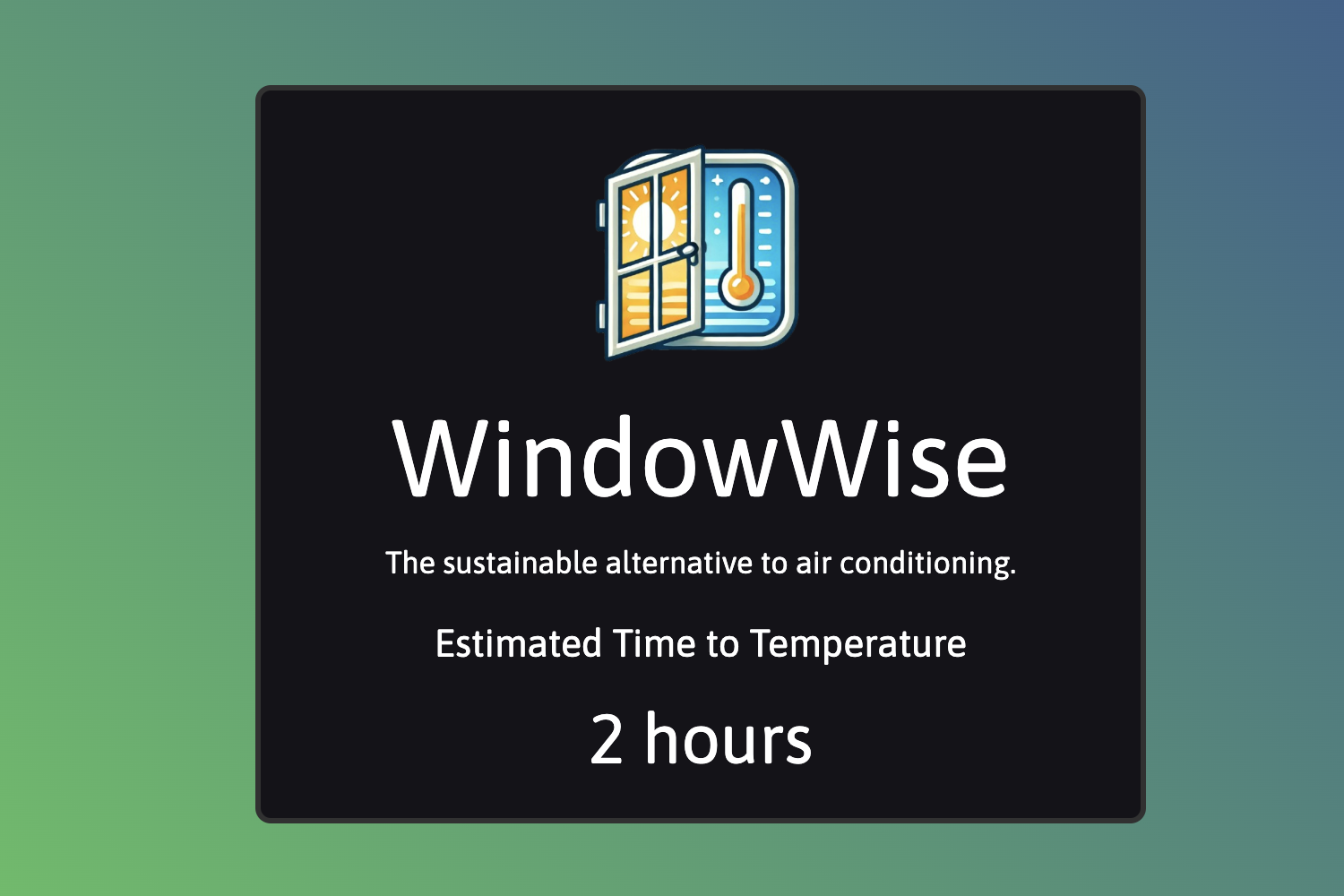
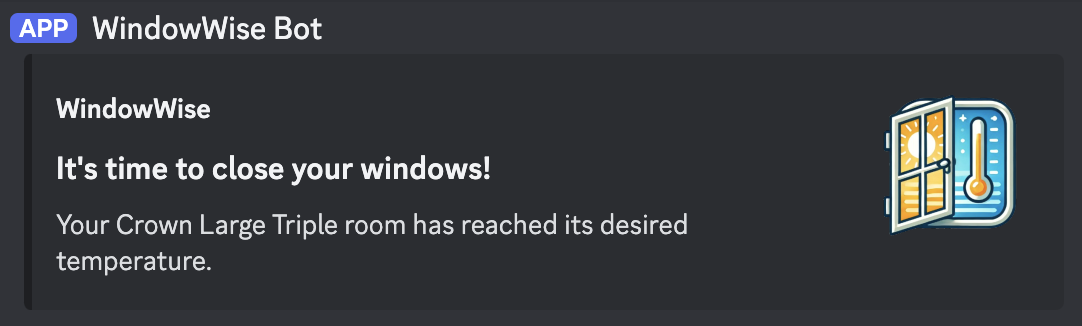
WindowWise provides a simple interface to create temperature alerts. You enter the current temperature of a room, your preferred temperature, and through our atmospheric simulation, we tell you how long to keep your windows open to reach the desired temperature. You'll receive a Discord or email notification reminding you to close the windows when it's time. This allows you to limit your use of air conditioning systems, when your room can be cooled by the ambient air alone.
How We Built It
We used Python with FastHTML to build the frontend website. Our temperature simulation data is retrieved from various open-source weather and geolocation APIs, and is processed by JavaScript on the backend using an API written with ExpressJS. JavaScript frameworks power our email and Discord notification systems.
Challenges
We faced some issues while learning the FastHTML framework that enables our web frontend. Ultimately, however, we were able to successfully implement this part of the project, improving our collective understanding of FastHTML in the process.
Accomplishments
We are very happy with the continuity of our project. The systems for frontend input from the user, modeling and predicting temperatures in the room, and sending notifications on time all work well together in the final product.
What We Learned
In addition to our improved knowledge of all the APIs and technologies used, we learned a lot about the physics of temperature, heating and cooling of residential buildings, and atmospheric phenomena.
What’s Next
We hope to continuously improve our temperature model to make the application useful for a wider population. We plan to add the ability to provide a non-UCSC address and room size, as well as a more sophisticated prediction routine based on this data.
Built With
- axios
- css
- discord.js
- express.js
- fasthtml
- geocoder
- git
- html
- json
- node.js
- openweathermap
- python
- requests
- tailwind


Log in or sign up for Devpost to join the conversation.