-
-
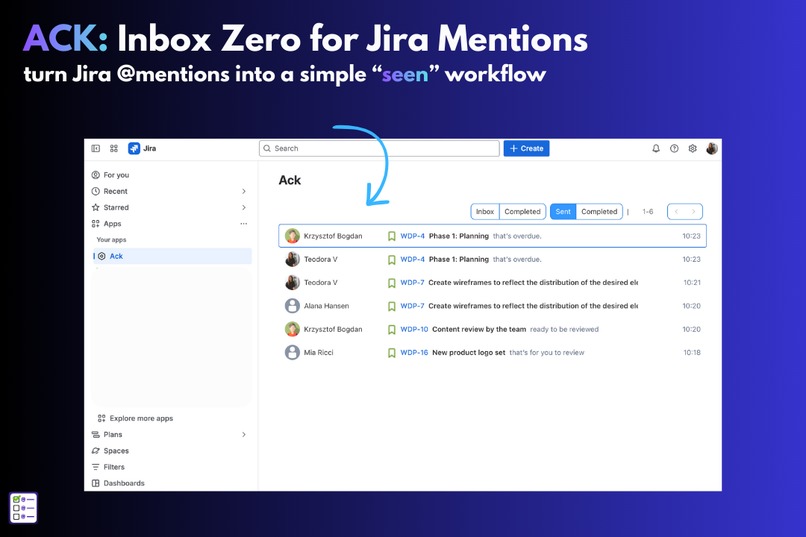
Turn Jira mentions into a simple "seen" workflow
-
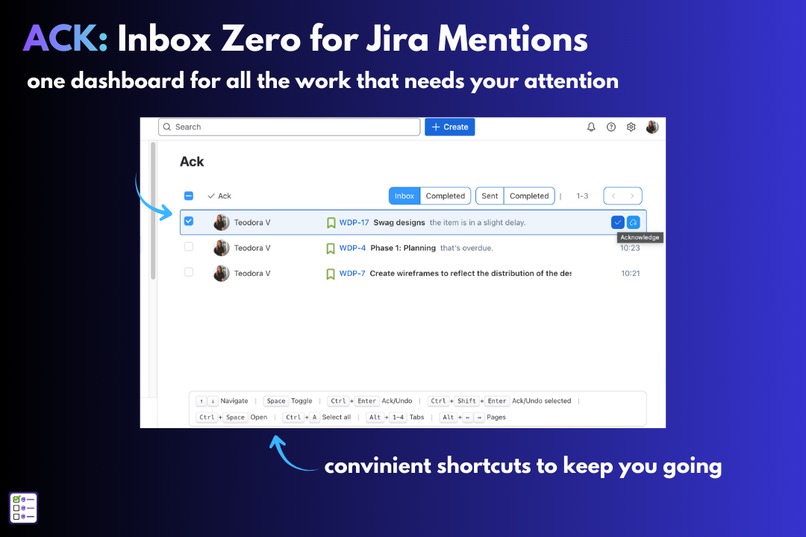
One dashboard for all the mentions that require your attention
-
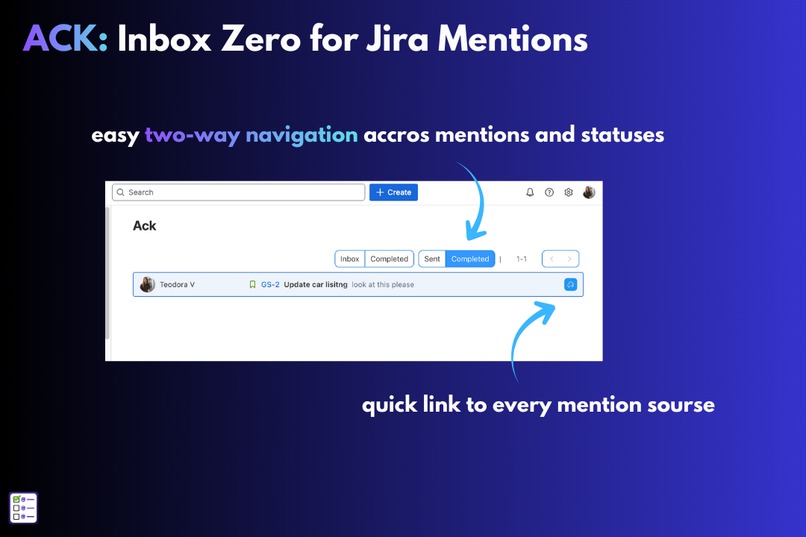
Easy two-way navigation across mentions and statuses
-
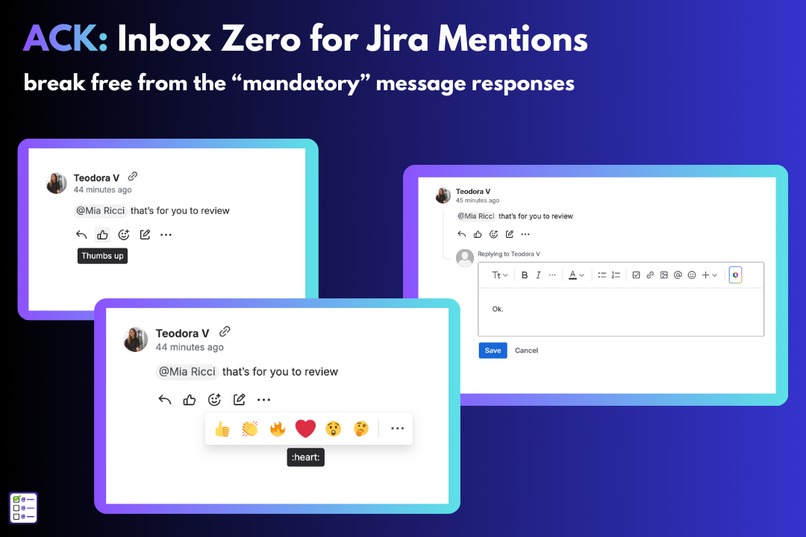
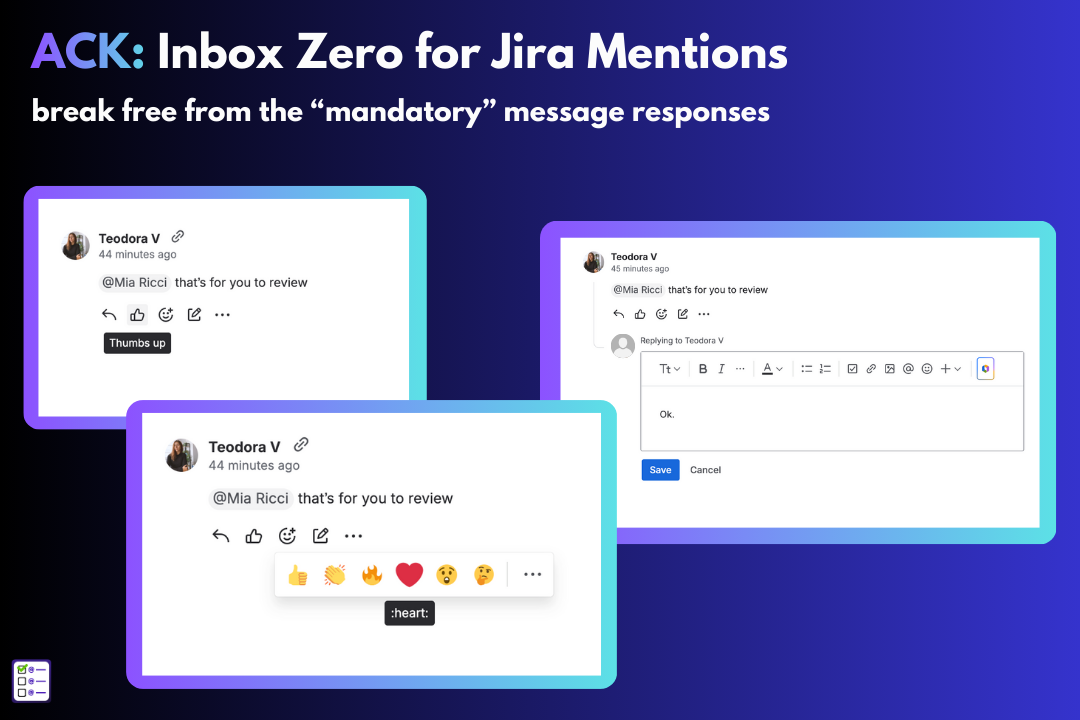
Stop the mandatory responses and thumbs up

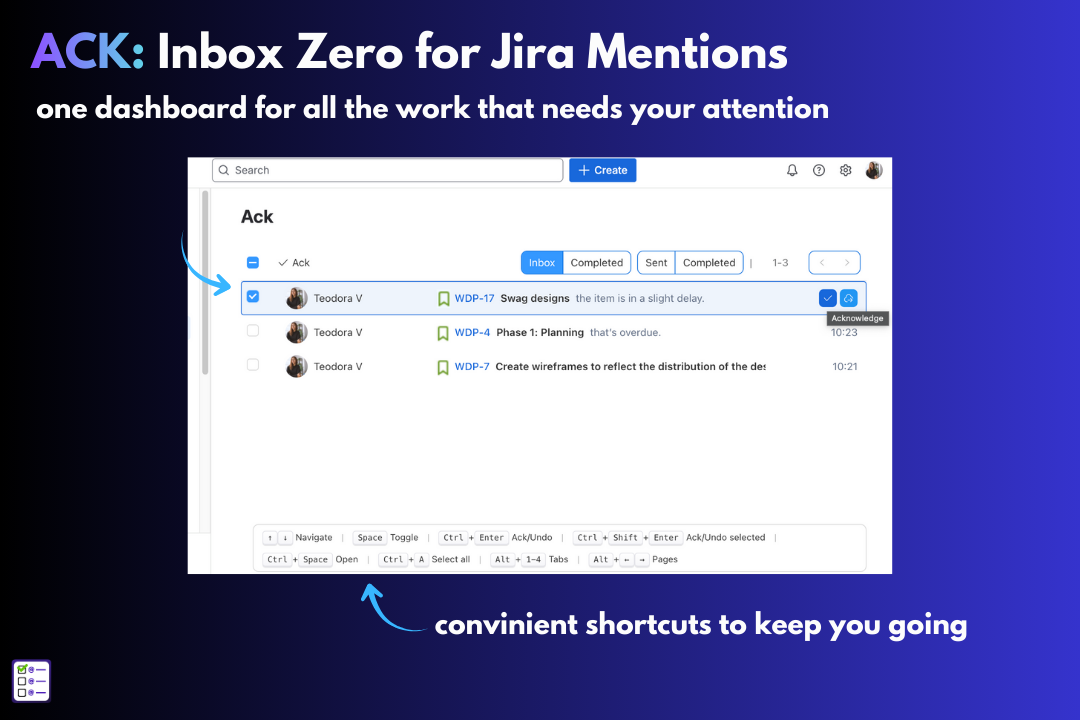
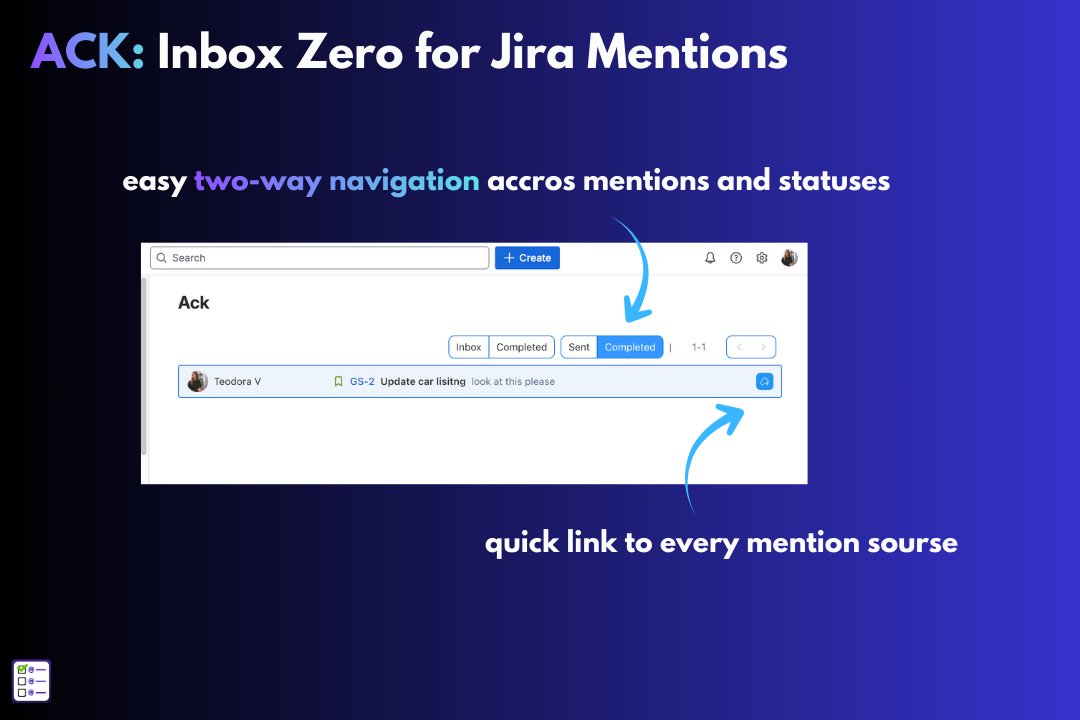
When working with team I always want to be sure I did not miss anything. Inspired by the Japanese point and calling method, you can track and take necessary actions by going through all mentions one by one.
In a Jira-driven team, comments and @mentions are the fastest way to move work forward. Clarifying requirements, flagging risks, requesting reviews, or calling attention to a decision that doesn’t need active discussion but just awareness.
Over time, a few problems may appear. First, silence is unclear - when a @mention gets no reply, nobody knows if it was read, missed, or still waiting. Second, teams often find a way to resolve this by adding low-value responses like “seen”, “ok”, or reacting with emojis, which is not always ideal.
ACK adds a lightweight acknowledgment layer to Jira mentions by capturing and organizing them, enabling users to handle them in seconds: read, review, and mark them as Acknowledged.
The result is cleaner comment threads, fewer follow-up pings, and faster alignment because “I read this” becomes a measurable state rather than a guess.
Build with Atlassian forge, all data is stored inside Jira. Whole code is written in Typescript, linted, type checked during build. CI is setup on Bitbucket pipeline. With automated deployments -> pushing code to special branch will deploy code directly to production. This is first time when I have used forge key-value store. Comparing to regular databases and SQL - it requires absolutely different approach. What you take for granted in Postgres or Mysql - here you need to thinker how to get things done.
Built With
- atlassian-forge
- bitbucket-(ci-&-cd)
- claude.ai
- cli
- forge-key-value-store
- intellij-idea
- issue-properties.-for-development-git


Log in or sign up for Devpost to join the conversation.