-
-
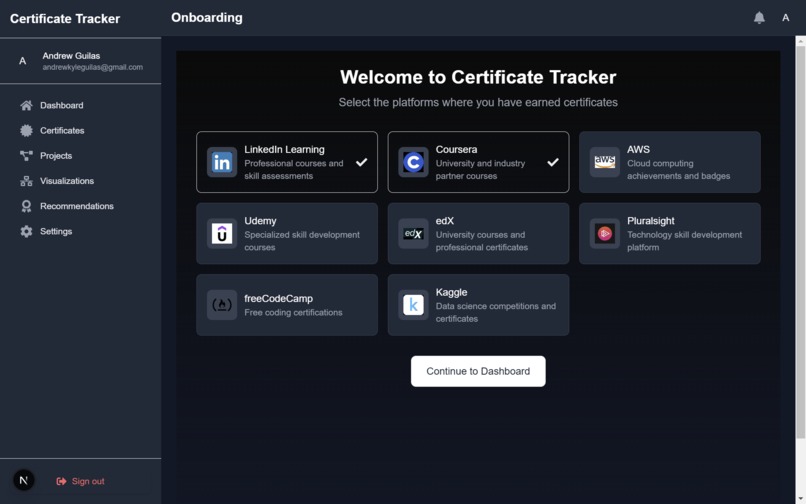
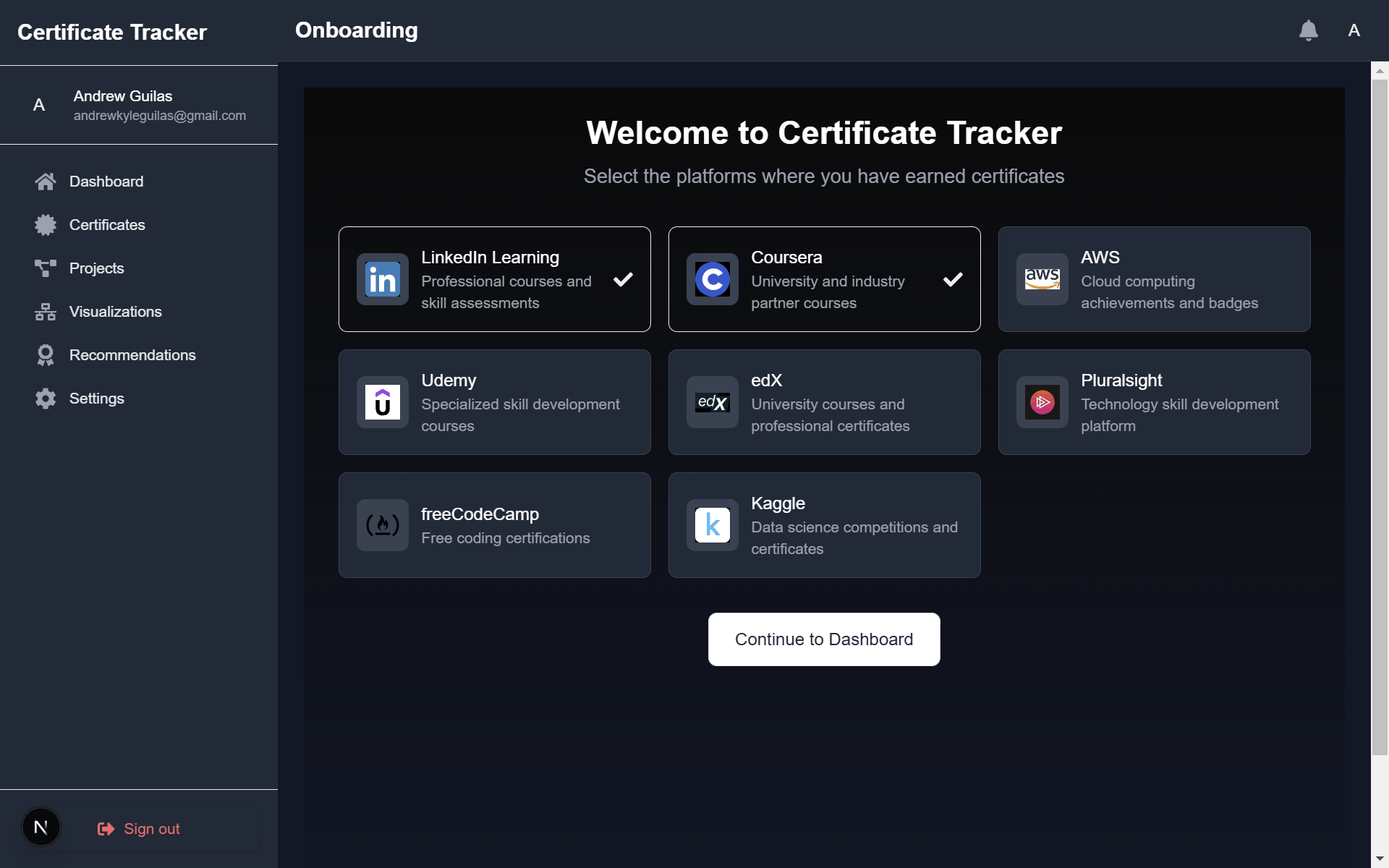
Onboarding Page
-
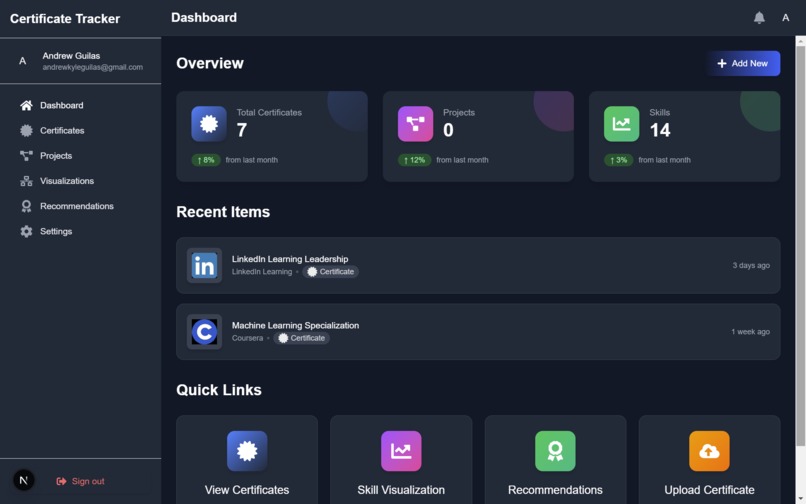
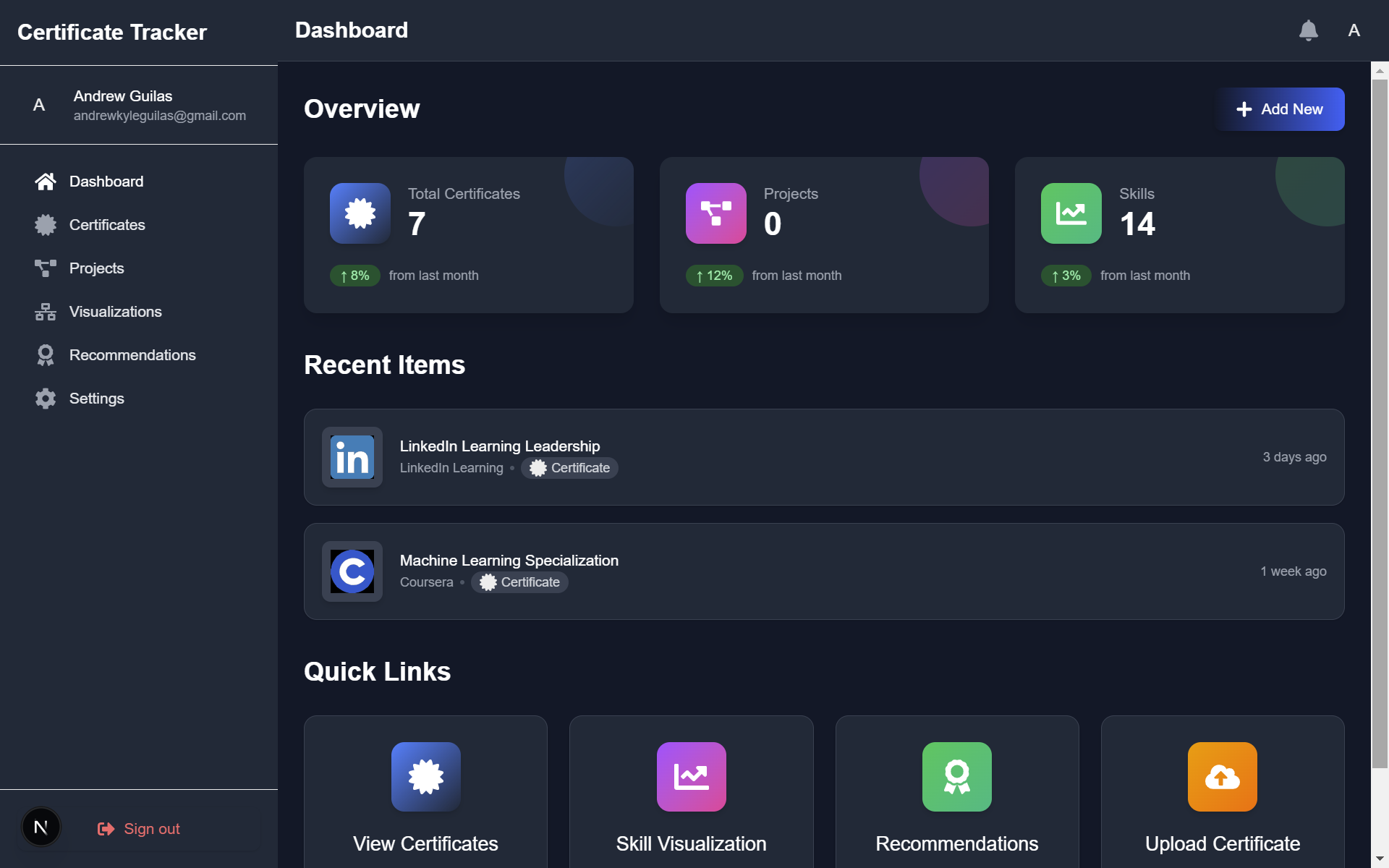
Home Page
-
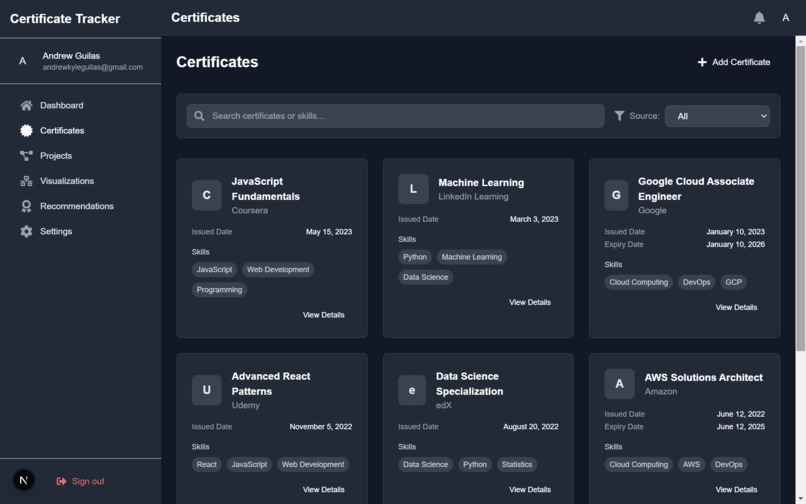
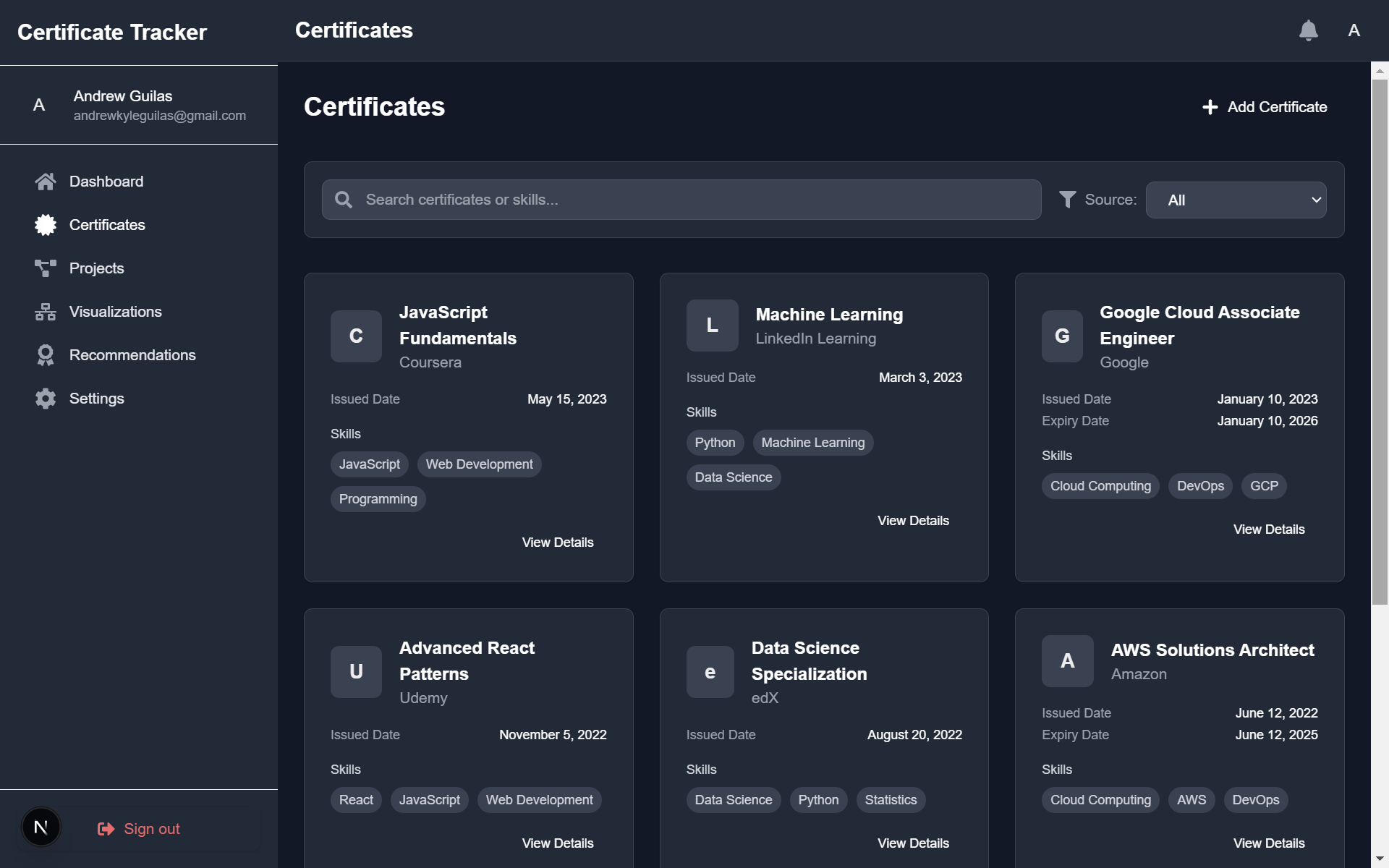
Certificate List Page
-
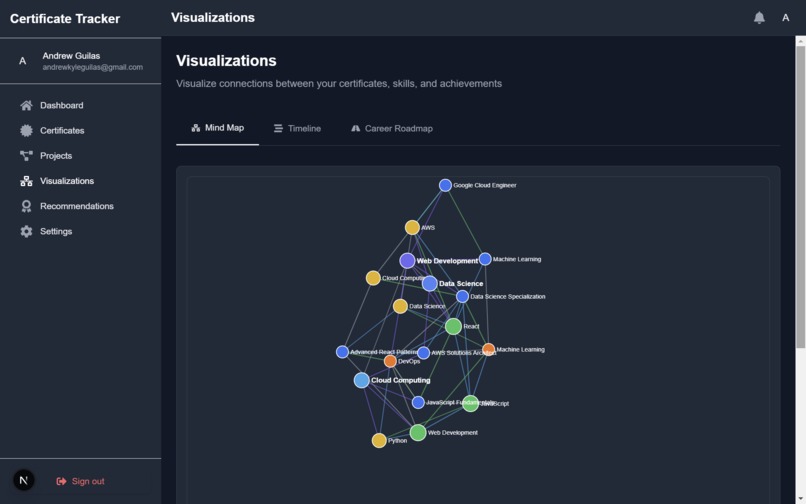
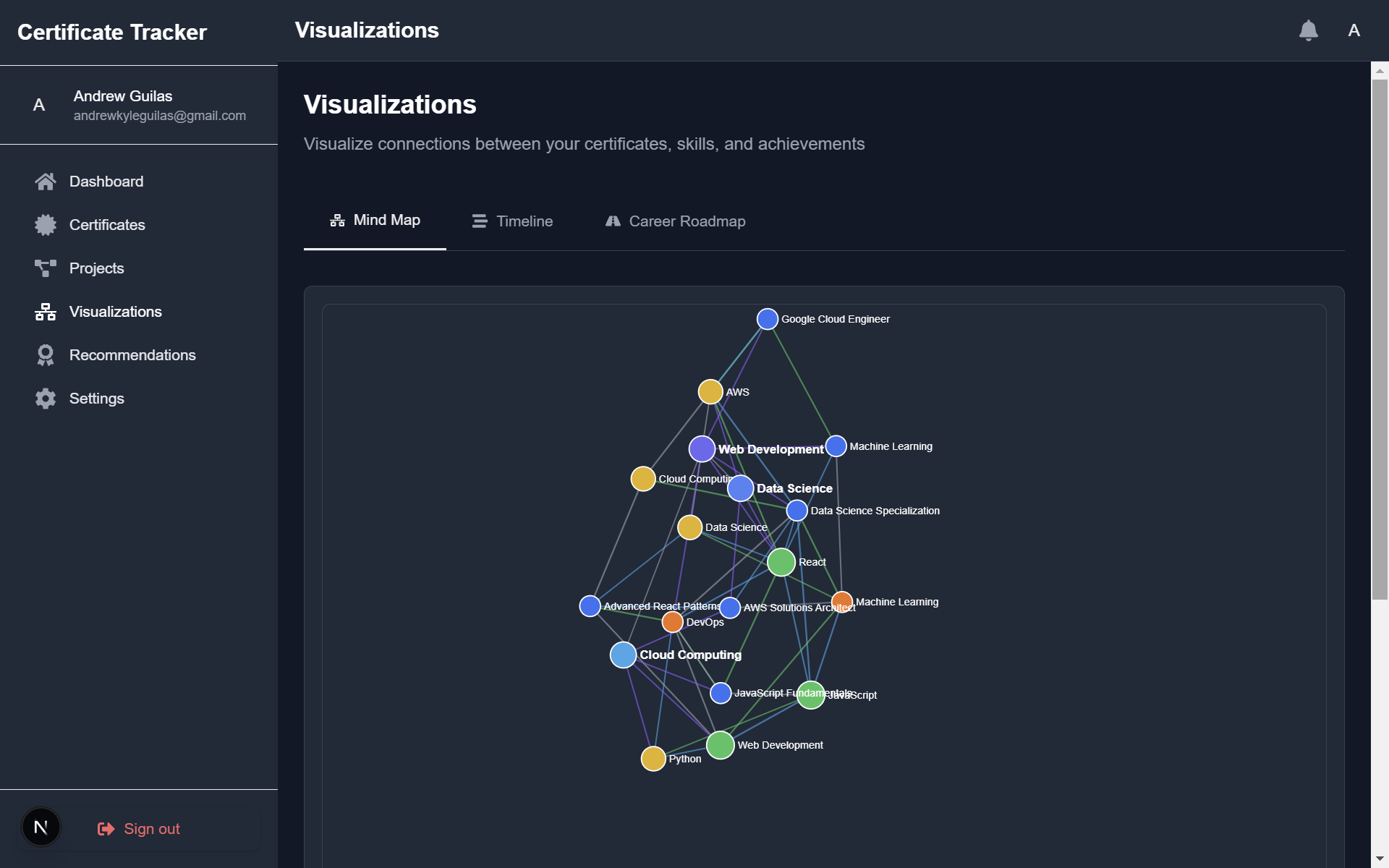
Mindmap Page
-
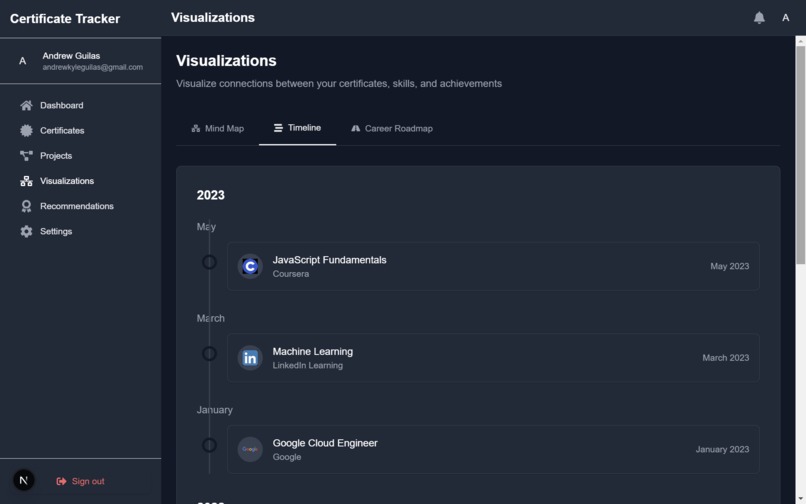
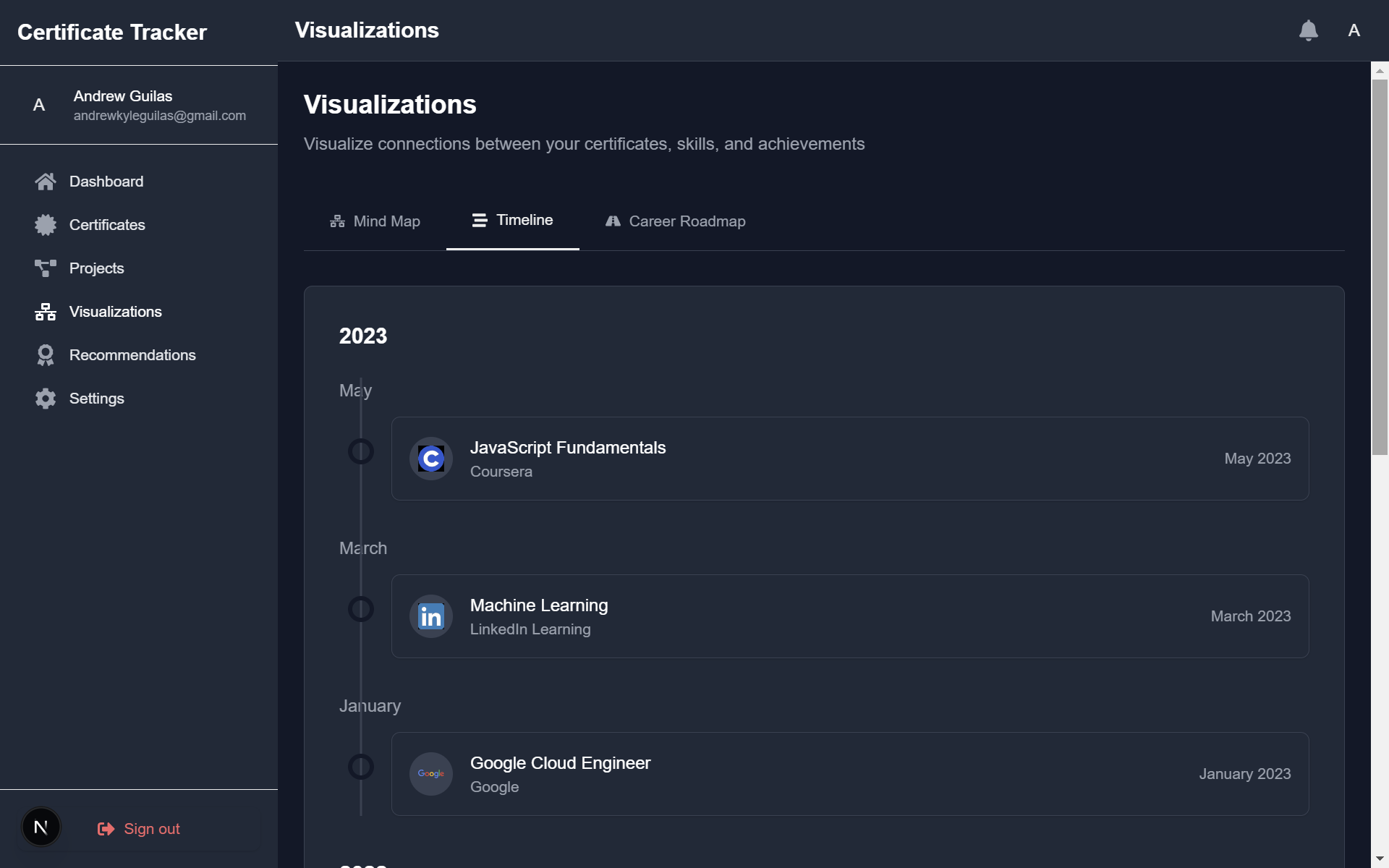
Timeline Page
-
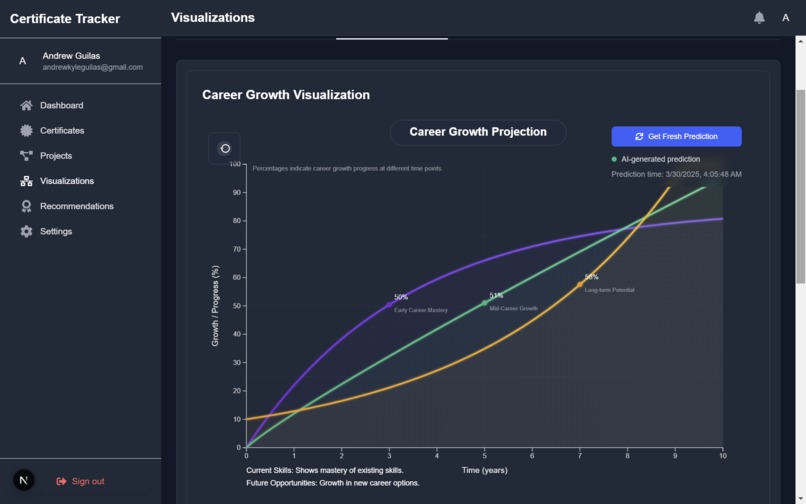
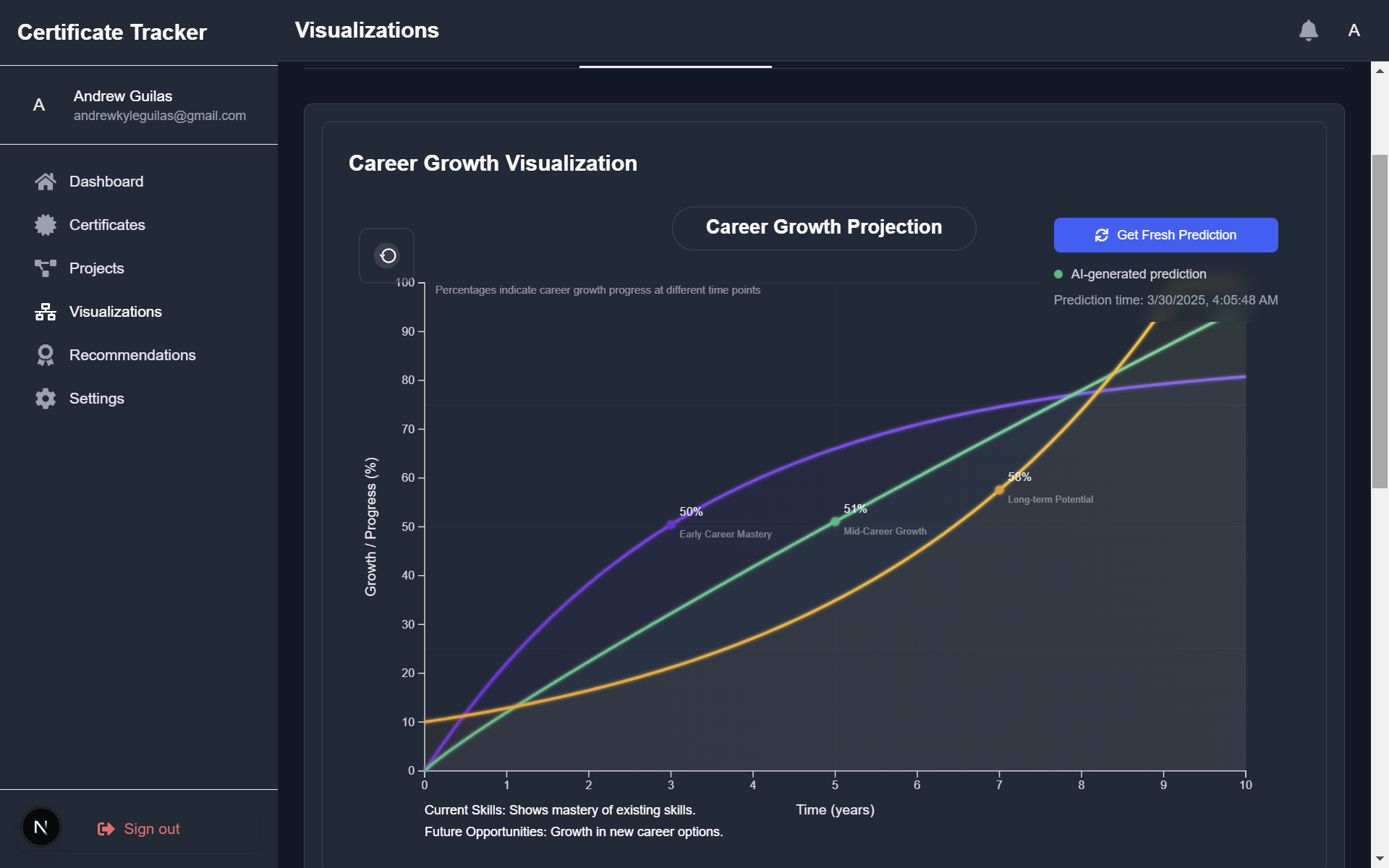
Career Growth Page
-
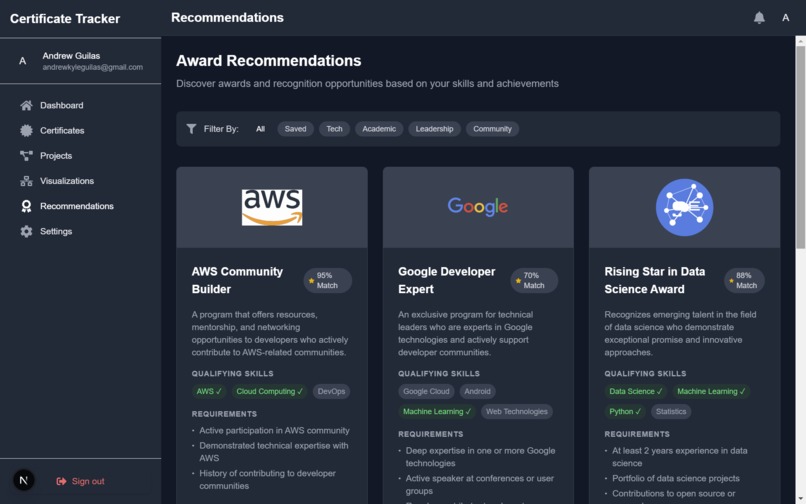
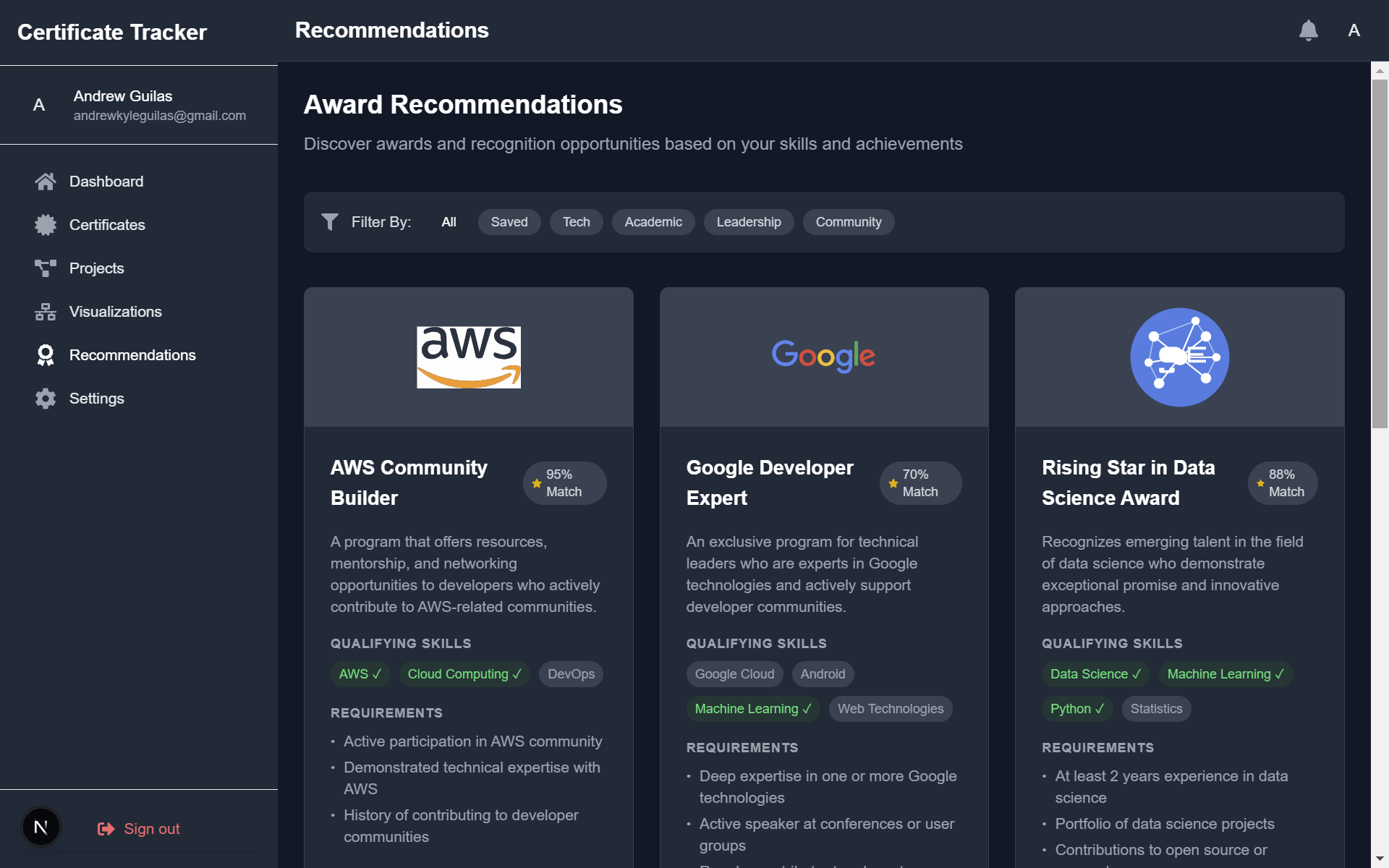
Recommendations Page
What Inspired Us
We came up with Achievement Analyzer after realizing how important it is to keep track of our growth as an individual. Instead of manually organizing everything, we wanted to create a platform that brings all achievements into one place and uses AI to recommend future growth opportunities and career paths—making professional growth easier and more streamlined. By leveraging intelligent insights, using AI algorithms like MDP and Decision Trees (MindMap), users can make data-driven decisions to accelerate their development, explore new possibilities, and reach their full potential with ease.
What It Does
When a user logs into Achievement Analyzer with Google, they can choose many platforms to sync / connect to our platform. The application automatically pulls in their various information, and they also have the option to upload info manually. AI scans these personal achievement to identify key skills, which are then visualized in a mind map that shows how their knowledge areas connect. The user can also view a timeline of their personal growth, exact path they learn, and a career growth projection based on their current skills. On top of that, the app provides personalized job recommendations and suggests awards they can apply for to further advance their career.
What We Learned
Throughout this project, we gained hands-on experience with making API calls and integrating various services like Google Cloud, OpenRouter, and OpenAI. We learned how to authenticate users securely, retrieve data from multiple sources, and process it efficiently. Working with AI-powered recommendations also gave us insight into leveraging AI models for personalized career guidance.
How We Built Our Project
We built our project using Next.js for the frontend and Node.js for the backend. We started with the foundational components, such as implementing the login screen with Google authentication, before progressively adding more complex features like information syncing, AI-powered recommendations, and data visualization. This modular approach helped us maintain a clear development structure while iterating efficiently.
Changes We Faced
One of the biggest challenges we encountered was dealing with API limitations, especially with LinkedIn's API, which had restrictions on retrieving certification data. We had to explore alternative approaches to get relevant information. Additionally, we faced debugging issues throughout the development process, particularly when handling asynchronous API calls and integrating third-party services. Overcoming these challenges required extensive troubleshooting, testing, and refining our implementation.
Built With
- ai
- backend
- frontend
- google-auth
- javascript
- ml
- next.js
- node.js
- openai
- openrouter
- tailwind-css


Log in or sign up for Devpost to join the conversation.