Acharya: AI-Powered Classroom Assistant
Inspiration
In every classroom around the world, something powerful is happening — teachers are shaping how students understand reality.
But teaching isn't static. It evolves every single day, demanding constant adaptation, clarity, and the ability to respond to dozens of different students all at once. As we explored this space, we realized something simple but important: teachers are already giving everything they have. The problem isn't effort — it's the lack of real-time support.
In many classrooms, especially those with limited resources, teachers don't always have the tools to validate information on the spot, adjust their approach mid-lesson, or reflect on whether a concept truly landed. And over time, even small gaps like these can snowball into bigger learning issues.
That thought stayed with us.
We didn't want to build something that replaces teachers. We wanted to build something that stands with them. That's how Acharya was born.
What is Acharya?
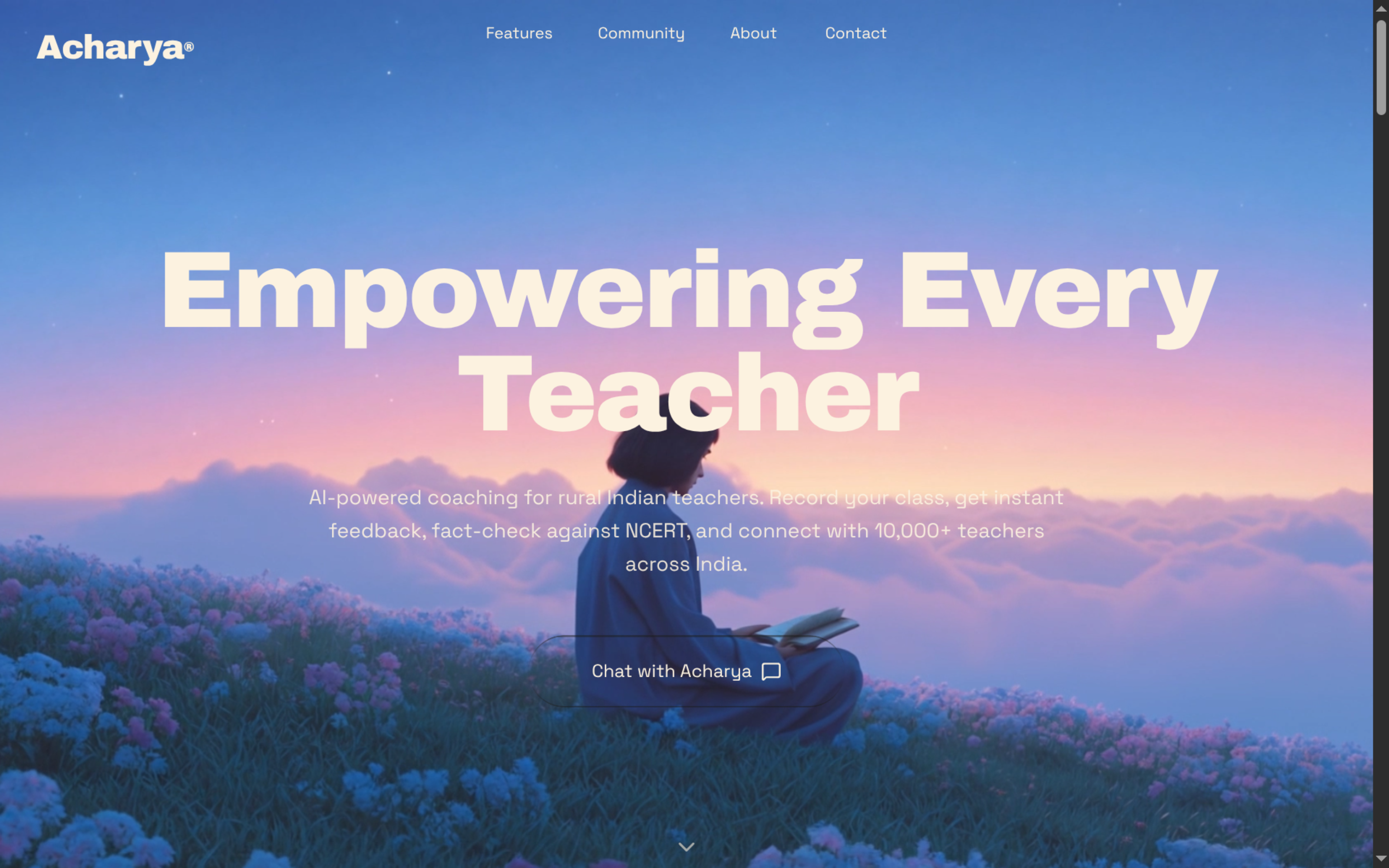
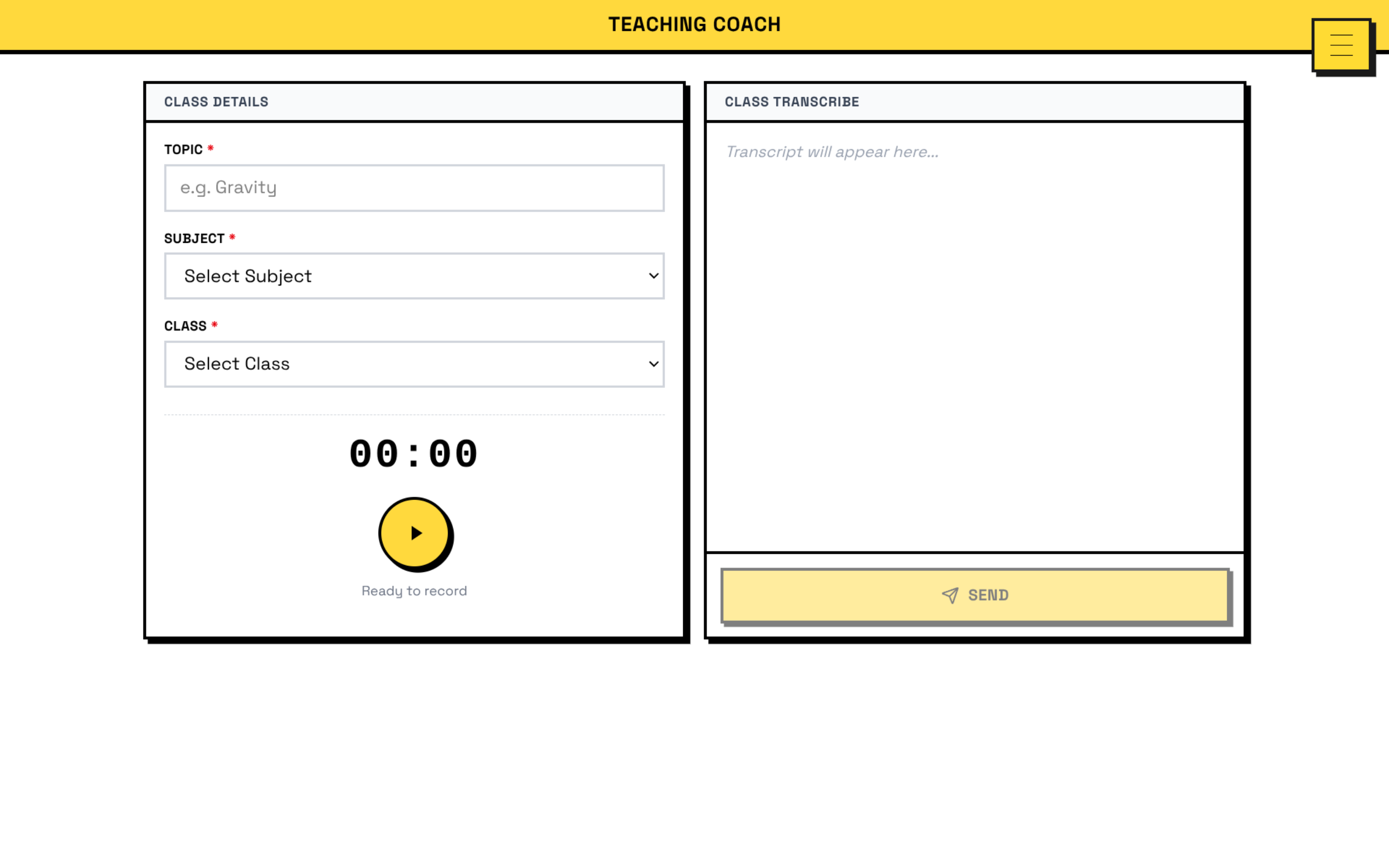
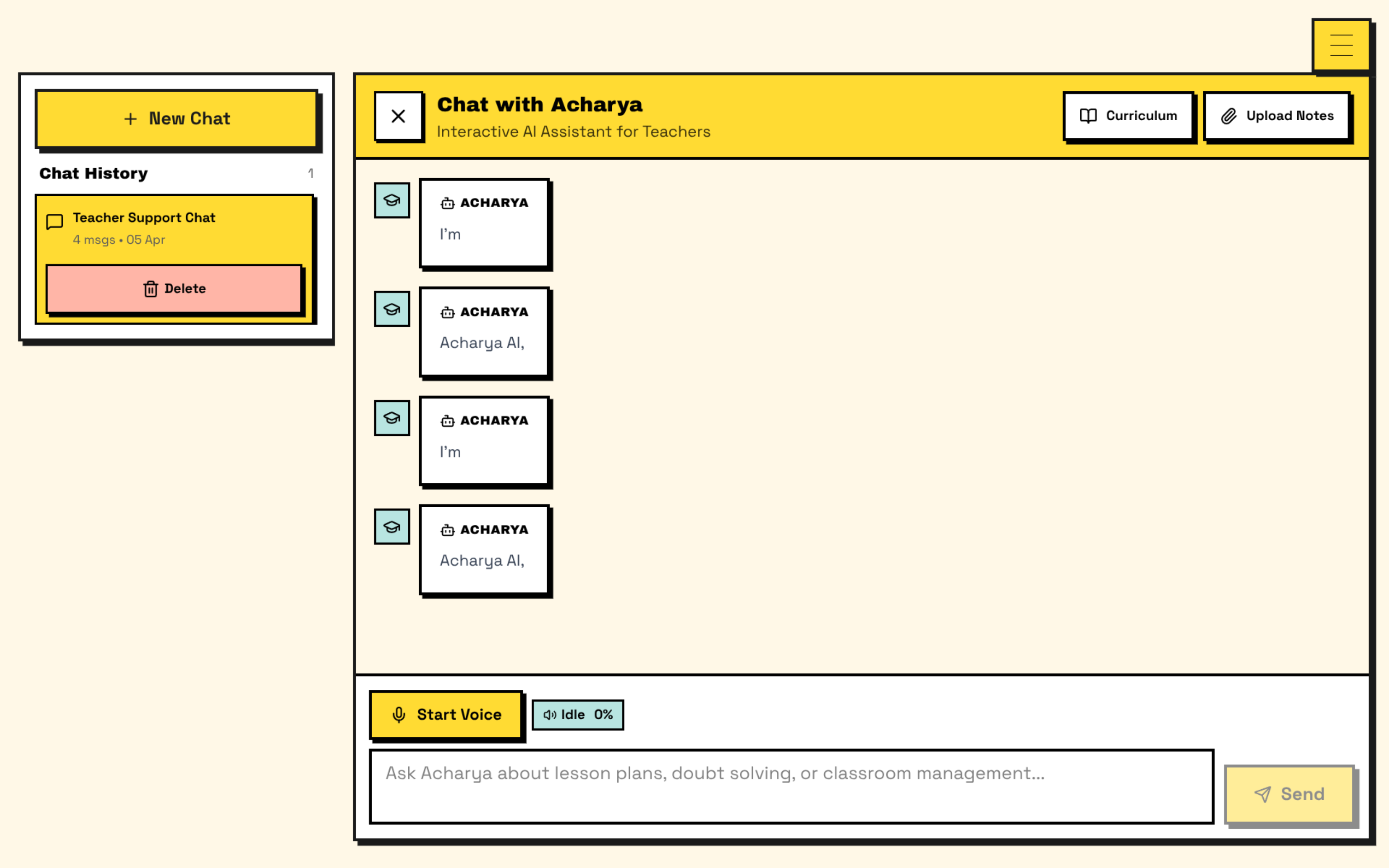
Acharya is an AI-powered classroom assistant that delivers real-time, context-aware guidance and personalized teaching strategies right when educators need them most.
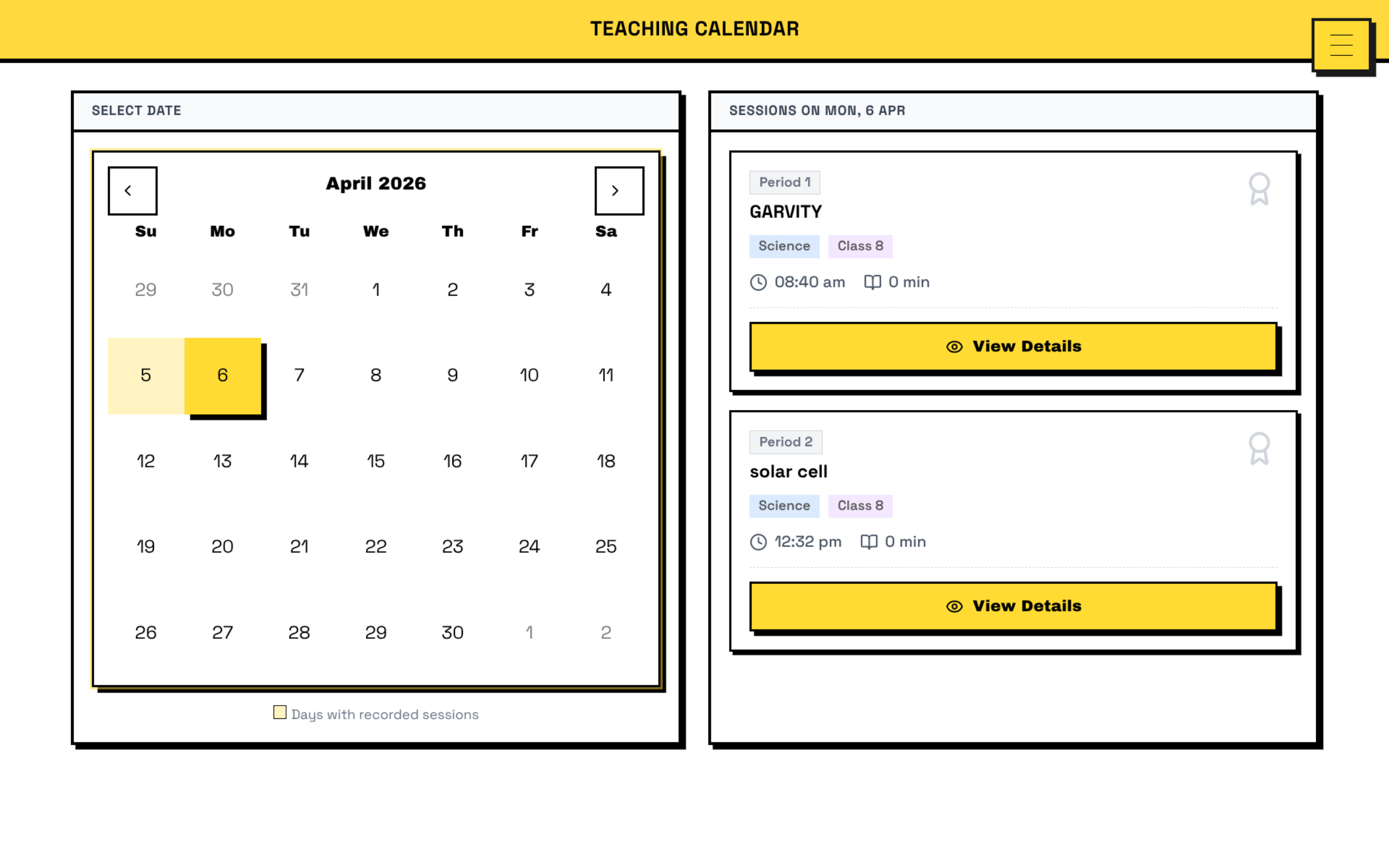
Think of it as a quiet, knowledgeable companion — present during and after a lesson — helping teachers stay aligned with accurate information, improve how clearly they explain concepts, and manage their classrooms more effectively. The goal was never to change how teachers teach. It was to help them do what they already do, even better.
How We Built It
We approached Acharya as a system that needed to work in real conditions — not just as a polished concept.
On the technical side, we used Next.js and TypeScript for the interface, Clerk for authentication, and NeonDB (PostgreSQL) for scalable data storage. For the AI layer, we brought in LangChain and LangGraph for orchestration, the Gemini API for language intelligence, and ElevenLabs along with Twilio to handle voice and communication features.
At the heart of Acharya is a Retrieval-Augmented Generation (RAG) system. We worked with curriculum-based content, broke it into meaningful chunks, generated vector embeddings, and built a retrieval pipeline around it. When a query comes in, the system pulls the most relevant context and grounds its response in that — making outputs far more accurate and trustworthy than raw generation alone.
What We Learned
This project taught us that building AI isn't just about making it "smart" — it's about making it reliable and actually useful.
Working with RAG showed us how essential it is to anchor AI in real knowledge rather than letting it drift on generated responses alone. We also discovered just how much data structuring matters — the way you chunk content and build embeddings directly determines how well the system understands context.
System design was another big takeaway. Tools like LangChain and LangGraph pushed us to think in terms of workflows rather than isolated features, which completely changed how we approached the architecture.
And beyond the technical side, we learned what it really means to build for people — not just for demos.
Challenges We Faced
Acharya wasn't straightforward to build, and we won't pretend it was.
The RAG pipeline was one of our biggest hurdles. Finding the right chunking balance — enough context without overwhelming the retrieval — took multiple iterations and a lot of trial and error. Integrating that with LangChain and LangGraph added another layer of complexity, especially keeping retrieval and generation working in smooth coordination.
ElevenLabs and Twilio brought their own set of surprises. Setting up voice and phone-based features meant dealing with paid service tiers, credential management, and infrastructure constraints we hadn't fully anticipated. Even something as seemingly simple as enabling an SMS response turned out to involve unexpected layers of complexity.
And then there was the challenge of stitching all of it together into one coherent, working system. But honestly? Every one of those challenges made the final product stronger and more thoughtful.
Impact
Acharya is built for real classrooms — anywhere, not just well-resourced ones.
It gives teachers real-time support exactly when they need it, keeps them aligned with accurate knowledge, improves how clearly concepts are delivered, and makes quality teaching assistance accessible even in low-resource environments. It doesn't try to change teachers. It amplifies what they're already doing.
Closing
This project means a lot to us — because it isn't just about building something with AI. It's about building something that genuinely helps people who are already doing meaningful, important work.
Acharya is our contribution to better learning experiences, one classroom at a time.
Built With
- ai
- api
- clerkauth
- db
- gemini
- langchain
- langgraph
- neon
- nextjs
- rag
- sarvam
- serp
- twilio
- typescript


Log in or sign up for Devpost to join the conversation.