Inspiration
We’ve won 7 hackathons, and every time we hit the same wall:
- Agents fight over files
- Context gets too expensive
- Parallel work breaks merges
- Results become unpredictable and sloppy
So we built ACG: Agent Context Graph. A local-first architecture layer that lets AI agents understand a codebase before they touch it.
What it does
ACG helps AI coding agents work in parallel without stepping on each other. It scans a codebase, builds a deterministic context graph, predicts which files each task will modify, and creates an agent_lock.json that agents can follow.
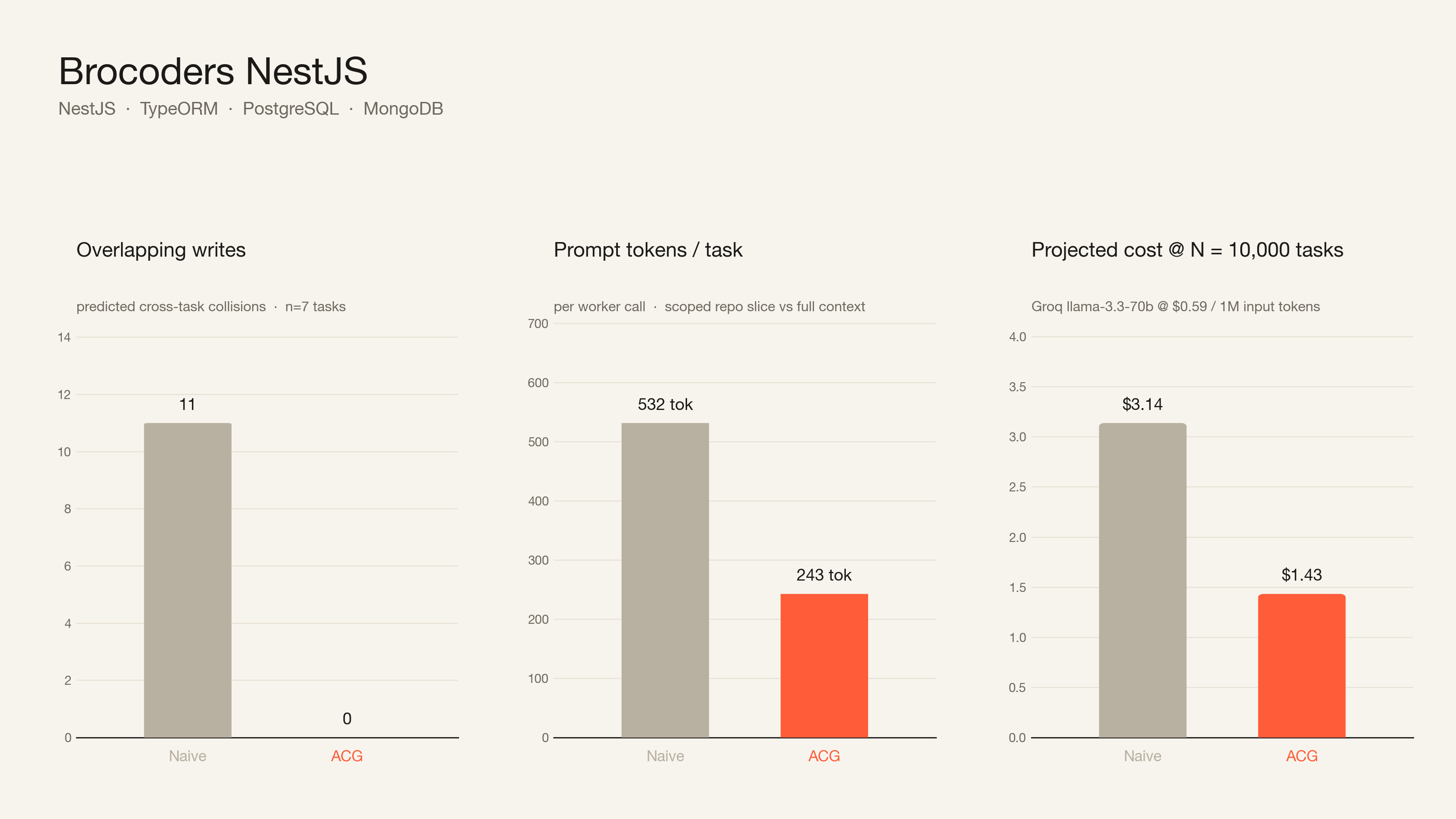
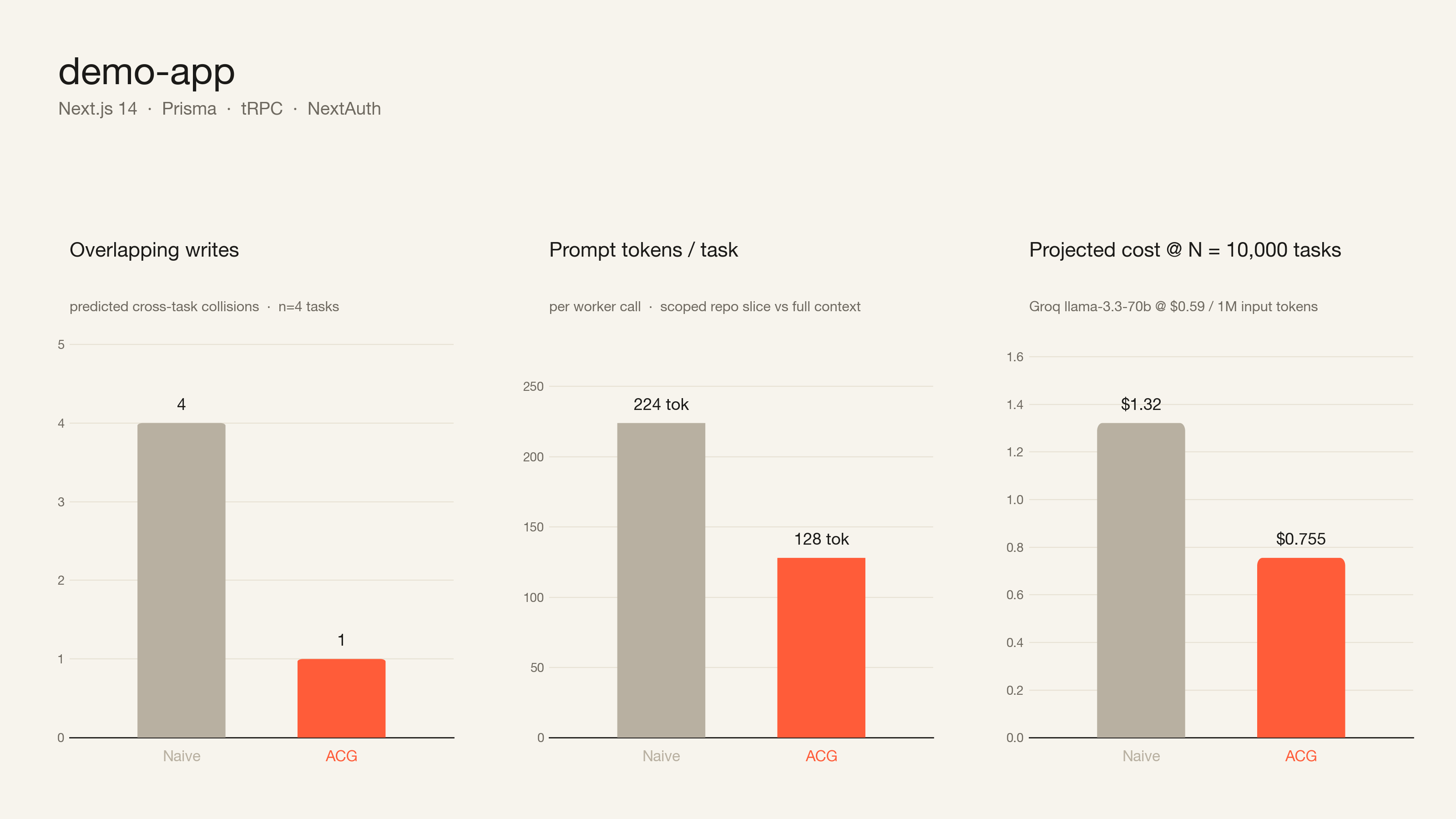
In our early benchmark, ACG:
- Reduced prompt context by 54%
- Cut prompt tokens from 3,721 to 1,700
- Completed 7/7 benchmark tasks
- Tested coordination across up to 5 parallel agent runs


Make multi-agent coding feel less like chaos and more like infrastructure.
How we built it
We built it using:
- Static code graph analysis
- Write-set prediction
- DAG-based task planning
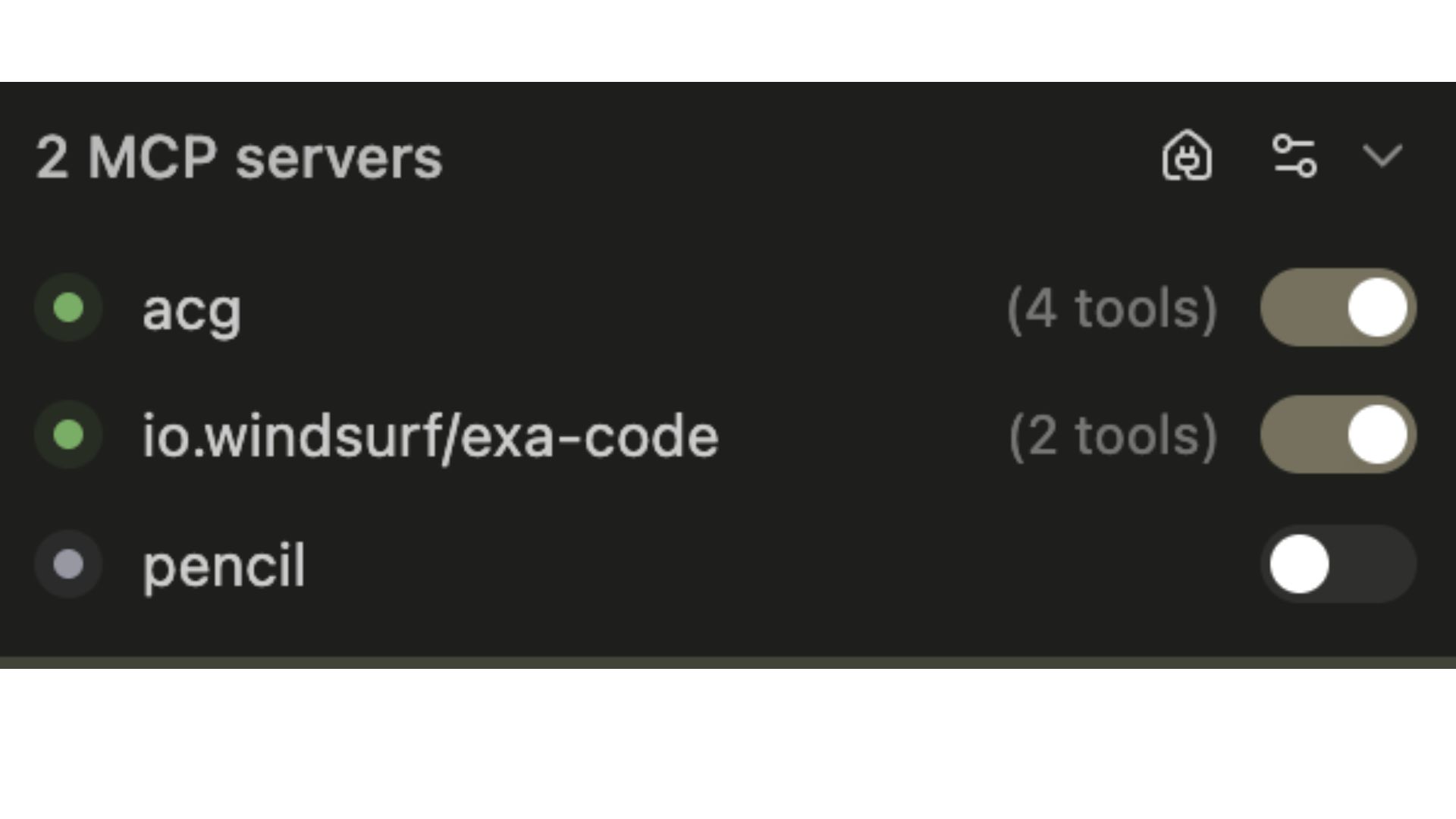
- Local-first MCP server
ACG analyzes routes, imports, symbols, configs, tests, and file relationships. Then it predicts where agents are likely to write, compiles a safe execution plan, and validates edits before they create conflicts.
Challenges we ran into
The hardest part was making agent behavior predictable.
- Agents are messy.
- Codebases are messy.
- Parallel execution is messy.
We had to turn a chaotic multi-agent workflow into something deterministic, inspectable, and safe.
Other challenges:
- Predicting write-sets before execution
- Reducing context without losing accuracy
- Handling overlapping agent tasks
- Designing a simple lockfile format
- Building fast enough for a hackathon demo
Accomplishments that we're proud of
The Fact that we were able to find a niche that no one has worked on yet and got substantial improvements!
We’re proud that ACG is:
- Agent-agnostic
- Insanely Fast to run
- Built for parallel coding
- Focused on reducing real engineering waste
The biggest win: We proved that multi-agent coding does not need bigger prompts. It needs better coordination.
What we learned
We learned that multi-agent coding is not just a prompting problem. It is a systems problem. The future is not one giant agent with infinite context. The future is many specialized agents working in parallel with shared coordination rules. ACG is our bet on that future.
What's next for ACG
Next, we want to make ACG the default coordination layer for AI engineering teams.
We want to add:
- Live conflict dashboards
- Deeper Windsurf/Cascade integration
- Better write-set prediction
- Agent performance traces
- Team-scale task planning
Our long-term vision: Make parallel AI coding reliable enough for real software teams.



Log in or sign up for Devpost to join the conversation.