-
-
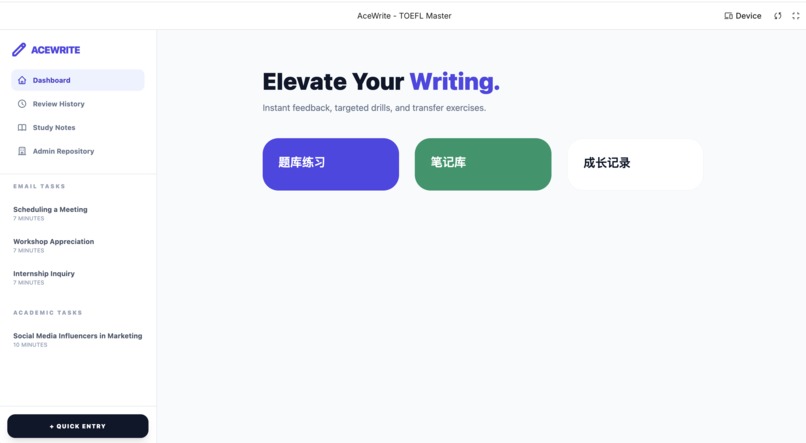
Home page
-
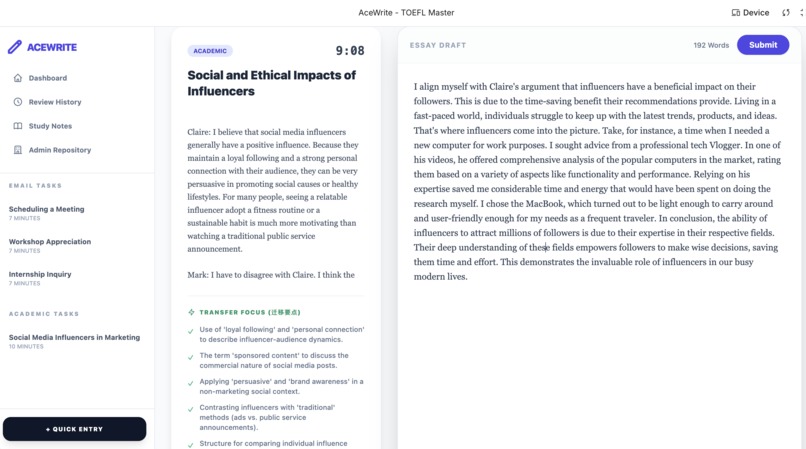
step 1
-
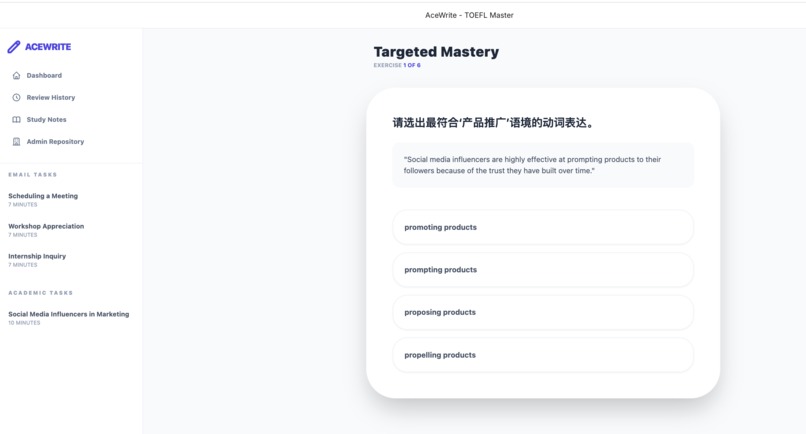
step 2-targeted drill
-
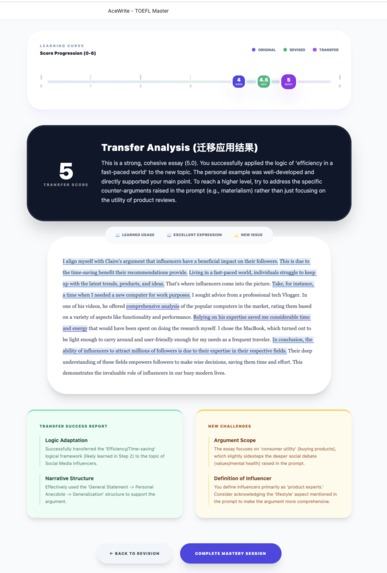
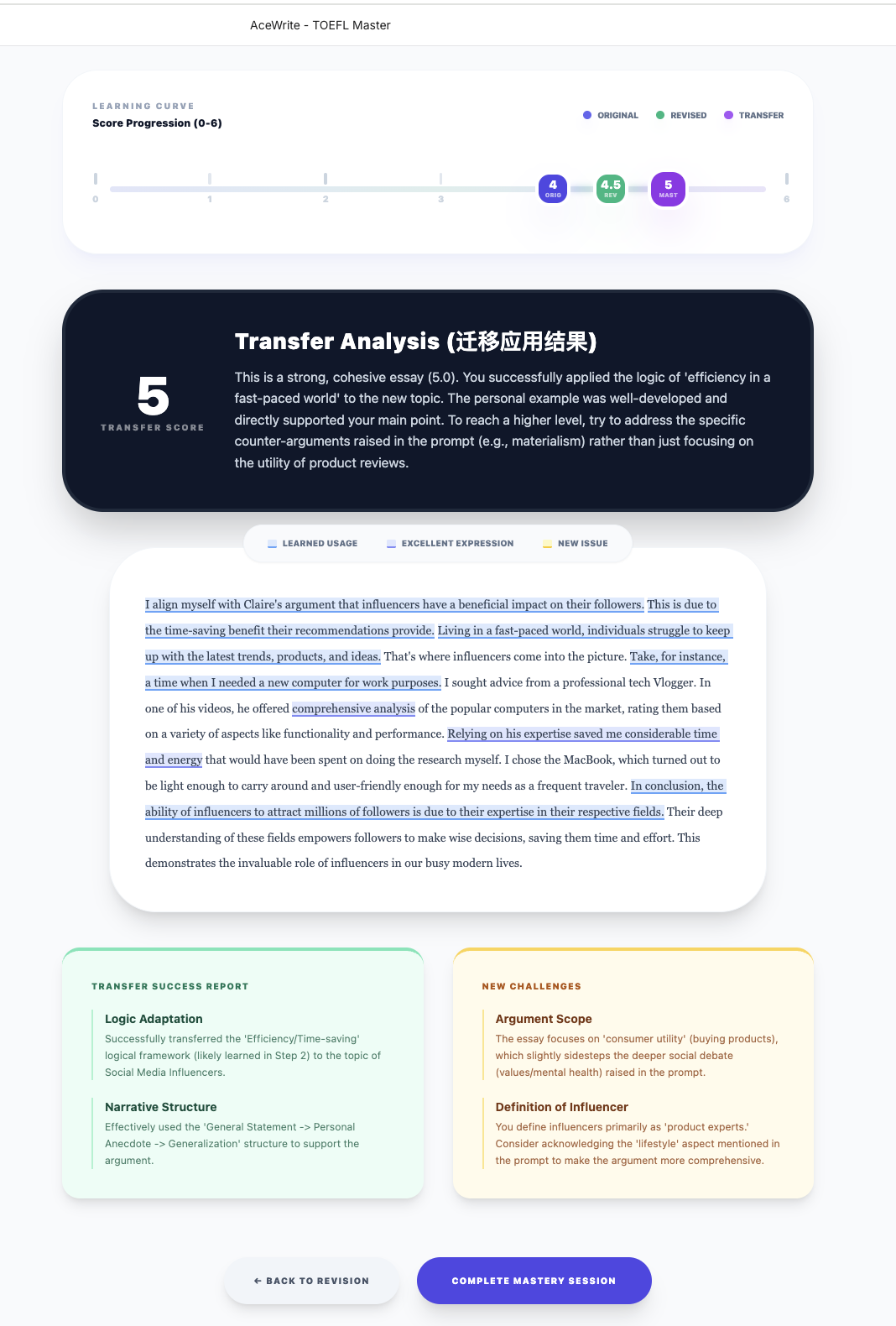
step 3-near transfer analysis
-
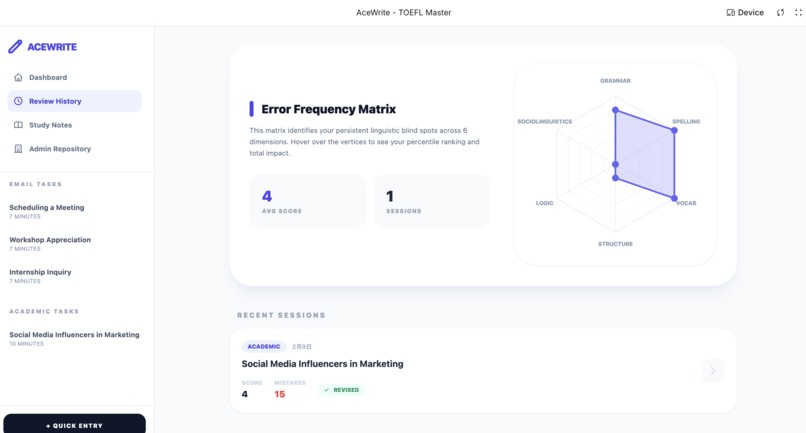
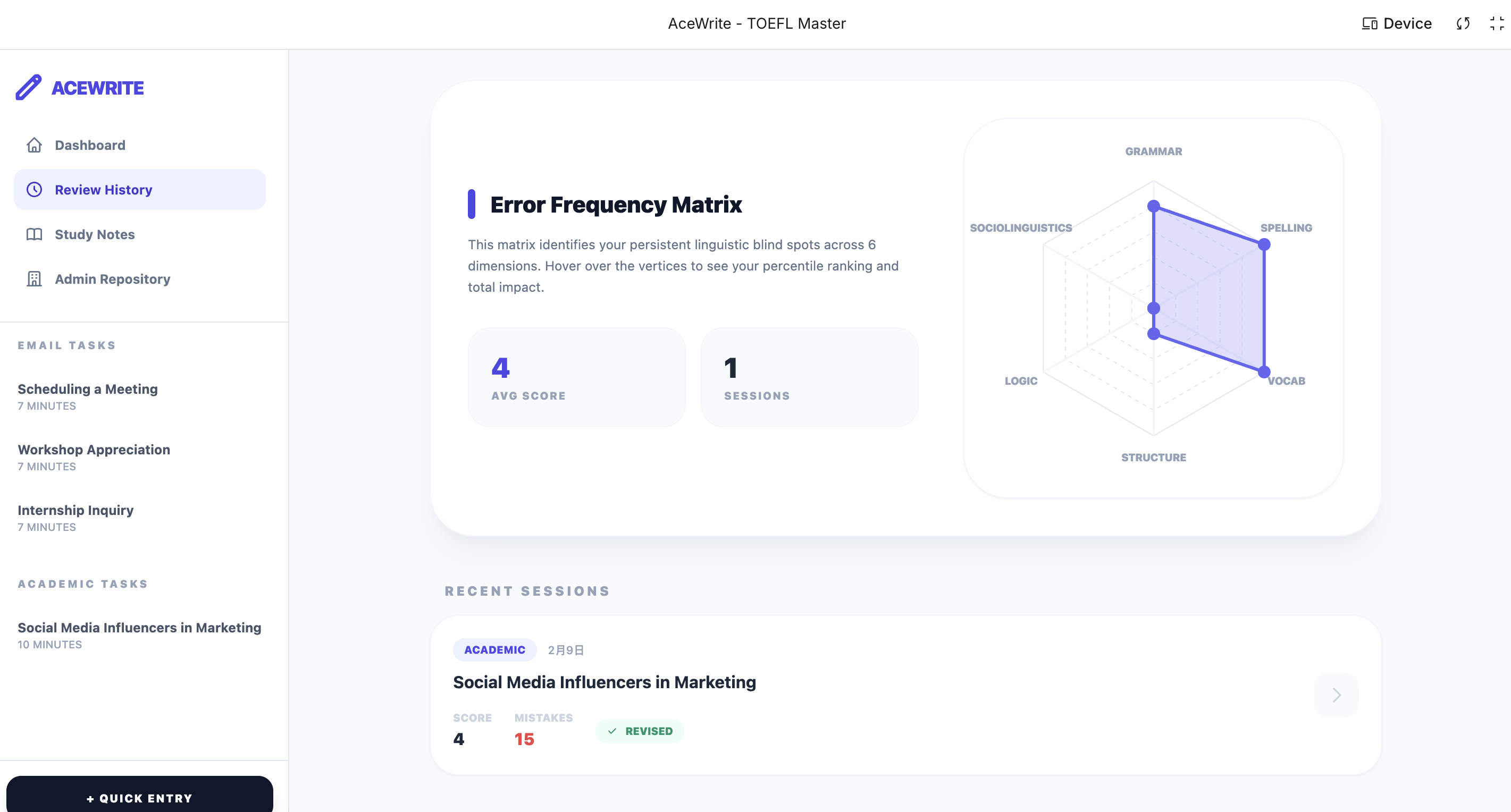
error
-
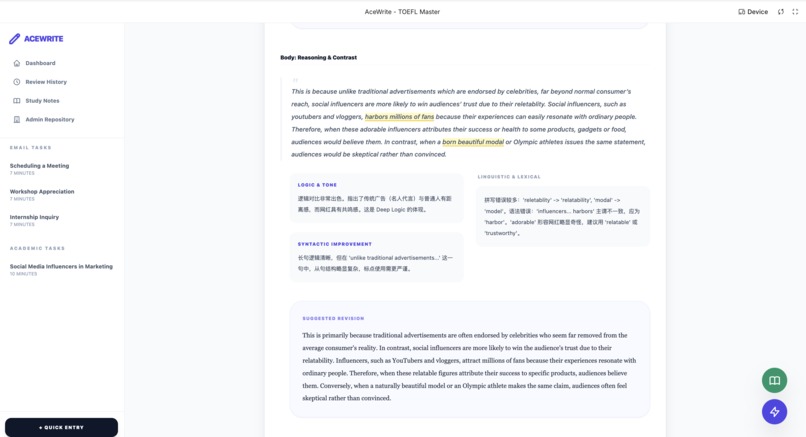
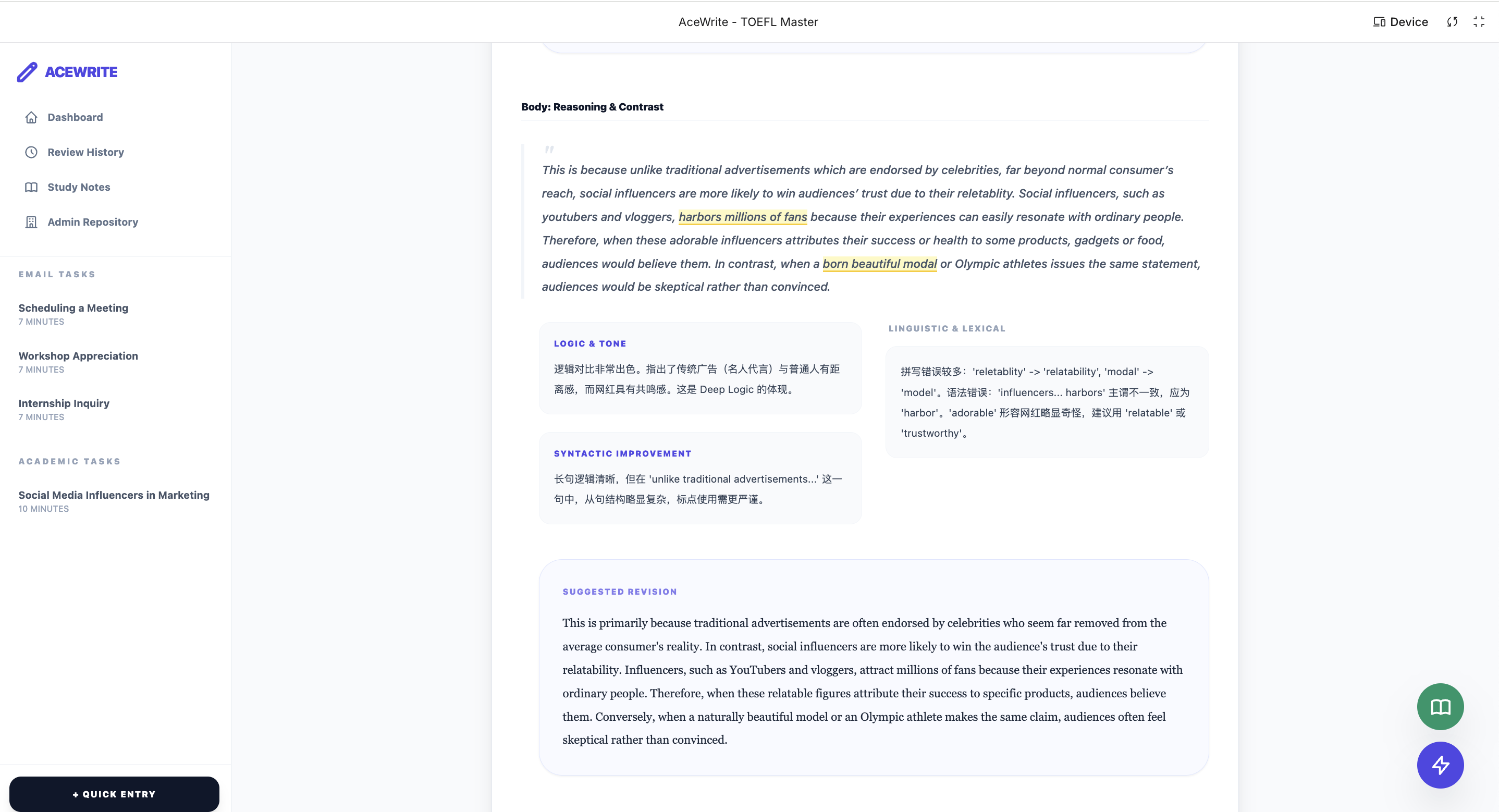
step 1 - analysis
-
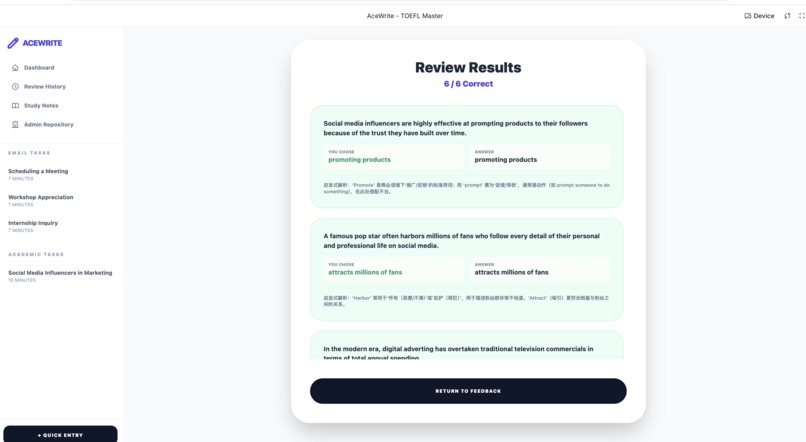
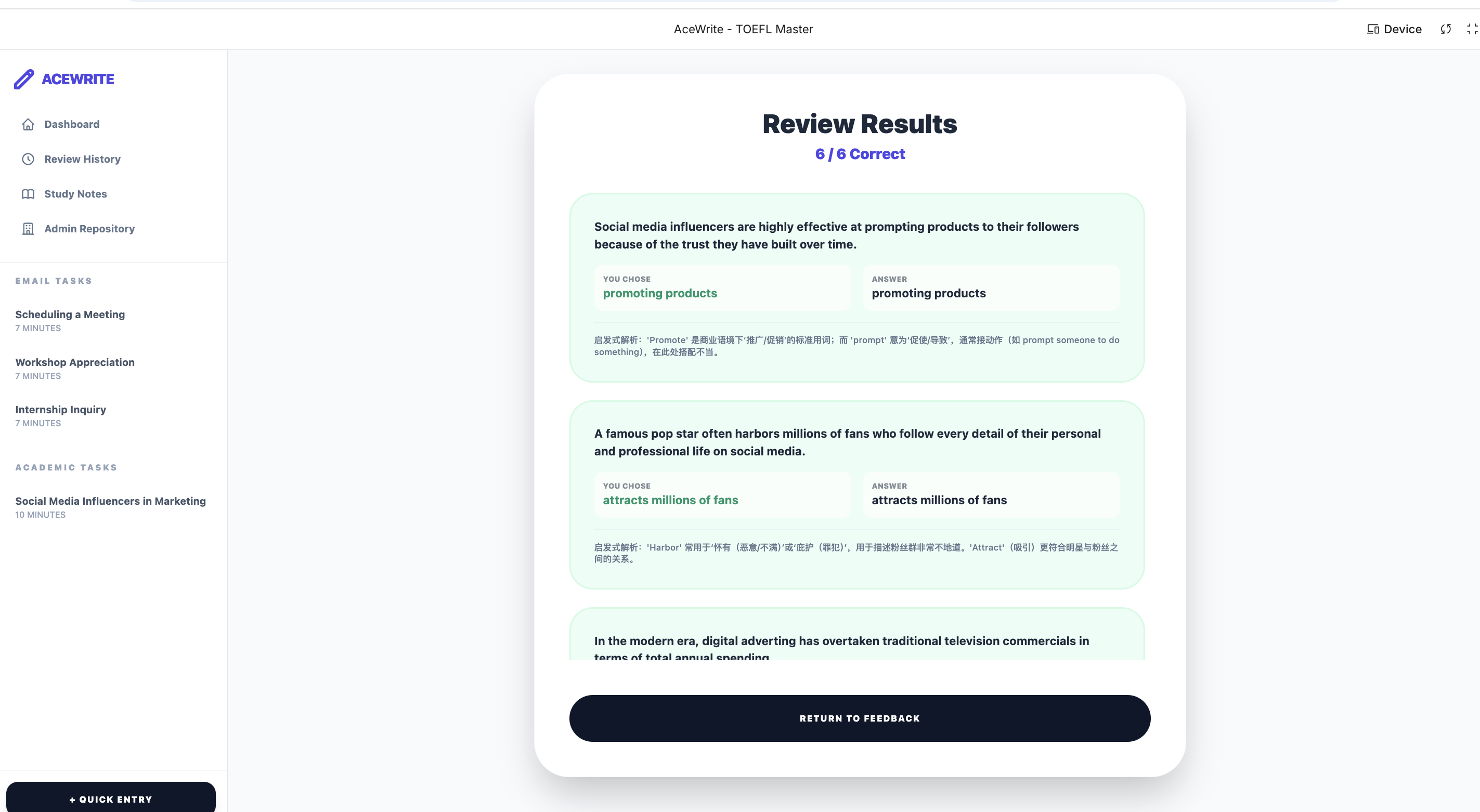
step 2-targeted drills
-
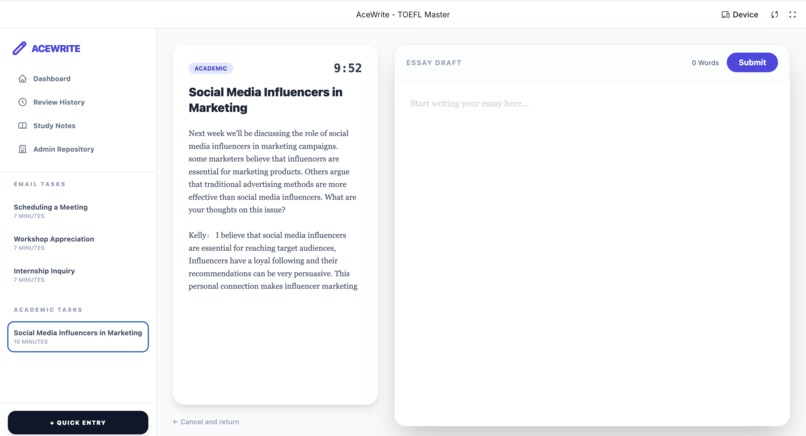
step 1-
-
step 2 -revised analysis
-

Notebook

AceWriting: A Teacher's Response to the AI Feedback Paradox
💡 Inspiration
I’ve been in the classroom for 15 years. I know the look on a student’s face when they receive a graded essay—that mix of hope and anxiety. When Generative AI arrived, I thought the "feedback gap" was finally closed. I was wrong.
In my classes, I saw students getting more feedback than ever, yet they were more paralyzed than ever. They were drowning in a sea of red ink generated by LLMs—corrections that were technically correct but pedagogically overwhelming. Many were even "misguided" by AI that didn't understand the nuances of the TOEFL rubric.
I realized that AI was functioning as a sophisticated spell-checker, not a True Tutor. Students don't need more "data points" on their mistakes; they need a scaffold that respects their cognitive load. AceWriting was born from my desire to build the tool I wish I had for my students: one that guides them step-by-step, focusing on one mastery point at a time.
🚀 What it does
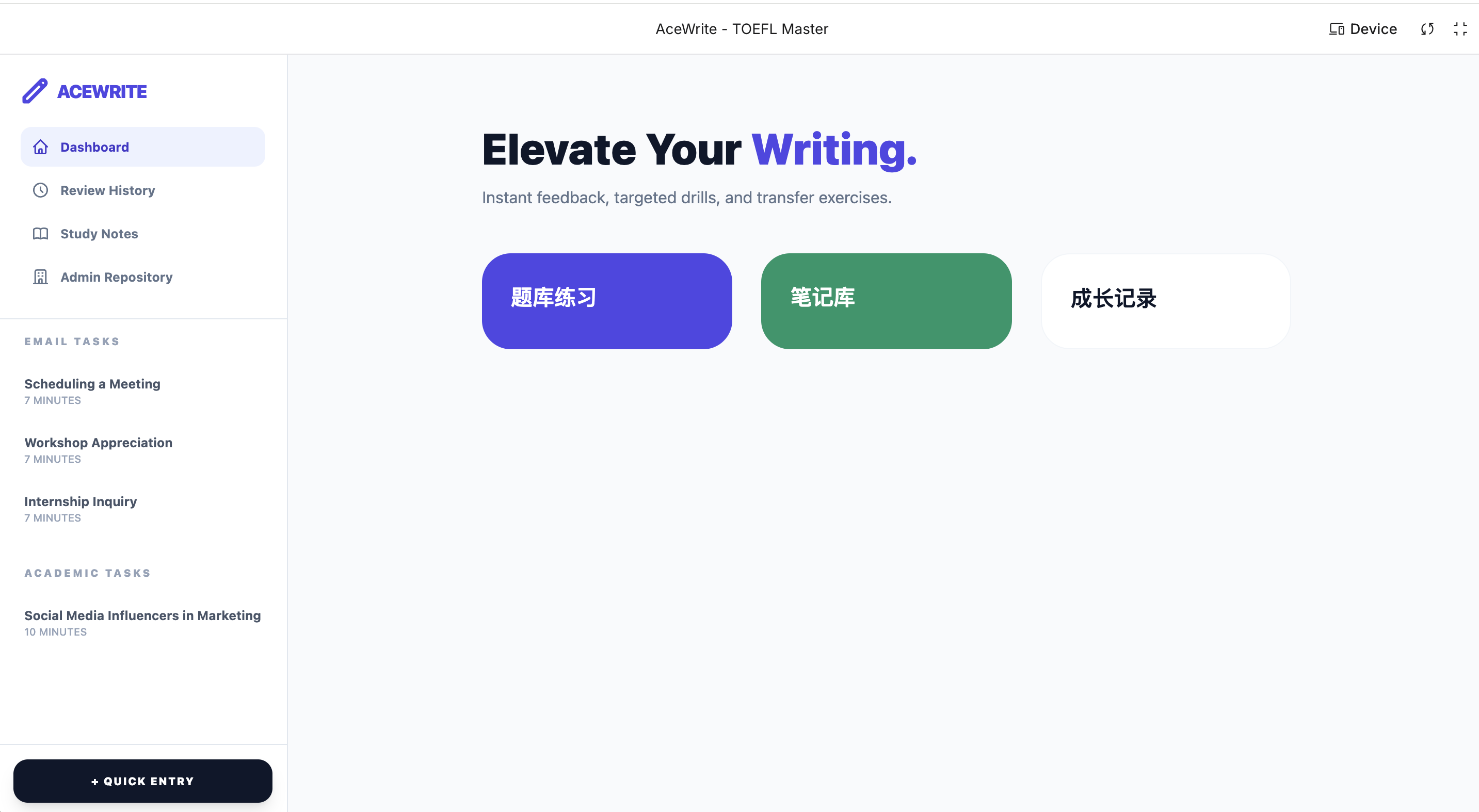
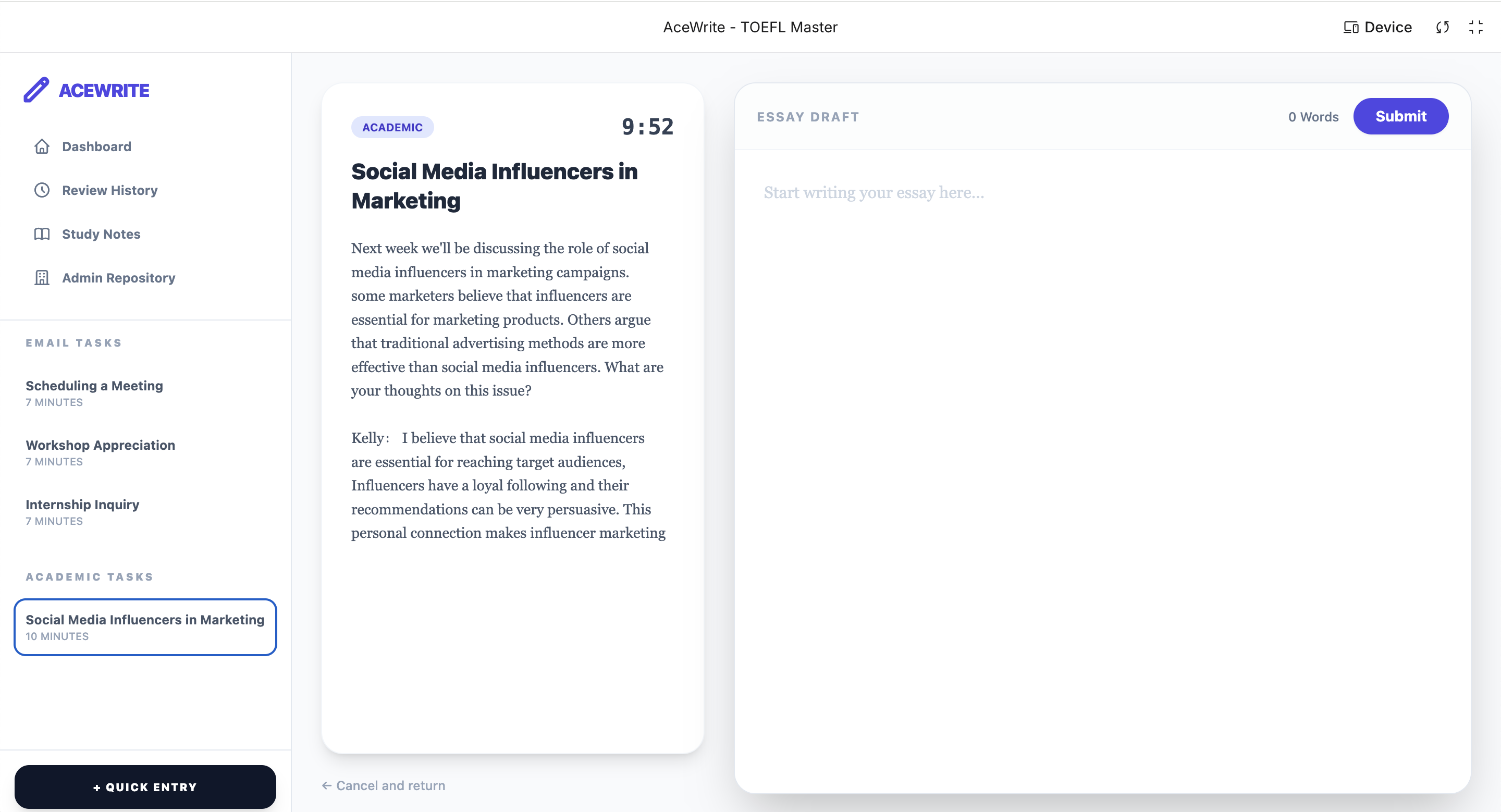
AceWriting is designed like a teacher's brain, not just an API call.
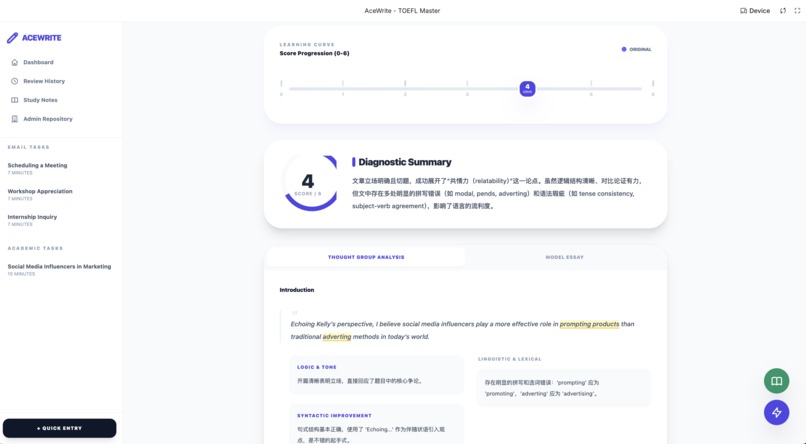
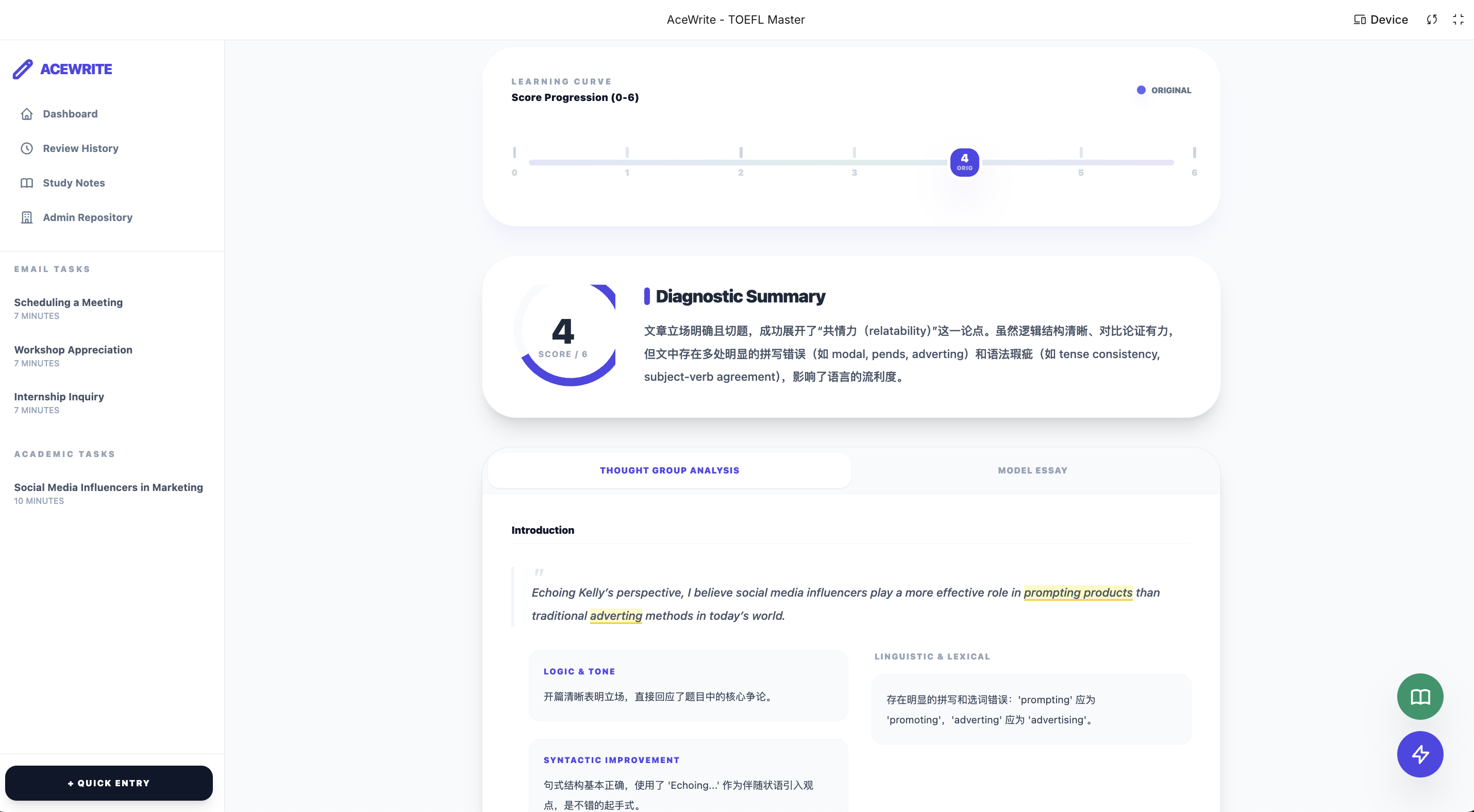
Surgical Thought-Group Analysis: Instead of a wall of text, we break the essay into "Thought Groups," analyzing the logic flow and word "texture" (collocations) specifically for the academic context.
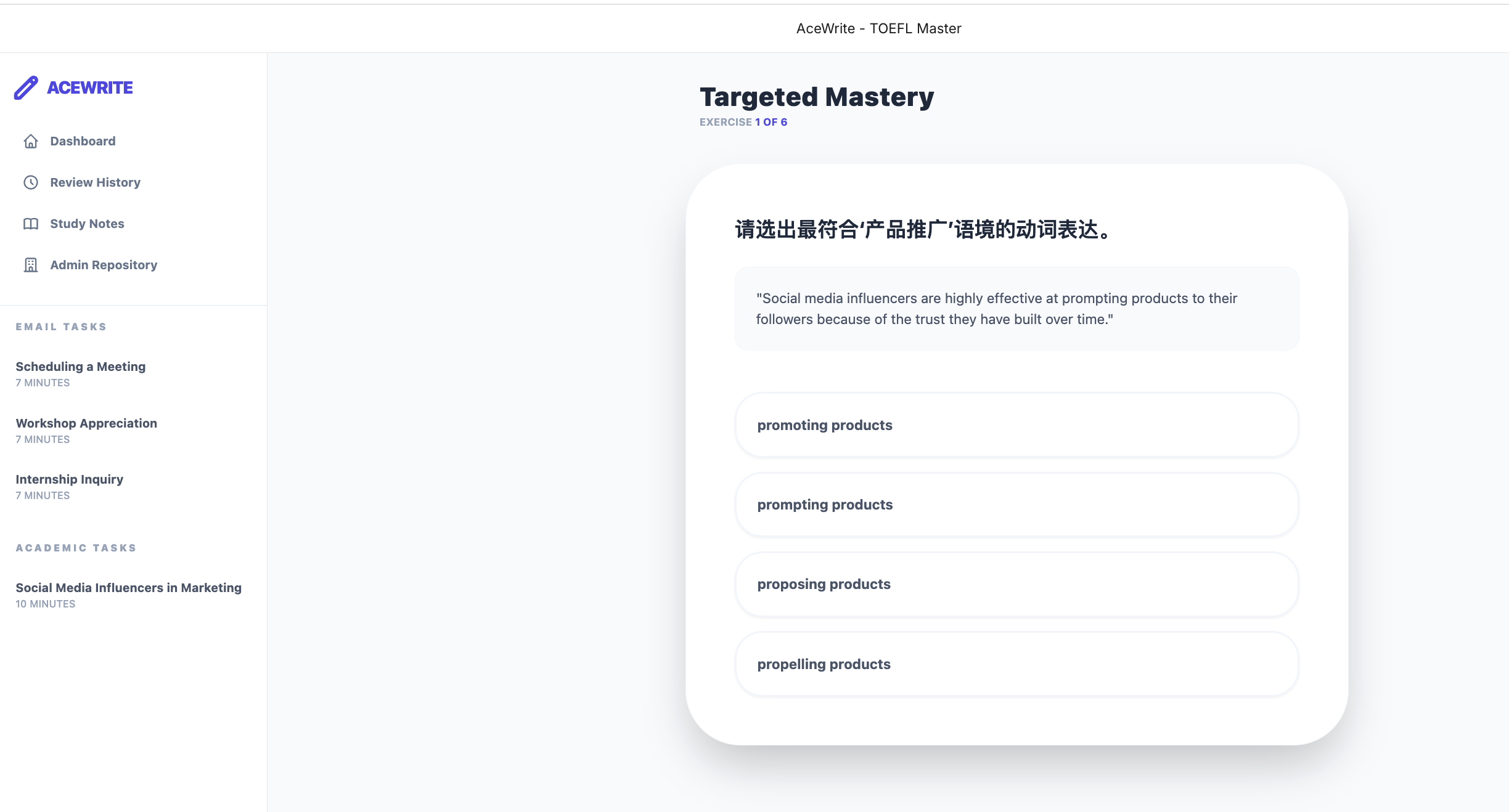
The "Shadow Drill" Engine: We don't just tell you it's wrong; we transform your own mistakes into interactive 4-choice exercises. You learn by doing, not just reading.
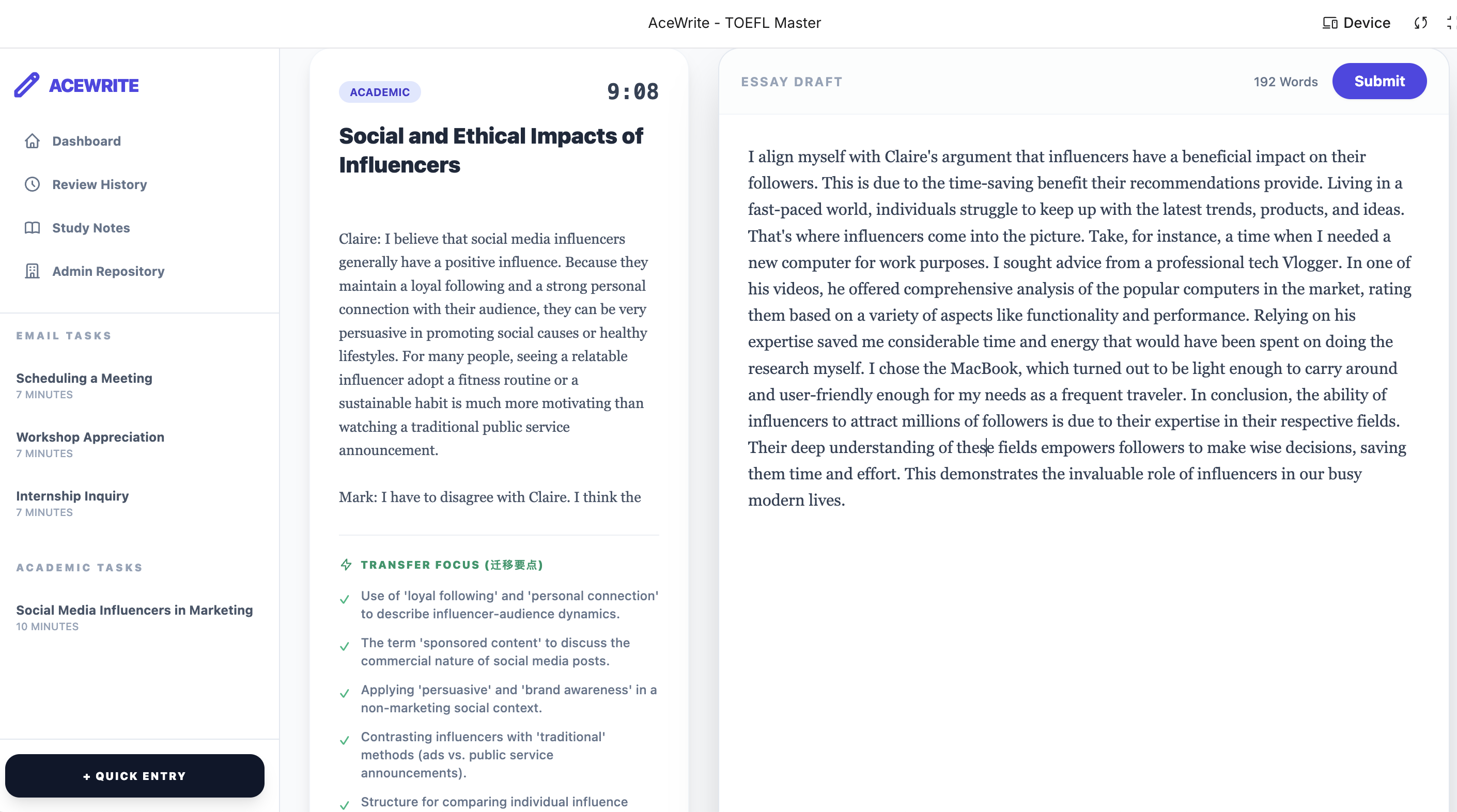
Logic Causal-Chain Auditing: We tackle the hardest part of TOEFL writing: the logic. We detect "logic gaps" and "evidence quality," ensuring the student's argument is watertight.
The Mastery Scoreboard: A visual journey from the "Original Mess" to a "Mastery Version," celebrating every 0.5-point gain on the 0-6 scale.
🛠️ How we built it
Powered by Gemini 3.0 Flash, our architecture prioritizes Pedagogical Logic over simple prompt-response.
Structured Instruction Sets: We built distinct engines for Evaluation, Drill Generation, and Logic Auditing, ensuring the AI sticks to the "teaching script."
JSON-Driven UI: Every diagnostic is mapped to a specific visual component, turning raw text into an interactive learning dashboard.
Context-Aware Topic Transfer: Using Gemini’s reasoning to create "Near-Transfer" challenges that keep the core topic stable while shifting the perspective, forcing students to reuse their newly learned vocabulary.
🚧 Challenges we ran into
Teaching AI to "Say Less": It was surprisingly hard to stop the AI from correcting everything at once. We had to engineer it to prioritize only the "core, indispensable" errors to avoid overwhelming the student.
Quantifying the "Vibe": Measuring "Syntactic Variety" and "Logic Gaps" required complex prompt layering to ensure the AI's "gut feeling" matched the actual TOEFL rubric.
🏆 Accomplishments that we're proud of
Pedagogy-First Architecture: Successfully translating 15 years of classroom intuition into a repeatable AI workflow.
High Retention Loop: Creating a "Step-by-Step" flow that actually makes students want to rewrite their work.
📖 What we learned
We learned that the best "Prompt Engineering" is actually Teaching Engineering. AI is a powerful engine, but without a teacher's steering wheel, it just spins its wheels. Limiting feedback is more effective than providing "perfect" feedback.
🔮 What's next for AceWriting
Emotional Intelligence: Adding motivational triggers based on the student's specific "Aha!" moments.
Exam Expansion: Adapting the "Mastery Logic" to IELTS and GRE.
Social Mastery: A space for students to share their "Before & After" journeys, turning writing into a collaborative sport.
Built With
- css3
- gemini
- html5
- javascript
- lucide
- react
- tailwind

Log in or sign up for Devpost to join the conversation.