-
-

Ace AI
-
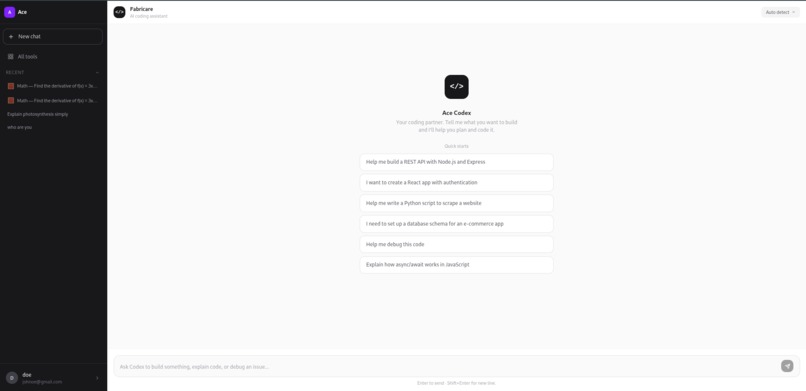
-
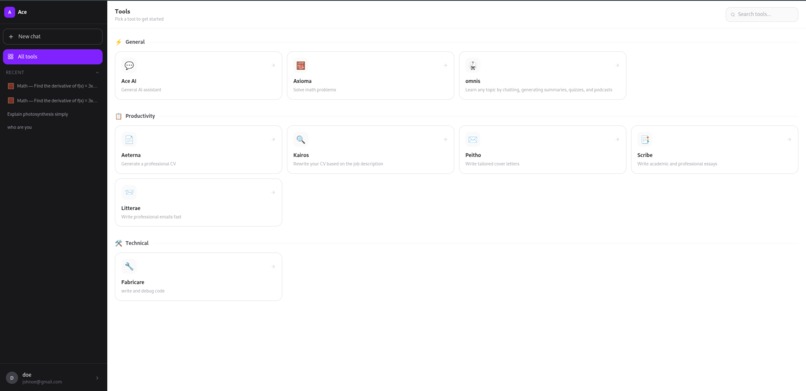
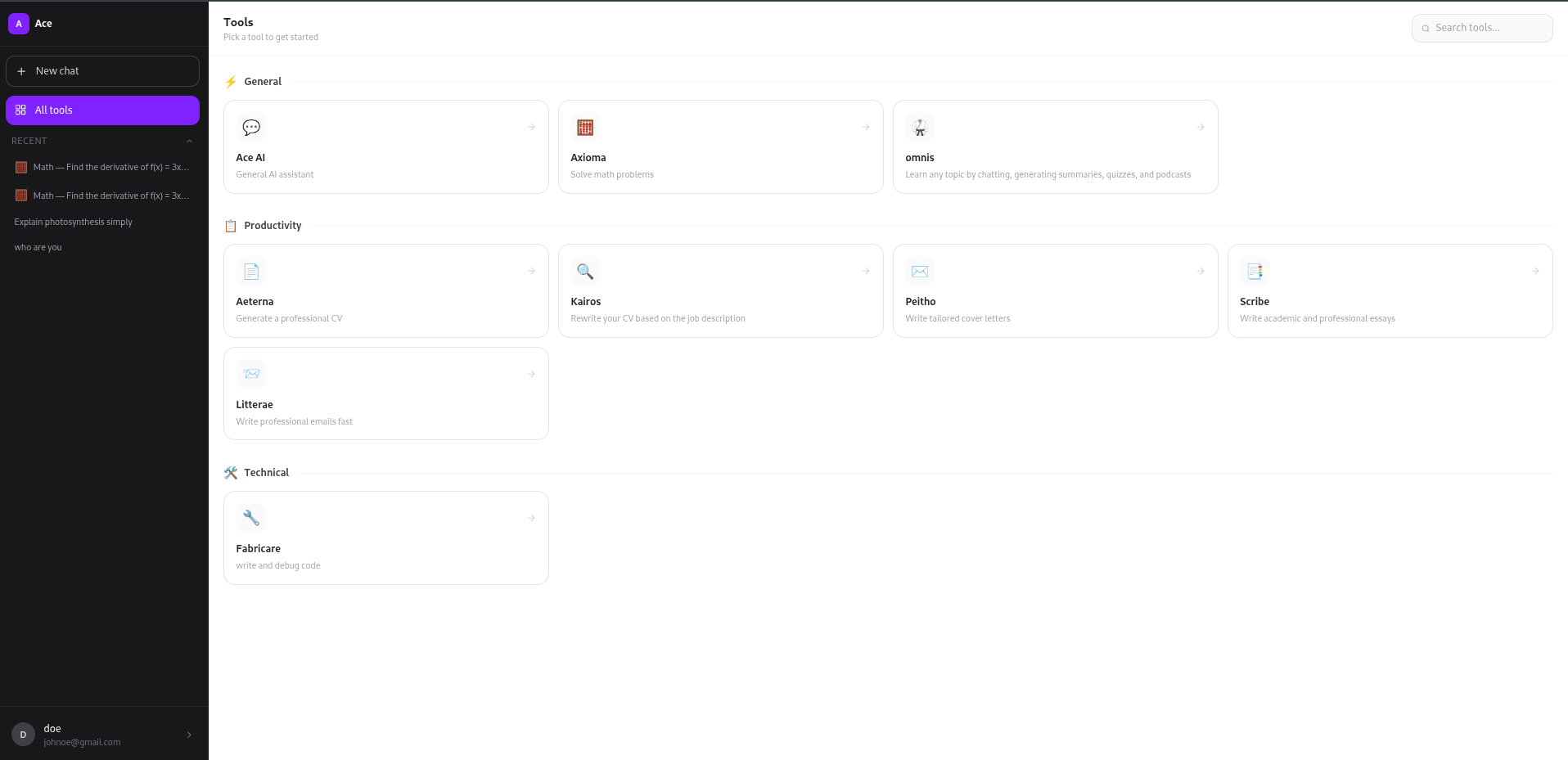
tools page
-
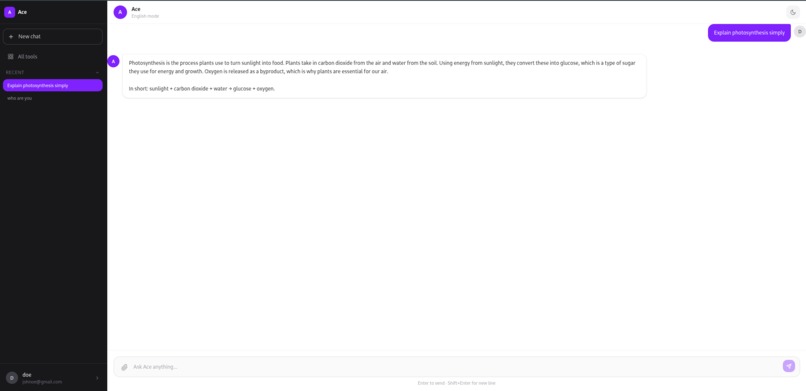
-
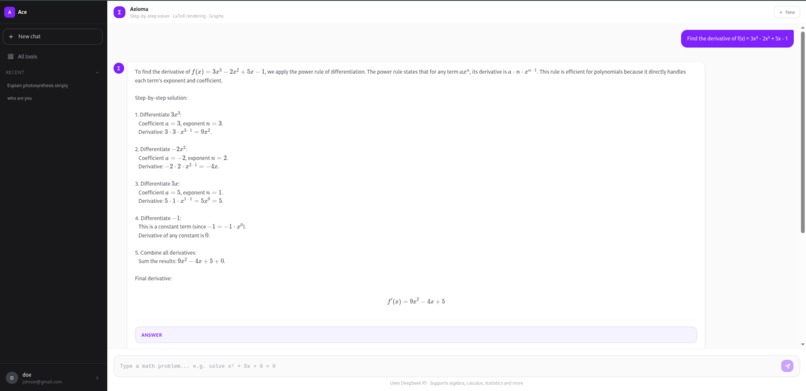
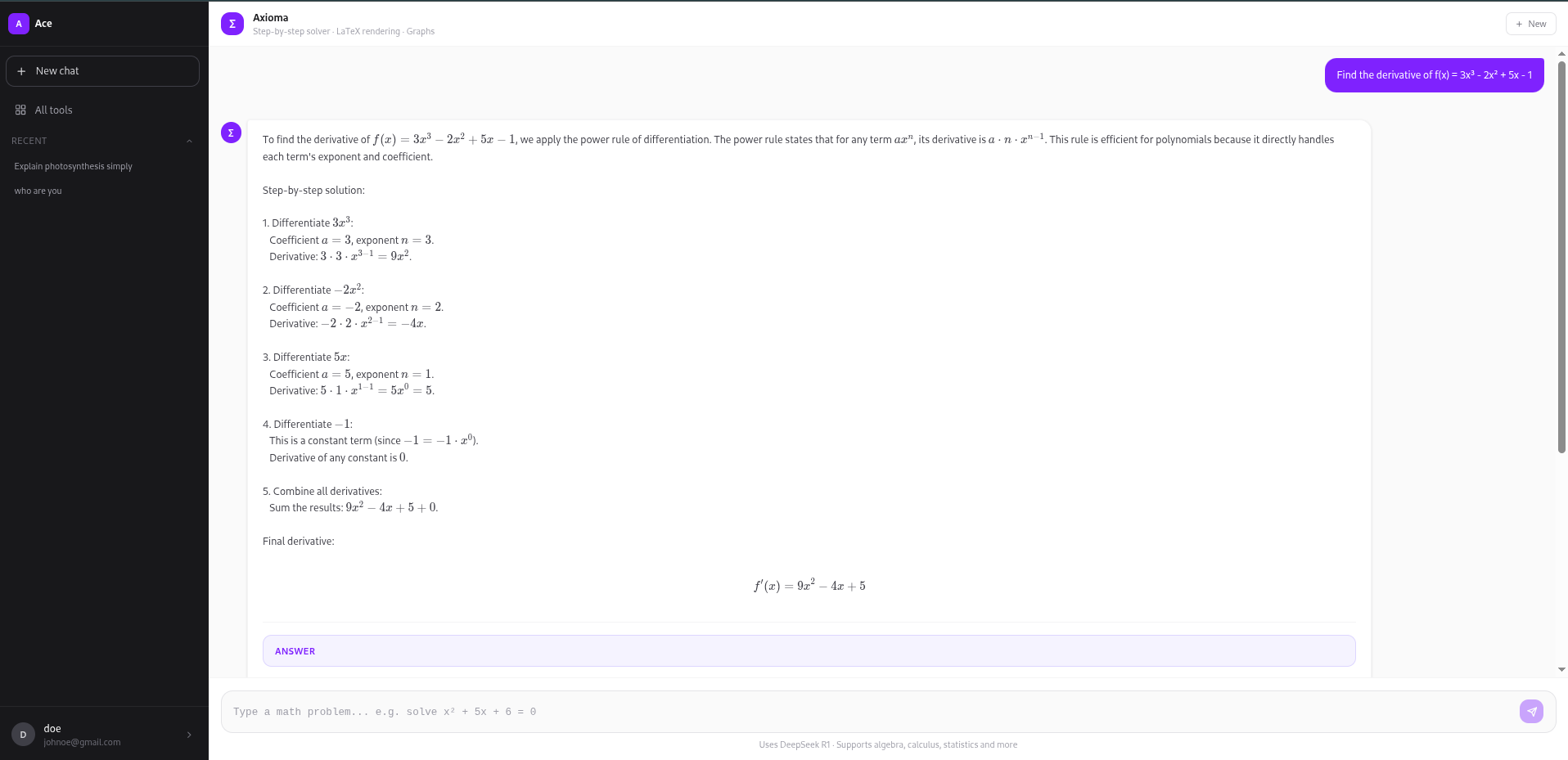
ace AI solving a math question
-
-
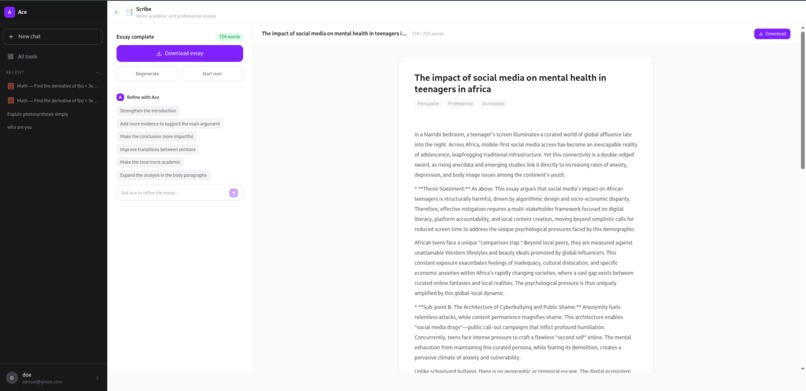
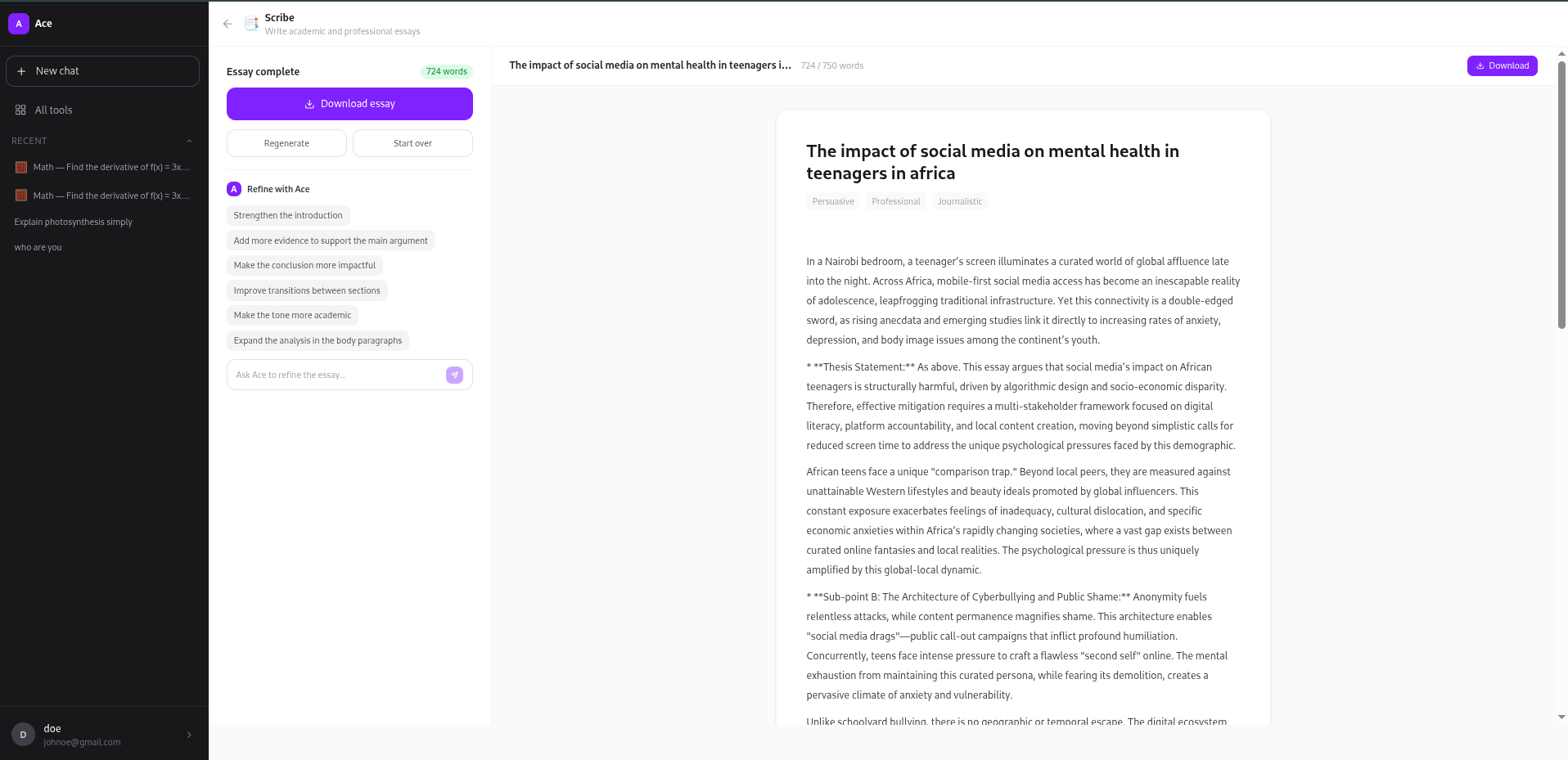
essay written by ace AI

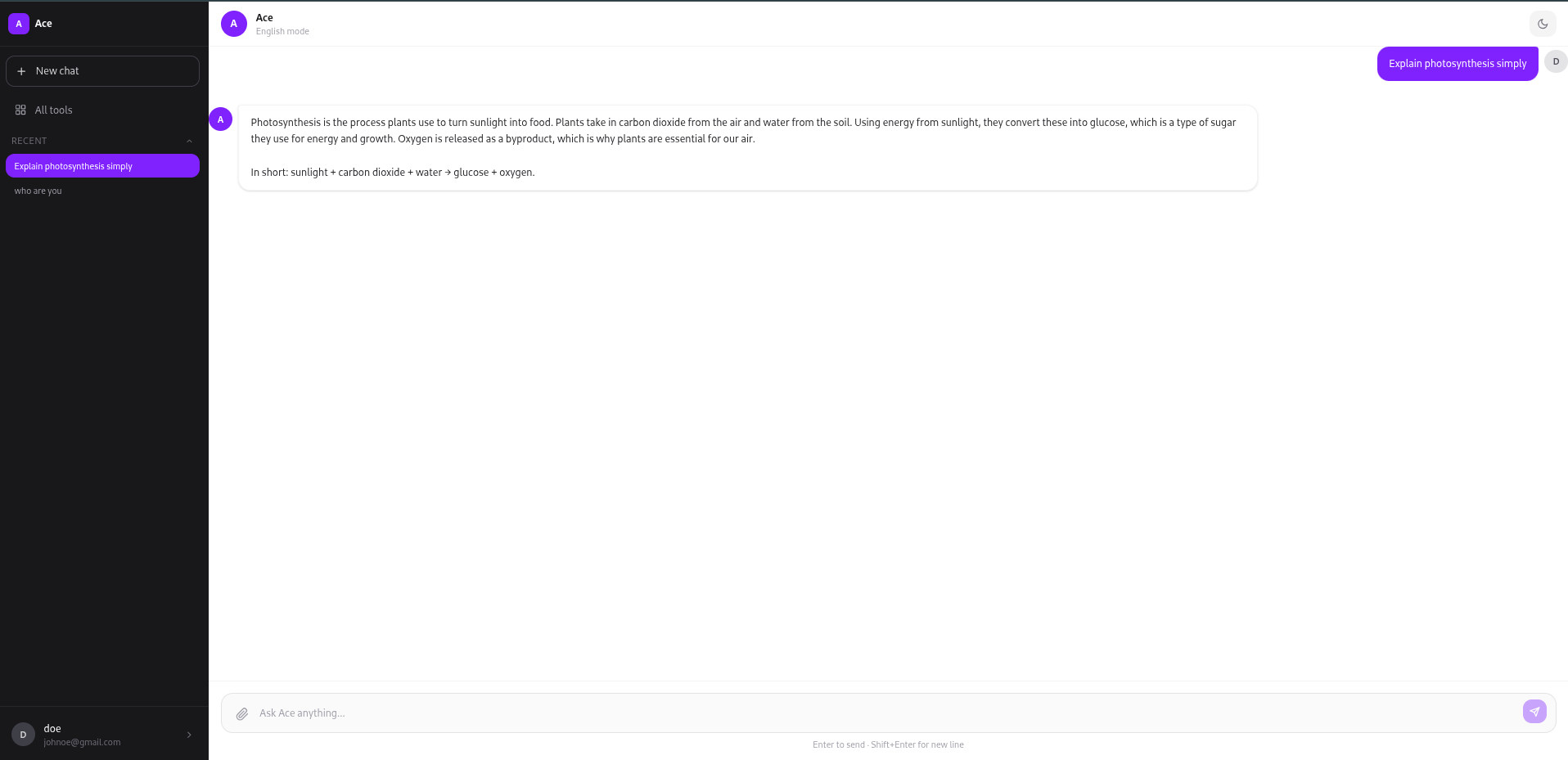
Inspiration
The idea started as an AI tutor for Nigerian students preparing for local national exams. But the deeper I went, the more I realised the real gap wasn't tutoring, it was access. Most powerful AI tools are built for Western users, priced in dollars, and culturally foreign to African users. I wanted to build something that feels like it was made for us, speaks Nigerian local languages.
As the build progressed, the vision expanded. Why limit it to students? A fresh graduate needs a CV. A founder needs a business email. A developer needs a coding partner. Ace became the answer to all of them.
What it does
ACE AI doesnt have a testable link yet
Ace is an all-in-one AI assistant that brings multiple high-value tools into a single, unified interface. Instead of switching between different apps, users can handle learning, writing, problem-solving, and productivity workflows in one place.
It can:
- Answer questions and explain complex concepts clearly
- Generate and refine written content (essays, emails, reports)
- Create and analyse CVs and cover letters
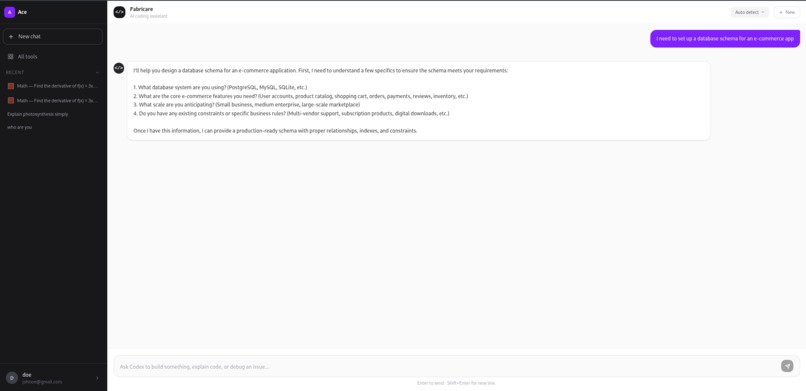
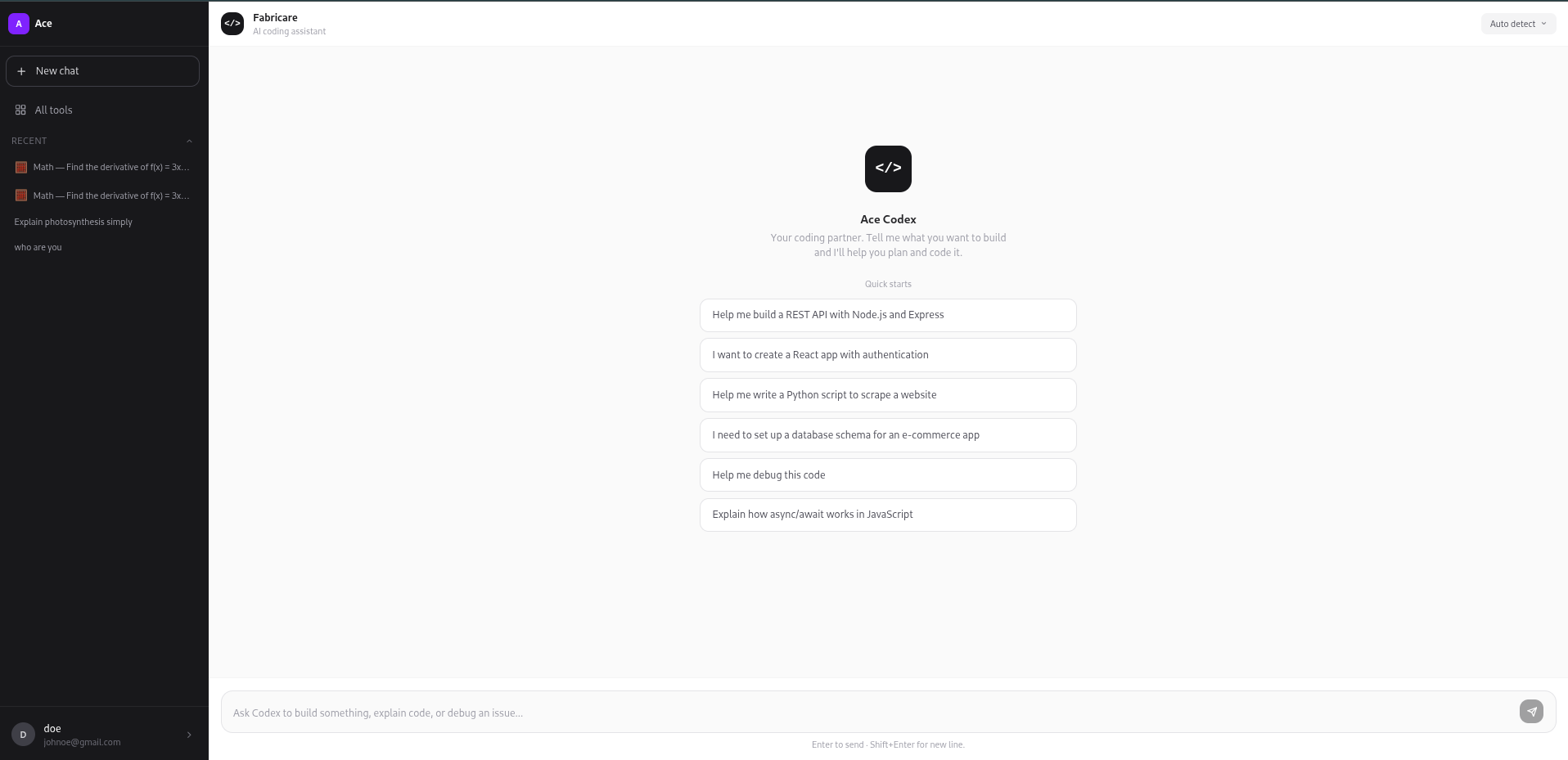
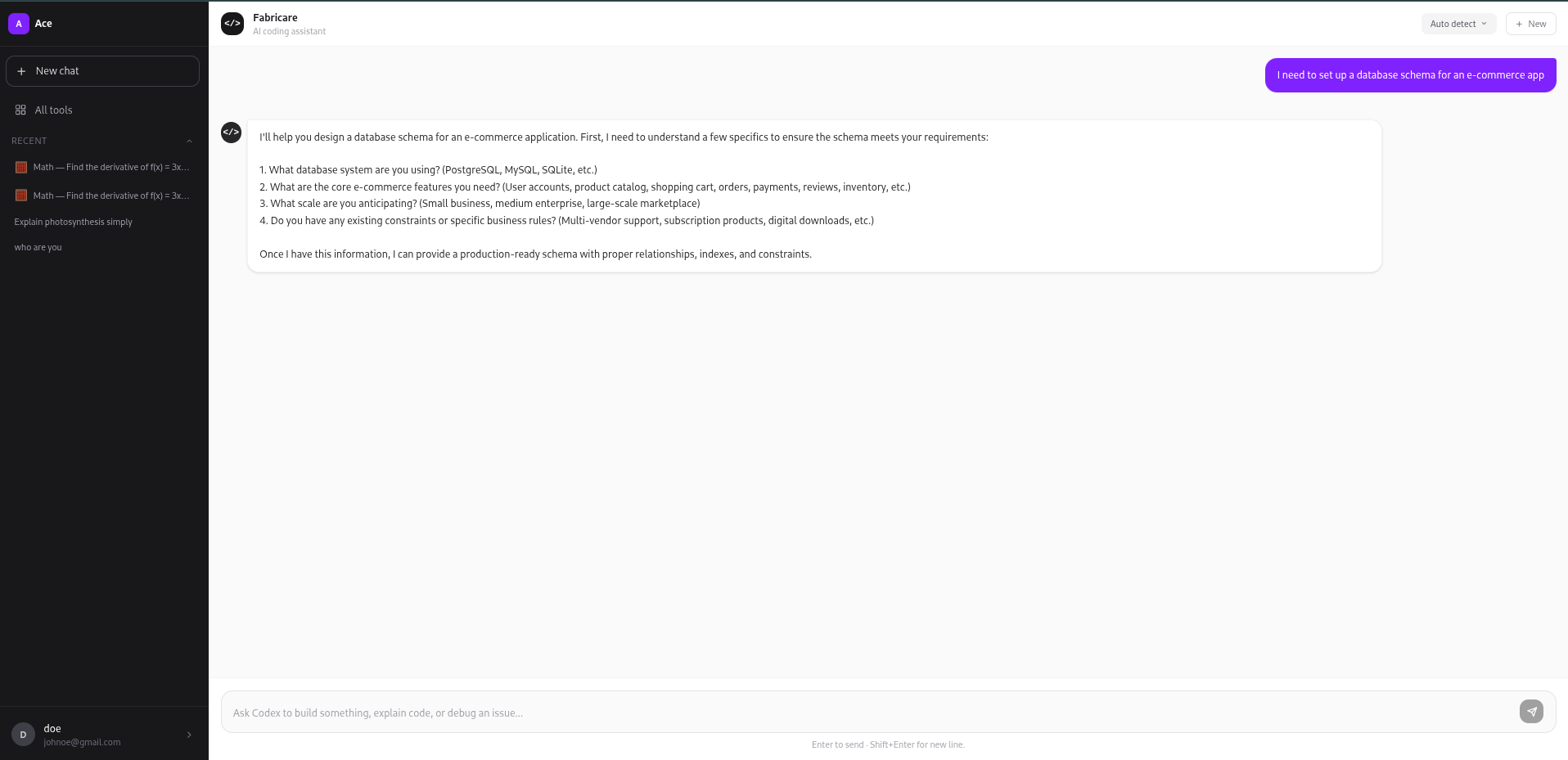
- Assist developers with coding and debugging
- Solve and explain mathematical problems step-by-step
Each capability is designed as a dedicated tool within the same system, backed by shared memory and persistent sessions. Conversations and outputs are saved automatically, and responses stream in real time, creating a fast, continuous, and context-aware user experience.
Ace is not just a chatbot, it’s a modular AI workspace that adapts to different user needs without breaking context or flow.
How we built it
Ace was built in phases over several weeks.
Phase 1
Established the foundation — authentication, chat, and memory.
Phase 2
Added persistent conversation history.
Phase 3
Introduced Nigerian-specific features, including OCR and multilingual support.
Phase 4
Built out the full tool suite CV Maker, CV Analyser, Cover Letter, Essay Writer, Codex, Math Mode, I, Email Composer, and Dojo, each inspired by and benchmarked against the best standalone tools in that category.
Challenges we ran into
Memory
The hardest challenge was memory building an AI that genuinely remembers different users across sessions, which required careful Firestore schema design and prompt injection architecture. Getting it to feel natural rather than mechanical took multiple iterations.
Streaming
Streaming across complex UIs was another challenge, especially in Math Mode, where LaTeX rendering, markdown stripping, and step parsing all occur simultaneously on live streaming content.
Scope Management
The biggest product challenge was scope management. Every week, there was a new tool to add, a new feature to build. Learning to say "not yet" and finish what was started before adding more was a discipline I had to develop throughout the build.
Accomplishments that we're proud of
I built a fully functional, multi-tool AI system that goes beyond a standard chatbot experience. Ace combines chat, productivity tools, and domain-specific assistants into one unified interface.
Some key achievements include:
- Designing and implementing a modular tool-based AI architecture
- Building real-time streaming responses across all features
- Creating persistent memory so users can continue conversations across sessions
- Integrating multiple AI-powered tools (writing, coding, math, CV generation, etc.) into one system
- Delivering a smooth, app-like experience with fast transitions between tools
What we learned
I learnt that building a real product is less about adding features and more about making systems work together reliably.
Key lessons:
- Architecture decisions early on heavily impact scalability later
- Streaming AI responses require careful UI and state synchronisation
- Memory systems are hard to get right, especially when they must feel natural and consistent
- Scope control is critical; focus and iteration matter more than feature volume
- The difference between a prototype and a usable product is consistency under edge cases
What's next for Ace AI
Next, we plan to expand Ace into a more powerful, extensible AI workspace and bring it to mobile devices, not only the web.
Key directions include:
- Improving long-term memory and personalisation
- Expanding tool ecosystem with more specialised workflows
- Enhancing collaboration features for teams and shared workspaces
- Optimising performance for lower-end devices and slower networks
- Adding plugin support so developers can build and integrate custom tools
Built With
- cloud-firestore
- deepseek
- featherless.ai
- firebase-authentication
- html2pdf.js
- javascript(es2023)
- katex
- latex
- ocr.space-api
- pdfjs-dist
- plotly.js
- react-router-dom
- react-syntax-highlighter
- tailwind
- tesseract.js
- vite
- web-speech-api
- zustand


Log in or sign up for Devpost to join the conversation.