-
-
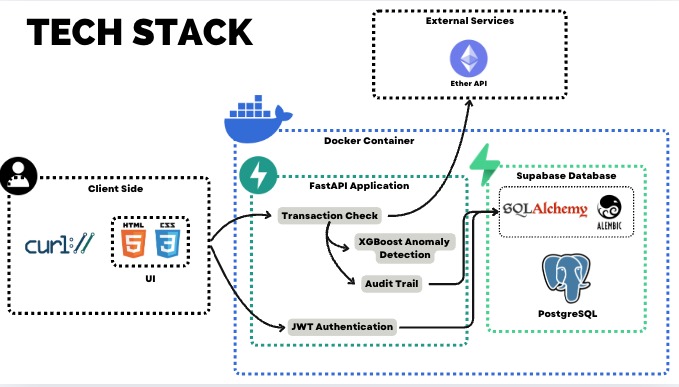
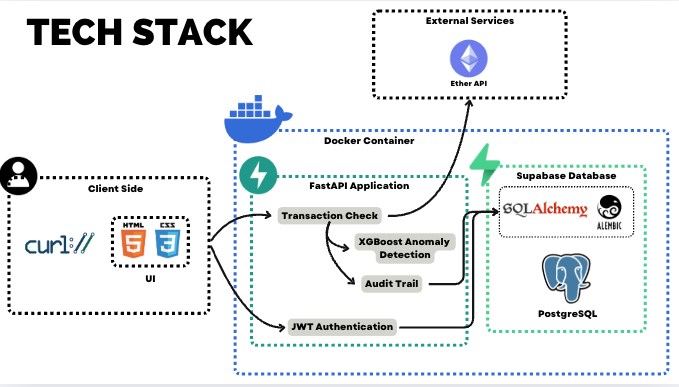
Our Tech Stack
-
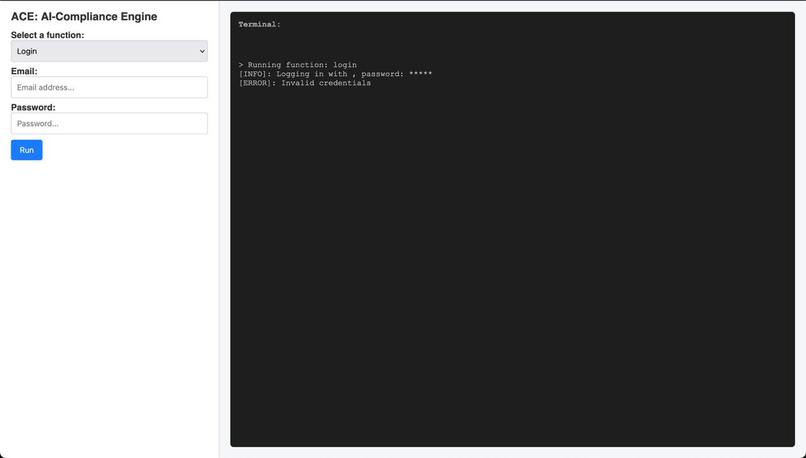
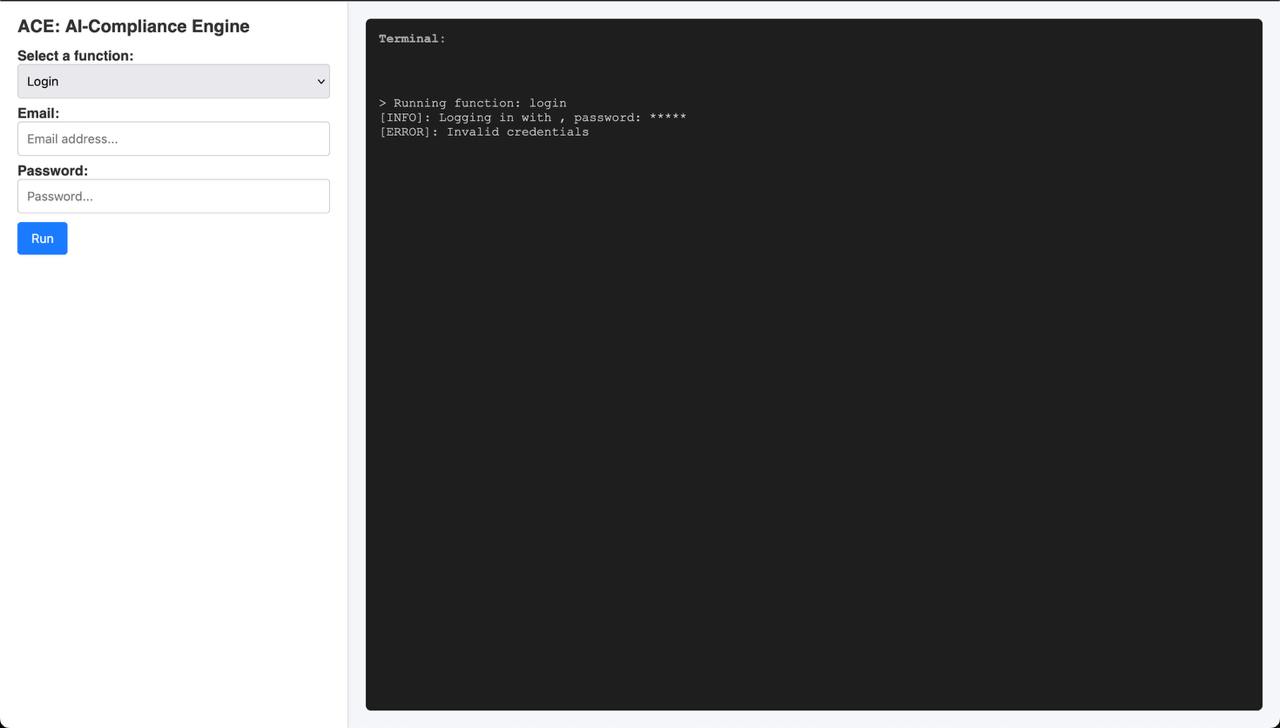
Authentication
-
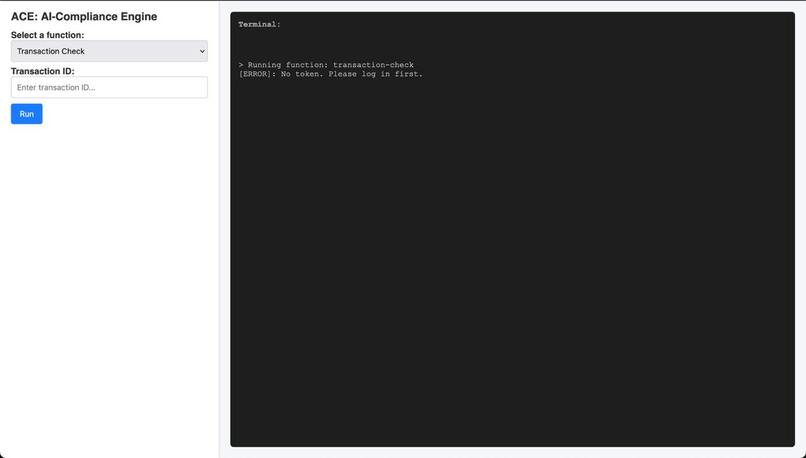
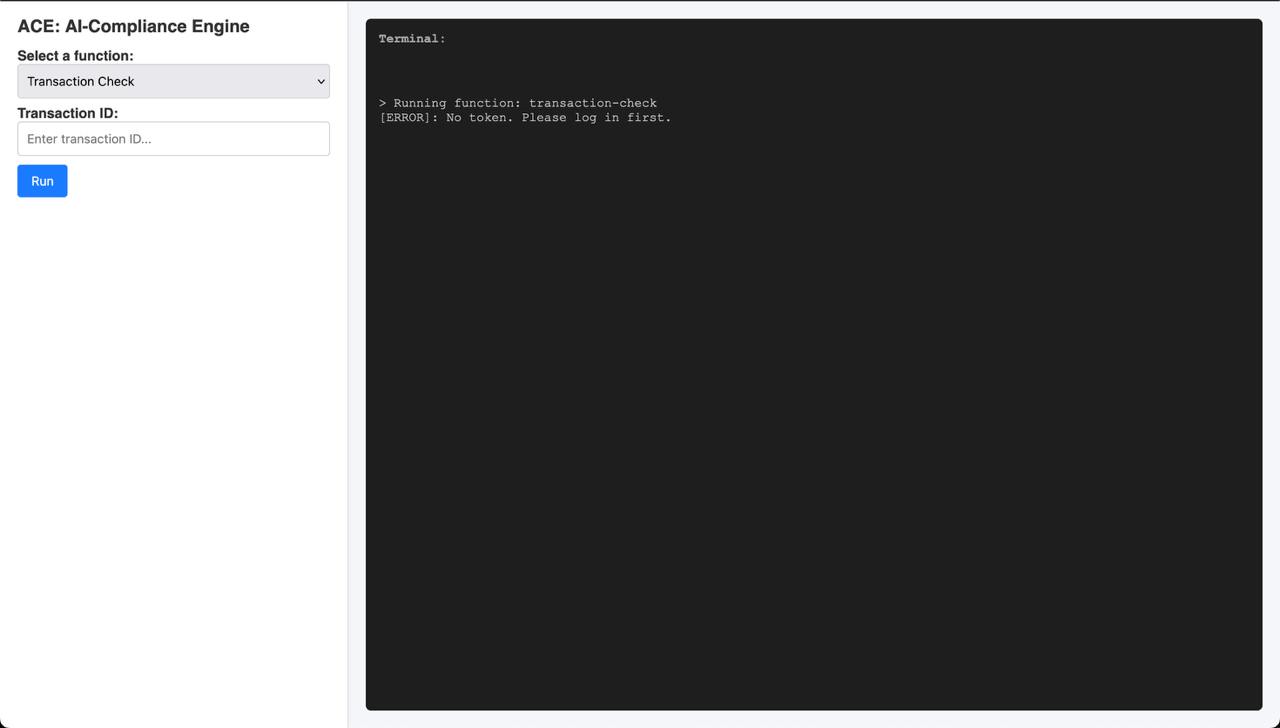
Transaction Checker
-
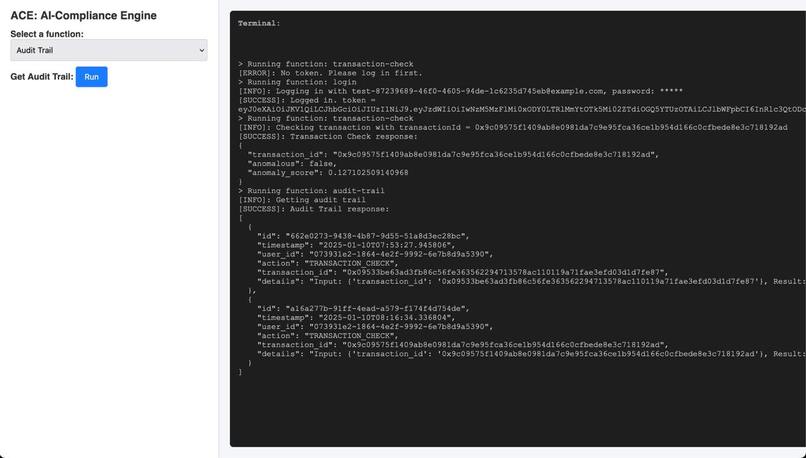
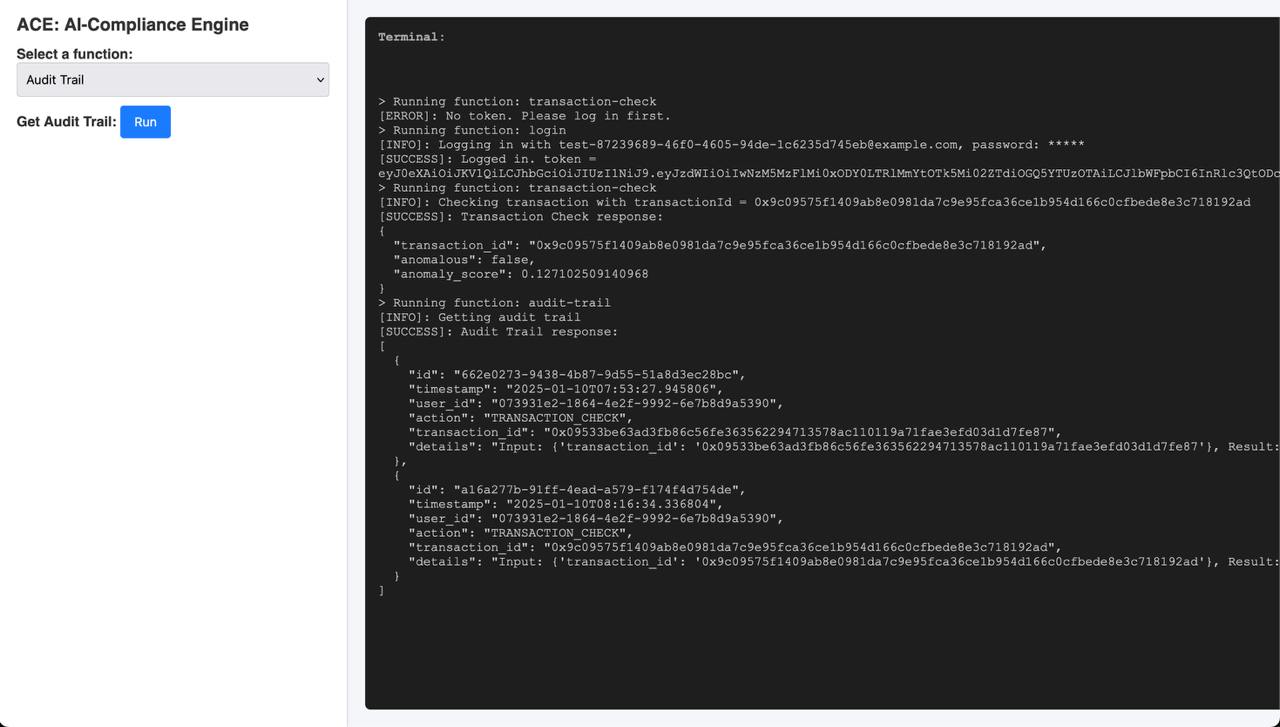
Secure Audit Trail Generator
Inspiration
The rise of blockchain technology in the financial sector has transformed how transactions are recorded and verified. However, it has also introduced new challenges in fraud detection and regulatory compliance. Traditional systems struggle to adapt to the decentralised nature of blockchain, creating a need for innovative solutions that can seamlessly integrate with blockchain data and provide real-time fraud detection. ACE (AI Compliance Engine) was born out of the necessity to address these issues, providing financial institutions with the tools to enhance security, automate compliance, and detect fraudulent activities in blockchain transactions.
What it does
ACE is a cutting-edge REST API that empowers financial institutions to navigate fraud detection and regulatory compliance with ease. It integrates directly with blockchain systems to analyse transaction data, predict anomalies, and assign anomaly scores based on the latest blockchain information. Additionally, ACE automatically logs each transaction check, providing a transparent and auditable trail for compliance purposes.
Key Features:
- Anomaly Detection: Real-time analysis of blockchain transactions to detect fraudulent or suspicious activities.
- Audit Trail: Automatic log generation for transparency and future reference during audits.
- Authentication: JWT tokens to access protected endpoints, providing secure and stateless access control.
How we built it
- Trained and Tested Machine Learning Models: We trained and tested various machine learning models to effectively detect anomalous transactions using real-time blockchain data. This allowed us to predict and flag suspicious activity in a scalable manner.
- Database Backend with Alembic and SQLAlchemy: We used Alembic and SQLAlchemy to establish a robust PostgreSQL backend for efficient schema development, seamless database migrations, and effective handling of complex relational data.
- Secure Access with JWT Tokens: To ensure secure and authenticated access to the API, we implemented JWT (JSON Web Tokens) for user authentication and management, enhancing the system's security.
- Integration with Ethereum Blockchain: We integrated the system with the Ethereum blockchain using Ether API to fetch the latest transactions as well as historical transaction data, enabling real-time analysis.
- Developed Key Features: We focused on building essential features such as fraud detection, real-time transaction analysis, and secure user management to enhance the overall effectiveness of ACE.
- Set Up API Endpoints: Designed and set up various RESTful API endpoints to provide users with easy access to ACE’s functionalities, ensuring smooth interaction with the system.
- Unit and Integration Testing: We conducted thorough unit and integration testing to ensure that all components of ACE work seamlessly together and that edge cases were addressed.
- Deployed Front-End for User Experience: We deployed the front-end interface to provide a user-friendly UI, allowing users to interact with ACE easily and efficiently.
Challenges we ran into
- Data Privacy and Security: Handling sensitive financial data while ensuring compliance with privacy regulations such as GDPR and PCI DSS was a key concern. We implemented encryption and robust authentication mechanisms to mitigate security risks.
- Real-Time Blockchain Data Processing: Fetching and processing blockchain data in real-time posed significant challenges in terms of speed and data consistency, especially when working with decentralised and heterogeneous blockchain networks.
- Machine Learning Model Accuracy: Fine-tuning the anomaly detection model for optimal performance was a challenge. Balancing false positives and false negatives while working with real-world, noisy financial data required extensive experimentation and validation.
Accomplishments that we're proud of
- High Model Accuracy: Despite the challenges with anomaly detection, the model was refined to offer reliable and actionable predictions, increasing its usefulness in detecting anomalous activities.
- Transparent Audit Trail: We developed an automatic audit logging system that provides financial institutions with detailed and easily accessible logs for future audits.
- Setting up backend: We successfully implemented backend systems using Alembic and SQLAlchemy for schema development. This allowed for seamless database migrations, robust model definitions, and efficient handling of complex relational data.
What we learned
Throughout the development process, we learned the importance of flexibility and scalability when working with emerging technologies like blockchain. Key insights include:
- The need for efficient data processing pipelines to handle real-time data and large-scale transaction logs.
- How to balance machine learning model performance with the need for interpretability in financial applications.
- The critical role of security and regulatory compliance in fintech projects and how to design systems that can easily adapt to these requirements.
What's next for ACE
Expansion to Other Blockchains: While ACE currently integrates with Ethereum, we plan to extend support to other blockchain platforms like Bitcoin, Solana, and Binance Smart Chain.
Built With
- alembic
- css
- docker
- etherapi
- fastapi
- html
- javascript
- kaggle
- numpy
- pandas
- postgressql
- postman
- pyjwt
- python
- sqlalchemy
- supabase


Log in or sign up for Devpost to join the conversation.