-
-
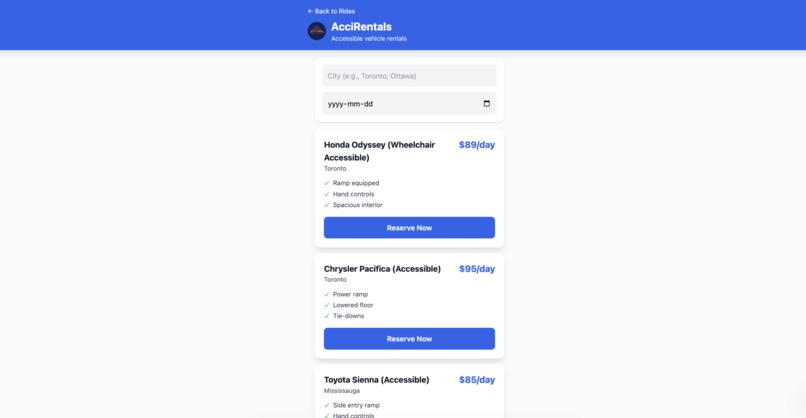
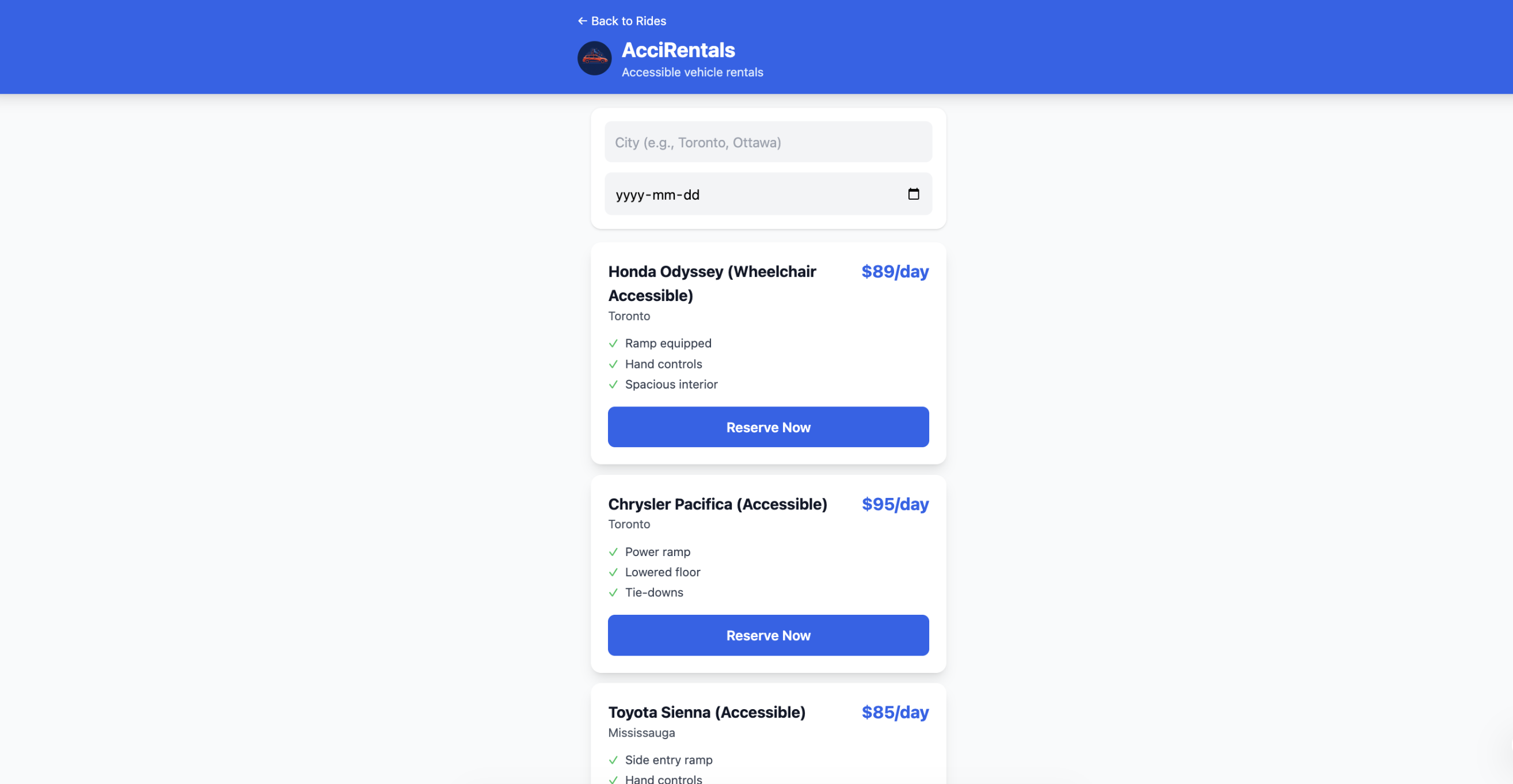
Car Rentals Page
-
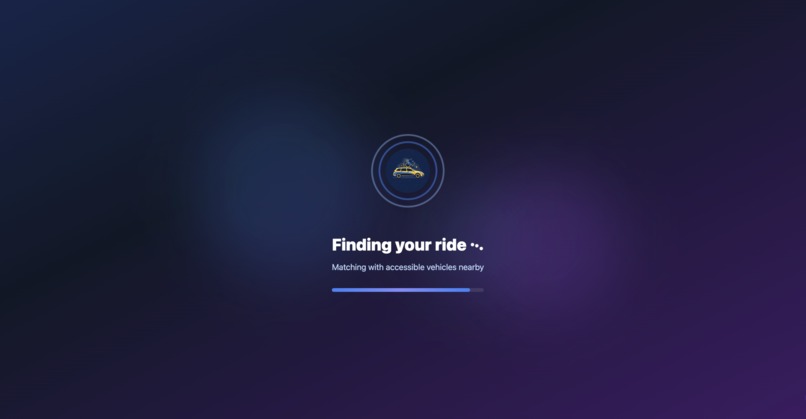
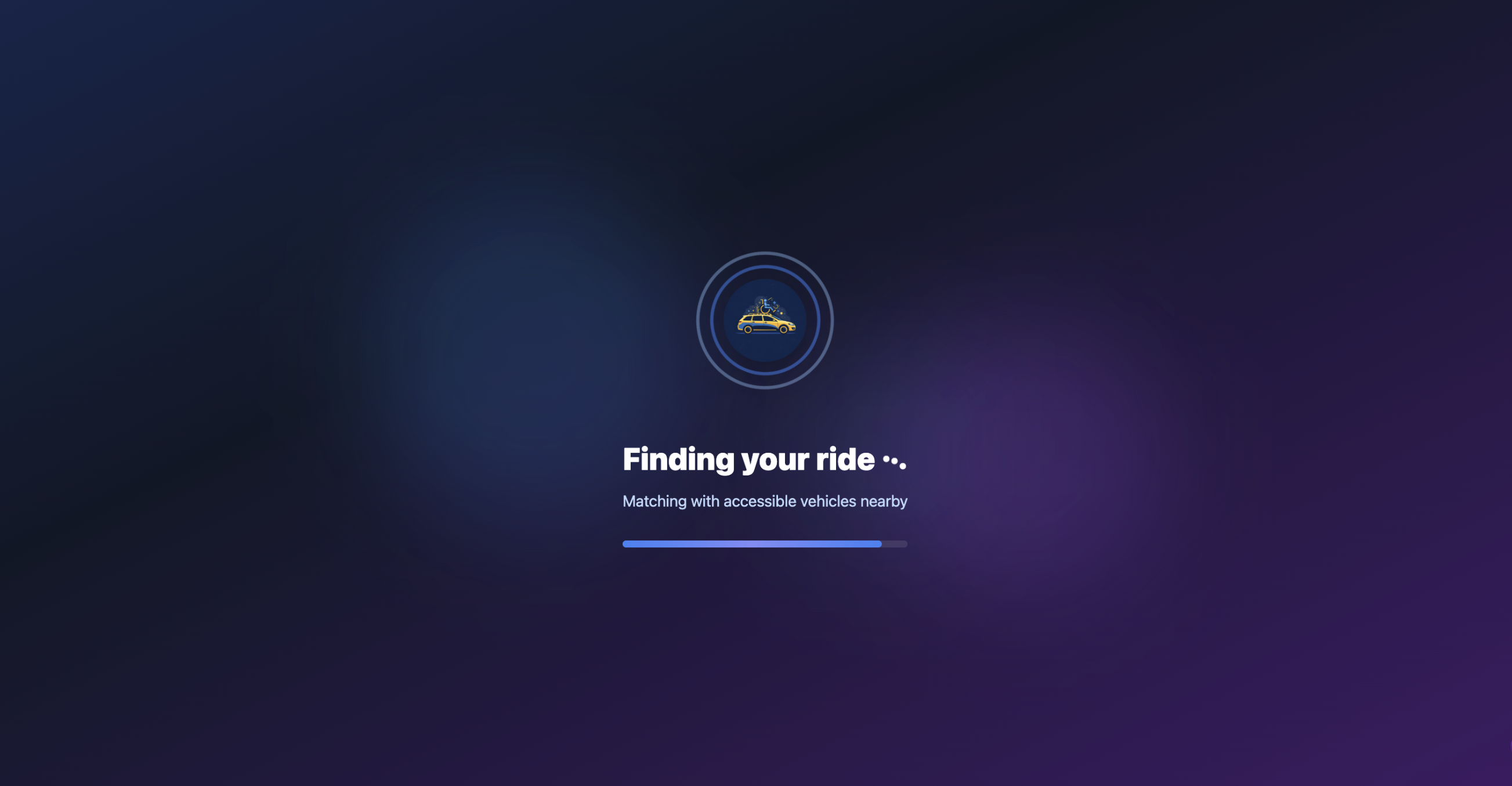
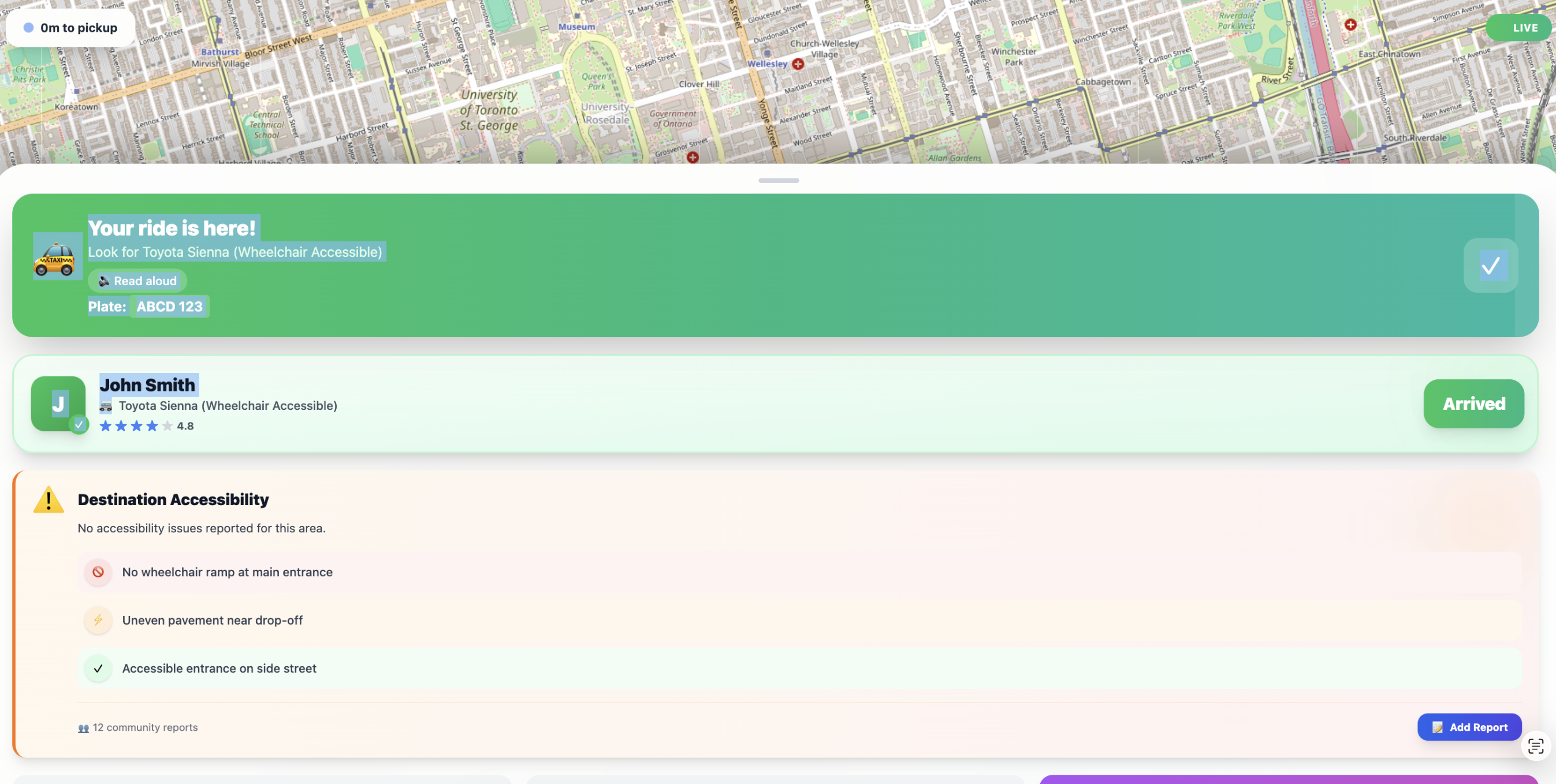
Matching the rider with the accessible vehicle driver
-
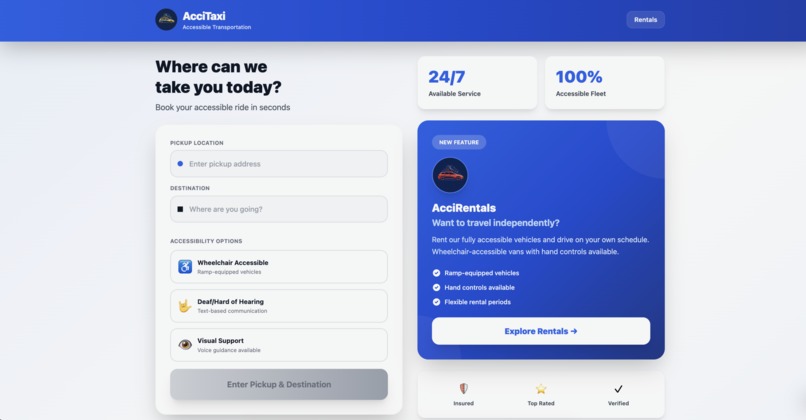
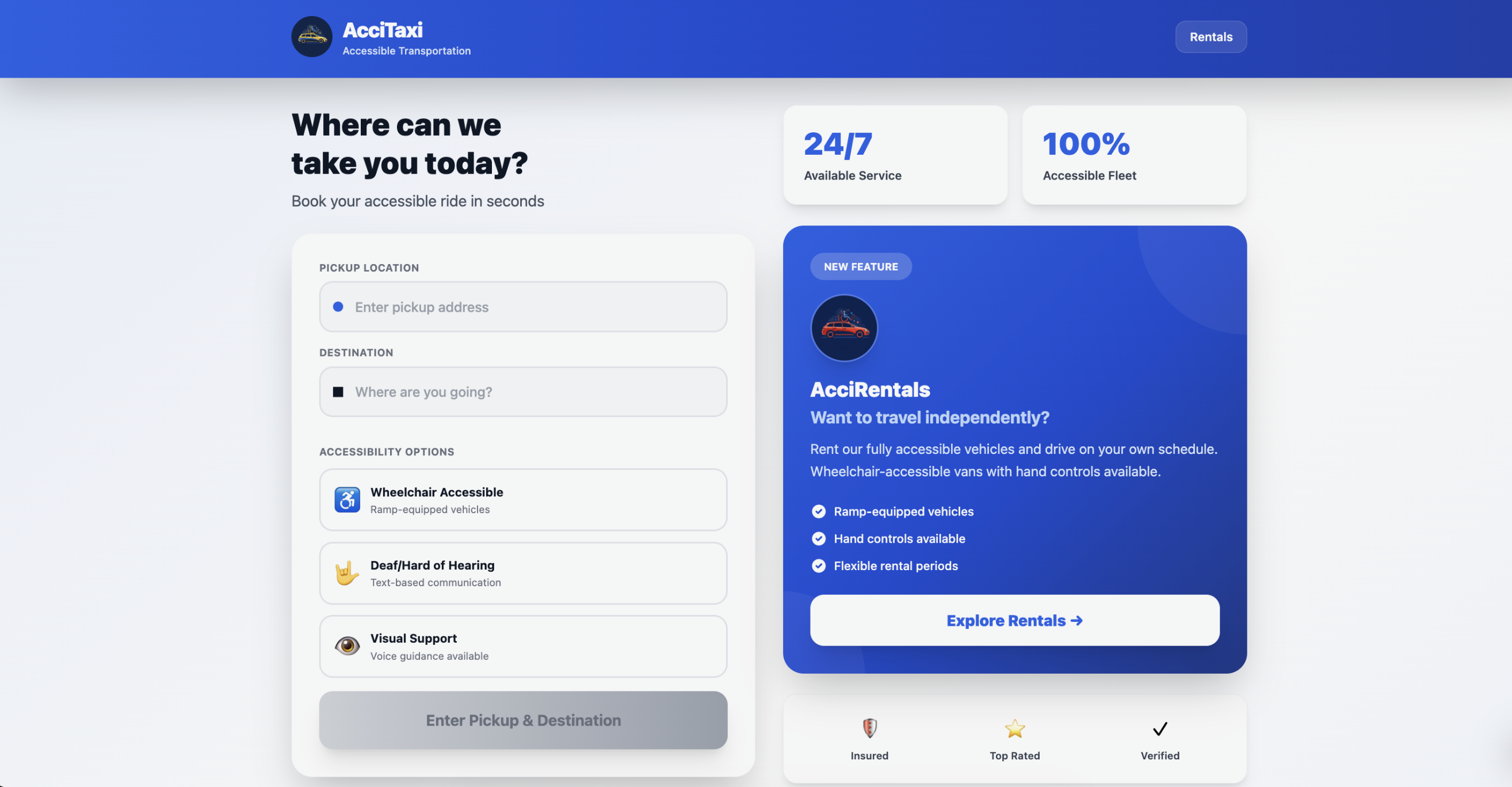
Application Landing Page
-
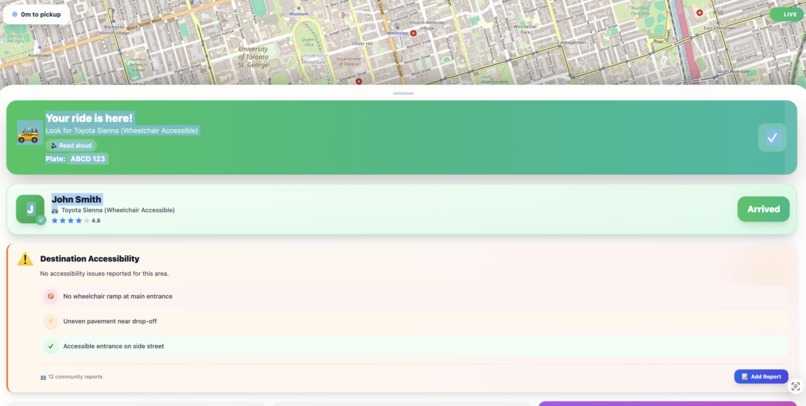
Waiting for the driver UI
-
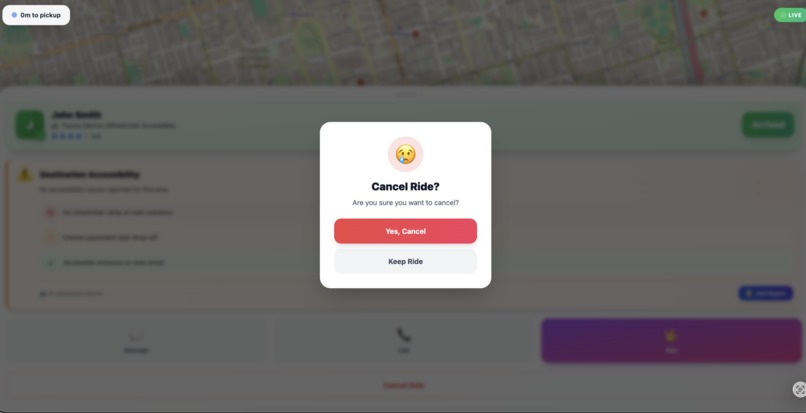
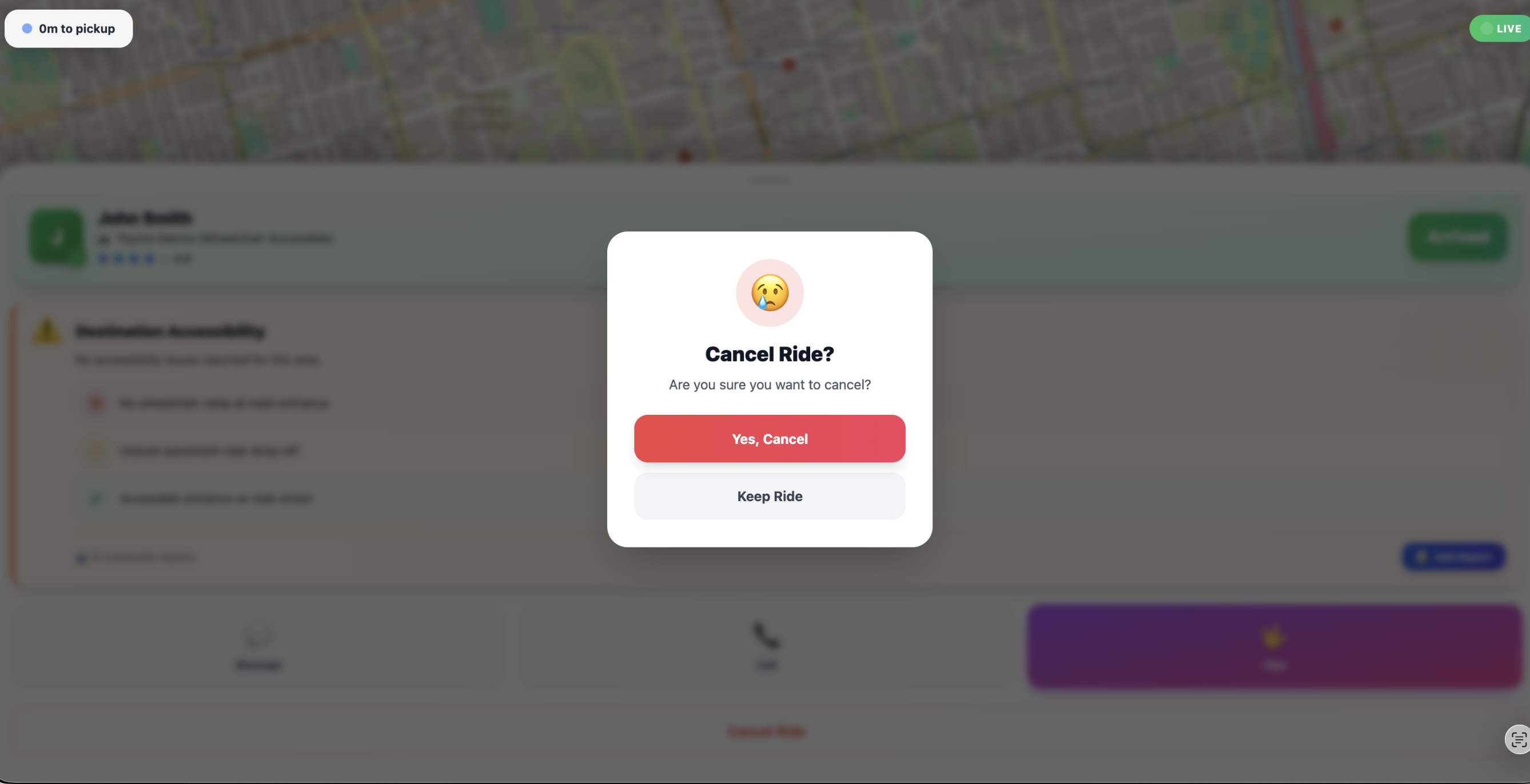
If user wants to Cancel their Ride
-
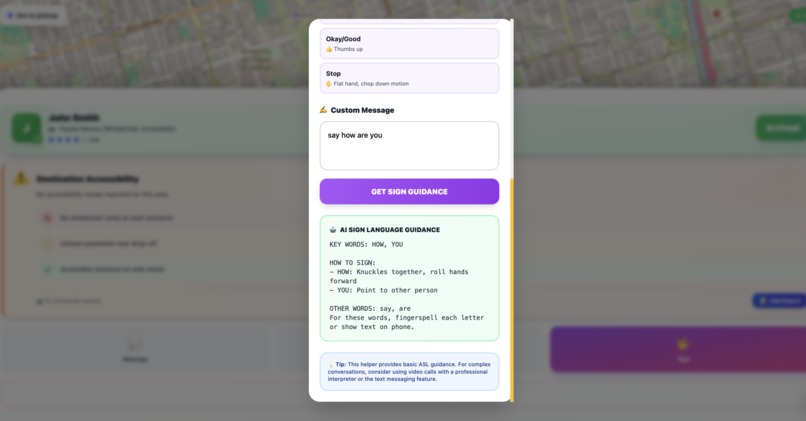
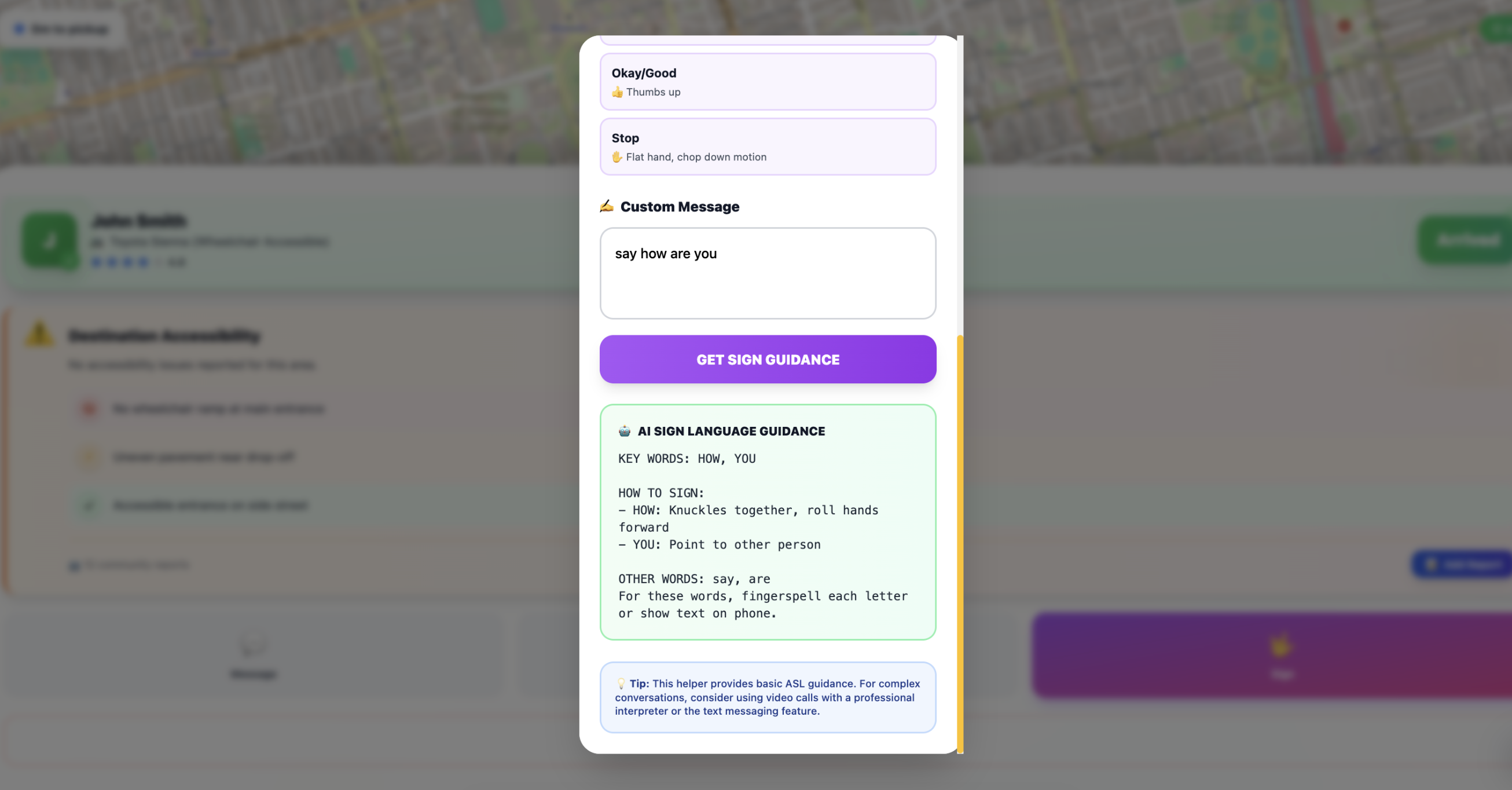
AI Sign Language Assistance for the driver and rider to interact
-
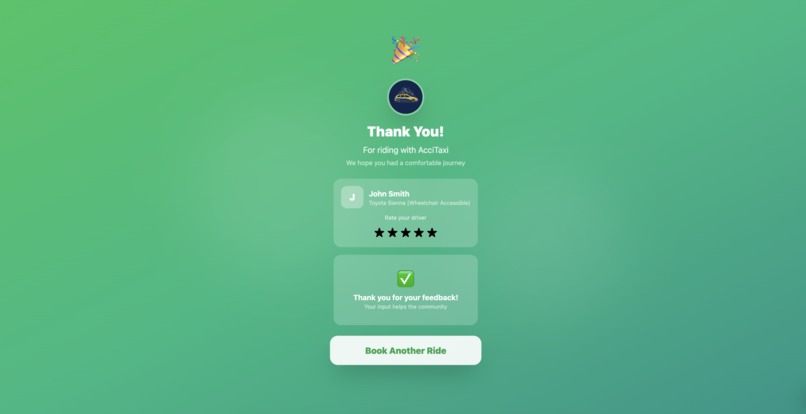
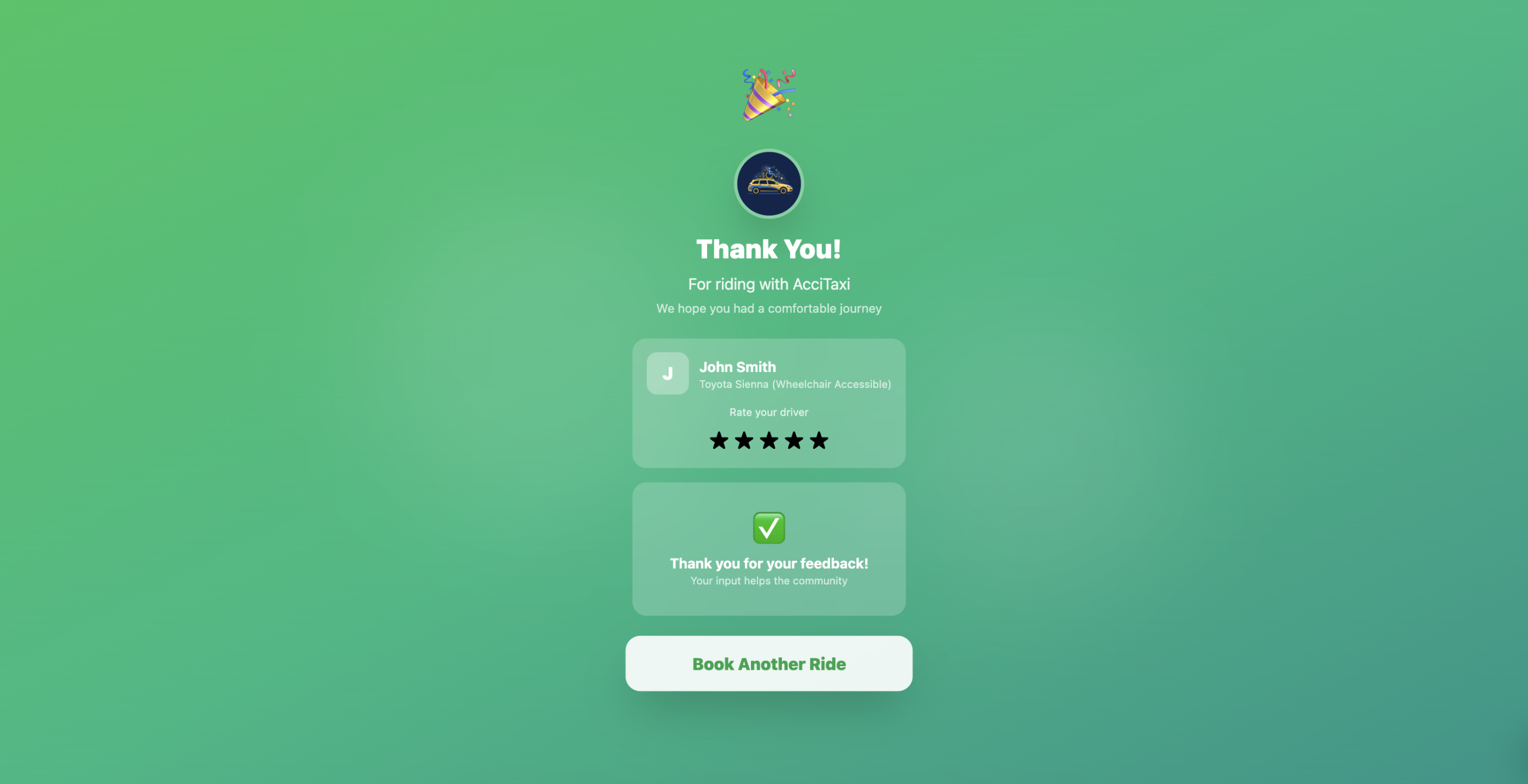
Thank you and book another ride
-
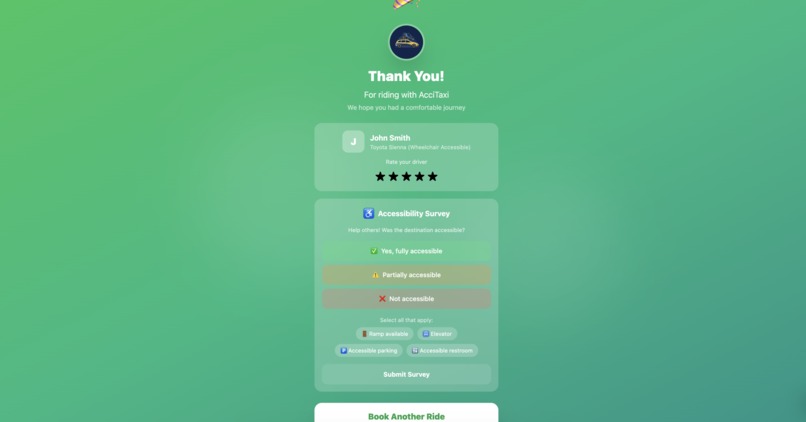
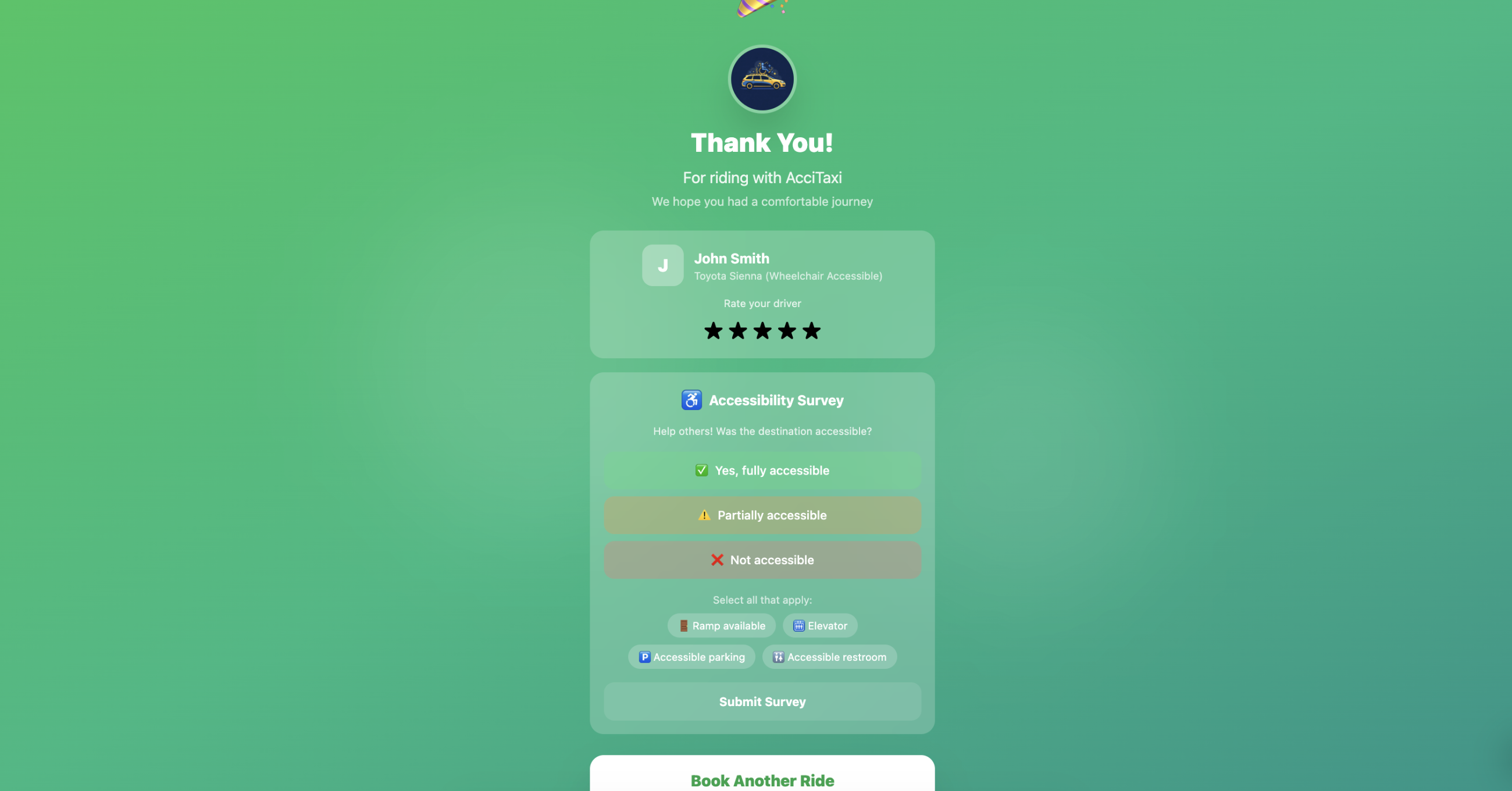
Thank You Page + Accessibility Survey
-
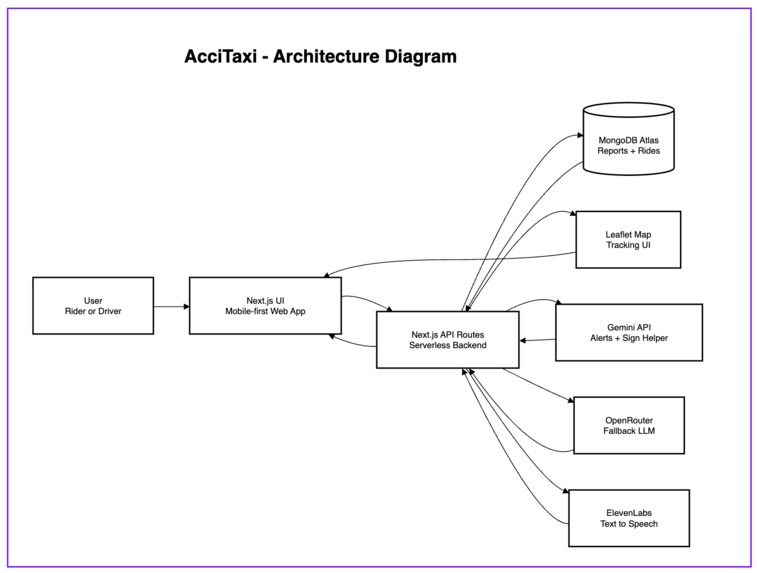
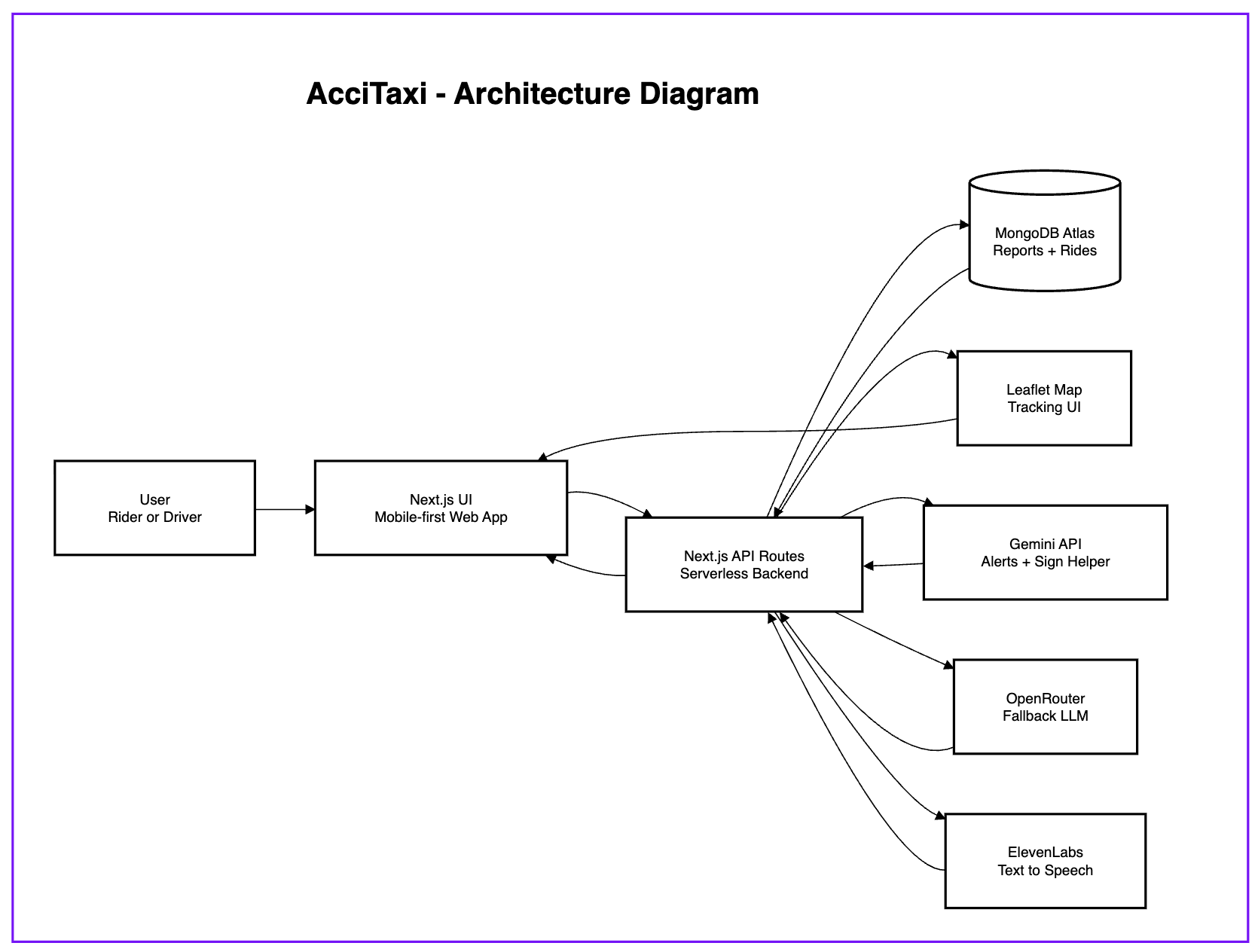
Architecture Diagram
Inspiration
🚕 AcciTaxi — Project Story
AcciTaxi was inspired by a simple but powerful question: why is mobility still a barrier to living fully?
As we explored accessibility challenges in Canada, we realized that transportation doesn’t just affect how people move - it affects whether they can work, travel, socialize, and participate in everyday life. For many people with disabilities, existing ride-hailing and transit systems are inaccessible, unreliable, and stressful to use. At the same time, people with disabilities face disproportionately high unemployment rates - according to Statistics Canada's data from 2025, around 740,000 Canadians were unemployed despite being fully capable of contributing to the workforce.
AcciTaxi was born to address both sides of this gap — accessible mobility and inclusive economic opportunity.
What it does
AcciTaxi is an accessibility-first ride-hailing and rental platform designed for the Canadian context. Unlike traditional mobility apps that optimize for speed, AcciTaxi optimizes for access.
Our platform enables:
- Riders to request accessible vehicles tailored to their needs (e.g., wheelchair access)
- Real-time alerts if a destination or area is not accessibility-friendly, using crowd-shared insights
- AI-powered communication between riders and drivers using text-to-speech and speech-to-text
- AcciRentals, a feature that allows users to rent accessible vehicles when traveling
- Inclusive employment by welcoming drivers with disabilities, providing training where needed, and also providing accessible vehicles to rent
Accessibility is not an add-on in AcciTaxi - it is our foundation.
How we built it
We built AcciTaxi as a web and mobile-based application, prioritizing accessibility, speed of development, and ease of demo.
Our system design includes:
- A front-end built in Tailwind focused on clear UI, accessible colours and fonts for people with visual impairments, and assistive-technology
- A backend build with React, that handles ride requests, accessibility preferences, and matching logic
- Google Gemini API for AI-powered features such as:
- Text ↔ sign communication
- Interpreting accessibility needs
- Explaining accessibility barriers in plain language
- Eleven-Labs API used for text ↔ speech communication
- MongoDB Atlas is used for storing crowd-sourced accessibility reports and ride-data
- Mapping is being done using Leaflet.js
- Crowd-sourced accessibility reporting to improve transparency and trust
For the hackathon, we used realistic mock data to demonstrate how the system would scale with real-world integrations.
Challenges we ran into
- Our first challenge was addressing accessibility responsibly by understanding real user needs, recognizing data limitations, avoiding over-promising AI accuracy, and prioritizing transparency with clear human override.
- One of the biggest challenges was balancing ambition with feasibility within a hackathon timeframe. Features like sign-to-text translation and real-time accessibility validation are complex, so we focused on building a clear MVP while transparently explaining future extensions.
Accomplishments that we're proud of
- Built an accessibility-first mobility platform that addresses both transportation access and inclusive employment in a single solution
- Successfully integrated AI to remove communication barriers through text-to-speech and speech-to-text
- Introduced AcciRentals, extending accessibility beyond daily rides to fulfill travel needs
- Grounded the solution in the Canadian context by addressing real accessibility gaps in cities, infrastructure, and employment
What we learned
Building AcciTaxi taught us that true accessibility requires system-level thinking. Transportation, communication, employment, and trust must all be considered together.
We also learned:
- Designing for accessibility improves usability for everyone
- Even small design decisions can significantly reduce stress and uncertainty for our users
- There are still significant opportunities to improve everyday accessibility and make daily life more independent for people with disabilities.
What's next for AcciTaxi
- Pilot AcciTaxi in select Canadian cities through partnerships with accessibility organizations, fleet providers, and local governments
- Enhance driver training and verification with accessibility certifications
- Integrate real-time accessibility data from transit agencies, municipalities, and venue partners to improve destination validation
Built With
- google-ai-studio
- google-cloud
- mongodb
- open-router
- react
- tailwind

Log in or sign up for Devpost to join the conversation.