-
-
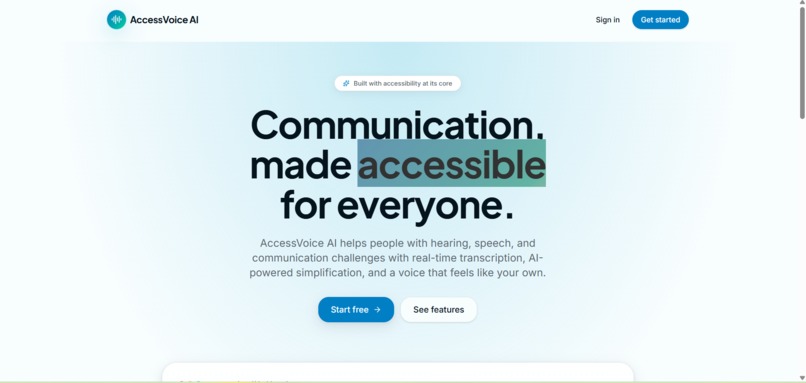
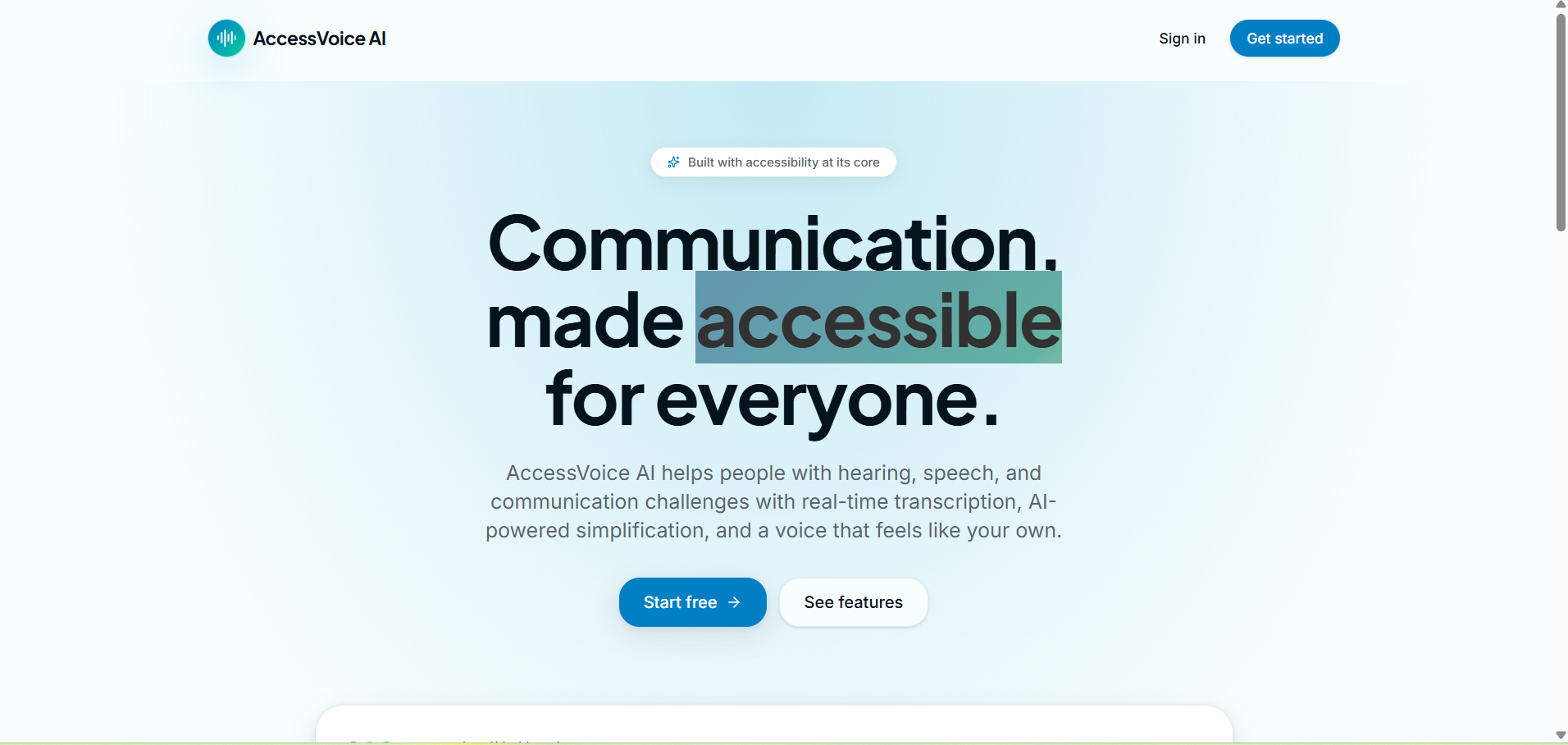
Landing Page
-
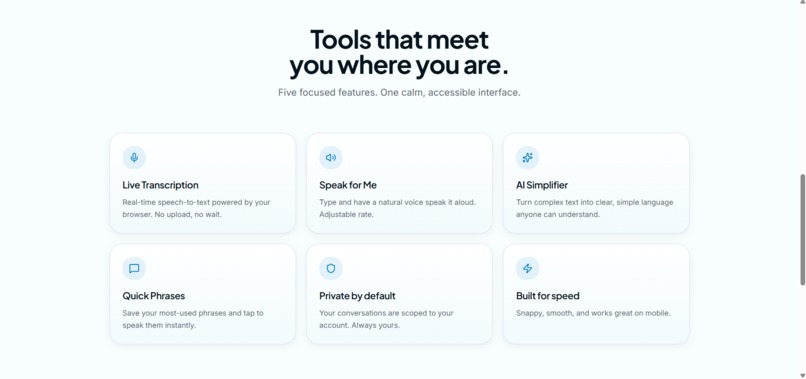
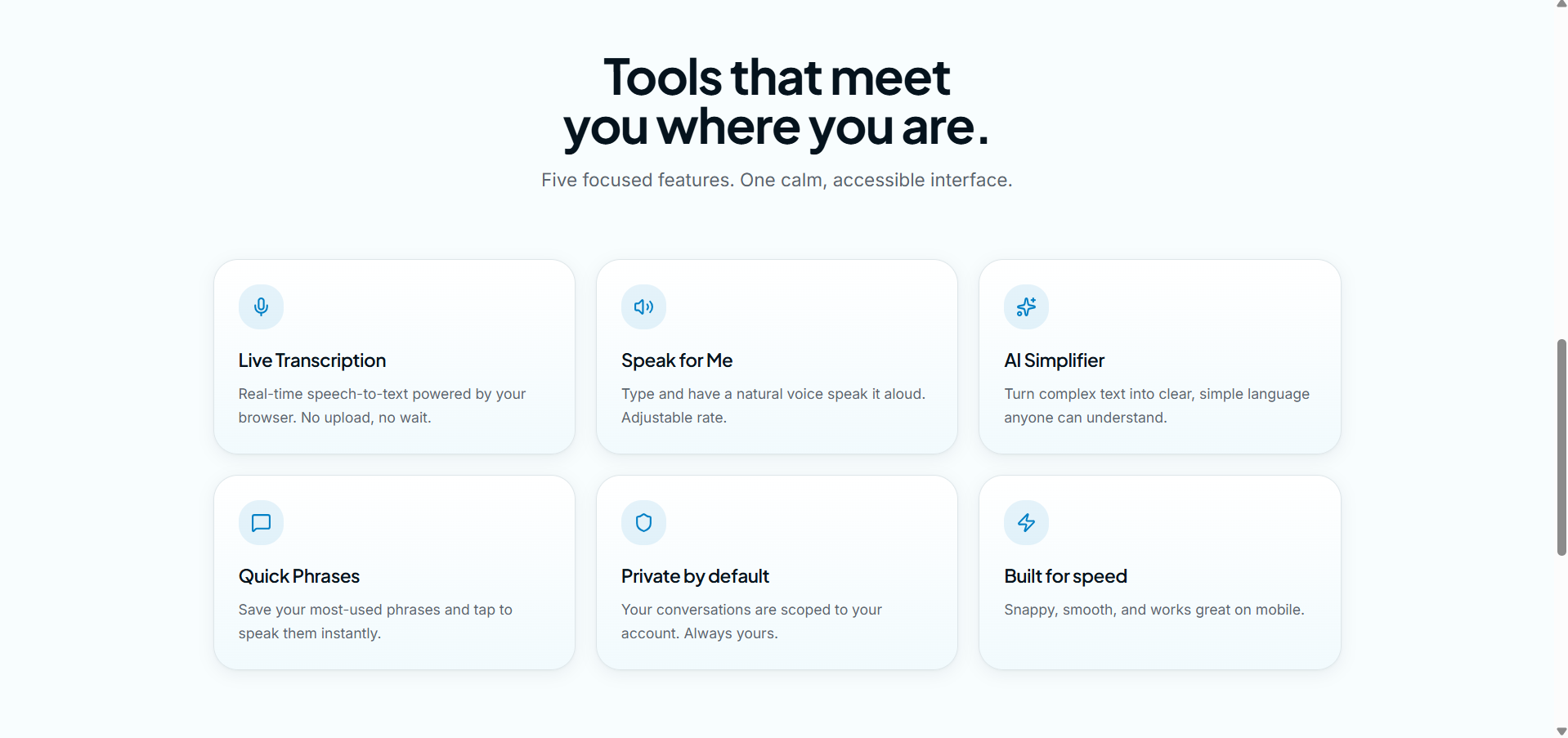
Tools that meet you where you are
-
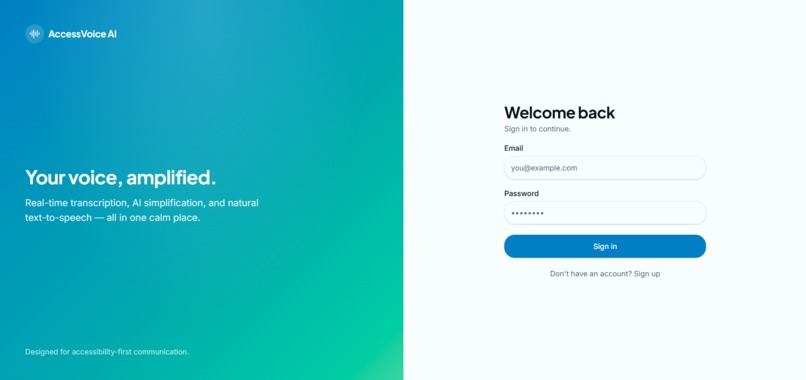
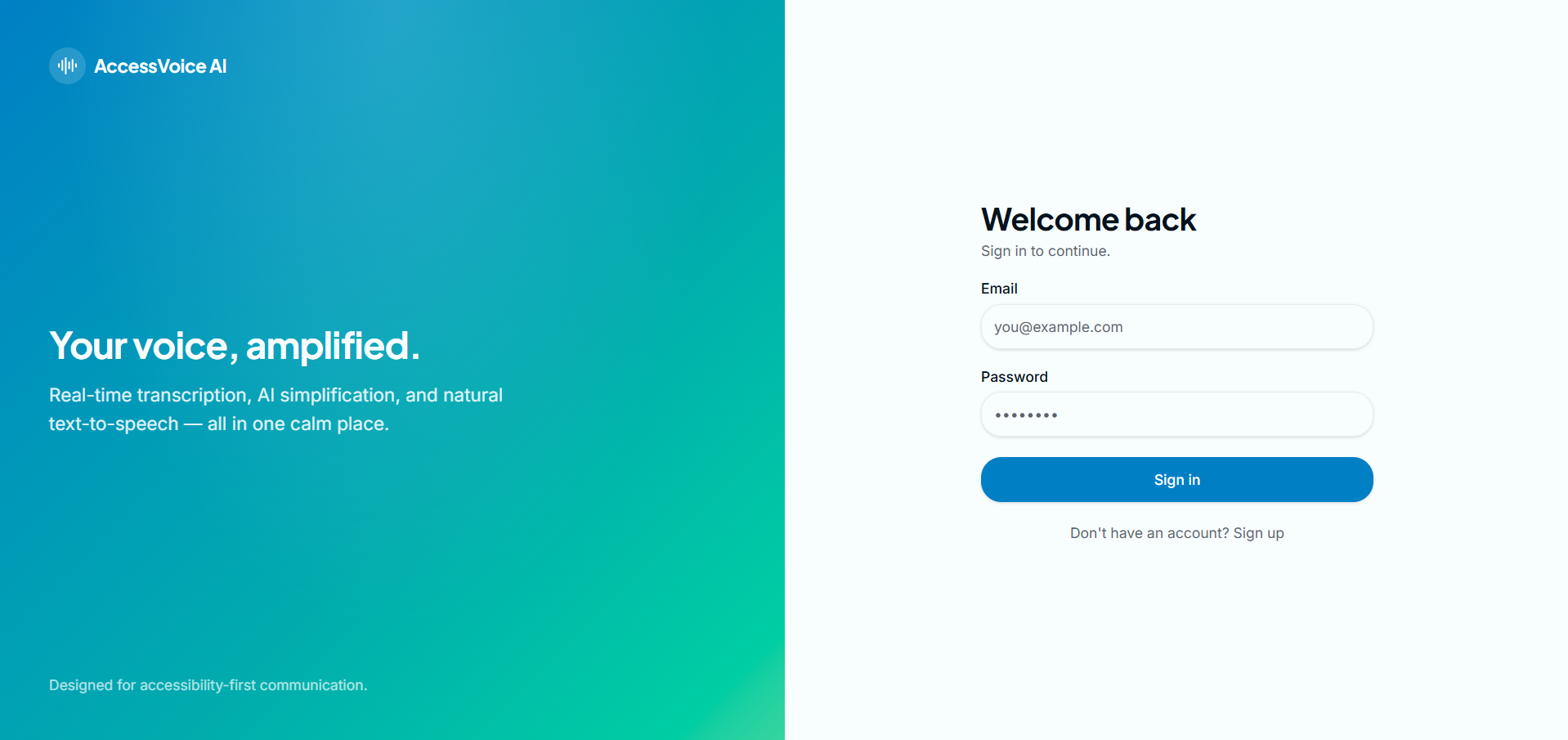
Registration Page
-
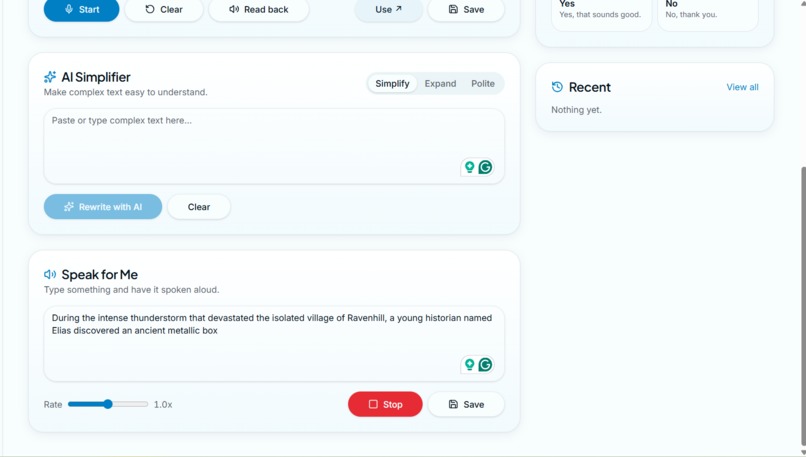
Speak for Me
-
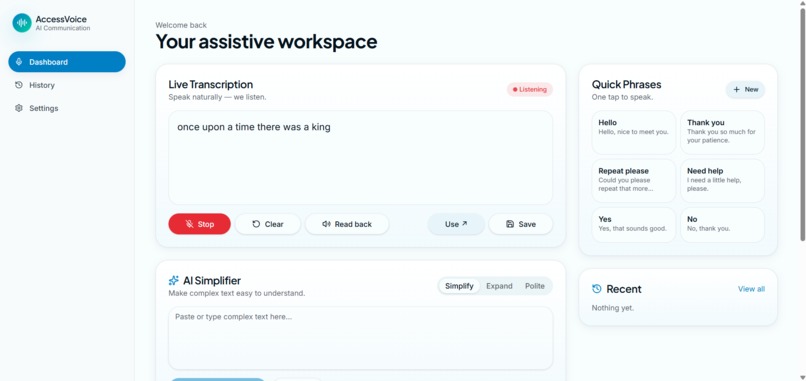
Live Transcription
Inspiration
Communication barriers affect millions of people around the world every day. People with hearing impairments, speech difficulties, communication anxiety, or cognitive processing challenges often struggle in classrooms, workplaces, hospitals, and public spaces. We wanted to create a practical AI-powered solution that makes conversations more accessible and inclusive. AccessVoice AI was inspired by the idea that technology should help people feel heard, understood, and confident while communicating.
What it does
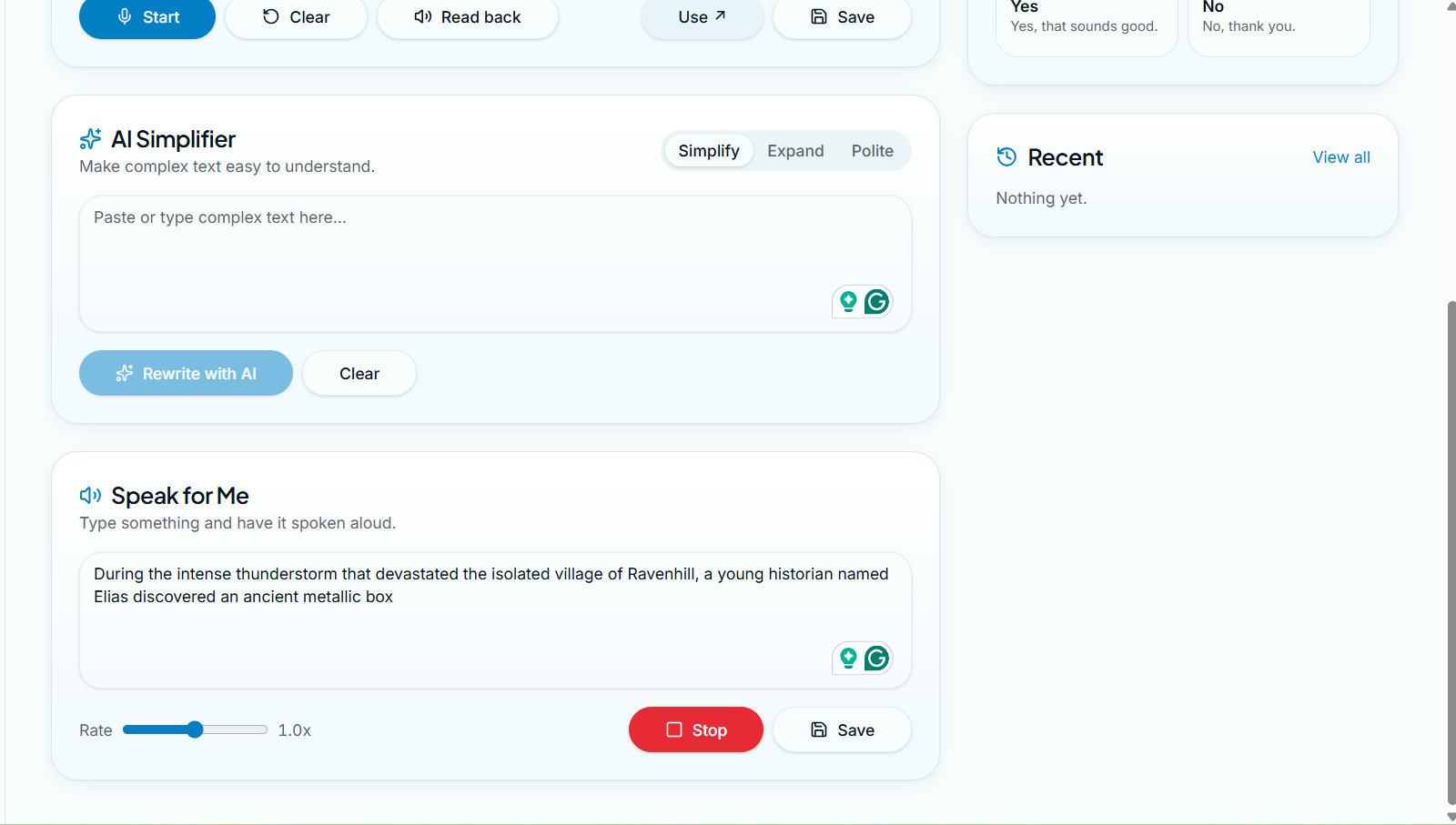
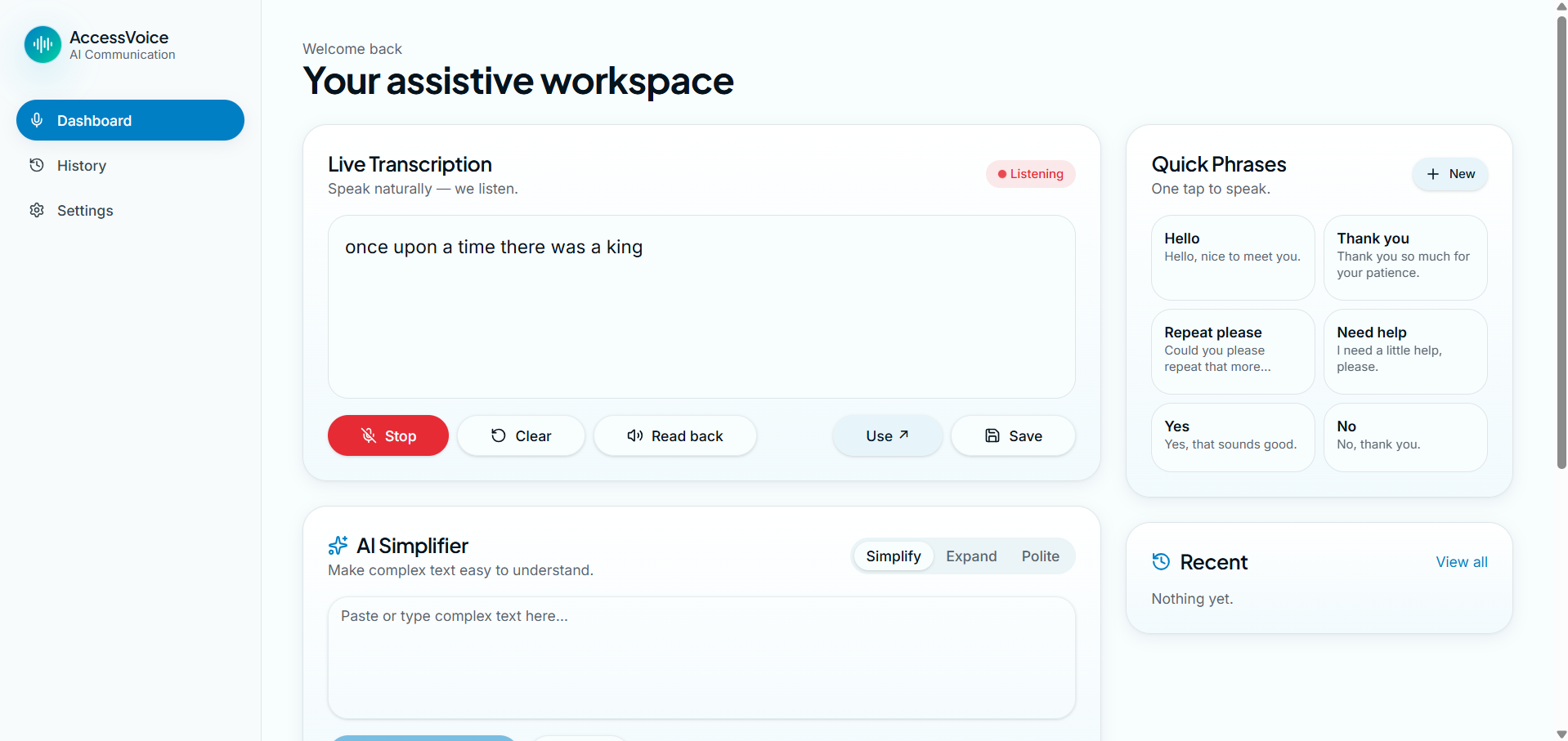
AccessVoice AI is an accessibility-focused communication platform that helps users communicate more effectively through real-time assistive tools. The platform converts speech into text, allows users to type messages and speak them aloud naturally, simplifies complex language using AI, stores conversation history, and provides quick response phrases for faster communication. The application is designed to work directly in the browser with a clean, modern, and accessible user interface.
How we built it
We built AccessVoice AI as a full-stack web application using React.js and Vite for the frontend and Node.js with Express.js for the backend. Supabase was used for authentication, database management, and secure data storage. We integrated browser Speech Recognition APIs for real-time transcription and the Speech Synthesis API for text-to-speech functionality. AI-powered message simplification was implemented using OpenAI APIs and Lovable AI integration. The UI was designed with accessibility in mind, including responsive layouts, large typography, dark/light mode support, and mobile-friendly interactions.
Challenges we ran into
One of the biggest challenges was integrating multiple assistive technologies into one seamless experience. Browser speech recognition behaved differently across browsers, which required additional handling for compatibility and reliability. We also faced challenges in designing AI prompts that simplify text without losing its meaning. Managing real-time transcription updates, user authentication, responsive UI behavior, and storing conversation history securely were additional technical hurdles during development.
Accomplishments that we're proud of
We are proud that we successfully built a functional AI-powered accessibility platform that combines speech-to-text, text-to-speech, AI simplification, quick phrases, and conversation history into one application. We created a clean and modern accessibility-first user experience that works across devices without requiring a mobile app installation. We are also proud of building a practical solution that can genuinely help people communicate more confidently in real-world situations.
What we learned
During this project, we learned how to integrate browser speech technologies with AI-powered workflows in a real-time application. We gained experience working with Supabase authentication and database management, designing accessibility-focused interfaces, handling responsive frontend architecture, and building AI-assisted communication tools. We also learned the importance of simplicity and usability when creating products intended for accessibility and inclusion.
What's next for AccessVoice AI
We plan to expand AccessVoice AI with multilingual support, real-time translation, customizable AI communication modes, emotion-aware responses, and voice personalization features. We also want to add offline support, exportable conversation summaries, and integrations with platforms like Zoom, Google Meet, and Microsoft Teams. Our long-term vision is to turn AccessVoice AI into a complete accessibility communication ecosystem that helps people communicate confidently anywhere.
Built With
- browser-speech-recognition-api
- css3
- express.js
- github
- html5
- javascript
- lovable-ai
- node.js
- openai-api
- postgresql
- react.js
- responsive-web-design
- rest-api
- speech-synthesis-api
- studio
- supabase
- tailwind-css
- typescript
- visual
- vite

Log in or sign up for Devpost to join the conversation.