Inspiration
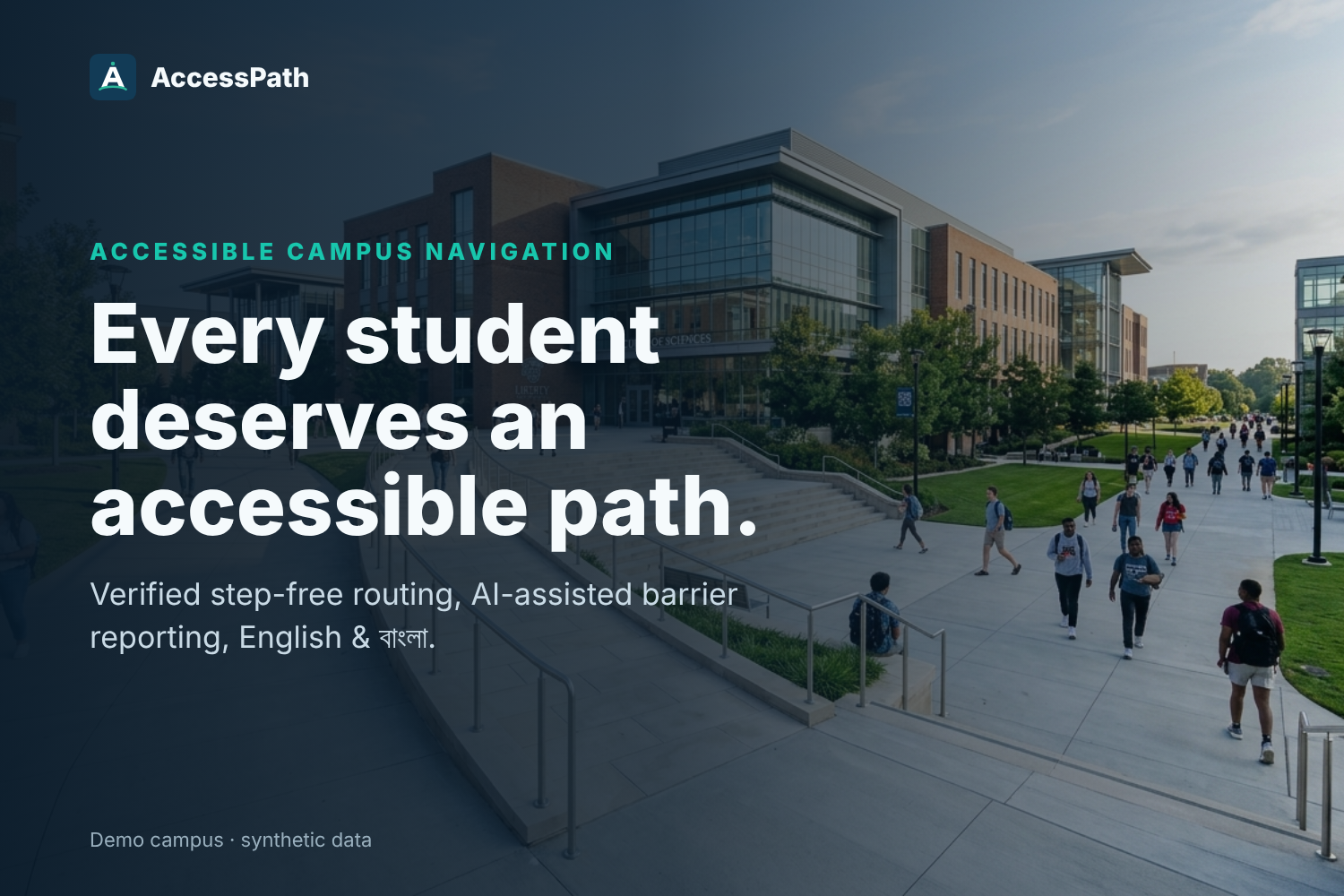
For many students with disabilities, navigating a school or university campus can be more challenging than it appears. A route that looks convenient on a map may include stairs, steep slopes, inaccessible entrances, or blocked pathways.
Most navigation experiences prioritize distance and speed, but accessibility deserves equal attention.
This inspired me to create AccessPath — a concept for a smarter, more inclusive campus navigation experience where accessibility is considered from the beginning, not treated as an afterthought.
My goal is to explore how technology can help students with mobility challenges navigate educational environments with greater confidence and independence.
What it does
AccessPath is an accessibility-focused campus navigation solution designed to help users discover more inclusive routes and report accessibility barriers.
Its core features include:
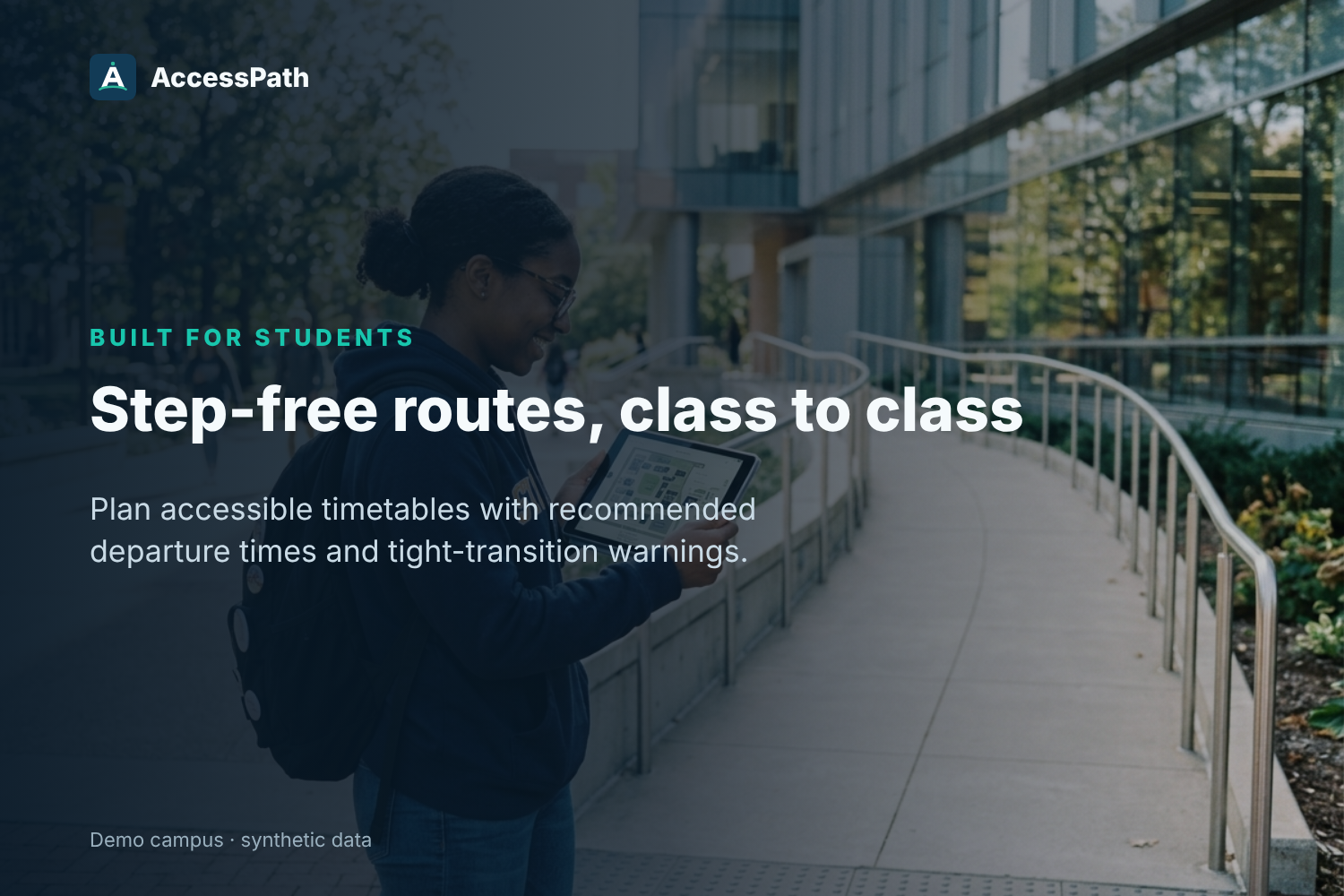
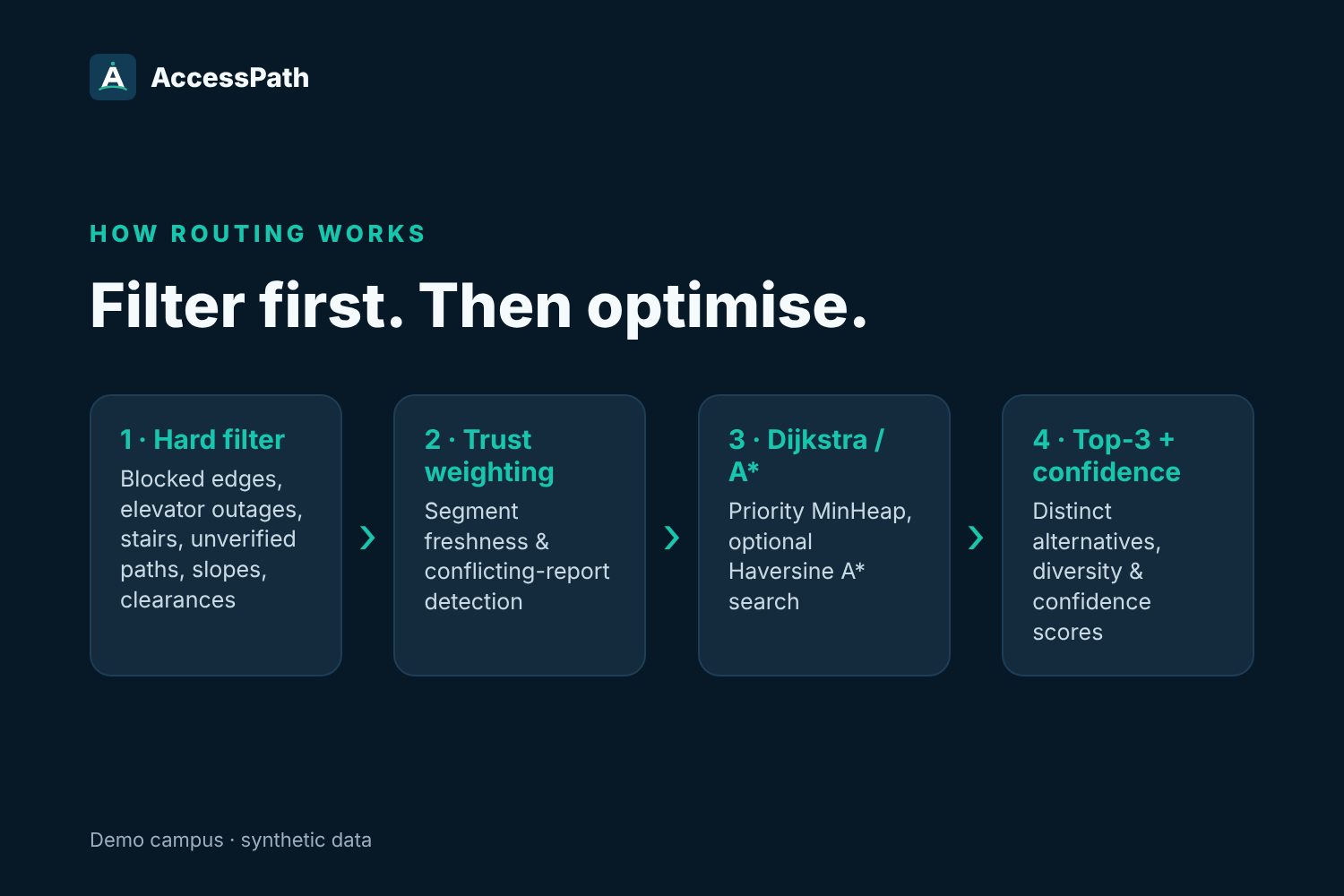
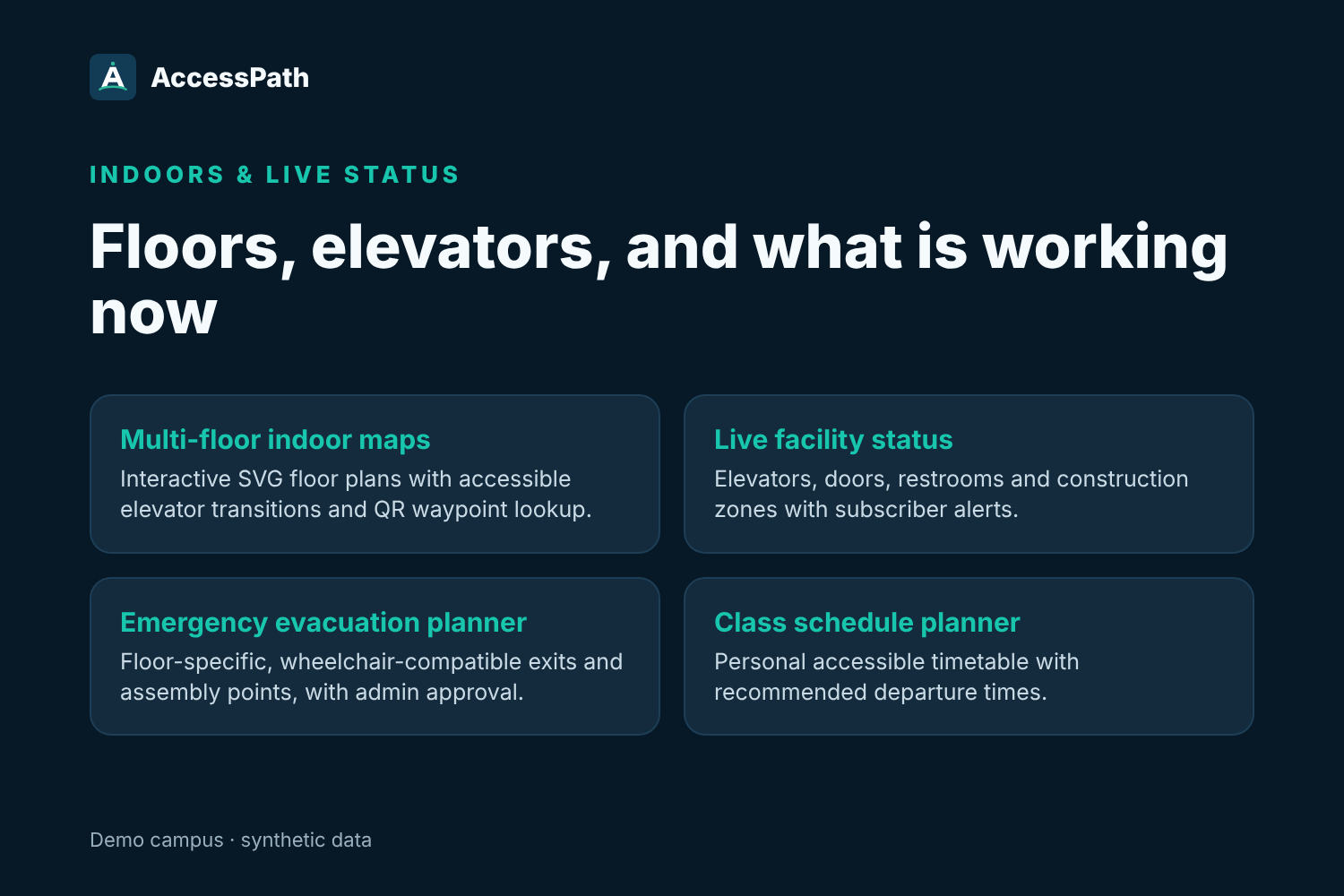
- Accessible Navigation: Helps users identify routes that consider wheelchair accessibility, stairs, slopes, and other physical barriers.
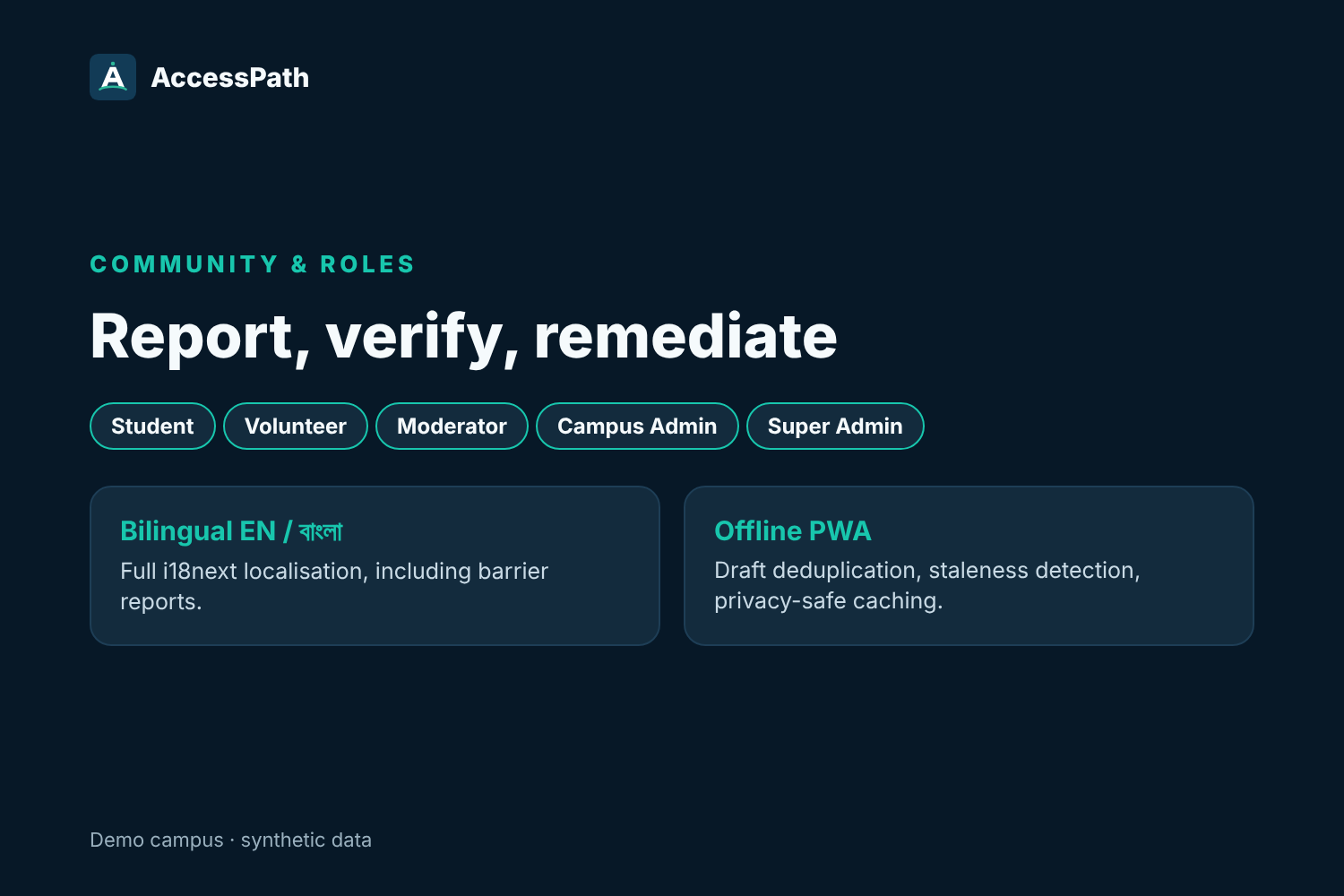
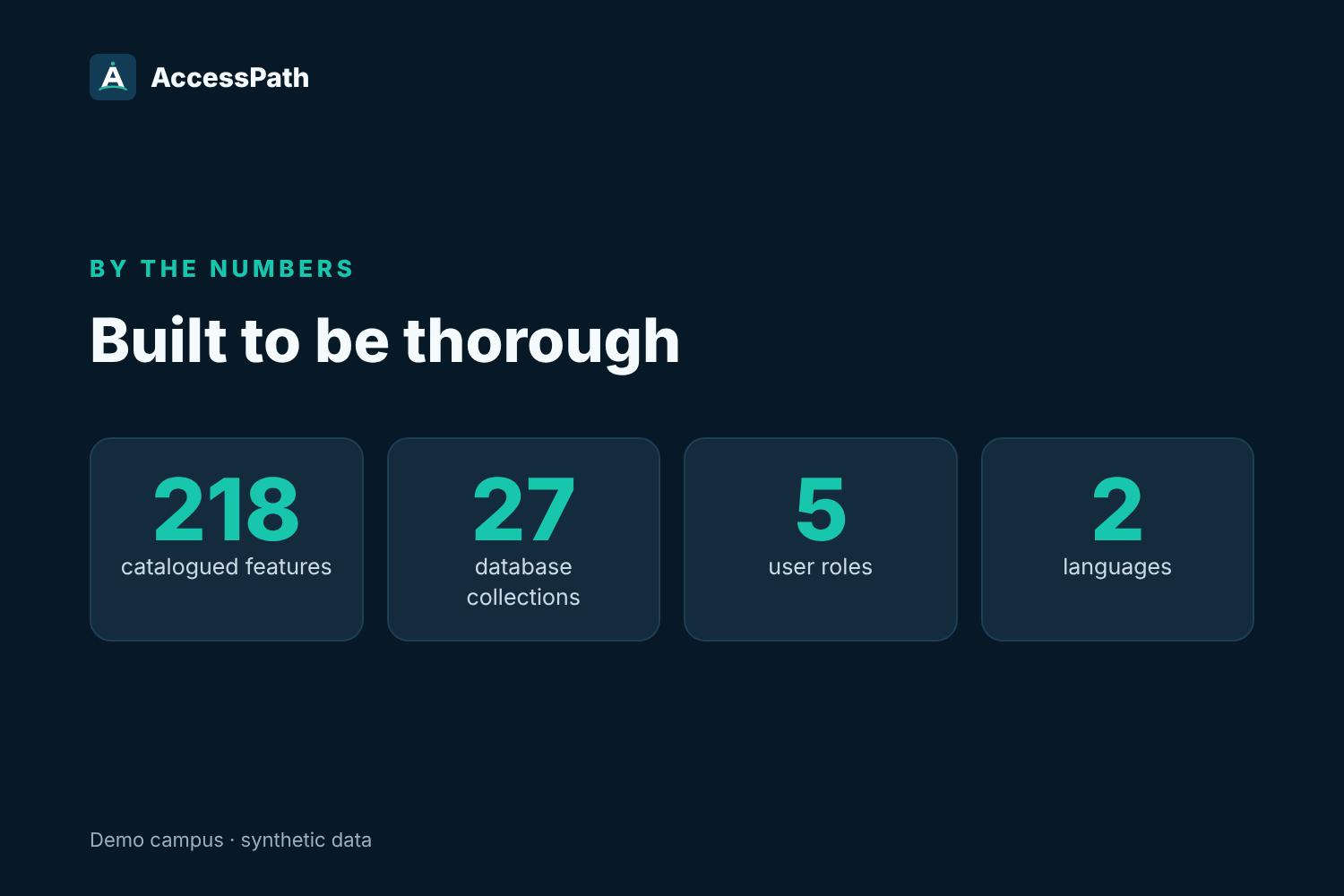
- Bilingual Barrier Reporting: Supports reporting accessibility problems in both English and Bangla.
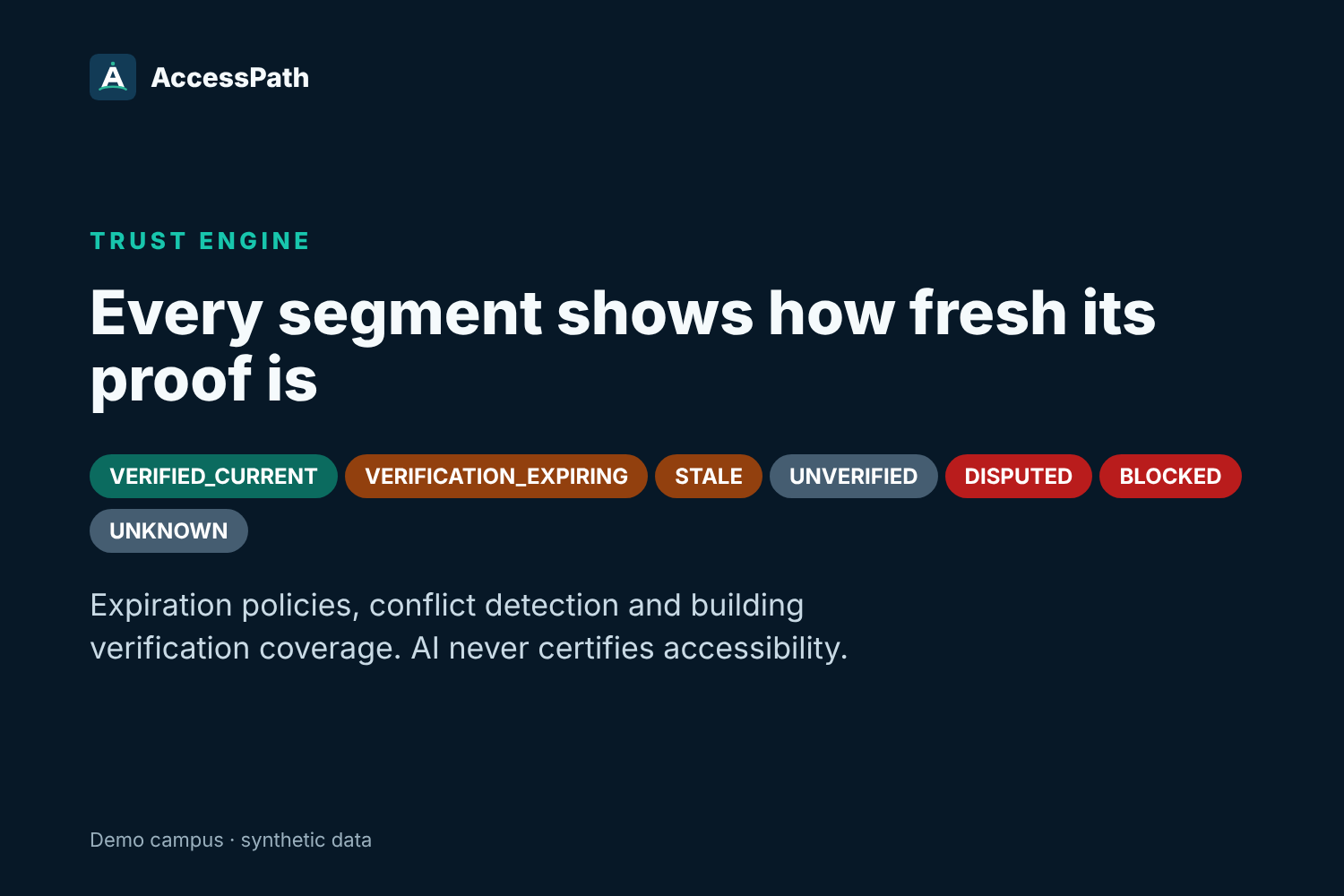
- Community Verification: Introduces a verification process so users can review and confirm reported accessibility information.
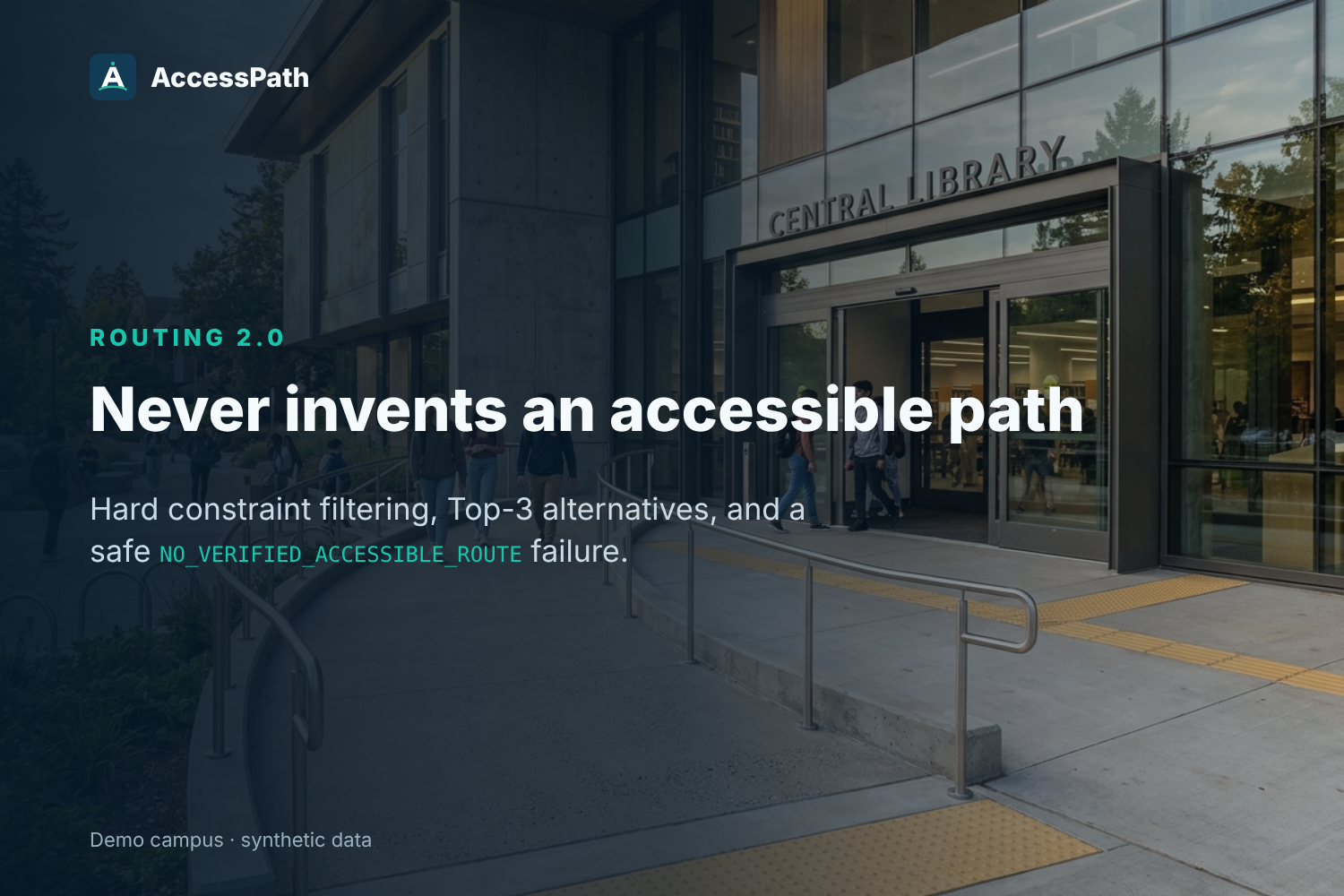
- Alternative Routes: Aims to recommend more accessible alternatives when a route contains reported obstacles.
- Accessibility Awareness: Makes campus accessibility information easier to understand and share.
The central idea is simple: everyone should have the opportunity to navigate their educational environment independently.
How we built it
We approached AccessPath by breaking the accessibility problem into three main components:
- Navigation: Organizing campus locations and accessibility information around a map-based experience.
- Reporting: Structuring accessibility reports so users can identify barriers, describe problems, and communicate them in their preferred language.
- Verification: Designing a community-driven process to improve the reliability of accessibility information before it is used for route recommendations.
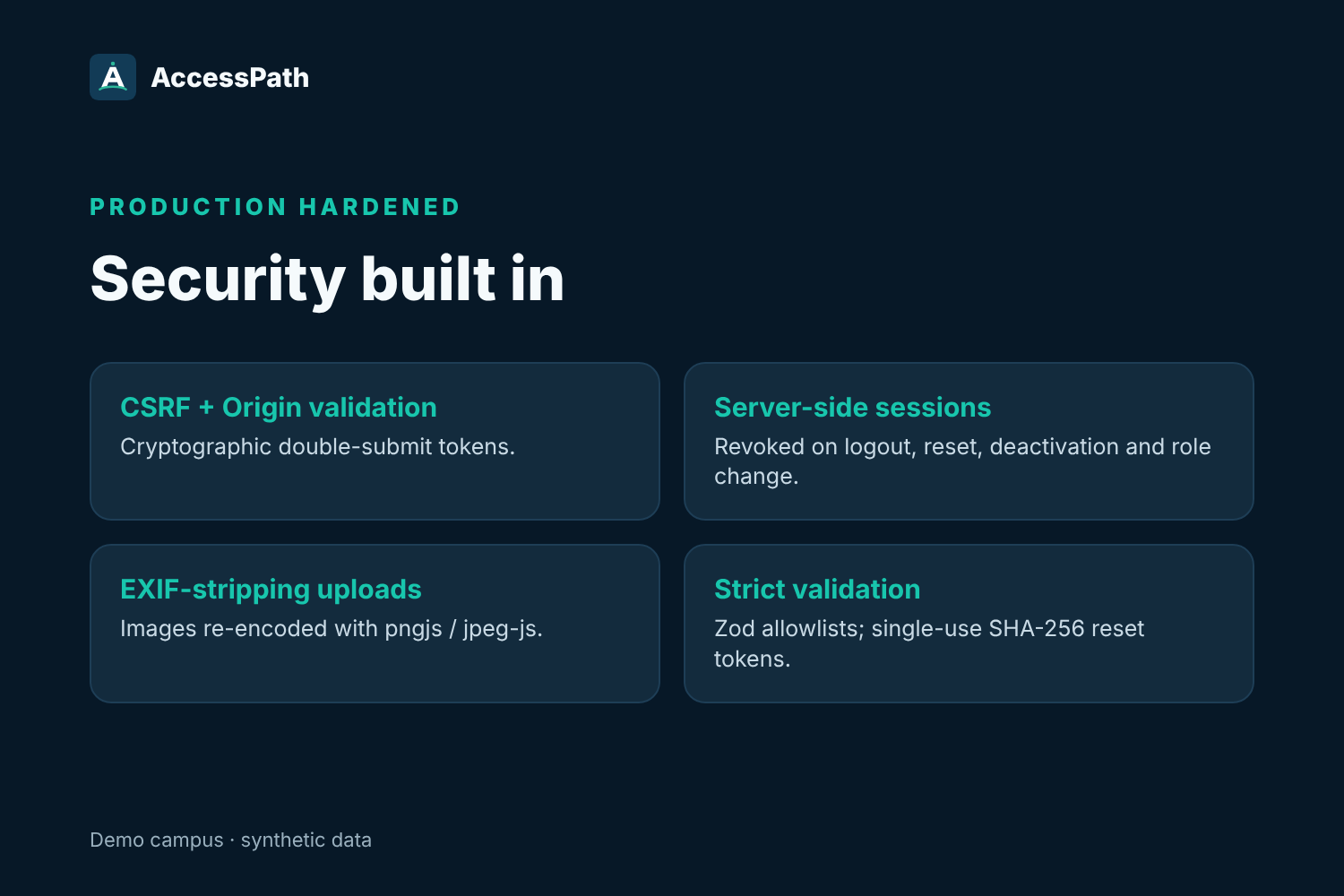
AI-assisted language processing is an intended part of the system, particularly for making Bangla and English reports easier to understand and categorize.
The solution is designed as a modular platform so that navigation, reporting, verification, and future AI capabilities can be improved independently.
Challenges we ran into
One of the biggest challenges was realizing that accessibility is not simply a matter of finding the shortest route.
A pathway may be geographically shorter but completely unsuitable for someone using a wheelchair.
Other important challenges include:
- Data reliability: Accessibility information can become outdated when elevators stop working or pathways become blocked.
- Verification: Unverified reports could result in misleading route recommendations.
- Language accessibility: Users should be able to report problems naturally in both Bangla and English.
- Different accessibility needs: A route suitable for one person may not be suitable for another.
These challenges helped shape our approach around community reporting, verification, and accessibility-aware route planning.
Accomplishments that we're proud of
We are proud to have developed a focused solution concept around a real-world accessibility problem.
Our key accomplishments include:
- Bringing campus navigation and accessibility reporting together in one solution.
- Designing a bilingual reporting experience for English- and Bangla-speaking users.
- Incorporating community verification into the accessibility information workflow.
- Prioritizing inclusive design rather than relying exclusively on conventional shortest-route navigation.
- Establishing a foundation for future AI-assisted accessibility services.
Most importantly, AccessPath represents an effort to make digital navigation more inclusive and meaningful.
What we learned
Working on AccessPath reinforced an important lesson: technology is only useful when it addresses the real needs of the people using it.
We learned that accessibility information must be reliable, understandable, and regularly updated. We also recognized that AI should support users and improve information processing rather than independently make potentially unsafe accessibility decisions.
Another important lesson was the value of inclusive design. Accessibility should be considered throughout the development process, not added as a final feature.
What's next for AccessPath
AccessPath has the potential to grow beyond a single campus and become a broader accessibility-support platform.
Our next priorities are:
- Develop and refine a functional, map-based campus navigation experience.
- Integrate reliable mapping and location data.
- Improve AI-assisted Bangla and English accessibility reporting.
- Introduce photo-based barrier reporting and community moderation.
- Test the platform with students and people with different accessibility needs.
- Collaborate with educational institutions to collect and maintain accurate accessibility information.
- Explore expansion to additional campuses and public spaces across Bangladesh and beyond.
Our vision is a world where accessibility is not an obstacle to education, mobility, or opportunity.
AccessPath — Navigate. Report. Access.
Built With
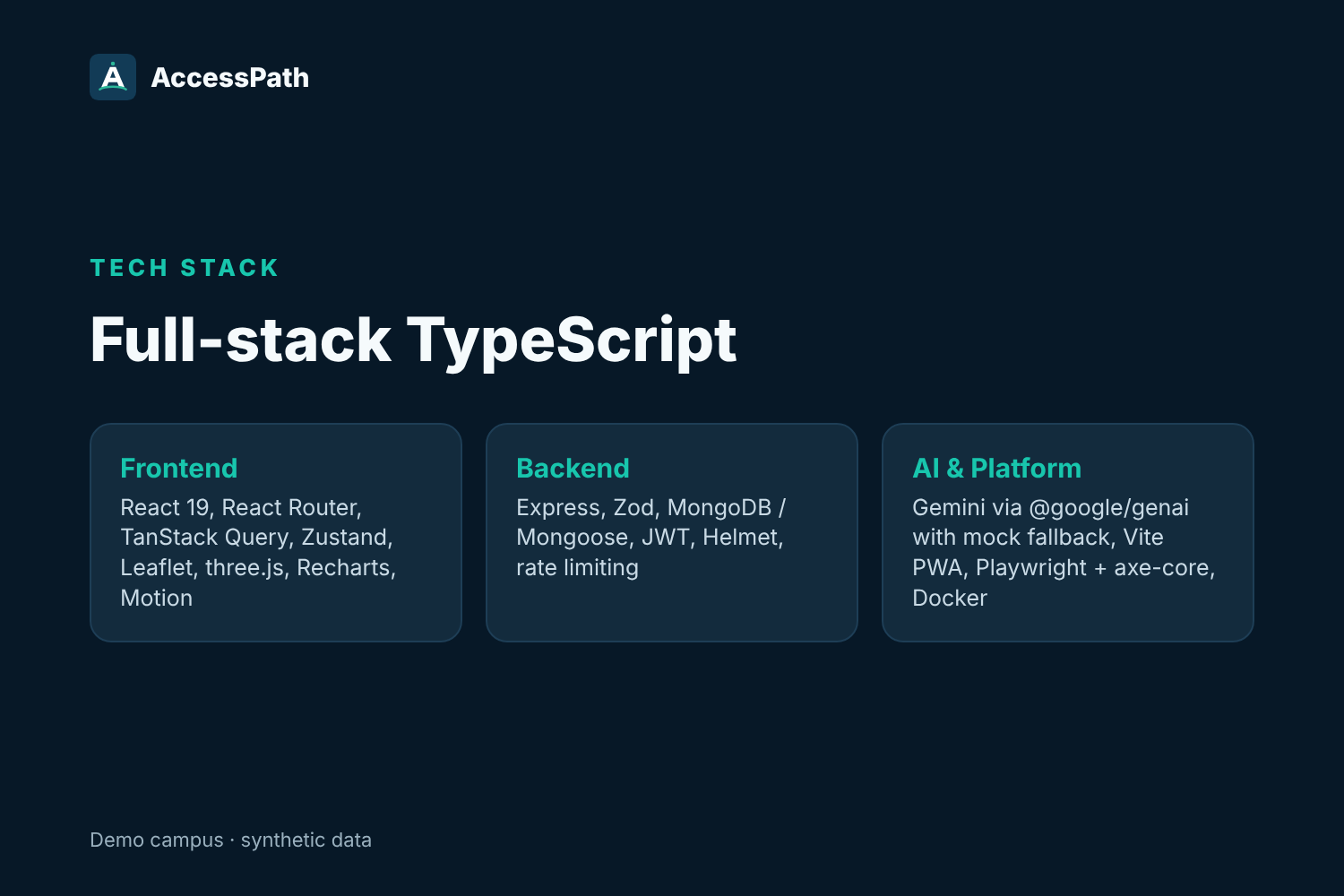
- atlas
- authentication
- css
- express.js
- fiber
- jwt
- leaflet.js
- mongodb
- mongoose
- node.js
- query
- react
- router
- tailwind
- tanstack
- three
- three.js
- typescript
