Inspiration
The internet is designed to provide information and services to everyone, yet accessing it is not equally easy for everyone. People with visual impairments, cognitive disabilities, limited digital literacy, or difficulty understanding complex interfaces often face barriers while navigating websites, filling out forms, and interpreting documents.
We wanted to address this gap by building more than another AI chatbot. We envisioned an intelligent accessibility companion that could understand digital content, guide users through complex tasks, and help them interact with the web more independently. This idea led to AccessMate — Beyond Accessibility, Into Possibility.
What AccessMate Does
AccessMate is an AI-powered accessibility assistant with two core capabilities:
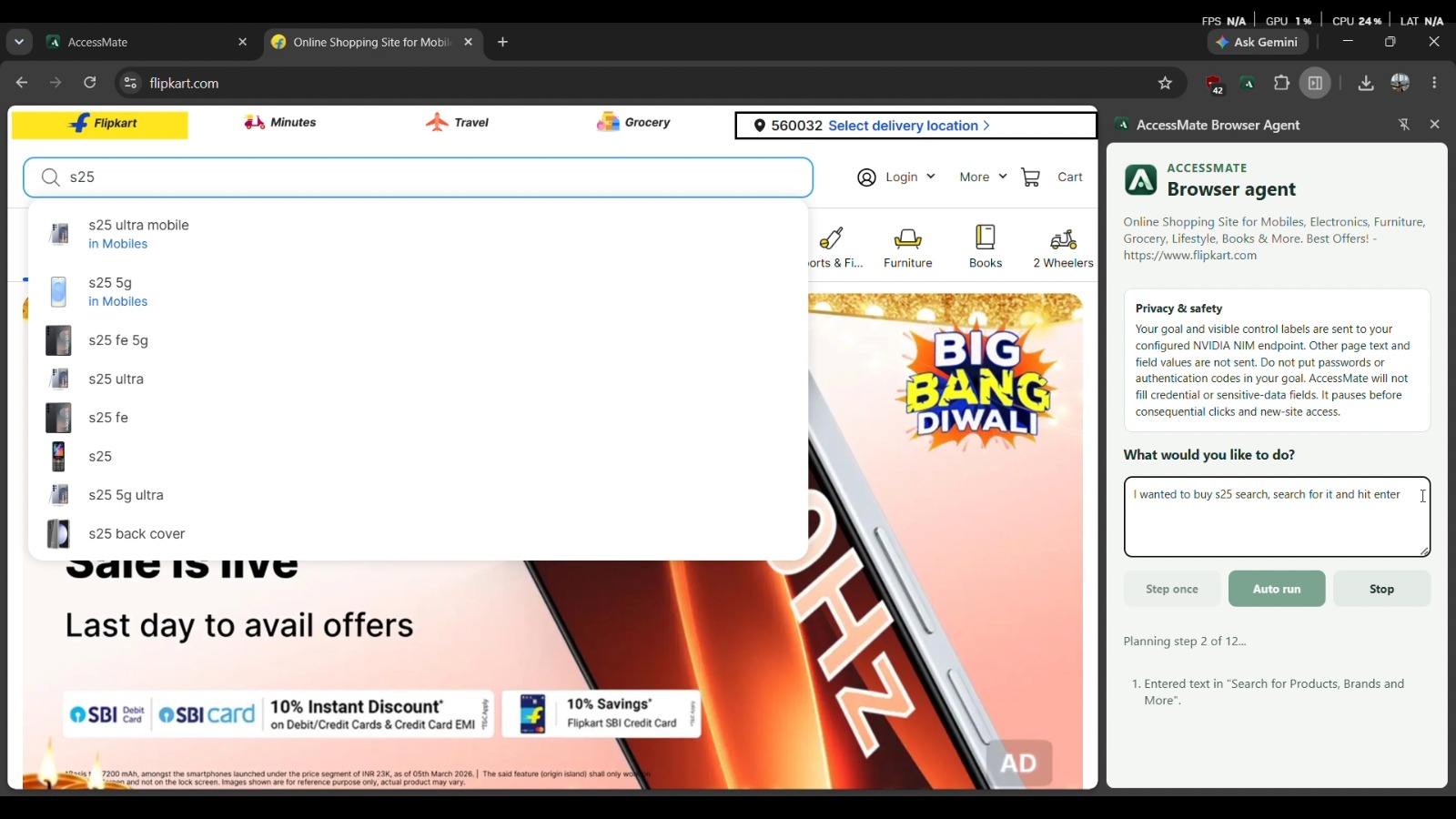
- Intelligent Website Navigation: An AI agent that understands website structure and user goals, identifies relevant interactive elements, and assists users in navigating websites and completing digital tasks.
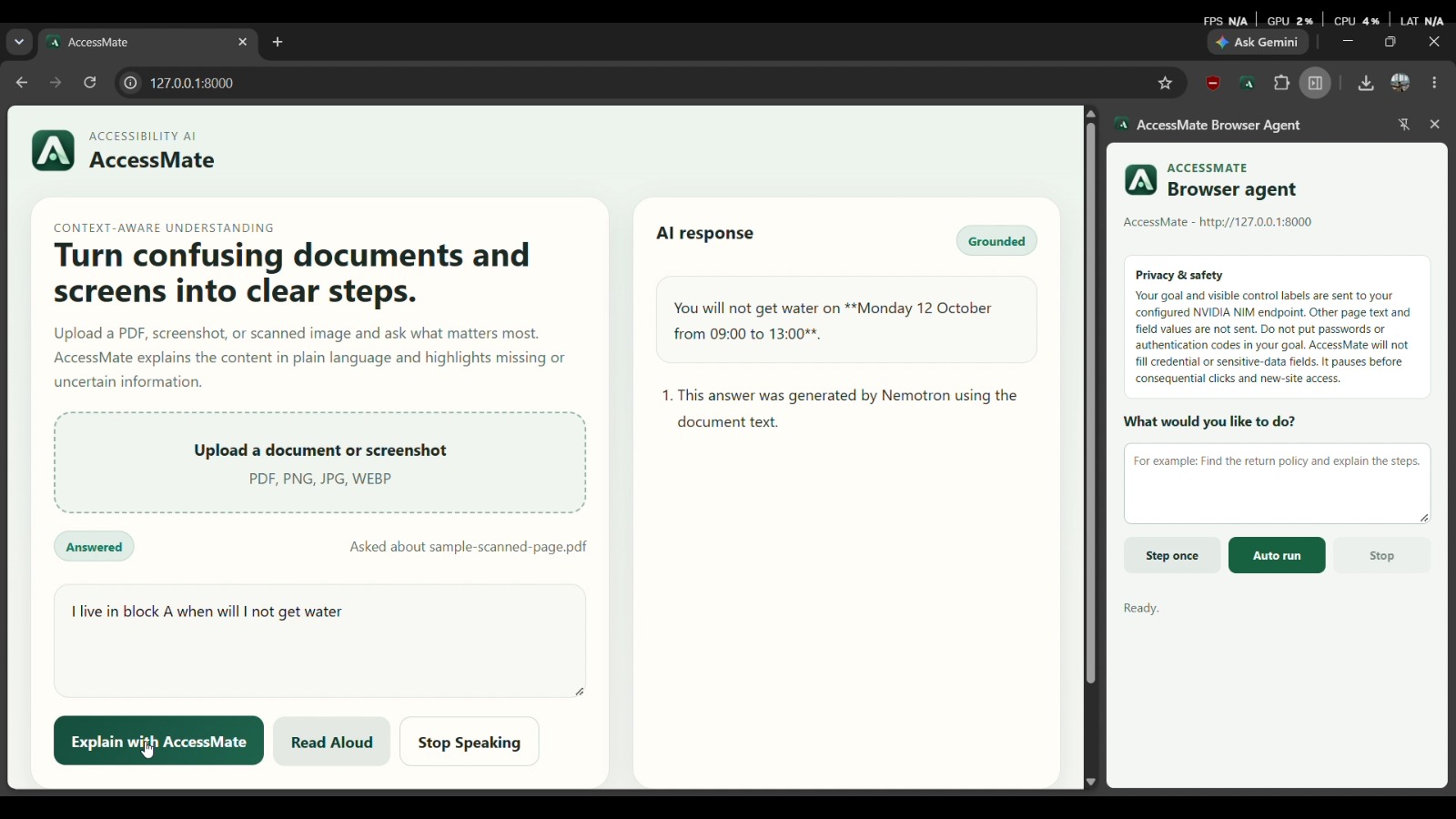
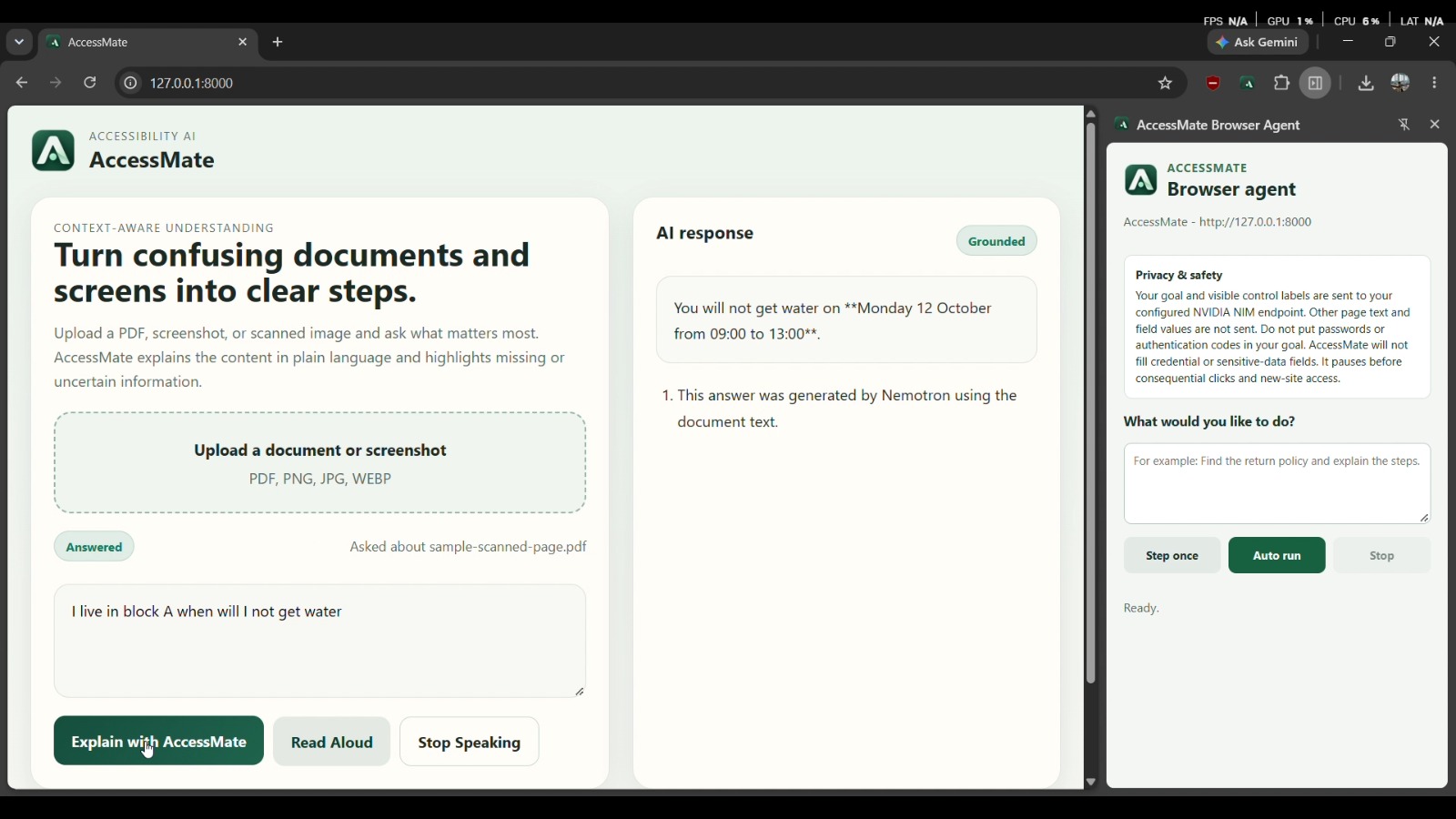
- Document Understanding: Users can upload PDFs, screenshots, and scanned images and ask questions about them. AccessMate converts complex information into clear, plain-language explanations and highlights important details.
- Read-Aloud Assistance: Users can listen to explanations, making information easier to access without relying entirely on visual reading.
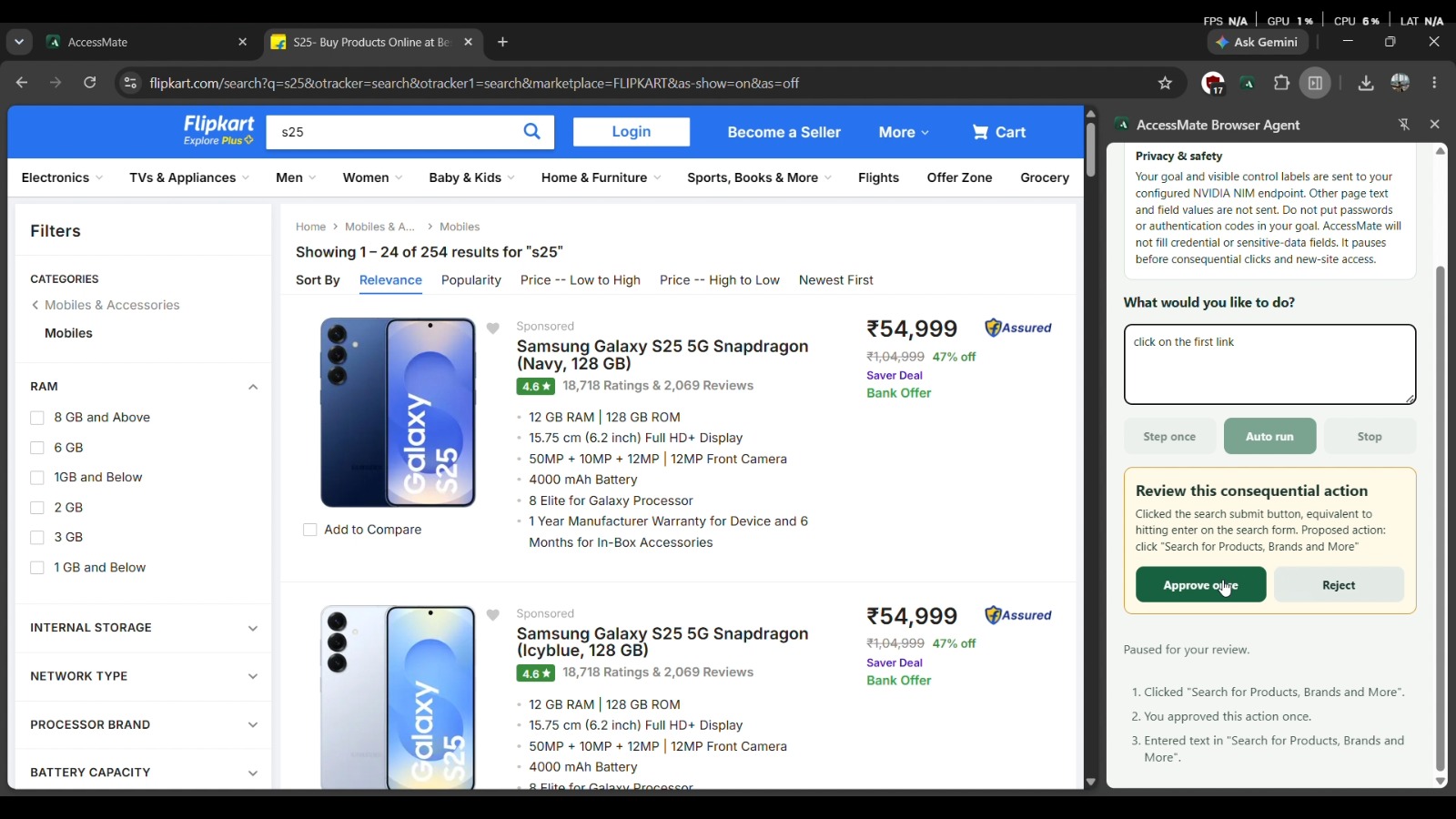
- Safety and Human Oversight: Consequential or security-sensitive actions are designed to require human review and explicit approval rather than being executed blindly.
How We Built It
We developed AccessMate using a Python-based backend and a web interface, alongside a Chrome extension for website interaction. The backend handles user requests, processes relevant page or document context, and coordinates AI-powered responses.
Our architecture is designed around NVIDIA Nemotron to provide the reasoning capabilities needed to interpret user instructions, understand context, and generate useful guidance. The browser agent works with structured information about website elements instead of relying on unrestricted, model-generated browser actions.
We focused on making the experience simple and approachable, with a clean interface, clear explanations, voice assistance, and an emphasis on user control.
Challenges and What We Learned
One of our biggest challenges was bridging the gap between understanding a user's intention and safely translating it into actions on a real website. Websites have different layouts, labels, and interaction patterns, making reliable navigation difficult.
We also had to consider privacy and safety. An accessibility agent should not blindly execute sensitive actions or handle confidential information without appropriate safeguards.
Through this project, we learned how to combine AI reasoning, browser automation, backend development, and accessibility-focused design into one practical application. Most importantly, we learned that building useful AI is not just about making models smarter; it is about making technology more understandable, usable, and inclusive.
Our Vision
We envision AccessMate as a step towards a digital world where disabilities or difficulties with technology do not determine who gets to participate. Our goal is simple: make the web more accessible, understandable, and independent for everyone.
Built With
- ai-agents
- browser-automation
- chrome
- css3
- document-ai
- fastapi
- html5
- javascript
- llm
- nvidia-api
- nvidia-nemotron
- ocr
- python
- rest-api
- text-to-speech
- webdevelopment

Log in or sign up for Devpost to join the conversation.