The main goal of Accessly is making student organizations, event organizers and common spaces more accessible and accommodating. It also enhances students' experiences by allowing them to gather information and context for the events and locations they might want to attend, allowing for more autonomy and inclusion.
Inspiration
Most student events handle accessibility with one line at the bottom of the flyer: "For accommodations, contact the organizer." That puts all the work on the person who needs help. They have to find the right contact, explain their situation to someone they may not know, and wait. Many people decide it isn't worth it and either skip the event or show up unsure of what they'll find.
There are three problems with that setup.
- It costs people privacy, since you have to tell someone about yourself to get help.
- It costs them autonomy, since you can't plan ahead without asking.
- It's slow, partly because most student organizers have never been trained to handle accessibility requests.
What it does
Accessly makes student organizations, events and shared campus spaces easier to access, for both sides.
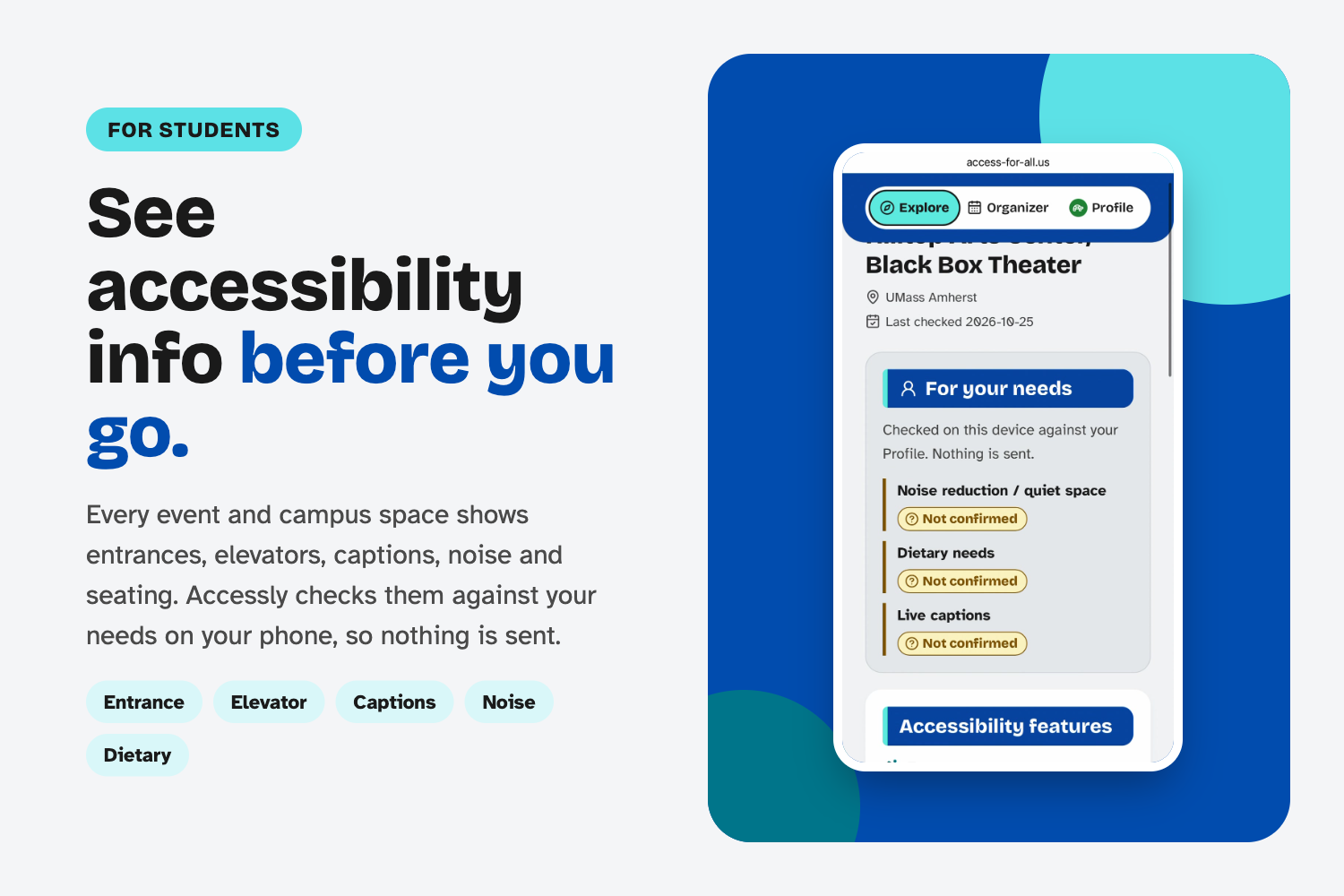
For attendees: • Explore spaces and events. See accessibility details before you go: entrances, elevators, seating, restrooms, lighting, noise, quiet areas and more.
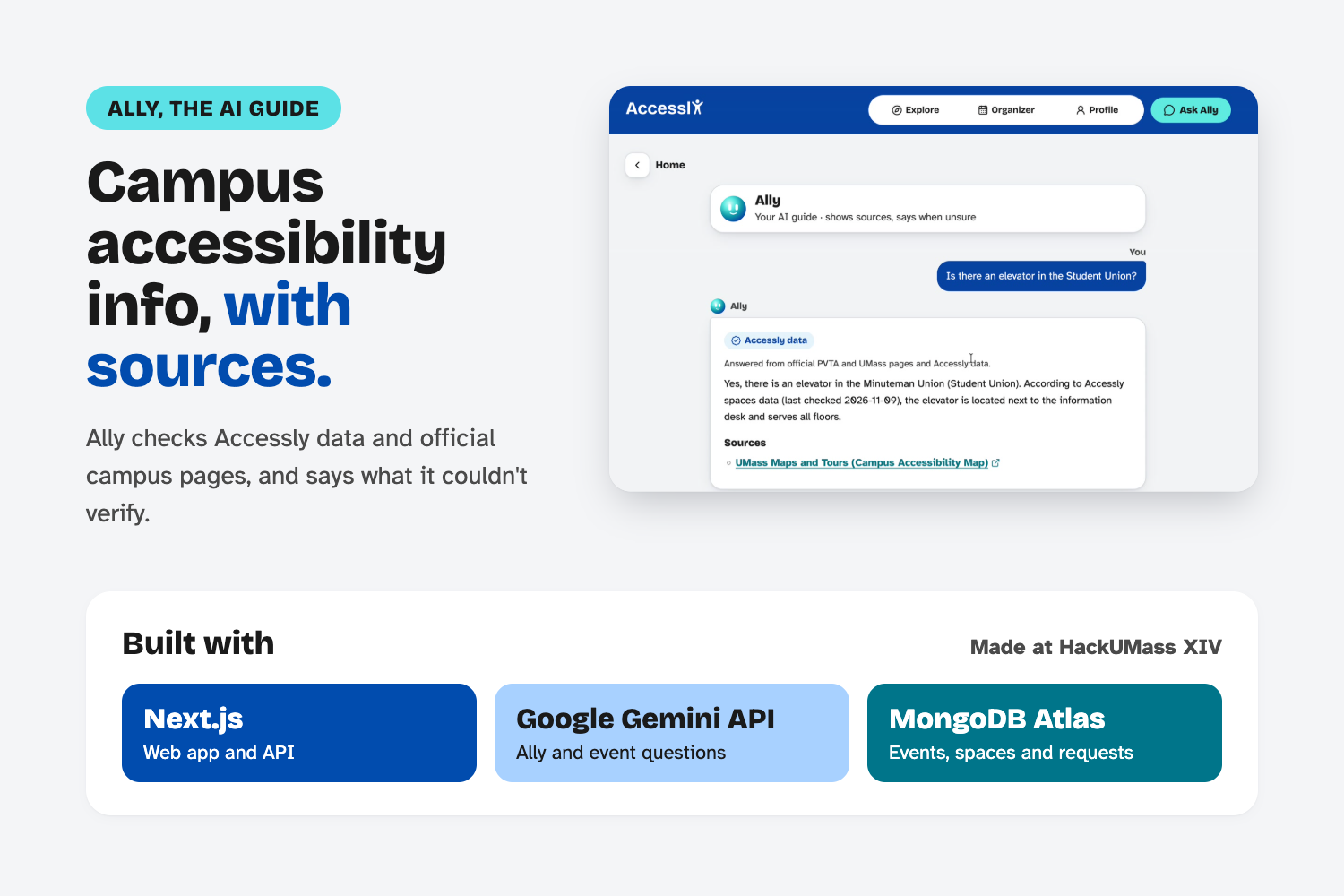
• Ask Ally. Ally is an AI assistant that answers questions about a specific event or space using only what the organizer has published. It always says what it couldn't verify and where to confirm it.
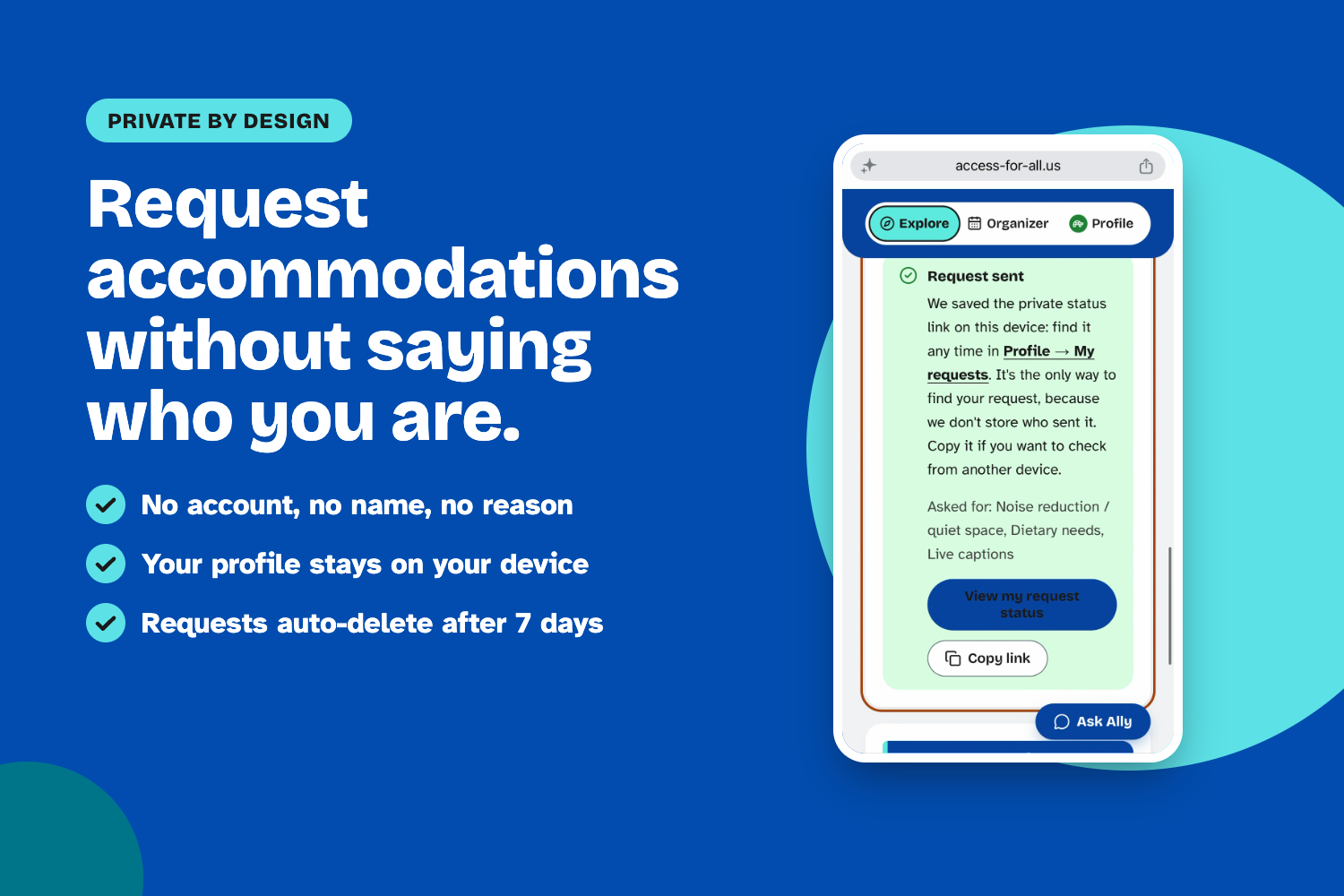
• Request accommodations anonymously. Choose your needs from simple chips and send the request. The organizer sees what you need, not who you are. You never have to explain why.
• Your profile stays private. Your needs are saved only for you and are shared only when you choose to send a request.
• Track your requests. Each request shows a clear status: Awaiting, In progress, Confirmed or Can't accommodate.
For organizers:
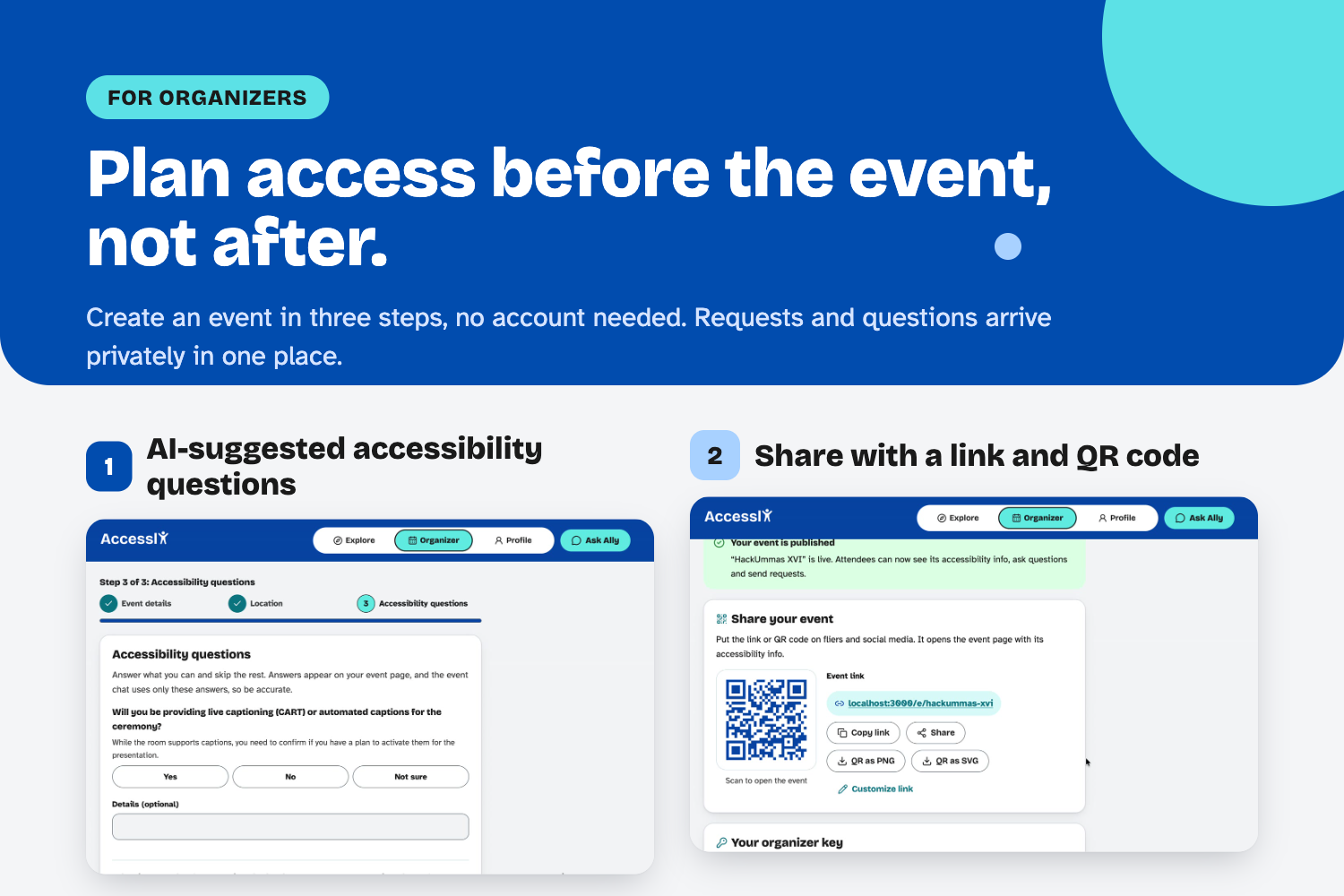
• Create events with accessibility built in. A guided flow prompts you for the details attendees actually ask about, so nothing important gets left out.
• Get a shareable link. Every event gets a public page you can post in a group chat, on a flyer or on social media.
• One request inbox. See anonymous requests, respond quickly and update their status so attendees aren't left guessing.
• Fewer repeated questions. Ally answers the common questions for you, so you can spend your time on the requests that need a person.
How we built it
• Next.js for the frontend and API routes, with plain CSS and design tokens.
• MongoDB Atlas stores events, spaces, accessibility details and requests. Requests are kept separate from any identifying information, so organizers only ever see the need.
• Gemini API powers Ally. Its answers are grounded in the event and space data in Atlas, and it is told to state uncertainty rather than guess.
• GoDaddy thanks for the domain!
Challenges we ran into
• Designing for privacy without losing usefulness. Organizers need enough detail to act on a request, and attendees should reveal as little as possible. Finding that balance shaped our whole data model.
• Keeping the AI honest. An assistant that confidently invents accessibility facts is worse than having none. We spent a lot of time making Ally stay within published info and say clearly when it doesn't know.
What we learned
• Accessibility is as much about information and dignity as it is about ramps and elevators. Often people just need to know what to expect.
• Privacy can't be added at the end. It has to drive the data model from the start.
• Grounding an LLM and getting it to say "I don't know" is a product decision as much as a prompting one.
• Designing accessibly from the first component on is much easier than fixing a finished UI.
What's next for Accessly
Test it with student orgs!!!
