-
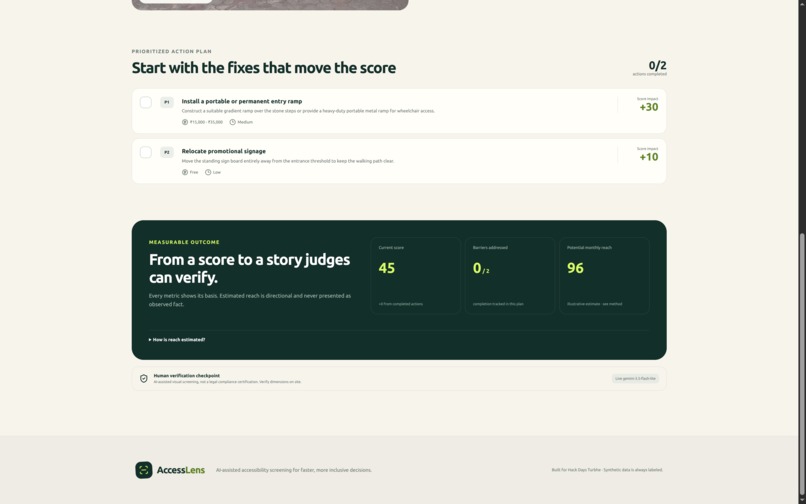
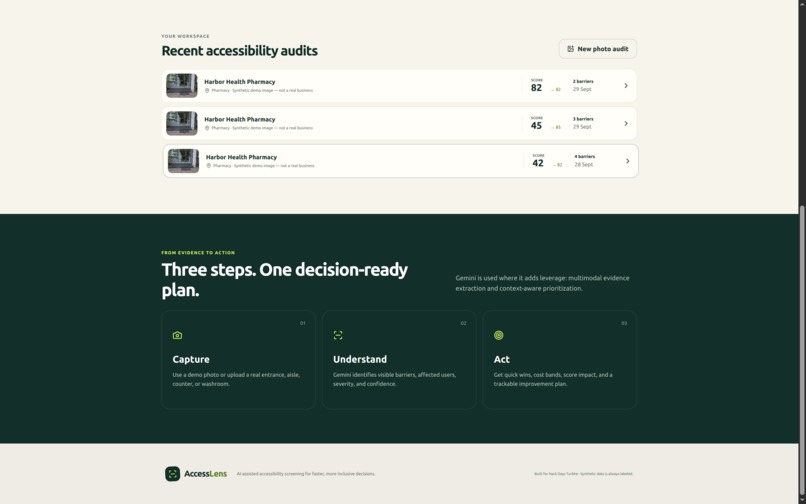
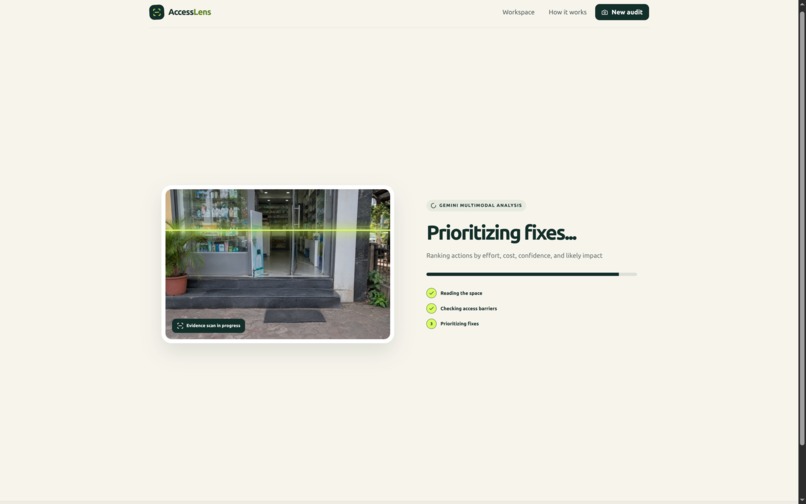
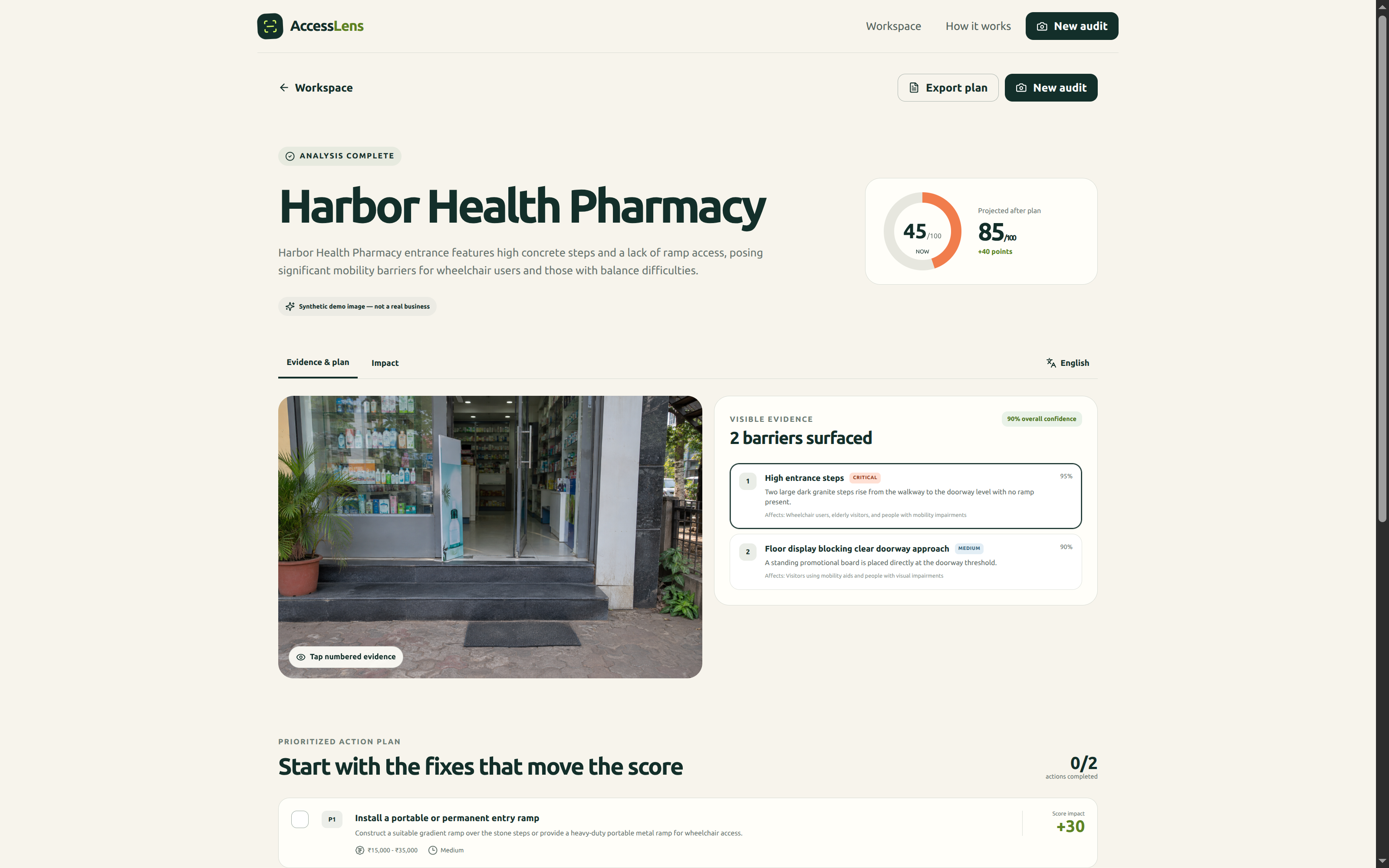
Results page showing image annotations
-
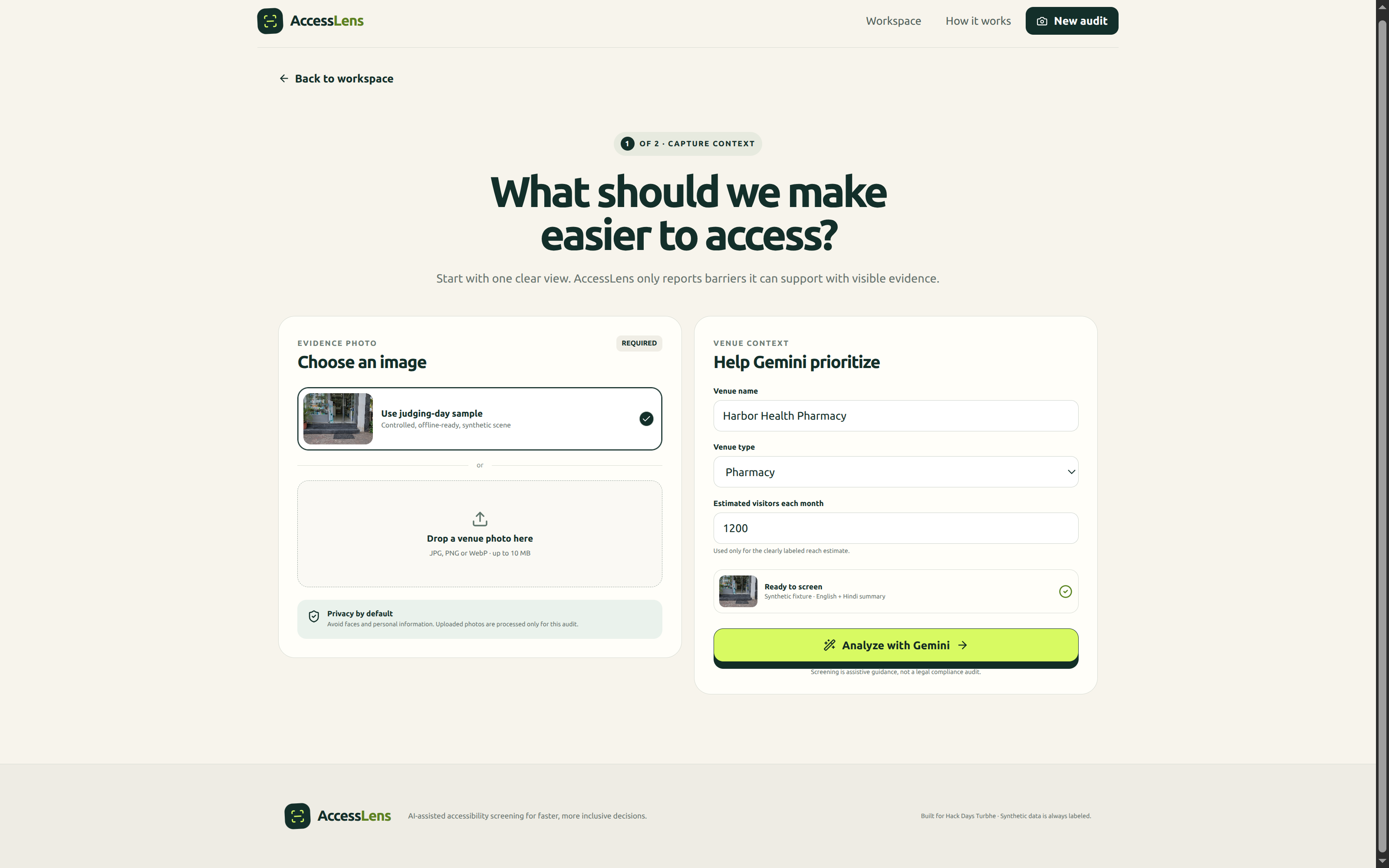
Audit setup with the synthetic sample selected
-
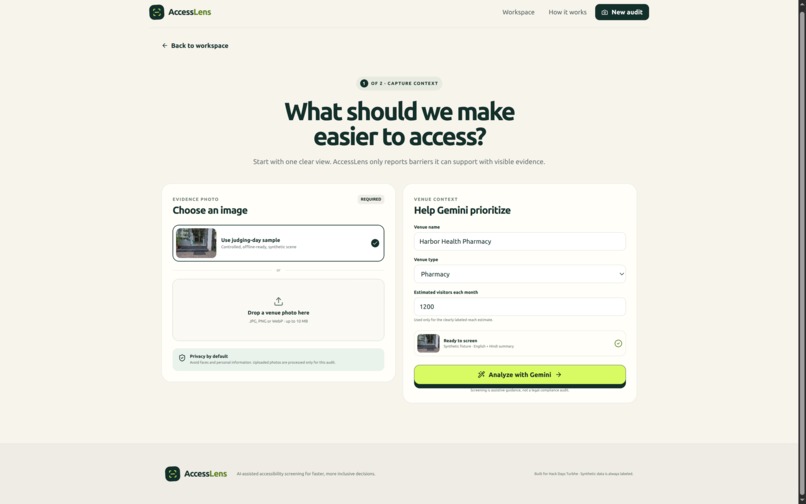
Audit setup with the synthetic sample selected
-
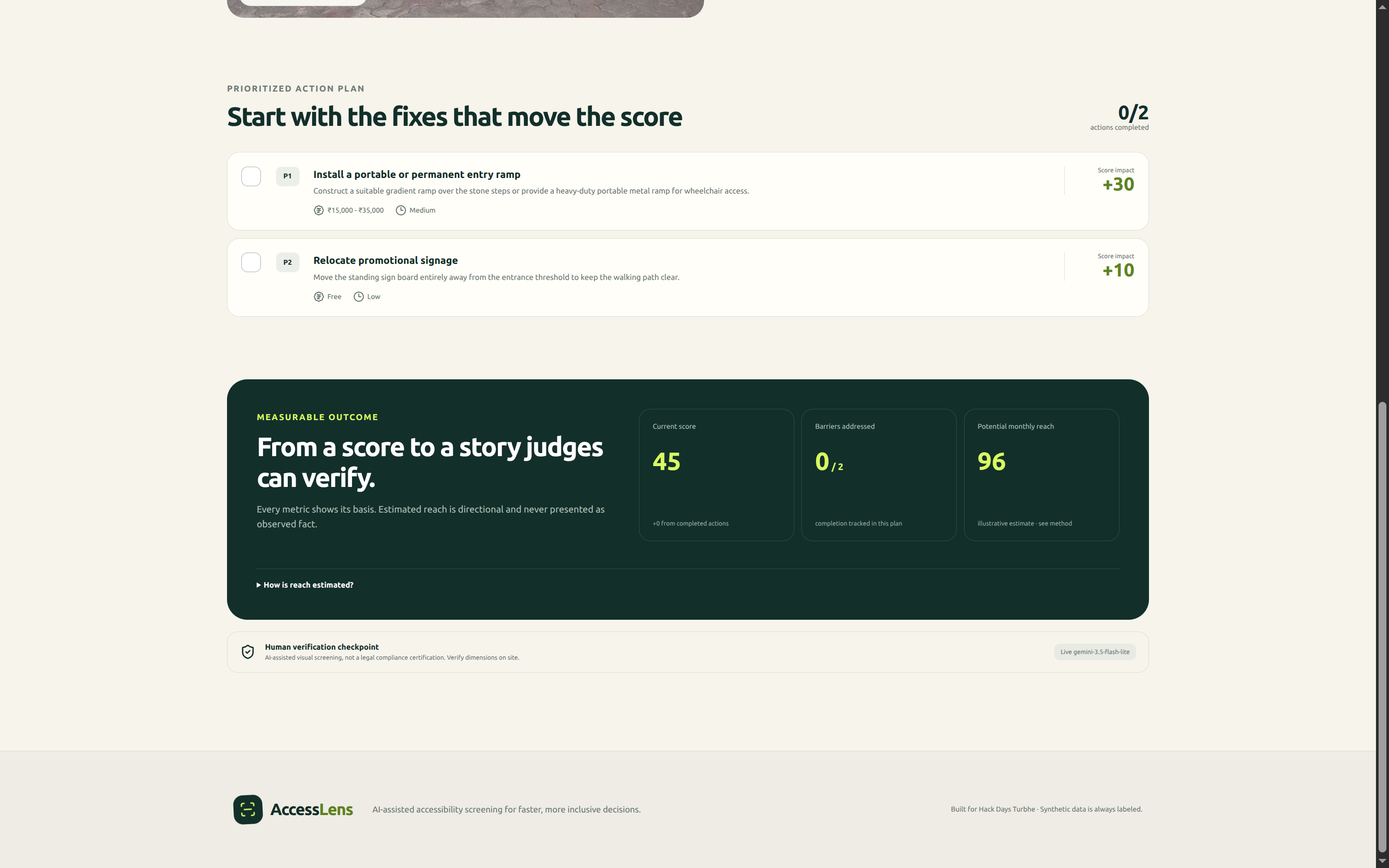
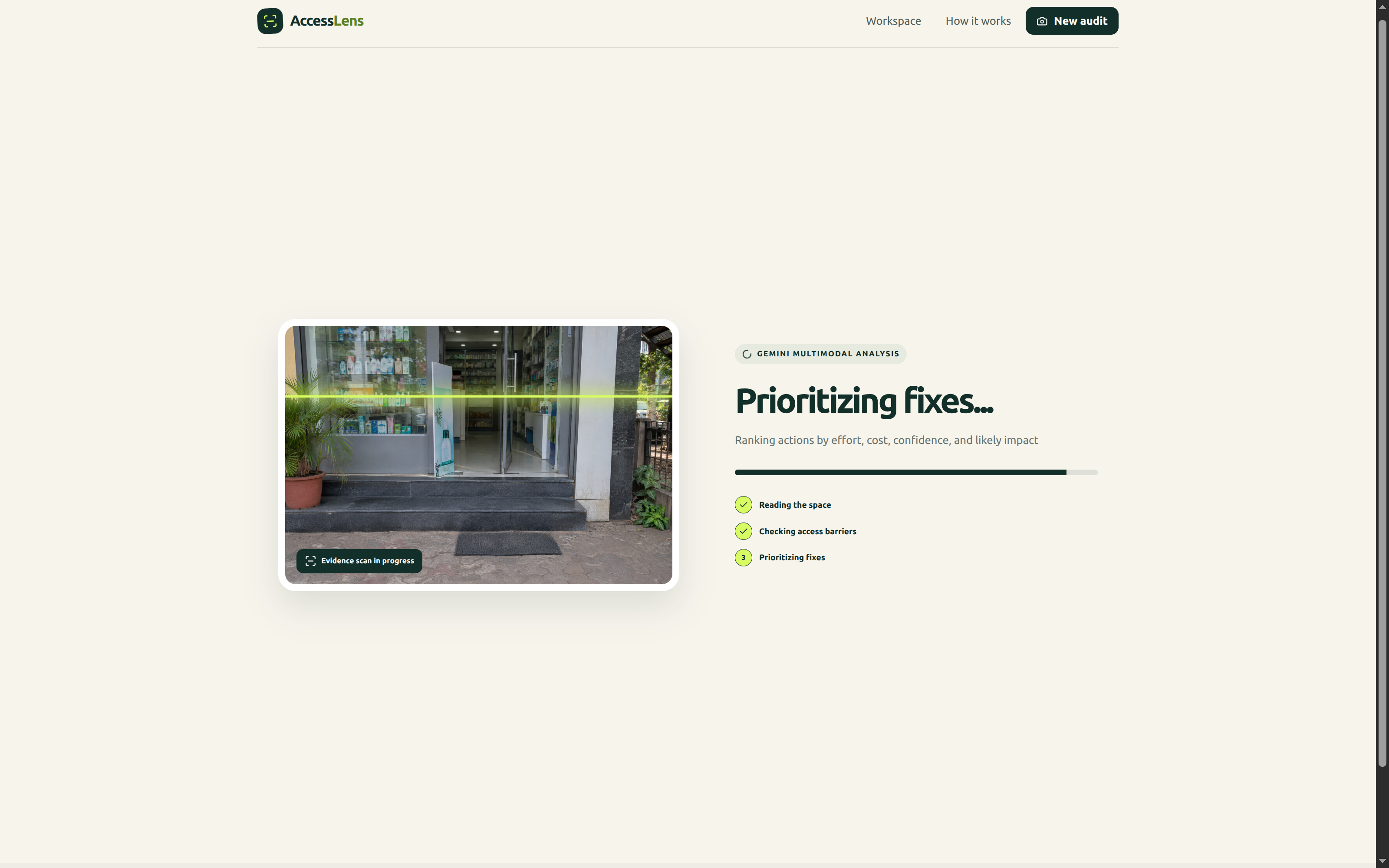
Prioritized action plan
-
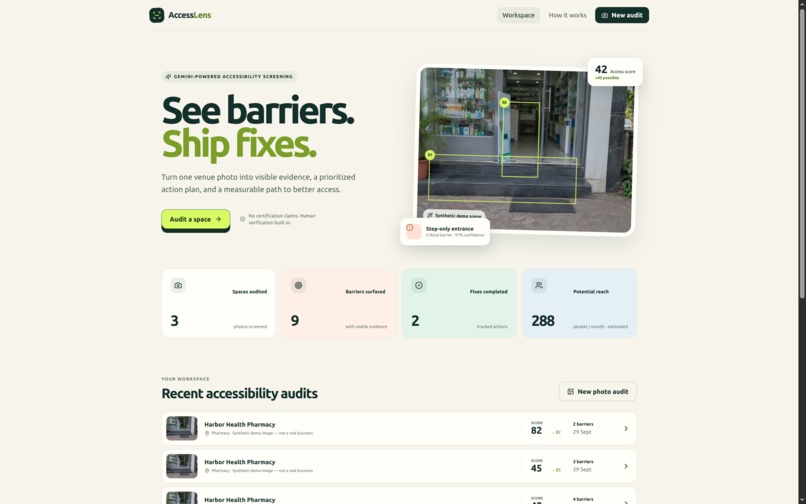
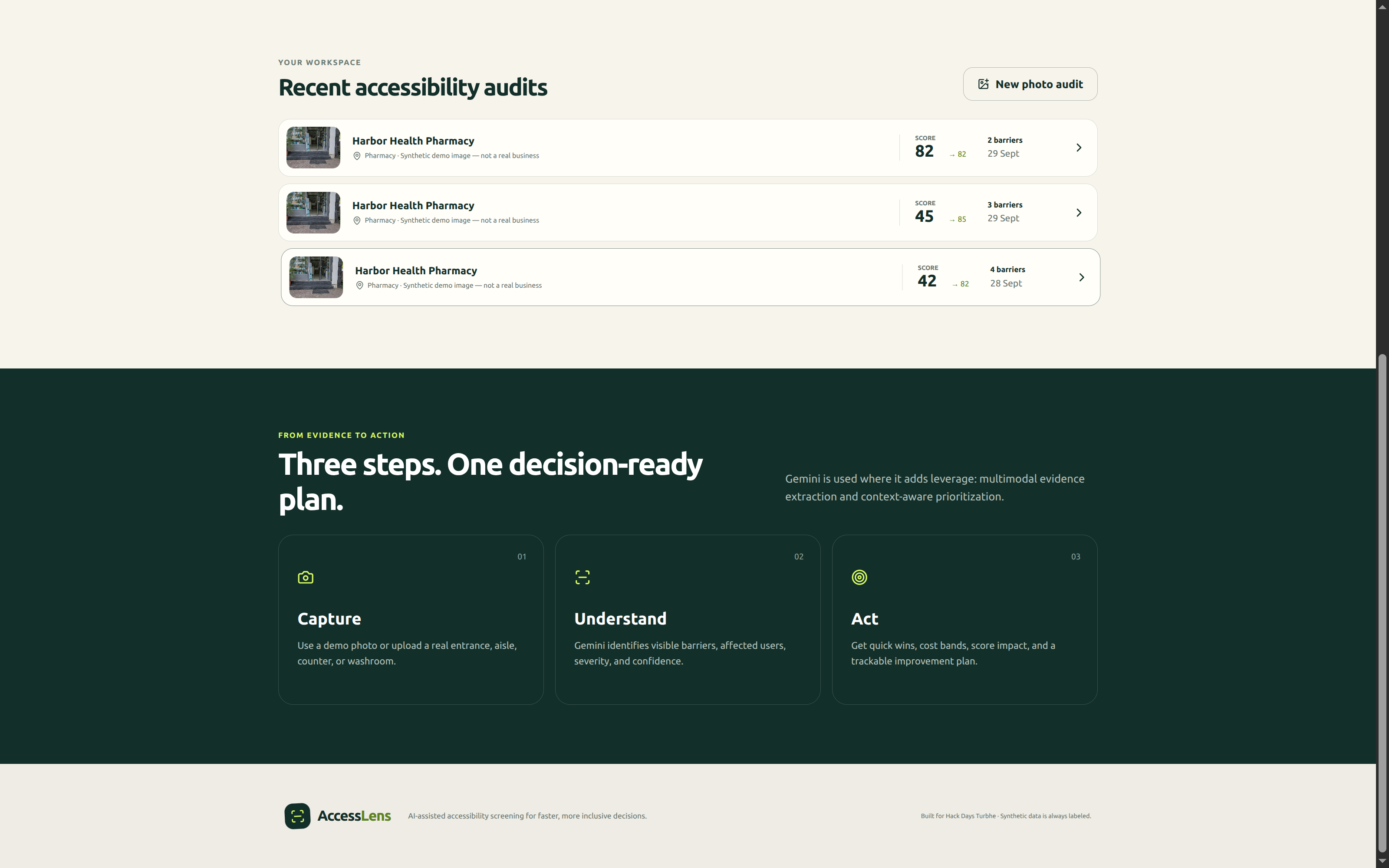
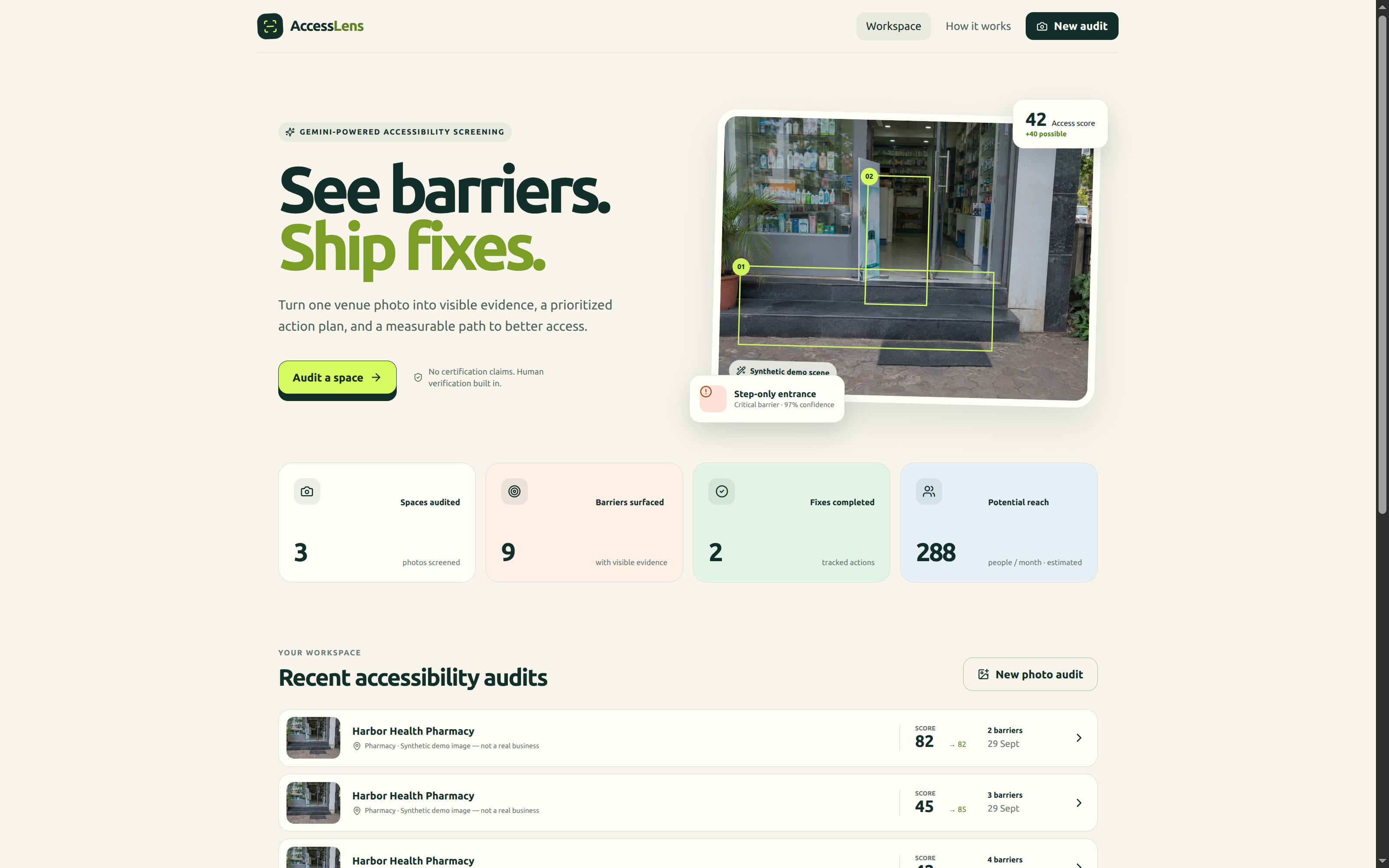
Landing page with “See barriers. Ship fixes.”
-
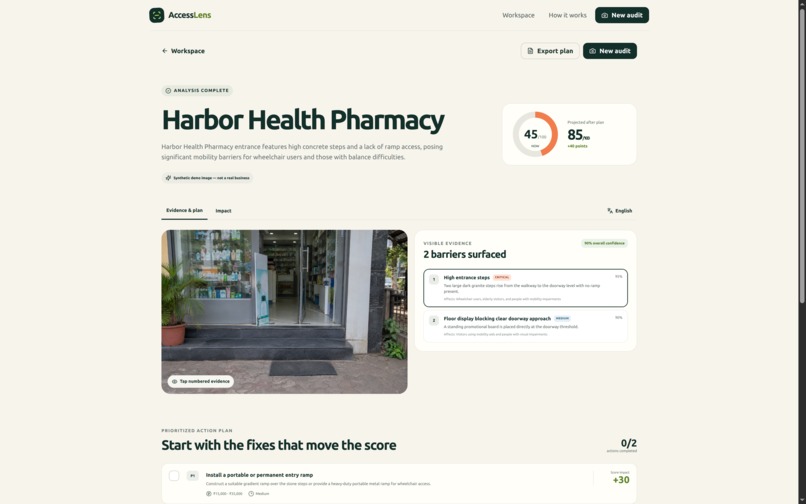
Score improvement and live Gemini model badge
Inspiration
Many small shops, clinics, cafés, colleges, and community spaces want to become more accessible but do not know what to inspect or fix first. Generic checklists lack context, while a professional accessibility audit may not always be immediately available.
We built AccessLens to make that first step visible and actionable.
What it does
AccessLens turns one venue photograph into an evidence-linked accessibility action plan.
Users can upload an entrance photo and provide basic venue context. Google Gemini then:
- Identifies visible accessibility barriers
- Highlights evidence directly on the photograph
- Explains who may be affected
- Assigns severity and confidence
- Recommends prioritized improvements
- Estimates cost, effort, and score impact
- Generates English and Hindi summaries
Users can complete recommendations and immediately see the accessibility score improve.
AccessLens is an AI-assisted screening tool, not a legal compliance certification. Structural measurements and final decisions should be verified by a qualified professional.
How we built it
AccessLens uses React and Vite for the responsive frontend, with Node.js and Express for the backend API.
The backend sends the venue image and context to Google Gemini 3.5 Flash-Lite using Google's official GenAI SDK. Gemini returns structured JSON containing evidence-grounded barriers, image regions, confidence values, affected users, and prioritized recommendations.
MongoDB and Mongoose are supported for persistent audits, with an in-memory store available for the hackathon prototype. The application also includes image validation, analytics events, bilingual output, responsive layouts, and an explicitly labeled offline fallback.
Challenges we ran into
The largest challenge was using AI honestly. A single photograph cannot prove exact dimensions or certify legal compliance.
We addressed this by:
- Requiring visible evidence for every finding
- Showing confidence values
- Preventing unsupported measurement claims
- Treating text inside uploaded images as untrusted content
- Using a strict structured-output schema
- Adding a human-verification checkpoint
- Clearly identifying live Gemini and offline-demo results
We also migrated to the latest Gemini Interactions API and selected Gemini 3.5 Flash-Lite for reliable free-tier multimodal performance.
Accomplishments that we're proud of
- Built a complete photo-to-action workflow
- Successfully integrated live Gemini multimodal analysis
- Added interactive evidence annotations
- Created measurable score updates when actions are completed
- Added English and Hindi summaries
- Designed loading, error, empty, onboarding, and offline states
- Tested desktop and mobile layouts
- Passed all backend integration tests
- Created a deterministic fallback for internet or API failures
What we learned
We learned that trustworthy AI is not only about producing an answer. Users need to understand why the model made a claim, how confident it is, and what still requires human verification.
We also learned that a focused end-to-end workflow is more valuable than adding unrelated AI features.
What's next for AccessLens
Next, we plan to:
- Work with disabled users and accessibility professionals
- Calibrate the scoring rubric against expert assessments
- Support multi-image venue audits
- Add Marathi and additional regional languages
- Generate professional audit-ready PDF reports
- Add secure image storage, authentication, and deletion controls
- Build an expert-review workflow for structural recommendations
Built With
- css3
- docker
- express.js
- google-gemini
- google-genai
- html5
- javascript
- mongodb
- mongoose
- multer
- node.js
- react
- render
- vite
- vitest

Log in or sign up for Devpost to join the conversation.