-
-
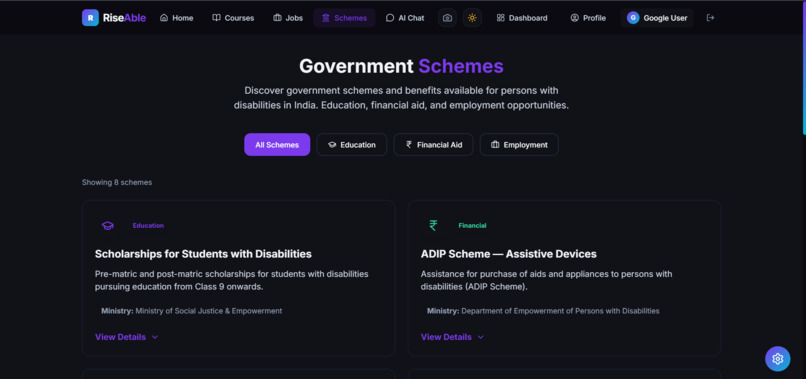
Night Mode
-
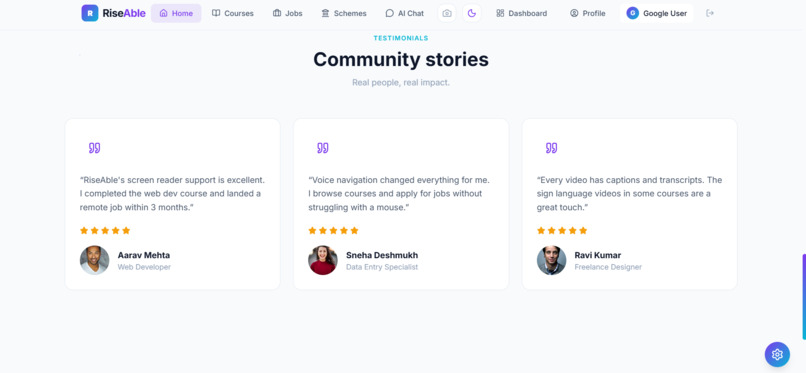
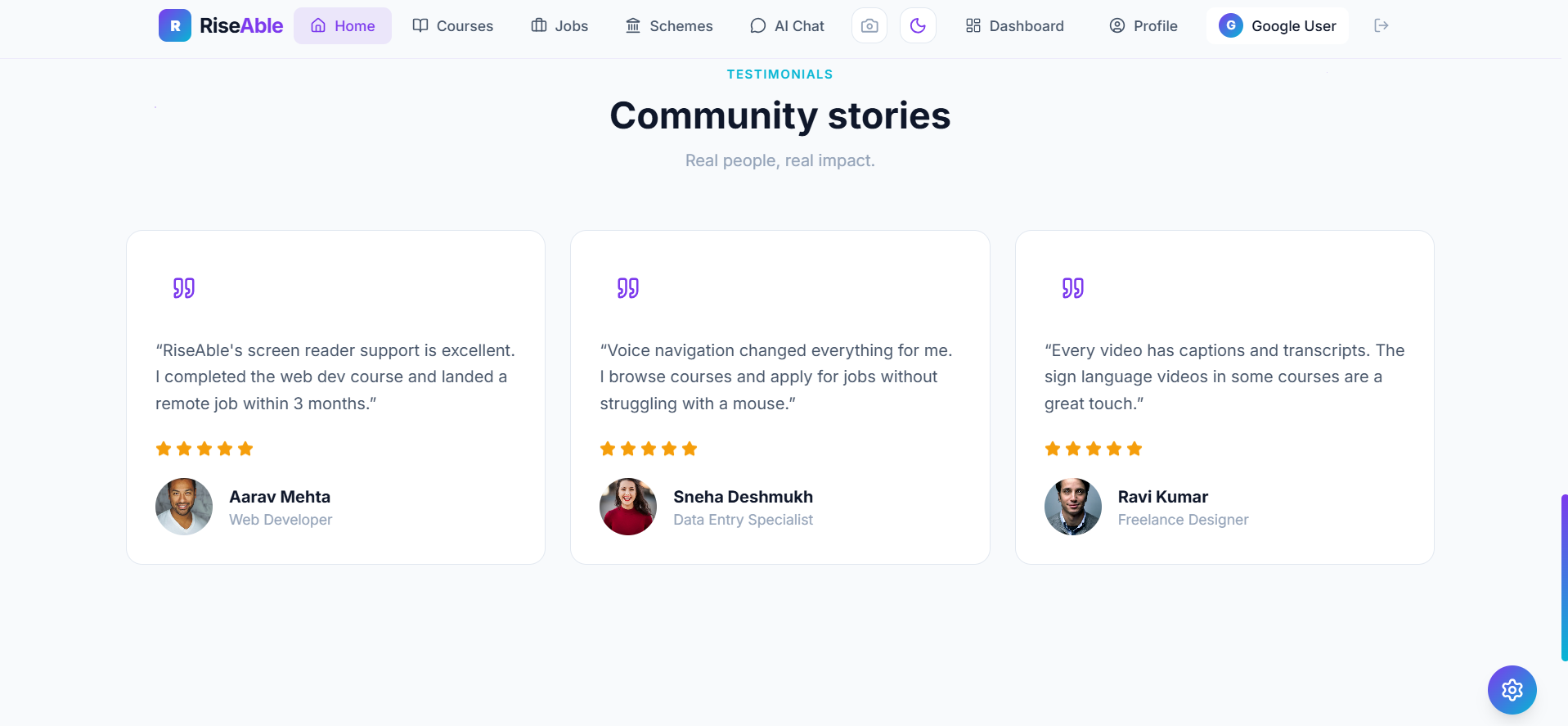
all the reviews by users and ratings
-
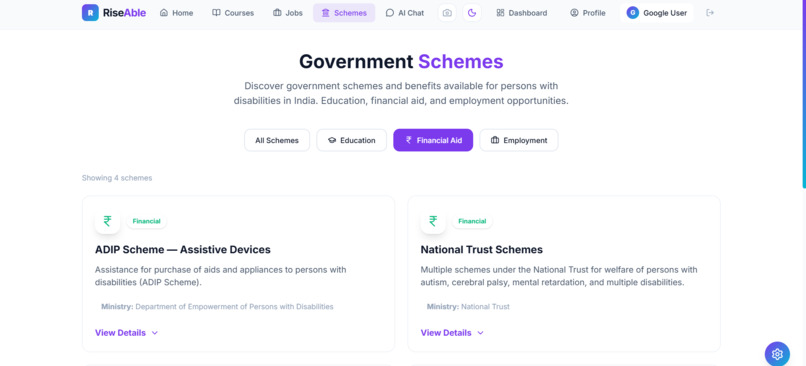
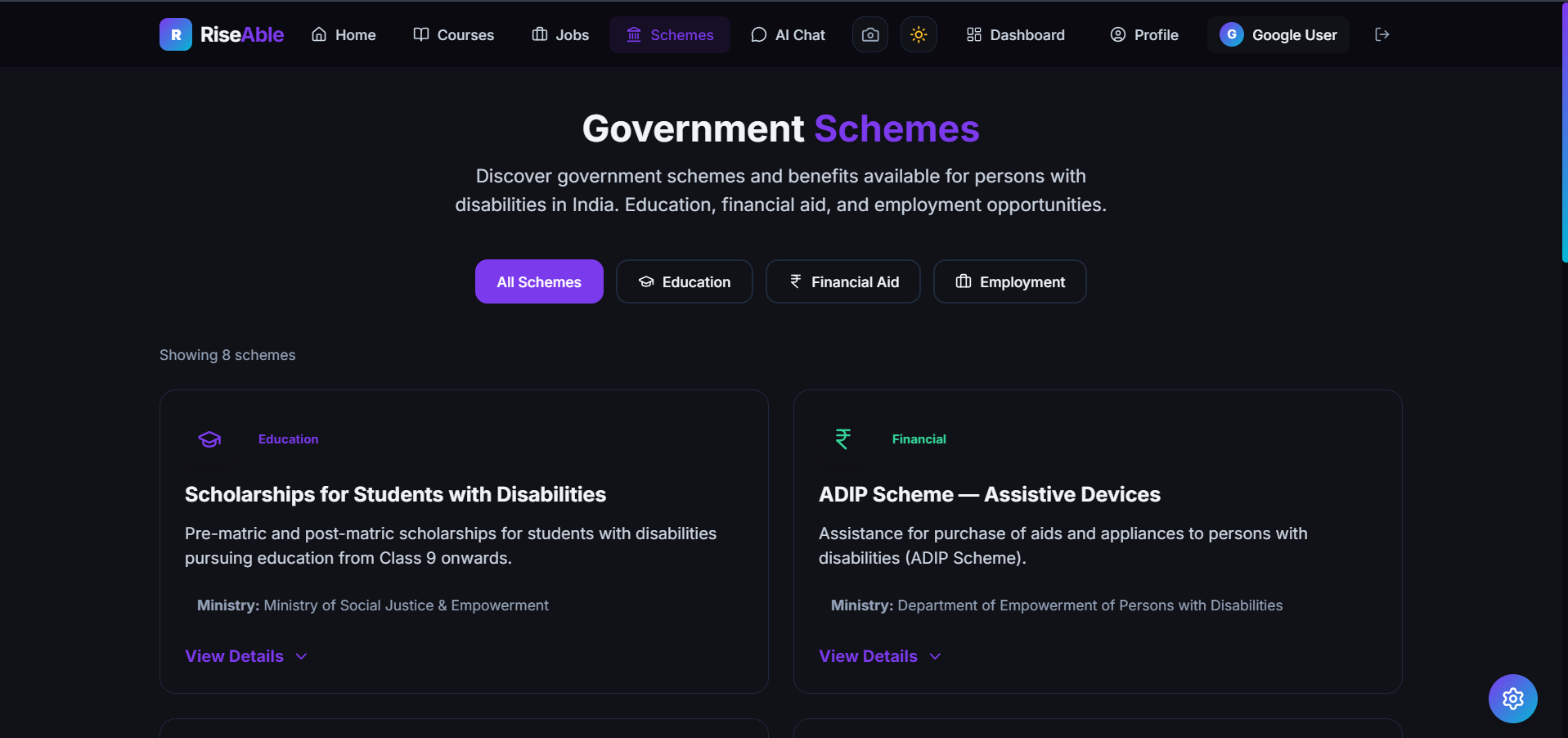
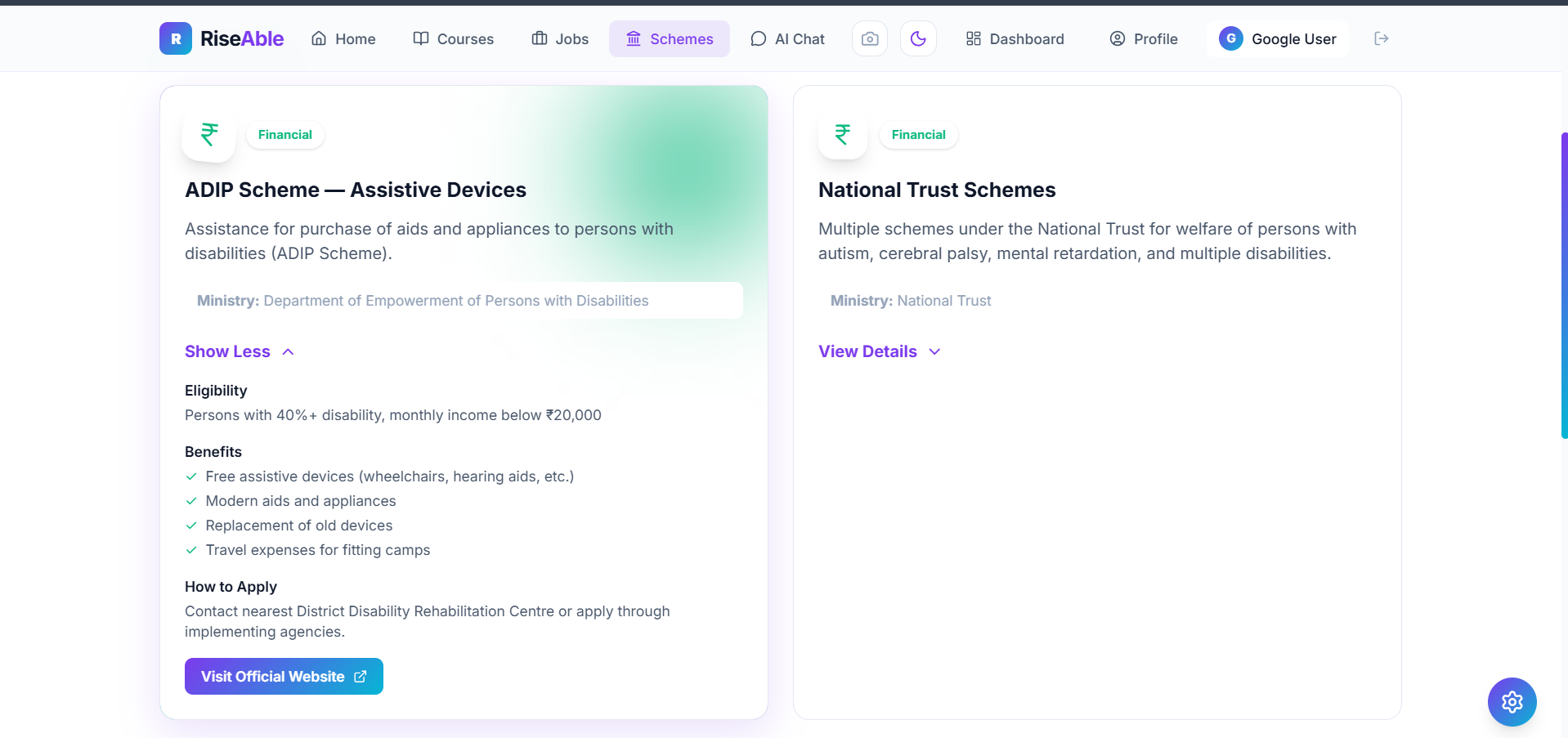
Government schemes page
-
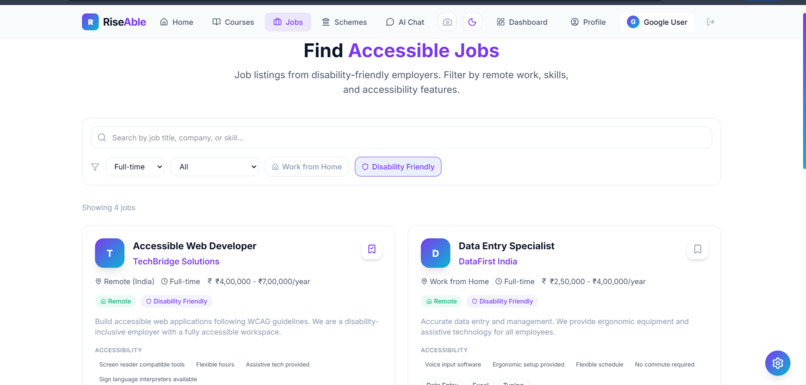
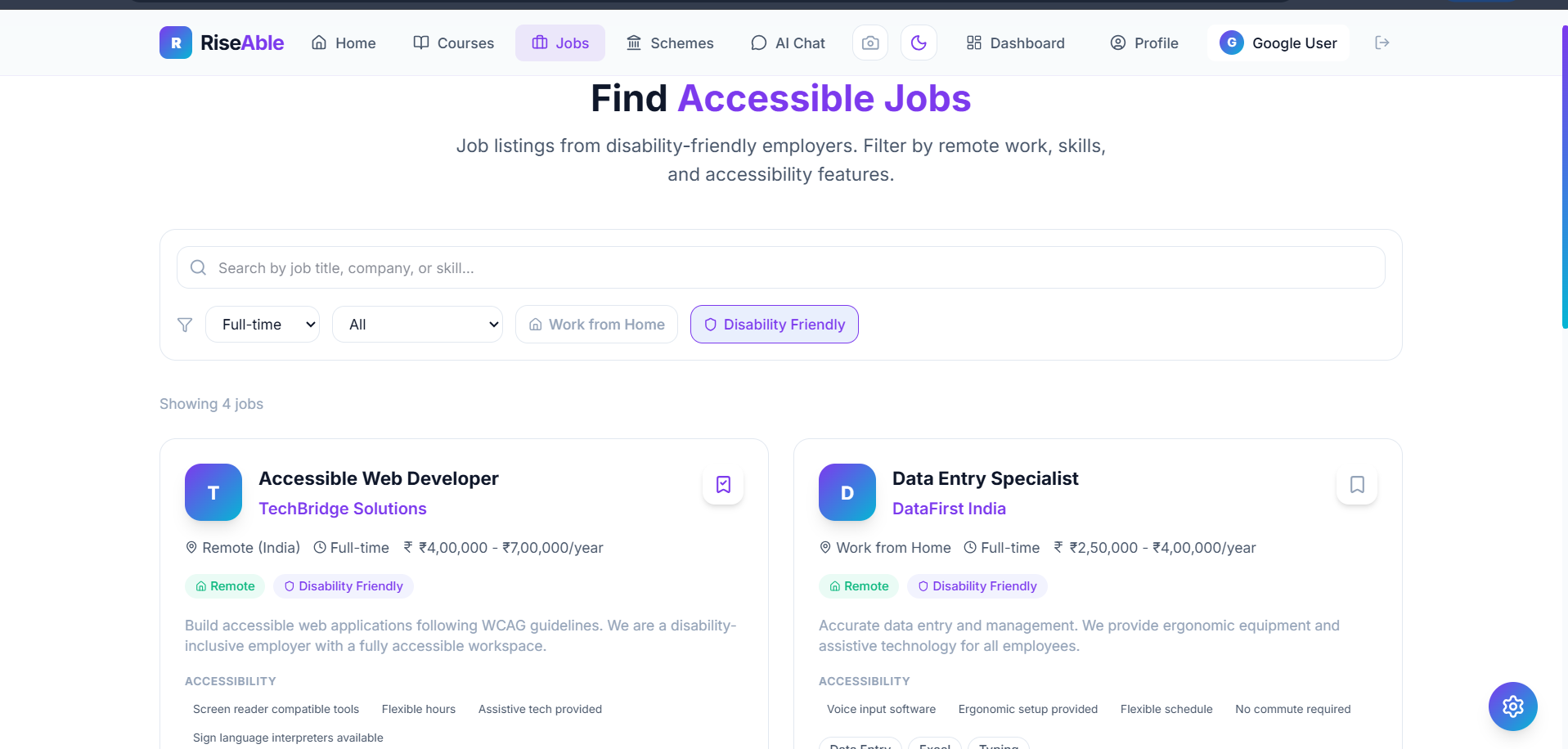
All the available jobs in the current situation including requirement and job description
-
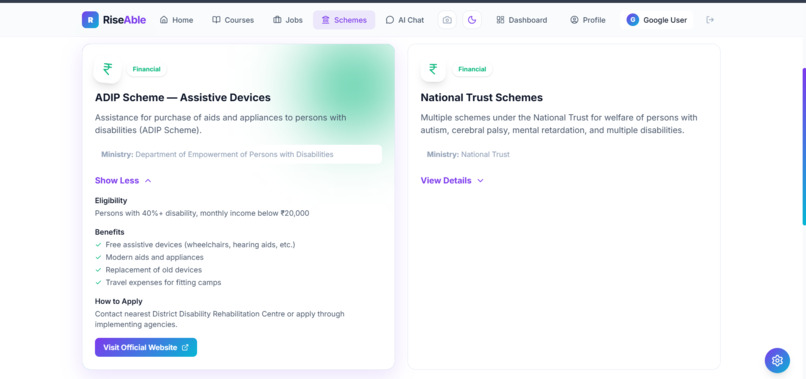
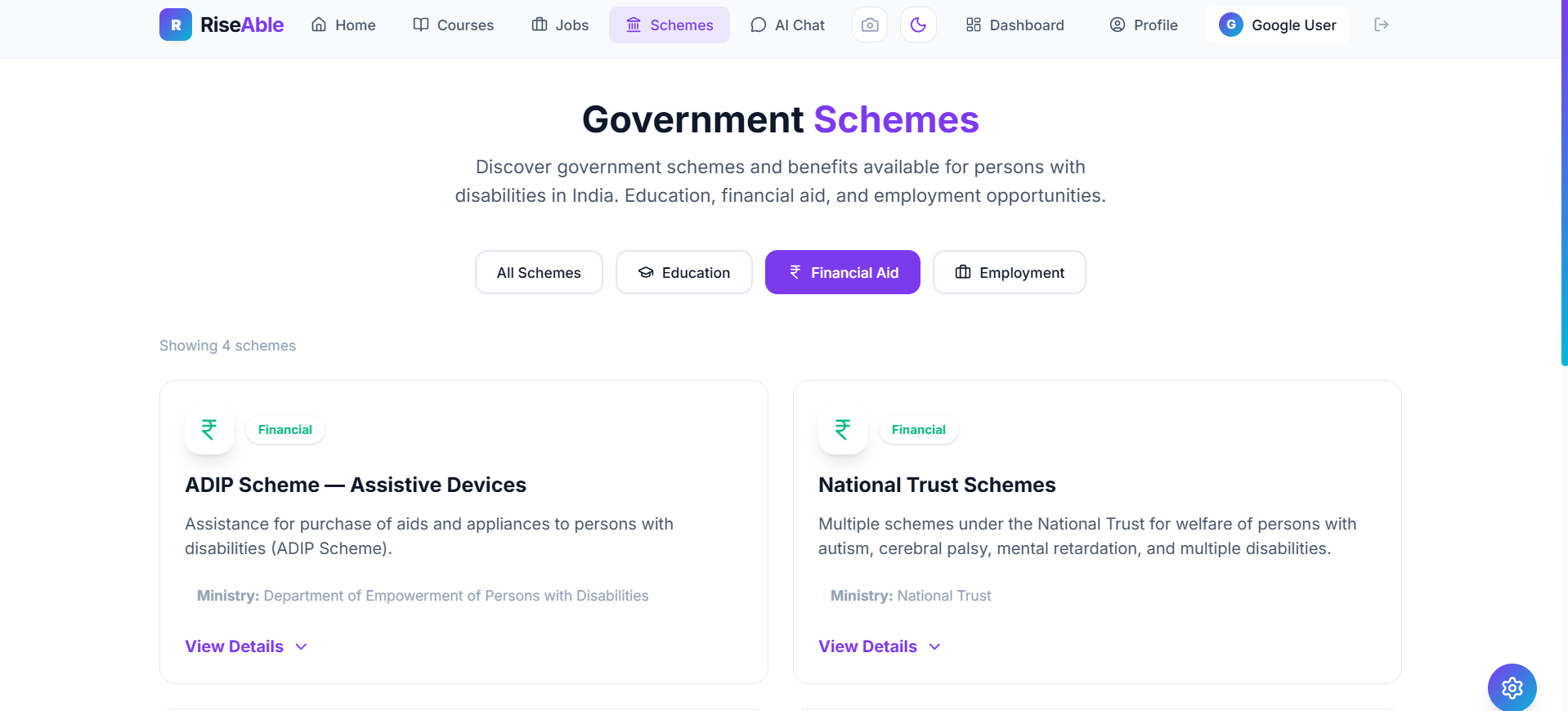
All the schemes filter out according to disability
-
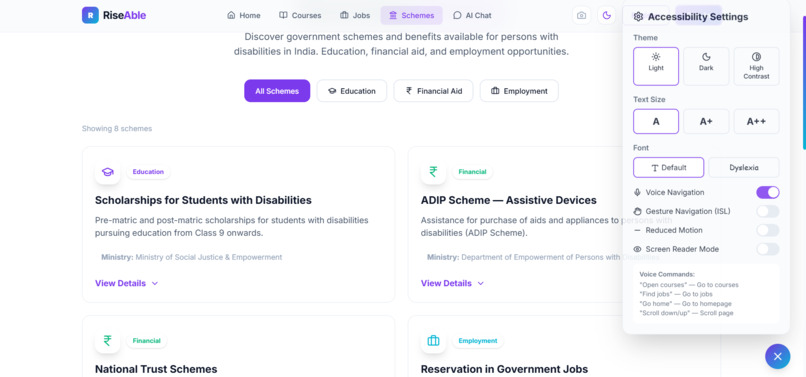
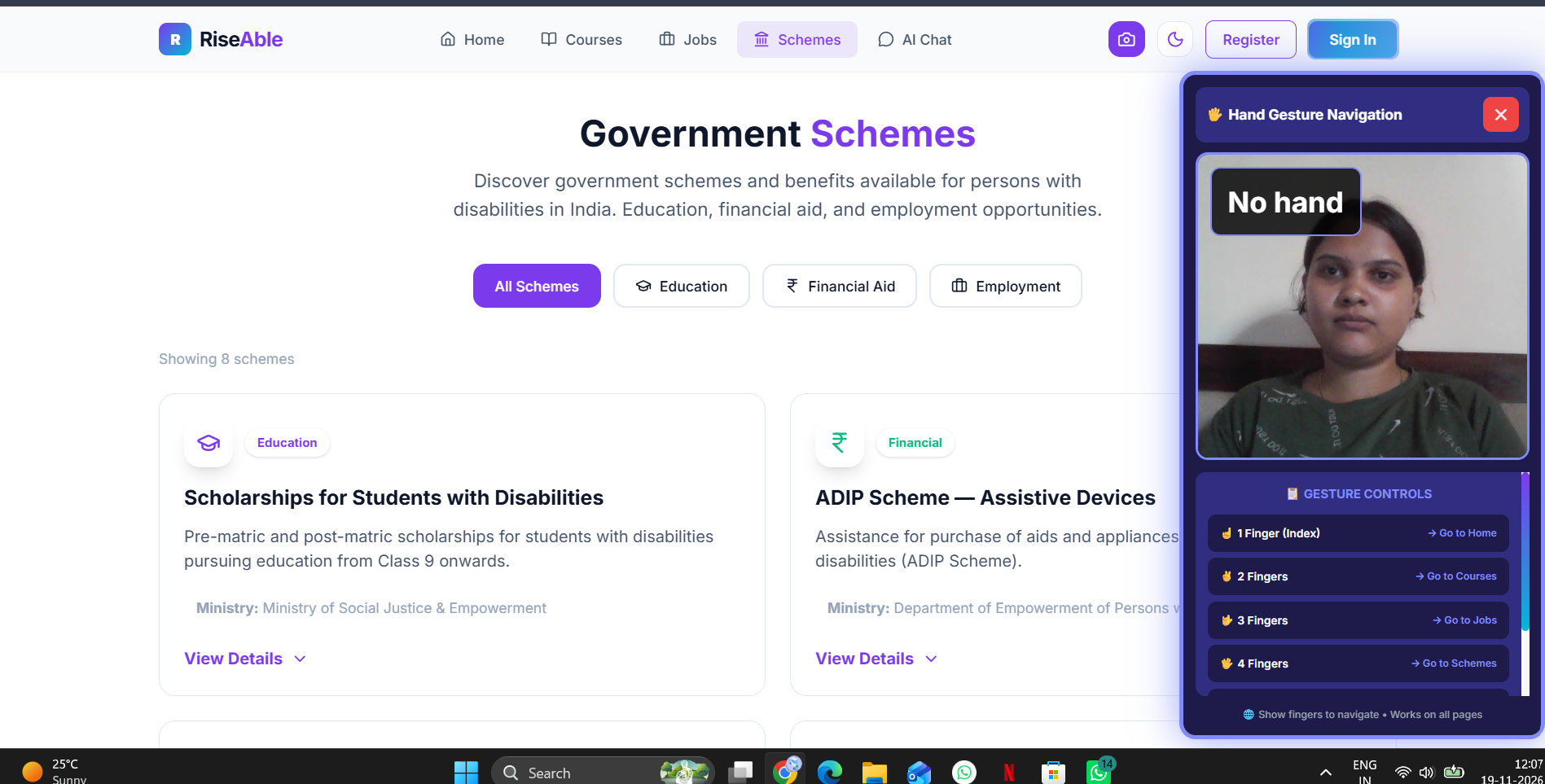
All Government schemes currently active with filters including education , finance , employement. This schemes are work on voice navigation
-
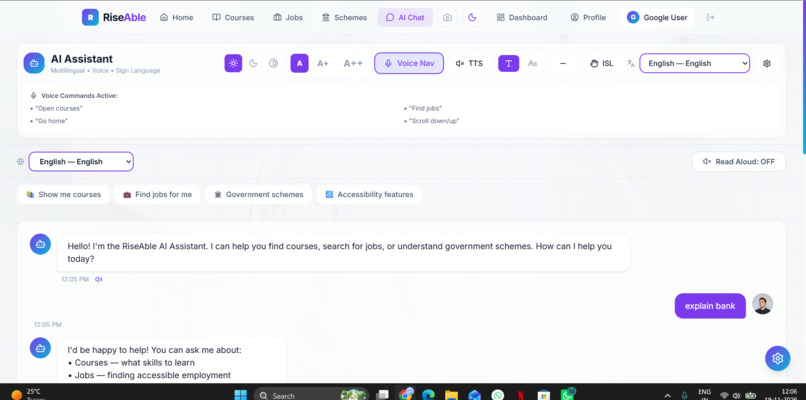
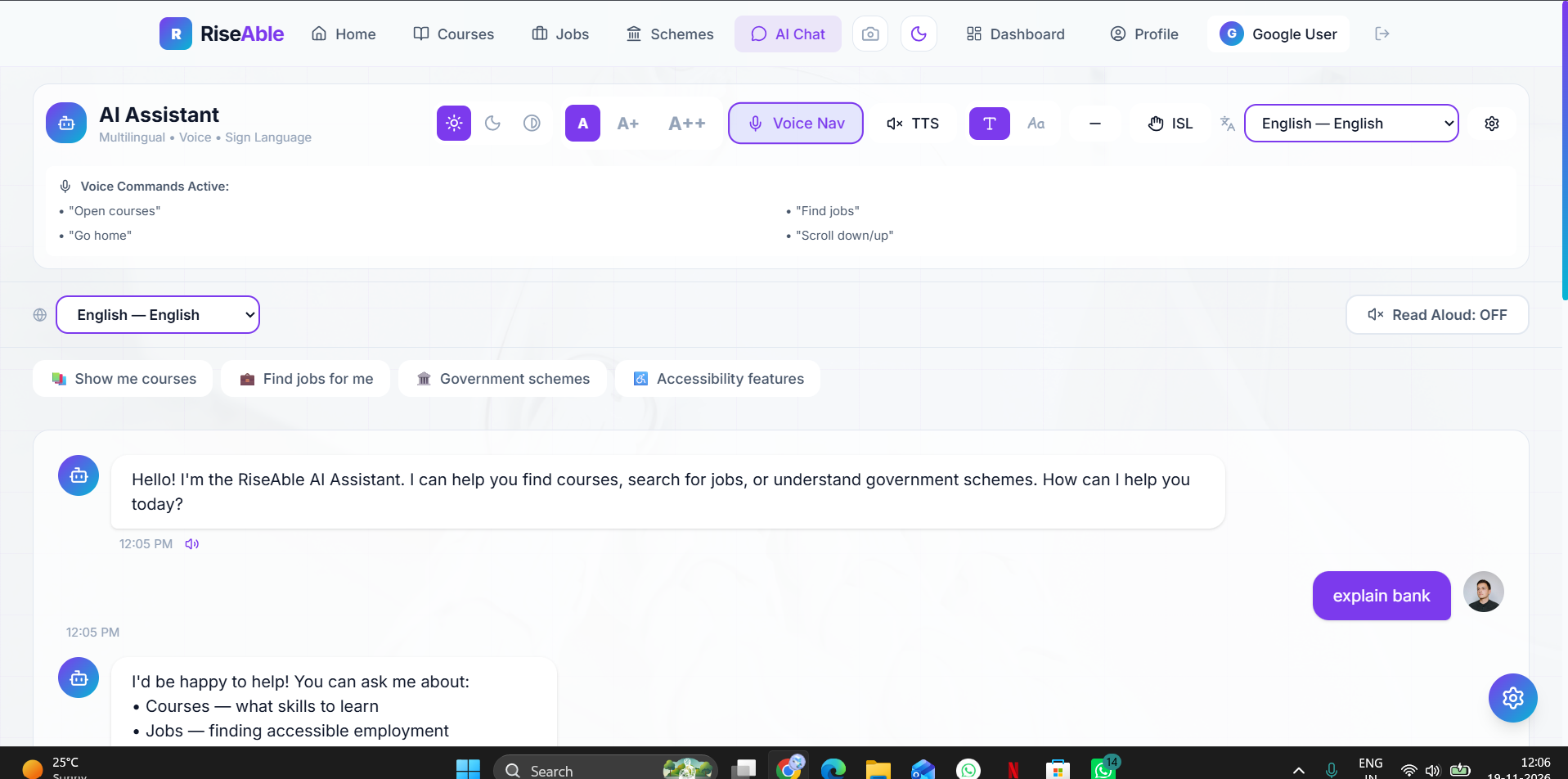
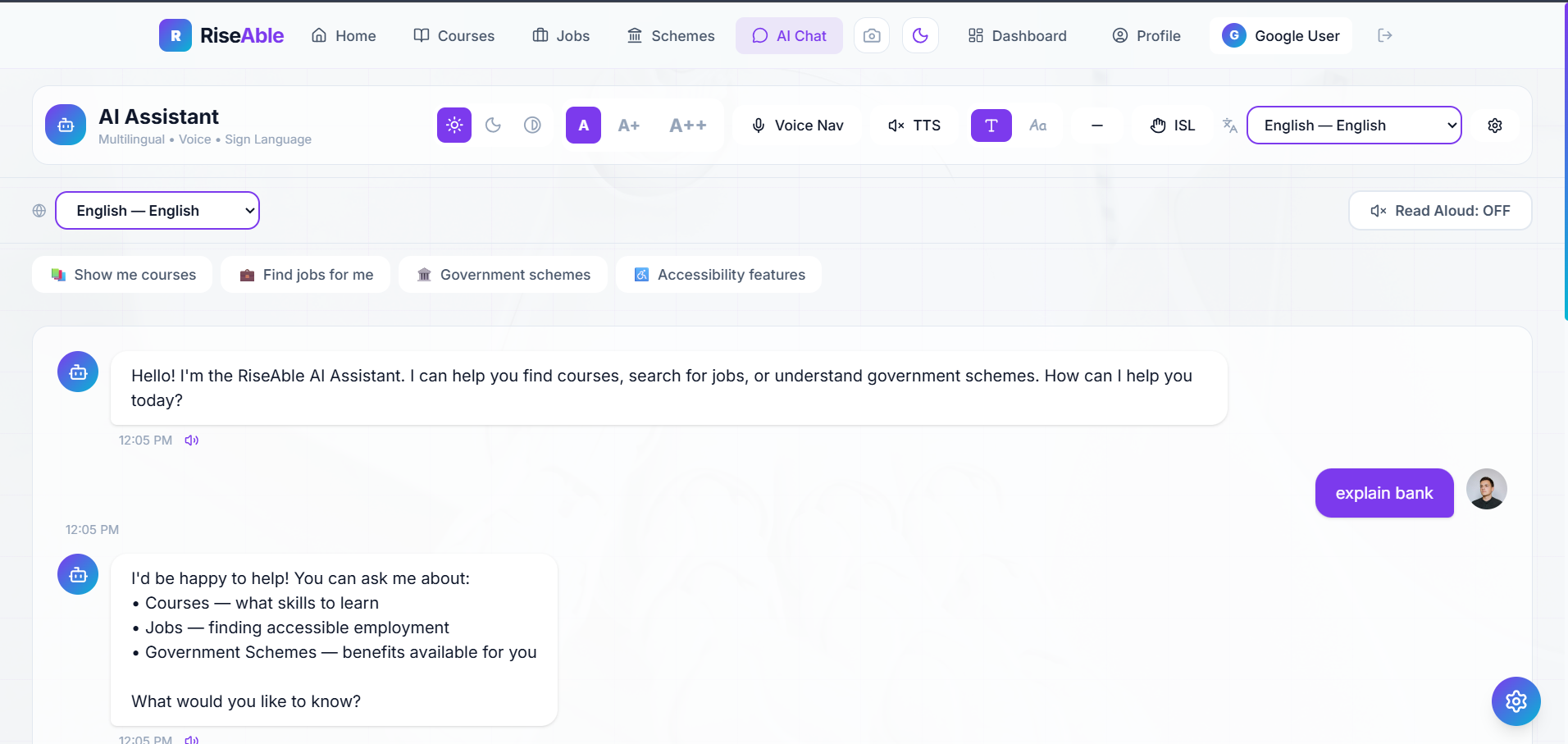
AI assistant works on voice command and explains about the portal and tells how this features works and supports the doubts
-
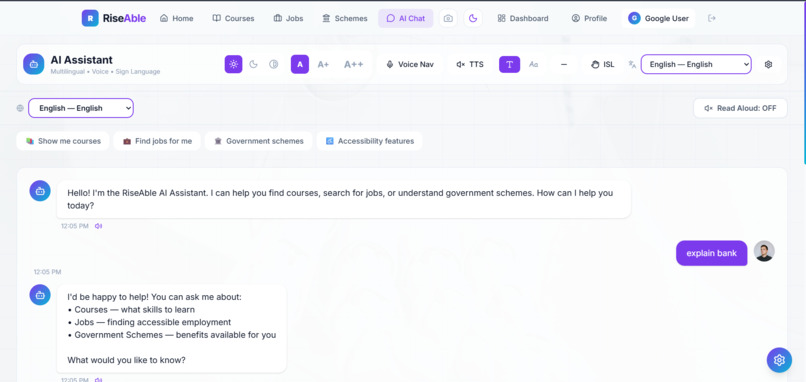
Ai assistant fully works on voice navigation
-
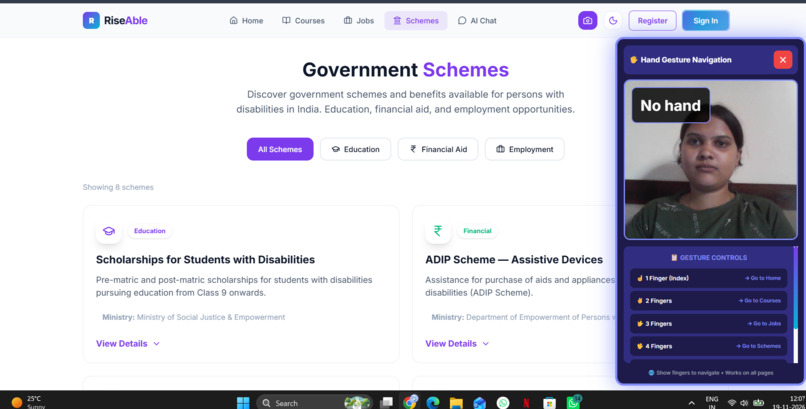
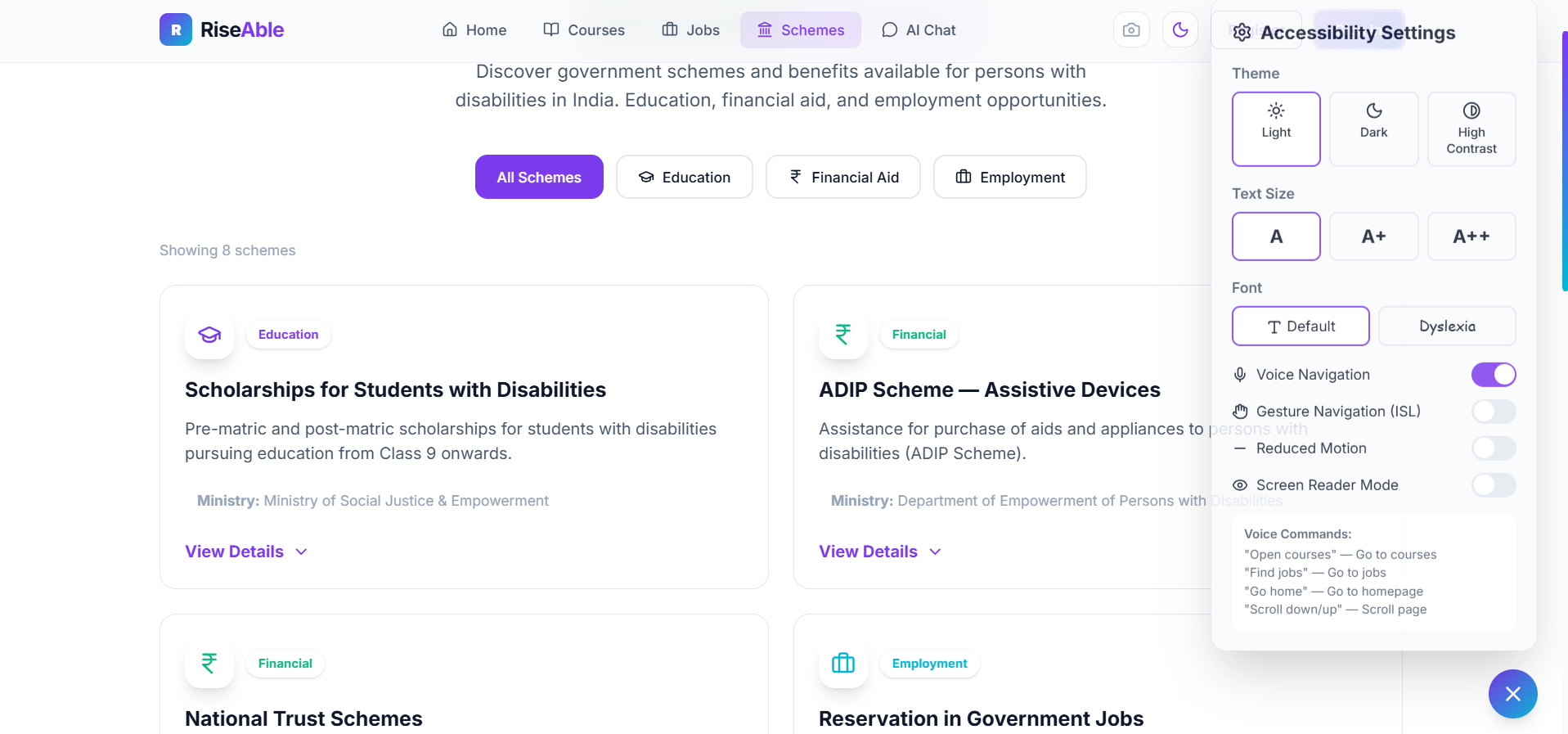
Sign Navigation works on hand movements . Navigation is done for all the pages
-
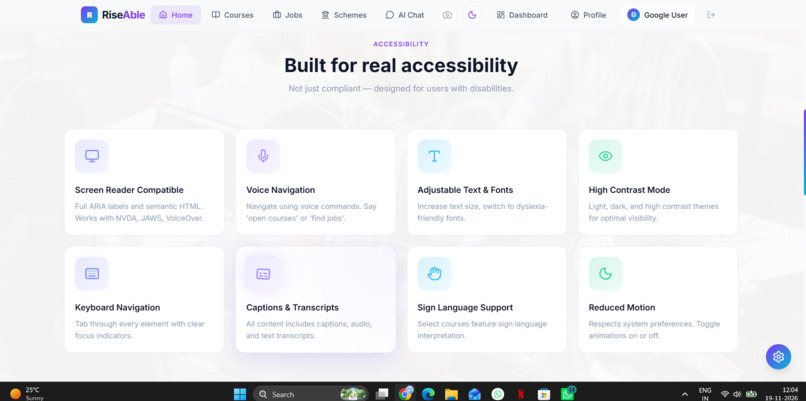
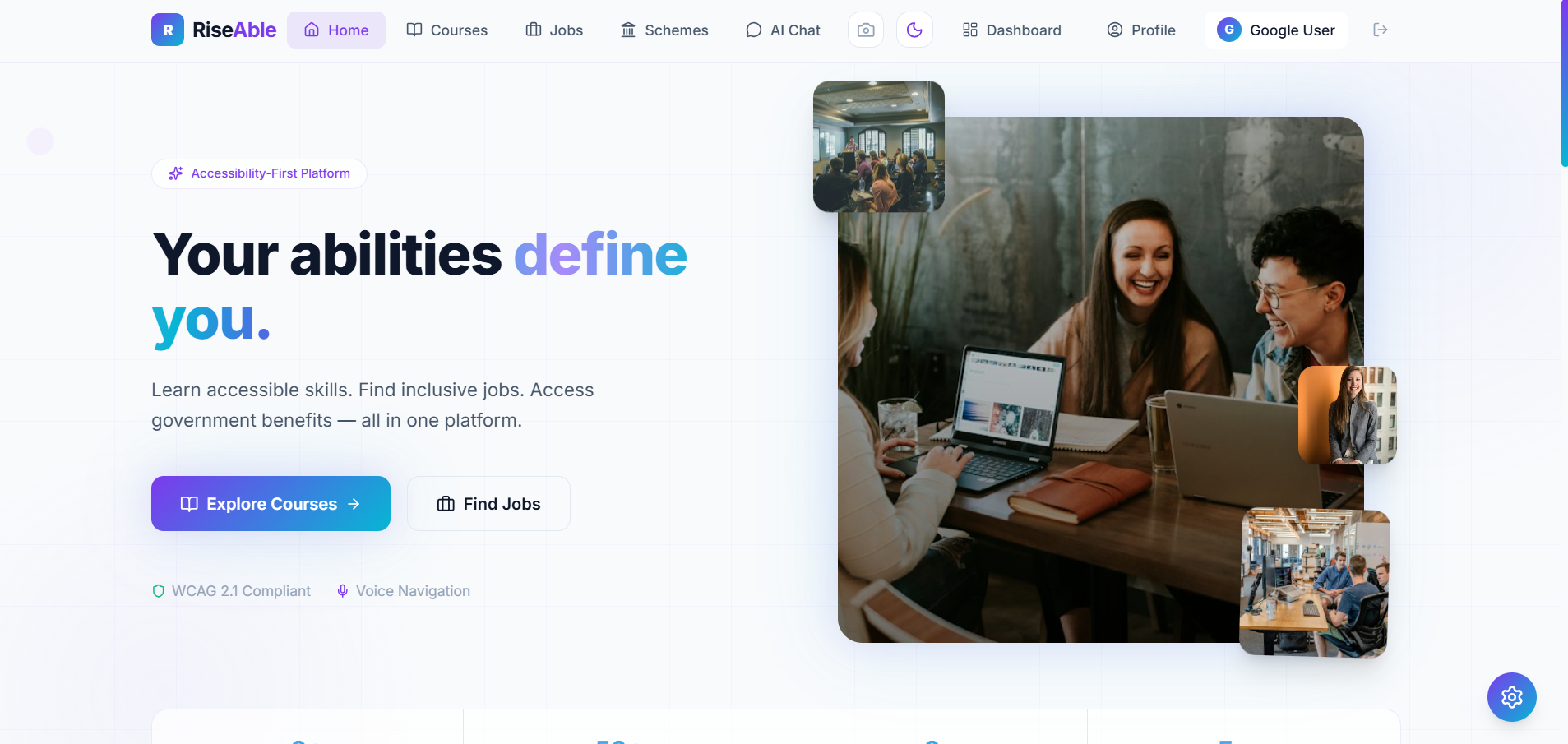
Explaination of how to use the platform for new users
-
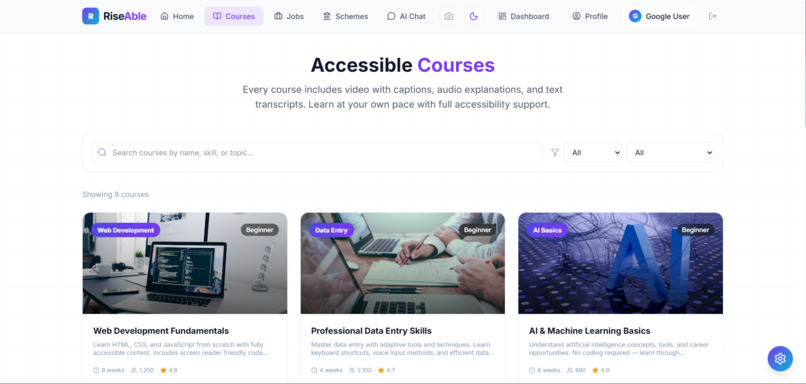
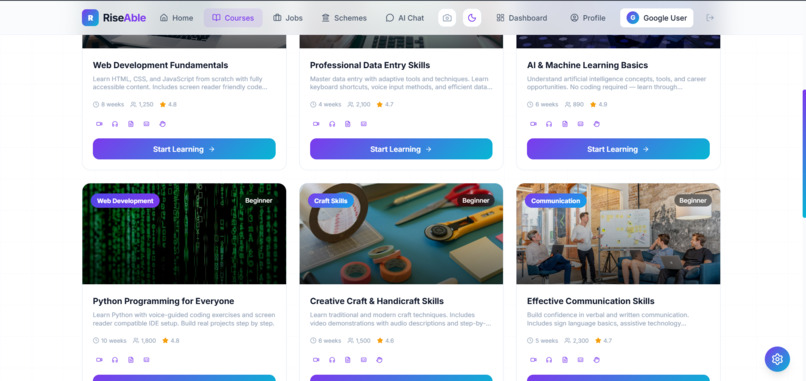
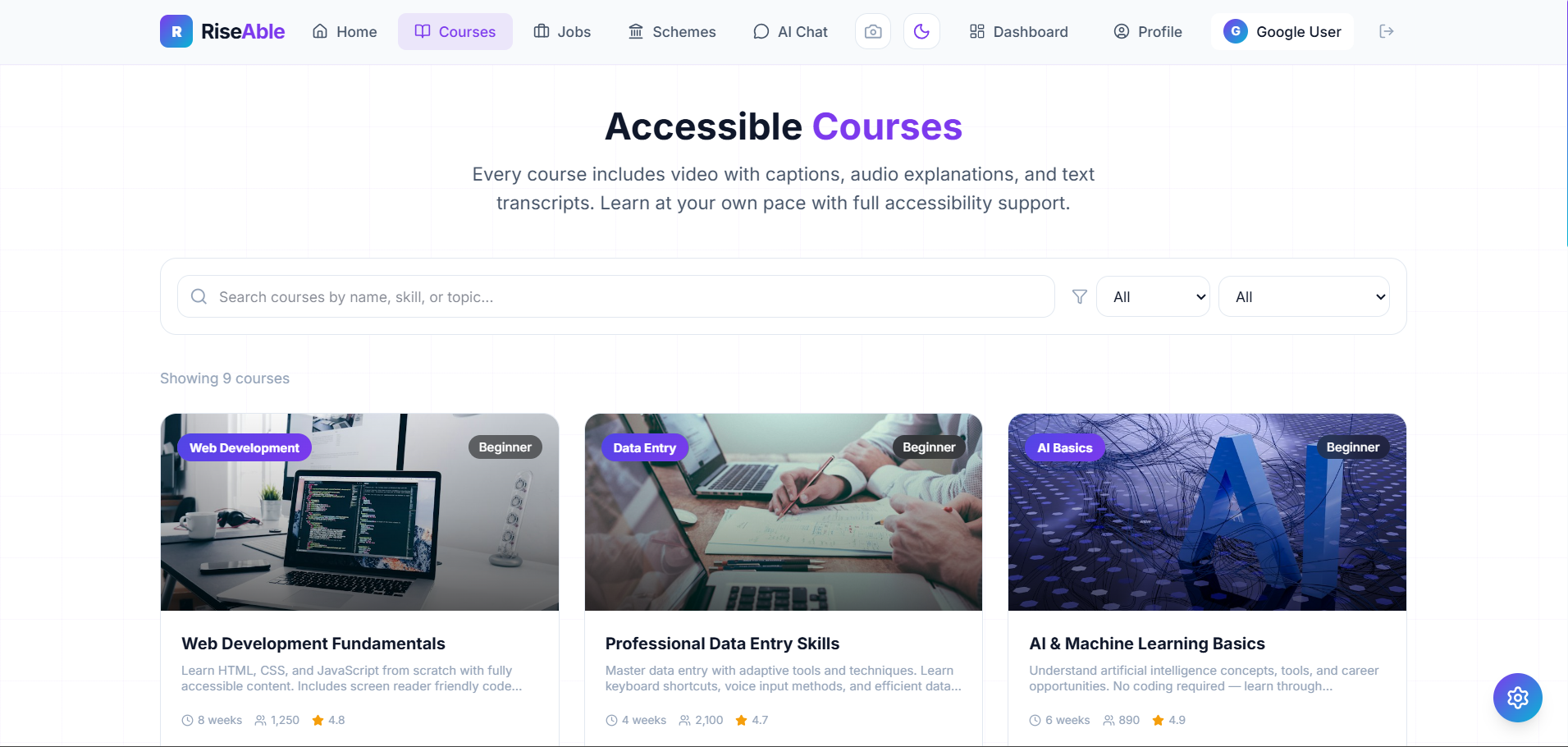
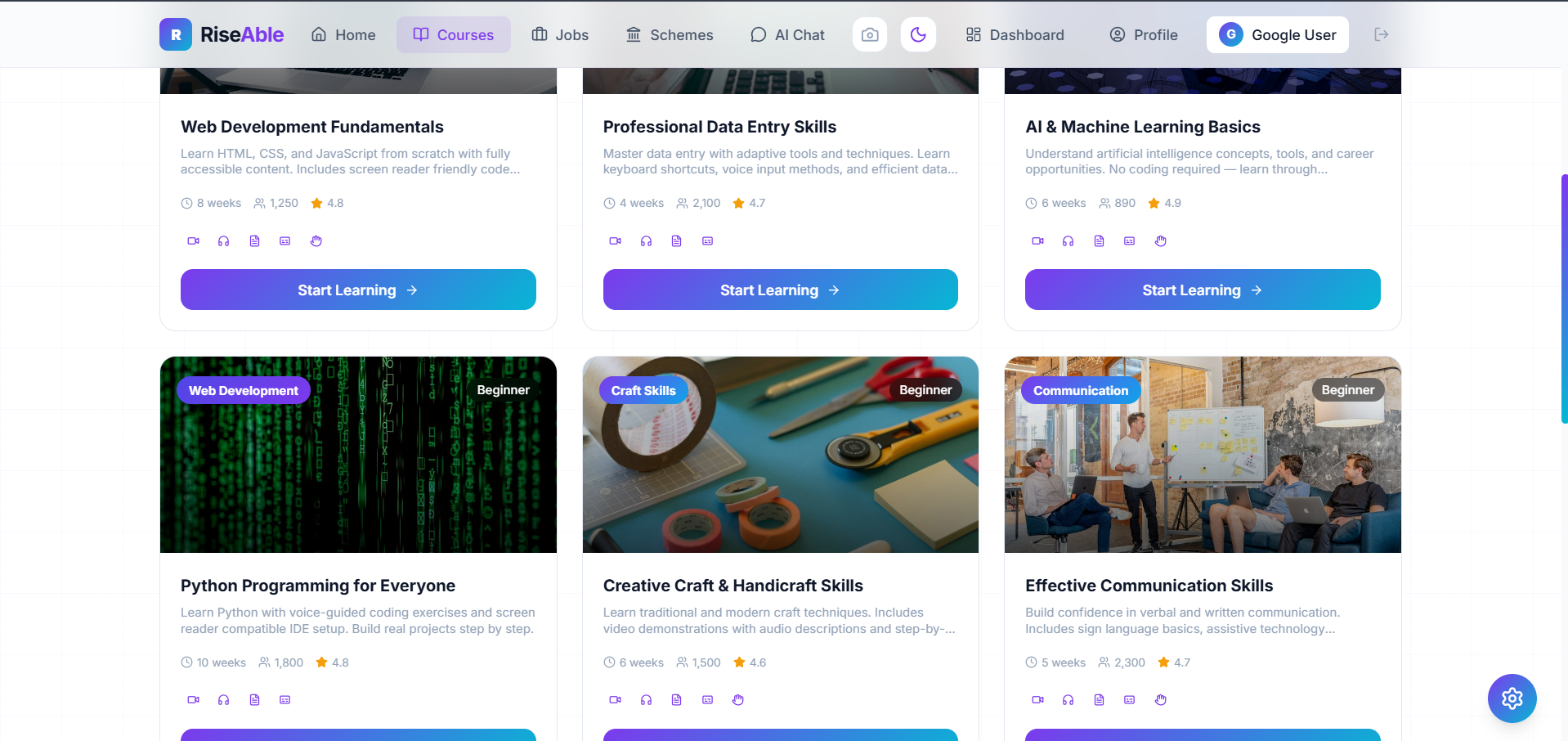
All the available courses for specially abled including tech and non tech
-
All the listing of job and works on the voice command
-
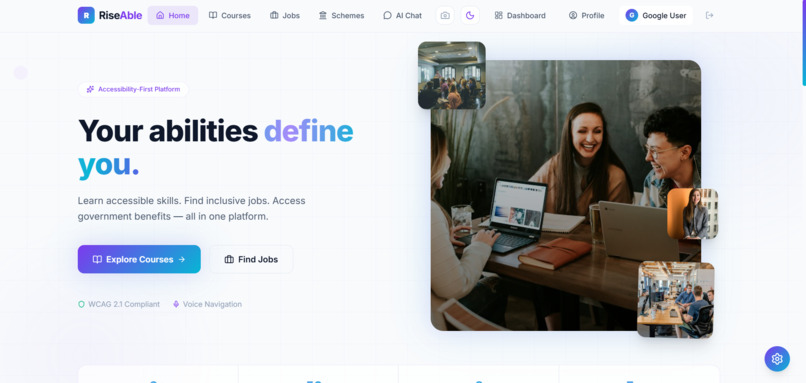
Dashboard visibility after Sign in or Registration
-
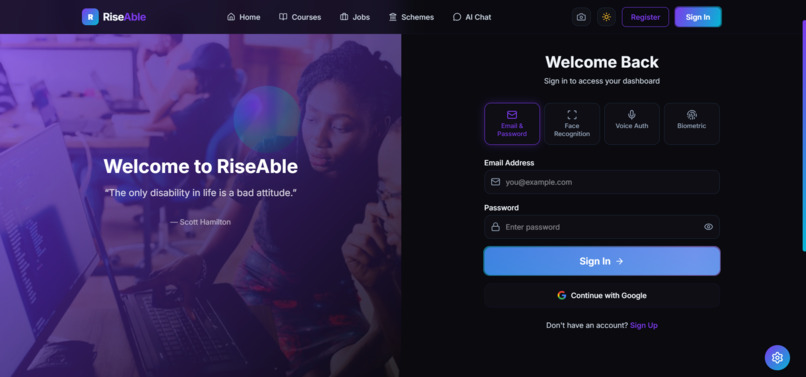
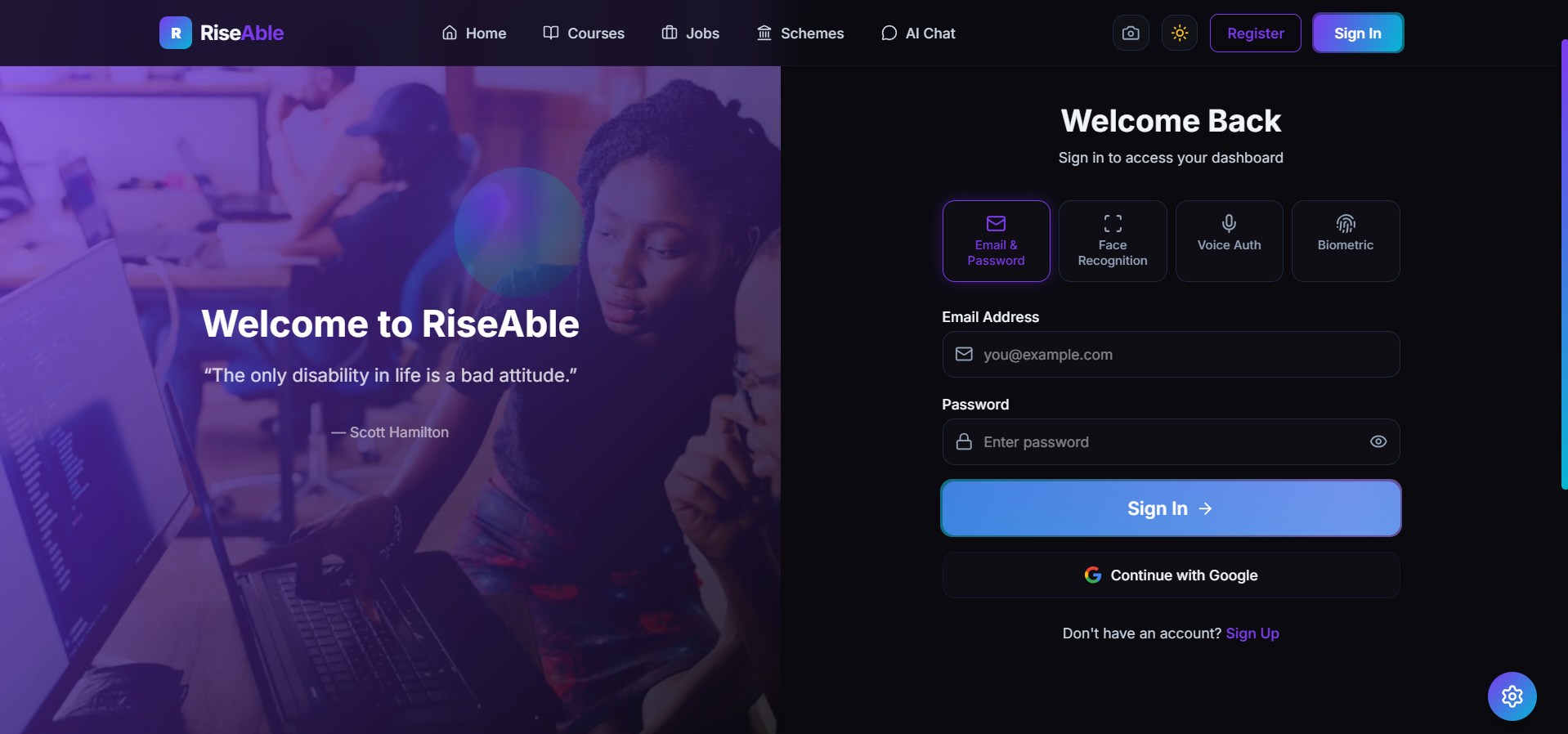
Sign in or Registrations includes 2FA , Biometric Authentication , Face recognition and traditional authentication
Risable – AI That Listens, Learns, and Adapts to You
Inspiration
I was inspired by the challenges faced by people with disabilities and elderly individuals while accessing digital platforms. Many websites, job portals, and government services have complicated interfaces that make independent navigation difficult.
I wanted to build a solution where technology adapts to people rather than expecting people to adapt to technology. This idea inspired me to create Risable, an accessibility-first AI platform that promotes digital independence and equal opportunities for everyone.
What it does
Risable is an AI-powered accessibility platform designed to help people with disabilities and elderly users independently access information, explore job opportunities, and discover government schemes.
Its key features include:
- AI Assistant: Provides intelligent, context-aware responses through conversational AI.
- Voice Assistance: Enables voice-based navigation and multilingual interaction.
- Sign Language Support: Uses a 3D Indian Sign Language (ISL) avatar for accessible communication.
- Emotion-Adaptive Responses: Analyzes emotional cues and adapts response tone and pacing.
- Inclusive Job Platform: Simplifies job discovery and application processes.
- Government Scheme Discovery: Helps users explore government schemes, eligibility criteria, and benefits.
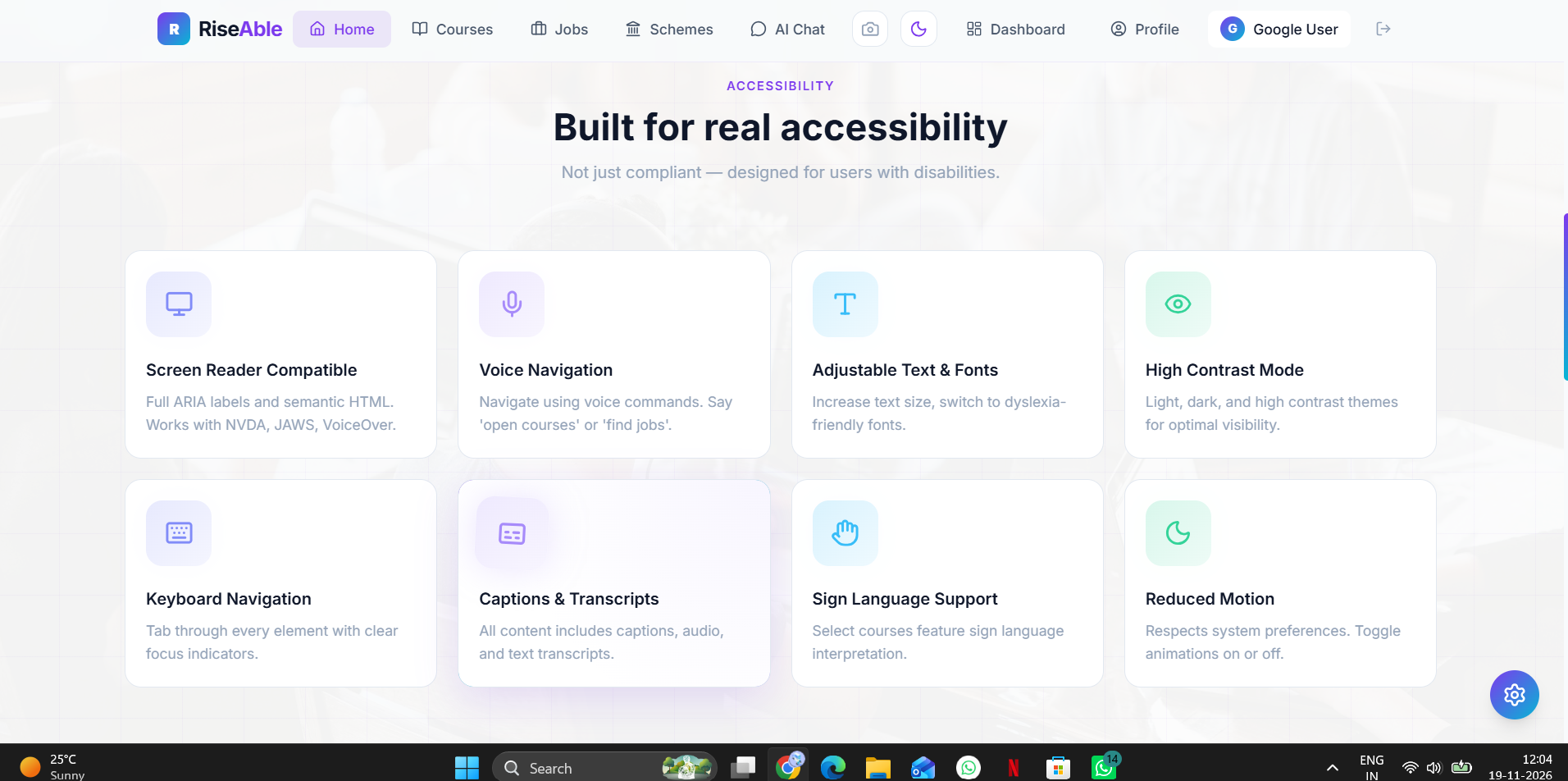
- Accessibility Features: Includes screen reader support, font scaling, dark mode, and high contrast.
How we built it
I built Risable using modern web technologies, AI services, and Microsoft Azure.
- Frontend: React.js for an accessible and responsive user interface.
- Backend: FastAPI and Azure Functions for APIs and application logic.
- AI Integration: Azure OpenAI (GPT-4o) for intelligent and context-aware responses.
- Speech Processing: Azure Speech Services for speech-to-text and text-to-speech.
- Emotion Detection: Azure AI Language and Azure Machine Learning to analyze tone, pauses, and sentiment.
- Sign Language: Three.js for the 3D sign language avatar.
- Database: Azure SQL for storing user preferences, interaction history, and accessibility settings.
- Cloud Infrastructure: Microsoft Azure for hosting and scalability.
Challenges we ran into
One of the biggest challenges I faced was integrating multiple accessibility features into one seamless platform. Combining voice interaction, sign language support, emotion detection, and AI-powered navigation required coordinating several technologies.
Another challenge was making AI responses understandable and comfortable for users with different needs. I focused on improving response pacing, simplifying explanations, and making navigation more intuitive.
User feedback and usability testing helped me identify areas for improvement and refine the overall experience.
Accomplishments that we're proud of
I am proud to have developed an accessibility-first AI platform that brings multiple assistive technologies together in one place.
Some accomplishments I am particularly proud of are:
- Integrating conversational AI with emotion-adaptive responses.
- Implementing voice-based and multilingual interaction.
- Introducing a 3D Indian Sign Language avatar.
- Bringing job opportunities and government scheme discovery into one platform.
- Building accessibility features that encourage independent digital navigation.
- Turning a socially meaningful idea into a functional platform.
What we learned
Building Risable helped me understand how AI can go beyond automation and create meaningful social impact.
I gained practical experience in integrating Generative AI, speech recognition, emotion detection, cloud services, and assistive technologies. I also learned the importance of user validation, accessibility-focused design, teamwork, and solving real-world problems through technology.
Most importantly, I learned that building an inclusive product requires understanding the people who will actually use it.
What's next for Risable
My vision is to make Risable a unified accessibility platform that can reach more people and support more languages and accessibility needs.
Future improvements include:
- Expanding regional language support.
- Improving real-time Indian Sign Language translation.
- Enhancing emotion detection and personalized AI responses.
- Integrating with more government and employment platforms.
- Expanding accessibility support for different disabilities.
- Scaling the platform through partnerships with educational institutions, NGOs, employers, and government organizations.
My vision is simple: Build a world where technology has no barriers and everyone gets an equal opportunity to learn, grow, and succeed.
