💡 Inspiration
Over 26 million persons with disabilities and millions of senior citizens across India face invisible barriers every day while navigating urban transit. Traditional navigation apps only optimize for the quickest or cheapest route—completely ignoring whether a commuter with a wheelchair will face steep steps, if an elevator is out of service, or if tactile paving exists for low-vision individuals.
We built AccessiRoute to bridge this gap: giving vulnerable commuters complete clarity on physical accessibility before they step out of their homes.
🚀 What it does
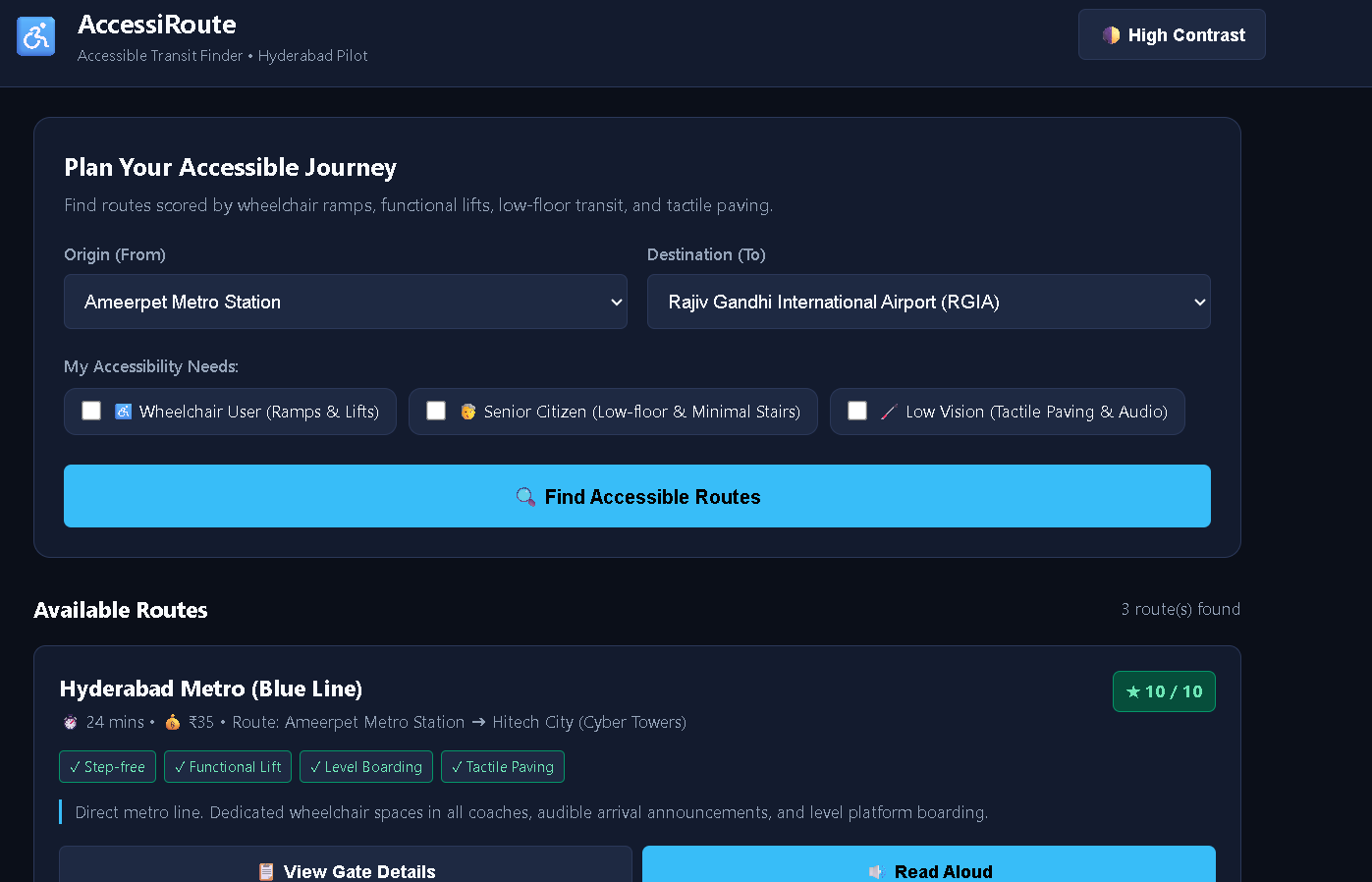
AccessiRoute is an accessibility-first transit finder tailored for Indian urban commuters (demonstrated with Hyderabad's transit corridor):
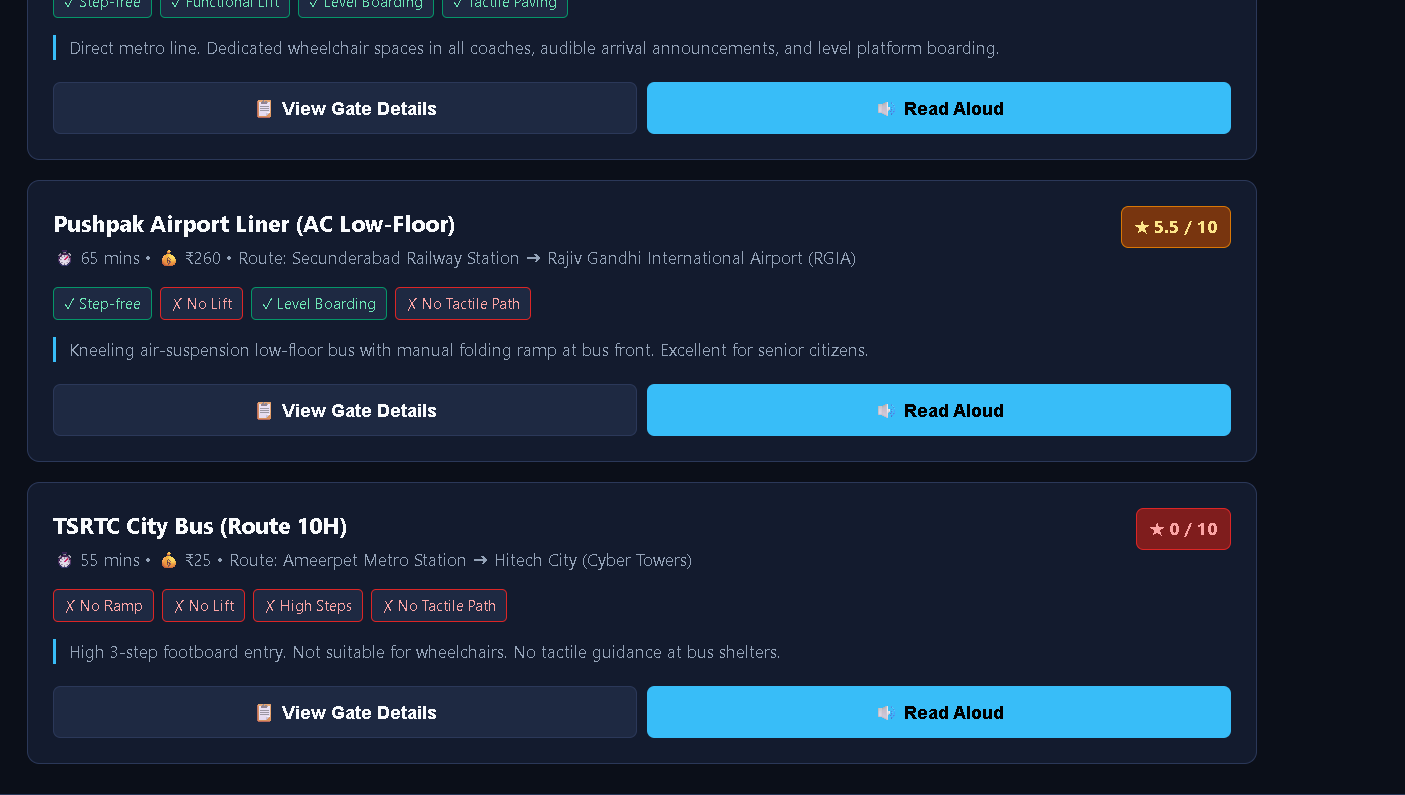
- Dynamic Accessibility Score (0–10): Ranks every transit route based on the commuter's selected needs (Wheelchair, Senior Citizen, or Low Vision). A step-free metro route scores a high green 8.5/10, while high-footboard local buses receive a cautionary red 1.0/10.
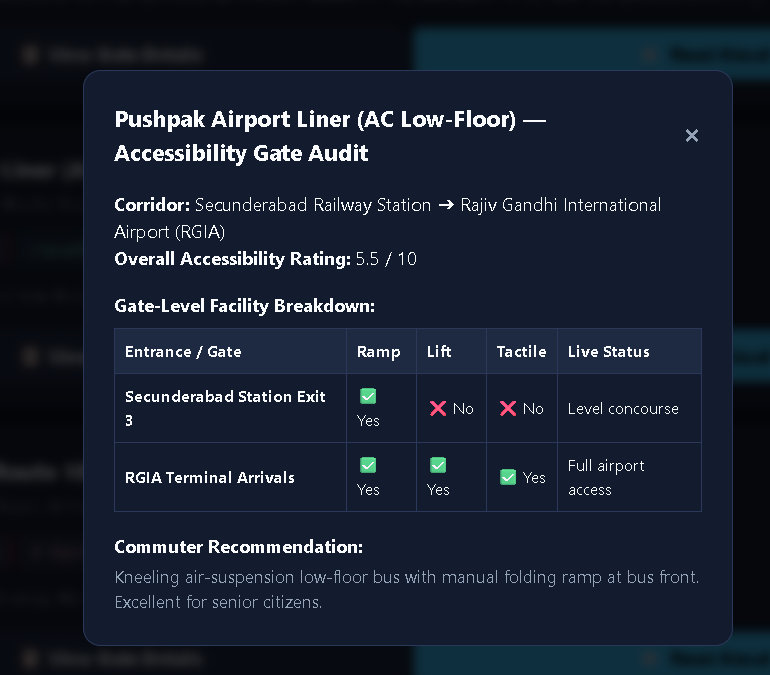
- Gate-Level Facility Audits: Standard apps stop at station names. AccessiRoute provides gate-by-gate audits—highlighting which specific gate has working elevators and ramps versus escalator-only exits.
- Audio Screen Reader: Direct integration with the browser's native Web Speech API allows low-vision commuters to click "Read Aloud" and hear route summaries, scores, and warnings.
- 1-Click High Contrast Mode: Tailored WCAG AAA high-contrast mode (pure black background with vibrant yellow typography) for maximum readability.
🛠️ How we built it
- Semantic HTML5: Fully accessible page layout with native ARIA landmarks, dialog modals, and keyboard focus outlines.
- Modern CSS3: Hand-crafted design token system featuring dark theme, responsive grid/flex layouts, and a dedicated
.hchigh contrast stylesheet. - Vanilla JavaScript (ES6+): Custom dynamic scoring engine and speech synthesis integration with zero heavy runtime frameworks.
- Production Deployment: Hosted with 100% uptime on Vercel and backed up on GitHub Pages.
🧠 Challenges we ran into
Balancing distinct accessibility priorities into a single, intuitive scoring model:
- A wheelchair user requires strict step-free ramps and functional elevators.
- A low-vision commuter prioritizes tactile paving and clear audio announcements.
- A senior citizen needs low-floor vehicles and minimal walking distances.
We engineered a responsive weighting formula that dynamically calculates scores based on user-selected criteria so recommendations remain tailored and actionable.
🏆 Accomplishments that we're proud of
- Built, tested, and deployed a fully working production application solo in less than 8 hours.
- Achieved zero third-party dependencies, meaning the entire application loads in under 1 second on low-bandwidth mobile networks across India.
- Designed gate-level transit visibility that generic multi-billion dollar transit trackers still fail to provide.
🔮 What's next for AccessiRoute
- Crowdsourced Elevator Statuses: Community reporting via WhatsApp/SMS bots for real-time broken lift alerts.
- OpenStreetMap Accessibility Layer: Direct syncing with OpenStreetMap tags (
wheelchair=yes,tactile_paving=yes). - Expansion to Pan-India Networks: Scaling the dataset to Bengaluru (Namma Metro), Mumbai Suburban Railway, and Delhi NCR.
Built With
- a11y
- accessibility
- civic-tech
- css3
- github
- html5
- india
- javascript
- leaflet.js
- public-transport
- smart-cities
- transit
- vanilla-js
- vercel
- wcag
- web-speech-api

Log in or sign up for Devpost to join the conversation.