Inspiration
During severe regional crises—such as hurricanes, flash floods, grid failures, and hard freezes—locating life-saving resources can mean the difference between life and death. Over 5.1 million residents in Harris County, 7.9 million people across Greater Houston, and millions of annual visitors face immediate friction when searching for critical relief. In past disasters, people lost their lives simply because they could not locate active medical device power or warming hubs in time. Disaster relief is often scattered across dozens of different municipal sites, non-profit portals, and social media feeds. We realized the community needed a way to bridge these fragmented disaster resources into one easy-to-access place—eliminating confusion and panic when every second counts.
What it does
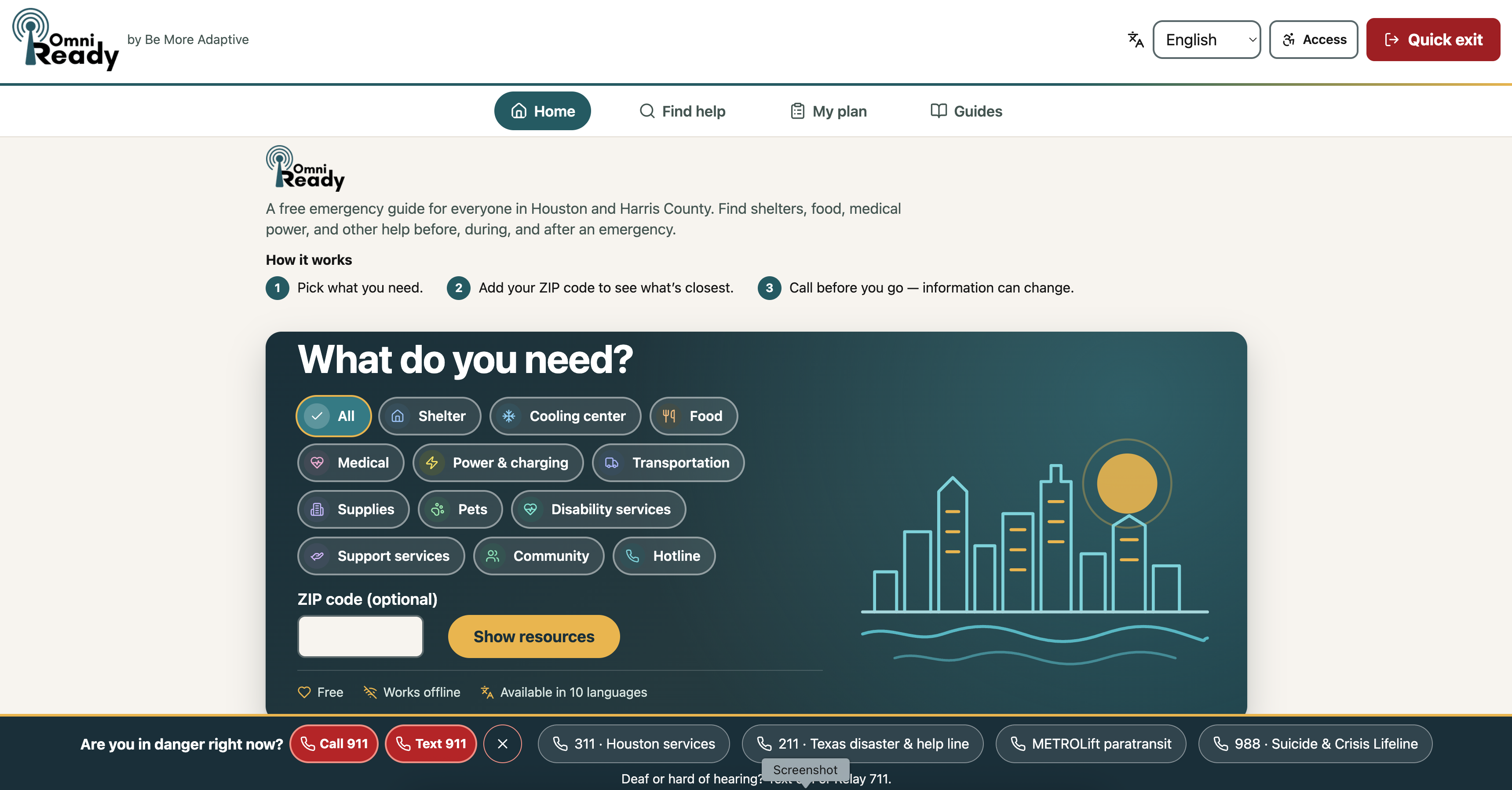
OmniReady by Be More Adaptive is a centralized platform that bridges emergency and disaster resources together into one easy-to-access hub, engineered for immediate, low-friction access.
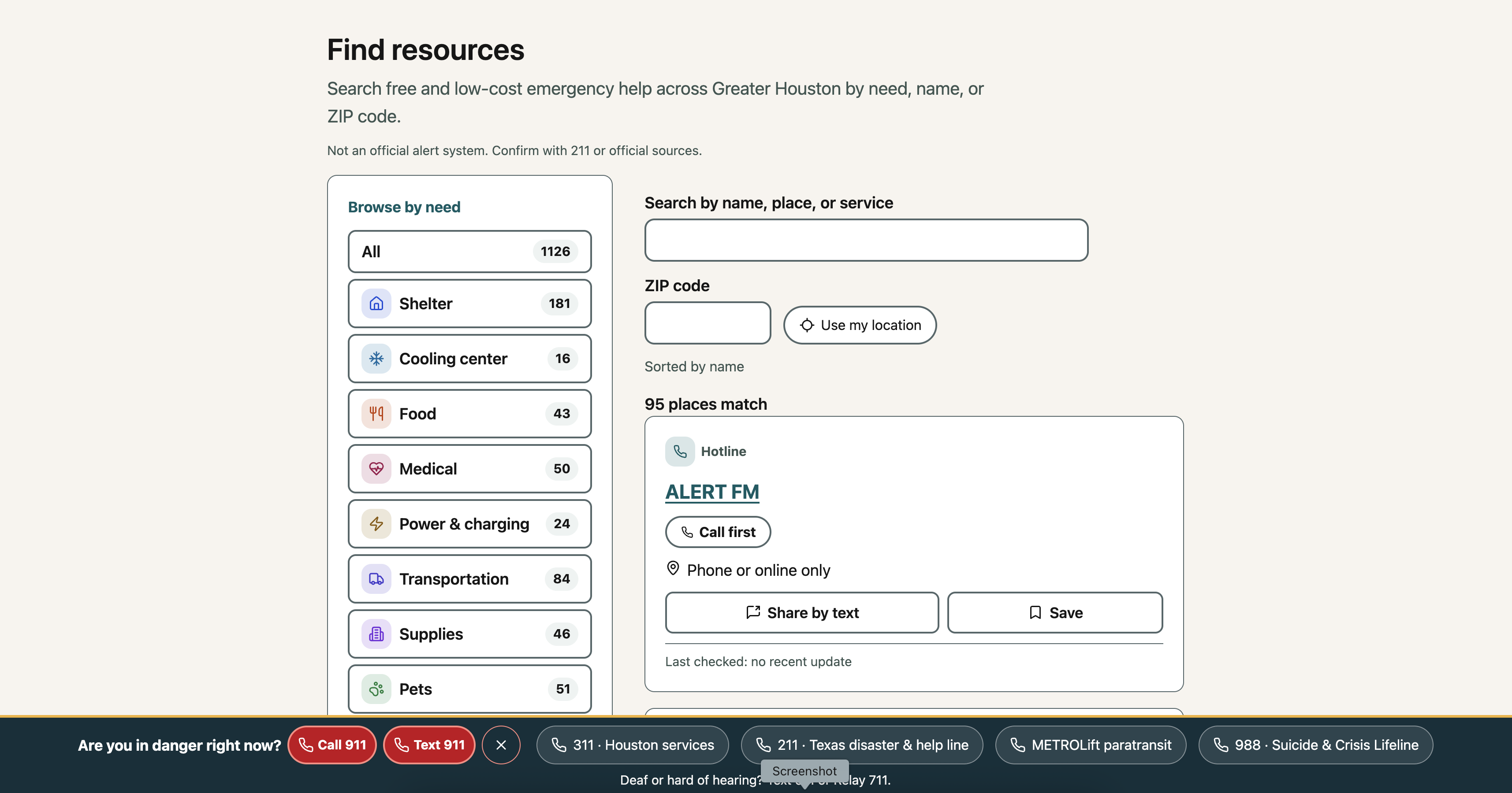
Bridged Resource Directory: Connects active climate shelters, medical power charging stations, food distribution, clean water hubs, and accessible transit into a single unified directory—eliminating mandatory typing, complex forms, or logins.
Universal & Low-Stress Design: Built to reduce cognitive overload during high-anxiety crises, using plain, non-clinical language so that residents, regional commuters, and tourists can find help without barriers or exclusionary labels.
100% Offline & Grid-Ready: Powered by Service Worker local caching and battery-saving AMOLED modes to ensure uninterrupted operation when power grid infrastructure or mobile networks disconnect.
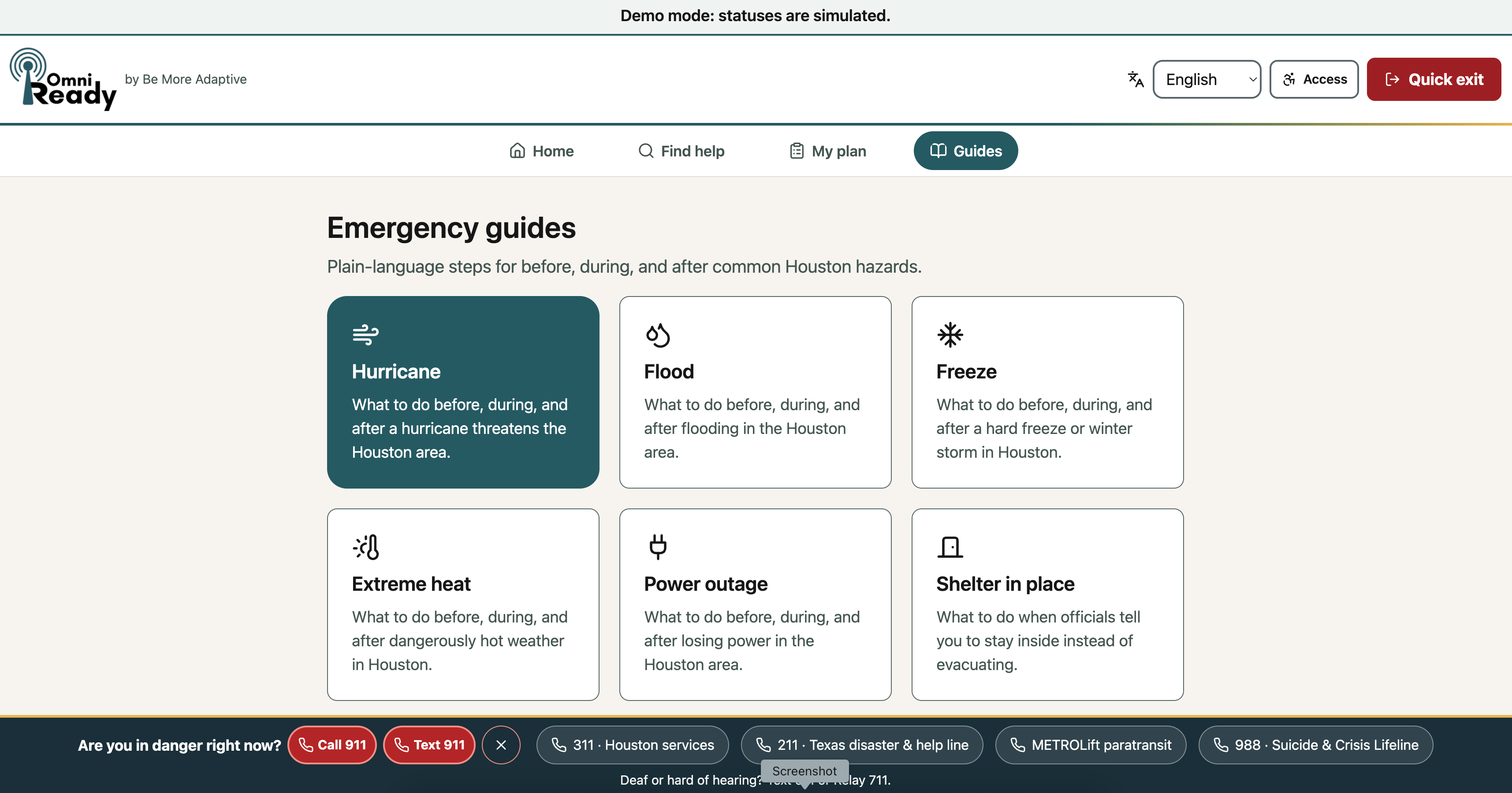
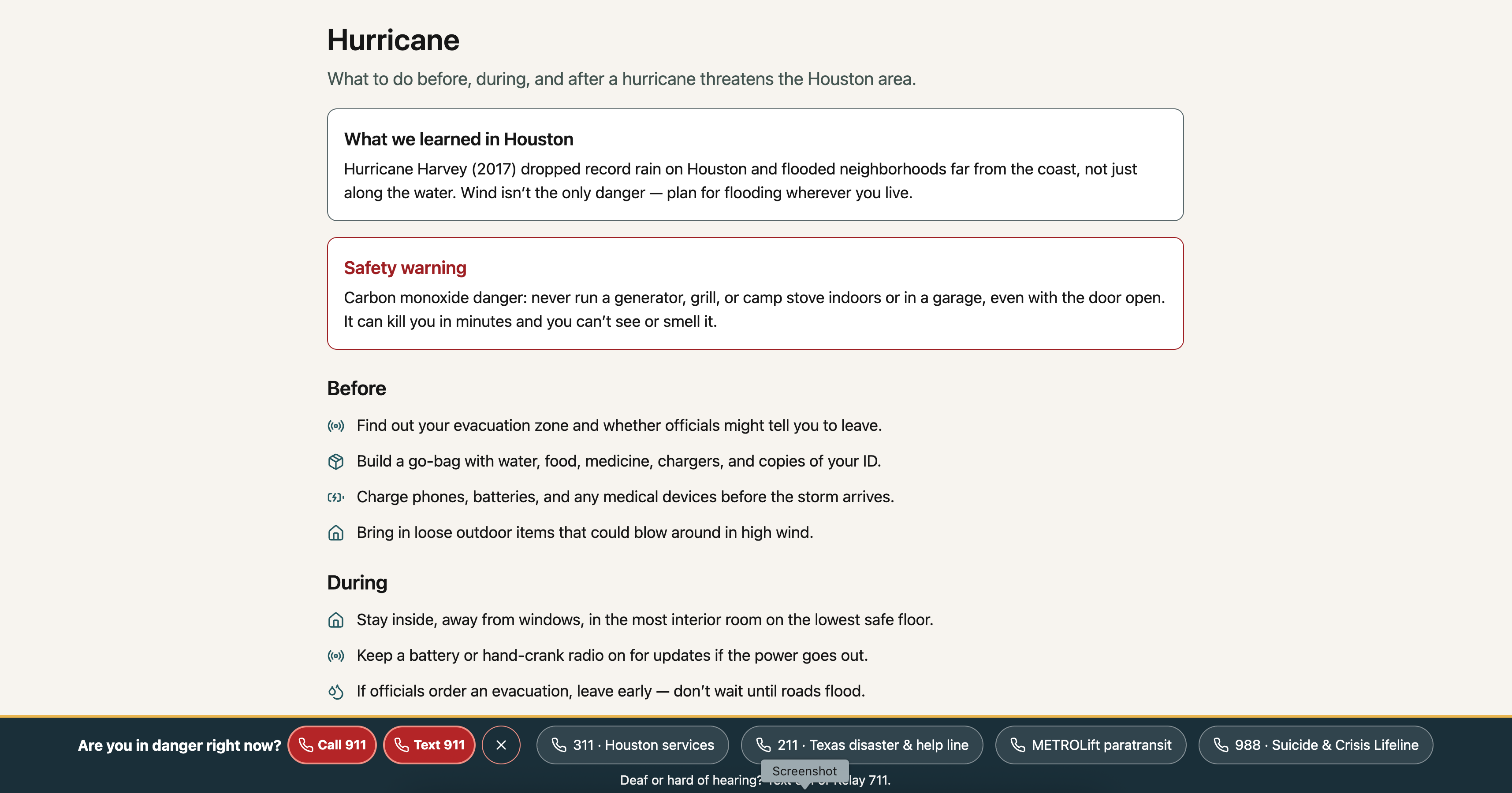
Pre-Disaster Education & Agency Relief: Centralizes preparedness guides before storms hit, educating the public in one place and offloading routine resource inquiries from frontline first responders and 311/911 call centers.
How we built it
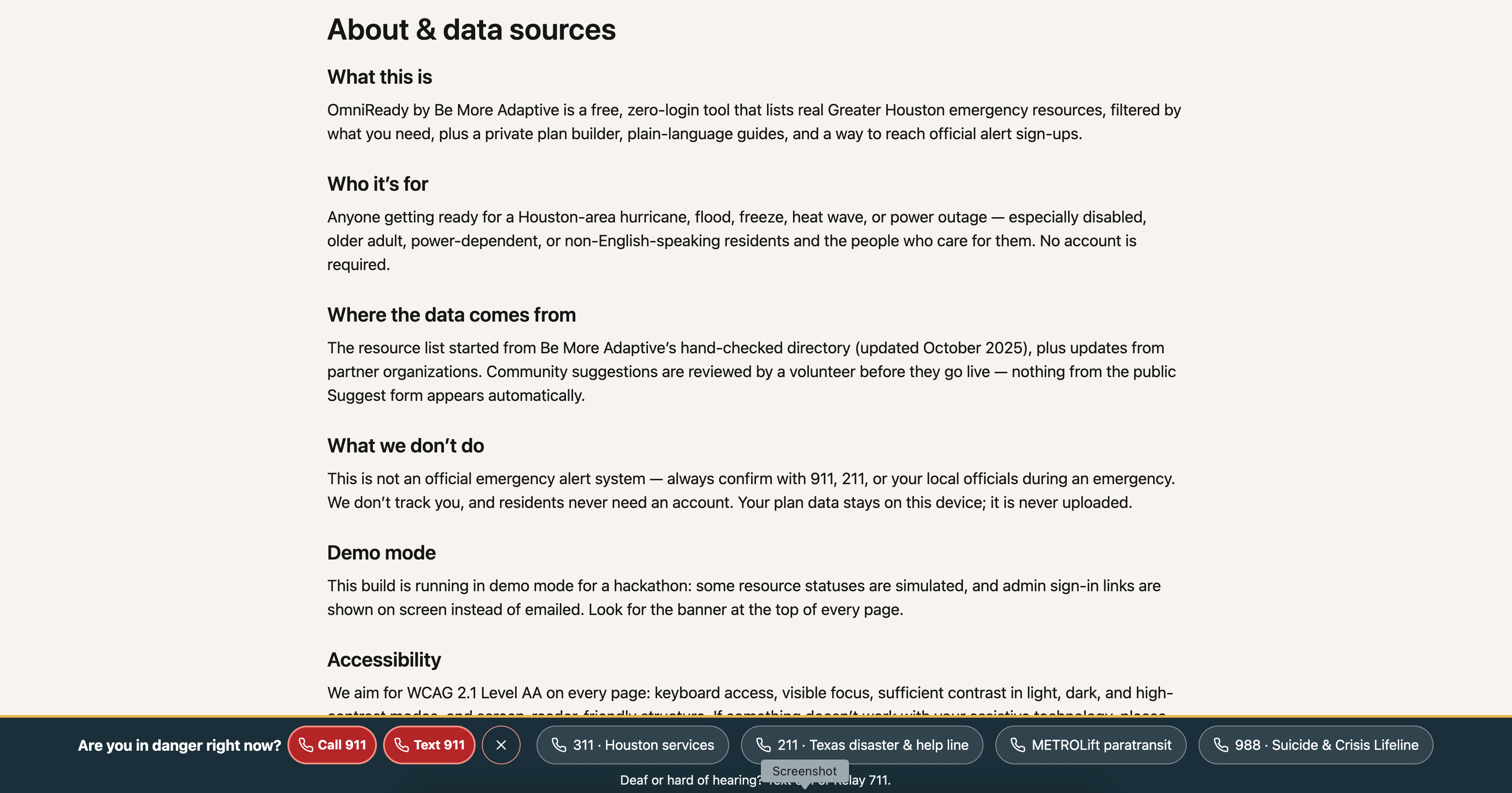
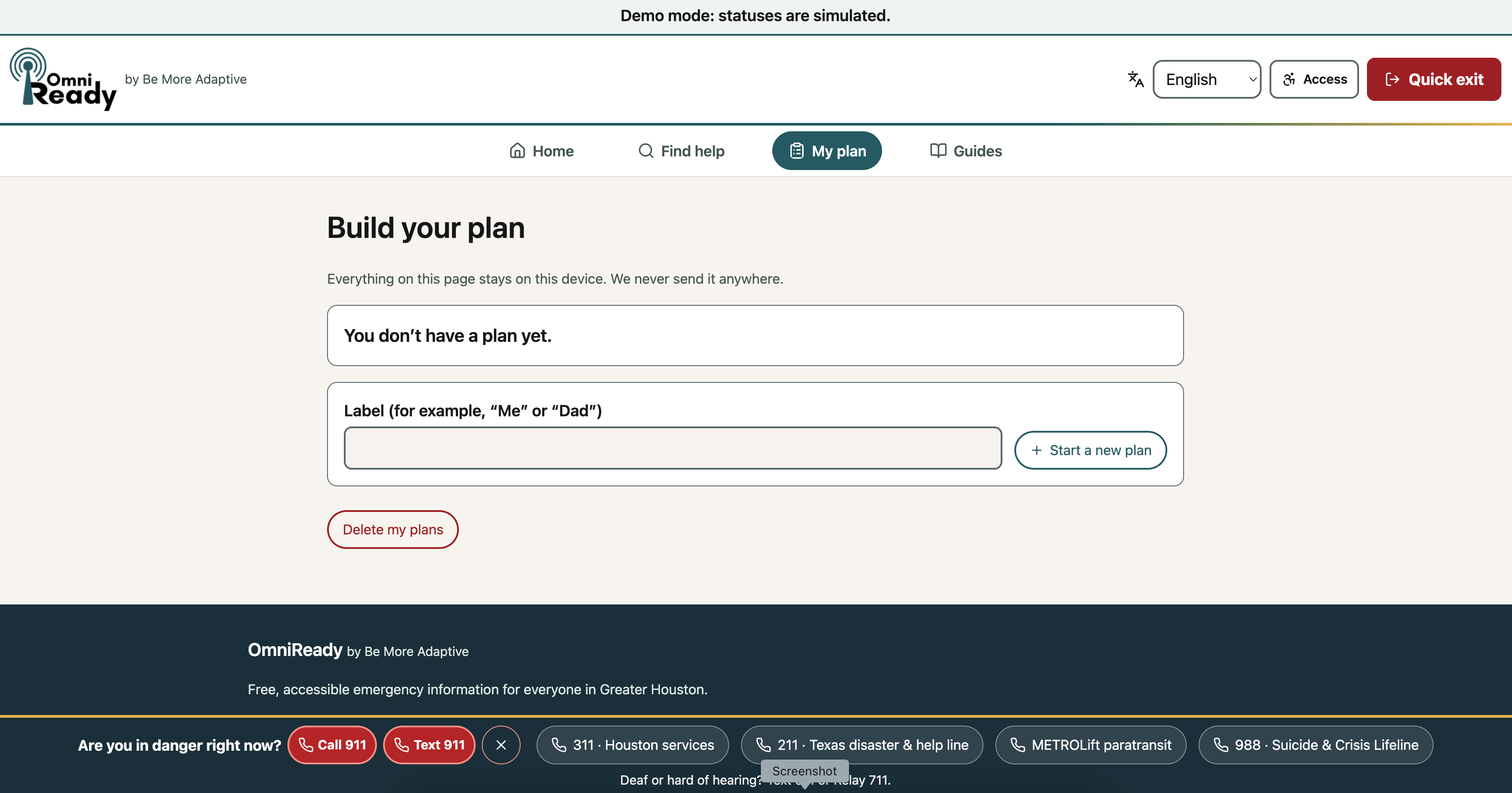
We started from Caitlin Conner's blueprint. She's the founder of Be More Adaptive and sits on the Houston Commission on Disabilities, and we treated her spec as the source of truth. The core loop is simple: data in (her resource spreadsheet plus an accessible admin tool) and data out (a fast, offline, accessible directory anyone can use without logging in).
Stack
- Frontend: Preact, Vite and Tailwind, built as a Progressive Web App with vite-plugin-pwa and Workbox. It's text-first, with no map, so it stays light on slow phones and weak connections.
- Backend: Node and Express. One service handles the API, the admin tools and sign-in, and also serves the built app.
- Database: Postgres on Railway, with checked-in migrations. It's seeded from a JSON file that an import script generates from Caitlin's spreadsheet. Personal contact details in the sheet are removed before anything is published or committed.
- Shared rules: one set of zod schemas and types checks the data on the frontend, the backend and during import.
Offline-first by design The whole directory is cached on the device, so it still works when the power or cell network goes down, which is exactly when people need it. We kept a strict data-saver budget: the resources page loads in under 90 KB on a cold start, helped by a compact snapshot format. Anything not needed on first paint loads later.
Accessibility as a requirement, not a polish pass
- The goal is WCAG 2.1 AA on both the public site and the admin tools, because volunteers and admins may have disabilities too.
- Automated axe-core checks run inside our Playwright end-to-end tests on every pull request.
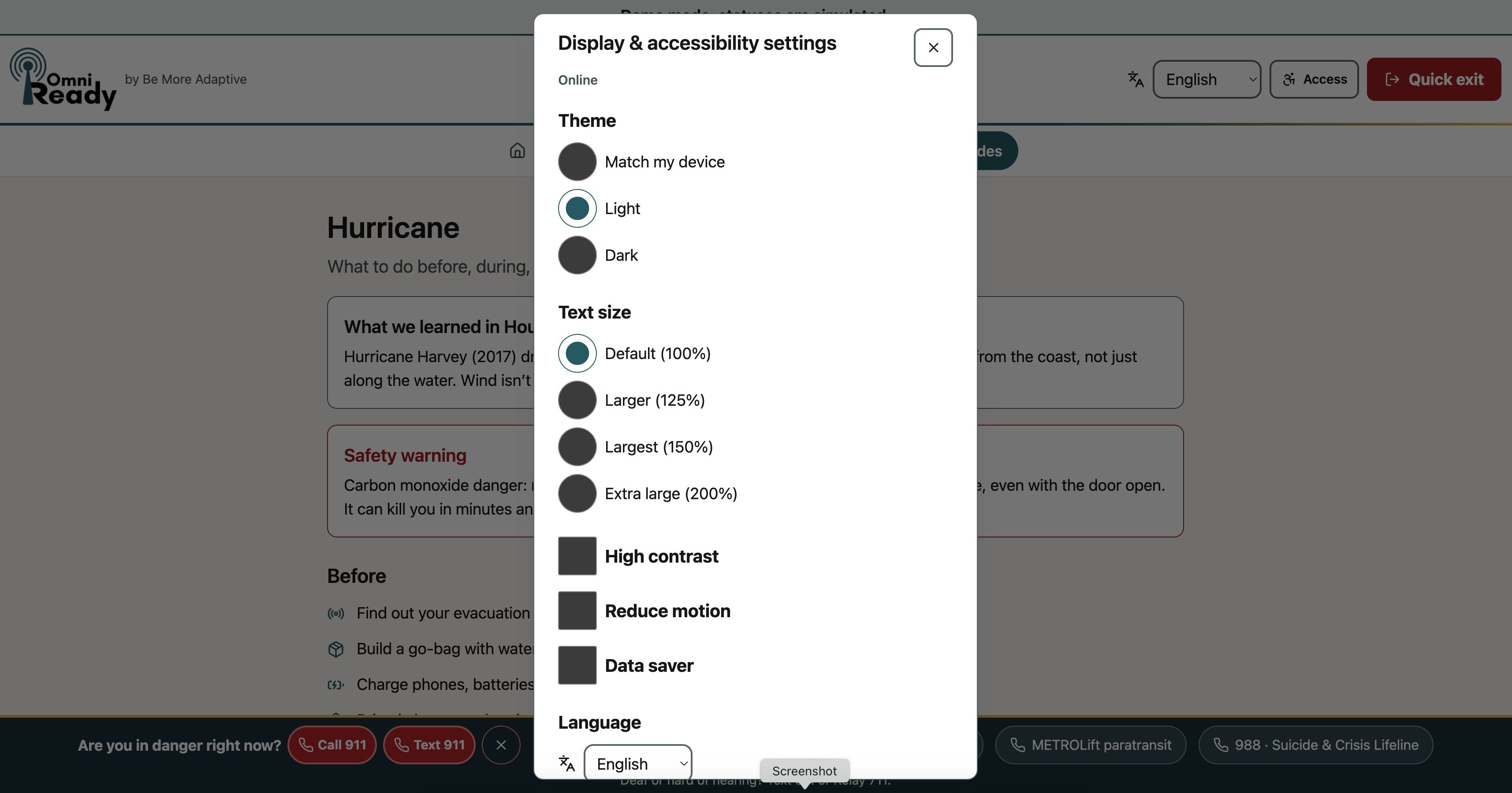
- There are high-contrast and dark themes and text scaling up to 150%.
- Every icon has a text label, and no emoji are used.
- A quick-exit button and a persistent "Are you in danger right now?" hotline bar are always on screen.
- Freshness badges fade from green to yellow "Call First" rather than hiding stale data.
10 languages Every UI string goes through a translation dictionary. The site ships in English, Spanish, Vietnamese, Chinese, Arabic, Urdu, French, Tagalog, Korean and Hindi. Arabic and Urdu read right to left, and the layout uses direction-neutral CSS so it flips cleanly. Languages beyond the first three load only when chosen, to protect the data budget. The newer translations are machine-made and marked for review by native speakers.
Admin and community input
- Admins sign in with a passwordless magic link.
- Volunteer roles are limited to specific ZIP codes, and the server enforces that, not just the interface.
- Suggestions from the public never go live without approval.
Built to scale beyond Houston Every Houston-specific value lives in one city config file: hotlines, counties and local links. Another city can launch by swapping that file and its data.
How we worked We used Claude Code as an AI engineering team. A lead agent planned each piece of work and handed it to engineer and QA agents working in parallel on separate branches. Every change went through a draft pull request, CI (unit tests, type-checking, lint, and the Playwright and axe checks), a QA review, and human approval before merging. Caitlin's feedback rounds came straight back in as small, testable fixes, and we deployed continuously to Railway.
Challenges we ran into
Bridging Fragmented Data: Unifying isolated data streams from different agencies into a clear, single view required stripping away confusing agency jargon and organizing critical life-safety categories right at the surface.
Maintaining Accuracy in Crises: Outdated shelter listings pose a direct safety hazard. We addressed this by designing automated status verification timers and low-bandwidth SMS updates for shelter managers in the field.
Accomplishments that we're proud of
Successfully bridged disparate emergency resources into one easy-to-access platform where accessibility and screen-reader readiness are embedded into the core UX.
Created an offline-ready framework capable of helping millions of residents, commuters, and visitors navigate regional emergencies without relying on active cell service.
What we learned
Bridging civic information during crises isn't just a matter of convenience—it is a life-safety requirement. Creating a single, accessible entry point for the most vulnerable users under extreme stress creates a faster, clearer, and better experience for everyone.
What's next for OmniReady By Be More Adaptive
Expanded Resource Feeds: Continuing to bridge additional community organizations, food banks, and transit providers into the central directory.
Inter-Agency Integration: Partnering with regional emergency management offices (ReadyHarris, Houston OEM) and first responders to streamline public information flow into one trusted hub and reduce call center strain.
Built With
- accessibility
- axe-core
- claude
- express.js
- github-actions
- i18n
- lucide
- magic-link-auth
- node.js
- npm-workspaces
- offline-first
- playwright
- postgresql
- preact
- pwa
- railway
- rtl
- service-workers
- tailwindcss
- typescript
- vite
- vitest
- wcag
- workbox
- zod


Log in or sign up for Devpost to join the conversation.