-
-

Real world implementation...trying product in real world
-
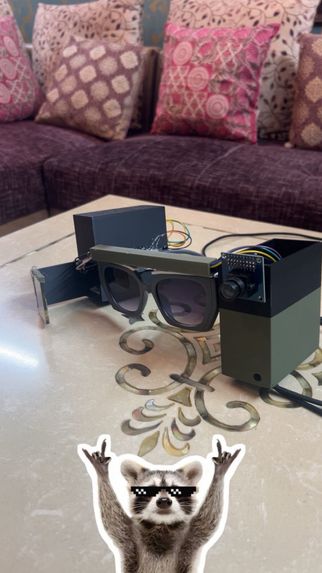
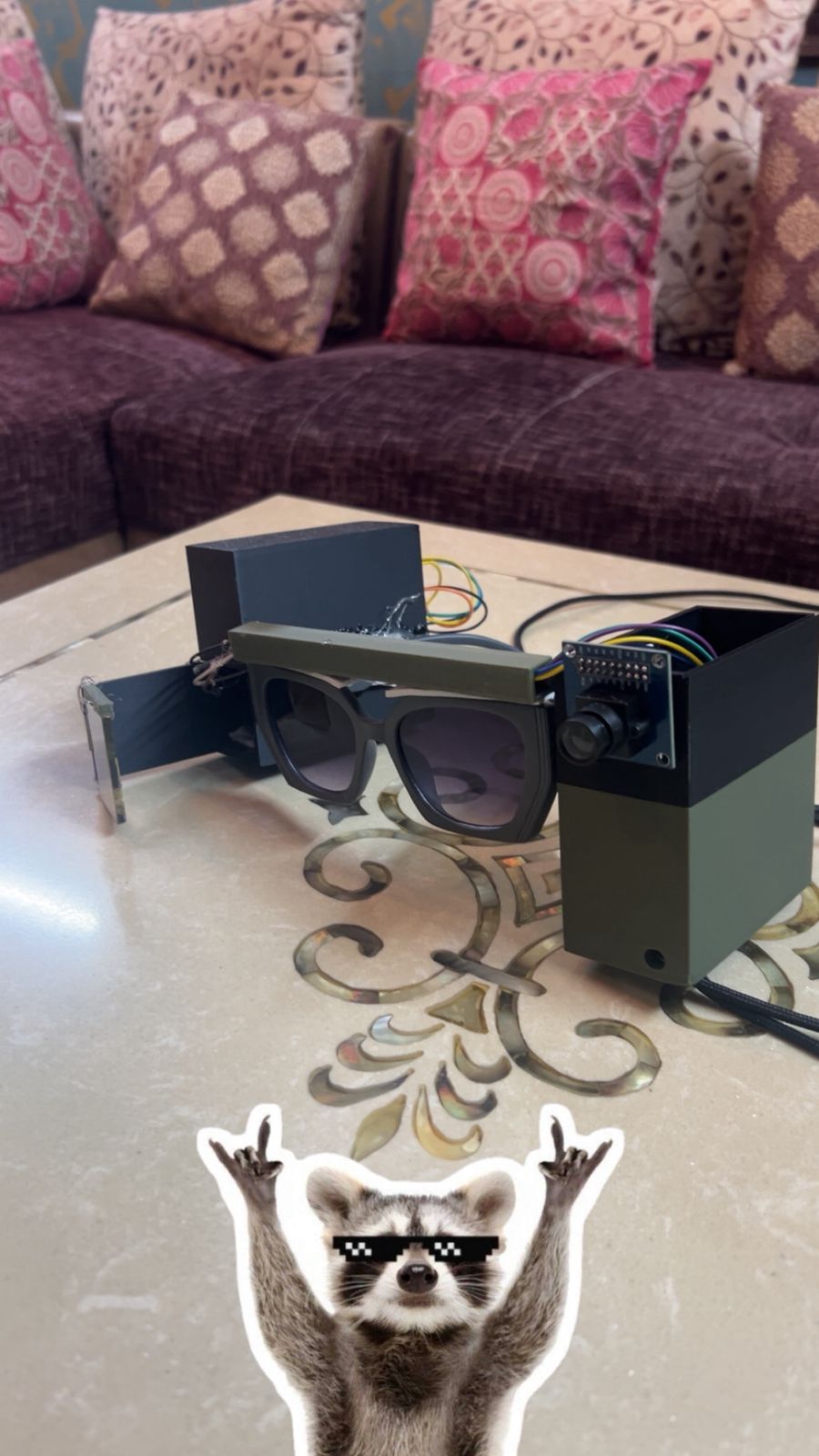
Smart Glasses

Inspiration
AccessBot was inspired by the visible gap between technological advancement and real-world accessibility. While navigation systems optimize for time and distance, they rarely account for accessibility constraints such as ramps, elevators, or obstacle-heavy environments. We observed that people with visual, hearing, or mobility impairments often rely on assistance for tasks that should be independently manageable. The goal was to design a system where accessibility is treated as a core routing constraint, not a secondary feature. We wanted to build a scalable, AI-driven platform that improves independent mobility using practical hardware and optimized algorithms.
What it does
AccessBot is an AI-powered accessibility navigation system that combines smart glasses, accessible route optimization, and crowdsourced mapping.
The system:
- Detects real-time obstacles using onboard computer vision
- Provides haptic and audio feedback for safe navigation
- Computes accessibility-aware routes using weighted path optimization
- Integrates AR overlays for guided movement
- Allows users to map and validate accessibility features
Traditional routing minimizes:
$$ \min \sum_{i=1}^{n} w_i $$
AccessBot modifies this to:
$$ Cost = \alpha \cdot d + \beta \cdot a $$
Where:
- ( d ) = distance
- ( a ) = accessibility penalty
- ( \alpha, \beta ) = priority weights
This ensures routes are both efficient and usable.
How we built it
Hardware
We developed a wearable prototype using:
- ESP32-S3 / ESP32-CAM
- INMP441 microphone
- MAX98357A amplifier
- Vibration motor module
- OLED display
- Bone-conduction speaker
The device performs lightweight edge inference and syncs with a mobile application.
Software
- Optimized computer vision pipeline for obstacle detection
- Distance estimation using projection geometry:
$$ d = \frac{f \cdot H}{h} $$
- Accessibility-aware routing algorithm
- Crowdsourced accessibility database with validation scoring
- Mobile interface for navigation and AR overlays
The architecture separates edge inference (micro-level awareness) from mobile-based route planning (macro-level navigation).
Challenges we ran into
Hardware Limitations
Running real-time inference on ESP32-class hardware required aggressive model optimization and memory management.Latency Constraints
Navigation feedback must satisfy:
$$ Latency \leq 100 \text{ ms} $$
Maintaining this under variable lighting and movement conditions was challenging.
Environmental Variability
Detection accuracy fluctuated in low-light or cluttered environments.Data Reliability
Accessibility data is often incomplete. We implemented a confidence scoring model:
$$ C = \frac{\sum r_i}{n} $$
to improve trustworthiness.
- Multimodal UX Design
Designing a unified system for blind, deaf, and wheelchair users required careful abstraction of feedback mechanisms.
Accomplishments that we're proud of
- Successfully built a working smart glasses prototype.
- Implemented accessibility-aware routing instead of simple shortest-path logic.
- Achieved low-latency obstacle detection on embedded hardware.
- Designed a scalable crowdsourced accessibility validation system.
- Integrated hardware and mobile software into a synchronized ecosystem.
What we learned
- Accessibility is fundamentally a systems engineering problem.
- Edge AI requires balancing model accuracy with computational constraints.
- In assistive technology, reliability and predictability are more important than feature complexity.
- Real-world deployment demands robust fallback mechanisms.
- User-centered thinking significantly improves system design decisions.
What's next for AccessBot
- Replace geometric distance approximation with depth estimation models optimized for edge deployment.
- Integrate SLAM for improved indoor navigation accuracy.
- Expand the accessibility dataset through structured partnerships.
- Improve power efficiency and wearable ergonomics.
- Deploy pilot testing with real users to collect feedback and iterate.
Our long-term goal is to evolve AccessBot into a standardized accessibility intelligence layer that can integrate with existing navigation ecosystems.

Log in or sign up for Devpost to join the conversation.