AccessAlert – AI-Powered Accessible Workplace Safety Assistant
Inspiration
Workplace safety systems often rely on sirens, alarms, or lengthy written instructions. While these methods work for many people, they can unintentionally exclude workers who are deaf, hard-of-hearing, or have limited literacy skills.
I asked myself a simple question:
What if every workplace hazard alert could be instantly transformed into an accessible message that everyone could understand?
This idea became AccessAlert—an AI-powered workplace safety assistant that ensures critical safety information reaches every worker, regardless of hearing ability or reading proficiency.
What it does
AccessAlert allows workers to report workplace hazards directly through Slack.
When a report is received, the system:
- Detects and classifies workplace hazards using AI
- Identifies hazard categories such as:
- Fire
- Gas Leak
- Chemical Spill
- Electrical Hazard
- Other Safety Risks
- Generates short, easy-to-understand safety instructions
- Converts complex descriptions into plain language
- Maps hazards to intuitive visual symbols
- Sends accessible Slack alerts to workers
- Automatically escalates high-severity incidents to safety officers
The platform focuses on accessibility by replacing complicated technical language with simple instructions and visual cues, making workplace communication inclusive for everyone.
How i built it
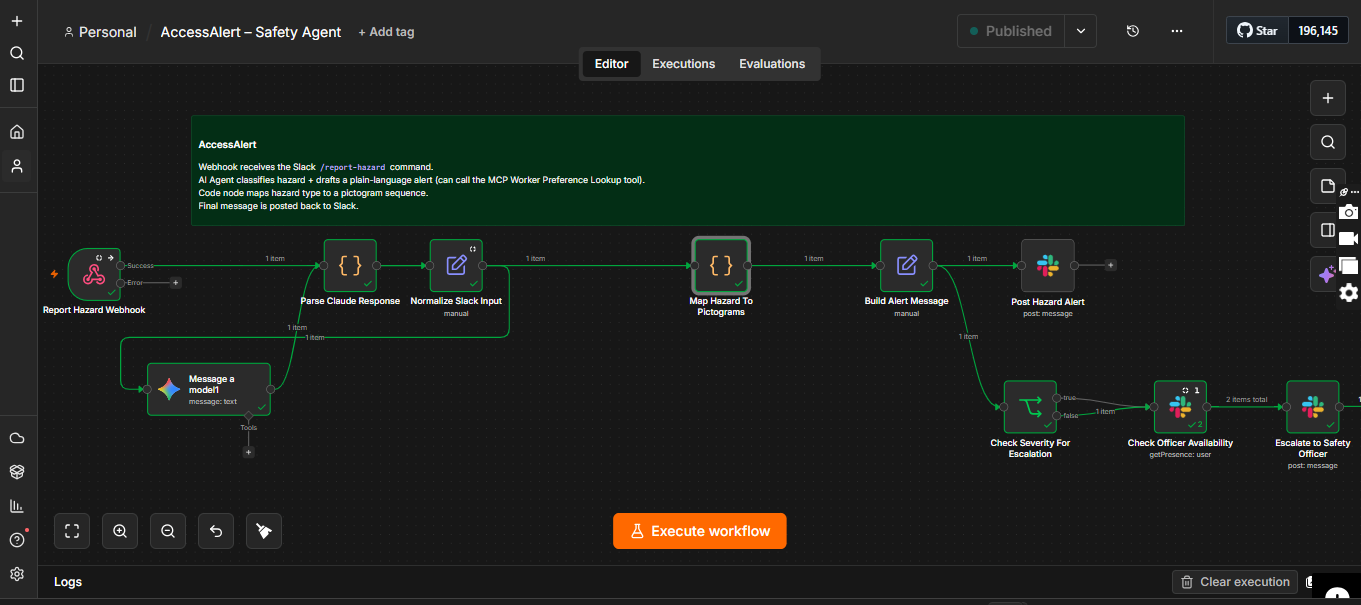
AccessAlert was built entirely using n8n as an AI automation platform.
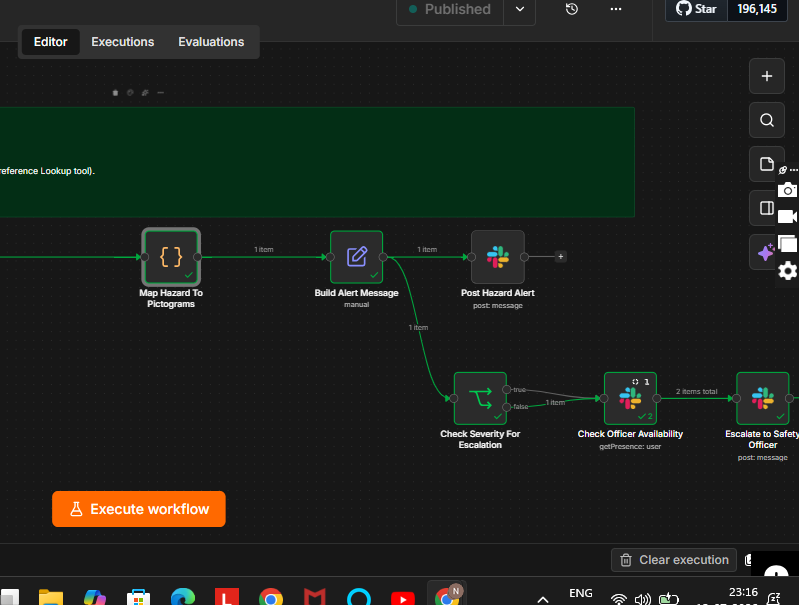
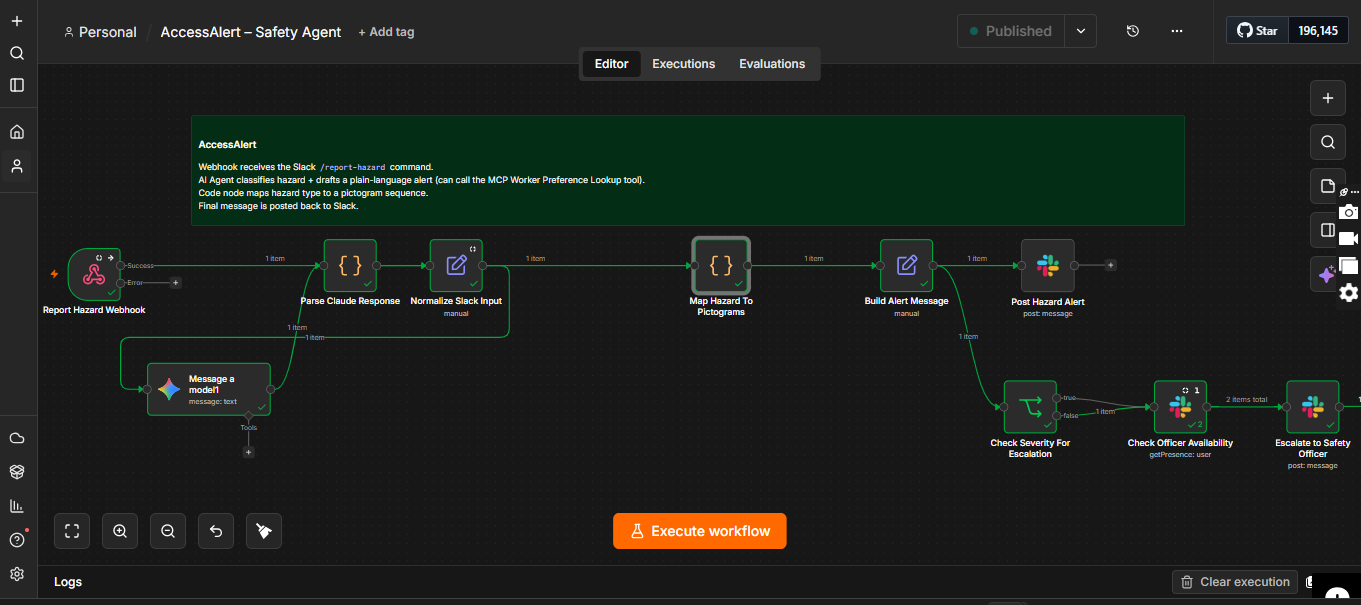
The workflow includes:
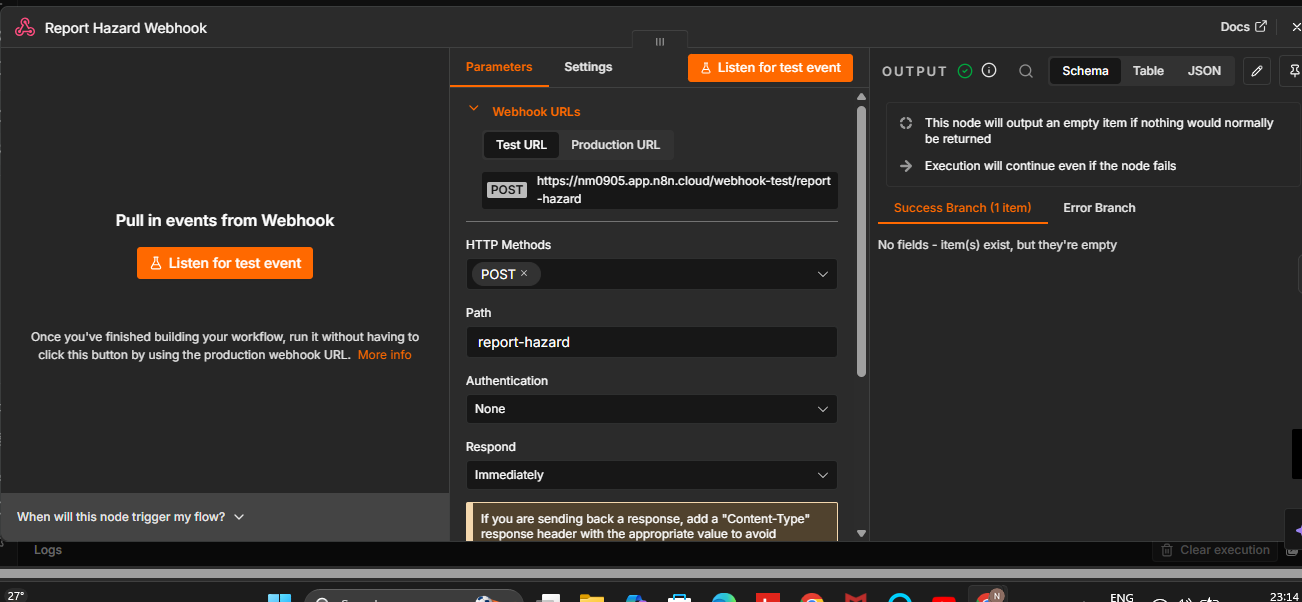
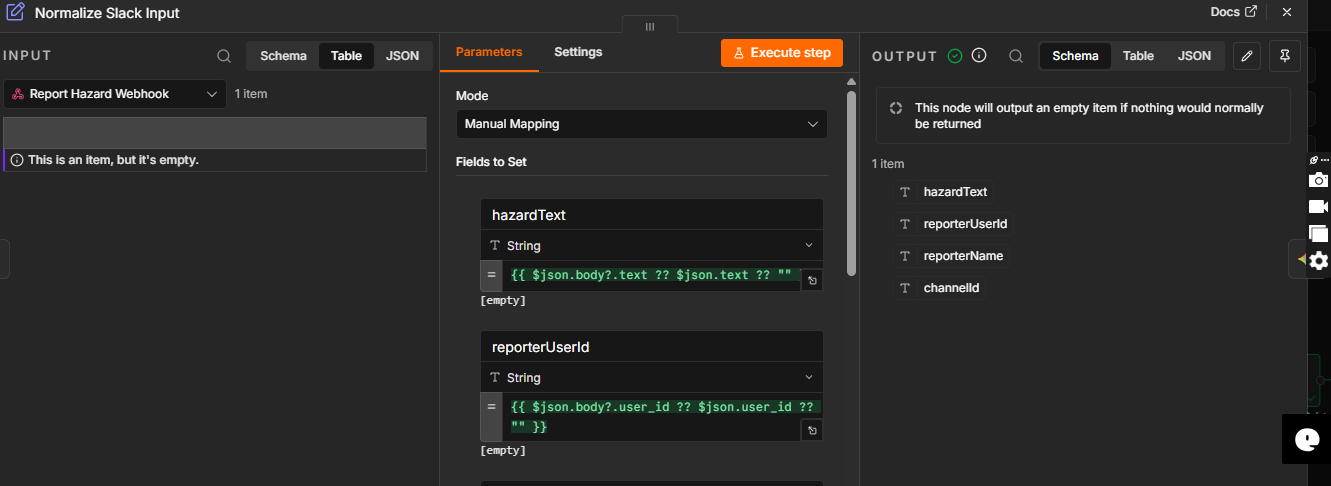
- Slack receives a hazard report.
- n8n triggers the workflow.
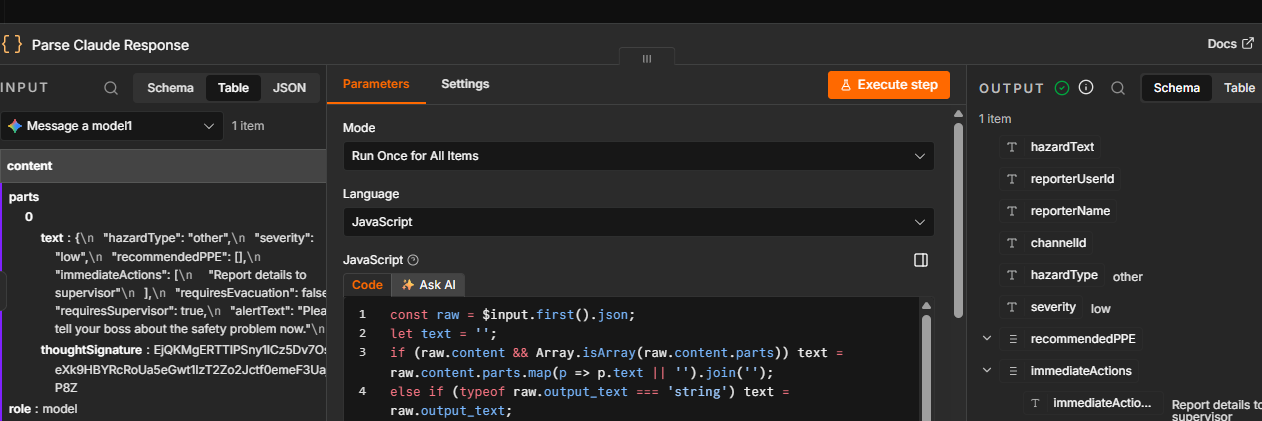
- GPT-4.1 analyzes and classifies the hazard.
- The workflow simplifies the alert into plain language.
- Hazard-specific pictograms are generated.
- A formatted Slack safety alert is posted.
- High-risk incidents are automatically escalated to safety officers.
The entire process is fully automated, requiring no manual intervention.
Challenges I ran into
Some of the biggest challenges included:
- Designing prompts that consistently classify hazards correctly
- Simplifying technical hazard descriptions into plain language
- Integrating Slack with n8n workflows
- Managing OpenAI API limitations and quotas
- Handling workflow execution paths and debugging node dependencies
- Designing alerts that remain informative while being accessible to workers with different communication needs
What I learned
Through this project, I learned:
- Building production-ready AI workflows in n8n
- Prompt engineering for workplace safety scenarios
- Slack API integration
- AI workflow orchestration
- Automation design patterns
- Accessibility-first software design
- Human-centered AI development
What's next for AccessAlert
I plan to extend AccessAlert with:
- Real-time multilingual alerts
- Mobile application support
- Wearable device notifications
- Computer vision for automatic hazard detection
- Voice and sign-language support
- IoT sensor integration for gas leaks and fire detection
- Predictive workplace risk analytics
- Enterprise safety dashboards
Impact
AccessAlert demonstrates how AI can make workplace safety more inclusive by ensuring that critical safety information is accessible to every worker—not just those who can hear alarms or understand complex technical instructions.
My vision is simple:
Making workplace safety accessible for everyone.

Log in or sign up for Devpost to join the conversation.