-
-
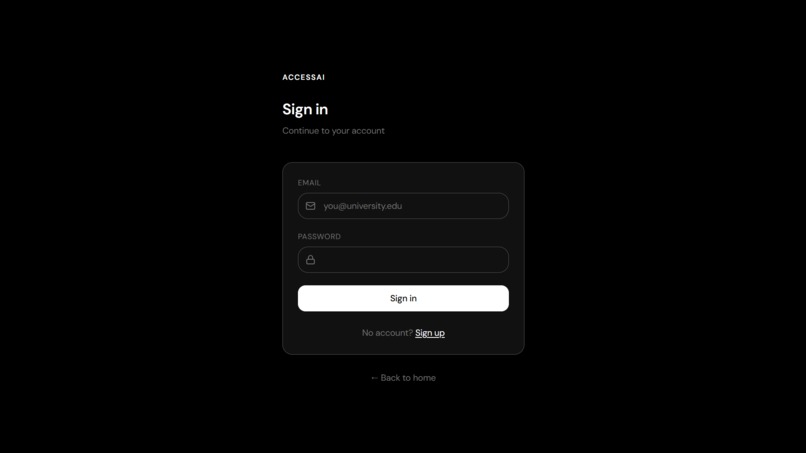
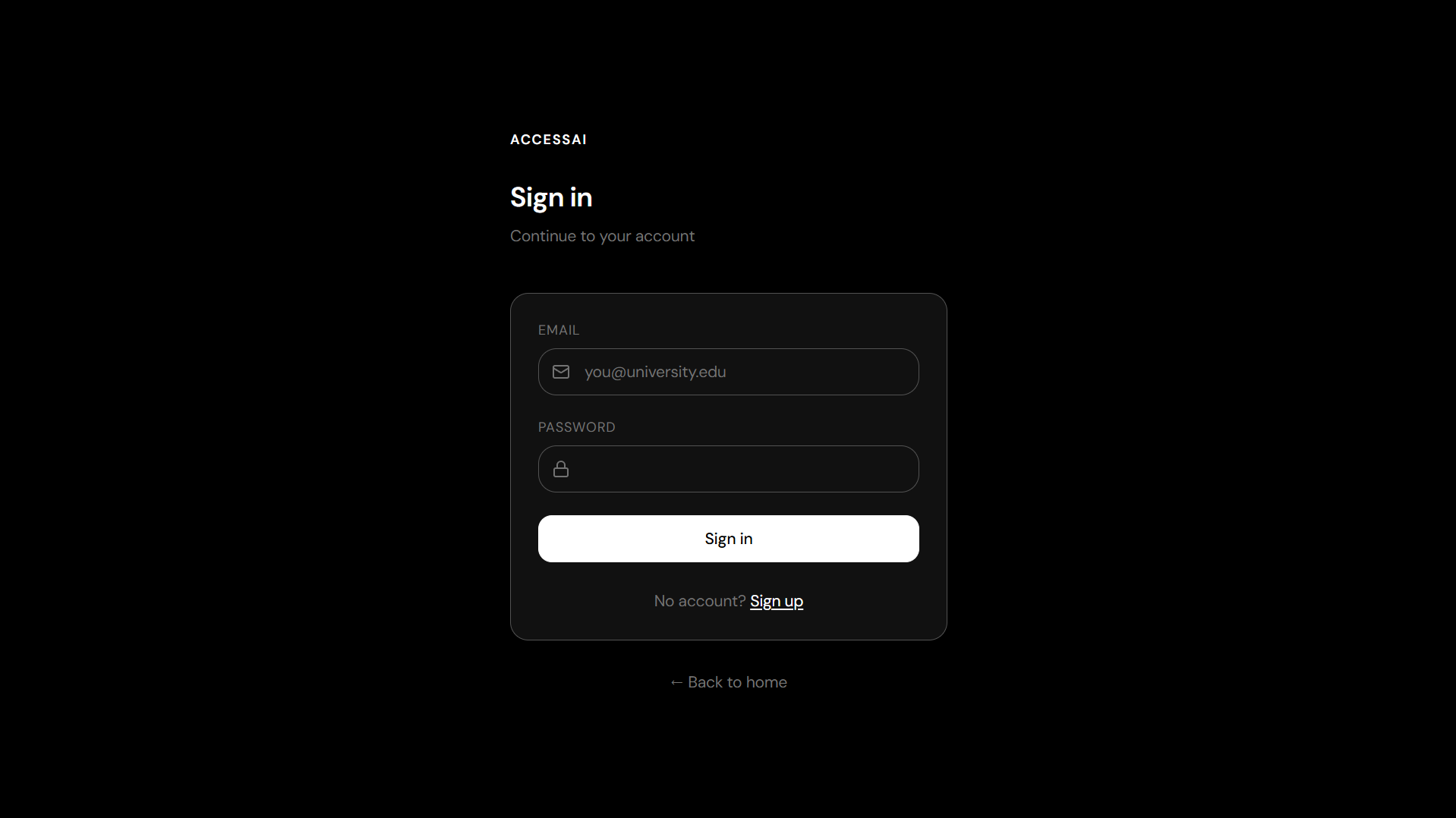
Login page
-
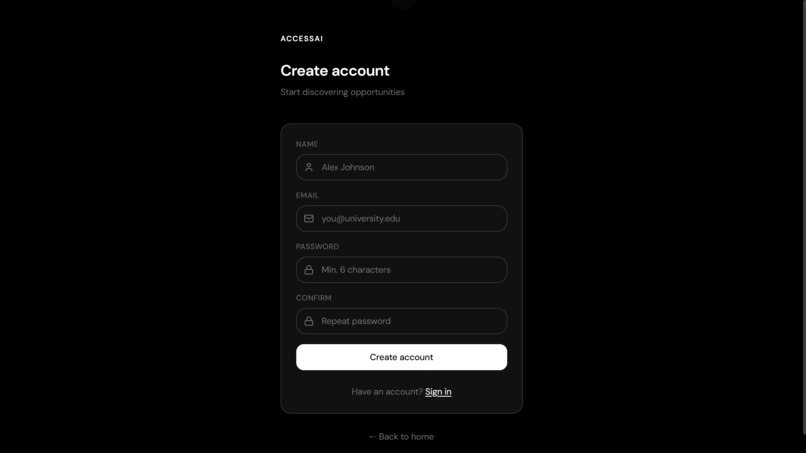
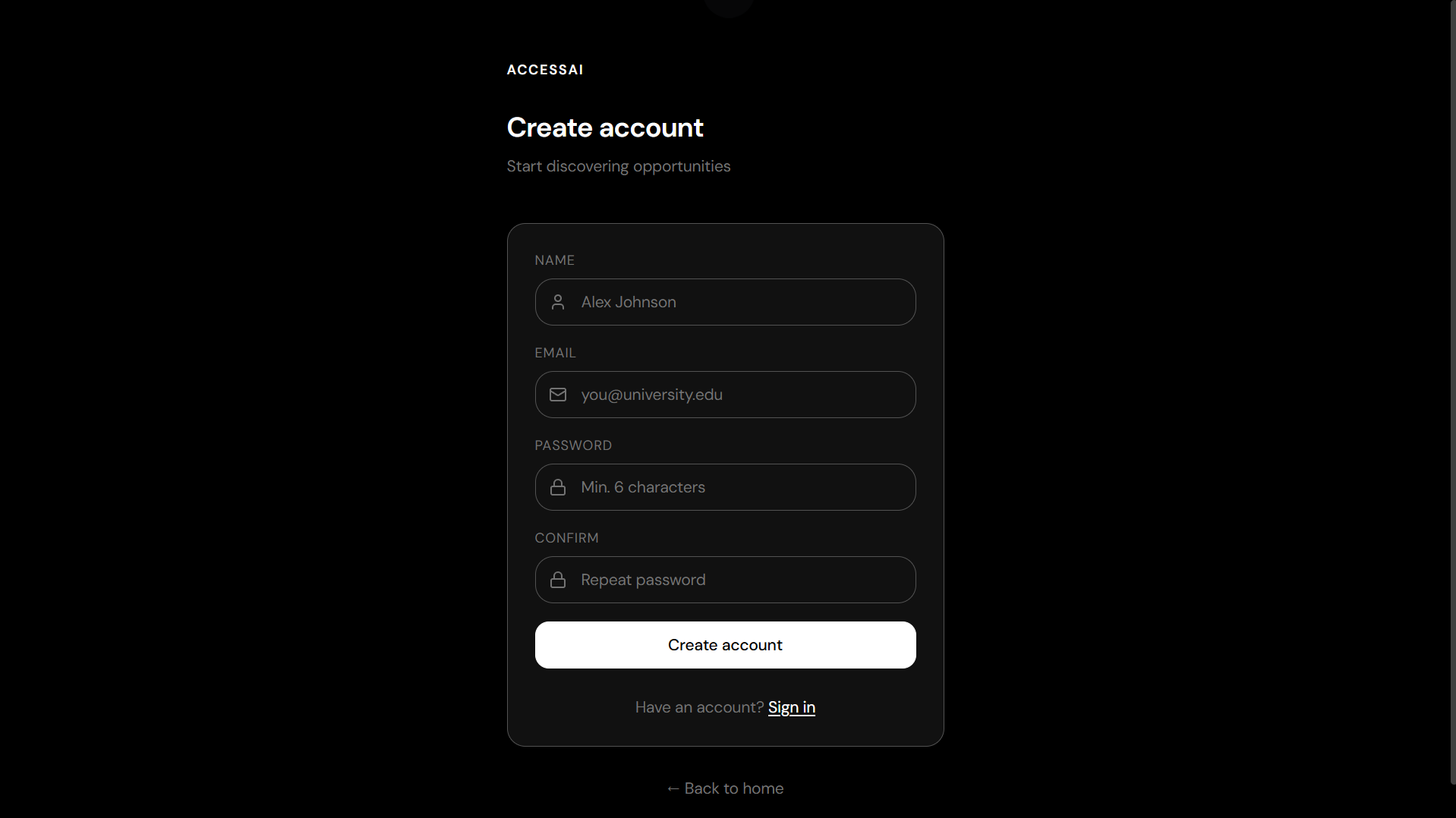
Signup page
-
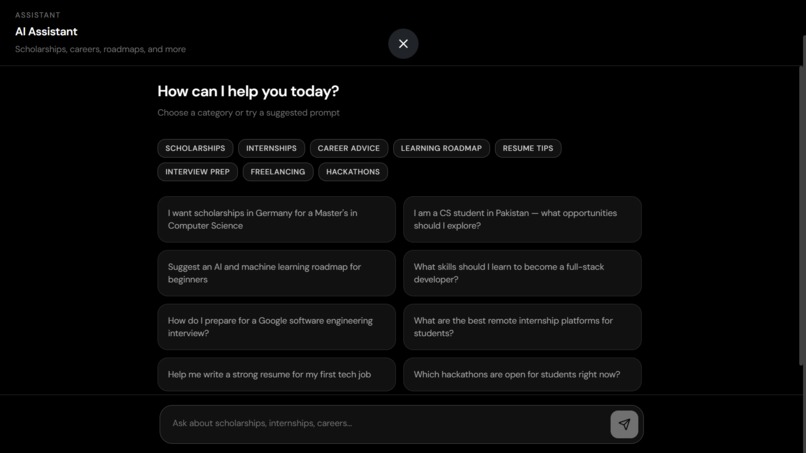
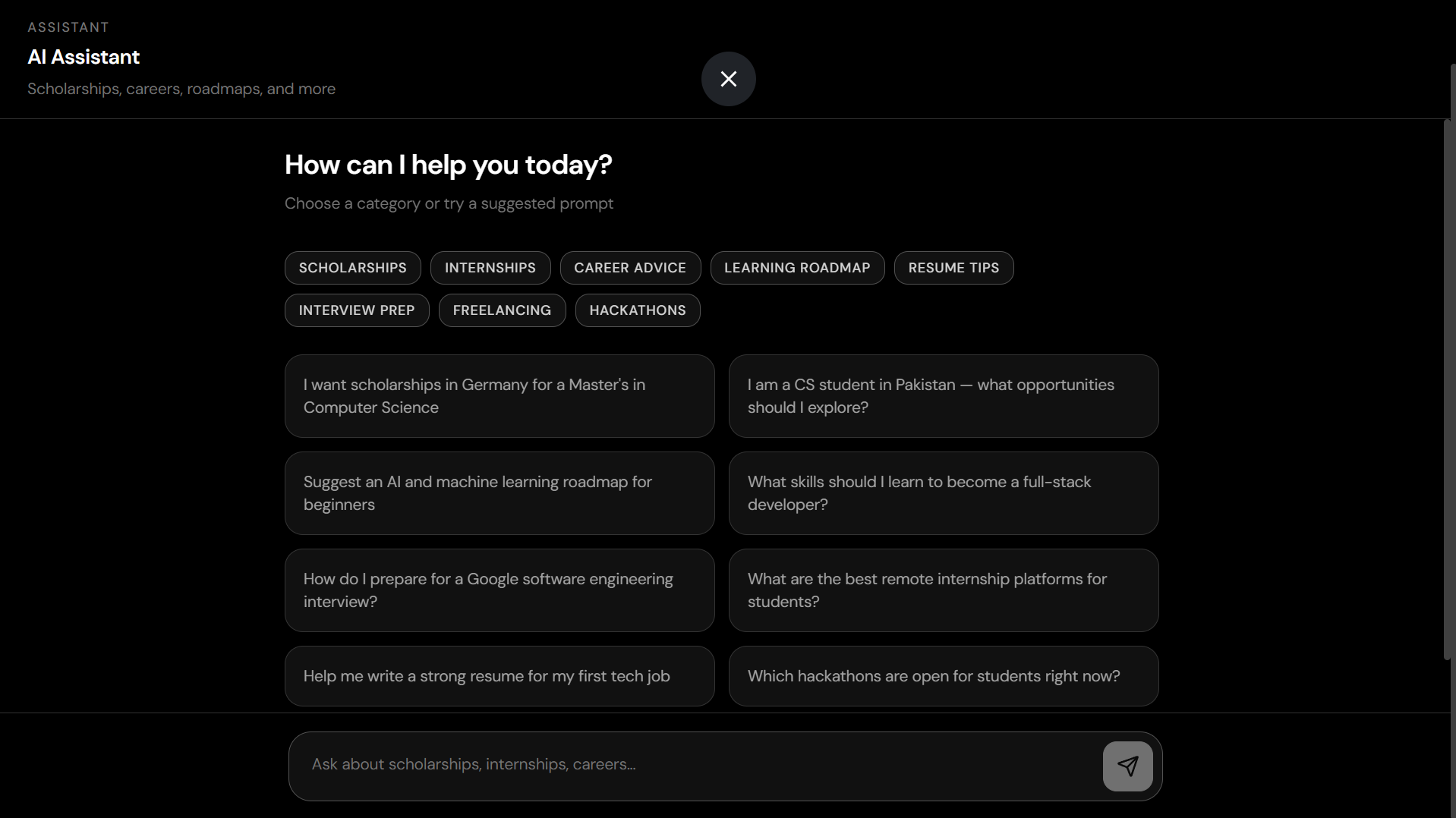
Chatbot page
-
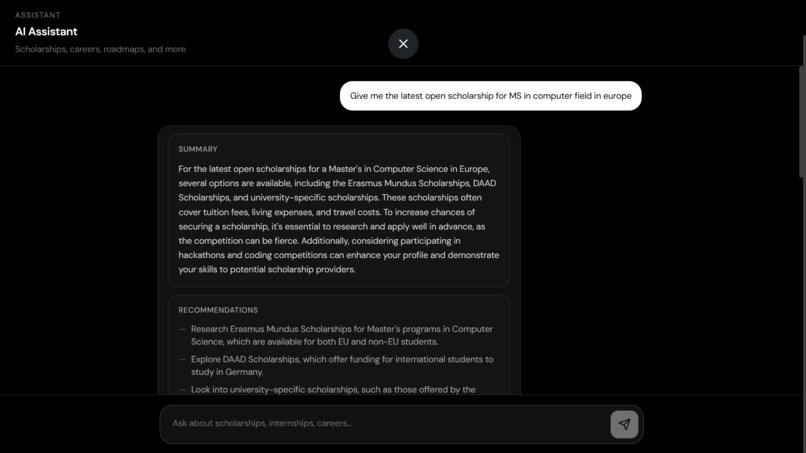
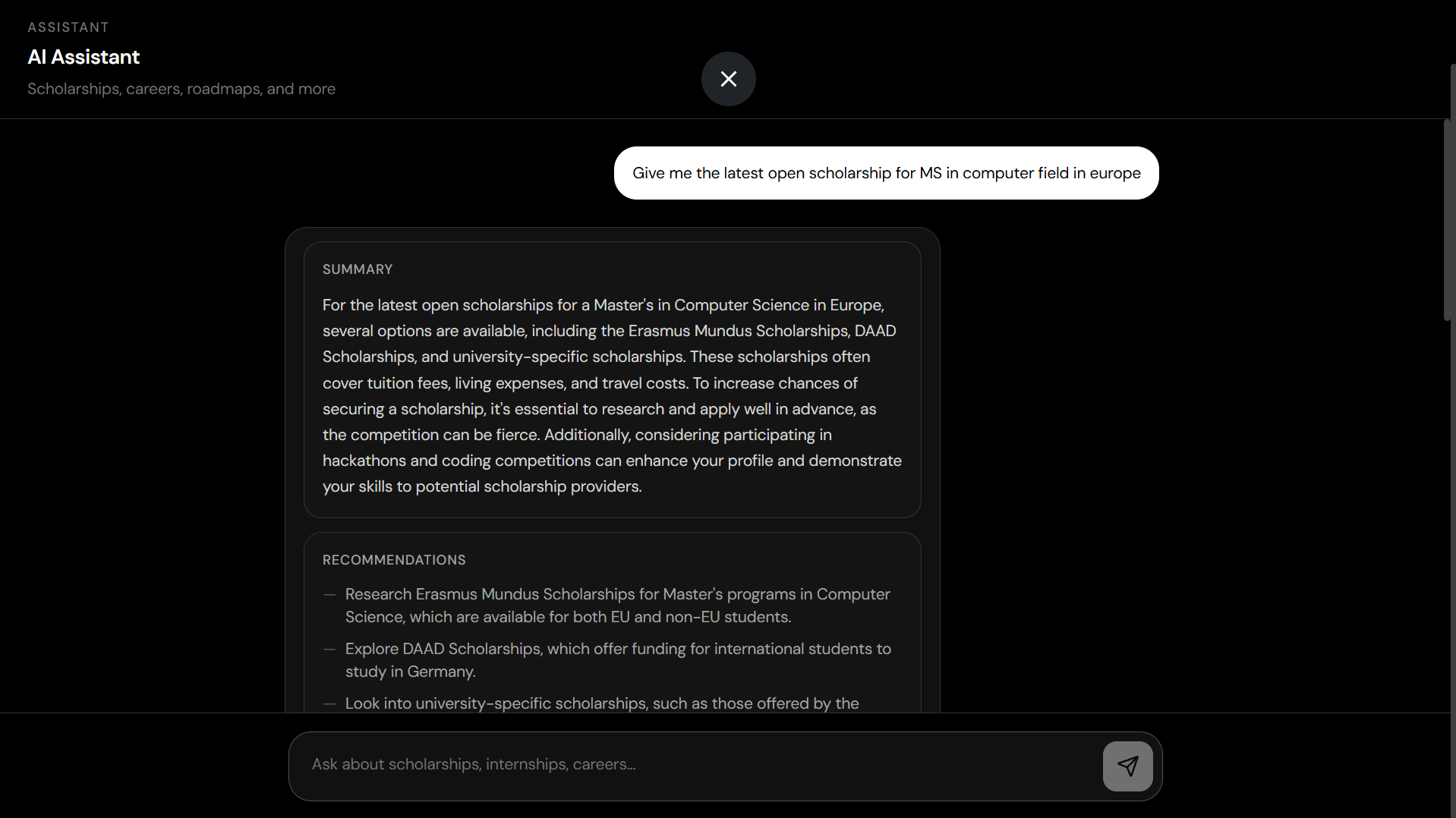
Chatbot working page
-
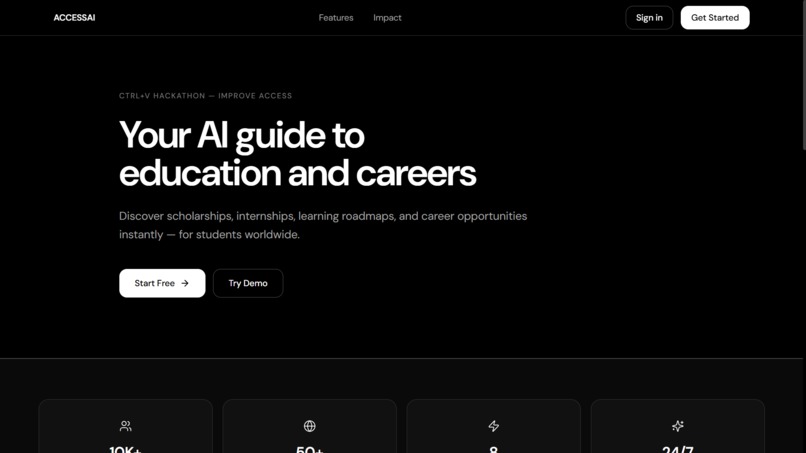
Main Dashboard
-
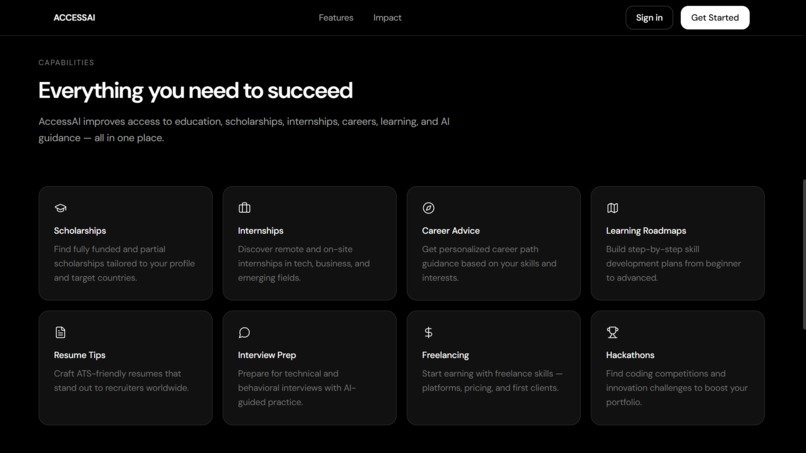
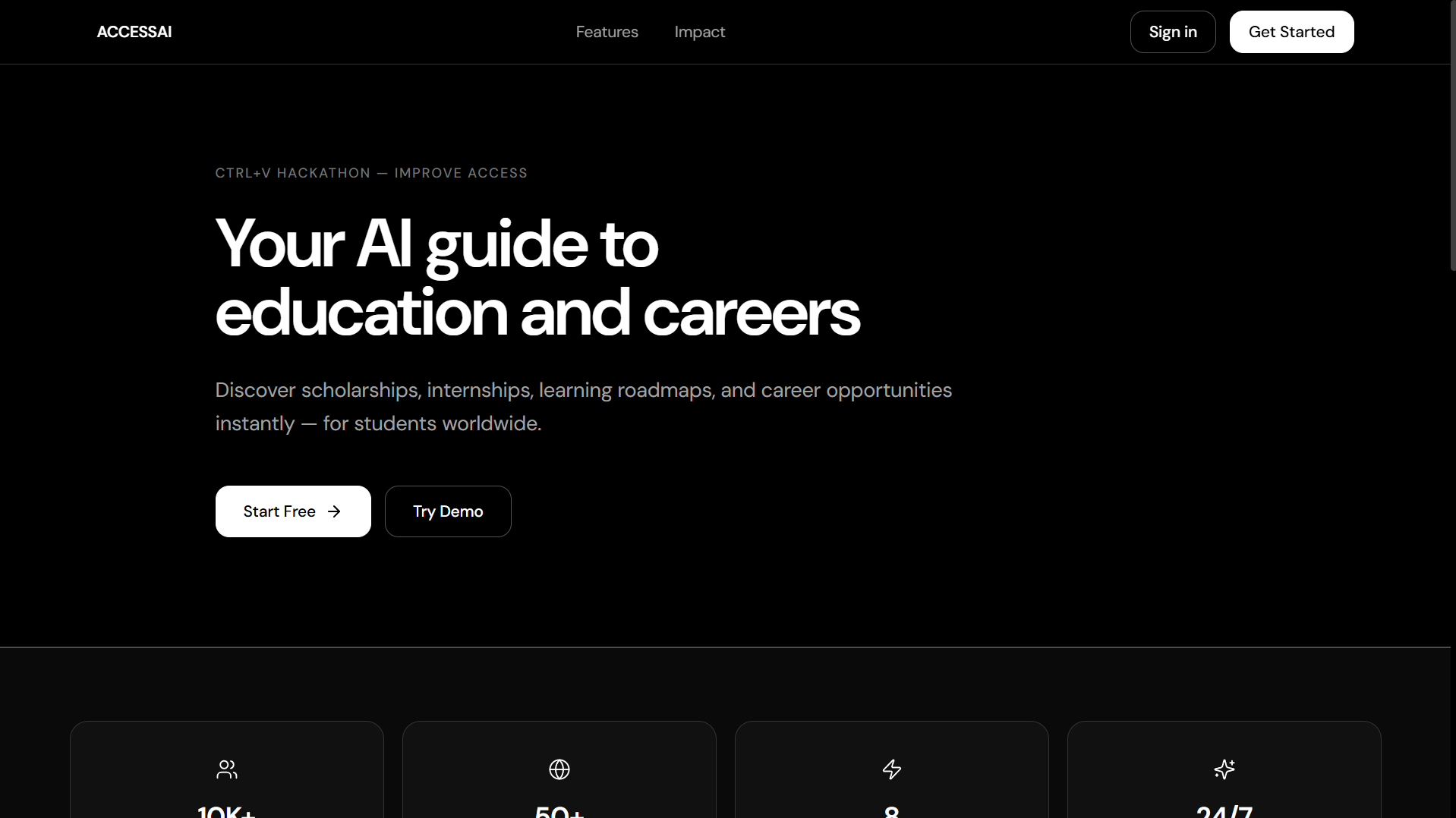
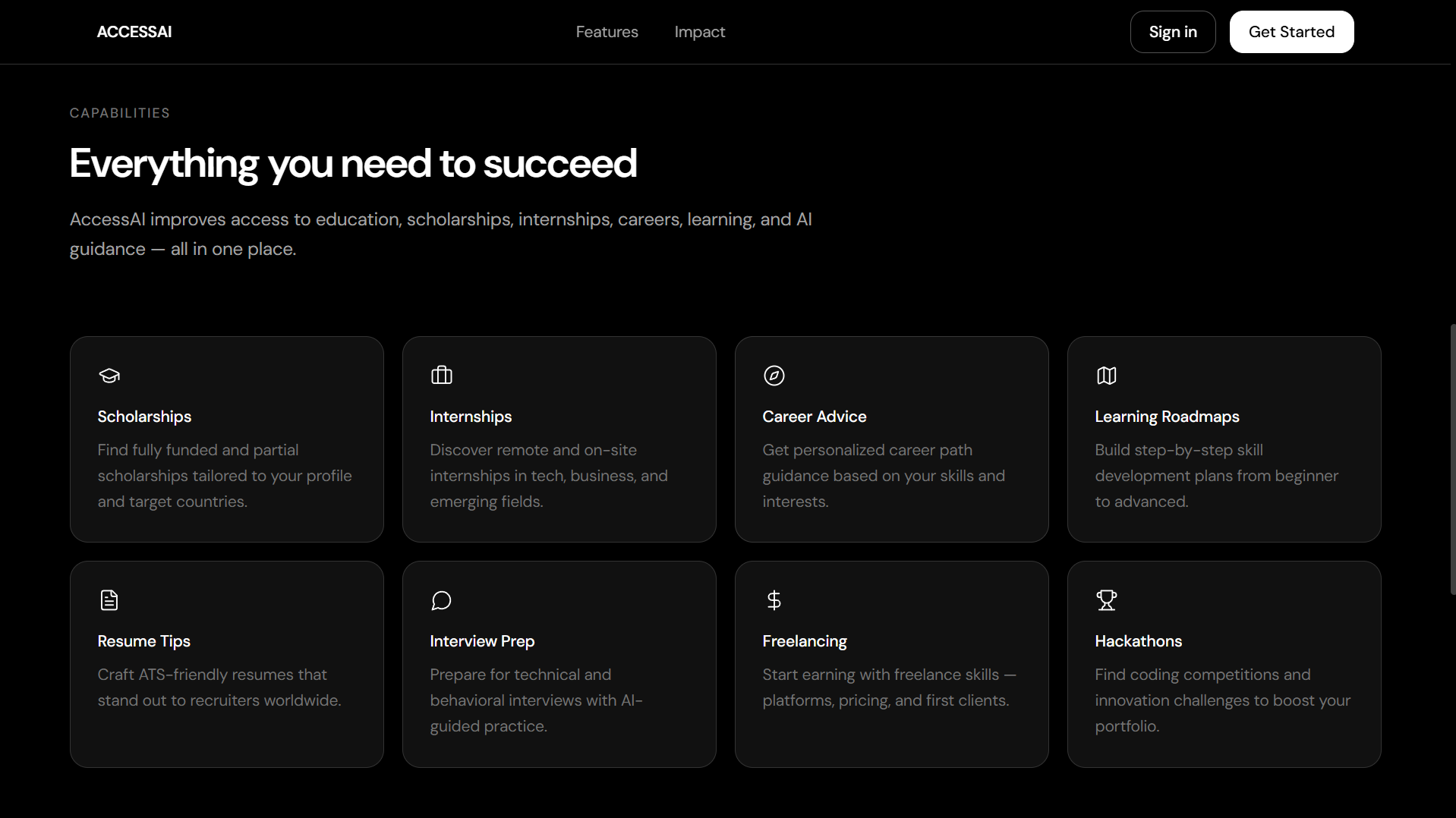
Main page components
Inspiration
Millions of students, fresh graduates, and job seekers around the world miss out on life-changing opportunities, scholarships, internships, career paths, imply because they don't know where to look, don't know what to search for, or don't have anyone to guide them. Career counseling and educational guidance are often locked behind expensive consultants or simply unavailable in under-resourced schools and regions. We built AccessAI because access to opportunity shouldn't depend on your zip code, your school's counseling budget, or whether you happen to know the right person.
What it does
AccessAI is a web app where users chat naturally with an AI assistant about their goals — scholarships, internships, career advice, learning roadmaps, resume tips, interview prep, freelancing, or hackathons. Instead of a generic chatbot reply, every response comes back in a structured, actionable format:
Summary: A clear overview of the answer Recommendations: Specific, actionable next steps tailored to the user's background Useful Links: Real, reputable resources (official university sites, scholarship portals, LinkedIn, Coursera, etc.) Action Plan: Concrete steps the user can take this week
Users can create an account, chat from a dashboard with suggested prompts and quick-access templates, browse and search their past conversations in a history page, and toggle dark mode and manage their profile in settings.
How we built it
The frontend is built with React and Vite, styled with Tailwind CSS and animated with Framer Motion. The backend is a FastAPI (Python) REST API that handles authentication with JWT, chat history, and communicates with an OpenAI-compatible LLM to generate responses. A custom parser converts the model's markdown output into structured fields (Summary, Recommendations, Useful Links, Action Plan) that the frontend renders as clean, scannable cards.
Challenges we ran into
Getting reliable, consistently-structured AI output was harder than expected. We had to carefully engineer the system prompt and build a markdown parser resilient enough to handle variation in the model's formatting. We also worked through several rounds of backend configuration issues (environment variables, API provider switching, and authentication) to get a stable, production-ready chat pipeline.
What we learned
We learned a lot about designing prompts for structured, parseable AI output rather than free-form text, and about building a clean separation between AI service logic and the rest of the backend so providers can be swapped without touching the rest of the app.
What's next for AccessAI
- Personalized recommendations based on a user's saved profile and location
- Support for more languages
- Direct integration with real scholarship and job-board APIs
- A mobile app version

Log in or sign up for Devpost to join the conversation.