Inspiration
pitch slides Over 1 billion people worldwide live with some form of disability, yet many digital platforms still overlook accessibility. We were inspired by the need for inclusive technology that adapts to each user’s abilities and preferences. AccessAI emerged from our desire to bridge this gap with a scalable, intelligent solution that ensures everyone has equal access to digital content.
What it does
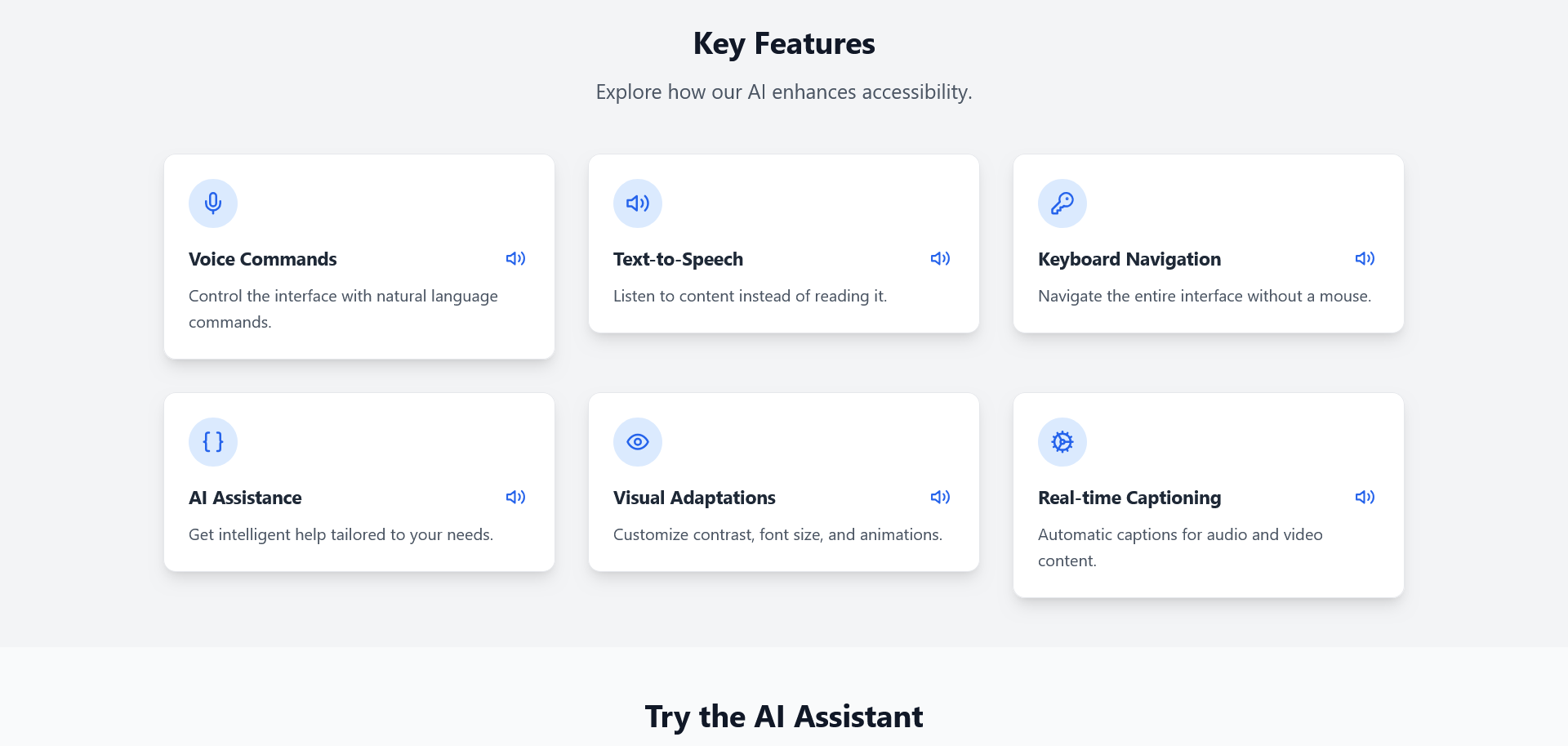
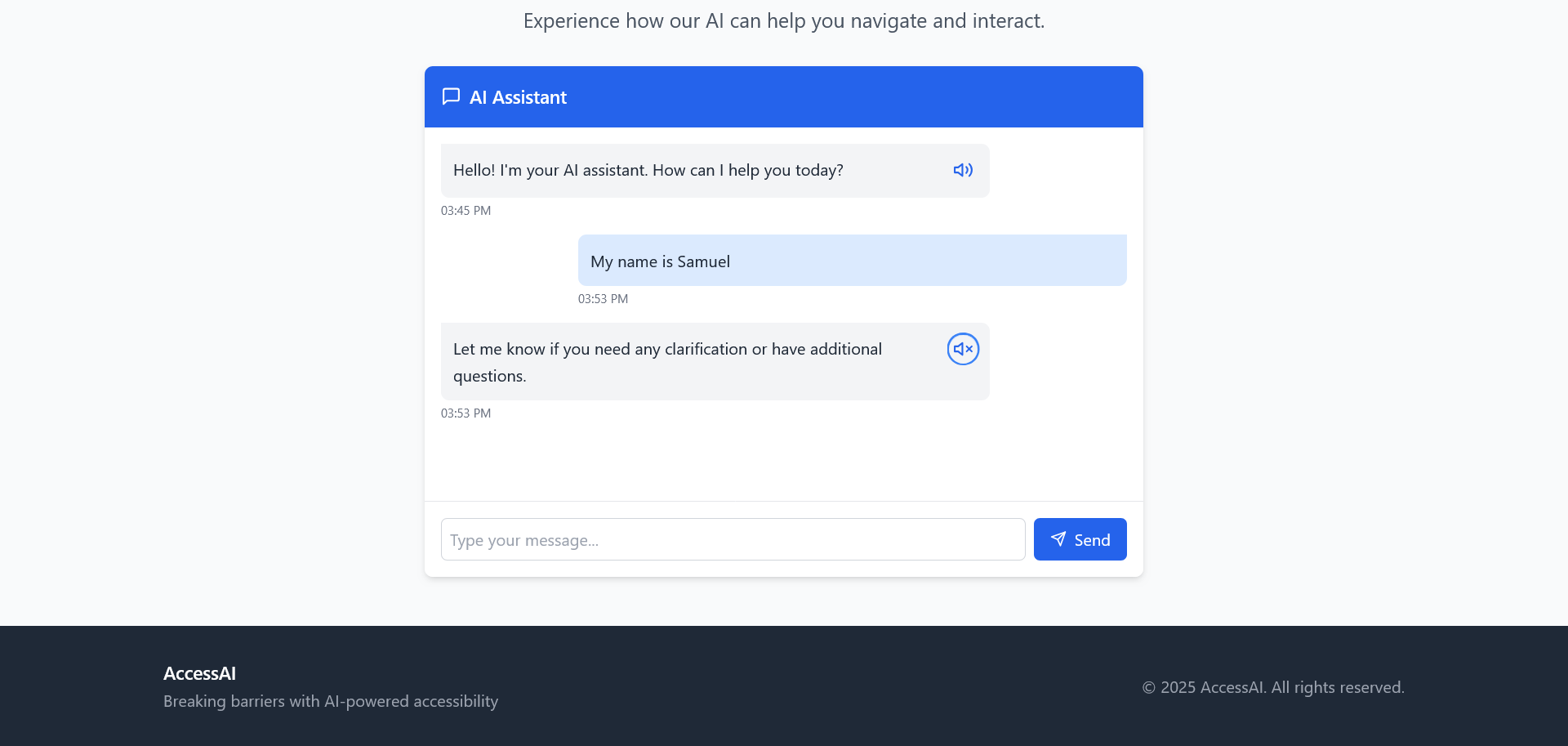
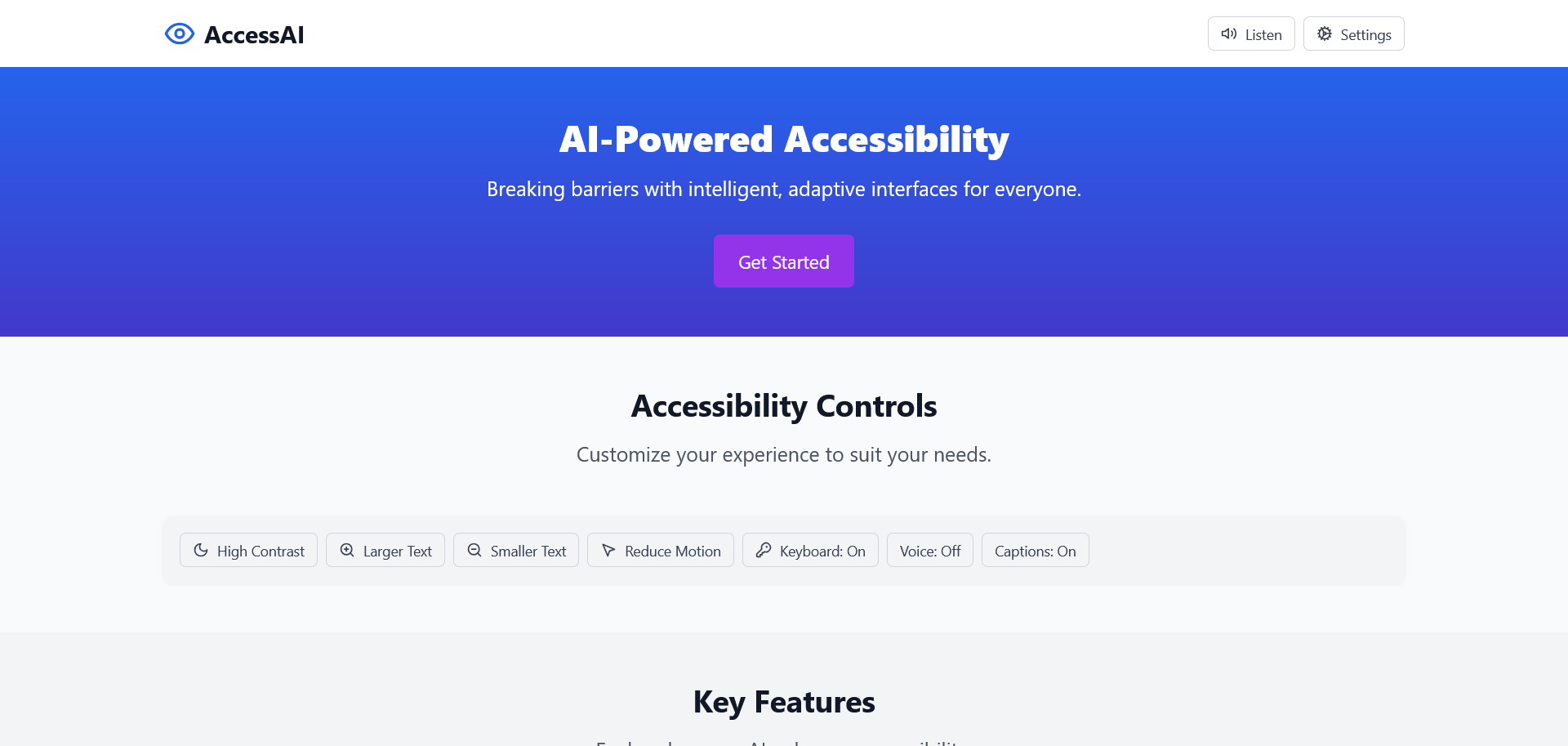
AccessAI is a smart accessibility assistant that dynamically adapts digital content to suit the user's unique needs. It offers:
- Voice-controlled navigation and interaction
- Text-to-speech and real-time captioning
- Customizable visual modes (high contrast, font sizing)
- Keyboard-friendly interfaces
- AI-driven suggestions for better usability from gpt-4o api
How we built it
We used a modern web stack:
- Frontend: React 18 with TypeScript
- Styling: Tailwind CSS and Framer Motion for accessibility-friendly animations
- Voice Features: Web Speech API for text-to-speech and voice commands
- Component Design: Modular architecture with reusable components (AI Assistant, Accessibility Controls, Voice Interface)
- Context API: For managing user preferences and settings
Challenges we ran into
- Ensuring compatibility of speech APIs across browsers
- Designing an interface that works equally well for keyboard-only and screen reader users
- Balancing feature richness with simplicity for non-technical users
- Handling real-time captioning accuracy and latency
Accomplishments that we're proud of
- Built a fully functional AI-powered accessibility interface
- Integrated voice, keyboard, and text input seamlessly
- Created a scalable architecture with room for more accessibility features
- Achieved responsive design that works on any device
What we learned
- Accessibility is not just about compliance—it’s about empathy and design thinking
- The Web Speech API has limitations but can be adapted with fallback strategies
- Modular component design is crucial for accessibility customization
- User testing with real users makes a massive difference in refining the interface
What's next for AccessAI
- Add AI-based content summarization and screen reading
- Integrate user feedback to refine controls and interactions
- Expand to mobile platforms (PWA or native)
- Partner with accessibility experts and advocacy groups
- Contribute open-source modules to the accessibility community
Built With
- 18
- bolt.new
- css
- framer
- gpt-4o
- motion
- react
- tailwind
- typescript
- web

Log in or sign up for Devpost to join the conversation.