Inspiration
We were deeply inspired by the stark educational inequities that prevent underserved communities from accessing STEM opportunities, particularly in AI and coding. Over 60% of global students lack quality STEM resources—a gap that disproportionately affects low-income learners, individuals with disabilities, and those in remote regions. These communities are often excluded from the tech revolution, limiting their ability to contribute to solutions for pressing global issues like healthcare disparities, climate change, and economic inequality. The AlgoArena: For Social Good hackathon motivated us to create AccessAI—a platform that empowers these groups with the skills to innovate and build a more inclusive, equitable tech future.
What it does
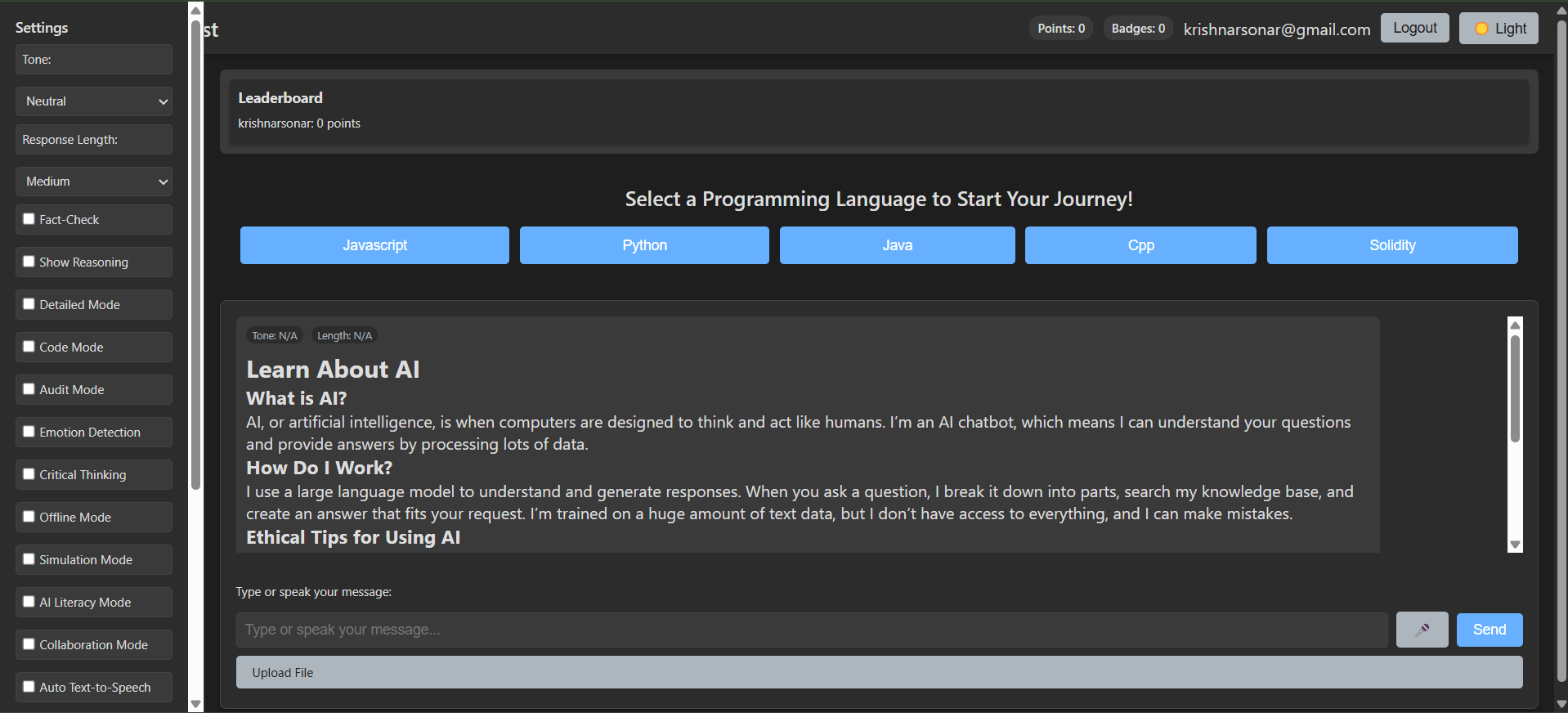
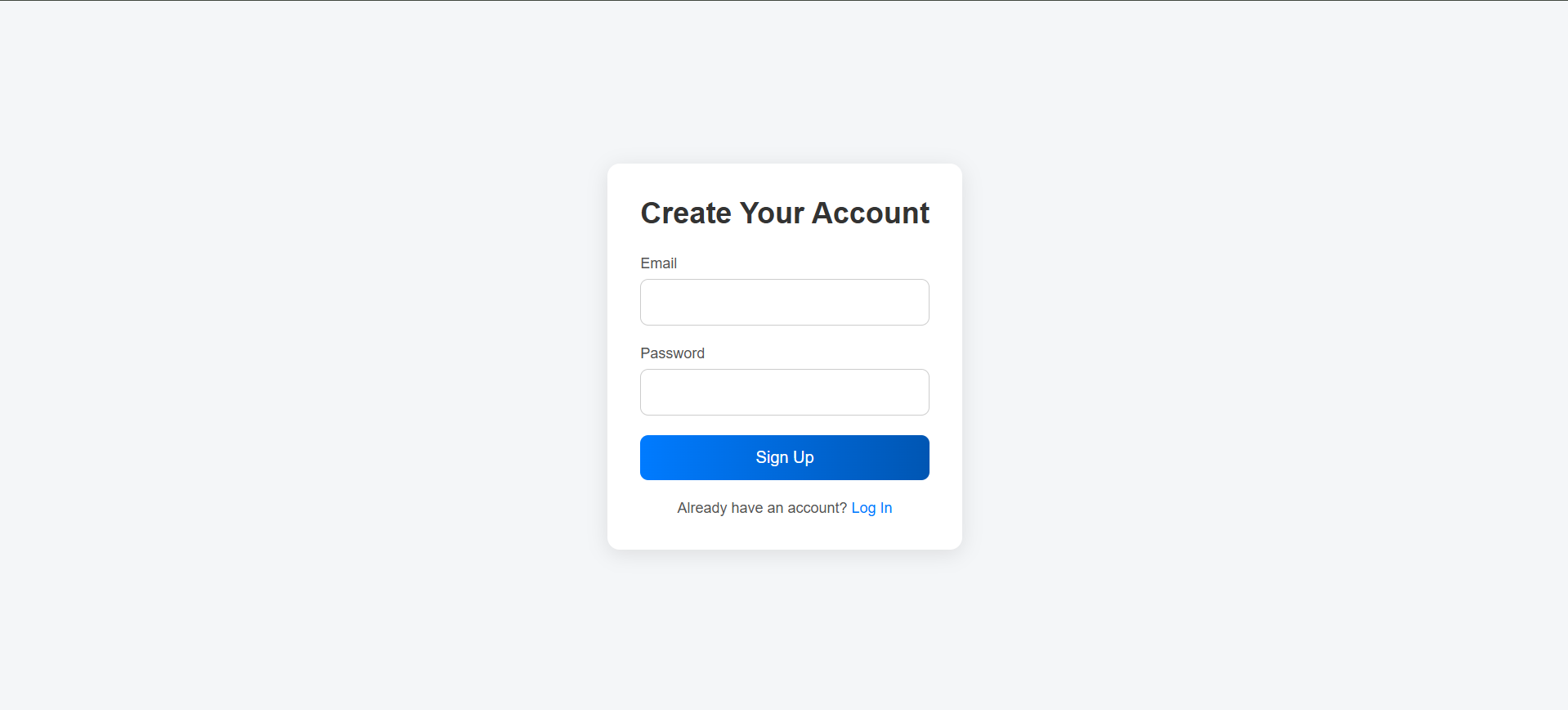
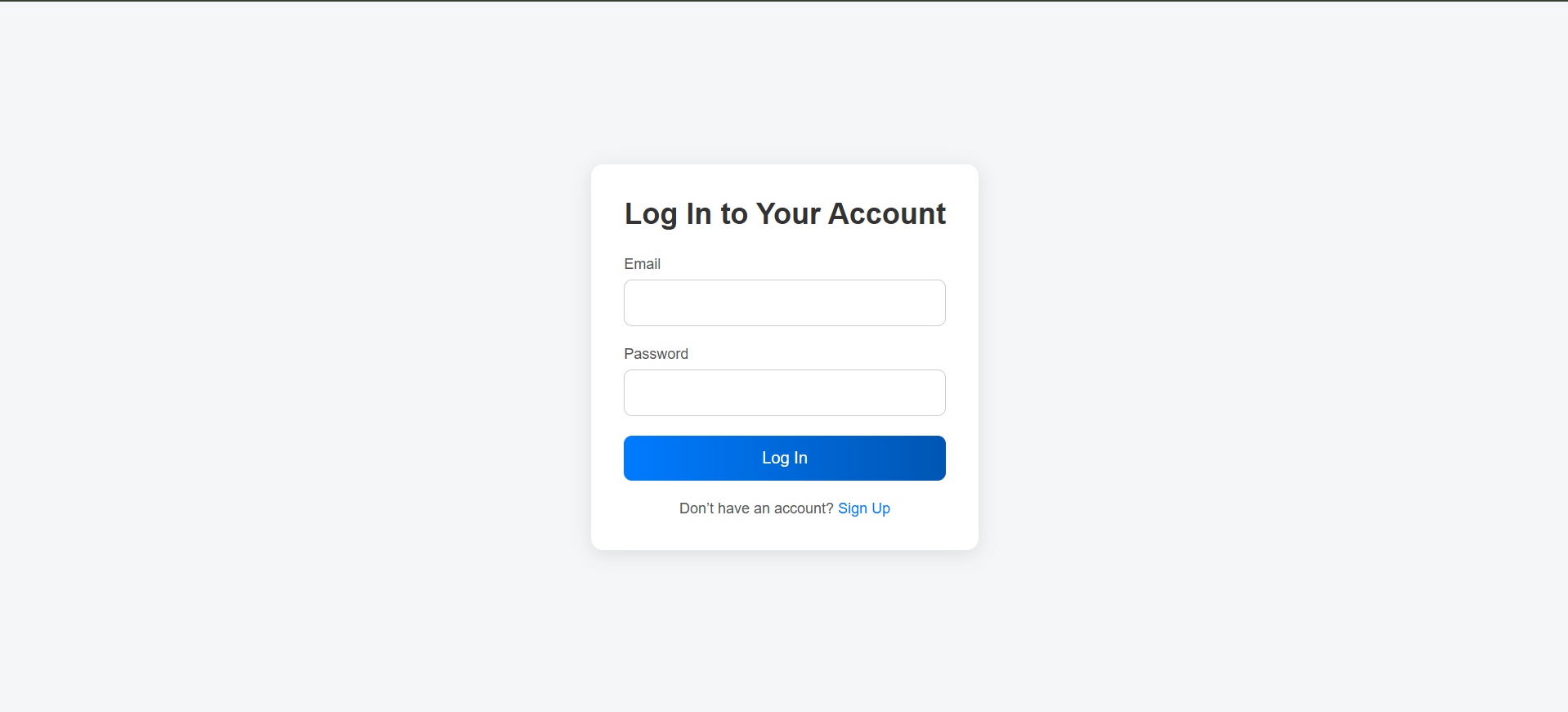
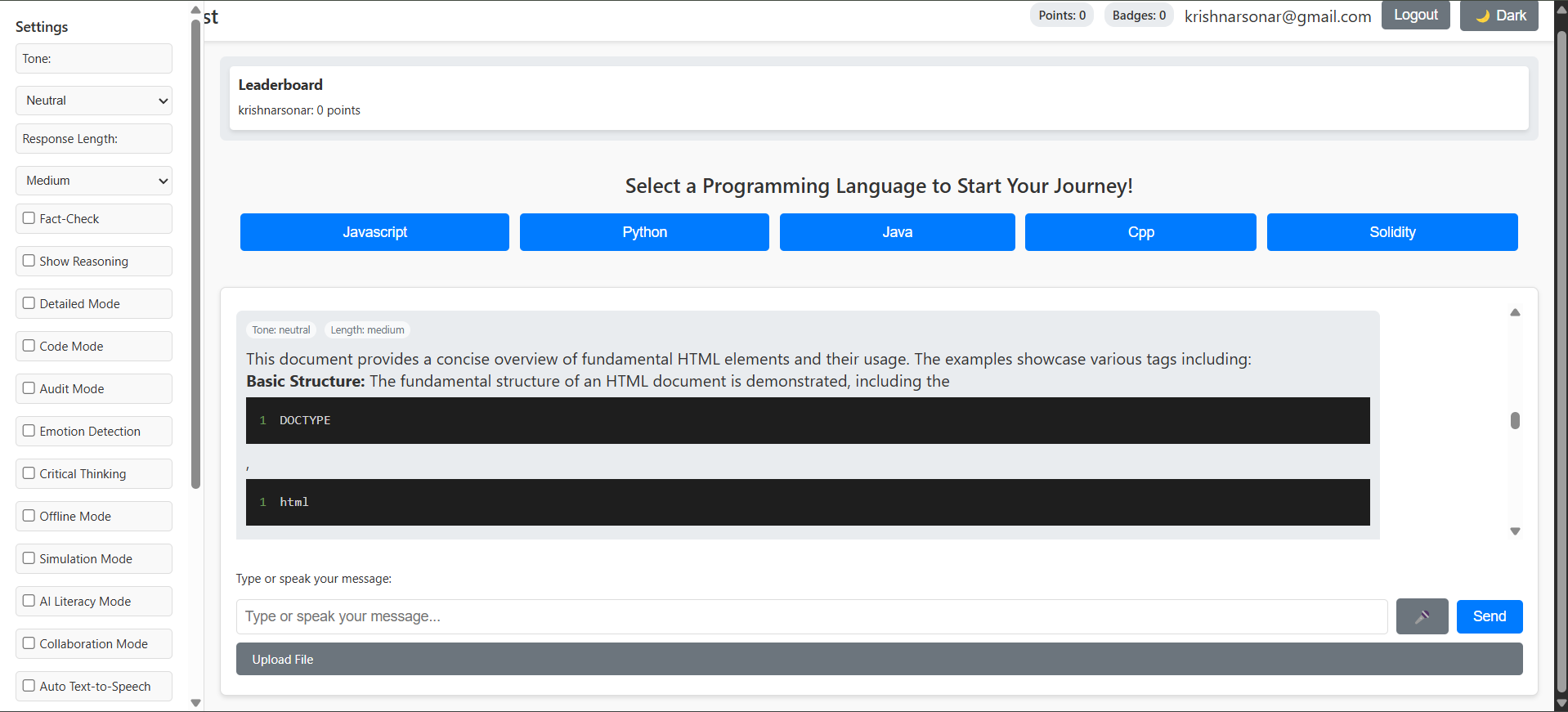
AccessAI is a web-based platform that democratizes AI and coding education for underserved communities. It features:
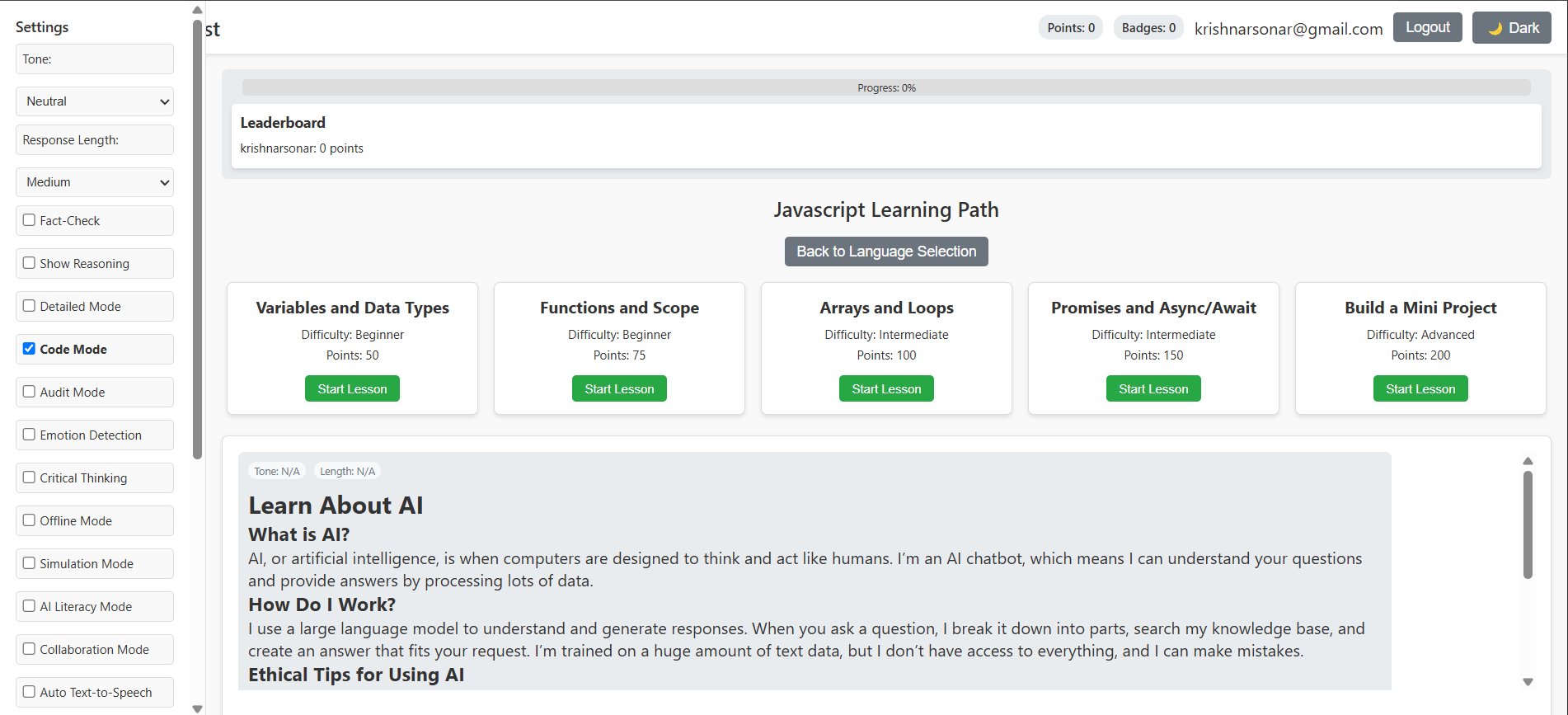
- An AI-powered chatbot that delivers personalized coding lessons in JavaScript, Python, and Solidity.
- Speech-to-text (STT) and text-to-speech (TTS) capabilities powered by the Web Speech API, enabling voice-based interaction for users with visual or motor impairments.
- Gamified learning paths with coding challenges, progress tracking, and a leaderboard to encourage continuous learning.
- A customizable UI with features like dark mode and emotion detection for an inclusive experience.
- Project collaboration tools using MongoDB to help learners co-create tech solutions for community issues like healthcare access or climate resilience.
How we built it
AccessAI was built with accessibility, scalability, and user experience at its core:
- Frontend: Developed using React and styled with Tailwind CSS for responsive design across devices.
- Backend: Built on Node.js with Express, connected to MongoDB for storing user data, progress, and collaborative projects.
- AI Integration: The Google Generative AI API powers the personalized learning chatbot, delivering context-aware code guidance.
- Accessibility: The Web Speech API was integrated for STT and TTS to enable accessible learning experiences.
- Hosting: The platform is deployed on Vercel at access-ai-iota.vercel.app.
- Team Workflow: Our team collaborated using GitHub, continuously testing and refining UX to ensure alignment with our mission of inclusive education.
Challenges we ran into
We faced several technical and design hurdles:
- Integrating STT and TTS presented browser compatibility issues, requiring workarounds and extensive fallback testing.
- Viewport distortion occurred when rendering dynamic content like AI responses, demanding in-depth CSS debugging to maintain layout stability.
- Designing gamification features that remained accessible—like a visually perceivable leaderboard—required careful consideration of accessibility standards.
- API latency was a concern under the constraints of the hackathon, especially for maintaining chatbot responsiveness with minimal delay.
Accomplishments that we're proud of
- Successfully implemented voice interaction features to support users with disabilities.
- Developed an engaging and inclusive learning experience with gamified paths and social collaboration.
- Delivered a scalable, mobile-friendly platform that can serve learners from diverse backgrounds.
- Enabled users to create real-world impact through collaborative tech projects that address local and global social challenges.
- Created a product that aligns strongly with the "For Social Good" theme by addressing education inequality with accessible AI tools.
What we learned
- Learned the value of inclusive design, and how to translate empathy into product features that serve marginalized communities.
- Gained experience with the Web Speech API, understanding its nuances for building accessible voice applications.
- Deepened our technical knowledge in integrating AI models via the Google Generative AI API for personalized learning.
- Improved our collaborative development and agile iteration skills, especially when solving cross-browser and performance issues under time pressure.
What's next for AccessAI
To expand AccessAI’s impact, we plan to:
- Add more coding languages and AI topics, including machine learning fundamentals.
- Expand accessibility with multilingual STT/TTS support and sign language recognition for deaf users.
- Improve the AI chatbot’s emotional intelligence to support users experiencing learning fatigue or frustration.
- Introduce multiplayer coding challenges and certifications to enhance engagement and job-readiness.
- Partner with NGOs, schools, and community centers to deploy AccessAI in more underserved and remote regions.
AccessAI is just the beginning—we aim to transform how marginalized communities engage with technology, enabling them to create meaningful solutions for the world’s most urgent problems.

Log in or sign up for Devpost to join the conversation.