-
-
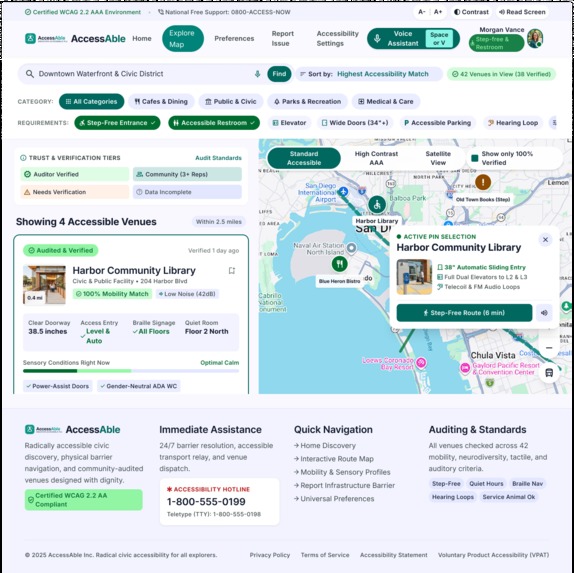
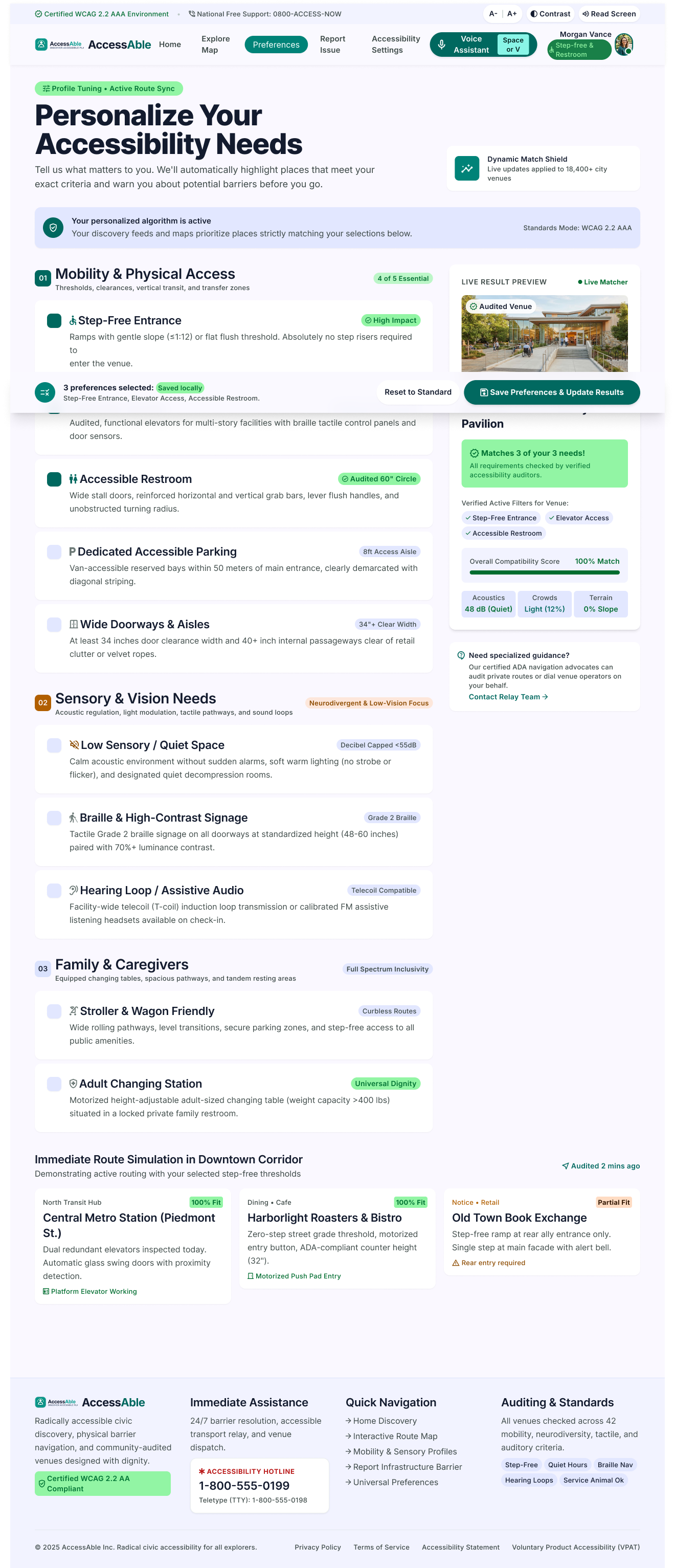
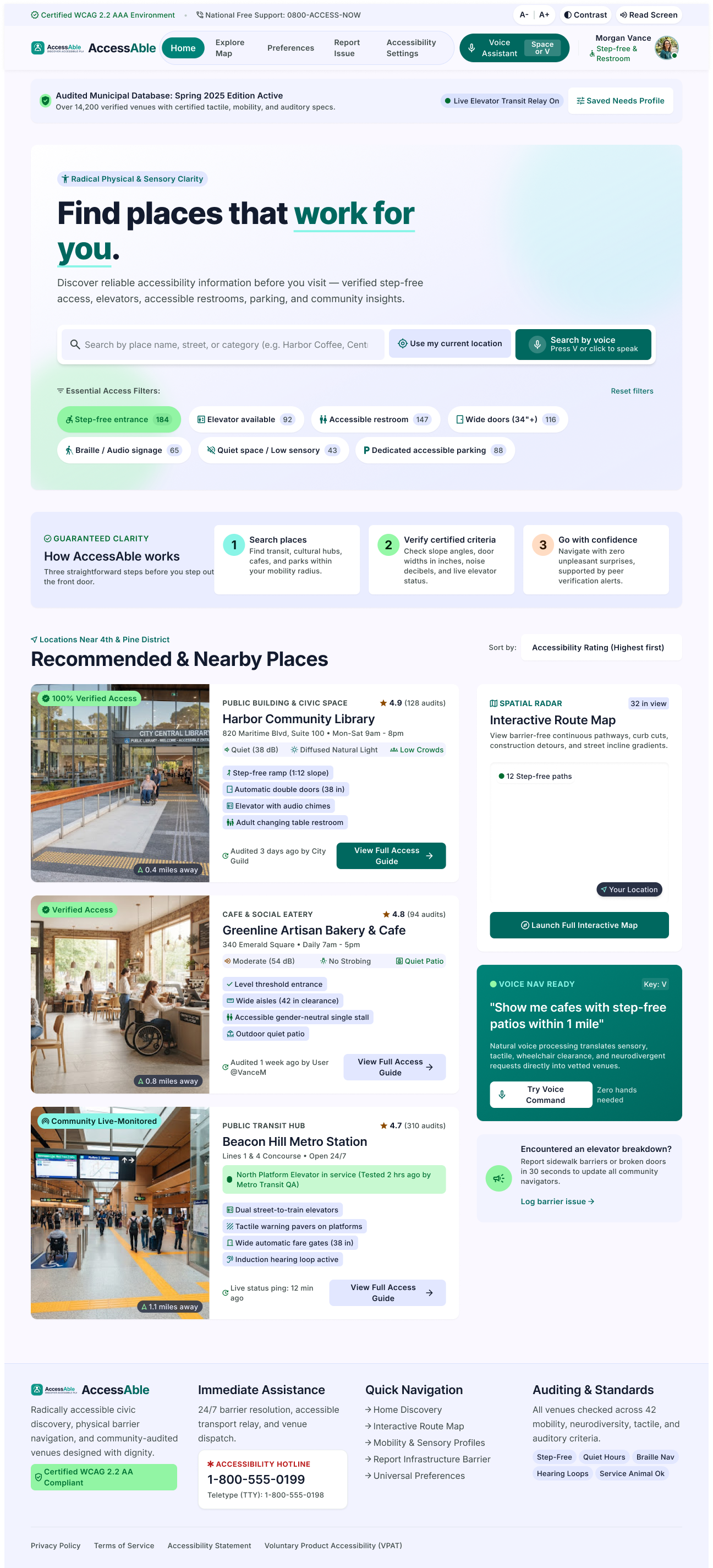
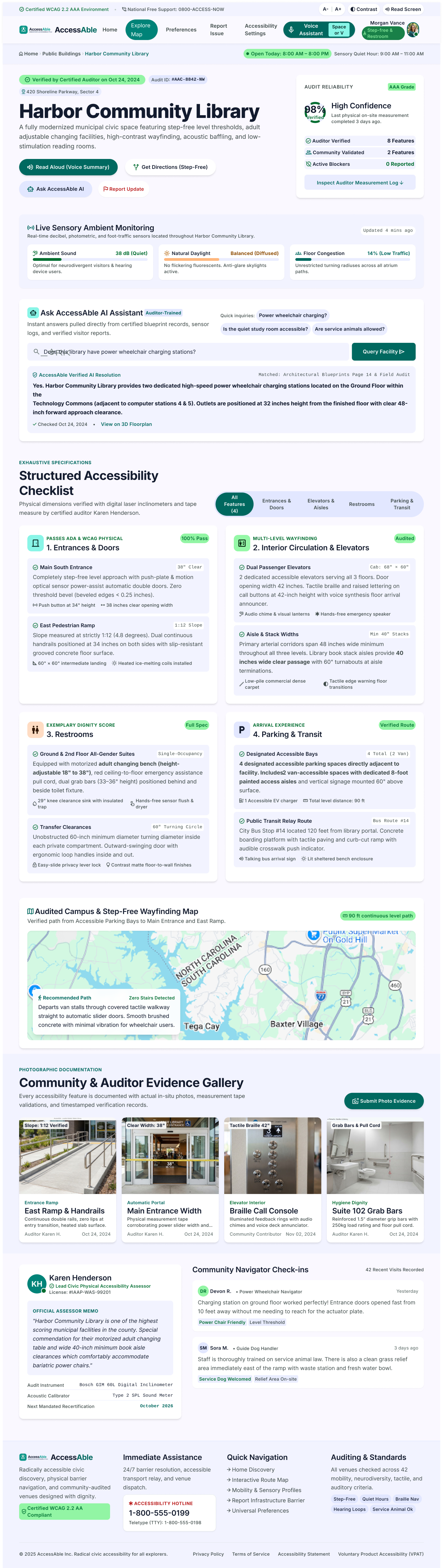
This is the page where you get to know place near you
-
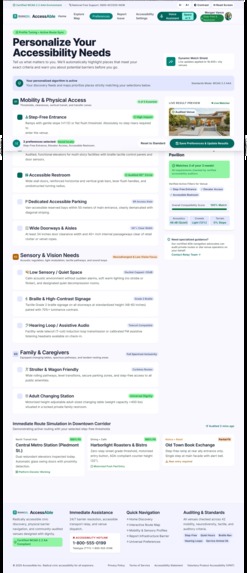
You can select your accessibility needs from here and we will assign you place on your favour
-
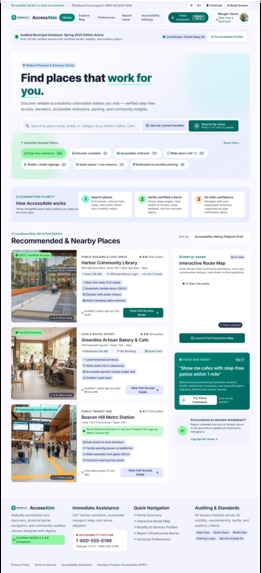
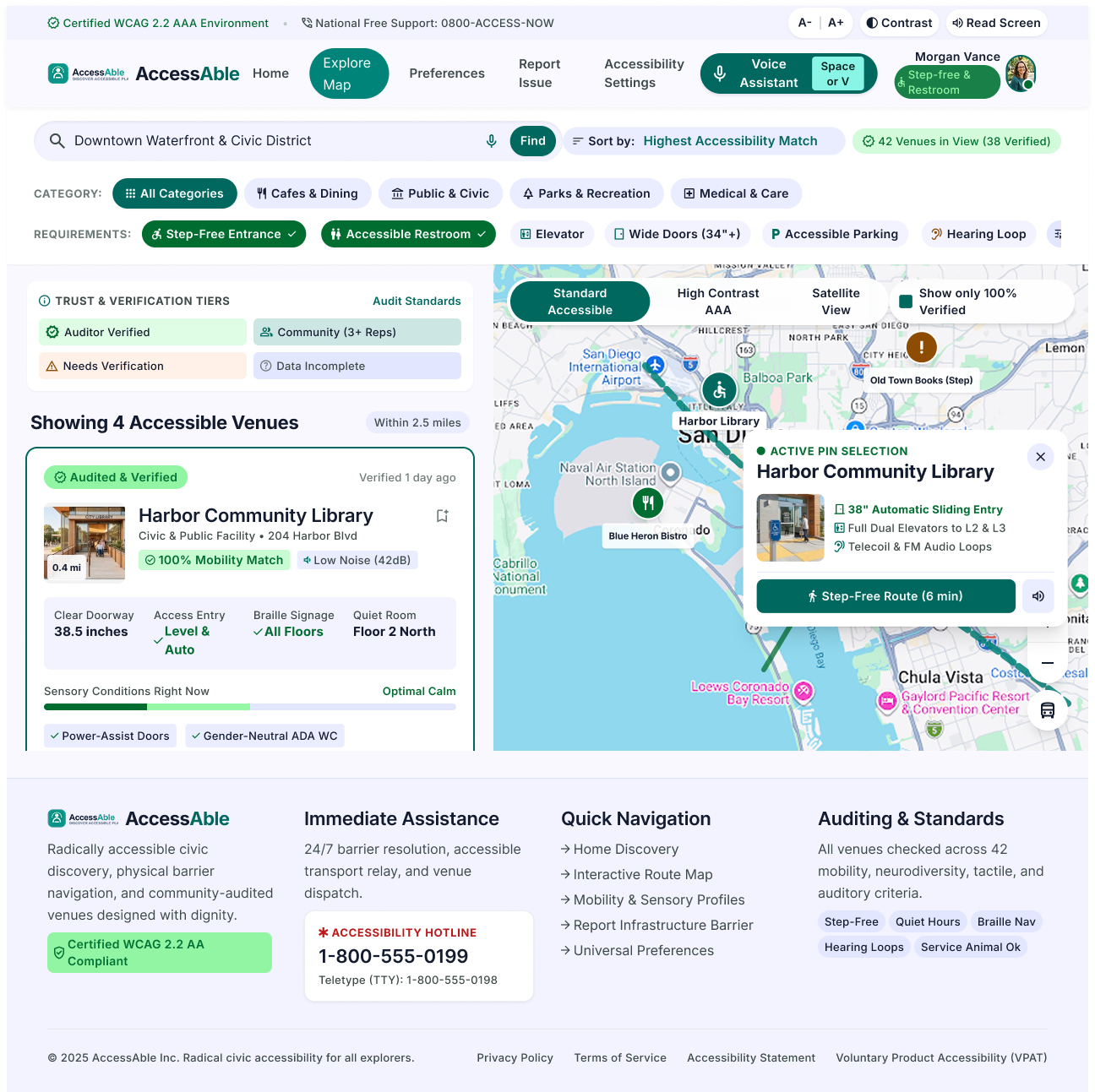
this is the landing page
-
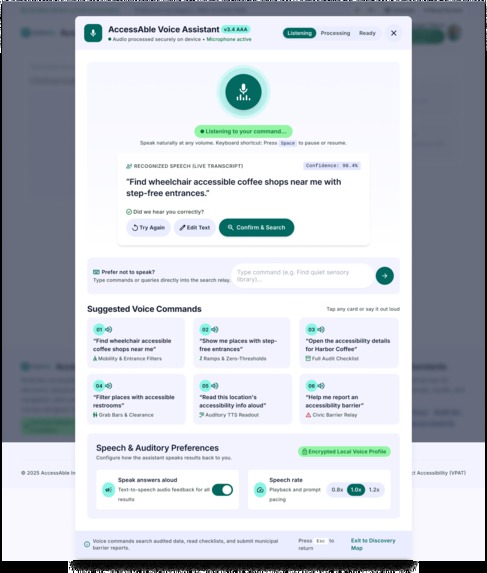
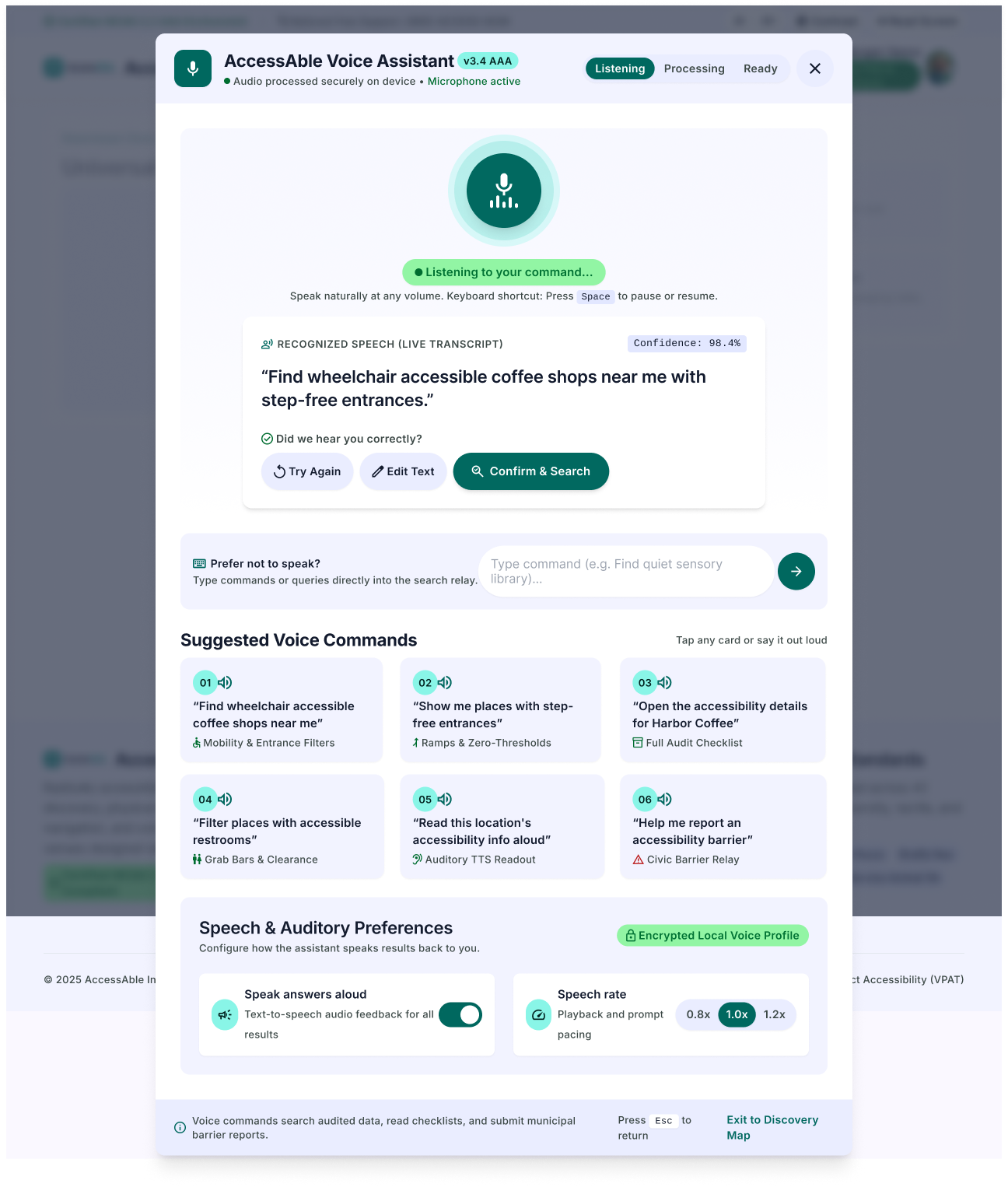
For older peoples and people who need it we also add voice feature which help to find place in their own native language
-
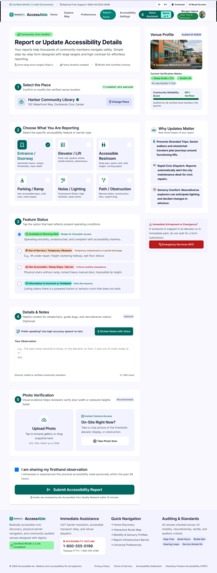
-
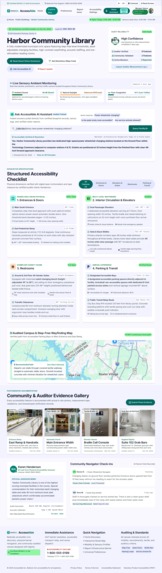
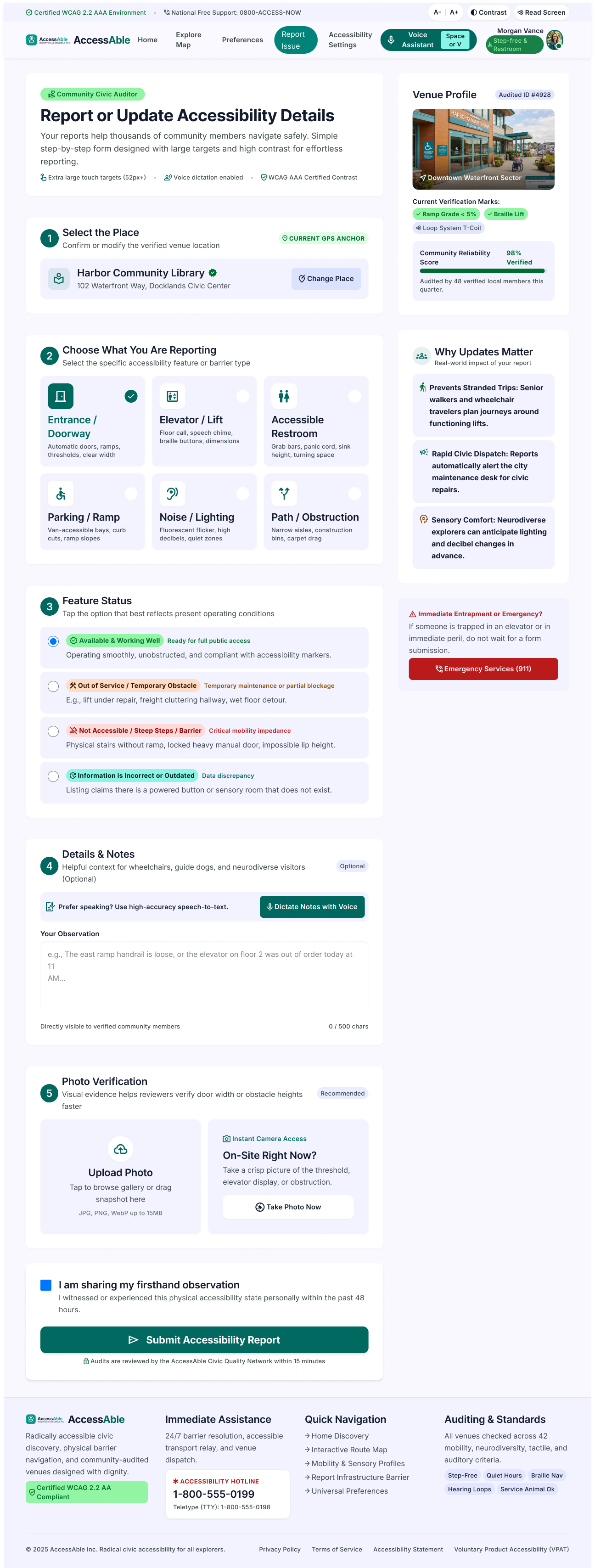
this is the community where you can see reviews and other things about that place
Inspiration
People with disabilities, older adults, and parents with strollers often cannot know whether a place is accessible before visiting. We wanted to solve this problem by creating a platform that helps people find places that match their accessibility needs.
What it does
AccessAble helps users discover restaurants, cafes, libraries, parks, and public buildings using accessibility based filters. It provides information such as step free entrances, elevators, accessible restrooms, parking, and community reports. Users can also use voice powered search and save their preferences.
How we built it
We designed and developed AccessAble using web technologies such as HTML, CSS, and JavaScript, with a responsive and accessibility-focused interface. We organized the project into search, map/list exploration, location details, accessibility preferences, community reporting, and voice-assistant features.
Challenges we ran into
Our main challenge was presenting detailed accessibility information without making the interface complicated. We also had to consider changing or incomplete information, browser support for voice features, and ensuring that every important action had a simple text based alternative.
Accomplishments that we're proud of
We are proud of creating a simple, responsive platform that helps users find accessible places through personalized filters, accessibility details, community reports, and voice friendly features.
What we learned
We learned that accessibility involves the entire user experienc not just visual design. We improved our understanding of responsive layouts, accessible navigation, clear feedback, user preferences, and the importance of showing verified, unverified, and unknown information honestly.
What's next for AccessAble
We plan to add real-time map data, stronger community verification, accessible route planning, multiple languages, and business updates to make AccessAble more accurate and useful.
Built With
- accessibility
- css
- html
- javascript
- mongodb
- node.js
- responsive-design
- ui/ux
- web-speech-api


Log in or sign up for Devpost to join the conversation.