-
-
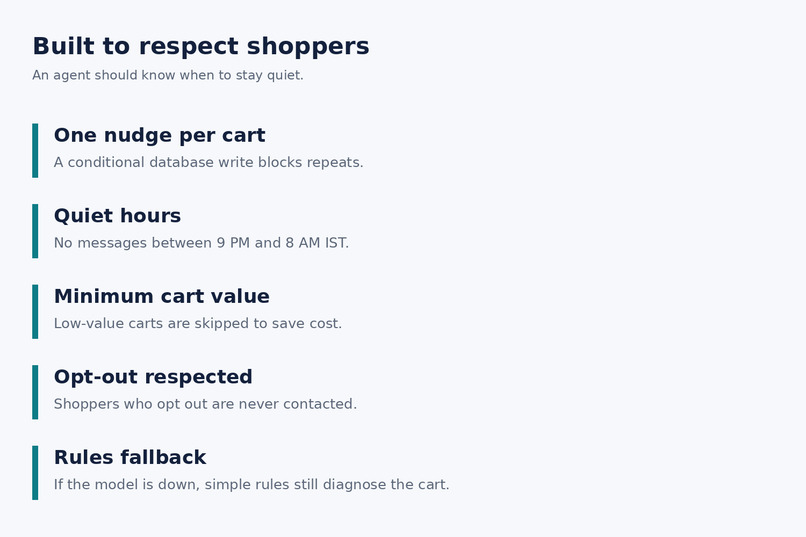
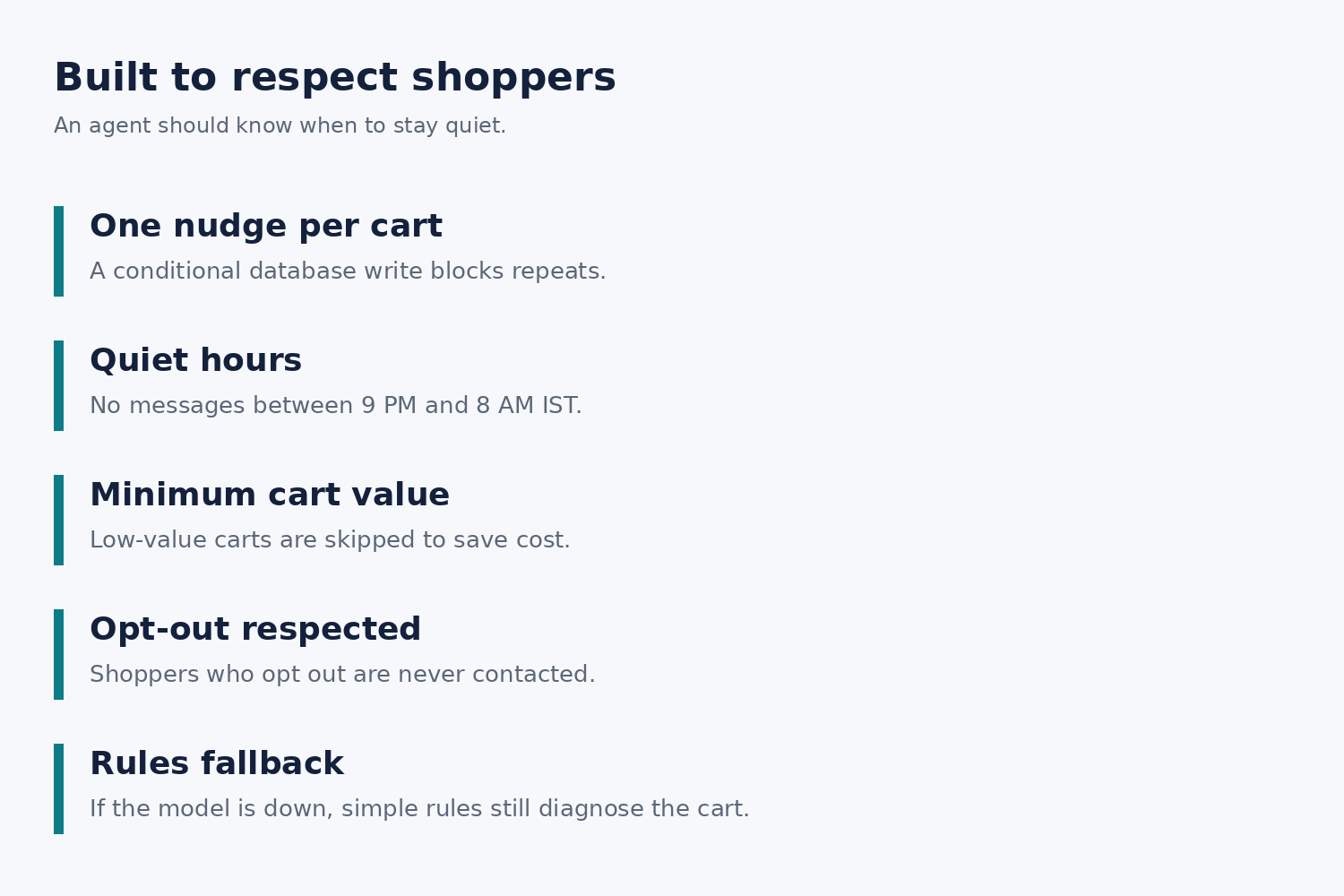
Built to respect shoppers: one nudge per cart, quiet hours, opt-out support, and a rules fallback if the model is down
-
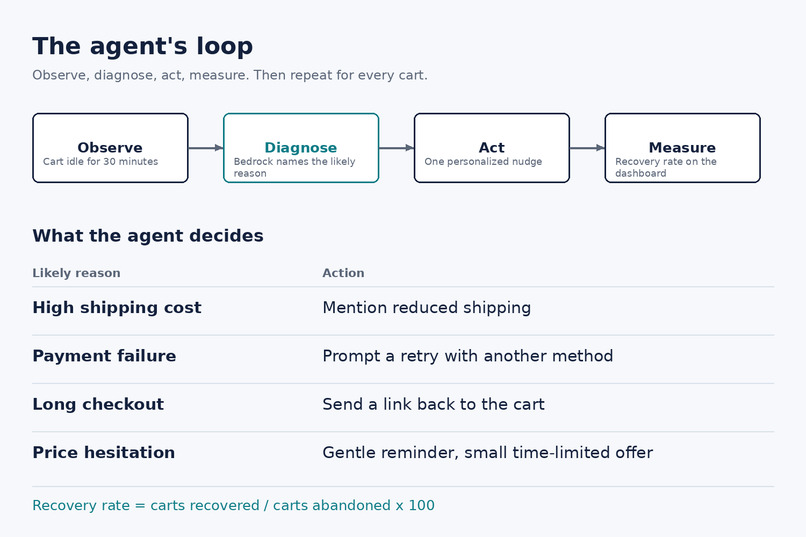
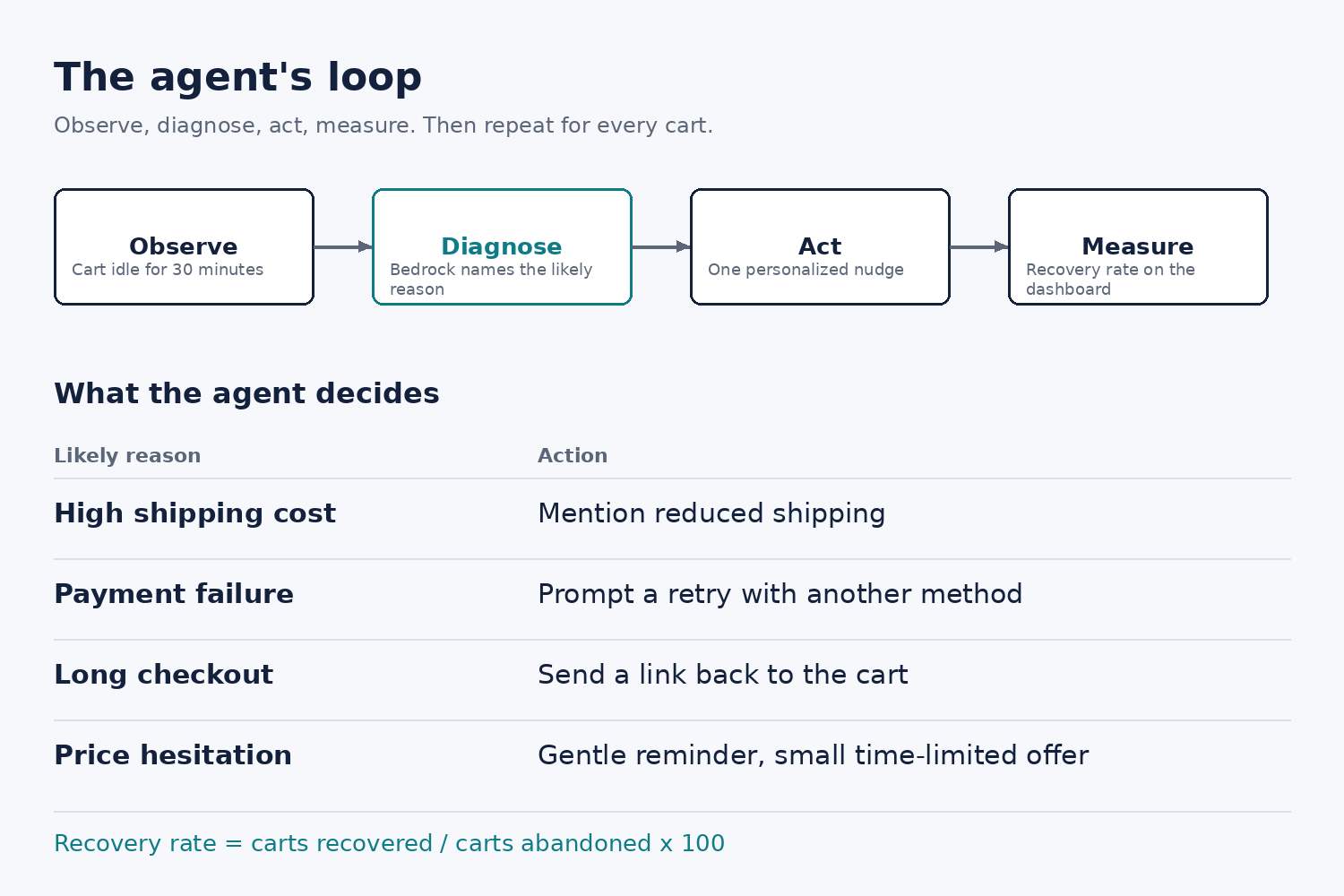
The agent observes idle carts, diagnoses the reason, sends one targeted nudge, then measures recovery.
-
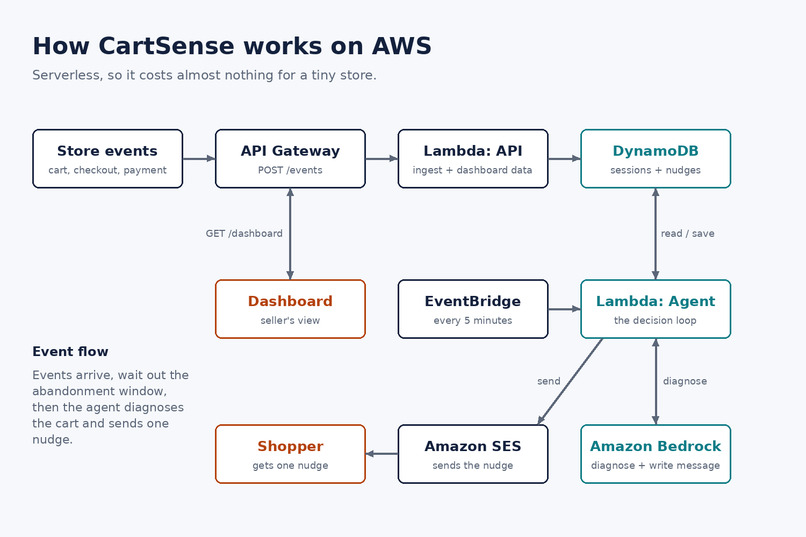
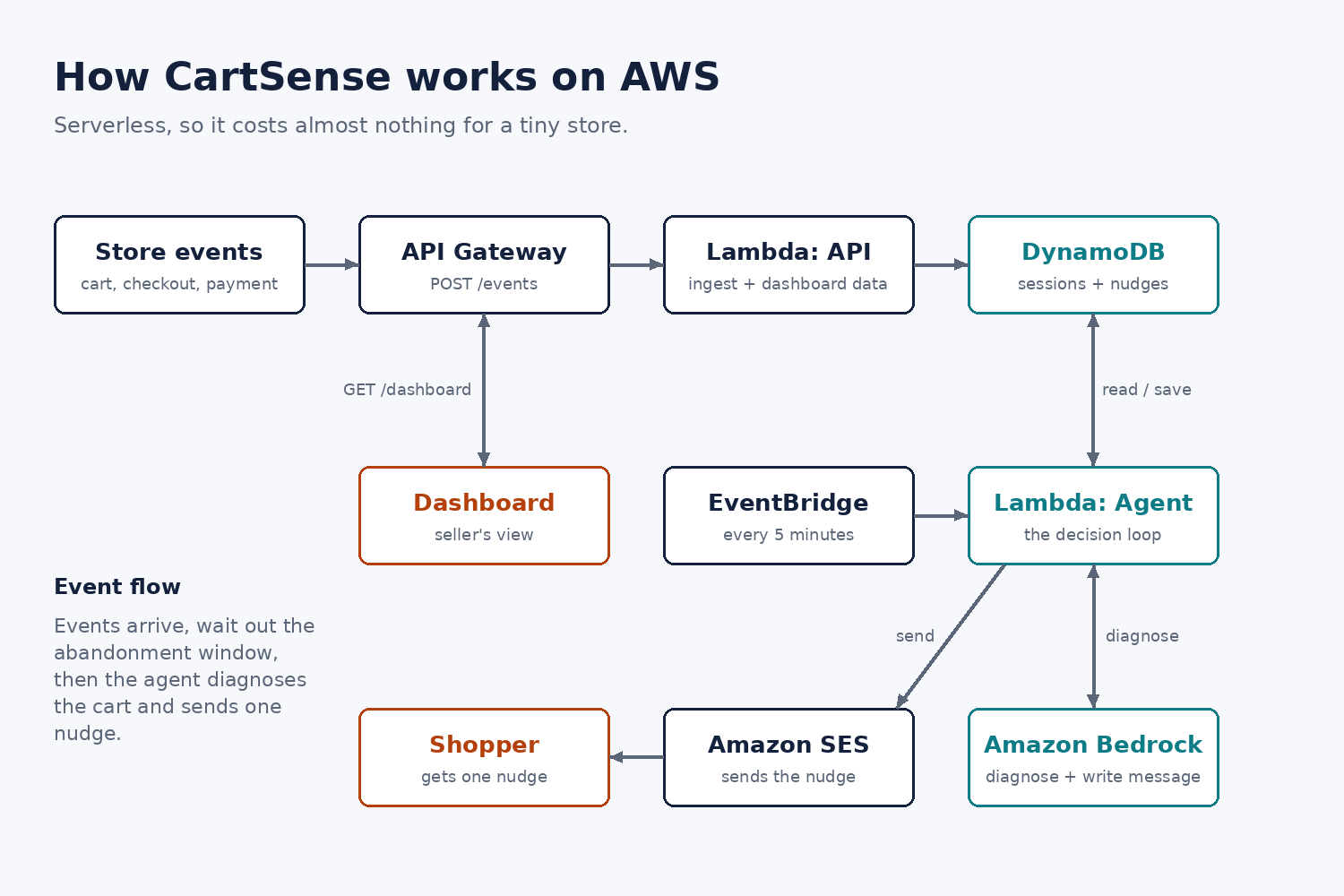
Serverless AWS design: API Gateway and Lambda feed DynamoDB, EventBridge wakes the agent, Bedrock diagnoses, SES sends the nudge.
-
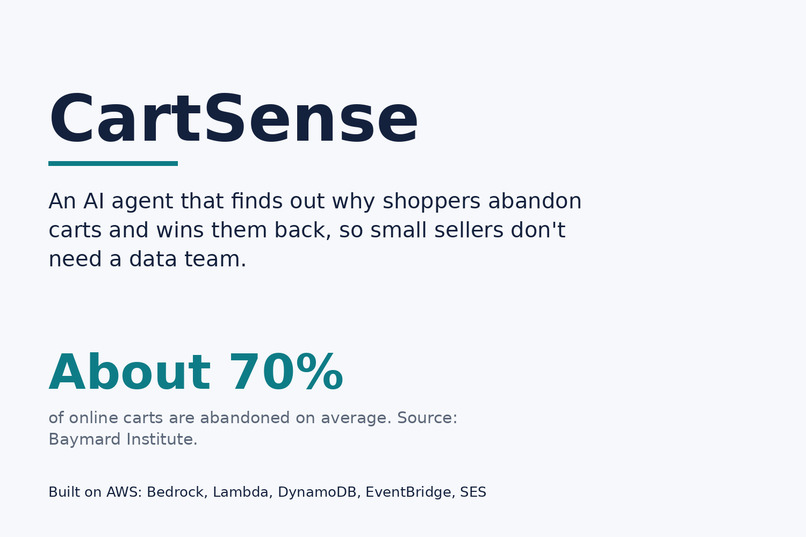
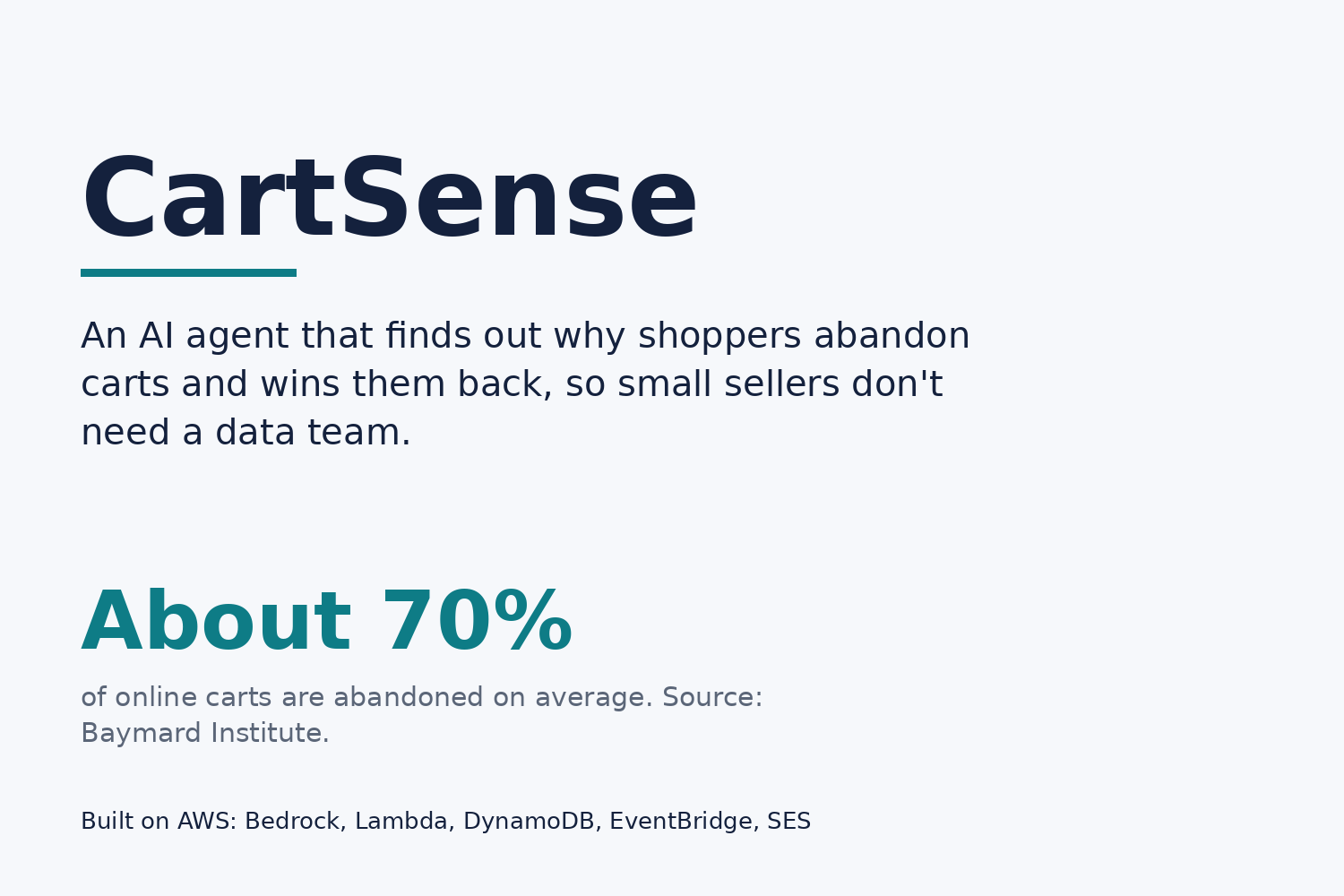
CartSense: an AI agent that finds why shoppers abandon carts and wins them back, so small sellers need no data team.
Inspiration
Small online sellers work hard to bring shoppers to their store, only to watch most of them leave before paying. The Baymard Institute, which aggregates dozens of checkout studies, puts the average documented cart abandonment rate at roughly 70%. Large retailers have data teams to investigate this. A seller running a store from a phone or a small shop has no such luxury. We asked a simple question: what if every small seller had an analyst who watches every abandoned cart, works out why it happened, and acts on it automatically?
What it does
CartSense is an AI agent for small online sellers. It:
- Detects abandoned carts from store events in real time
- Diagnoses the likely reason, such as high shipping cost, surprise fees, a long checkout, no preferred payment option, or price hesitation
- Acts by sending a personalized nudge (email, SMS or WhatsApp) with a relevant fix, such as free-shipping messaging, a payment reminder or a small time-limited offer
- Reports to the seller in plain language: what went wrong, what was done, and how much revenue was recovered.
The core metric is the recovery rate:
$$ \text{Recovery Rate} = \frac{\text{Carts Recovered}}{\text{Carts Abandoned}} \times 100 $$
How we built it
- Event ingestion: Store events (add to cart, checkout started, payment failed) flow through Amazon API Gateway into AWS Lambda.
- Storage: Amazon DynamoDB holds sessions, cart contents and nudge history.
- Reasoning layer: Amazon Bedrock powers the agent. It reads the session trail and cart context and produces a structured diagnosis (reason, confidence, recommended action).
- Scheduling: Amazon EventBridge triggers follow-ups at the right moment, since timing matters as much as the message.
- Delivery: Amazon SES and SNS send the personalized messages.
- Seller dashboard: A lightweight web view shows abandonment reasons, actions taken and recovered revenue.
The agent follows a loop of observe → diagnose → choose action → send → measure, and each outcome feeds back into which actions it prefers for similar carts.
Challenges we ran into
- Diagnosing without certainty: A shopper never tells you why they left. We had to infer reasons from behavior and have the agent report confidence rather than guess blindly.
- Avoiding spam: Aggressive nudges annoy customers and hurt the seller's brand. We added frequency caps, quiet hours and opt-out handling.
- Timing: Too early feels pushy, too late is ignored. We tested different delay windows to find what worked.
- Keeping it simple for sellers: Our target users have no technical background, so every output had to be plain language, not analytics jargon.
- Cost control: Calling a model for every session is wasteful, so we only run the full diagnosis on carts above a minimum value or intent signal.
Accomplishments that we're proud of
- A working end-to-end loop from detecting an abandoned cart to measuring its recovery
- Diagnoses that a seller can read and act on without any data background
- A serverless design that scales down to near-zero cost for tiny stores
- Built-in guardrails for customer consent and message frequency
What we learned
The reason behind an abandoned cart matters more than the reminder itself. A generic "you forgot something" email performs far worse than a message that addresses the actual blocker.
- Good agent design is mostly about constraints: when to act, when to stay silent, and when to ask the seller.
- Serverless AWS services let a small team ship a production-style system quickly.
- Trust is the product. Sellers want to see exactly what the agent did and why.
What's next for CartSense: AI Agent That Cuts Cart Abandonment for Sellers
- Plug-ins for popular store platforms so setup takes minutes
- Regional language support for messages and the seller dashboard
- A/B testing built into the agent so it learns the best action per customer segment
- Voice and chat summaries for sellers, such as "Here's what you recovered this week"
- Smarter offer logic that protects margins instead of defaulting to discounts
Built With
- amazon-api-gateway
- amazon-bedrock
- amazon-cloudwatch
- amazon-dynamodb
- amazon-eventbridge
- amazon-ses
- amazon-sns
- amazon-web-services
- aws-iam
- aws-lambda
- boto3
- css3
- html5
- javascript
- python
- react

Log in or sign up for Devpost to join the conversation.