Inspiration
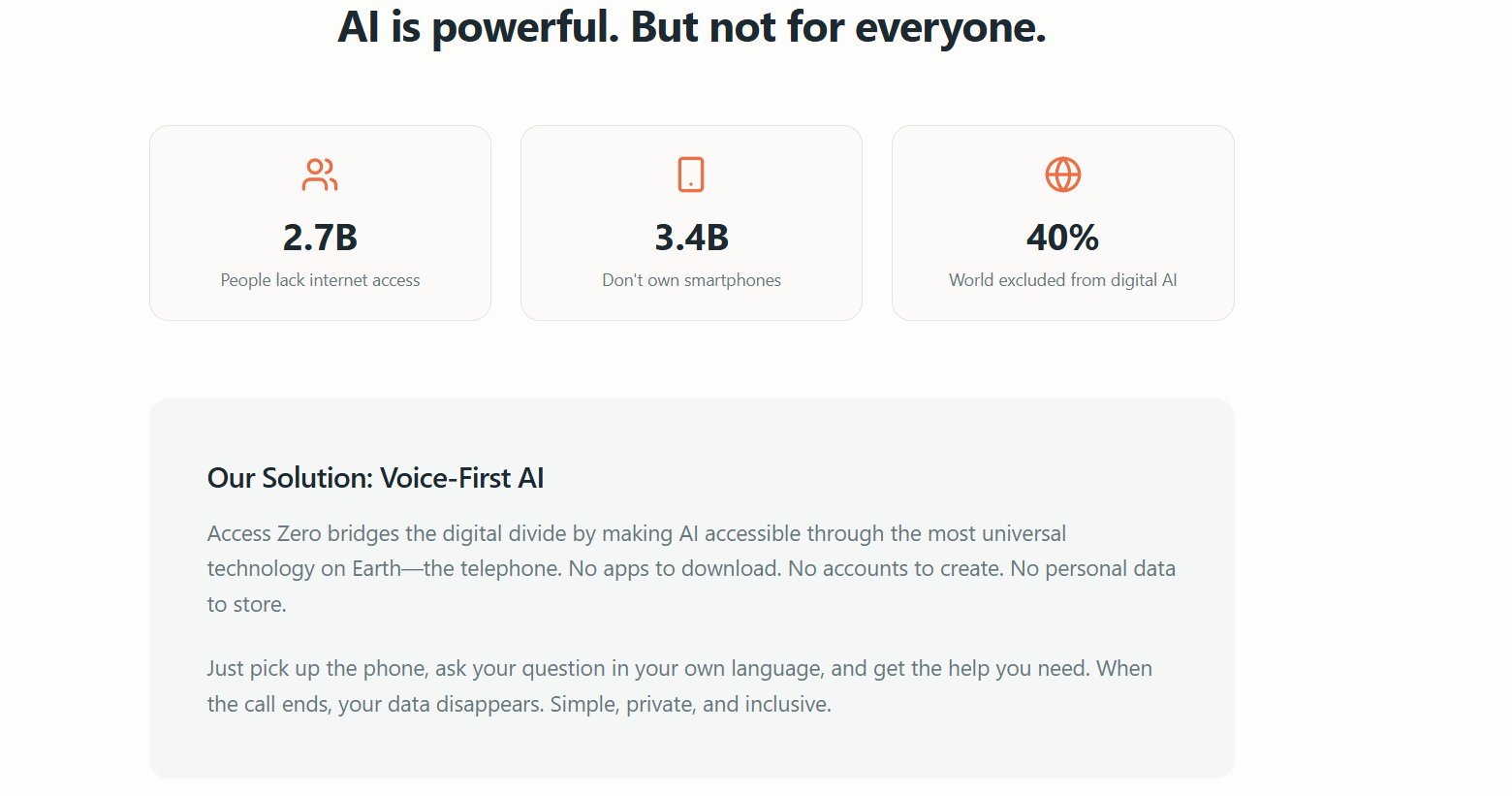
Many people are unable to use digital services because they do not have smartphones, internet access, documents, or literacy skills. Most AI systems depend on apps and personal data, which excludes these people. We wanted to build an AI that helps anyone, even when it knows nothing about them.
What it does
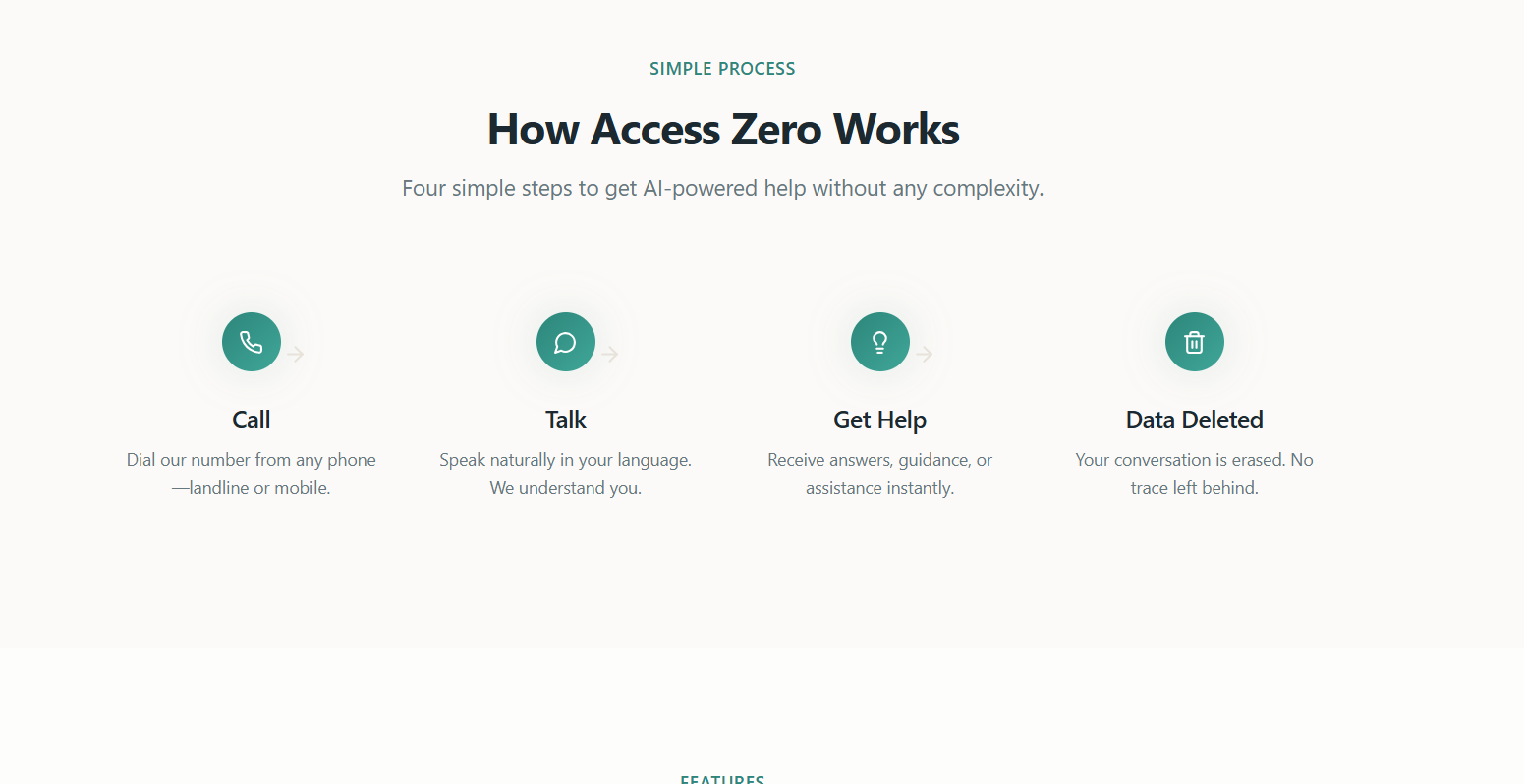
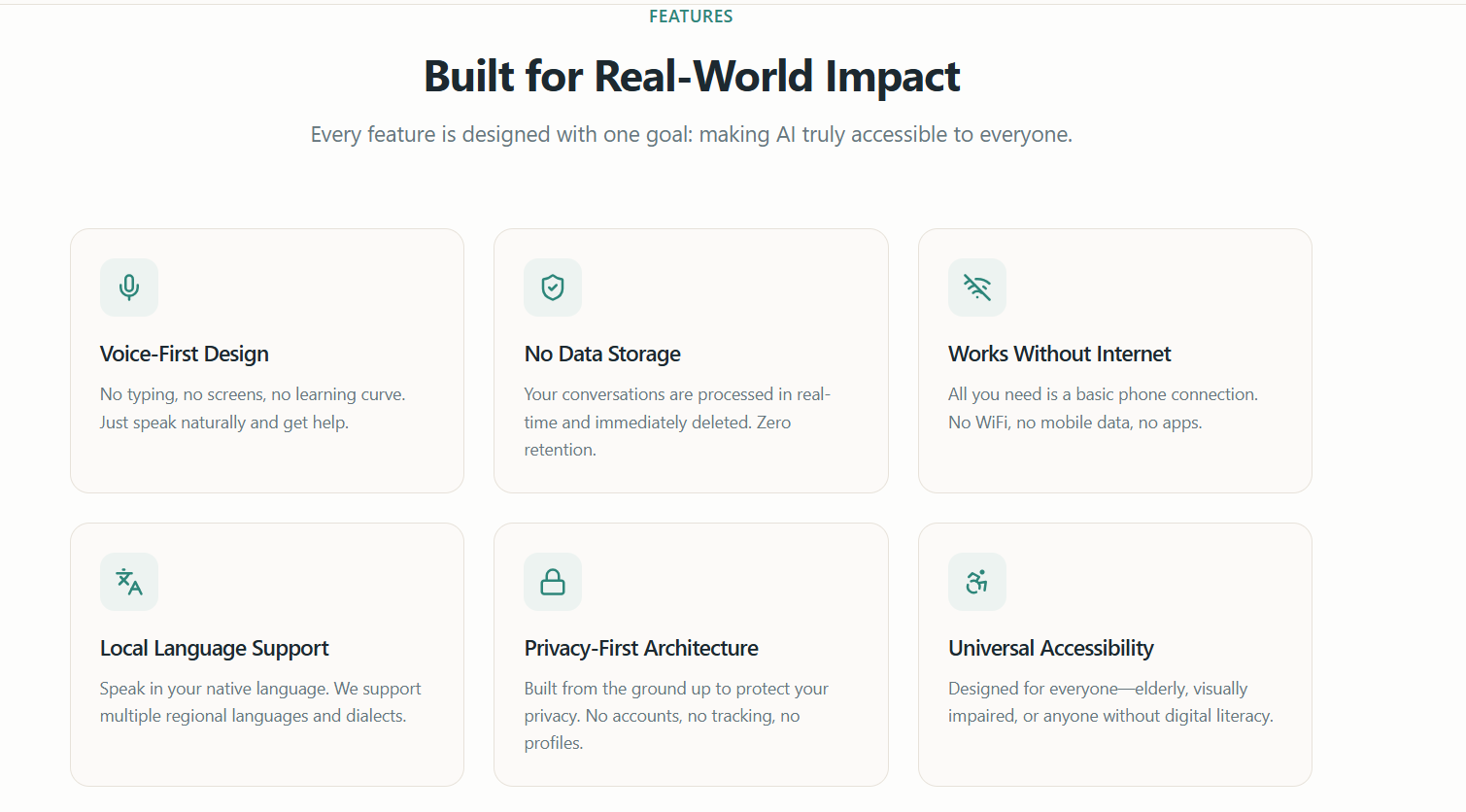
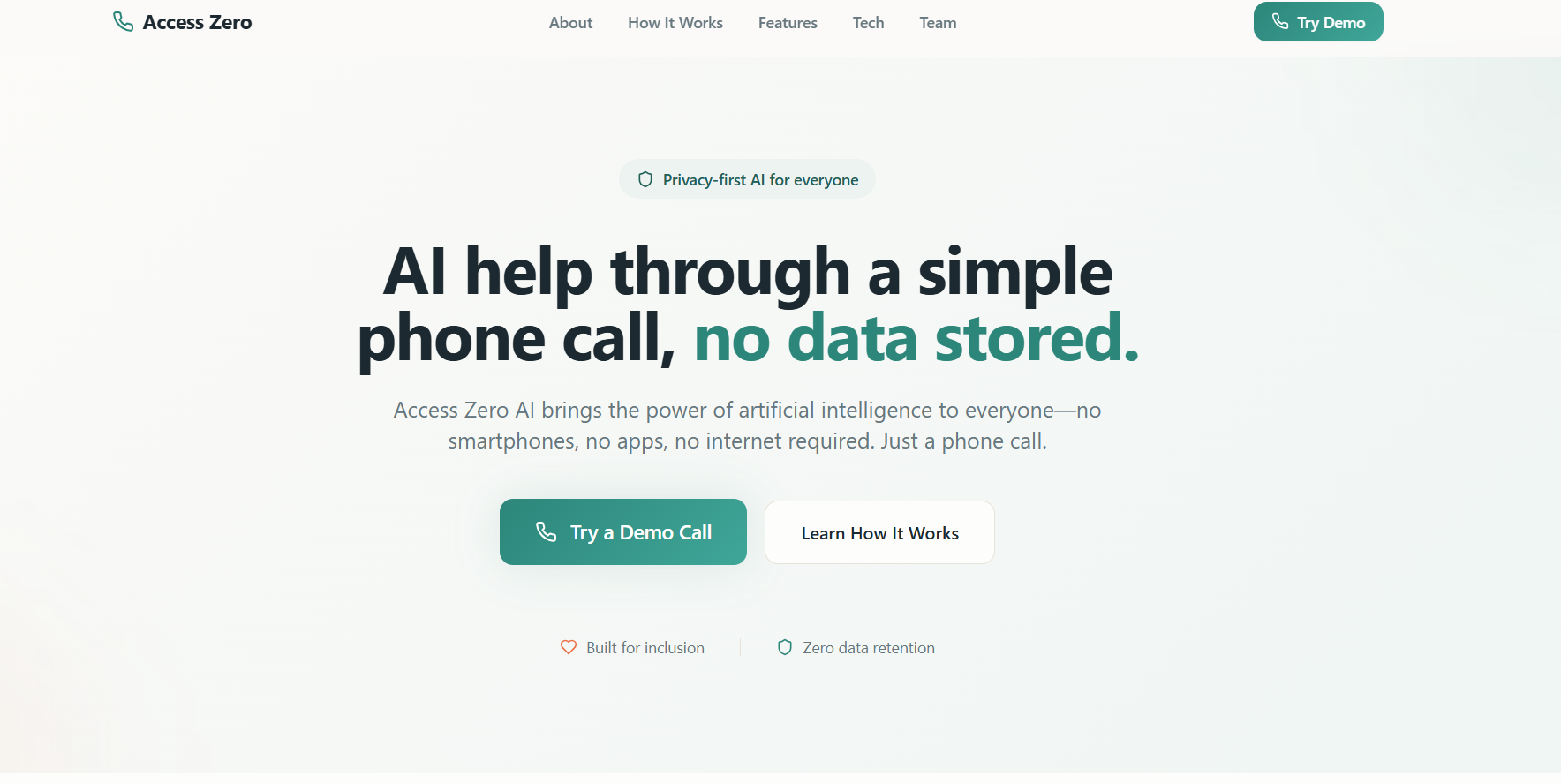
Access Zero is a voice-based AI that works through a simple phone call. A user can call the system, speak in their local language, and receive basic guidance or support. It does not require apps, forms, documents, or personal data, and no call data is stored.
How we built it
We built Access Zero using telephony services to handle phone calls. Speech-to-text converts the user’s voice into text, and text-to-speech responds back. A simple AI conversation engine understands the user’s situation and provides safe guidance. Temporary sessions are used, and all data is deleted after the call.
Challenges we ran into
Handling different accents and noisy phone calls was a major challenge. Ensuring useful responses without storing any user data was also difficult. We addressed this by keeping the conversation short, simple, and rule-based.
Accomplishments that we're proud of
We successfully built a working voice-based AI that does not depend on apps, internet, or user data. The system guarantees minimum support instead of rejecting users. Most importantly, it focuses on privacy and inclusion.
What we learned
We learned that AI does not have to be complex to be impactful. Designing for real people means keeping things simple, accessible, and privacy-first. Voice can be a powerful way to include those left out of digital systems.
What's next for Access Zero
In the future, we plan to support more local languages, improve voice accuracy, and partner with NGOs or government services to provide real-world help through the system.


Log in or sign up for Devpost to join the conversation.