-
-
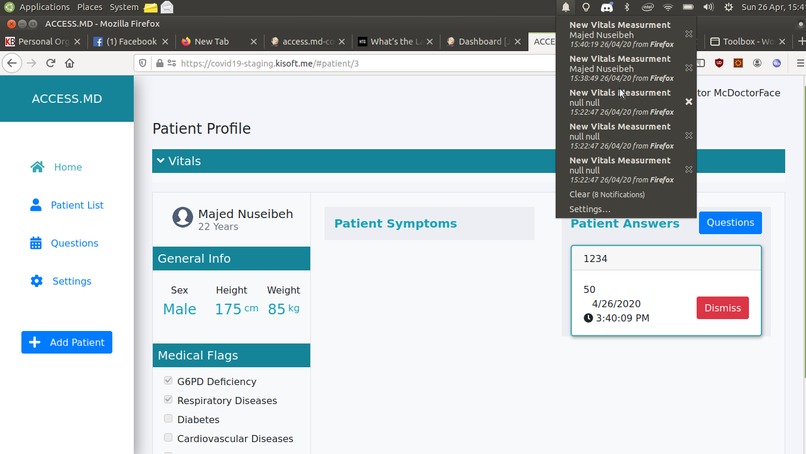
Notifications for new Patient Vitals
-
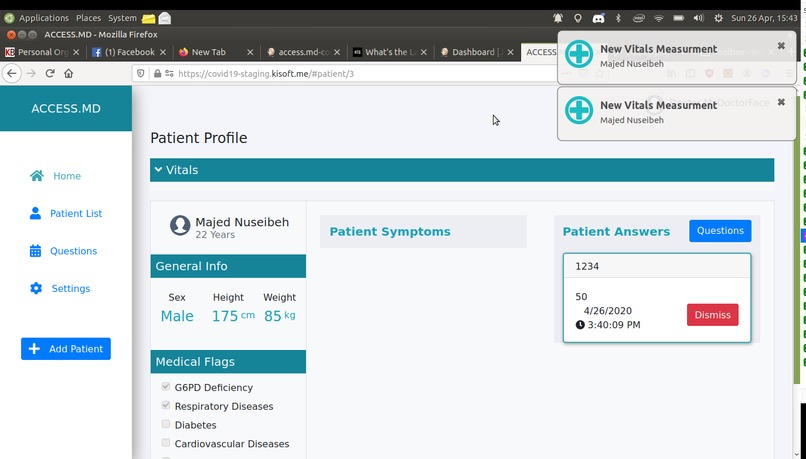
Notifications for new Patient Vitals
-
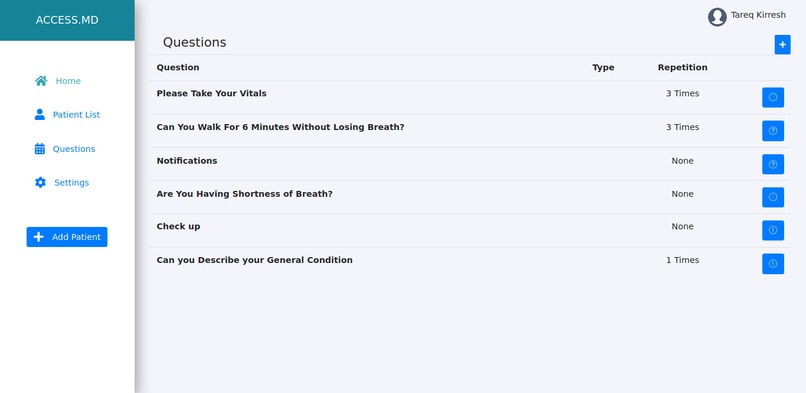
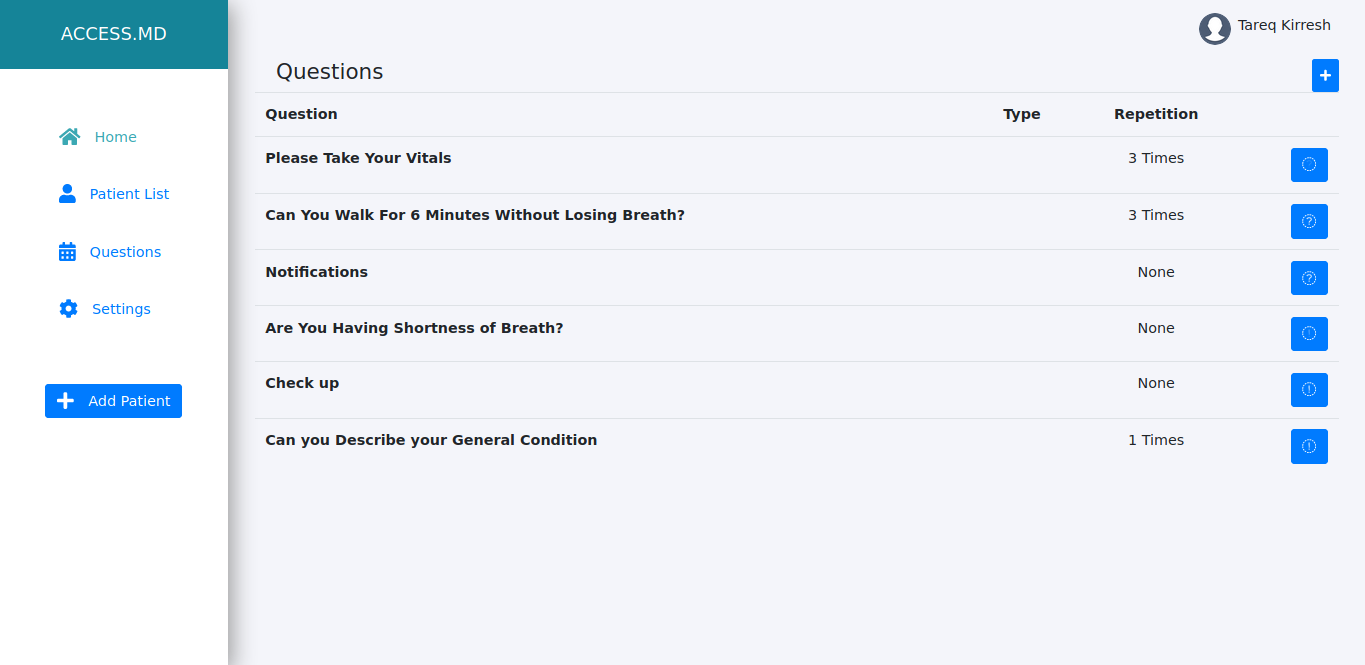
Questions List
-
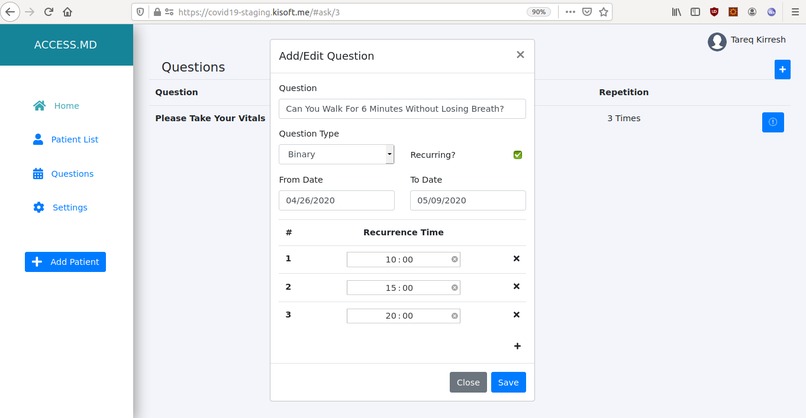
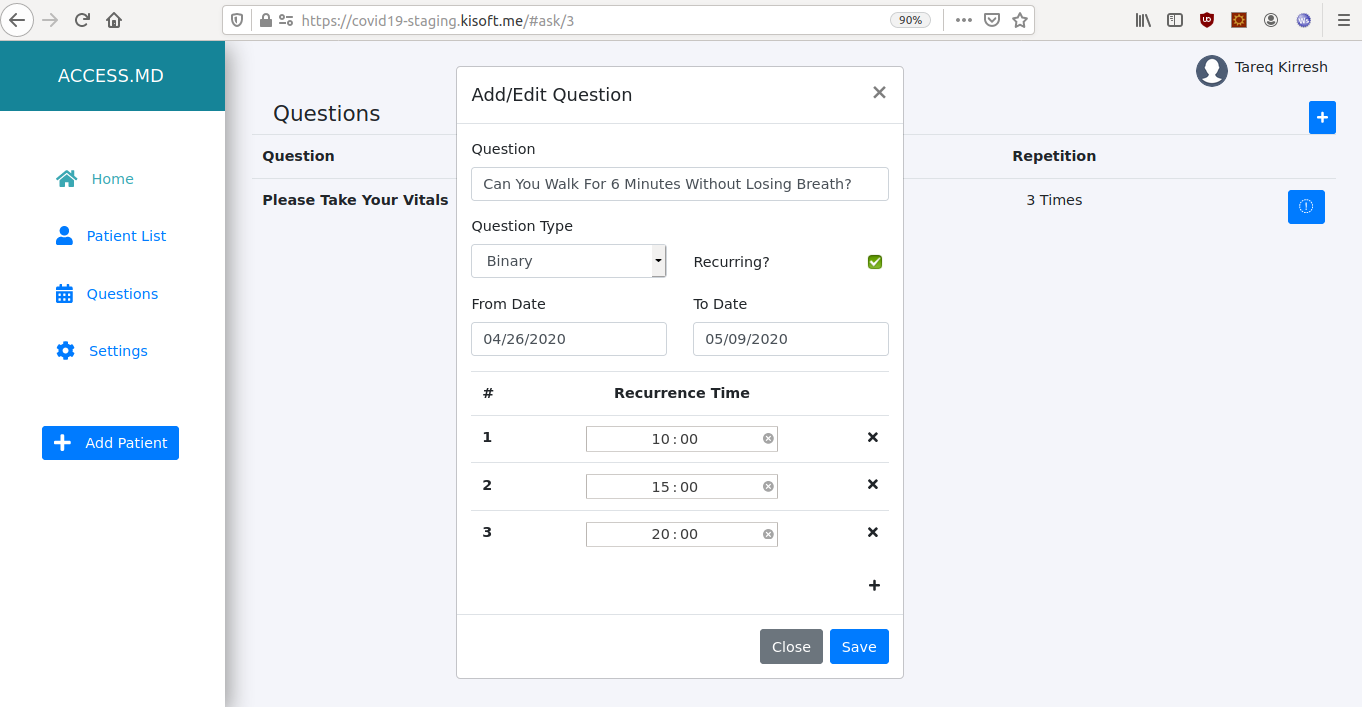
Asking For Vitals
-
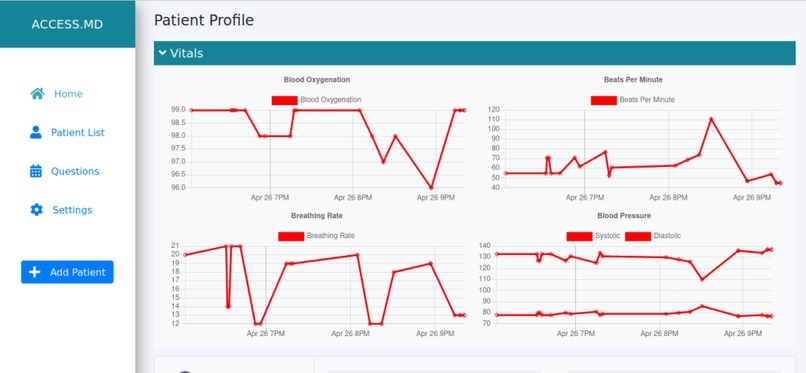
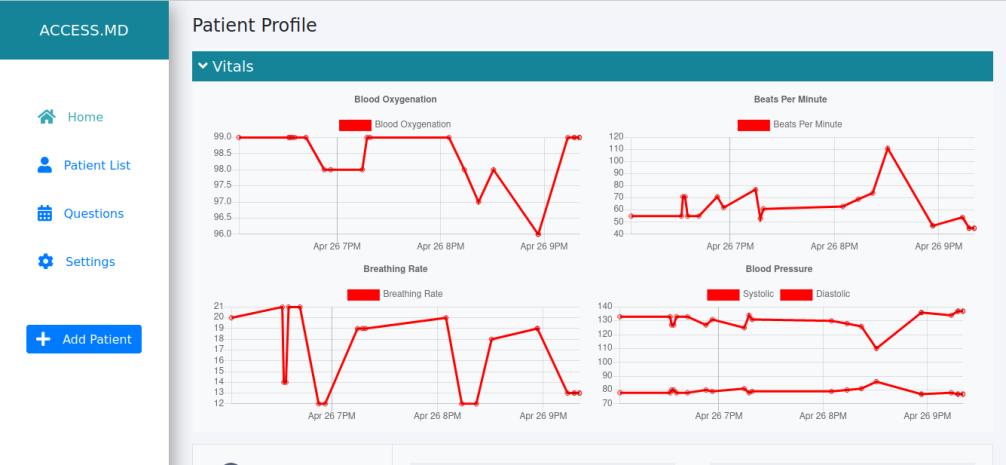
Patient Vitals Dash
-
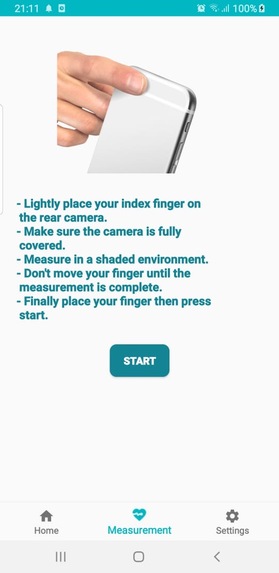
Vitals Measuring Screen
-
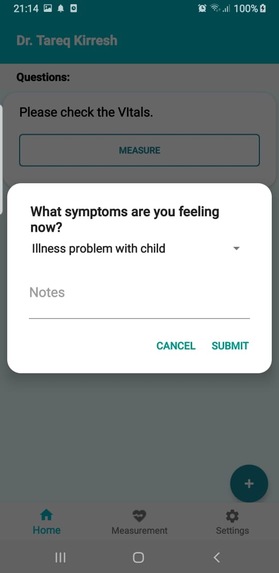
Adding a Symptom
-
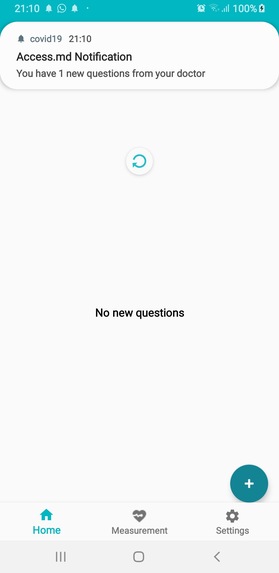
Notifications
-
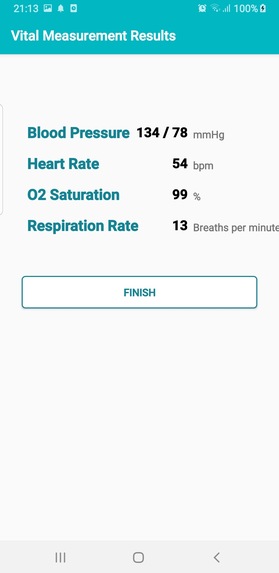
Vitals Results Screen




ACCESS.MD Vitals Checkup
Background & Inspiration
We started the ACCESS.MD project at the onset of our local covid-19 outbreak. Our initial target was to create an easy-to-deploy and self host community-local Telemedicine app for healthcare providers that do not have infrastructure to follow up with remote patients so they dont leave home. We completed that initial project, satisfied with what we did, and started looking for partners to push it out with.
However, in our attempts to find partners and adoption, we kept coming back to the idea that medical supplies are in short order - whether its PPE and ventilators, Lab Equipment, or even simple things like thermostats. So we decided that we are going to try and help solve that issue.
This was especially true for SpO2 sensors, which are critical for the current Pandemic.
The vast majority of covid-19 patients are not in hospital. Even most patients who test positive are not checked into hospitals, and are instead ordered to stay at home for a few weeks to get better. Sometimes, they are sent home with some medical kits to monitor their status, most of the times, they aren't, especially for underprivileged/underserved communities and places where healthcare infrastructure is not mature enough to allow those logistics. This inspired us to look into the idea of making vitals measurement more accessible and more efficient.
We are passionate, we love a good challenge, and this seemed right up our alley.
What We Did
Combining approaches from academia and our own already existing open source solution, the ACCESS.MD Vitals Checking Module allows doctors to regularly check up on their patient's critical vitals of Blood Oxygenation, Blood Pressure, Heart Rate, and Breathing Rate using nothing more than a simple smartphone app that works based on image processing and signal processing techniques. Additionally, this information is shown to doctors using a dashboard, that allows them to monitor and evaluate the status of their patient and whether or not they are doing better - simply put, we put a doctor in every home, capable of evaluating and communicating more effectively with their patients, enabling doctors to do more with little resources. All Patients must do is place their finger on the camera and cover their phone's flashlight, and a measurement of their vitals will be sent to their physician for review.
What do we want to do next ?
What we want to do next is to iterate our idea to have a better accuracy rate, and to create more partnerships with medical professionals and providers to roll our solution out en-masse. We intend to target underserved/underprivileged communities and places where there is no telemedicine infrastructure or where it is difficult to provide devices for monitoring.
Additionally, We will be working closely with interested healthcare providers to manage their hosting and help them maintain the system up and running, in addition to rebranding to provider colors and logos, deploying to app stores, and providing training to physicians, nurses, and administrators in handling the system. We estimate that hosting will cost around 70-100 USD/year, depending on the price of IT Infrastructure at the time and the size of a deployment, based on the current pricing of our staging setup (which should handle up to 1000 patients estimated) .
Lastly, we intend to continue working on the project to become a fully fledged open-source primary care Electronic Medical Record, compatible with the WHO's primary care format (ICPC-2e), to allow interoperability with existing medical and insurance software, and to become a viable open-source option for providers wishing to have EMR and Telemedicine capabilities with few resources.
Built With
- android
- java
- javalin
- javascript
- redom

Log in or sign up for Devpost to join the conversation.