-
Real vs. Derived
Inspiration
Motion/position capture systems aren't sexy - we want to change that. With the emergence of VR, AR, fitness trackers, and many other related technologies, digital representation of the human body will become more important than ever. We feel passionate about finding better ways to capture the position of the human body for data-driven experiences and solutions, and strongly believe that this is a ripe but massively untapped area for hacking and innovation. Hence, Acceloro.
What it does
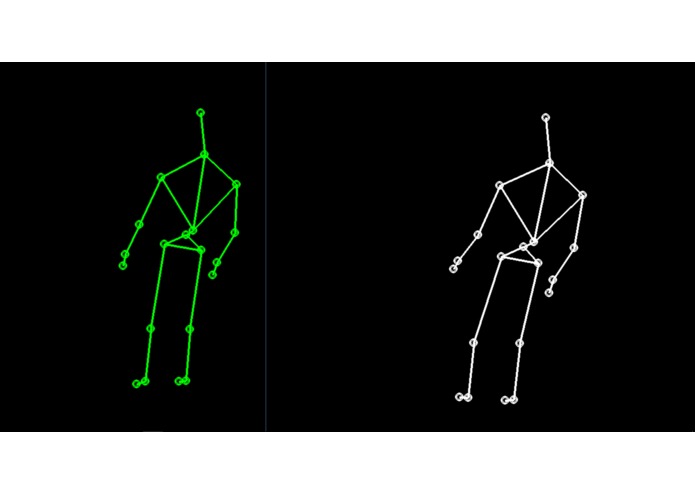
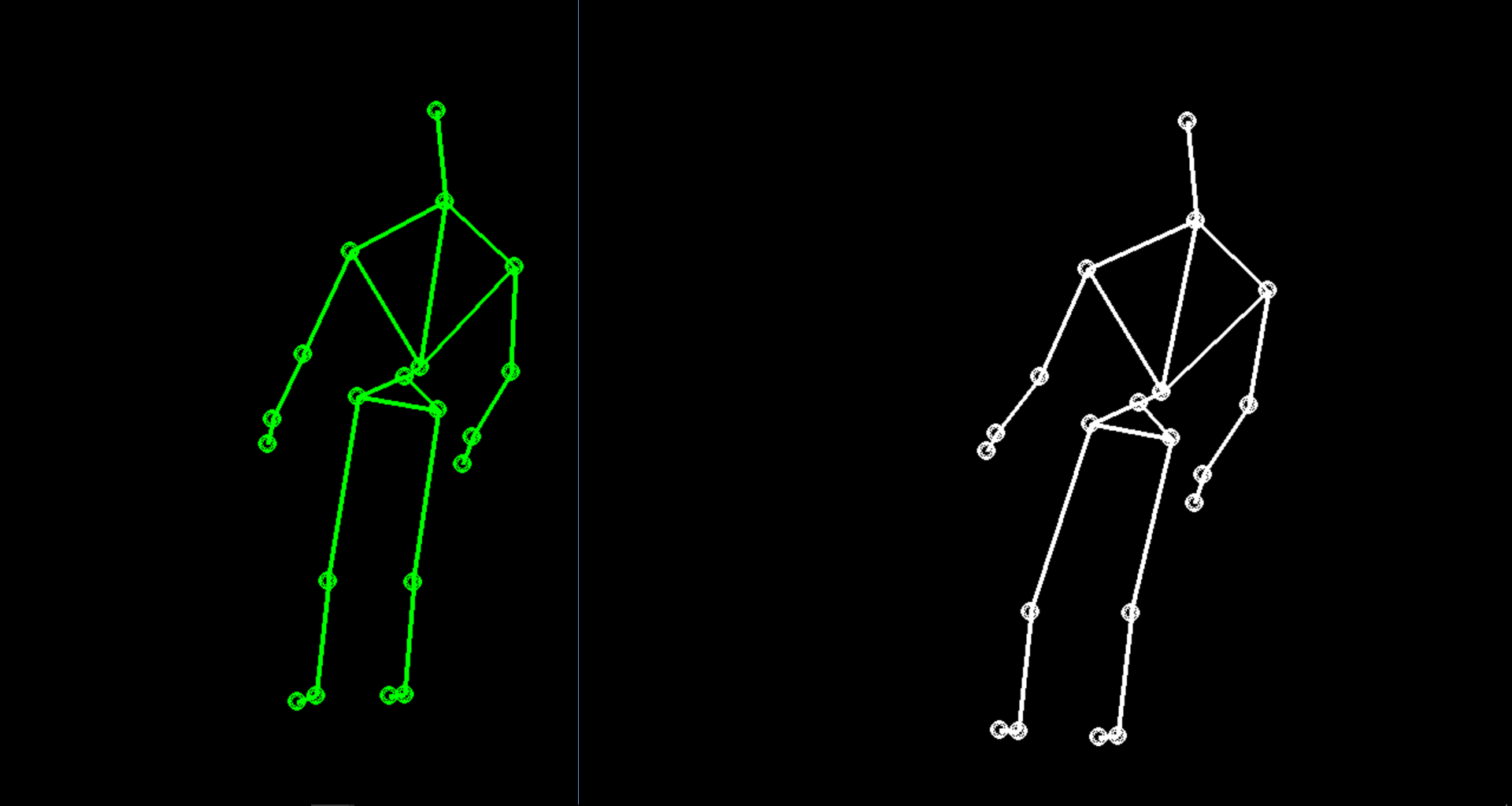
Acceloro is initially "trained" with two streams of data: the x, y, and z coordinates of the body's key skeletal nodes are tracked with a Microsoft Kinect, while a 9 DoF accelorometer fixed to the individual's chest collects physical data in parallel. Once the user records a few basic motions and collects some data, we use Machine Learning (SVR) to do away with the Kinect by deriving the position of the nodes from just the accelorometer data and the derived weights.
How we built it
First, we got a kinect to interface with an arduino in order to synchronize data collection from the two sources. After sampling as much data as possible, we strictly focused on training a Machine Learning algorithm with the help of the SciKit-learn library. Then, we wrote some script in python (with pygame) to output our formatted coordinate data in a video-stream.
Challenges we ran into
It was a bit of a pain to collect data on the skeletal coordinates through the Kinect because many of the packages and opensource projects for the Kinect were deprecated. We also didn't have access to optimal hardware - the cable we we plugged into the arduino was a bit too short, and resource limitations we had to stick the accelorometer to the person's body using electrical tape while collecting data. Still, we overcame nearly all of these issues.
Accomplishments that we're proud of
This was the first time either of us had attempted a hardware hack so we were glad to successfully get both the arduino and kinect functional and synchronized. We also weren't sure if our final output would be utter chaos because the relationship between the accelorometer data and the position of the nodes seemed to defy intuition. We succeeded far beyond our expectations.
What we learned
Hardware hacks are tough! That and that Red Bull and Doritos are the only forms of sustenance you need for 36 hours.
What's next for Acceloro
We want to collect higher resolution data and attempt to streamline the user experience (i.e. make a single application that guides the user through a few basic motions in order to generate their specific parameters). Hardware improvements like going wireless and making a dedicated sensor are also conceivable.

Log in or sign up for Devpost to join the conversation.