-
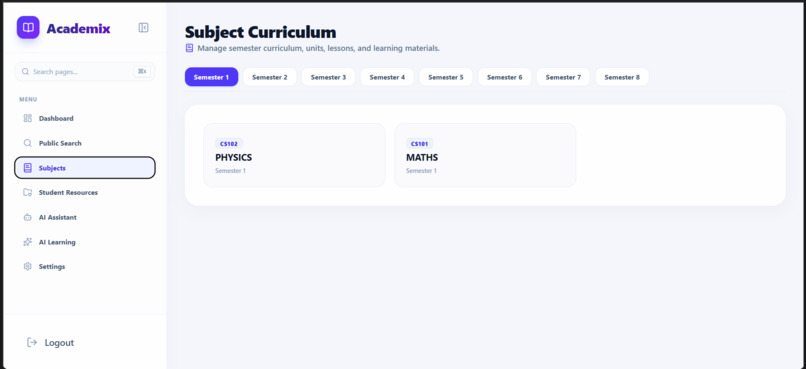
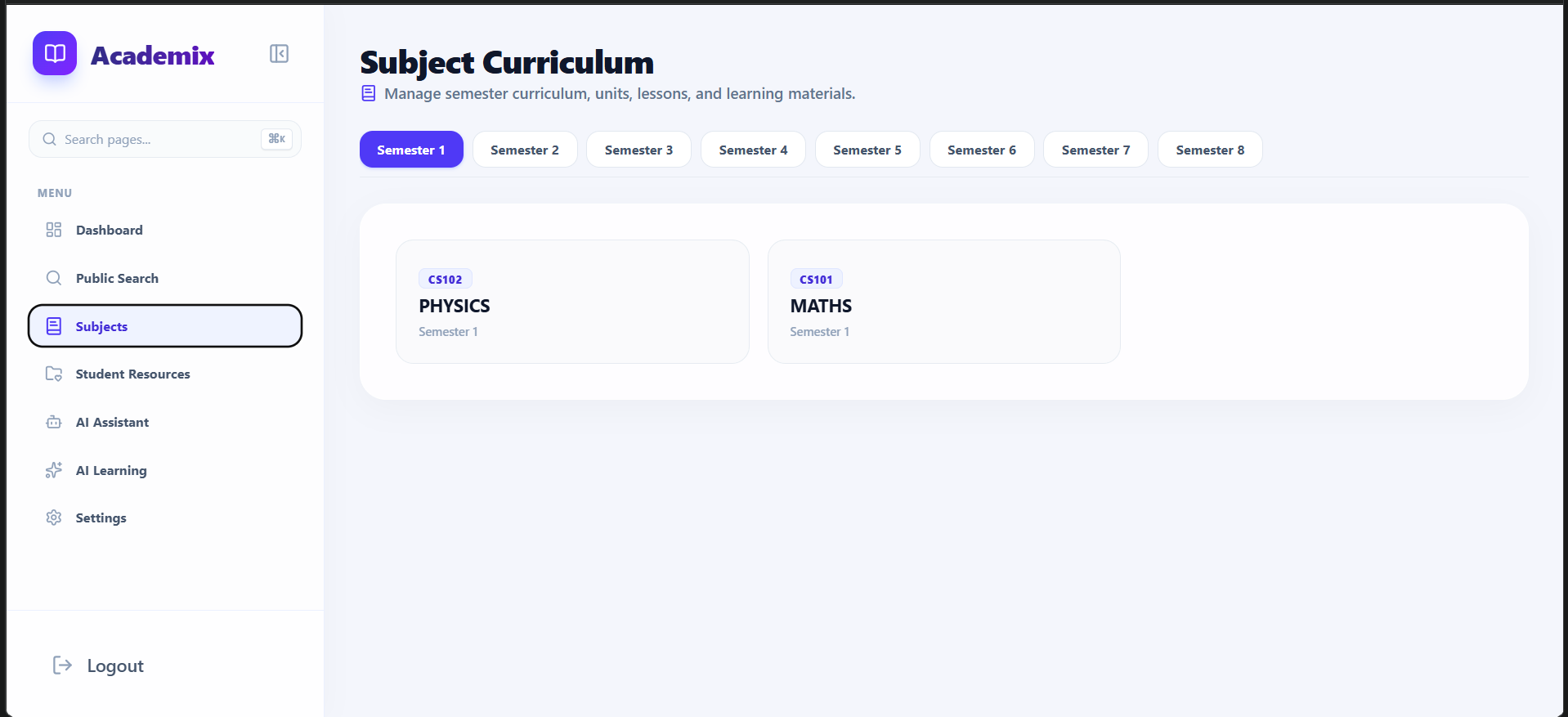
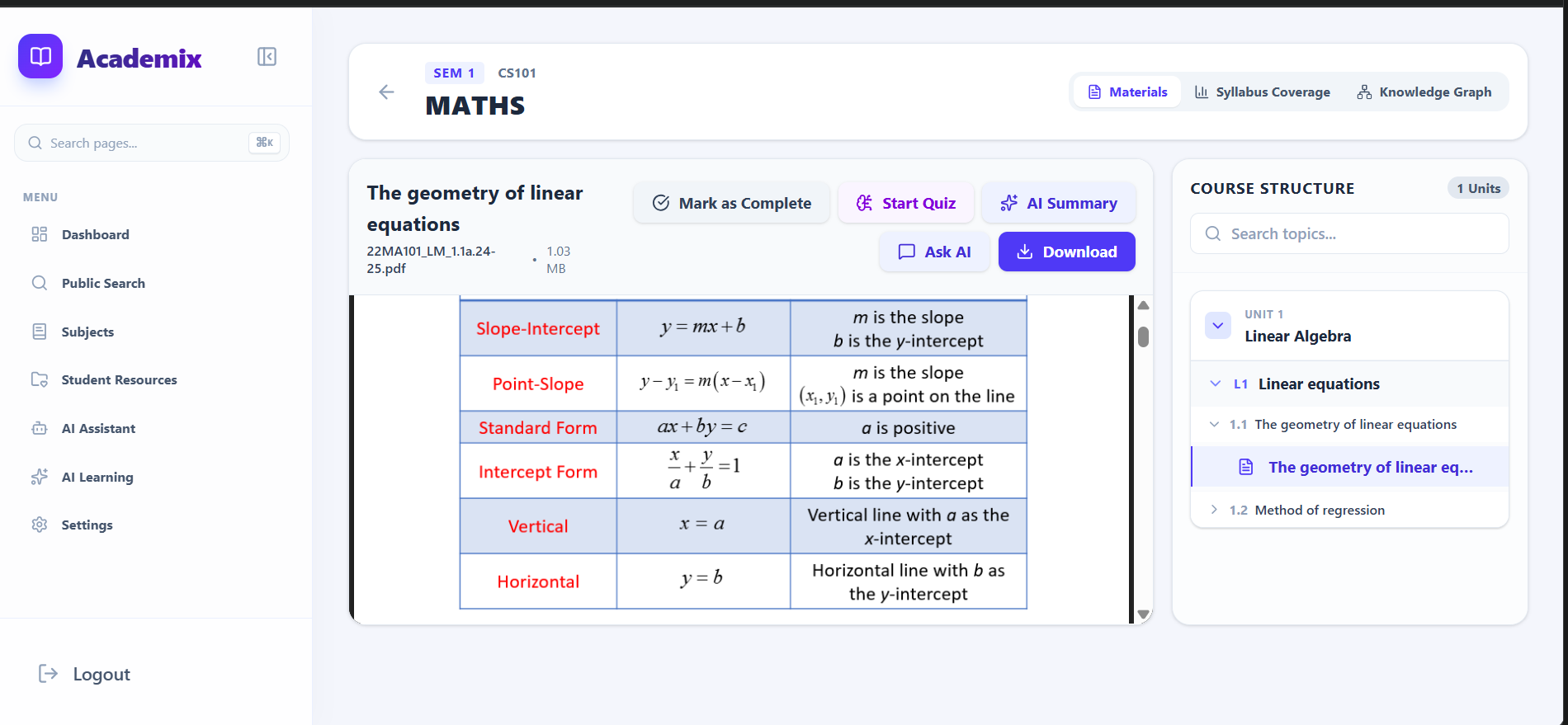
Subjects Page
-
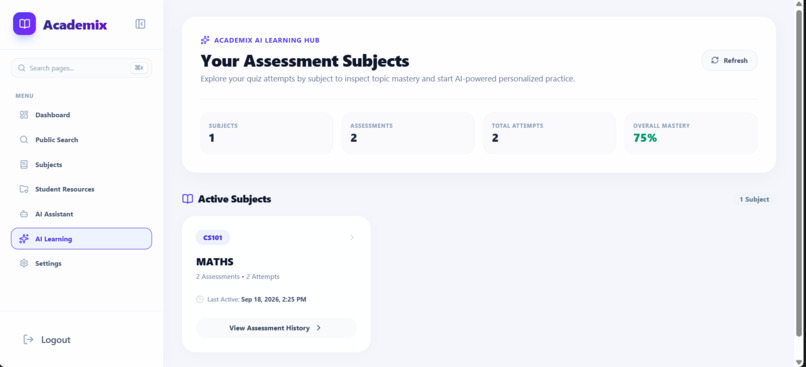
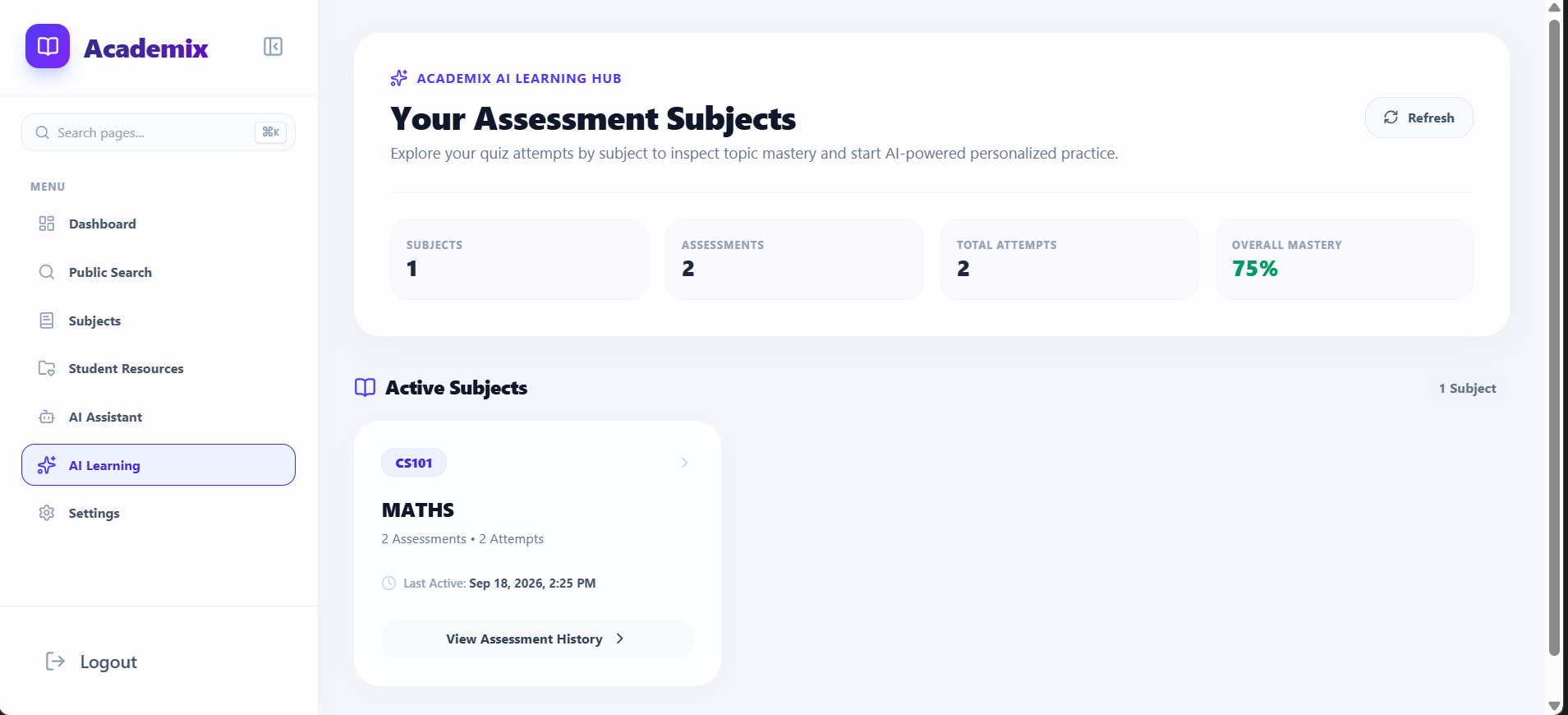
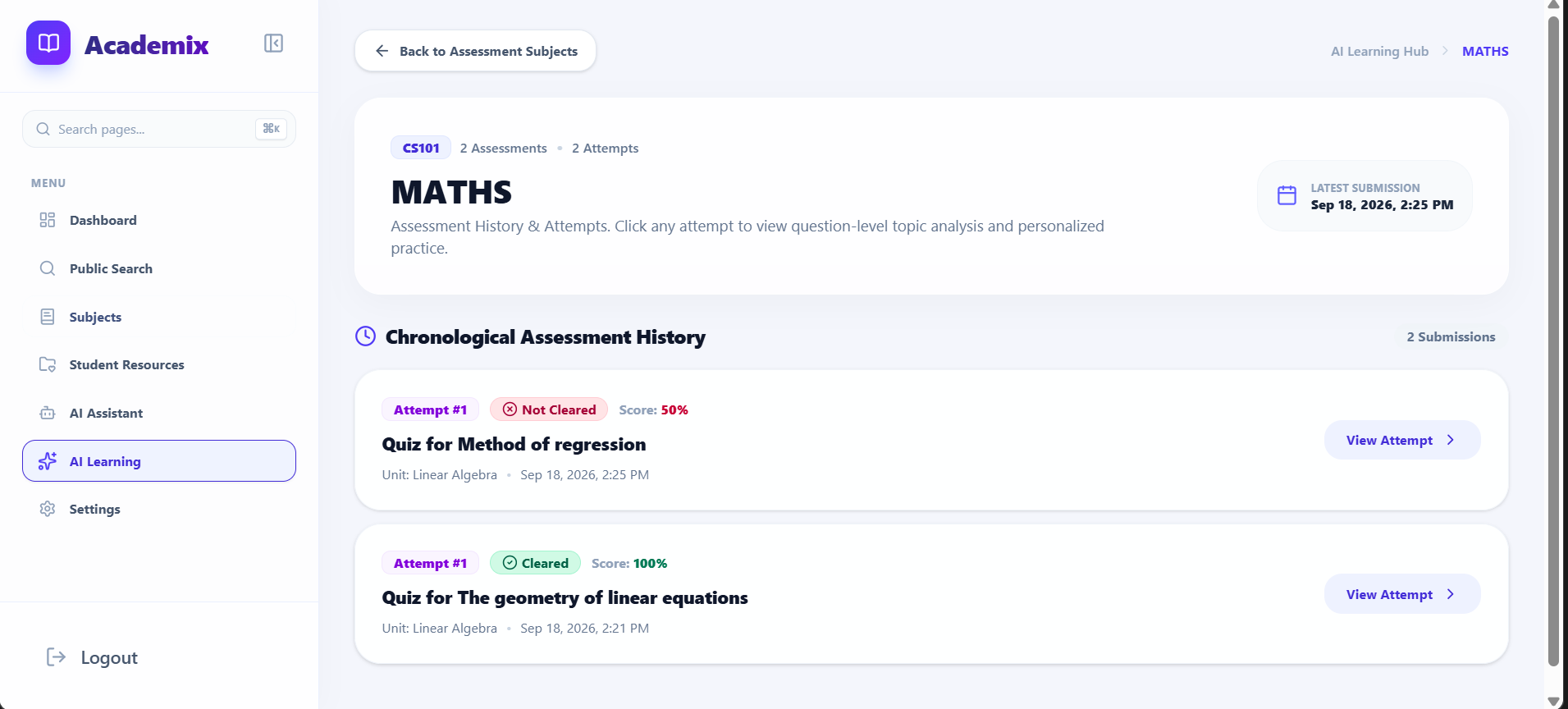
Assessment History and Assessment remarks
-
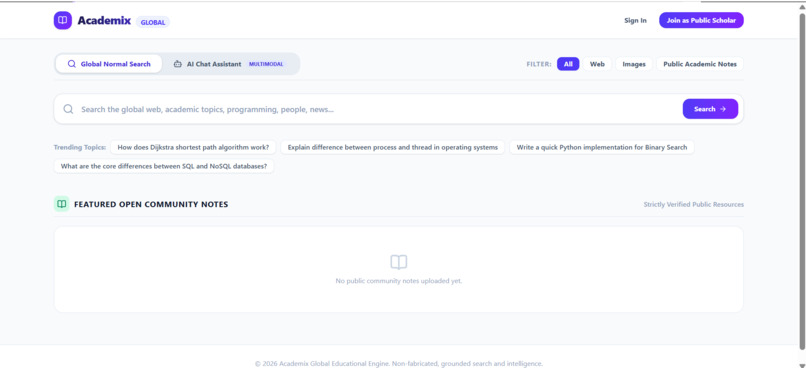
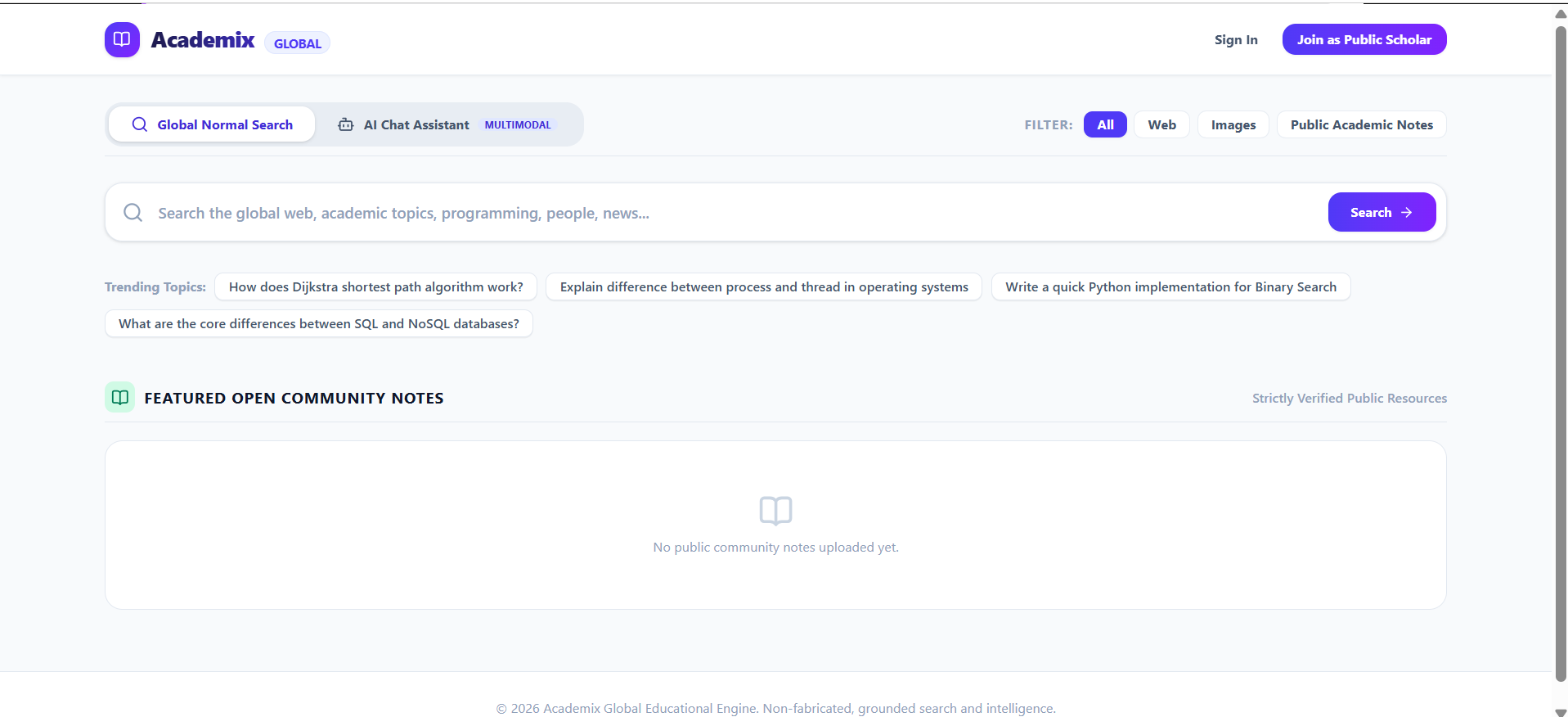
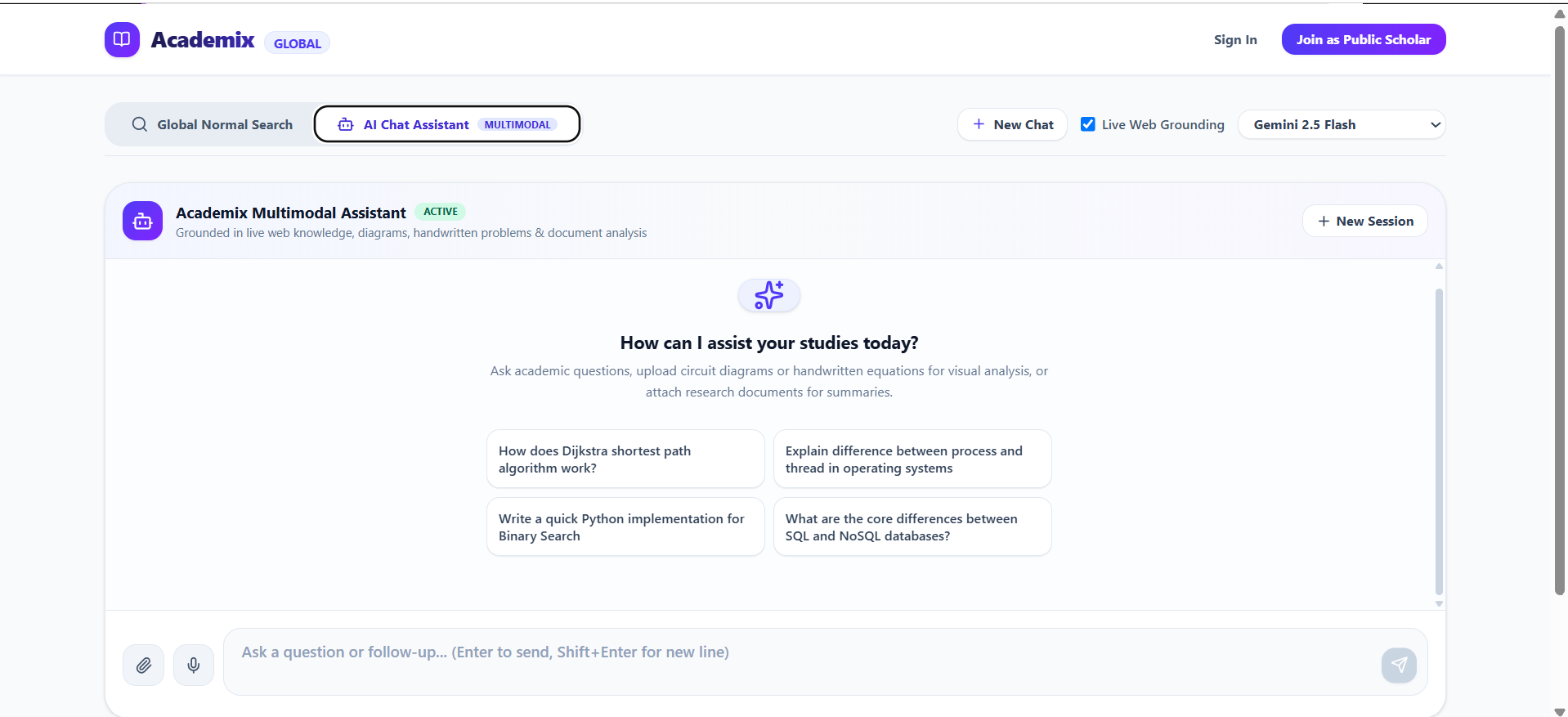
Other than institute users, Normal (Global) users can also login and use academix for common search
-
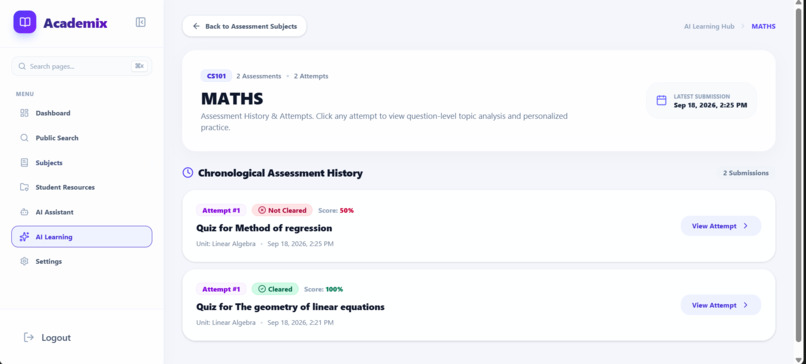
AI Based Support for each failed assessment
-
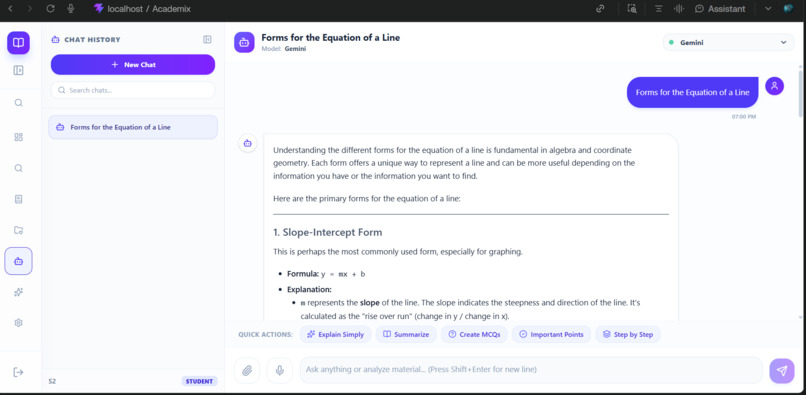
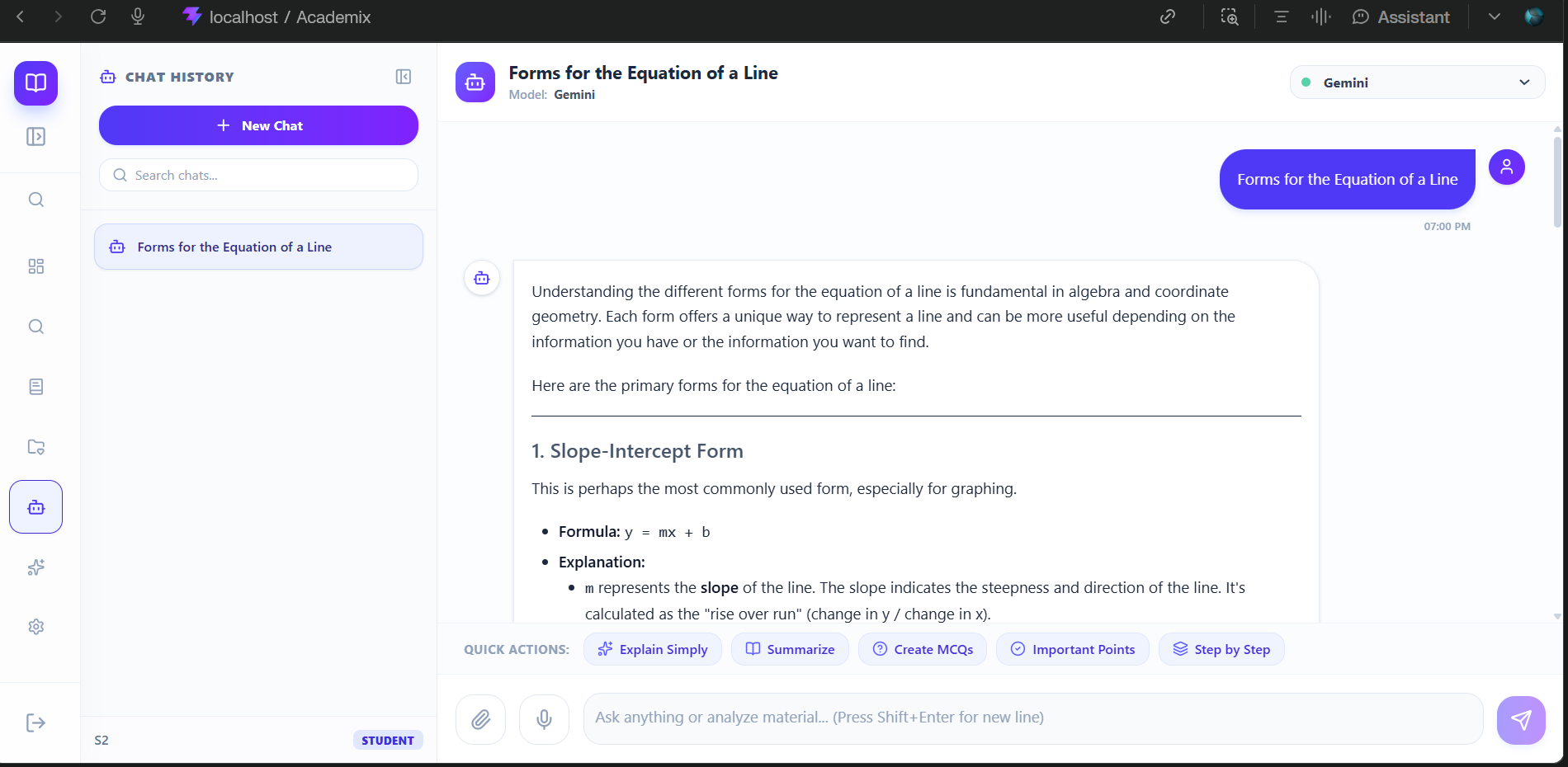
AI chatbot support for all user for personal assistance
-
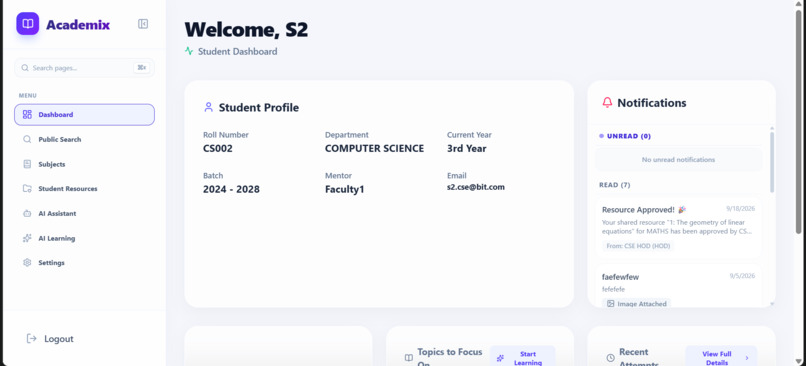
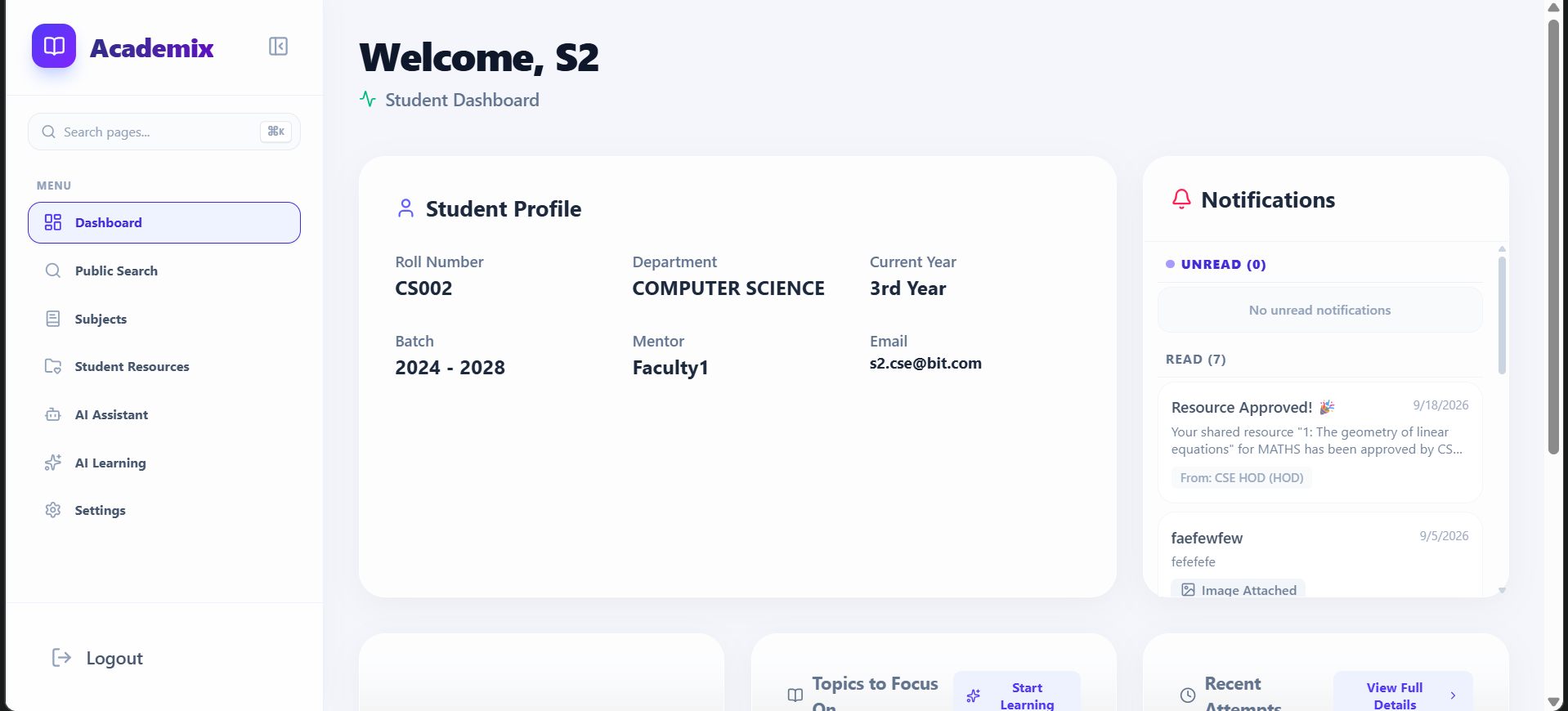
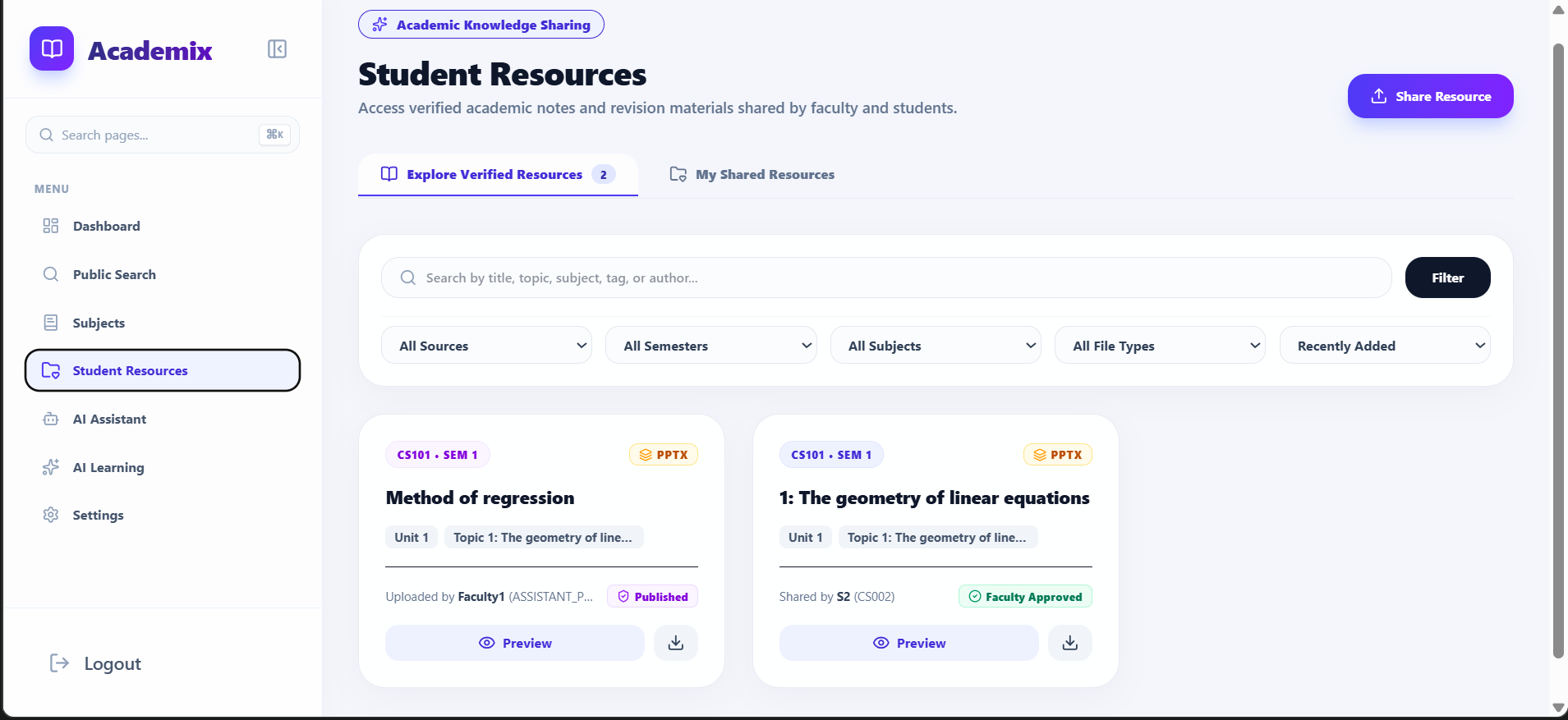
Student Dashboard
-
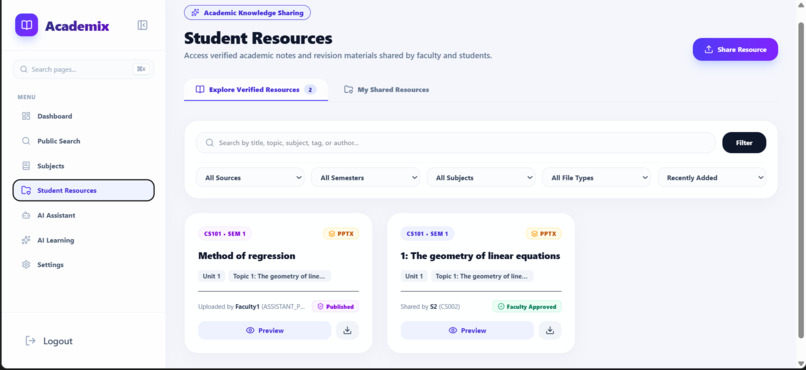
Special Notes Uploaded by students or facutly
-
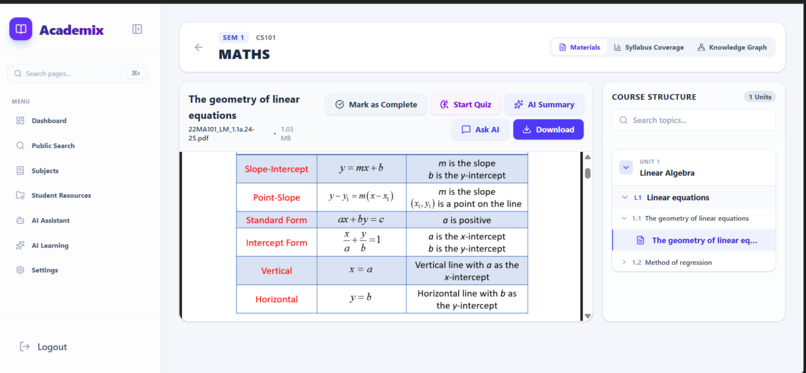
Academic materials shared by faculty
-
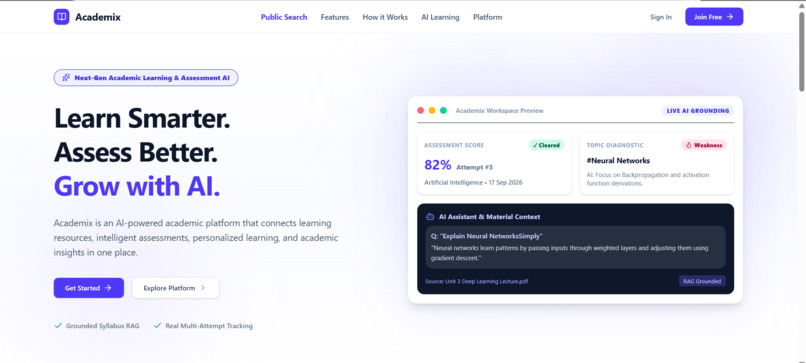
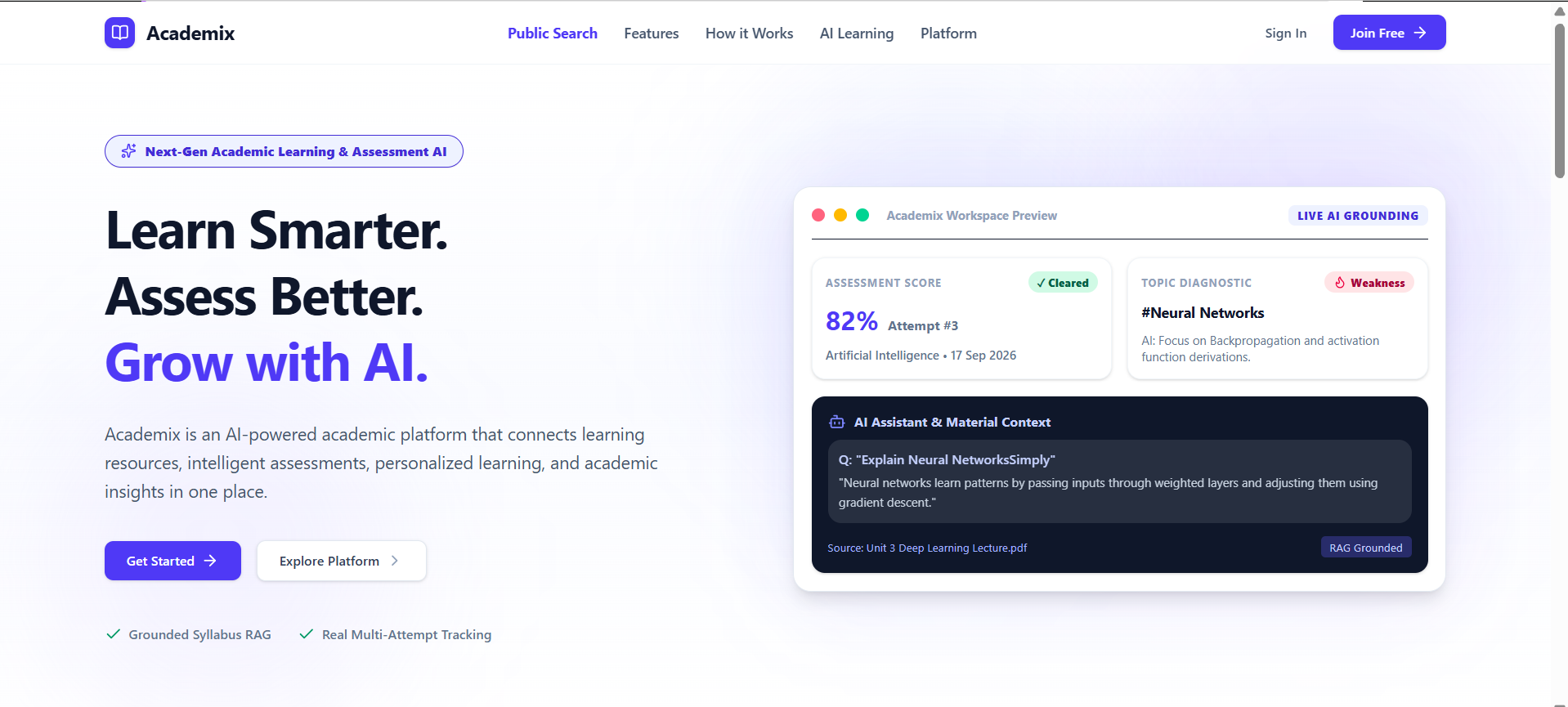
Landing Page
-
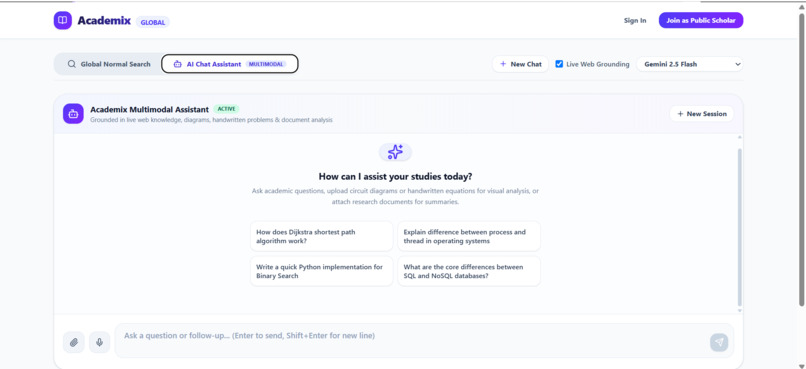
Other than institute users, Normal (Global) users can also login and use academix for common search and Ai search
Academix – AI-Powered Academic Resource Sharing Platform
Inspiration
Students often struggle to find the right academic materials, understand complex concepts, and access reliable learning resources from different sources. Study materials may be scattered across websites, shared drives, and institutional platforms, making learning less organized and time-consuming.
We were inspired to build Academix, a unified platform that brings academic resources, intelligent search, and AI-powered learning assistance together in one place. Our goal is to make learning more accessible, organized, and interactive for students while enabling the academic community to share knowledge securely.
What It Does
Academix combines academic resource management with AI-powered learning tools to create a smarter learning experience.
- AI Chat Assistant: Helps students understand concepts, solve programming questions, and explore academic topics through conversational AI.
- Multimodal Learning: Enables students to upload documents and images and ask questions about their contents, including diagrams, mathematical problems, code screenshots, and textbook pages.
- Global Search: Helps users discover web resources, educational content, images, and publicly approved academic notes.
- Academic Resource Sharing: Allows authorized users to contribute learning materials, with approval workflows and access controls to protect private institutional resources.
- AI-Powered Study Support: Supports document summarization, concept explanations, and learning-oriented question answering.
- Search and Conversation History: Helps users revisit previous searches and AI conversations.
- Role-Based Access Control: Separates permissions for different academic roles and public users to maintain secure access to resources.
How We Built It
We developed Academix as a full-stack web application using modern web technologies.
- Frontend: React.js, Vite, and Tailwind CSS for a responsive and interactive user interface.
- Backend: Node.js and Express.js for API development, authentication, resource management, and AI integration.
- Database: PostgreSQL/Supabase for storing user information, academic resources, and conversation history.
- AI Integration: Google Gemini and OpenRouter for conversational AI, with provider fallback mechanisms to improve reliability.
- File Storage: Cloudinary for academic resource storage and access.
- Search: A search service that combines web search integrations and educational resource discovery.
- Security: Role-based permissions, resource approval workflows, and backend authorization checks to protect institutional materials.
We designed the application to bring these capabilities into a single platform rather than requiring students to switch between multiple disconnected tools.
Challenges We Faced
One of our major challenges was integrating AI capabilities while handling provider rate limits and usage quotas. We worked on fallback mechanisms so that the application could switch to another configured provider when the primary AI service became temporarily unavailable.
Another challenge was implementing image and document understanding. We needed to process uploaded files appropriately and route image-based questions to compatible vision-capable models.
Maintaining secure academic resource sharing was also important. Publicly shared materials must be explicitly approved for public access, while private institutional resources must remain protected.
We also worked on improving search relevance, avoiding duplicate image results, preserving conversation history, and connecting the different modules through a consistent user interface.
What We Learned
Building Academix helped us gain practical experience in full-stack development, REST API integration, database design, authentication, role-based access control, and AI-powered application development.
We learned that integrating AI into a real-world application involves more than sending prompts to a model. It requires handling quotas, provider failures, file validation, multimodal inputs, response quality, and user experience.
We also learned the importance of testing security boundaries, maintaining data integrity, and designing reliable fallback behavior for external services.
What's Next for Academix
Our future plans include improving AI-generated study plans, expanding personalized learning features, enhancing semantic search, supporting more academic file formats, and developing better tools for collaboration between students and educators.
We aim to evolve Academix into an intelligent academic ecosystem where learners can discover resources, understand difficult concepts, and learn more effectively through a single, accessible platform.
Our Vision
Academix aims to transform scattered academic resources into a connected, intelligent, and collaborative learning experience.
Built With
- ai
- api
- artificial
- cloudinary
- css
- development
- express.js
- full
- gemini
- generative
- intelligence
- javascript
- node.js
- openrouter
- postgresql
- react
- rest
- stack
- supabase
- tailwind
- vite


Log in or sign up for Devpost to join the conversation.