-
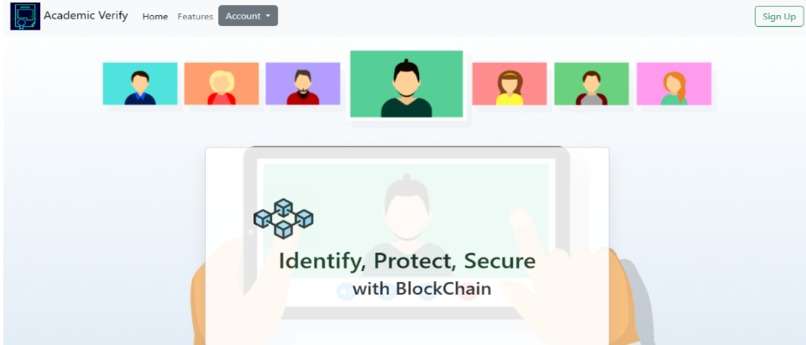
Homepage
-
-
-
Inspiration
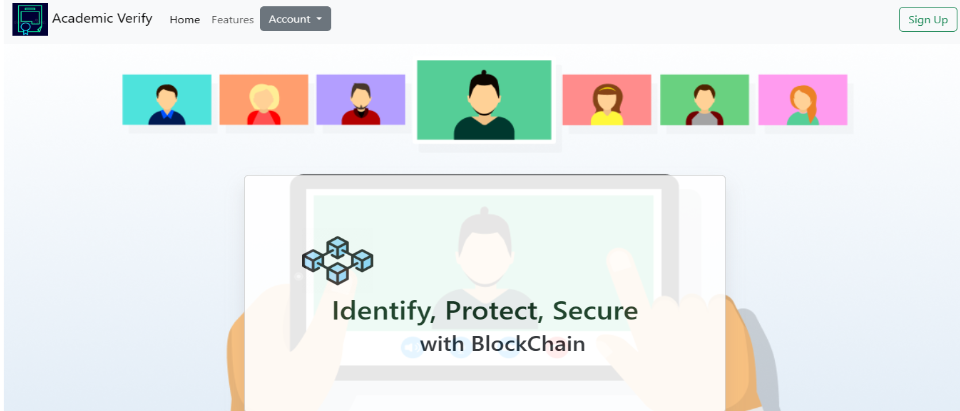
Recently, blockchain technology has gained considerable attention from researchers and practitioners. This is mainly due to its unique features including decentralization, security, reliability, and data integrity. The current centralized educational data management system results in problems like malicious tampering, low cost of diploma fabrication, and high cost of certificate and identity verification. The art of decentralized blockchain technology can be applied to solve these problems and many more. Blockchain provides a creative approach to storing information, executing transactions, conducting tasks, and building trust. In this synopsis, we discuss the shortcomings of the existing centralized and manual systems and propose a blockchain-based framework for secure and reliable student's record management.
What it does
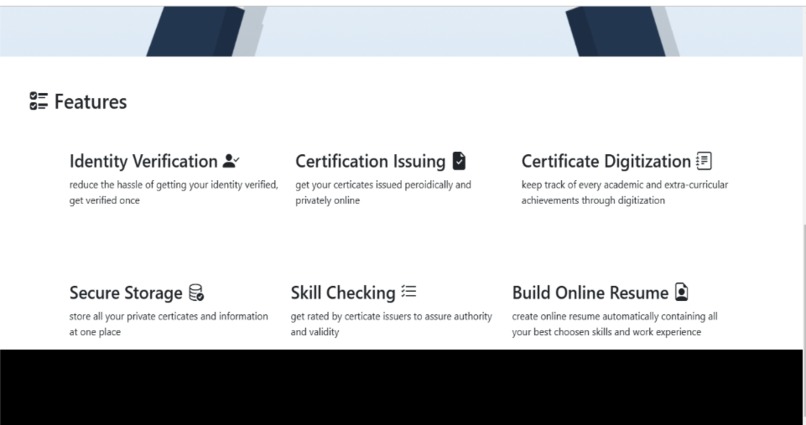
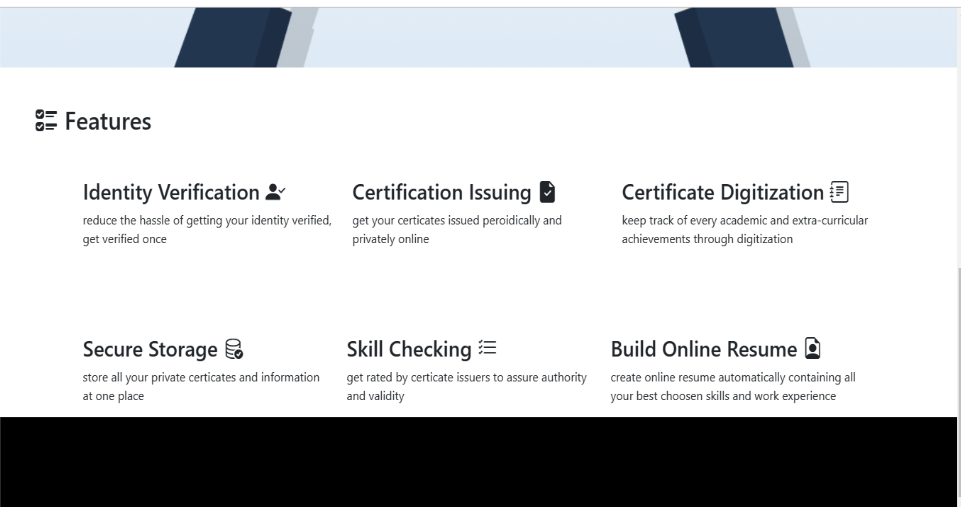
1.Proposed system for storing and verifying student credentials using blockchain technology 2.Students can send their original documents for verification at the time of admission without visiting the university multiple times 3.Grades or competencies are inserted into the system for each research unit, and digital certificates are issued and stored each semester/year 4.Each certificate gets a unique certificate ID and is linked to the student's Aadhar card number as a primary key 5.Verifiers can use the unique certificate ID to verify the certificate and see all certificates listed under the same Aadhar card number 6.The system can store extra-curricular certifications, platform ratings, work experiences, and more Blockchain's distributed nature makes it difficult to tamper with data stored in a block 7.Institutions can store student credentials on the platform, and future employers can access verified credentials using transaction ID and unique candidate ID 8.Blockchain records are permanent and do not need any additional notarization.
How we built it
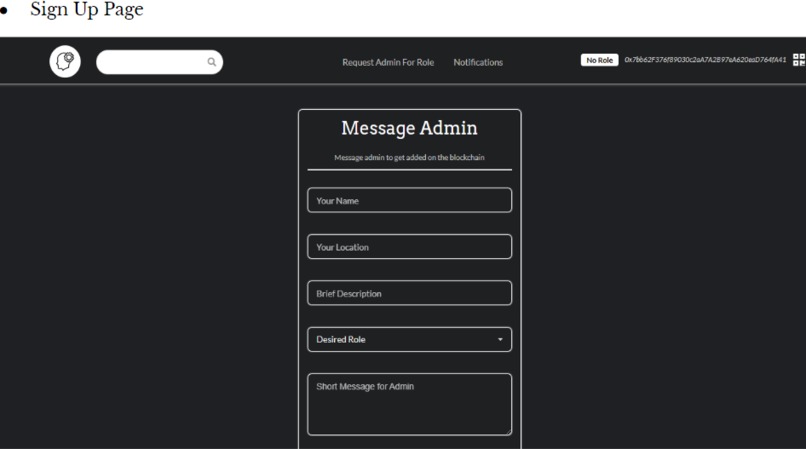
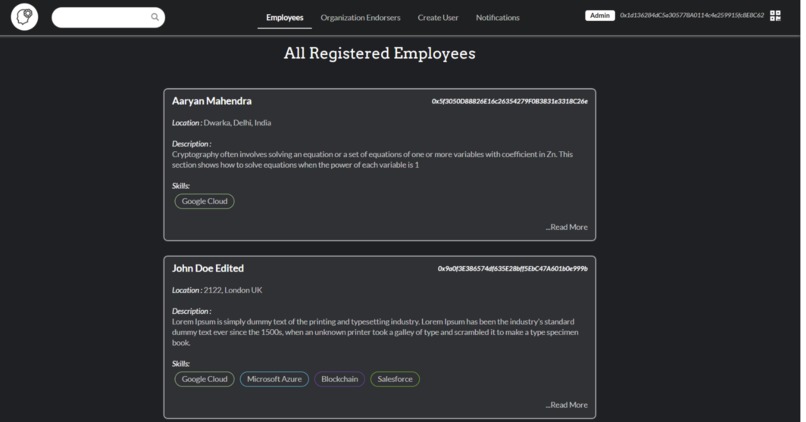
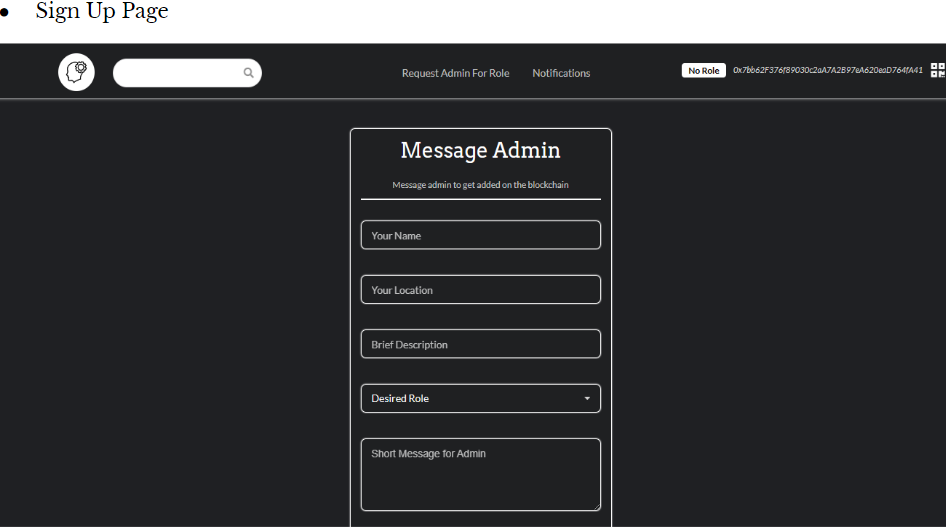
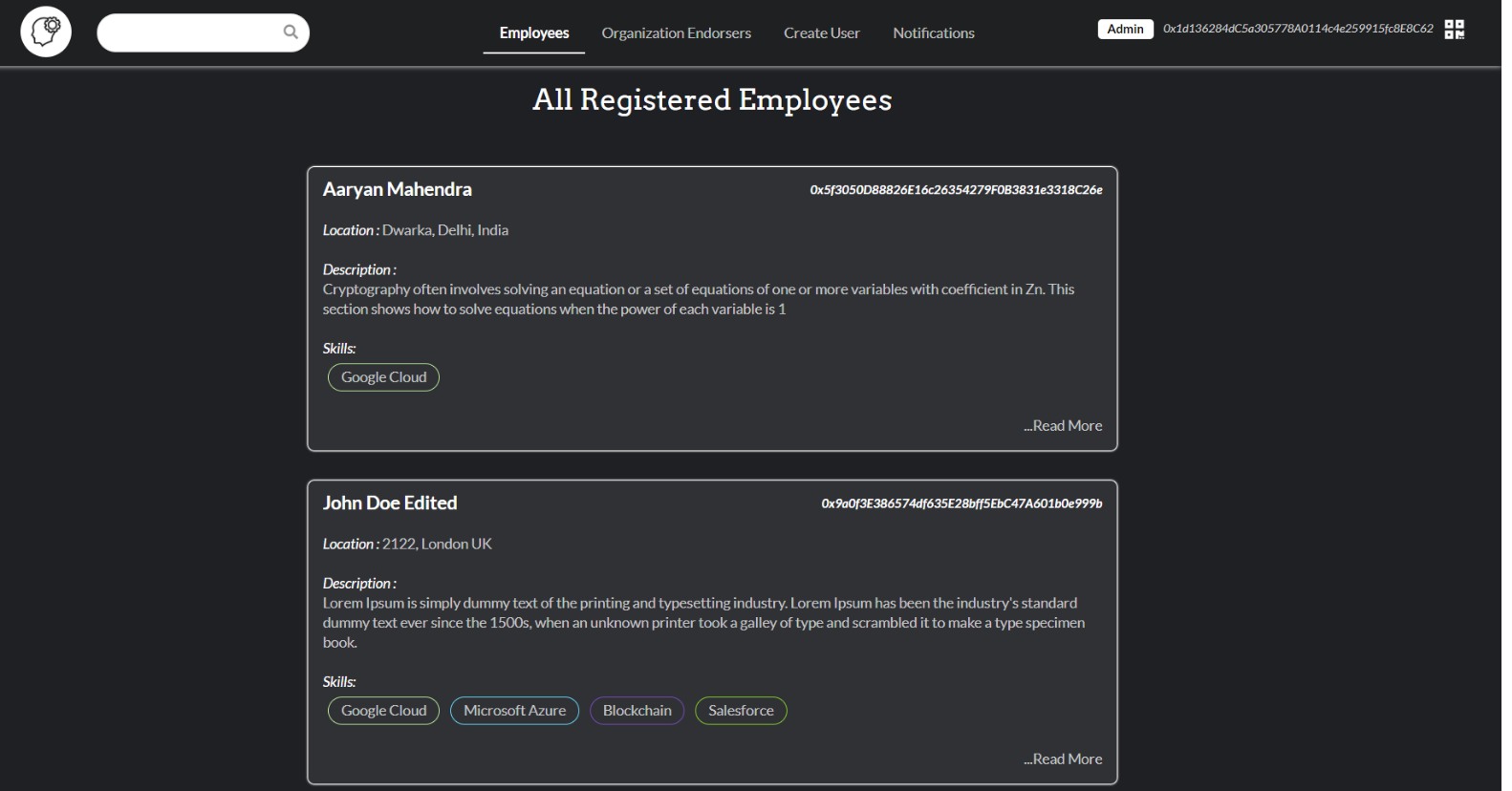
No role- 1.A user with an Ethereum account can send their profile to the admin and chat with the admin. 2.He can claim employees or organizations by role. Admin- 1.He/she will register a new user on the blockchain. 2.Control blockchain ambiguity. 3.Respond to user role requests. Manage and scale users. 4.You can revoke/reassign roles from users. Employee- 1.This smart contract is intended for employees. Store data about employees. 2,Lists the employee's name, overall recommendation score, and each skill with its recommendation score (on a scale of 1-10). 3.Accreditation − There are two types of accreditation, he verified and unverified. A certificate is considered validated once the organization that provides it approves it on the blockchain. 4.Employment History – Contains fields like (organization name, job title, description, etc.) and is validated two ways. Once an organization approves it on the blockchain, it is considered verified. 5.Education Verification - These details are matched against transcripts provided by the employee (or if the university/college provides an API domain for re-verifying results, this will be implemented) and blockchain is saved to group recommender 6.This smart contract is for organizations. Organizations can use it to check the skills, work experience, education, and qualifications of their employees. Smart contracts include: Organization name- 1.It contains a mapping of the organization's current employees, who have certifications that endorse another employee's skills, work experience, and education. Only current employees are eligible, not former employees. 2.It contains a list of all her HR, Talent Acquisition teams, and all employees working within the organization. 3.It have the ability to update an employee's job title. You have the ability to give your employees a certificate of achievement, which will be displayed on their profile. 4.It has the ability to search for employees on the blockchain according to their job description and invite them for interviews.
Challenges we ran into
Interoperability: The system must be able to communicate with various platforms and systems used by employers and educational institutions. Standardization of data formats and interaction with current systems may be necessary for this.
Adoption: The system's success hinges on getting the support of companies, students, and academic institutions. It could take some time to overcome any reluctance to change and win over all stakeholders to the system.
Regulation compliance: The system must abide by all applicable laws and regulations regarding data privacy. For instance, using blockchain technology to store personal data might not be allowed in some nations
What we learned
We learned about blockchain, data management and security in blockchain, smart contracts(how do they function).
What's next for Academic Skill Verification and Management System
The approach may be adapted to other industries, such as healthcare, finance, and government services, where confirming credentials is crucial. Instead of a web application it can be build into a mobile application.

Log in or sign up for Devpost to join the conversation.