-
-
Banner
-
Inspiration
As a final-year student and the course representative at a Nigerian university, I led a research project to address a long-standing issue: the slow and stressful process of manually grading theory exams.
With over 200 students per class and limited faculty capacity, delays and vague feedback became the norm. I envisioned a faster, fairer way.
That vision became Acad AI.
But I knew I couldn’t build it alone.
So, I assembled a small team of passionate developers, designers, researchers, and educators to bring the idea to life as a working system - one designed for the realities of African classrooms.
What We Learned
We surveyed lecturers and students across 15+ universities and found:
- Most lecturers grade theory exams manually, sometimes taking weeks.
- 78% of students don’t get timely or helpful feedback.
- 65% of institutions struggle with exam record management and audits.
These insights shaped our approach to the solution (our product thinking) and revealed the urgent need for what we were building.
Building Acad AI
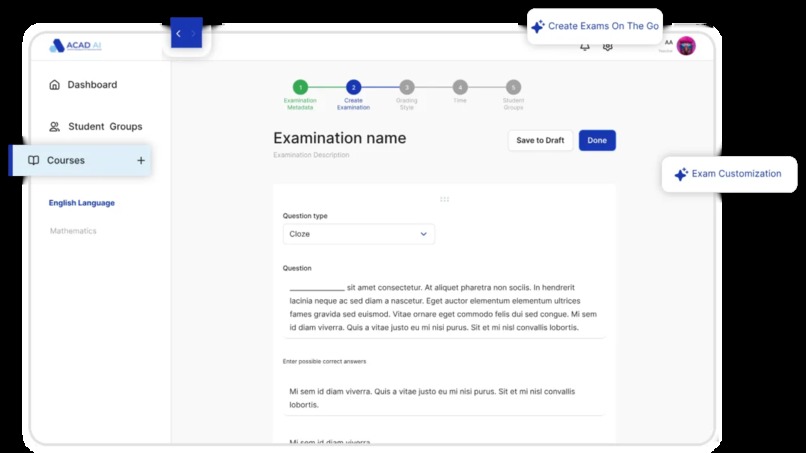
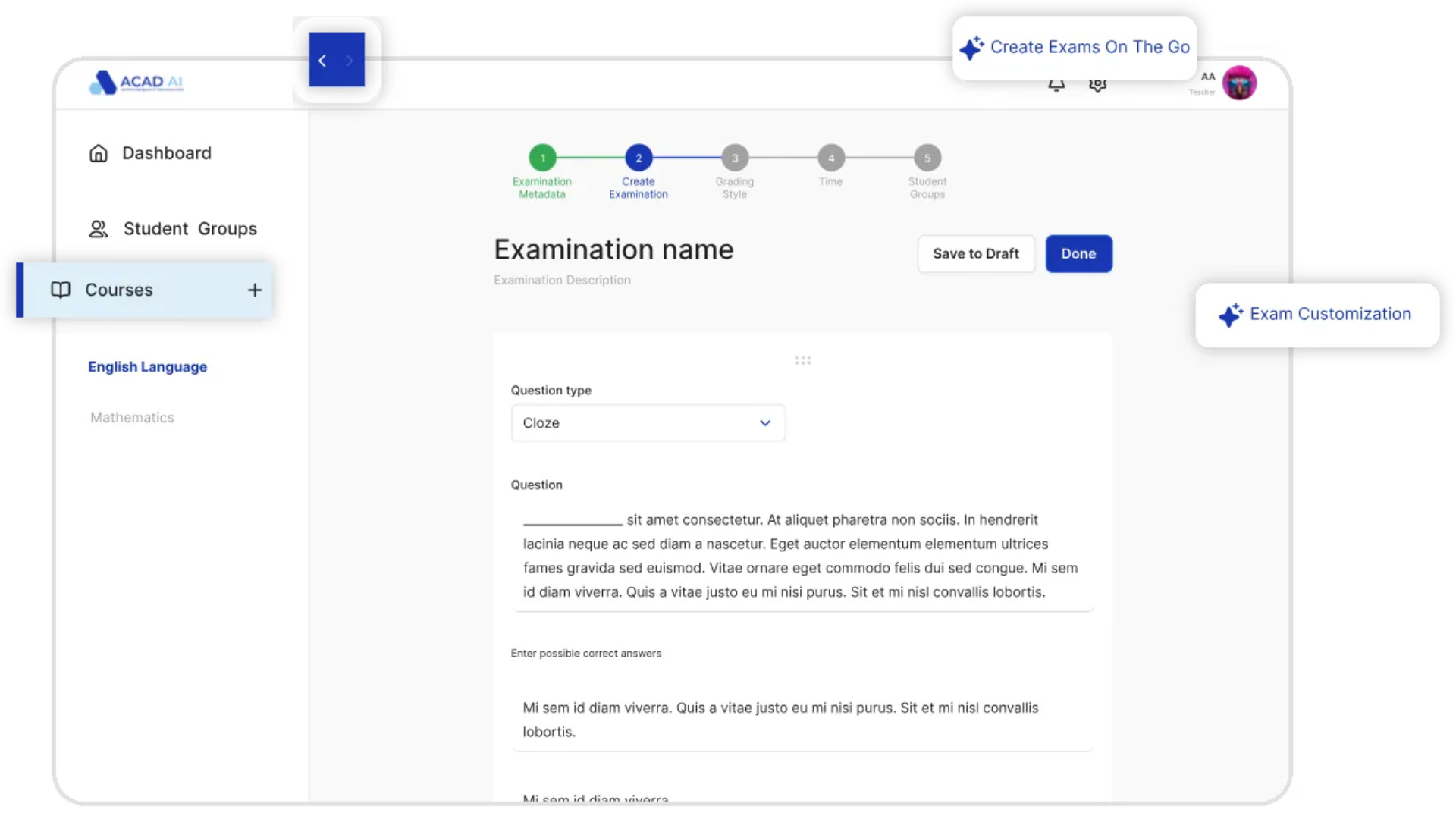
Acad AI is an AI-powered examination platform that:
- Scores theory exams in minutes using small, fine-tuned LLMs
- Works on low-power devices
- Gives helpful feedback and lets teachers adjust scores
- Autosaves student responses and supports NDPR-compliant audits
We built it using:
- Python (FastAPI and Django) for the backend
- React for the frontend
- Gemini 2.0 Flash Lite and a custom grading algorithm for evaluating answers
- PostgreSQL, hosted on a secure cloud service, for data storage
- Browser caching to autosave student answers during exams
Constraints We Solved For
While Acad AI is a web application, we intentionally designed it for real-world challenges in African schools:
- Connectivity issues: Student responses are autosaved in-browser during exams to prevent data loss
- Manual work: Exams are created from lesson notes, and grading + feedback are auto-generated
- Auditability: All records are exportable in one click; encrypted for security
- Teacher control: Every score is editable — no final mark without human approval
Challenges Faced
- Balancing AI grading accuracy with transparency and trust
- Handling vague or poorly structured student responses
- Designing feedback that both students and teachers could understand
- Encouraging adoption in low-tech environments with limited resources
- Earning teacher trust in an AI-assisted process
Built With
- django
- fastapi
- gcp
- gemini
- postgresql
- python
- react
- render

Log in or sign up for Devpost to join the conversation.