
Inspiration
Frequent power outages in rural and semi-urban areas are often caused by unnoticed breakages in low-voltage overhead conductors. Manual fault detection is time-consuming, unsafe, and delays power restoration. We wanted to design a simple and affordable solution that could automatically detect such faults and alert operators in real time.
What it does
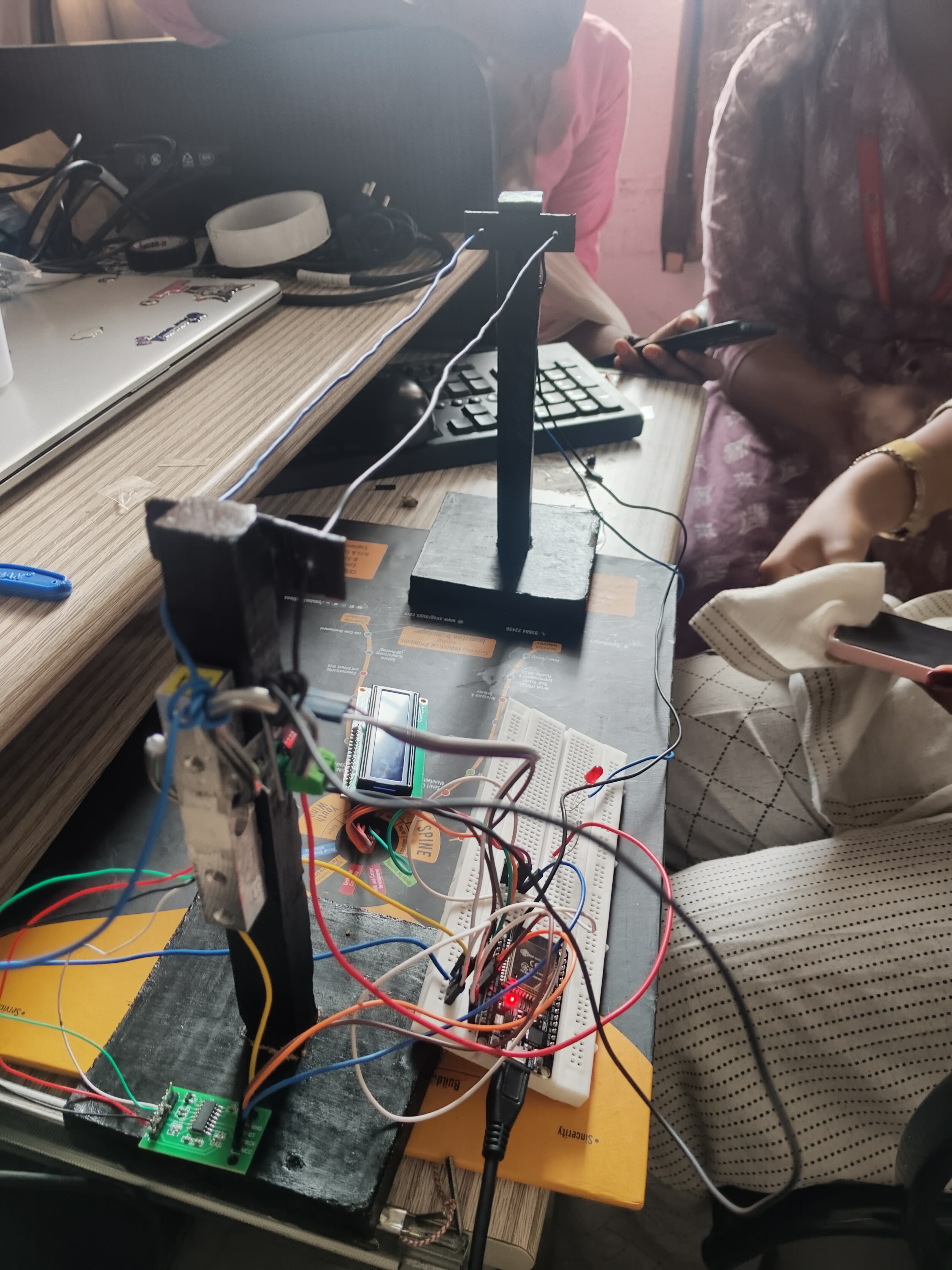
The system continuously monitors current flow and line tension. When an abnormal change or breakage is detected, it immediately triggers a relay-based alert and displays the status on an OLED screen, ensuring quick identification of the fault location.
How we built it
We integrated an ACS712 current sensor and a load cell (YZC133 with HX711 amplifier) with an ESP32 microcontroller. Data is processed in real time, and alerts are displayed through an OLED. The setup is powered via a buck converter, assembled neatly using relays, diodes, and transistors for stable operation.
Challenges we ran into
Sensor calibration, noisy readings, and ESP32 boot issues were our main hurdles. We overcame them through careful testing and circuit optimization.
Accomplishments that we’re proud of
We successfully created a working prototype that is low-cost, accurate, and scalable for real-world implementation.
What we learned
We gained hands-on experience in IoT systems, sensor integration, and circuit reliability improvement.
What’s next for AC Low Voltage Breakage Detector
We plan to add wireless cloud connectivity, develop a mobile/web dashboard, and test the system on actual distribution lines.
Built With
- acs712
- arduino
- display
- esp32
- hx711
- oled
- relays
- yzc133

Log in or sign up for Devpost to join the conversation.