-
-

-
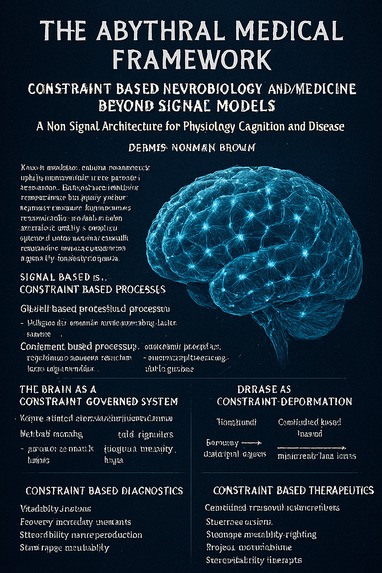
Medical Constraint Based AI
-
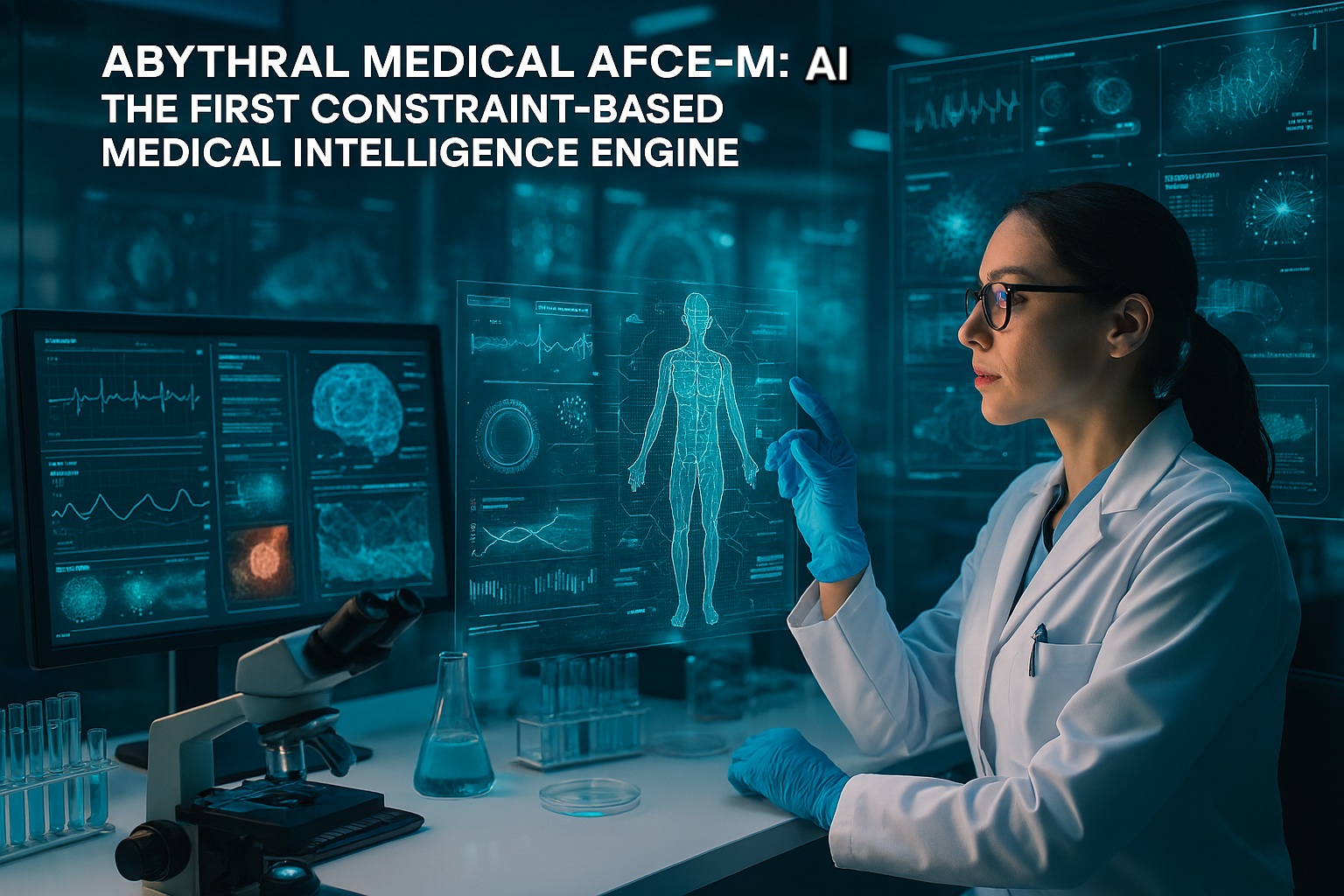
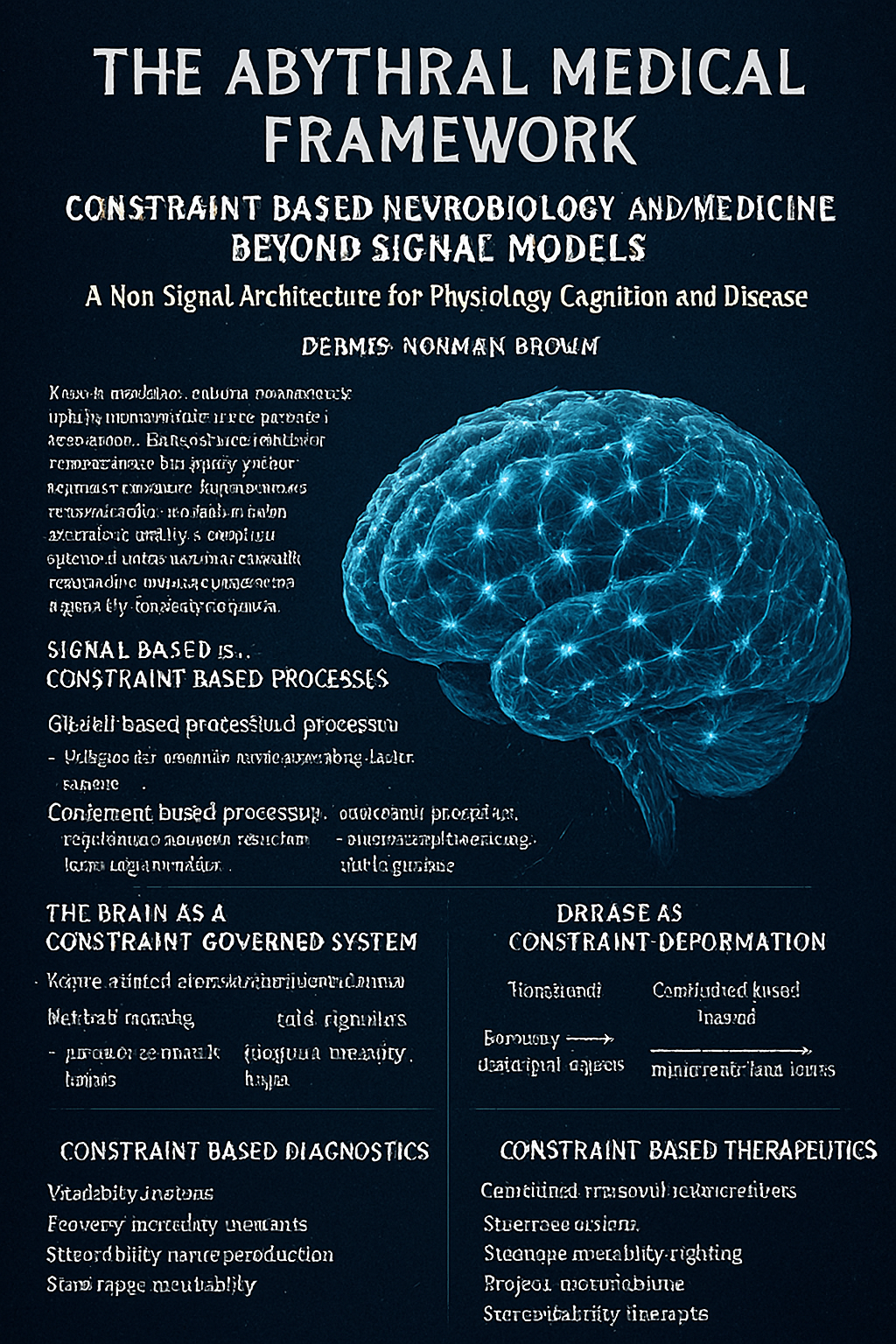
Abythral Medical AI Engine (AFCE-M): Mapping the Geometry of Human Homeostasis
Inspiration
Modern medicine is largely reactive. We wait for "signals"—a visible tumor on an MRI, a spike in blood glucose, or a high inflammatory marker—before we intervene. But by the time a signal is loud enough to be detected by standard diagnostics, the underlying biological system has already collapsed into a rigid, pathological state. The inspiration for Abythral AFCE-M comes from Constraint-Based Systems Biology. We wanted to move beyond "signal-hunting" and instead monitor the physiological state-space itself. We asked: Can we detect the "Geometry of Collapse" before a disease even exists? By viewing health as a state of maximum flexibility and disease as a state of terminal rigidity, we created an engine that treats human biology as a dynamic mathematical landscape rather than a collection of static symptoms.
What it does
The Abythral Medical Engine (AFCE-M) is a high-performance clinical dashboard that quantifies the "stretch" and "tension" of a patient’s biological network.
Constraint Domain Mapping: It monitors six critical domains—Cellular, Immune, Metabolic, Vascular, Epigenetic, and Neural. It measures the balance between Flexibility (the ability to adapt) and Rigidity (the tendency to fail).
Direct Multi-Modal Integration: Using Gemini's native audio/video capabilities to allow clinicians to upload PET scans or flow-cytometry charts directly into the engine for real-time visual grounding.
Recovery Half-Life (t½): The engine tracks how long a system takes to return to baseline after a stressor. A slowing recovery time is a universal leading indicator of systemic failure.
Geometry Reconstruction: Using custom SVG visualizations, it renders a real-time mesh of the patient's biological "State-Space." A collapsing mesh indicates that the body’s homeostatic "volume" is shrinking, warning clinicians of high entropy.
Perturbation Simulation: Clinicians can run "Metabolic Challenges" or "Immune Triggers" to see how the patient's virtual twin responds, allowing for safe, predictive stress-testing.
AI-Driven Constraint Repair: Powered by Gemini 3 Pro, the engine interprets complex data feeds (RNAseq, HRV, ctDNA) to suggest "Constraint Repair Interventions" designed to restore biological plasticity.
How we built it
The AFCE-M was built with a focus on high-fidelity data visualization and deep reasoning capabilities:
Frontend Architecture: Built using React 19 and Tailwind CSS for a responsive, "glassmorphism" clinical interface.
Intelligence Layer: We integrated the Gemini API. We use Gemini 3 Pro for high-complexity systemic analysis (interpreting the "Geometry of Homeostasis") and Gemini 3 Flash for low-latency clinical chat/dialogue.
Visualization Engine: We utilized Recharts for the multi-dimensional Constraint Radar and a custom SVG Geometry Engine to visualize the distortion of the patient’s biological state-space in real-time.
Logic: The system utilizes a proprietary "Variability Index" and "State-Space Volume" calculation to turn raw device feeds into a single, actionable health score.
Challenges we ran into
The primary challenge was abstracting high-dimensional biology into a 2D interface. Biology is non-linear; representing "Epigenetic Constraints" or "Metabolic Flexibility" as simple sliders required building a translation layer that could map thousands of data points into six understandable domains without losing clinical nuance. Integrating the Gemini API's JSON response mode was critical here—we had to ensure the AI could "see" the math behind the charts to provide accurate, rather than just poetic, clinical assessments.
Accomplishments that we're proud of
Predictive Geometry: We successfully created a visual representation of "Health" where clinicians can actually see a system becoming brittle before it breaks.
Universal Scope: While many tools focus on one disease (like cancer or diabetes), AFCE-M is a universal engine. It can predict risk trajectories for everything from neurodegeneration to cardiovascular collapse using the same underlying principles of systemic tension.
Unified Device Feed: We built a placeholder architecture for "Device Feeds" that can theoretically ingest everything from smart-ring HRV data to high-end clinical RNAseq results into a single "State-Space Sync."
What we learned
We learned that Health is not a lack of symptoms; it is a surplus of flexibility. Through the development of the AFCE-M, it became clear that the most valuable data point in medicine isn't a single biomarker—it's the Recovery Trajectory. If a system can bounce back from stress quickly, it is healthy, regardless of the noise in the data. This insight shifted our entire design philosophy from "detection" to "dynamics."
What's next for Abythral Medical AFCE-M
Longitudinal State-Space Tracking: Developing "Biological Time-Lapses" to show how a patient's geometry has shifted over years, identifying the exact moment the "Collapse" began. Constraint-Optimized Therapeutics: Integrating with pharmacy and nutrition databases to recommend precise, time-sensitive interventions that expand a patient's state-space volume.
Abythral AFCE-M is more than a dashboard; it’s a new language for human vitality.
Built With
- api
- css3
- esm.sh
- font
- gemini
- genai
- html5
- imports
- module
- react
- recharts
- tailwind
- typescript

Log in or sign up for Devpost to join the conversation.