Inspiration
Offshore pipelines, subsea cables, and underwater infrastructure are critical to global communication and energy, yet inspections remain slow, expensive, and heavily dependent on manual review. We wanted to explore how multimodal AI could help operators identify anomalies in real time by combining what an AUV sees with what its sensors measure. Built in just 10 hours for HackDays Delhi's "Beneath the Water" theme, Abyss.ai reimagines underwater inspections as an AI-assisted workflow.
What it does
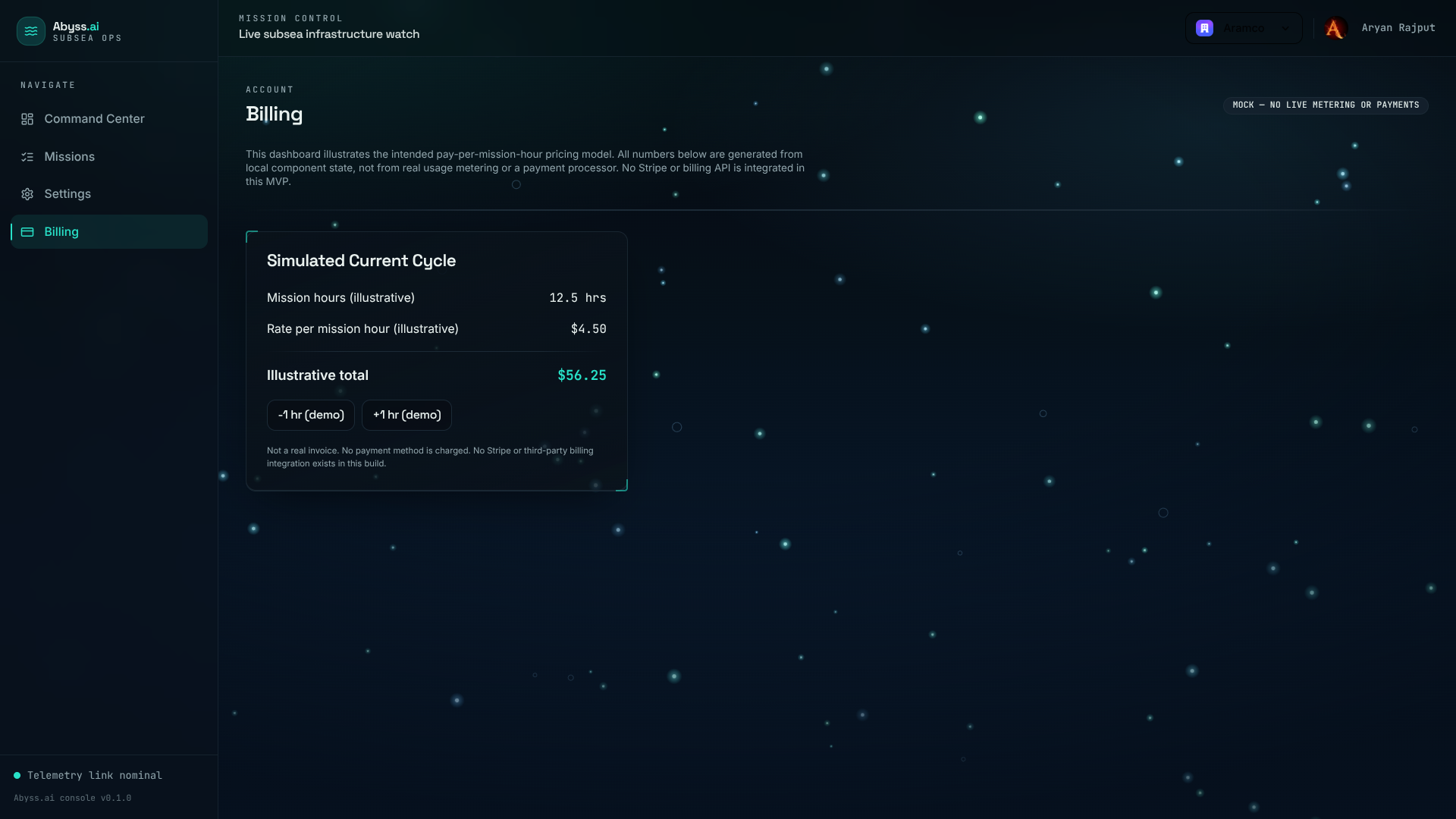
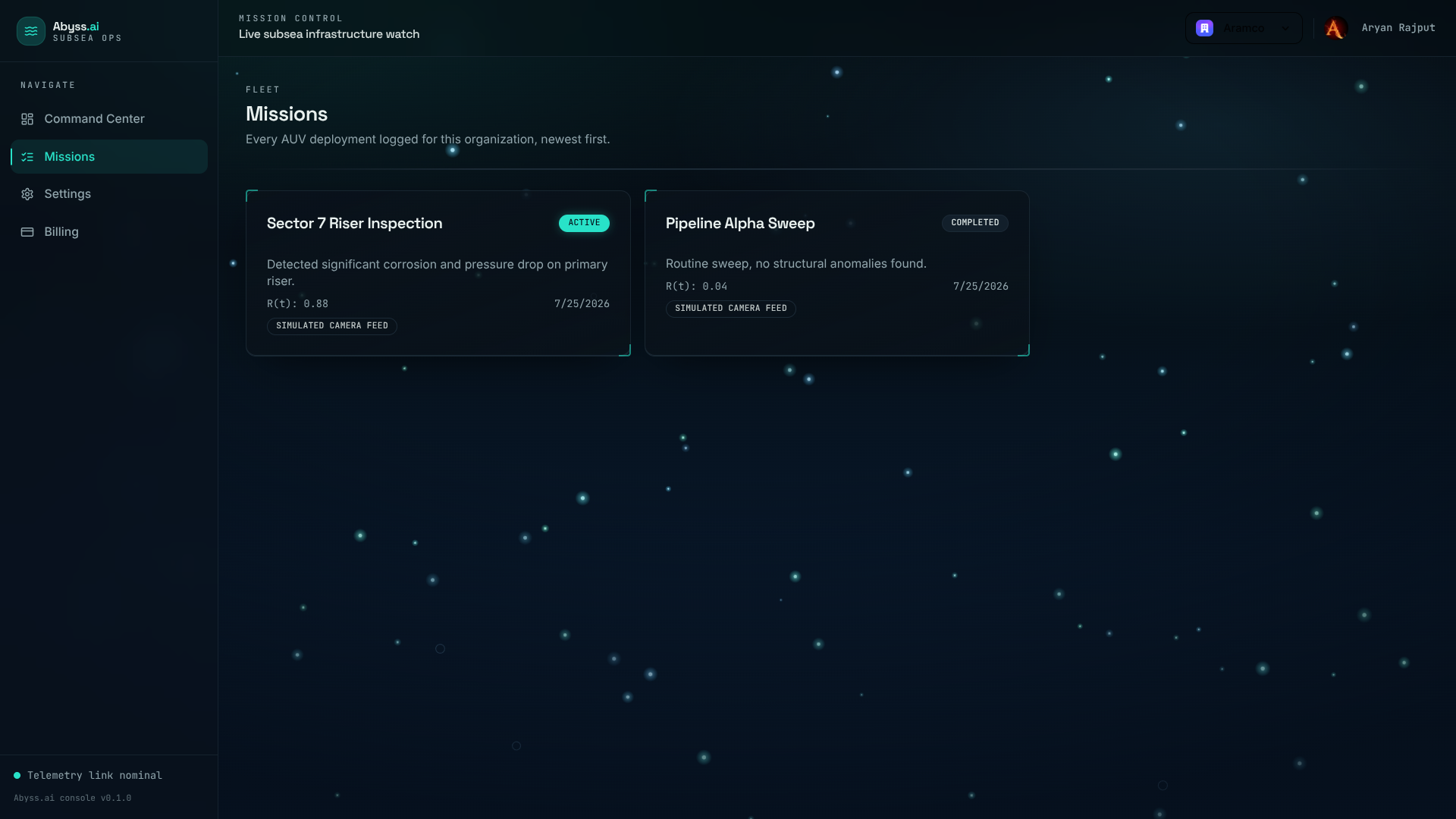
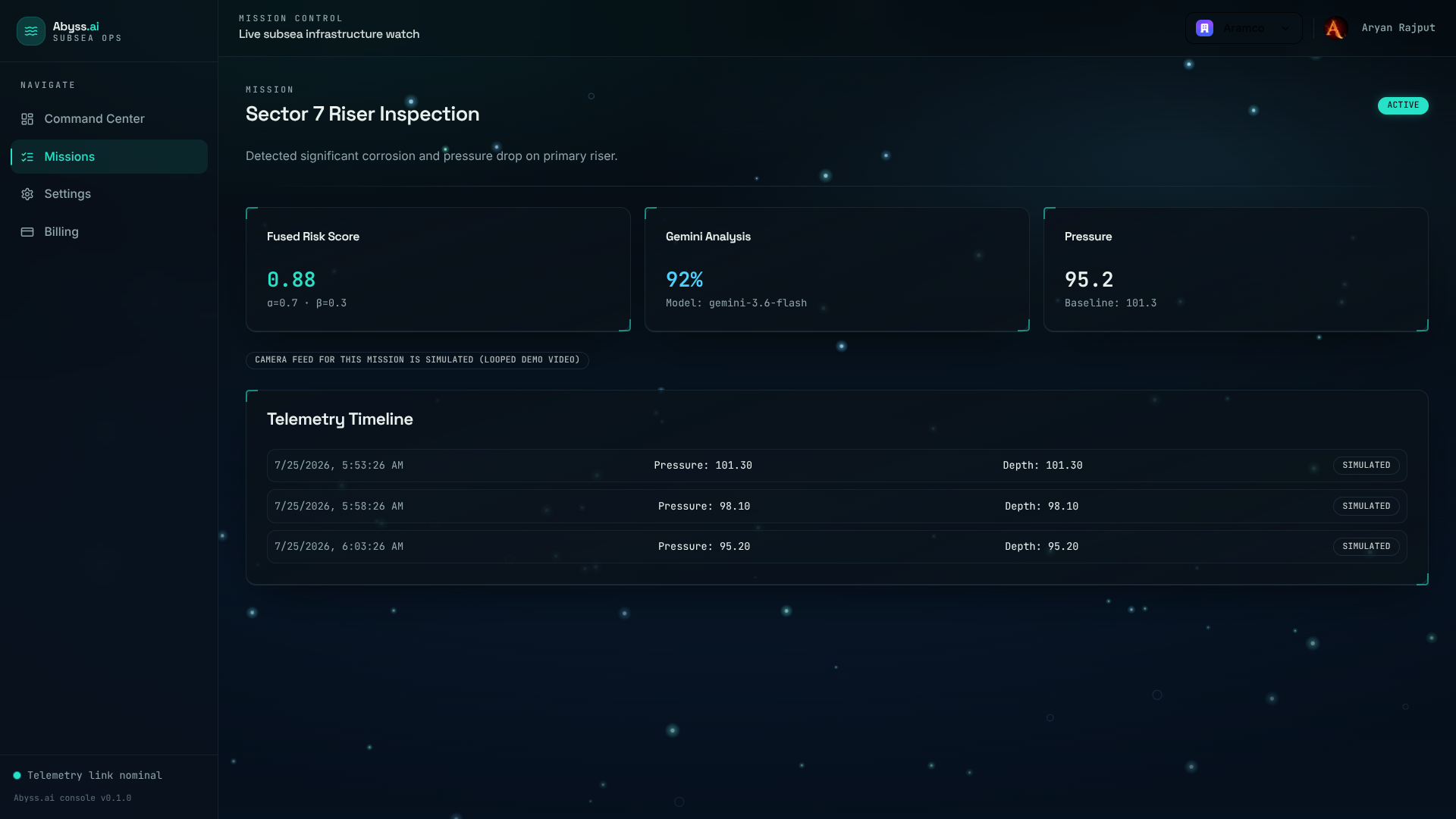
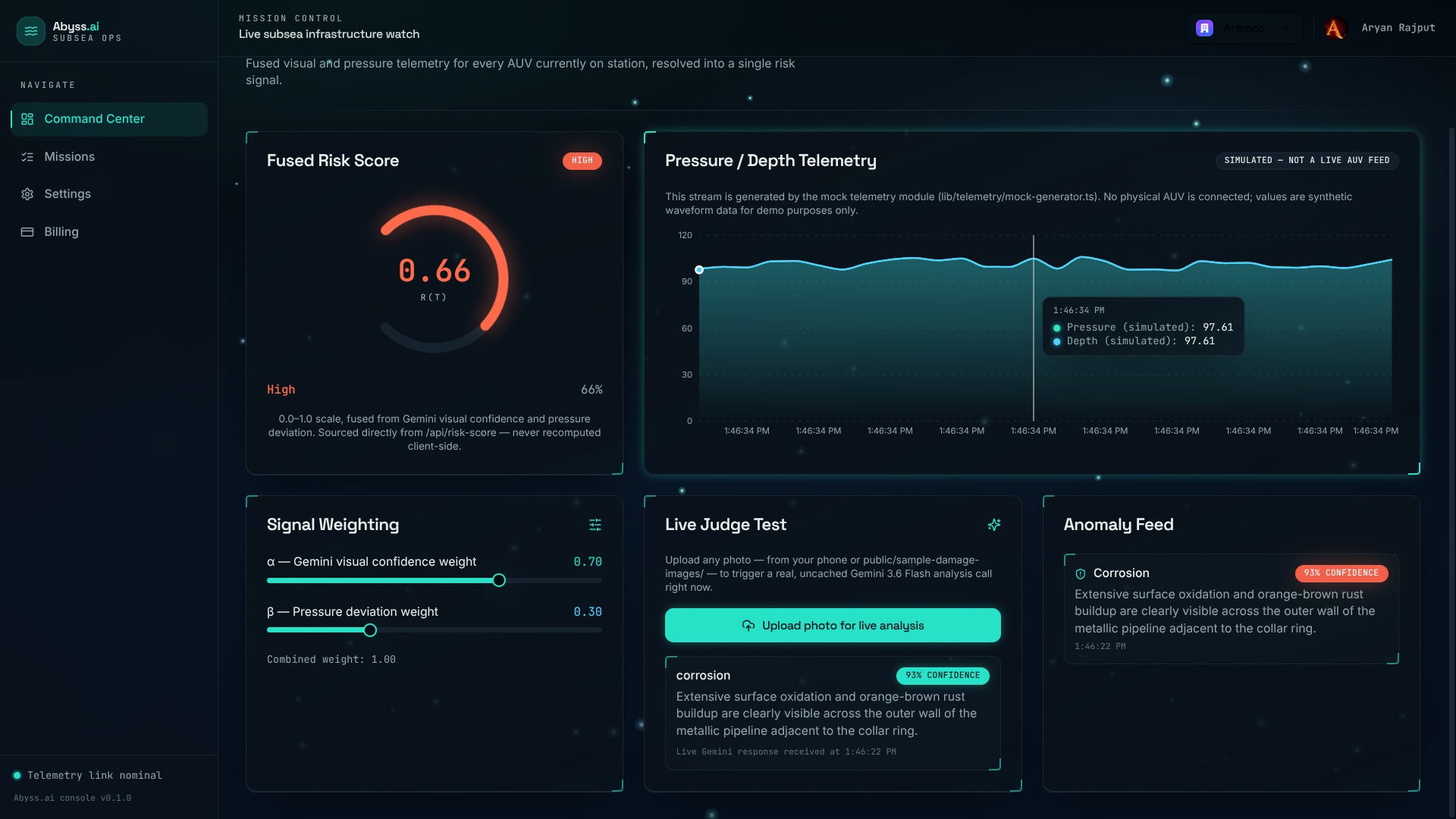
Abyss.ai is an AI-powered command dashboard for Autonomous Underwater Vehicles (AUVs). It analyzes underwater imagery using Google Gemini, detects corrosion, leaks, cracks, and ecological damage, and combines those results with live telemetry to generate an overall infrastructure risk score. Operators receive structured insights, confidence scores, and prioritized alerts through a real-time dashboard.
How we built it
- Frontend: Next.js 14, Tailwind CSS, shadcn/ui
- AI: Google Gemini 3.6 Flash (multimodal image reasoning)
- Backend: Next.js API Routes & Node.js telemetry simulator
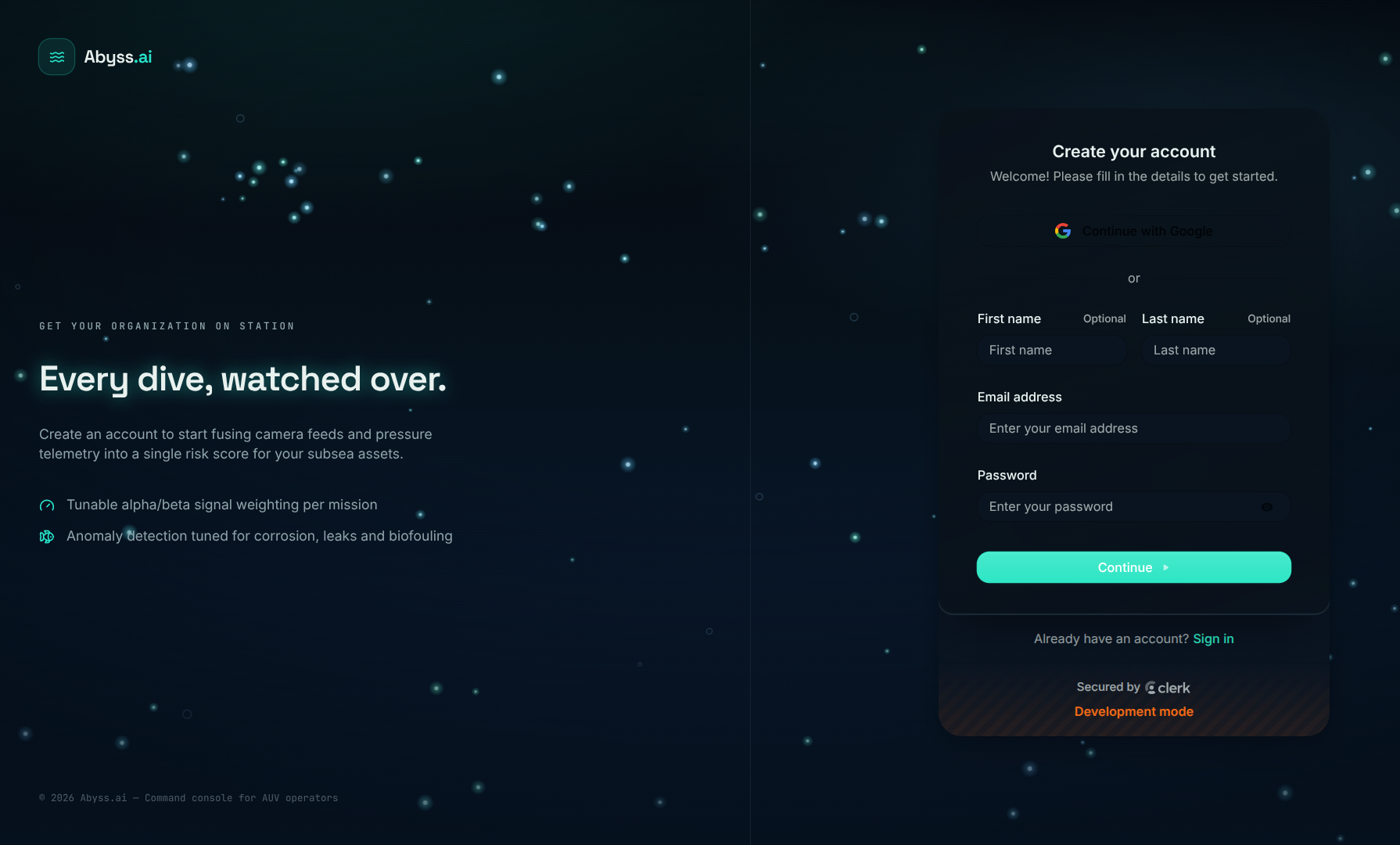
- Authentication: Clerk (organization-based multi-tenancy)
- Database: Supabase PostgreSQL with Row-Level Security
- Deployment: Vercel
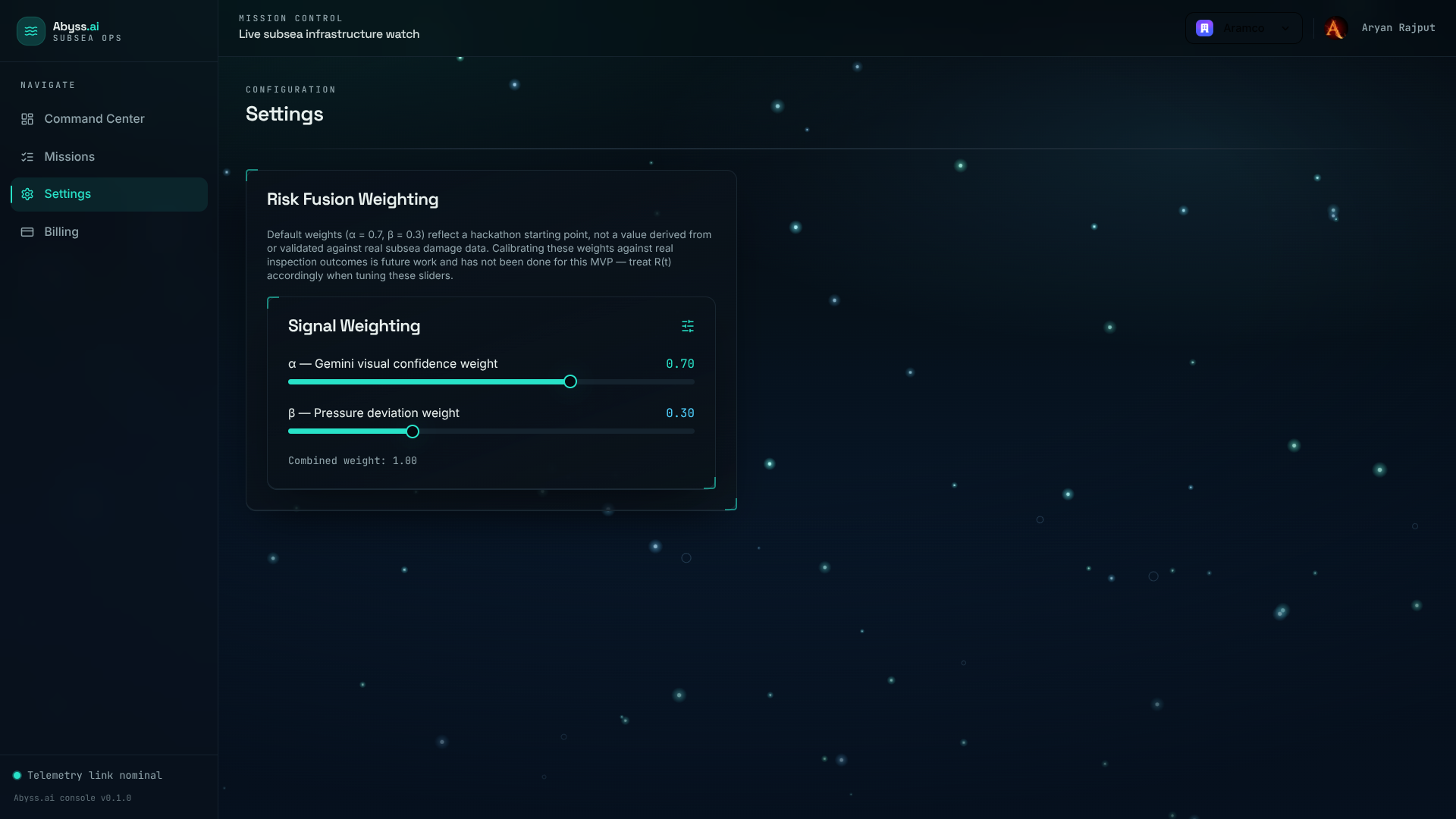
Gemini processes underwater images and returns structured JSON describing detected anomalies. A custom risk engine fuses Gemini's confidence with simulated pressure telemetry to produce a live risk score displayed on the dashboard.
Challenges we ran into
- Designing prompts that consistently returned structured JSON from Gemini.
- Balancing visual AI confidence with telemetry in a meaningful risk model.
- Building a polished, responsive dashboard within a 10-hour hackathon.
- Simulating realistic AUV telemetry without access to physical underwater hardware.
- Integrating multiple services (Gemini, Clerk, Supabase, Vercel) under tight time constraints.
Accomplishments that we're proud of
- Built a fully functional end-to-end prototype in just 10 hours.
- Successfully integrated Google Gemini as the core multimodal reasoning engine.
- Developed a real-time AI + telemetry risk fusion pipeline instead of relying on vision alone.
- Implemented authentication and multi-tenant architecture suitable for SaaS expansion.
- Created an interactive dashboard that demonstrates a practical industrial AI use case.
What we learned
- Effective multimodal AI applications require combining model outputs with domain-specific sensor data rather than relying solely on computer vision.
- Structured prompting dramatically improves downstream automation.
- Shipping a polished MVP under extreme time constraints requires careful prioritization and rapid iteration.
- Modern platforms like Next.js, Clerk, Supabase, and Vercel make it possible to build production-style applications surprisingly quickly.
What's next for Abyss.ai
- Connect to real AUV camera feeds and live telemetry.
- Support sonar and acoustic imagery alongside optical images.
- Train and validate the risk model using real subsea inspection datasets.
- Add predictive maintenance and historical trend analysis.
- Integrate mission reporting, alerts, and enterprise SaaS billing for commercial deployment.
- Expand support to offshore energy, telecommunications, marine research, and environmental monitoring.
Built With
- gemini
- nextjs
- node.js
- postgresql
- supabase
- tailwind-css
- vercel


Log in or sign up for Devpost to join the conversation.