-
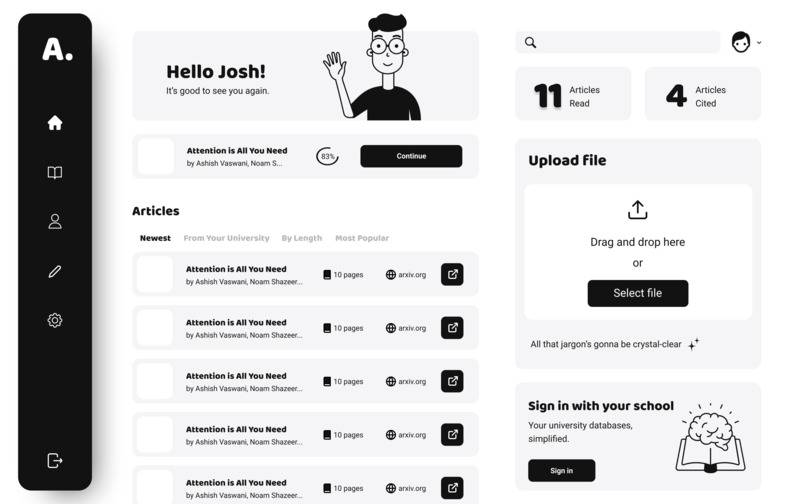
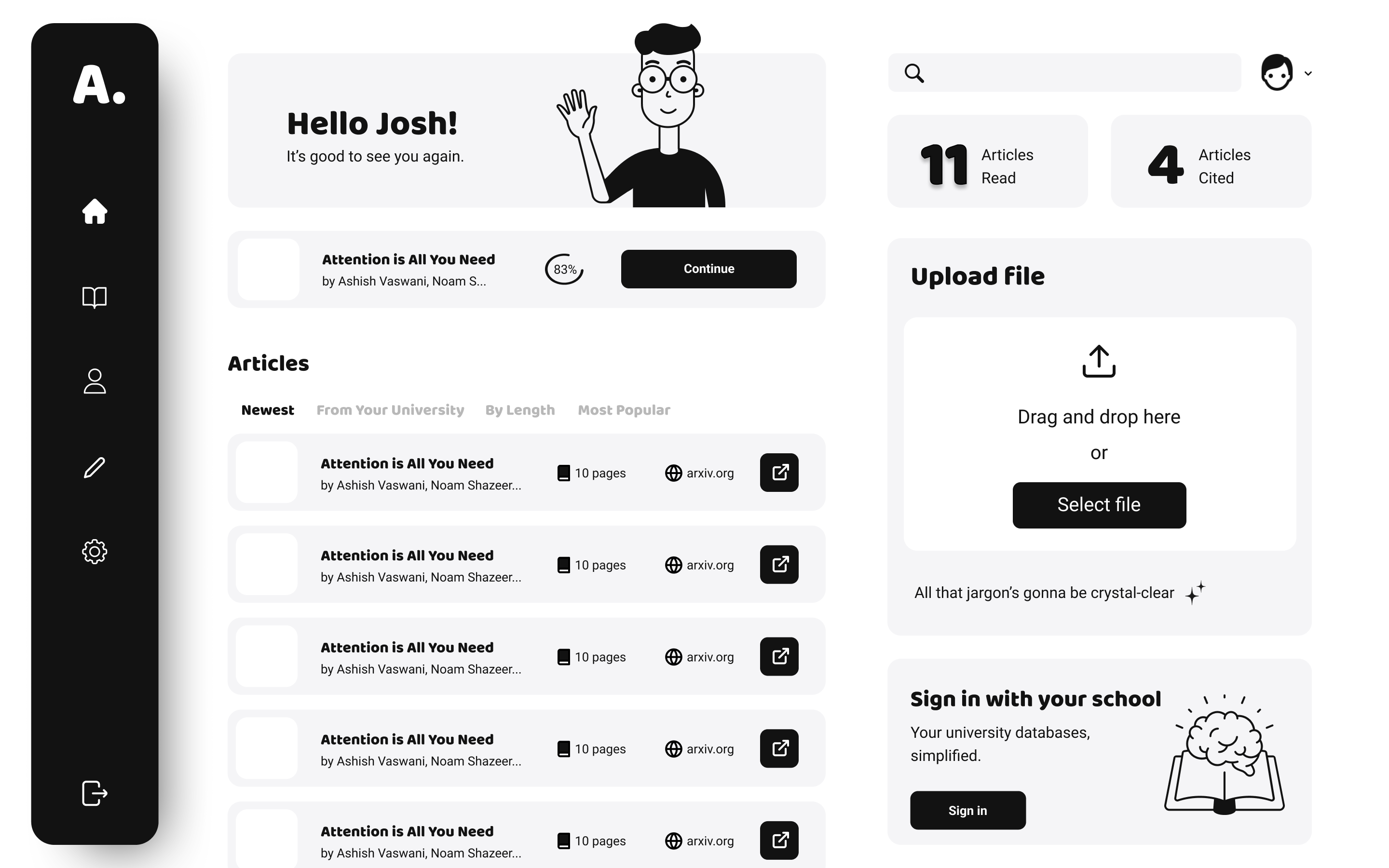
home
-
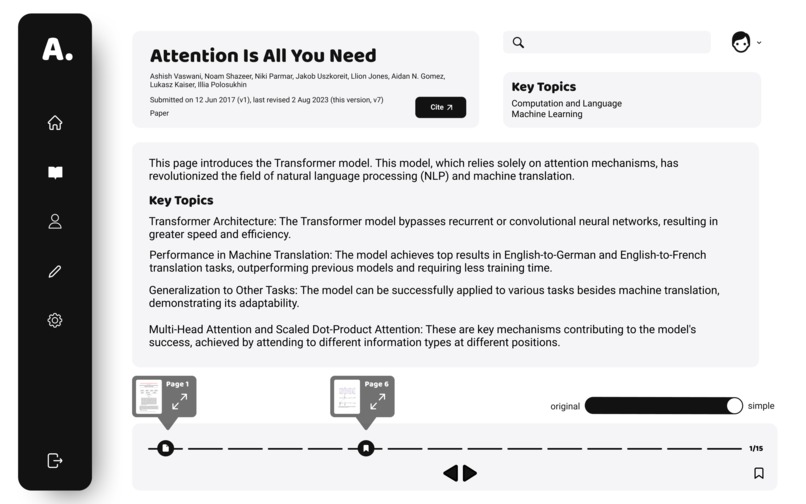
reader
-
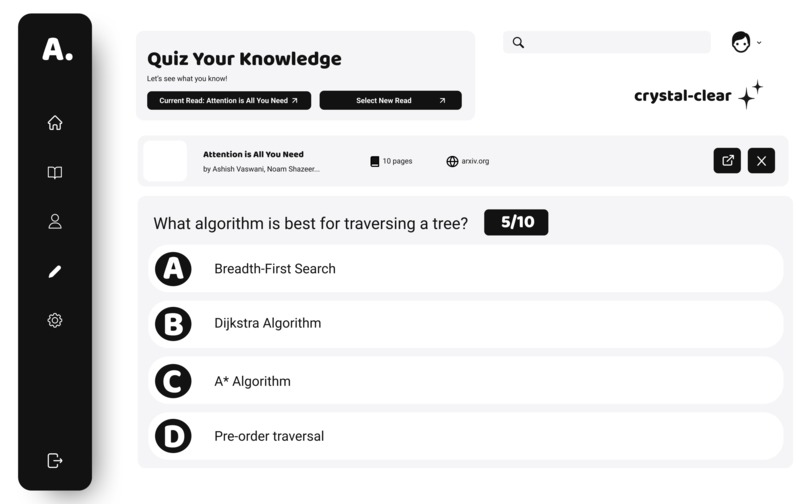
quiz
Inspiration
Our team members had just barely scratched the surface of the research world and we already felt overwhelmed. Reading research is a beast within the beast of research itself. What if, like a new-age Reader’s Digest, we could make reading research both easy for leisure and scalable for research student use?
Thinking along the lines of music and the process of learning it. Sure, you start out with a complicated score. But break it into digestible pieces--chords you already know. And soon you’re playing like a whiz. Abstract simplifies academic papers by page and allows the user to adjust the simplicity to lower and lower until they get to the original text. Along the way they read and learn, and soon the most jargon-filled papers are 100% comprehensible for any reader.
What it does
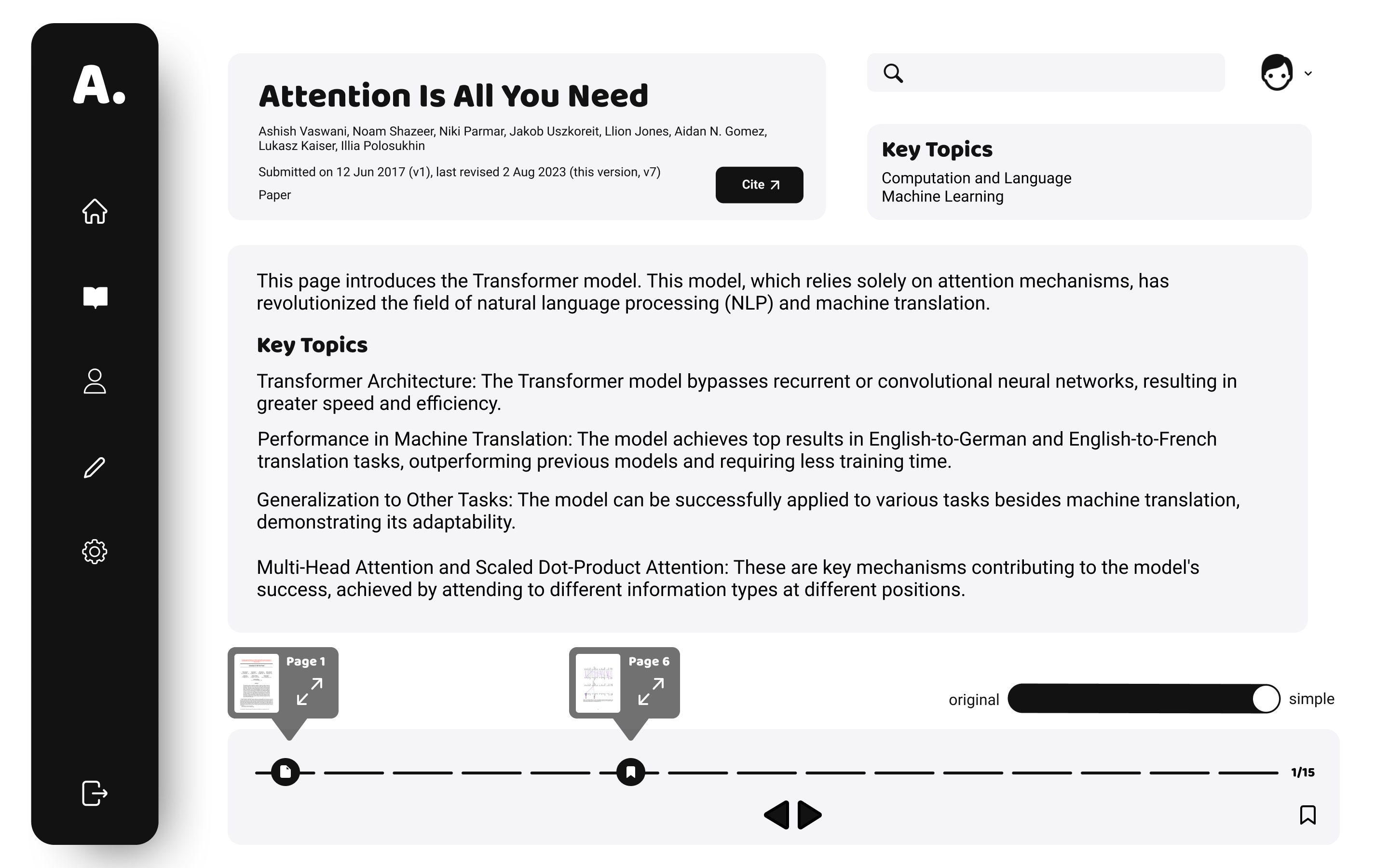
Abstract uses the You.com API to create customizable AI summaries, by-page, for uploaded or in-app research articles. With a sleek student-focused design, reading research is no longer daunting. Researchers can slide the simplicity slider all the way to “simple”, digest, move the slider a tad, and digest the slightly more advanced content. They can repeat this process all the way to the other end of the slider, where the reader now displays the original content of that particular page of research.
How we built it
We used the You.com API and Python to create our AI summarization tool. We use a single API endpoint for summarization. We prototyped the site in Figma and converted to frontend in React+Typescript+Tailwind CSS.
Challenges we ran into
We knew we wanted to make research easier, but we weren't sure if summarizing was enough. It took us some time to put together the idea of simple->original sliding for better comprehension without information/context loss. We also struggled a bit with collaborating on code, because we initially tried to use Repl.it in order to code together but soon realized we wouldn't be able to use the tools and frameworks we had wanted to. We had to collaborate in person by looking over each other's screens instead, but it worked out in the end!
Accomplishments that we're proud of
We all learned a lot! We complimented one another's skills well already, but we each dove into other parts of the stack that we weren't already familiar with as well. We were able to work on lots of part of the project together and we didn't necessarily have to "divide and conquer" all the time. We collaborated well, and are proud of our idea because honestly it helps us with our own learning/research interests too :).
What we learned
- How to design our product in first a sketch mock-up, then Figma, and finally into frontend Typescript React and Tailwind CSS
- How a front end framework like React communicates to a back end server
- How APIs like You.com's can be utilized alongside Python
- Ideation & collaboration
- Github!
What's next for Abstract
Abstract’s research paper learning strategy is a new one, something never-before-used. Before there was annotation, re-reading, more annotations, more frustration with complicated academic jargon. AI is what makes this new strategy possible. The process of starting simple and slowly building up to the actual text eliminates the possibility of missing information that ChatGPT summaries can cause for students. It helps build connections for future researchers between jargon and their meanings, creating a learning loop for how to read academic papers better. This is the learning process of the future. We believe that our research-based bite-size learning process is going to be used in schools everywhere. We aim to collaborate with K-12 schools and universities in order to both implement the databases they have access to, and provide our learning platform Abstract so the students can read and digest those papers for both school research and personal learning. AI has never been used this way before for learning, and we hope to eliminate the current pitfalls of students using ChatGPT to learn and serve as a liason between AI and students, letting them harness the benefits that AI brings without the harm. Abstract is the future of AI in education.


Log in or sign up for Devpost to join the conversation.