-
-
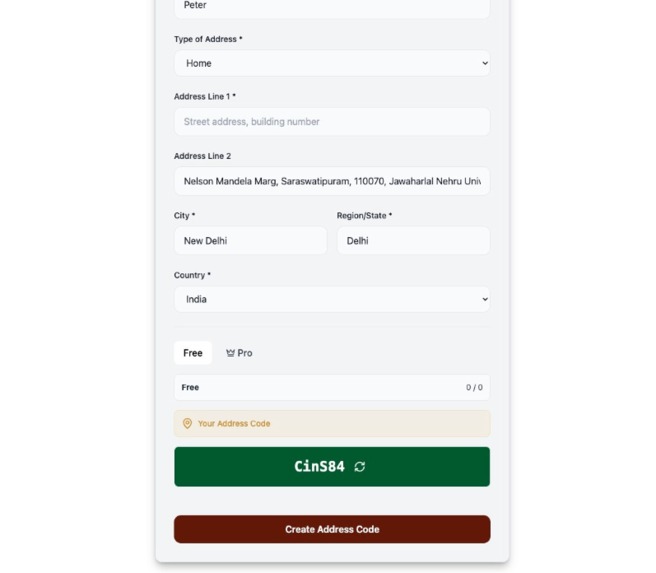
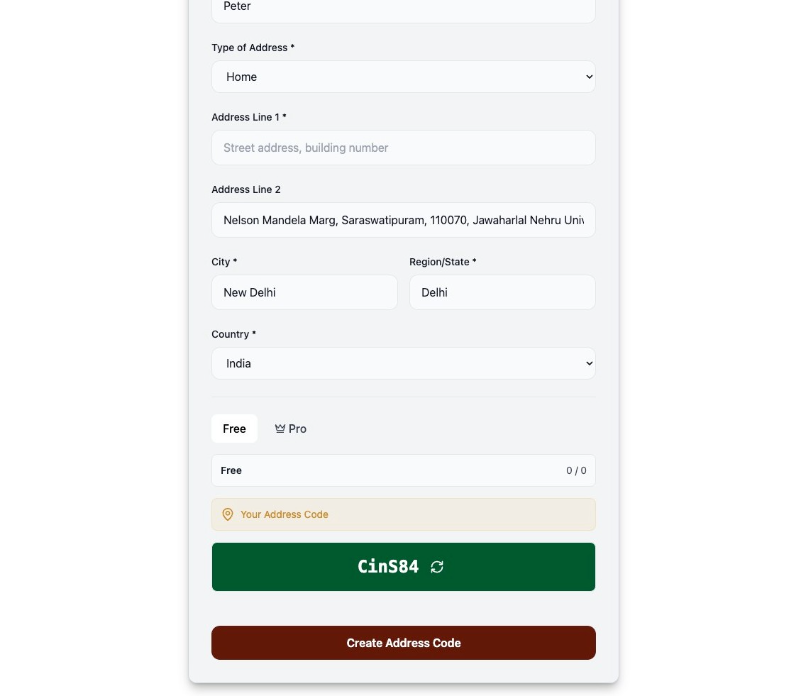
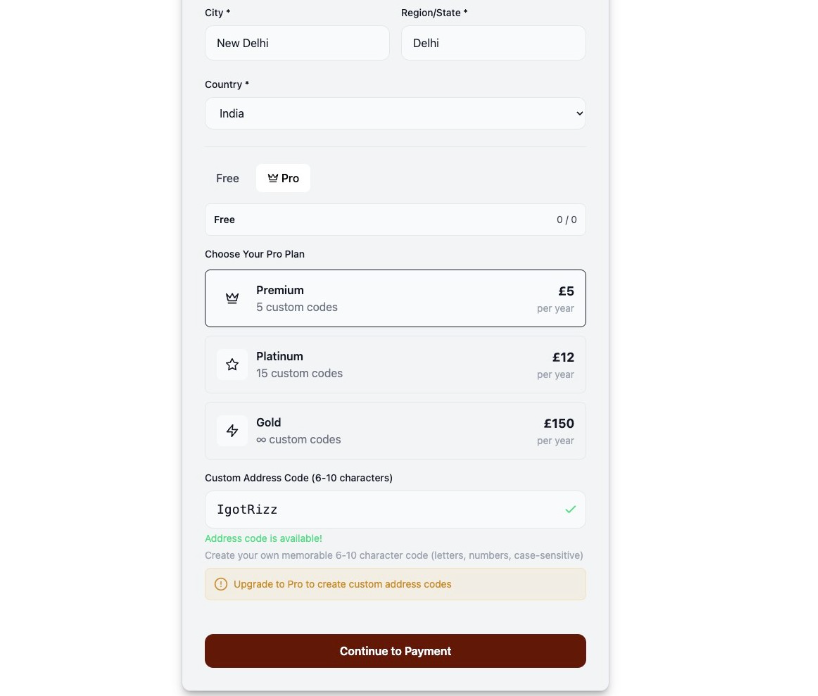
Create ABook code form
-
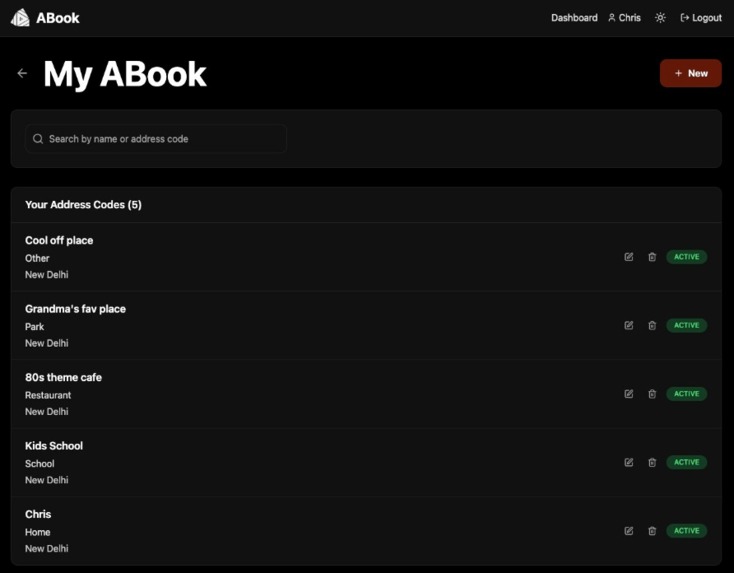
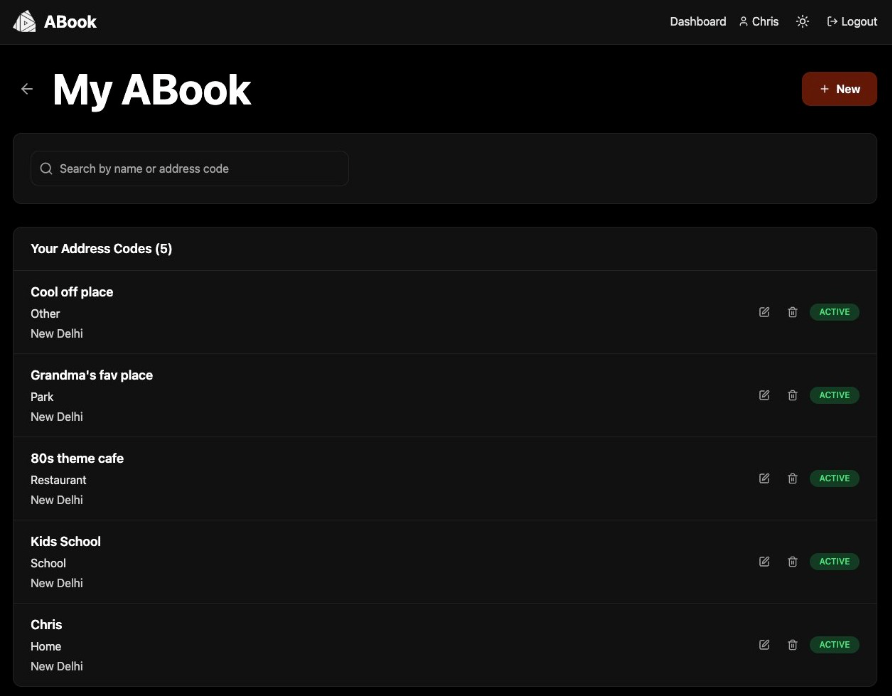
Your ABook
-
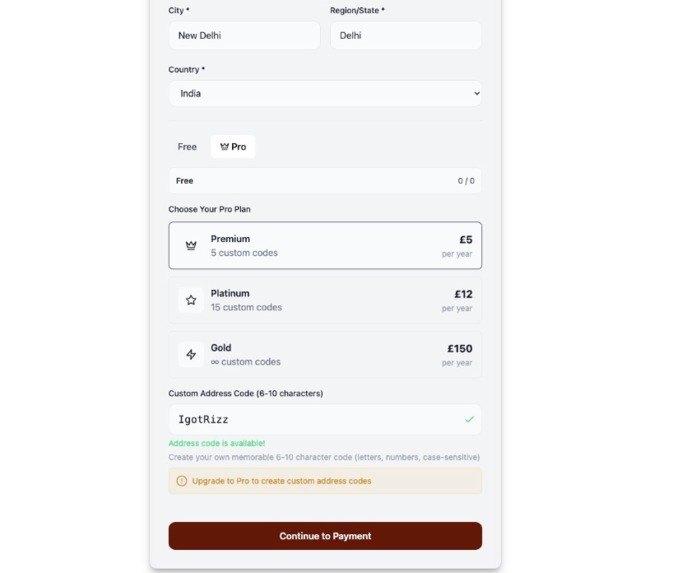
Custom code with Subscription
-
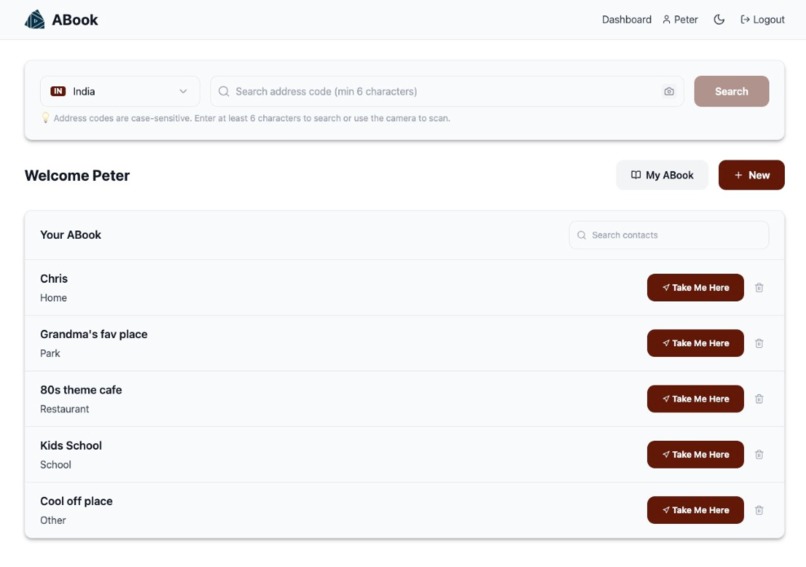
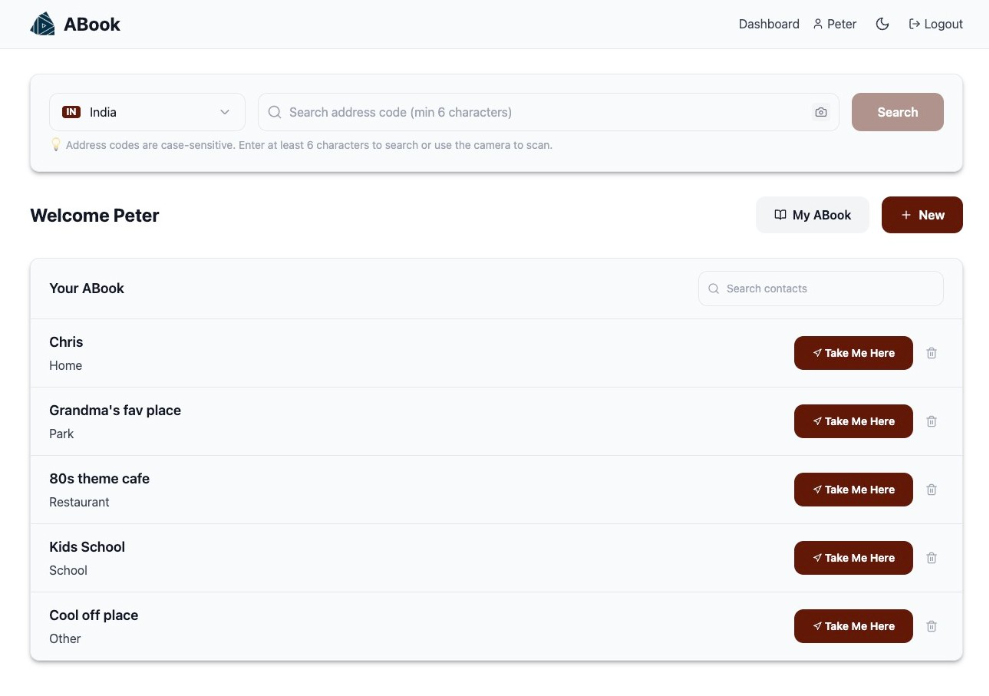
Your saved contacts
-
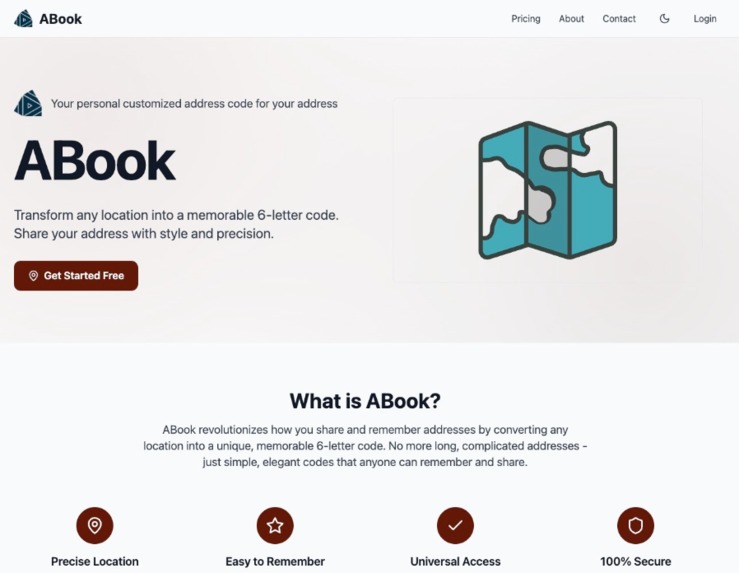
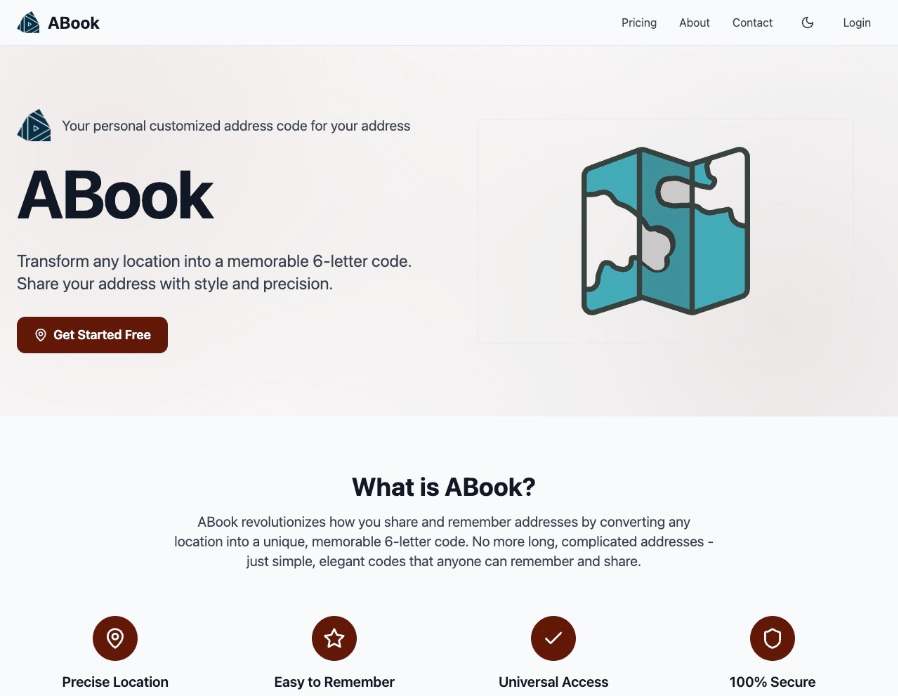
Home page
-
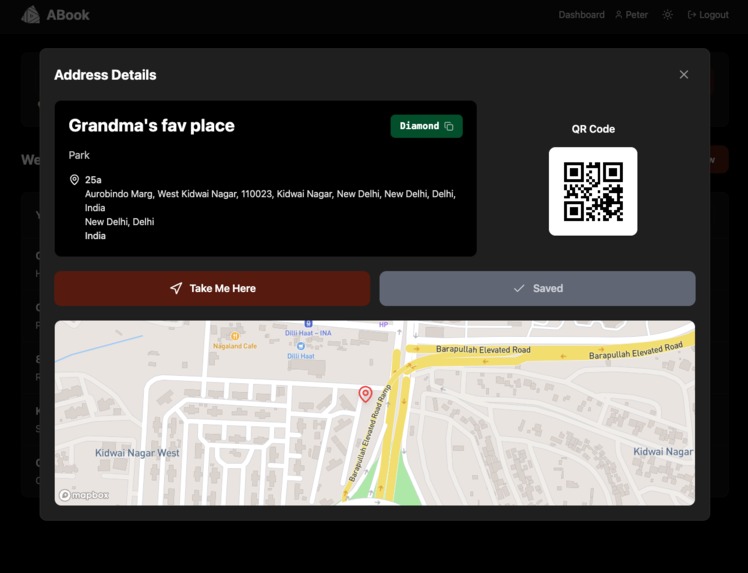
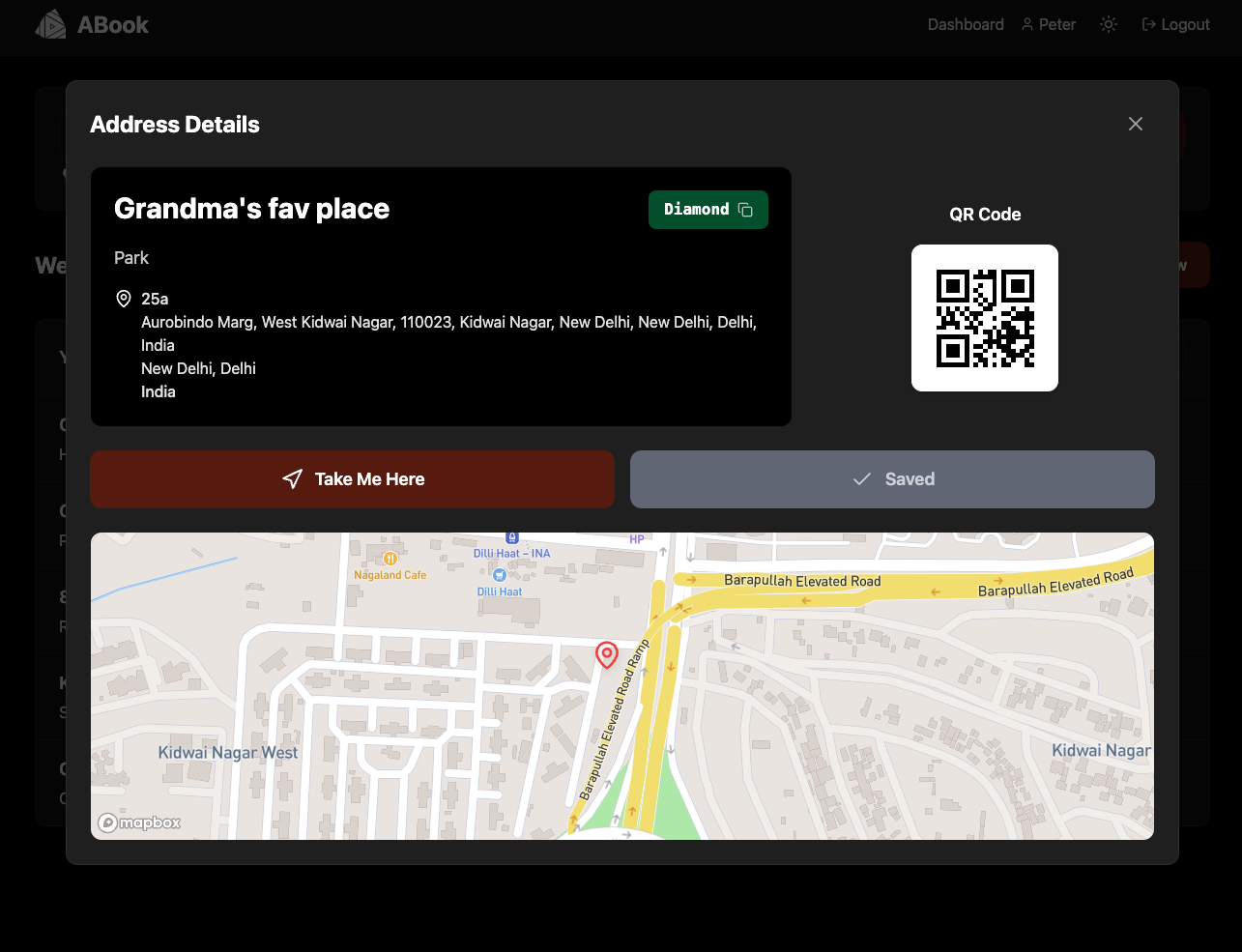
ABook code details
-
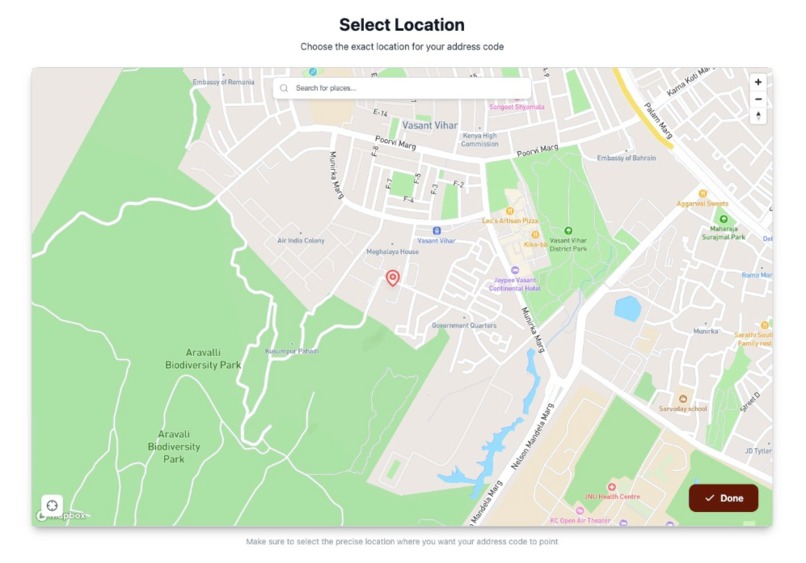
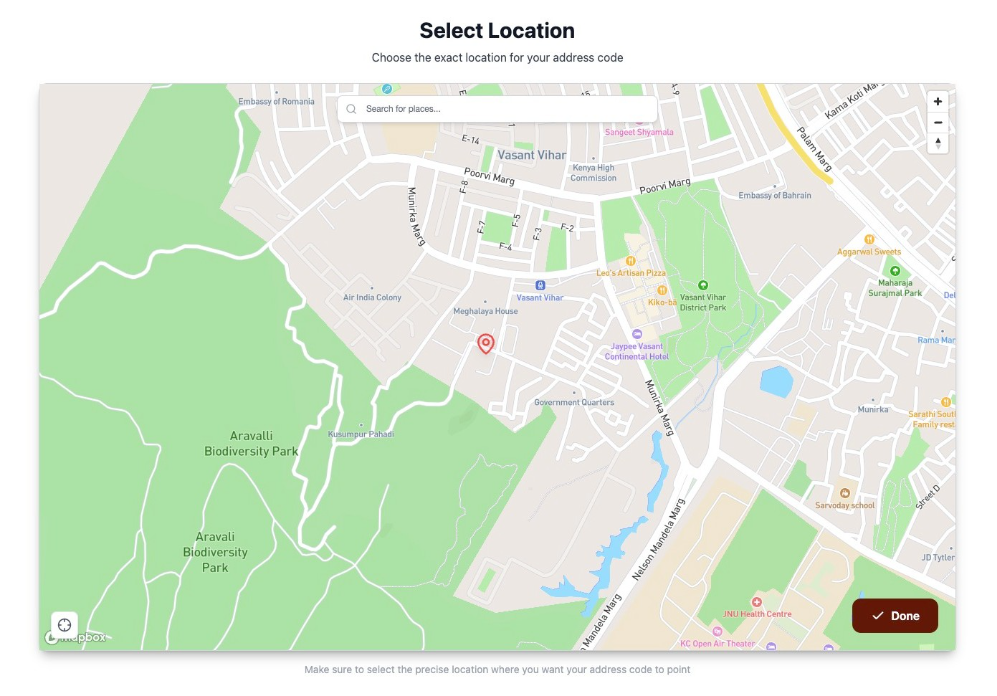
Choosing location on map
ABook
Secure and simplify your address

Inspiration
When I was pursuing my Bachelor’s in Computer Science, I had this thought while searching for my friend’s house: “Why are addresses so complicated?”
Our world has made incredible technological advancements—from computers to AI and now toward quantum computing—but every person on this planet still has to fill out at least five fields to provide a very basic yet often imprecise piece of information: “Your address.”
I kept thinking about this gap, and when I finally found my friend’s house—six blocks away from the address he gave me—I said to him, “What if we could just write ‘MYHOME’ and that’s it? I want MYHOME to be my address.”
Naturally, my friend laughed and called me a fool, saying that I’d need to include my flat number, building number, the neighbor’s dog’s name, the police station across the street, the state I grew up in, and the country I live in.
That’s how the idea of Address Book, or ABook, was born.
What it does
ABook provides you with a memorable six-letter code for your address that precisely locates it based on your coordinates—making the location 100% accurate and sharing addresses extremely simple.
For pro users, address codes can be customized, like “Paradise” or “Mountains” (subject to availability). Every address code is unique within its country.
What makes it different
There are other apps like what3words or MapCode that offer similar functionality, but ABook stands out because:
Safety:
The address codes are end-to-end encrypted. Users have the flexibility to deactivate their address code at any time, making it inaccessible to others. Simply keep it “active” when you want to share.
Memorable Codes:
No other service offers user-customized address codes. ABook allows you to create any word you like as your address code.
Contact Book & Sharing:
Just like a phone book, ABook introduces the concept of a contact book for addresses. You can search for an address and save it in your contacts. Sharing is easy using the in-app QR code and scanner.
Future Planning:
As the user base grows, we plan to develop a KYC pipeline to verify addresses, offering a “Verified Address Code” badge. These can be used on official documents. We also aim to provide API access to government bodies and verified organizations, ultimately becoming a central authority for address management.
How we built it
I primarily built ABook using Bolt.
Initially, I was skeptical about relying on an AI tool because I have a developer background (Android, React Native, MERN stack), and I understand how complex it can be to build a fully functional app with multiple branches and flows.
Despite my doubts, Bolt’s performance exceeded my expectations. It built the entire frontend and backend in minutes—something that would’ve taken me at least a week.
My prompt was quite specific about the app’s flow and UI/UX, and Bolt delivered exactly that. It even covered several things I hadn’t expected but were absolutely necessary, like the homepage content, authentication flow, and design components. Remarkably, about 80% of the app was built correctly from the very first prompt.
Challenges we ran into
There were several challenges along the way:
Supabase Query Issues:
Sometimes Supabase queries didn’t work through the Bolt interface, and I had to manually execute them in the Supabase dashboard.
Environment Variable Resets:
The environment variables kept resetting whenever the
.envfile was mentioned. Even after specifically instructing “DO NOT RESET ENVIRONMENT VARIABLES,” everything would reset, crashing the app each time.Third-Party API Integration:
Integrating third-party APIs like Mapbox was challenging. It took me several prompts to properly set it up, often requiring me to reference Mapbox documentation and use case code.
Light Theme Problems:
Creating a proper light theme was unexpectedly difficult. The app kept rendering white text on a white background, as if it couldn’t understand the frontend layout.
Race Condition Issues:
I encountered race conditions where updates were triggered before completing previous tasks. For example, the success dialog would appear before the user profile was actually updated with the new address code.
The Developer’s Curse:
This is just a theory, but I believe that people with less technical backgrounds sometimes write better prompts. Developers like me tend to over-explain every small detail, which can confuse the AI and hinder its ability to build the app optimally. While technical expertise is essential for unique feature flows, over-explanation can sometimes complicate the overall architecture.
Accomplishments that we're proud of
- I’m proud to have built a fully working application that has been my dream for years. Bolt helped me achieve this dream—completely free—by providing all the necessary resources. 😊
- I’m proud that I built this on my own while managing a full-time corporate job. I dedicated countless days and nights to this project.
- I’m proud that ABook can be used by anyone, anywhere in the world—not just by a select few. It has the potential to replace traditional addresses with a modern address code system.
- And finally, I’m proud that I finished building the app just as I ran out of tokens.
What we learned
I learned a lot about the immense potential of upcoming AI agents that can write entire codebases, integrate with external resources, and even provide useful feedback and highlight issues requiring human attention. I believe future tech jobs will focus more on supervision and domain expertise rather than coding everything manually, contrary to the common fear of losing jobs to AI.
I also learned the importance of prompt engineering. A well-written prompt can truly shape the response you get. I realized this can be summed up in one sentence:
“If you understand how it works, AI will understand how it works.”
Most of the serious problems I faced stemmed from my own lack of understanding of the features I wanted to build. That was my biggest takeaway from this hackathon: having absolute clarity in what you are trying to build.
What's next for ABook
ABook has an exciting future ahead:
Building trust:
Building a trust about ABook will be our first priority as any product that involves PII will be always questioned around trust. With our end-to-end encryption and built on highly secure Supabase database, we will market this tool as "100% secure. Share your address without revealing personal details". We will also build additional security features like request & accept to provide address owners with the information on who wants to access their address codes.**
User Acquisition:
We aim to make address codes a trend. Marketing will feature custom codes like people asking each other, “I live at TheLake, where do you stay?”, sparking curiosity what exactly is TheLake. Creating address codes (free or pro) will be our priority and marketing will show how easily is to keep a contact of important regular places for official or personal reasons. **
Scaling to Organizations:
We plan to expand to organizations and corporations to streamline address-dependent operations like logistics, deliveries, and address management (which can now fit into just one database column worldwide). This will be our main source of revenue as
API Rollouts:
We will offer APIs to verified companies and organizations to help them maintain customer records using ABook codes. This will be our another source of revenue apart from premium accounts.
Government Collaboration:
We aim to work with government bodies to perform KYC for users, validating their addresses and building a globally trusted address code system.
Companies Collaboration:
We also aim to collborate with companies to show a simple address code field in their forms and user's address rather than multiple fields. Incorporate address codes with navigation systems, voice assistants, and bringing the address codes a popular way to manage addresses in every home.
Built With
- bolt
- mapbox
- react
- supabase
- typescript


Log in or sign up for Devpost to join the conversation.