-
-
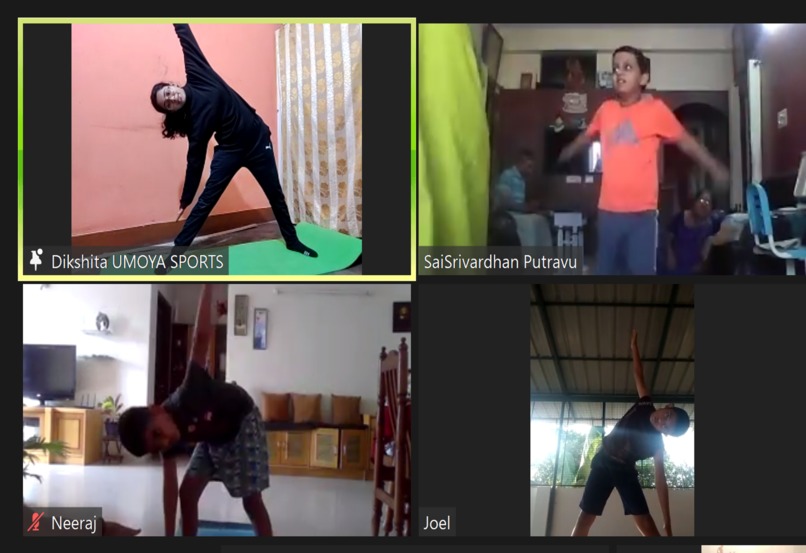
LIVE play and fitness inclusive program
-
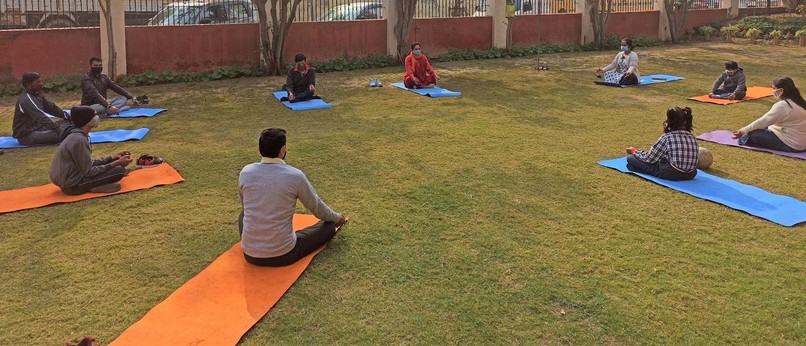
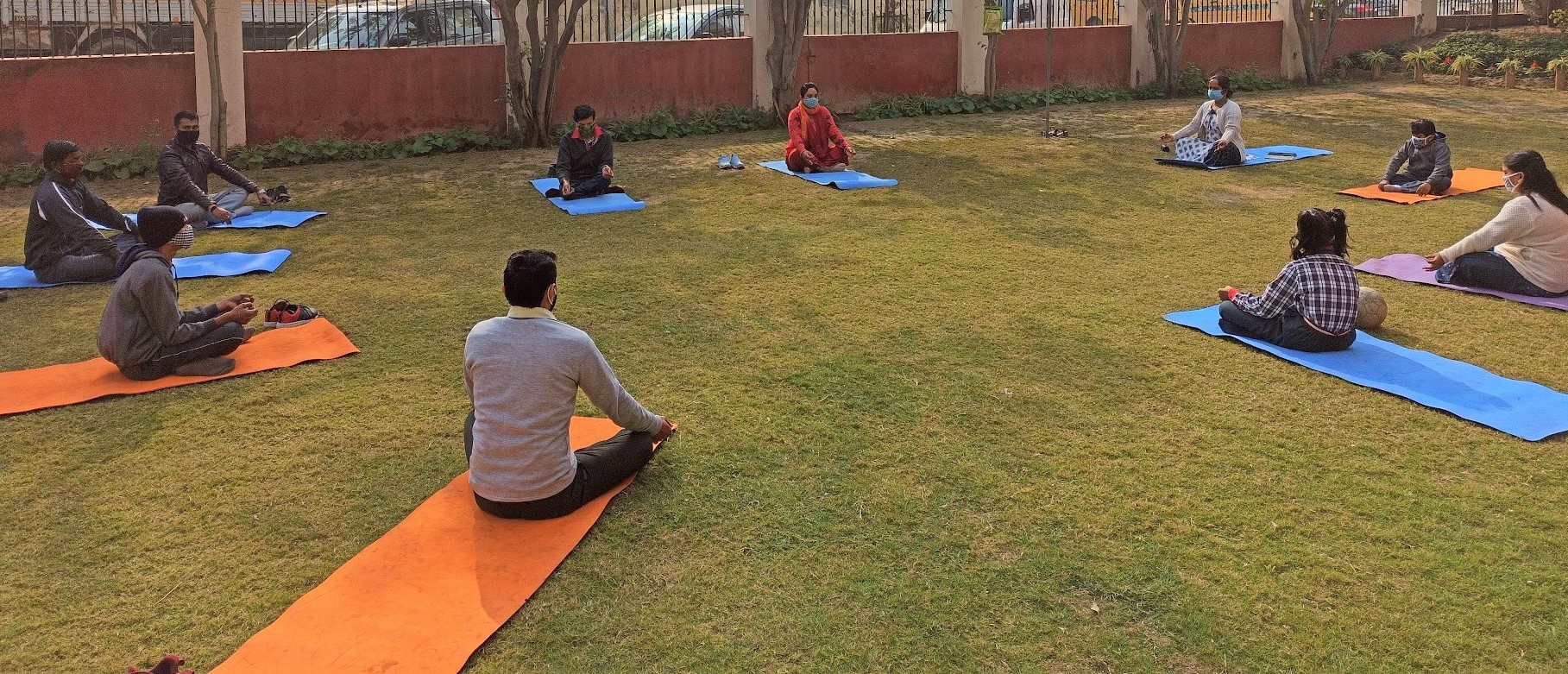
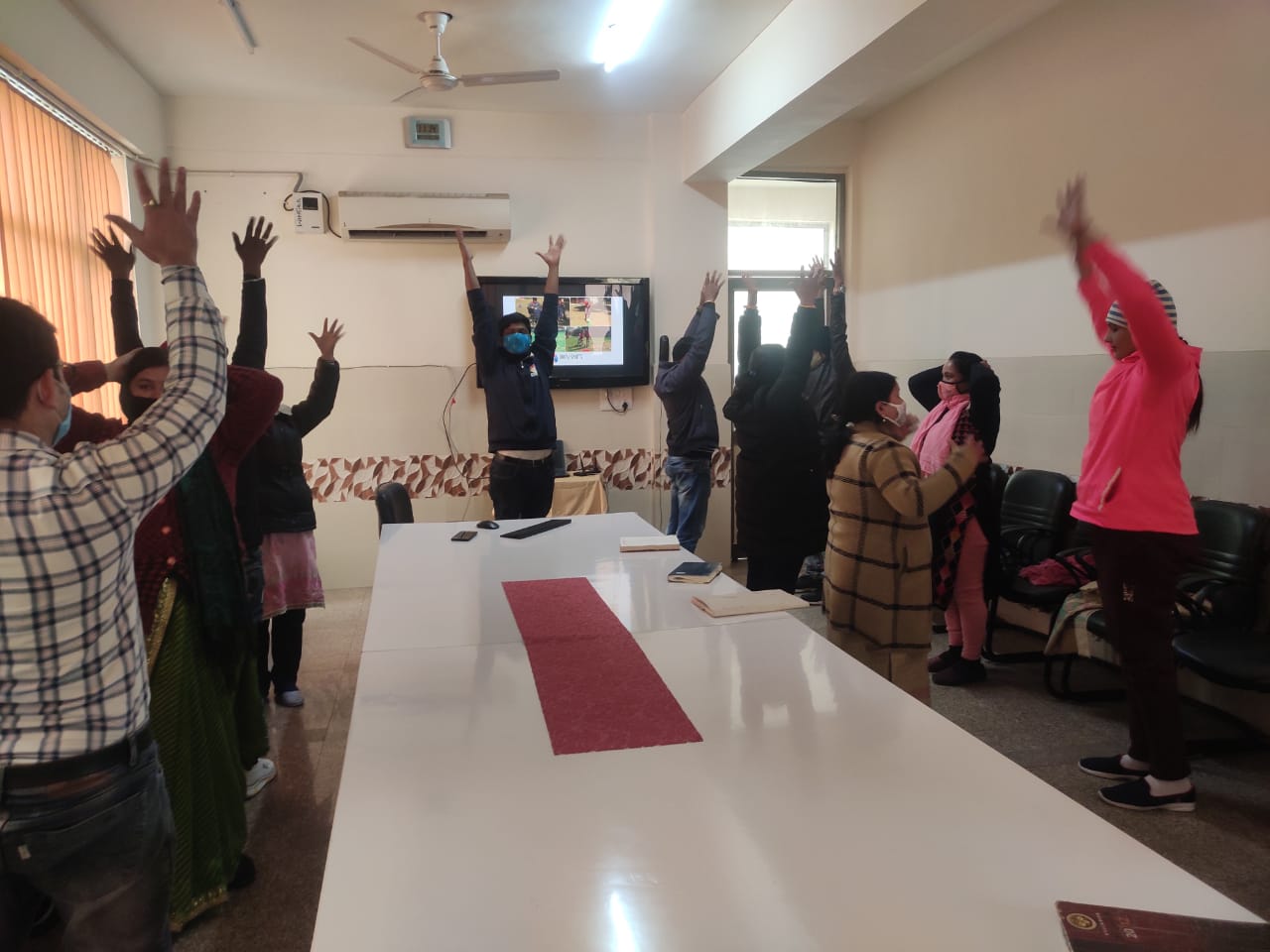
Yoga and mental well-being activity in school using Ability Spark program by teachers and children with disabilities
-
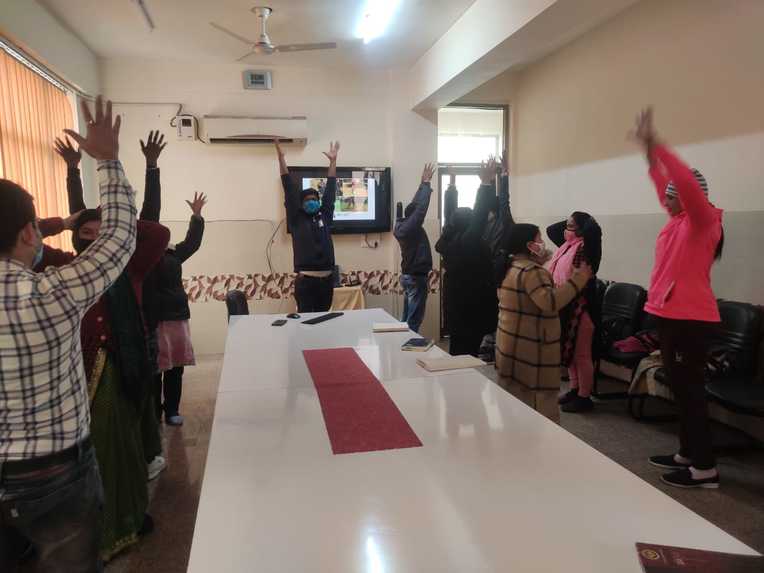
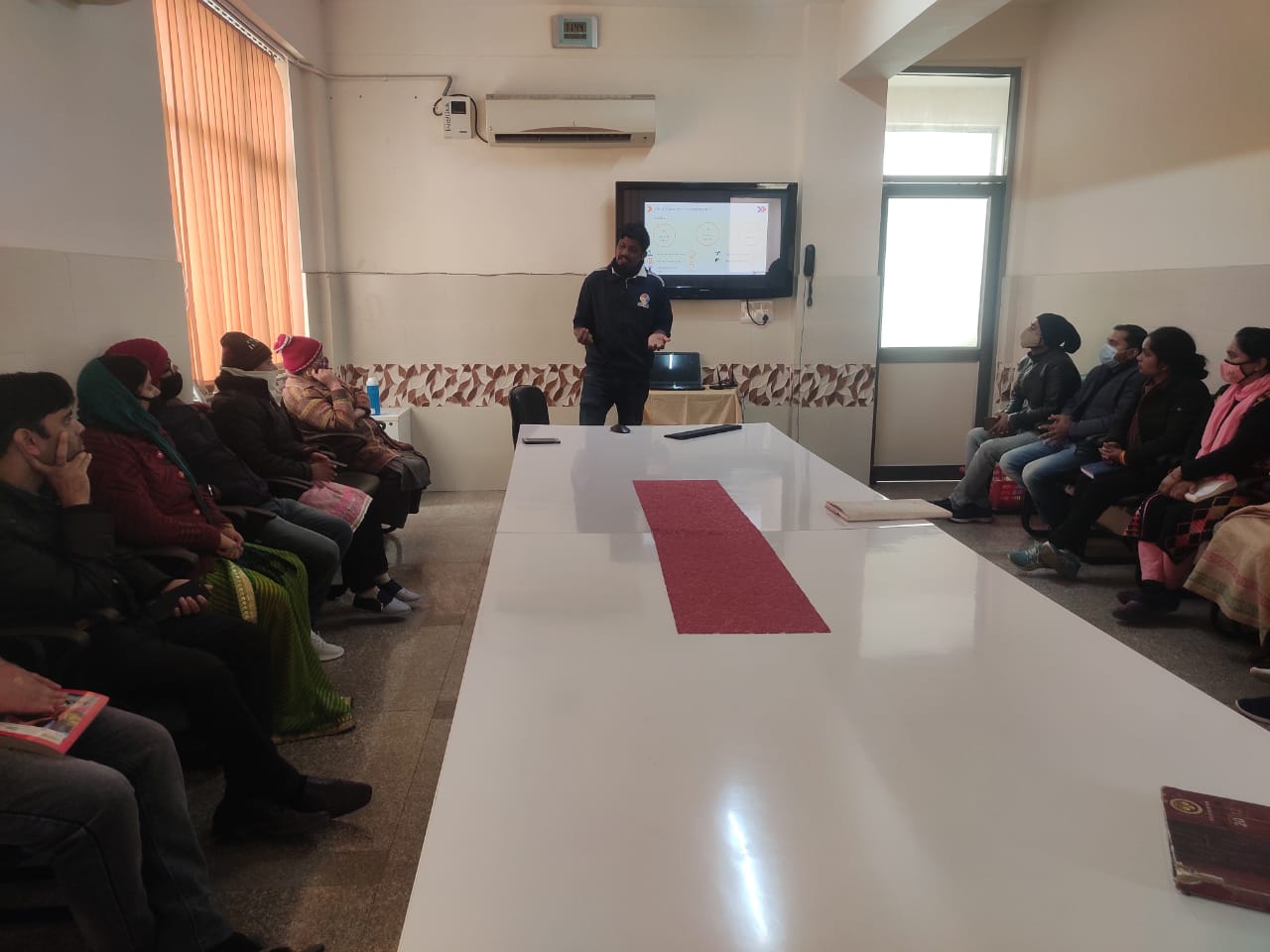
Teacher and community training workshop
-
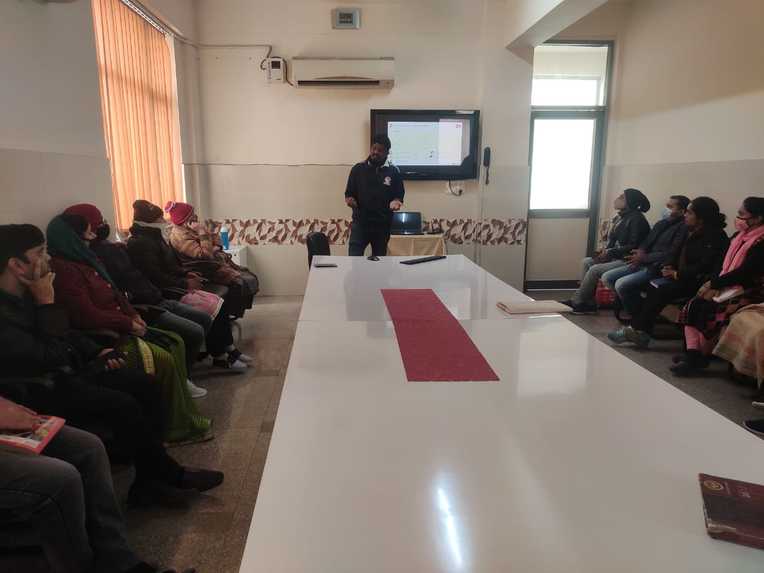
Teacher and community training workshop
-
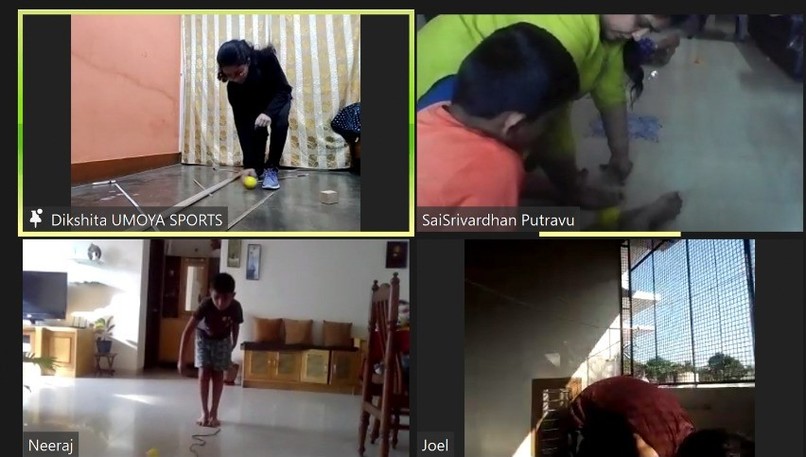
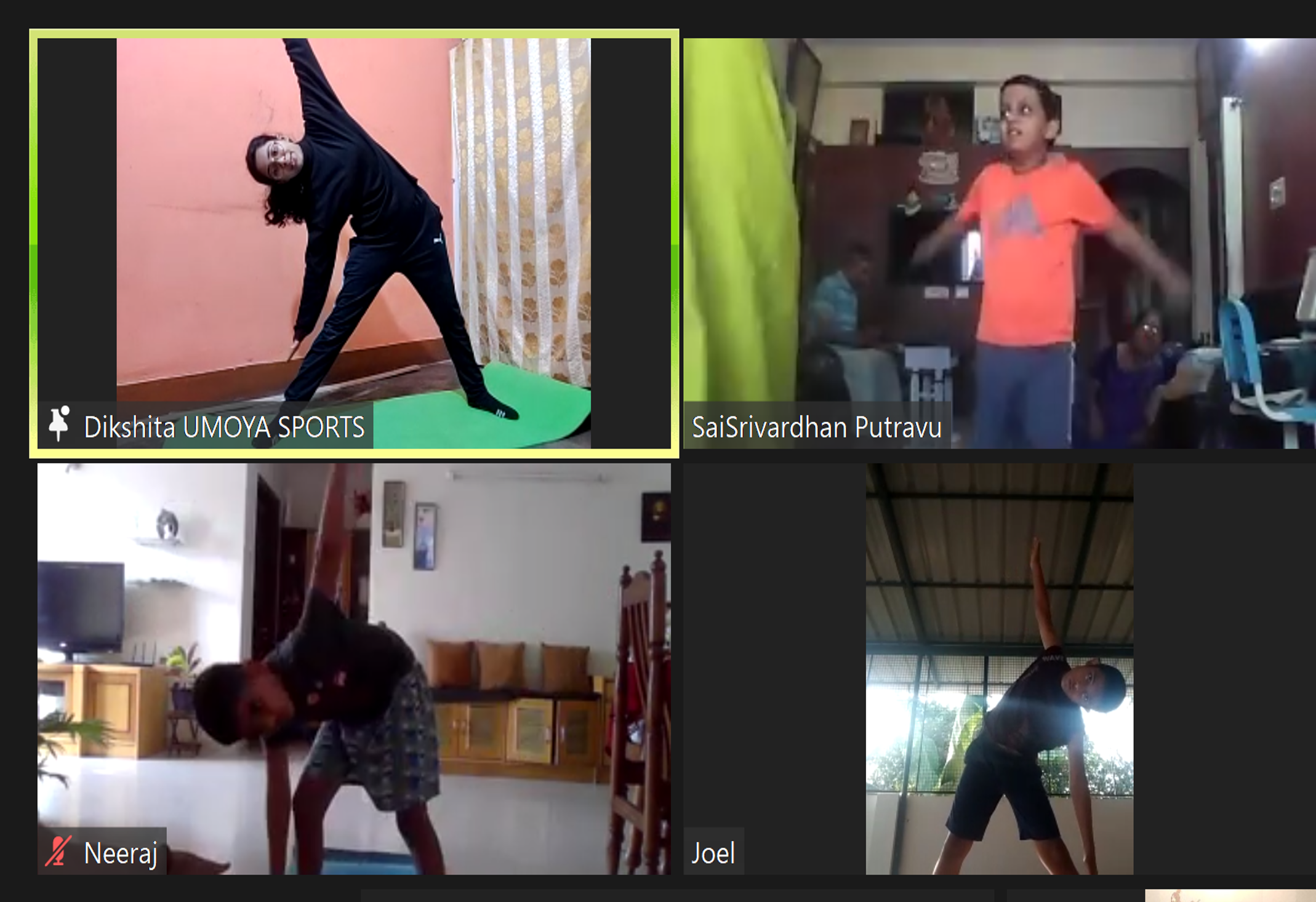
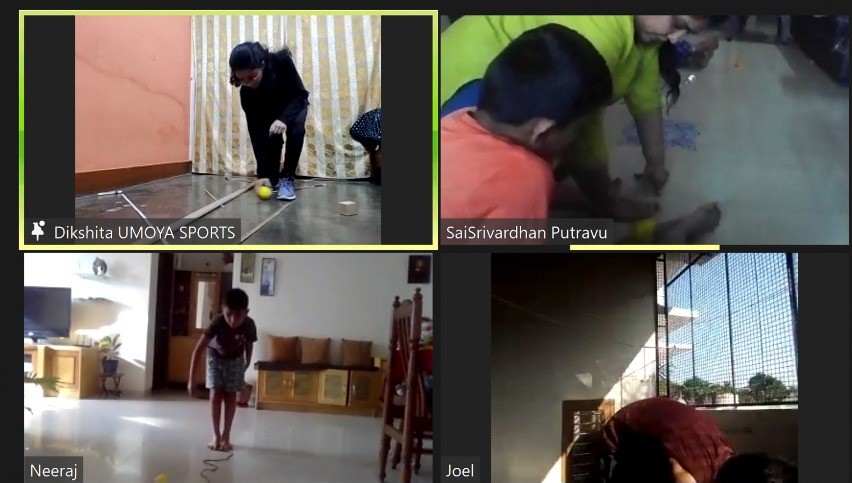
LIVE play and fitness inclusive program conducted through Zoom by sports mentor and helping children to build friendships and social skills
-
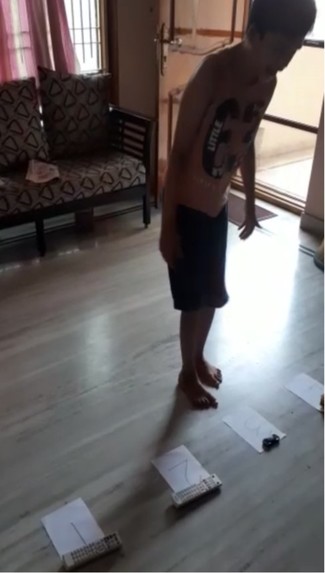
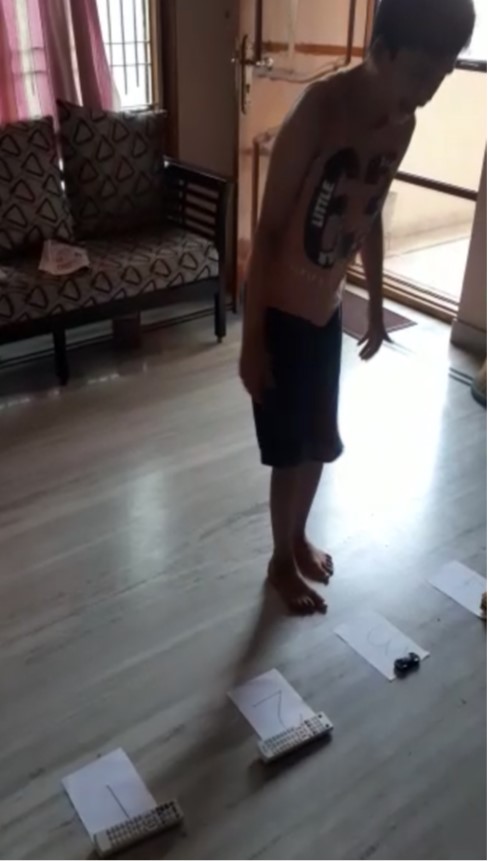
At-home play and physical activity by children through whatsapp program. In this a child with autism is playing a game called Number Jump
Inspiration
The moment we think of play and sports, visuals of the outdoors, playground and nature come to our mind. So when COVID upended our lives – lockdown and its restrictions, social distancing and the closing of schools – we found ourselves in uncharted territory.
After speaking to parents of children with disabilities, teachers, school leaders we learnt that being confined to indoors, there was a rise in anxiety, drop in social skills in children. Also, it is well known that lack of physical activity, more so among individuals with disabilities, results in functional challenges, such as obesity, cardiac diseases, attention deficit, coordination disorder.
Further, the sudden unwarranted alterations in the learning process during the lockdown increased the burden on children as well as their parents. The pandemic further exposed the challenges, and in a way, reiterated the need to work towards an ‘inclusive education crisis’ encouraging us to build:
Inclusive and accessible teaching-learning materials (TLMs) Structured and adapted low-cost, play-based Physical Education programmes.
Thus, keeping our children’s wellbeing at the centre, we developed an online physical education programme integrated with early childhood education.
What it does
Ability Spark is an early stage inclusive play & sports programme for children with and without disabilities in age bracket of 3-14 years with the focus on developing overall physical and mental well-being through age and skill appropriate yoga, outcome-based sports and physical education activities.
Inspired by every child’s natural love for play, the program aims to achieve 3 areas -
- Lay the foundation by building physical development skill, fitness and fundamental movement skills that prepares them for recreational sports
- Builds socio-emotional and 21st century skills to lead an active and independent life in an inclusive socity
- The program also integrates early childhood education concepts through a fun hands-on play, which can be played easily at home or indoors for an overall holistic development of the child.
Ability Spark serves as a digital play handbook for children and equips the schools, teachers, parents or care-givers with play-based education resources, knowledge and skills to develop an environment conducive for inclusive play, lead & support children with following resources –
- Pre-recorded Activity Video: Each activity will be demonstrated and modeled by adapted sports mentors together with a child enabling children with disabilities to visually understand the program activity using a 2-3 minute pre-recorded video.
- Activity Instruction cards: Extensive step-by-step instructions on how to perform the activity. The instruction card will also share research on how the activity will enable building essential life skills in the child, thereby helping them in their independent daily living.
- Visuals: Our step-by-step visuals will provide the necessary clarity to children to execute each step of the activity correctly enabling students with disabilities to visually understand the program activity.
A daily 30 - 40 minute play activity, with an annual program with close to 10,000 minutes of play and fitness plan for each child is shared with the child directly or their parents, teachers and caregivers. We also conduct LIVE instructor-led inclusive play and fitness activities by bringing children with and without disabilities to play together (virtually).
The key highlights that ensures the program is accessible for every child and their fundamental right to play and sports are:
- Adaptations – Each activity consists of adaptations, modifications as per skills and disabilities making it inclusive for children with different abilities
- Virtual Animated coach – All videos consist of ‘Spark’, a virtual animated coach and friend will guide and play along with children, helping children to build play and social skills through friendship in the current lockdown.
- Use of low-tech – Considering the digital divide and lack of high internet, all the activities and their toolkit are shared directly with parents, educators, caregivers over email/ WhatsApp, making it easier to access by all.
How we built it
We followed Universal design principles and product lifecycle phases starting from understanding challenges faced by teachers, parents of young children, especially with disabilities. We also conducted a secondary research to understand the impact, challenges of COVID-19 on children and individuals with disabilities in education, healthcare and access to basic medical facilities.
Based on our understanding and narrowing down the challenges, after taking inputs and feedback from parents, teachers and experiences of children participation, while creating a pilot solution we kept following aspects in mind -
- Keeping child at the centre, we gave paramount focus on the fun quotient of the activities so that children have maximum fun.
- Identified activities that could be done and played with minimum space, since majority of our participants were from low-income backgrounds are confined in their homes
- Not heavy on resources, and we used everyday items that are easily found in all homes as equipment for the activity.
- In order to build access to children with different disabilities, we added modifications for children with ID, ASD, locomotor challenges and visual impairment
- We also differentiated the difficulty and rigour of the activities in 3 different levels to ensure it is child appropriate and also able to push the children to hone their skills.
- Created a unisex digital character, Spark, so that boys and girls both feel connected with the character.
We ran a pilot program, and we got a tremendous response to the program. More than 400 parents and 100 NGOs, schools and organizations subscribed to the program, enabling us to reach out to close to 10,000 children during that 3 month pilot program.
Based on feedback, we are continuously making further updates and changes to the program to ensure high quality of the program is maintained.
Challenges we ran into
At the beginning of lockdown and COVID-19 pandemic, we tried to host LIVE sessions and we failed since children were unsettled, so we quickly transitioned into pre-recorded digital handbook, so that parents, teachers can use it with their child(ren) as per their own convenience. One of the biggest challenges became the implementation and operational model. We had to depend upon parents as our last mile delivery partners. While parents really supported us and were enthusiastic in participating the program, over time we realized the day to day burden on parents was too much and they were left with little time.
The other challenge while developing the program was to be able to customize the program activities for different disabilities. Considering that we cater to children with mild to severe disabilities, it became a challenge to modify the activities and educate parents of different techniques.
Funding and lack of resources was also a challenge. The video shooting and production became a hurdle.
Accomplishments that we're proud of
Within a short time since ideating, we were able to launch and pilot the program. Few of our accomplishments are:
Partnered with UNESCO New Delhi office to launch the program. Through the partnership, we were able to reach to close 10,000 children across 15 states of India and 6 countries
Through our user feedback, we achieved:
96% of participants felt a sense of emotional wellbeing and an improvement in fundamental development skills of their children
63% of parents and teachers observed higher physical and play activeness in their child(ren)
76% of participants felt an improvement in motor skills and development skills in their child(ren)
Got selected as finalists at National and International competitions and platforms; also received
Positive feedback from Industry leaders with validation and request to build an year-long program. 45% of participants were also ready to pay and subscribe.
What we learned
During the research and pilot phase, we learnt that there is an increase in stress, anxiety, obesity and loss of social skills in children, more so with disabilities during this lockdown. Parents play a critical role in a child’s life and it’s essential to partner with them in their learning process. We also realized that manier times play is treated as a therapy (OT) for a CwD and over a period they stop enjoying it, and also reducing the impact. Our solution addresses this by facilitating a fun and interactive approach to physical activity. We also conduct a training program for parents, teachers encouraging them to increase opportunities in physical activity for their child and monitor their growth.
What's next for Ability Spark - An inclusive play and well-being project
The underlying mission of Umoya is to enable all children to prosper through Play. Unfortunately, lack of opportunities, Infrastructure, and lack of Capacity at schools and local bodies often discourage the parents from enrolling their children with disabilities. This is more so in the case of Rural India where the proportion of children with disabilities who are out of school is much higher than the overall proportion of out-of-school children at the national level. Ability Spark aims to transform play and physical education to aid the inclusion of diverse learners. We aim to build an integrated parent-teacher app with a data-driven customizable program with physical-activity-based lessons, videos, assessments, and a Learning Management system dashboard with offline features such that it can work in communities from low-income backgrounds living areas with low bandwidth. ‘ This platform will also enable us to monitor impact and create customized skills-appropriate program plans and targets for each child.
Built With
- android
- api
- other
- partners
- people


Log in or sign up for Devpost to join the conversation.